Tag: Zeel

  • Zeel hires Sulekha Sharma as ad sales national head

    Zeel hires Sulekha Sharma as ad sales national head

    MUMBAI: Zee Entertainment Enterprises (Zeel) has brought back Sulekha Sharma as deputy vice president and national head, ad sales.

    Sharma will report to Zeel ad sales EVP Ashish Sehgal.

    It is a home coming for Sharma after a gap of two years. She was with UTV World Movies since February 2010 as associate VP and national head, ad sales.

    Prior to that, Sharma was zonal head, north and east, Zee Cafe and Zee Studio.

    Zeel executive director – revenue and niche channels Joy Chakraborthy said, “Zee fosters a culture of welcoming former employees with good track records and who want to re-join the organisation.We are glad to have Sulekha back with us.

    ” Sharma began her career in the editorial department with Strategic Newspaper.com in 1999 and spent two and a half years there. Her stint with ad sales started when she moved to The Times of India, where she was head of sub office, Visakhapatnam.

    After spending five and a half years there, she moved to Zee, where she spent two years and four months, before moving to UTV World Movies.

  • After 2 years, Star ups ad rates

    After 2 years, Star ups ad rates

    MUMBAI: Advertisers will need to cough out more to place their ads on television as two leading Indian broadcasters have indicated that they would be upping their rates this fiscal.

    After a gap of two years, Star India said Tuesday it would increase the advertising rates for its bouquet of channels by 20 per cent with immediate effect.

    “We expect our revenues to grow by around 15-20 per cent this fiscal as compared to 12-13 per cent in the last year. Since advertisements are the major source of income for this industry, the increase in rates will help us achieve the target,” says Star India COO Sanjay Gupta.

    The other leading broadcasting company, Zee Entertainment Enterprises Ltd (Zeel), has forecast a 12-14 per cent ad revenue growth in FY‘12.

    Star‘s decision has come amid rising content costs, an increase in market share and a leadership position of its flagship Hindi general entertainment channel Star Plus.

    Says Gupta, “We have achieved an unprecedented growth of 30 per cent in the last two years. Today we are leaders in 18 key states of India. This unstoppable growth is riding on the back bone of significant investments, innovative content and delivery of quality of experience through technologically advanced platforms.”

    Broadcasters have been pressing for a fair rise in ad rates as the cable and satellite homes in India have increased from 90 million in 2009 to 116 million in 2011, while the digital homes have almost double (from 15 million in 2009 to 26 million in 2011).

    Star claims that its market share and reach has gone up substantially. However, the advertising revenue growth has not kept the same pace.
     
    Says Gupta, “The total viewership share of the network in 2009 was 12.4 per cent, which today stands at 16.1 per cent. Advertisers should accept our increase.”

    Star justifies the increase in ad rates as it has come in the backdrop of spiraling cost of talent, increased investments in technology, advanced delivery and distribution platforms as well as increased production costs.

    Says Star India ad sales president Kevin Vaz, “Our network reach has increased and at the same time for the advertiser, the cost of reaching 1000 people has reduced by 38 per cent in the last two years. This rate increase of 20 per cent is just a part correction in lieu of the phenomenal growth the network has shown in the past two years.”
     
    Some senior industry executives do not find sense in Star making a public announcement. “Why do you need to announce the hike in ad rates when you don’t do business on rate cards? The deals are signed after negotiations and advertisers always try to beat down the price. This announcement is amusing,” says a senior ad sales executive from a rival network.

    Media buyers feel the pricing will be determined by the demand-supply equation.

    Says Madison Media Group COO Punitha Arumugam, “The television rates are decided by the TVR performance and not by rate cards. As Star is performing, it can charge premium. It all depends on the ratings and not on rate cards.”
     
    On the point of CPT (cost per thousand) going down, RK Swamy Media Group president Chintamani Rao believes that in India deals are not signed on the basis of CPT. “Deals are done on CPRP (Cost Per Rating Point). If deals would have been signed on CPT basis, the rates would have been much higher,” he says.
     

  • Draftcb Ulka to continue with ZEEL as creative AOR

    Draftcb Ulka to continue with ZEEL as creative AOR

    MUMBAI: Zee Entertainment Enterprises Ltd (ZEEL) has decided to continue with the incumbent agency Draftfcb Ulka as its creative agency on record (AOR).

    Reliable sources have also confirmed that Rediffusion Y&R was a formidable contestant.

    Zee’s creative duties has remained with Draftfcb Ulka (then FCB Ulka) since 2003.

  • Punit Goenka named Zee News MD

    Punit Goenka named Zee News MD

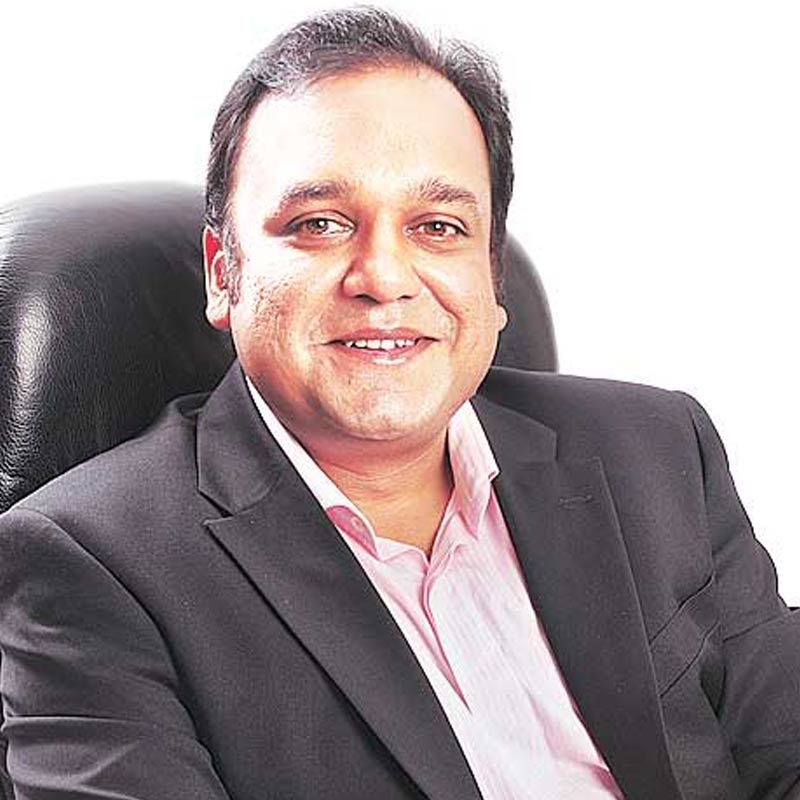
    MUMBAI: Zee News Ltd (ZNL) has appointed Punit Goenka as managing director of the company.

    Goenka has replaced Laxmi N Goel, whose resignation was accepted by the ZNL board. Goel will, however, continue as a non-executive director on the board.

    The change is effective 5 July. Goel will continue to drive Essel Group’s real estate business.

    Goenka, the eldest son of Subhash Chandra, is also MD and CEO of Zee Entertainment Enterprises Ltd (Zeel). He was designated as MD of Zeel starting 1 January.

    ZNL owns and operates the news channels of Zee network.

  • 2009: Television media can certainly say “Aal Izz Well”By Zeel chief revenue officer Joy Chakraborthy

    2009: Television media can certainly say “Aal Izz Well”By Zeel chief revenue officer Joy Chakraborthy

    In view of the global economic meltdown and its imminent impact on the advertising, 2009 was bound to be a challenging and tumultuous year. But, even as we entered into a rather gloomy 2009, there seemed to be a glimmer of hope that India would manage to insulate itself, at least in part, from the global downswing. And guess what?

    Our 1.1 billion-plus population, which until now has always been perceived as the hindering factor to growth, came to our rescue wherein the consumption of basic amenities of “ROTI, KAPADA & MAKAAN” ensured that organic growth across sectors is not stifled. Top this up with our undying quest for “KUSHI” (or constant up-gradation of our standard of living) which during the 2nd half of the year spurred the growth rates back onto the high single-digit figures.

    In the first half of the year, the fear of an impending downturn led to cost-rationalisation initiatives . . . especially in the sphere of marketing budgets. This resulted in marketers intensely re-evaluating their ad-spends. With focus on sustaining consumption of their products (which was coming from every nook & corner of India), marketers re-visited their basics of reach and frequency.

    Also, marketers adopted a stingy spending strategy. With splurging on high-value flashy media initiatives becoming a luxury that no one could indulge in, it was imperative to gain market shares in a declining market. The FMCG sector increased their ad investment by nearly 30 per cent, but on cost-effective options that yielded them better returns on media investments. This helped them grow their sales by six per cent.

    So, one of the most important positives to have emerged from 2009 is that marketers have realized the true potential of television in terms of reach and cost-efficiencies. With FMCG leading the way and viewing TV more optimistically than print, other sectors such as auto and telecom followed suit.

    So, let’s see how Television has evolved during last year:

    The emergence of Colors not only transformed the Hindi GEC space into a “3-player” genre but, more importantly, provided viewers with varied & diverse content and advertisers with multiple options to reach out to their consumers. This facilitated the genre to grow both in terms of viewership and ad revenue.

    Given the multiplicity of options and lower switching costs coupled with the marketers’ imperative of cost rationalization and reach maximization, “purple” GRPs became their key buying parameter. Broadcasters who quickly took advantage and managed to get their content propositions right reaped the highest benefits.

    Towards this end, while most networks busied themselves in attracting higher GRPs (to become No. 1) by initiating extravagant programmes with high-value celebrities and airing movies, Zee, on the other hand, focused on developing relevant and strong properties which helped us become leaders in “prime time”.

    So, the key to TV sales evolved around developing relevant, cost effective but plain vanilla sales propositions with high service quotient. As such, with our sales approach to optimally monetize these “purple” GRPs, we garnered highest revenue.

    Moreover, with marketers demanding “localization”, regional channels gained acceptance and emerged as key drivers of growth. Our host of regional channels capitalized on this through complementary media propositions to our advertisers.

    A key TV sales imperative emerging from the cost-conscious marketer was the need to leverage “network strength” across genres / markets as compared to offering a proposition based on merely one or two channels. The wider the range of the network’s bouquet, the better the ability to provide a comprehensive package to the marketer and thereby garner maximum share of client spends.

    Despite all the above sales approaches, the two factors which, to my mind, truly provided the only competitive advantage in this hyper-competitive environment are “people” and “relationships”. Broadcasters who stayed away from rampant “right-sizing” initiatives have benefited not only because of highly energized sales but also, more importantly, as it gave them more “feet on the street” whose relationships with clients and agencies could now be leveraged.

    In summation, Indian media (in general) and the television media (specifically) can certainly say “Aal Izz Well” and look forward for another enthralling year of high competitiveness.

  • ‘It’s not money but the idea that conquers’ -ZEEL COO & Zee TV business head Nitin Vaidya

    ‘It’s not money but the idea that conquers’ -ZEEL COO & Zee TV business head Nitin Vaidya

    MUMBAI: The beginning of the year 2009 was a huge challenge for us. We took up this challenge with great enthusiasm, confidence and a focused approach. Our aim was to achieve great heights with concentrated efforts without making any tall claims.

    Many of our shows gave us positive results in 2009. Two major properties by us last year were, ‘Choti Bahu‘ and ‘Lux Dance India Dance‘.

    ‘Choti Bahu‘ proved to be a phenomenal success, redefining the primetime band as 7.30 PM and reigning over it, ever since. But this is not the first time; we had also launched ‘Sindoor‘ at the same time in 2006.

    Another remarkable success in the non-fiction genre was ‘Lux Dance India Dance‘. Unlike other star-studded shows on competing channels, Lux Dance Indian Dance talks about excellence of talent and creates a platform for that talent.

    We always believed that television creates its own stars. For ‘Lux Dance India Dance‘ we adopted our 17-year old formula that stemmed from our longest running show – ‘SaReGaMaPa‘ which makes stars out of common people with exceptional talent. We began our journey to 11 cities, scouting talent, and came back with some fabulous dancers rather than encouraging celebrity participation in reality shows that look fabricated.

    The results were for all of us to see with ‘Lux Dance India Dance‘ becoming the biggest dance reality show growing in a profitable way rather than being an unviable business model. Our formats were copied and launched on other channels and we all know what happened to them.

    Indian television also saw an interesting turning point with a different kind of story-telling that emerged with newer shows. Our competition launched ‘Balika Vadhu‘ which has an excellent story and brought in an all-new flavour to the primetime. We also launched ‘Agle Janam Mohe Bitiyann Hi Kijo‘ which highlighted the social evil of women-trafficking very strongly and forcefully. This social cause backed up with effective story-telling made ‘Laali‘ a household name.

    Another of our shows from Balaji Telefilms, ‘Pavitra Rishta‘, was a great hit amongst the viewers, with the show now becoming the No. 1 fiction show across GECs. The first ever show on satellite television to be shot completely in Delhi, ‘12/24 Karol Bagh‘ was launched by us.

    Two other shows that immediately struck a chord with the viewers are ‘Jhansi Ki Rani‘ and ‘Aap Ki Antrara‘. Through ‘Aap Ki Antara‘, we have aimed at creating public awareness about autism & sensitizing the society towards this issue. More than the commercial success of the show, the kind of recognition and respect that it has garnered for itself and the channel, is what we take immense pride in.

    Similarly ‘Jhansi Ki Rani‘ was another path-breaker. In times where historical shows haven‘t really done well on television, ‘Jhansi Ki Rani‘ has created its own loyal audience and has been delivering consistently ever since its launch. The success of the show has taken it beyond HSM (Hindi speaking market) with the dubbed version being telecast on our regional channels.

    The pressure from the competitors was very high with the who‘s who of Bollywood anchoring some reality show or another across channels. During such times, we decided to introduce Afsha & Dhairya, the youngest hosts on any reality show thus far. Result? They became the most loved hosts on Indian television.

    Recession forced us to take some innovative decisions which surely opened up new avenues that went on to become great successes. Another show that got us directly connected to the audiences is ‘Ghar Ghar Mein‘, a low cost, simple game show with families that allowed cameras directly into their homes. ‘Ghar Ghar Mein‘ is the only show on television today which establishes a direct relationship with the viewers. So we see that it‘s not the money that matters but the idea that conquers!

    Hence with subjects ranging from those of historical importance to social awareness to differential talent, Zee TV‘s shows have been appreciated and acknowledged across the nation. Each of our new properties yielded results and there was no show that had to be withdrawn during the year. 

    Steps taken by Zee TV were consciously working towards not just being No. 1 on GRPs but also achieving high profitability. And to achieve profitability, we didn‘t want to compromise on our quality at any cost. We didn‘t succumb to unnecessary pressures of investing money in film stars or creating controversial content. We wanted to be on the top on our terms. It‘s a matter of great pride that the No. 1 fiction (Pavitra Rishta) and non-fiction show (Lux Dance India Dance) across GECs, belong to Zee TV.

    It was a year that started with great challenges that led to hope and thereby a promise to ourselves – to top the charts. The real joy and excitement came when we became No. 1 for a week after almost a decade. The challenge this year would be to maintain the high performance and offer exclusive content to our viewers.

    Another challenge that holds great value today is the digital scenario which is changing television consumption patterns. On one end of the spectrum is mass consumption pattern of television that is measured by GRPs and on the other is the evolving audience that is migrating from analogue to digital.

    Content and communication to match audiences‘ sensibilities is the emerging reality of the digital era. The growth of DTH is phenomenal. It has surpassed the number of declared analogue subscribers and will continue to grow further. Hence concentrating on the existing analogue viewers alongwith the ever-growing DTH viewers will be our core focus in the coming years.

  • Zee demerger scheme for Dish TV gets nod

    Zee demerger scheme for Dish TV gets nod

    MUMBAI: Subhash Chandra is all set to list the direct-to-home (DTH) business of Zee Group after having got the demerger scheme approval from the court. Already listed are the other entities – Zee Entertainment Enterprises Ltd (ZEEL), Wire & Wireless India Ltd (WWIL) and Zee News Ltd (ZNL).

    Zee Entertainment Enterprises Limited today announced the approval of its demerger scheme by the Hon’ble High Court of Judicature of Bombay. “This approval paves the way for setting the record date for the demerger of the direct consumer business undertaking of Zee into ASC Enterprises Limited (ASCEL), which is soon to be renamed to Dish TV India Limited,” the company said in a release. Dish has 1.6 million DTH subscribers.

    Says Zee Chairman Chandra, “This is the last phase of our current restructuring process – WWIL and ZNL are already independent companies listed on the stock exchanges in India. Dish TV would also get listed very soon and we are confident that all four companies will deliver long-term shareholder value.”

    The record date is likely to fall in the latter half of February. The shareholders of ZEEL as on the record date shall be allotted 57.50 shares in ASCEL for every 100 shares held.

    “Dish TV would then apply for listing of such shares to the BSE, NSE and CSE, in compliance with SEBI guidelines. ZEEL expects the listing process to be completed by February,” the release said.

  • Zee Tele’s stock soars on ratings upswing, future prospects

    Subhash Chandra touts his plans to disassemble Zee Telefilms Ltd (ZTL) into four separate entities as a necessary move to unlock value. As he stands on the eve of the digital age, he feels he can size up each line of his media business spreading across cable TV, direct-to-home (DTH), content and broadcasting with independent focus and management care.

    What this means is that the core ZTL, after the trimming, would have all the network channels except in the news and regional genres which raked in Rs 2.01 for the 2005-06 fiscal. Operating revenues of Rs 1.54 billion from cable TV would also be transferred out, further eroding the company‘s consolidated turnover.

    Even after cropping the topline, there is a mandate for robust growth. Riding on the wave of Zee Cinema and a resurgent Zee TV, the company expects to clock a 10 per cent rise from last year‘s turnover of Rs 10.51 billion.

    Says Essel Group CEO of corporate strategy and finance Rajiv Garg, “We expect an advertising revenue growth of 12-15 per cent this fiscal. While international business will sustain its 10-12 per cent growth (adding of channels and gain from Middle East operations), domestic subscription will stay steady.”

    Zee‘s road to recovery came last year as the flagship Hindi general entertainment channel bounced back big time on the ratings scale with simple storyline soaps like Saat Phere and Kasamh Se. Zee TV smelt the first scent of success since its continuous slide for over six years, with Sa Re Ga Ma Pe Challenge, a singing talent show.

    “It is not that we came out with any magic potion in programming. We just stuck to the basic rules. What made the difference this time is that we jelled as a team and came out with a winning mindset. The external environment also played a role as Sony lost audiences and Star Plus was still lighted up by the three long-running flagship soaps,” says Zee Network senior vice president Ashish Kaul, explaining the turnaround story.

    Zee‘s resurrection was born out of a long sequence of internal discussions and, in a reshuffle, Chandra‘s elder son Punit Goenka was made business head of Zee TV. In an interview with Indiantelevision.com, Goenka had then said that his induction would bring stability to the channel. “You can expect one change. We want a planned execution of what we do. We won‘t resort to any knee-jerk reactions… Here, internal palpitations happen whenever crucial projects come up. There have been instances when we started a project and left it midway… It is more like using someone who can handle pressure and bring in stability. I consider myself as one of the Zee professionals, not as a family hand. But, being a family man, I think I can bring in stability.”

    The duo of ZTL CEO Pradeep Guha and Goenka clicked and the strategy to build an entire programming wall with focus on a time band approach was chalked out. Programmes were jazzed up and a marketing buzz was created around them. The investments on Zee TV‘s content and marketing rose almost 20 per cent to Rs 2.2 billion in FY06. “There is usually a lag of 4-6 months between improvement in TRPs and ad revenue growth. So with an improvement in ratings, we are predicting a recovery in ad revenues going ahead this year with a return in pricing power,” says an analyst.

    Meanwhile, Zee Cinema, ZTL‘s second major revenue earner, continued as the numero uno in its space and posted an almost 20 per cent rise in turnover to end FY06 with Rs 1.45 billion in earnings. The channel banked on Amitabh Bachchan‘s films and a mix of new and old movies to fend off competition from Max and a revamped Star Gold.

    The change was reflected in the financial health of the company. Facing rough weather, Zee had reported a CAGR (compounded annual growth rate) of 7 per cent in revenues for the period FY02-05. This was contributed by a 28 per cent CAGR in subscription revenues and an annual decline of 8 per cent in ad revenues. The picture changed last fiscal and Zee posted a 13 per cent ad revenue growth, fueled by the ratings ramp up.

    International revenues, which account for one-fourth of Zee‘s earnings, will continue its good run, though operations from UK and US have matured. The Middle East and South Eastern region would ride on a growth wave and Zee is also planning to launch a dubbed movie channel in Russia.

    The worry, though, is the losses from new businesses which remain large at Rs 1.65 billion. But Zee Telugu, which suffered a loss of Rs 460 million last fiscal, now forms a part of Zee News Ltd. Operational expenses will continue to rise as several businesses will be in investment mode.

    The positioning of Zee Smile, a humour-based light entertainment channel, will be up for change. “We are considering whether we should turn it into a flanking second general entertainment channel or design it as a full fledged comedy channel. We have not taken any decision yet,” says Kaul. Zee is also planning to beef up content on its English channels, particularly Zee Cafe which would get a facelift.

    Some analysts have projected a high growth for the whole of Zee. “We model ad revenues to grow to Rs 8.24 billion in FY07, compared to Rs 6.44 billion in FY06 as the non ICC cricket matches pick up. We model subscription revenues to grow to Rs 13.1 billion in FY11 from Rs 7 billion in FY06. The bulk of our expected growth comes from domestic pay TV revenues which we model to grow to Rs 6.45 billion against Rs 2.95 billion in FY06,” writes an analyst in a research report.

    Several analysts, however, play these figures down, saying a lot will depend on how Zee shapes up its content businesses against intense competitive pressure.

    But what will the demerged ZTL look like? “The topline would be lower than what one would see today but bottomline would be healthier,” Chandra said in a recent interview to a business news channel.

    Zee‘s stock price has almost doubled in the last one year and is currently trading at Rs 260. The sum-of-the-parts value is what is driving the scrip up. It will further balloon when the demerger implementation is closer to date,” an analyst at a brokering firm says.

    So what are the potential downsides? There is of course Zee Sports, by virtue of its being a start-up proposition at the present. We do feel though that the new sports channel kid in the Zee family feel has the potential to contribute to ZTL‘s topline growth.

    Zee Sports

    Zee Sports is ready to play the high-cost game of sports broadcasting. After losing the four-year India cricket telecast rights to Harish Thawani-promoted Nimbus Communications, Chandra bowled just about everybody with his googly: a whopping $219.15 million bid to grab cricket rights for 25 one-dayers played by India in offshore non-ICC venues over five years.

    Even Thawani‘s humungous $612 million bid for BCCI (Board of Control for Cricket in India) cricket in India pales in comparison. With 115 days of Test cricket and 54-56 ODIs for four years, Thawani‘s payout for each match works out to around $3.57 million against Chandra‘s $8.77 million.

    Analysts are not enthused by such a high-cost bid. “We do not expect Zee to be able to recover its costs unless there is substantial rub-off effect on its distribution business. The positive aspect is that costs are back-ended, which will mitigate cash flow and balance sheet risks partially and allow Zee sufficient time to scale up its distribution business. The pace of adoption of addressability in India remains the key to Zee‘s future earnings and valuations,” an analyst at an institutional equity firm writes in a research report.

    For the first two ODIs in Abu Dhabi between India and arch rival Pakistan, Zee Sports suffered a loss. On a paying price of $10 million (Rs 450 million), sources say gross revenues from India stood at Rs 240 million (Rs 130 million on Doordarshan and Rs 110 million on Zee Sports channel). If you cut out a 15 per cent commission as media agency fee and a 25 per cent revenue share to DD (Rs 27.6 million), Zee‘s trimmed earnings would be Rs 176.4 million.

    Zee Sports business head Himanshu Mody does not agree that the offshore properties are a big hole in the company‘s pocket. The commercial exploitation from overseas markets fetched as much as was generated from ad revenues in India, he says. “Incremental subscription revenues from Zee TV‘s global channels, ad sales and earnings from content syndication were healthy. Besides, it increased the reach and visibility of Zee Sports in India.”

    Chandra is optimistic about his big bet on cricket. “We got only four days to sell the two ODIs and incurred a small loss of Rs 20-30 million. We have a staggered payment schedule which increases towards the end of the five-year period. We believe we will make money on this because of broadband and pay-per-view opportunities which are emerging. This will establish Zee Sports as a channel and boost our international subscription and domestic growth,” he told analysts.

    Chandra also believes he is paying only for the ODIs which are high-value properties. Besides, these are all India matches and will involve strong teams including Pakistan, Australia and England.

    Still, there is no getting away from the fact that Zee‘s cricket gamble needs to be backed up with good properties. Chandra will get just five matches on an average every year (the final calendar of matches hasn‘t yet been finalized), which is a spread too thin for any sports channel to command distribution clout and revenues. “A sports channel needs at least a long drawn cricket series to ramp up its subscription revenues,” says the distribution head of a leading network.”

    Having paid dearly for these spike properties, Chandra will have to build up a breadth of live mass-watched programming which will have a longer enduring value. If he is not able to manage a stream of supply that is more widespread, the property that he has acquired will lack bite and value. The youngest channel in the Zee bouquet will have to be fed with more days of live cricket or bankable international football.

    Even if Chandra loosens his purse strings, where is the cricket or football of value available to fill up the plate?

    Some options will open up for Zee like the Octagen-CSI cricket telecast rights (with ESPN Star Sports now) and the Pakistan and Sri Lanka domestic cricket (with Ten Sports), but the content will not be available before 2008. Even the ICC World Cup will be up for grabs after SET India‘s rights expire in with the 2007 World Cup in the West Indies.

    So, what does Zee do till 2008? The challenge is to develop Zee Sports as a platform for second-tier sports like football and wait till it can snap up bigger properties. Having acquired 10-year rights to AIFF (All India Football Federation) football, the task is to build this as a long term property.

    Zee Sports will focus on cricket, football and tennis, says Mody. “We hope to reap profits from football where our cost will be up by 5-7 per cent year-on-year while revenues can leapfrog. We have also got Mumbai and Delhi marathons as long term properties.”

    Working on collaboration with other sports channels is also a route Mody is going to push for. “Competition has to be more collaborative as acquisition prices of sporting events shoot up. The French Open is an example of how this can be achieved with Ten Sports allowing us to telecast the event as they had cricket on their channel,” he says.

    Zee Sports is at an incubation stage and will require long term investments for the development of the channel. For the fiscal ended March 2006, Zee Sports posted a loss of Rs 600 million. “Obviously, in the initial period there will be losses. We are not going to stop at the 25 ODIs. We will bid for the World Cup and the other boards as well. Sports as a business would grow for us,” Chandra told analysts.

    The decision to bring Zee Sports under the ZTL umbrella was something Chandra had not originally planned for. “We had created it as a separate entity because we were thinking of bringing a strategic partner in the business. But some developments took place and we decided it should become a division of ZTL,” he replied to analysts.

    The losses of Zee Sports, in fact, had a beneficial impact on ZTL‘s bottomline in FY06 as it acted as a tax shield. “It had a positive impact. Our tax liability has been reduced by at least Rs 180-200 million,” Chandra admitted.

    But by kicking in losses for a longer period, will Zee Sports be a drag on the profitability of ZTL? Making calculations based on the existing properties, Mody believes Zee Sports‘ losses would reduce this fiscal and the entity would be profitable by FY08. “We realise sports broadcasting is a long term play. As it was the only genre where Zee was not present in, we launched it with the idea of now or never. But we are in a special position by being part of a larger bouquet for both distribution and ad sales revenue exploitation. Since we also have a large global presence, we can also leverage it better,” he says.

    Zee Sports will spruce up ZTL‘s topline which has under its umbrella channels like Zee TV, Zee Cinema, Zee Café, Zee Studio and Zee Sports. Among all the horses within ZTL, it is Zee Sports which, as a startup, can provide faster growth for the company if properly incubated.

    Perhaps, it is with this logic that Chandra is putting big money behind the sports channel. Perhaps, it is also the ego of a media baron who wants to prove that he can win in sports broadcasting (after being deprived of ICC World Cup and BCCI cricket despite bidding higher on both the occasions) as well. Or is it a mix of both?

    Whatever it is, Chandra will have his task cut out for him to make money from a bid that, at the surface, seems ridiculously so high that it made Sony stay out and ESPN Star Sports come out with an offer lower than the floor price of $5 million per match.

    But it is exactly this quality which separates Chandra from the other Indian media entrepreneurs. Where others see risk, he sees an opportunity to make money.

  • Dish not about to let DTH first mover headstart go Sky way

    At Zee‘s office in Noida Film City, on the outskirts of Delhi, which also houses the news, DTH and sports operations with a state-of-the-art playout facility, the atmosphere these days is electric. Meetings are being held all over the place with senior management discussing restructuring, business strategies and increments in hushed tones.

    DTH business head and a younger brother of Essel Group chairman Subhash Chandra, Jawahar Goel, despite the surface cool is unable to contain the excitement even as he rushes back for an appointment with Indiantelevision.com from a management meeting.

    “These are exciting times,” he says, settling down in his plush wood-paneled office. Even as he quickly checks his e-mails on the wi-max enabled laptop, he shoots back with confidence, “In spite of Star and Sony channels‘ absence on Dish TV, we are selling 3,000 connections per day these days. This augurs well for us, though the regulatory environment could have been better.”

    Concurring with Goel is another senior executive of Essel Group, which is the parent of Zee and sister concern ASC Enterprise that holds the licence for DTH service in India.

    “We do expect competition in the middle of (calendar year) 2006, but I feel there‘s space for all players in the immediate future as DTH stands to take away some market share from cable,” says Rajiv Garg, chief executive, finance and corporate strategy, Essel.

    It is this confidence that a business could be built up even against odds and with looming competition that pumps up the adrenalin of the crack team at Dish TV, the brand name under which the DTH service is marketed.

    According to Hong Kong-based media research firm Media Partners Asia (MPA), India is set to emerge as Asia‘s leading revenue generating pay-TV market by 2015 with multichannel video industry (cable, DTH and IPTV) turnover growing from $3.6 billion in 2005 to $7.2 billion by 2010 and $10.5 billion by 2015.

    However, projections on DTH vary and depend a lot on progress (or the lack of it) made on the regulatory front (Dish‘s Goel bookmarks this as an important aspect).

    For example, MPA feels the Indian DTH market is likely to grow to Rs 45 billion ($ 1 billion) by 2015 on a base of slightly over 11 million subscribers and 7.8 million customers by end 2010.

    Contrast this against what others say. According to Sanjeev Prasad, head of equity research at Kotak Securities, the DTH market could grow to only 4 million “pay” homes or $300 million by FYE March 2010, while KPMG projects 8.6 million subscribers by 2010.

    But what most agree on is that digital television, driven more by DTH in India, has the potential of changing the electronic media landscape. In such a scenario, Dish TV, the country‘s first private sector DTH platform, stands to have a beginner‘s advantage. That‘s what most people feel.

    THE DISH STORY SO FAR
    Dish TV was launched in October 2003 by Essel Group after the Subhash Chandra-promoted ASC Enterprise Ltd, the licence holder, got all necessary permissions.

    Since DTH allows users to access a variety of digital television channels directly from the satellite without a local cable service provider, the initial thrust of Dish was in rural areas and those places, like the hilly regions of Himachal Pradesh and interiors of the desert state Rajasthan, where cable TV was a rarity and the terrestrial transmission of pubcaster Doordarshan was fuzzy.

    Thus, providing a superior viewing experience to subscribers who had not viewed anything of the sort, Dish TV built up its subscriber base; albeit slowly. The focus now has broadened to encompass urban areas where the spending power is high.

    Over a period of time, the penetration of Dish TV has increased significantly in the country. It has close to 1 million subscribers presently and is adding approximately 100, 000 subscribers every single month, says Goel. “I am quite happy with the (monthly) rate of growth. Such a ramp has been witnessed only in few top DTH platforms in the world,” he points out.

    With existing features like decent quality boxes, which support features like electronic programme guide, parental lock system and multiple audio feed (at the moment FM radio) Dish TV boasts of a capacity of carrying up to 400 channels and also giving the gaming freaks an opportunity to play video games.

    However, at the moment, technical constraints and uncertainty on the regulation front has compelled Dish to keep the offering to modest levels at conservative prices. Goel admits that channel capacity cannot be expanded at the moment, partly because of lack of transponder space and partly because selecting niche content for a DTH platform from the global market is not easy.

    “If we want to turn into a premium service, we should also have premium content. But clarity on that can only come from the sector regulator (that frowns down upon exclusive content on a delivery platform presently),” he adds.

    THE CHALLENGE AHEAD
    But from this point onward the task of Dish TV becomes that much more difficult as Tata Sky, a 80:20 joint venture between the Tatas and Rupert Murdoch, gears up to unleash its DTH service in the second half of 2006, signaling stiff competition.

    Though Tata Sky, in true Tata style of functioning, is keeping things close to its chest, reports filtering out do indicate that the service would focus on niche content, quality of service and aggressive marketing — some of which might be innovative like supplying one master DTH connections to high-rise residential complexes that can be then split up as per the local need.

    Tata Sky also hasn‘t given up the proposal of heavily subsidizing the set-top box, which will help the service gain entry into households quickly.

    Competition certainly there would be, though Dish TV CEO Sunil Khanna puts up a brave front by saying, “Competition? What competition?

    On a more pragmatic note, he goes on to point out that a change is taking place in the C&S dynamics in India where slowly analog is giving way to digital mode of delivery and transmission that will be primarily driven by DTH and to a lesser extent by broadband and IPTV.

    “If DTH is to play such a big role (in the change), all players have to grow as it‘ll help create market awareness about such a service. Tata Sky or other players‘ entry would only help Dish TV‘s growth,” Khanna surmises.

    There‘s certain logic behind such utterances. The entry of another DTH player is also likely to coerce sector regulator Telecom Regulatory Authority of India (Trai) to revisit an earlier mandate on making available all content to all platforms.

    This mandate has been openly flouted by some broadcasters who have delayed making available their channels to Dish TV on the pretext that continued commercial negotiations
    are yet to be concluded. This also means that Dish TV‘s subscribers are unable to get all the content available on cable services at present.

    “Trai‘s initiatives have been challenged in the court, while the government has its own reasons to be non-committal on issues like CAS and must provide. It is my belief that for the broadcasting industry to grow exponentially over the next five years, more government and self -regulation is needed,” Goel says.

    Consumer acquisition and investment on programming and packaging is another aspect that Dish TV needs to address as it‘s going to play a vital role in the Indian scenario.

    “The next 12-18 months and beyond will see a land grab in the distribution area, initially kick started by DTH and the launch of Tata Sky. So clearly Dish TV will require more investment in the future, particularly as STB subsidies and programming acquisition costs scale up,” says MPA executive director Vivek Couto.

    And, Goel partly agrees that customer acquisition and box subsidisation would take a toll on any DTH player as unlike in the DTH‘s developing stages in countries like the US and the UK, exclusive content is unlikely to be THE driving force of such a service in India.

    A unique market in every sense, in India it has to be combination of quality of service, good packaging of available and niche content, clever pricing of this content and pushing it into customers‘ homes by absorbing part of the cost of the box or the total hardware needed for a DTH service.

    The proverbial beginner‘s advantage may play its role up to an extent in Dish TV‘s growth. Take, for example, the cost of the box itself. While the imported boxes from Korean vendors is costing Dish TV on an average $ 38 (the average price might come down as the demand increases), industry sources say a box is likely to cost Tata Sky between $ 60-$ 65.

    “There‘s always a price advantage to the first mover. We had acquired the customer in the beginning when we paid lower satellite space rates. Though we did not experience negative cost of acquisition, things have changed now. Even Insat is unable to provide enough space to all the DTH probables now,” Goel points out.

    A Dish TV set-up box is now available in the market at an entry price of Rs 2,990 for 75 channels for three months, which also includes the monthly subscription fee for the period. The scheme was started in April.

    After this the customer has the option of paying Rs 107 per month for around 75 channels. The prices go up to Rs 300 per month for more than 100 channels, including the radio services. The company had priced its services initially in such a way as to leave some room for manoeuvring later.

    It‘s tactics like these that have kept the competition on the edge, compelling it also to review its options. Says MPA‘s Couto, “Dish‘s pricing structure has made Tata Sky revise its own plans. I‘m sure Dish will scale it (the price war) up further and then Tata Sky may respond.”

    Aware that what the likes of MPA are saying that intelligent packaging of content has some merit, Dish TV has devised various tiers also like Dish Welcome (introductory offer), Dish Bioscope (specially categorized movie channels like Zee Action and Zee Classic) and Dish Goal (for fans of European football).

    So, Dish Plus package, for example, comes packed with a wide selection of national and international channels at Rs 125 per month and offers channels like Zee Studio, HBO, TCM, MCM, Reality TV. Dish Bioscope, featuring Zee Premier, Zee Action, Zee Classic and Pakistani film channel Filmazia, costs Rs. 55 per month. News is packaged in Dish News with Zee Business, Euro News, Euro Sports News, NDTV 24×7, CNBC TV18, Awaaz and CNN Headlines News. The cost: Rs 60 per month.

    Dish Pick is an a-la-carte package that allows subscribers to pick and choose extra regional channels. Two channels come for Rs 30 per month, five channels for Rs 50 per month and all regional channels come for Rs 100 per month. (All the prices listed here are exclusive of taxes.) Channels included in this package include Zee TV, Sahara One Zee Punjabi, ETV- Rajastan, ETV – UP, ETV – Bihar, Geo TV, Zee Telugu, Jaya TV, Jeevan TV, Akash Bangla, Zee Bangla, Zee Gujarati and Marathi, India TV and NDTV India.

    NEW DISH INITIAIVES
    Knowing fully well that it has to continue reinvent itself, not only prices of Dish TV service has been dropped, but the retail networks too are being strengthened, apart from pushing digital video recorders (DVR) as a value added service.

    Dish, which presently has about 6,000 dealers around the country, is beefing up its network with an additional 3,000 dealers of HCL, the computer hardware company that is also a distributor of Nokia handsets in India.

    As per a yet-to-be-announced pact with HCL 3,000-odd HCL dealers would be responsible for selling, installing and servicing Dish TV hardware at customer end.

    “We expect that such non-exclusive deals will help us reach out to more customers and service them better,” Goel says, hinting that in the near future other such pacts may be concluded.

    Apart from this, the company is also in the process of launching anew its DVR service with focus on Delhi and Pune. Selling at Rs 16,000, a DVR will allow a subscriber to download up to 200 movies, apart from other Dish programming, to be watched at leisure.

    “We want to focus on some select cities like Delhi with the DVR offering before making it nationally available. This is a new concept and we want to do some sampling with subscribers,” Dish CEO Khanna says.

    Towards the end of June, Dish will launch its gaming and middleware facility that will allow DTH subscribers to play not only with games, but also while watching traditional television.

    With the help of technology partner Open TV, Dish plans to introduce middleware tech wherein a viewer can access background information about a cricketer, for example, who‘s playing in a match telecast on TV at that moment. (pix-Courtesy DishTV)

    However, one of the most exciting things explored by Dish TV is the introduction of pay-per-view concept in India in the real sense where subscribers of pay television have the option of watching a programme for a particular period of time after making payment for the same.

    Hoping that the Discovery-Sony Entertainment joint venture One Alliance will come on board soon, Dish is exploring whether exclusive Discovery programming (like excavation of Titanic or a famed Egyptian tomb) can be made available to Dish subscribers on selective payment basis.

    “Pay per view is a concept that‘s yet to mature in India. For that content is most important. But we are examining whether we can try out this concept with Discovery once it joins the Dish platform,” Goel informs with excitement written all over his place.

    It‘s quite apparent that Dish TV is far from being complacent. And, the announcement that at a later stage the whole DTH operation, restructured as part of an over all Zee Telefilms rejig, might be listed on the stock exchange has given the company an impetus to ramp up its activities.

    While Khanna is effusive that in the coming months Dish TV will become “more aggressive” on all fronts, MPA‘s Couto feels the restructuring has come at the right moment. “…a spin off could well be the ideal way to induct strategic and/or private equity financing in DTH.” After all, investments have to be made if the Dish operations are to be ramped up.

    (Rs 45 = 1US$)