Tag: Zeel

  • Zeel and ATL invest ?3.6 million in MirriAd

    MUMBAI: Indian media mogul Subhash Chandra has a strategic investment of ?3.6 million in digital brand integration specialist MirriAd through his broadcasting company Zeel and subsidiary Asia Today Ltd (ATL).

    The strategic investment by Chandra‘s ATL and Zee will see MirriAd deployed across India and other markets in the Asia region on broadcast, cable and satellite, and follows the success of campaigns by Zee TV in the UK, which used MirriAd technology to integrate UK brands into the Indian-produced popular daily soap Pavitra Rishta.

    Zeel chairman Subhash Chandra commented, “MirriAd‘s technology offers Zee and ATL a great opportunity to integrate locally relevant brands across all our territories, who knows, we might even be able to create an ad-free channel before long.”

    MirriAd‘s digital solution means brands can be integrated into programming remotely and independently of production schedules. This MirriAd platform offers brands the opportunity to target huge audiences across many countries with ease and across a wide variety of content locally, regionally and globally.

    MirriAd CEO Mark Popkiewicz said, “This is an exciting and important development for MirriAd. Asia and in particular India represents an incredibly important growth market with enormous potential for our bespoke technology for both media owners and brands. With a high GDP growth rate and a population of over 1.21 billion, India is a must have market for brands. Edge is an active and supportive investor with immense entertainment industry knowledge, and to have Subhash Chandra together with Zee and ATL commit to our future is a significant endorsement of our vision.”

  • ZeeQ kicks off on-ground initiative ZeeQ on-Wheels

    MUMBAI: ZeeQ, Zeel‘s edutainment channel, has flagged off its on-ground initiative ZeeQ on-Wheels in Mumbai. The ZeeQ van will visit 20 cities across the country with the aim of connecting directly with kids.

    The ZeeQ van will ply on the roads of Mumbai and then will cover the rest of the Western Zone. Apart from Mumbai, it will also visit Pune, Surat, Baroda, Ahmedabad, Indore, Bhopal and Nagpur in Western Zone.

    In North the ZeeQ on-wheels is set to tour New Delhi, Jaipur, Agra, Kanpur, Allahabad, Lucknow, Chandigarh and Amritsar. In Southern region the touch points will be Chennai, Bangalore and Hyderabad, whereas in East, ZeeQ on-Wheels will mingle with children in Kolkata.

    “ZeeQ‘s main aim behind this journey is to interact with children and their parents to communicate how learning can be fun,” said ZeeQ Business Head Subhadarshi Tripathy at the launch.

    ZeeQ on-Wheels is a knowledge treasure for children, providing opportunities of playing games like Balloon Maths, Bottle Cap Memory, Larger than Life Scrabble, English Wordmatch and M.I. Four Quiz.

    Along with games, ZeeQ on-Wheels will also screen ZeeQ programmes like Amar Chitra Katha Heroes, Sid the Science Kid, Teenovation, Word Match, Science with Brain café and Cyber chase for children and parents on the van.

    On the whole activity, ZeeQ Programming Head Aparna Bhosle, is confident that firsthand engagement with children will enrich the experiences of ZeeQ‘s Programming team. She said, “As a broadcaster, through our shows, we are committed to give life experience to children and this initiative, ZeeQ on-Wheels is the extension of our very same commitment.”

    From marketing perspective, ZeeQ on-Wheels will ensure sampling of ZeeQ‘s shows in its target market. Anuj Katiyar, ZeeQ‘s Head, Marketing and Research, informed that the activities on ZeeQ on-Wheels are interactive in nature and are formulated considering the four key subjects like English, mathematics, science, and general knowledge.

  • Zeel ropes in 18 sponsors for 13th Zee Cine Awards

    MUMBAI: Zee Entertainment Enterprises Ltd (Zeel) has roped in 18 sponsors for the 13th edition of its Bollywood awards property ‘Zee Cine Awards‘.

    Zeel, which will air the award ceremony across its seven channels, has got on board Hindustan Unilever‘s skin care brand Fair & Lovely as the presenting sponsor, while the powered by sponsor is Pune-based real estate developer DSK Group. Zeel has also created a category titled Fitness Partner and has got Sugar Free as the sponsor in the category. Geetanjali Jewelers is the trophy sponsor of the event.

    There are a total of 14 associate sponsors for the show — Revital, Volini, Amway, Cherry Cough Syrup, Asian Paints, Cavin Kare, Pataka Tea, Everest Masala, Suzuki Bikes, Quickr.com, Imperial Blue, Mahindra Quanto, Nyle Shampoo and Apollo Tyres.

    Zee Cine Awards will air on Zee TV, Zee Cinema, Zing, Zee Marathi, Zee Bangla, Zee Tamil and Zee Telugu.

    Zeel chief sales officer Ashish Sehgal told Indiantelevision.com that all the ad inventories for the show have been sold out. The show had a few spots which have been bought by Nestle.

    “Zee Cine Awards is our biggest property and this year it will make around Rs 300 million, which is 30 per cent higher than the last year,” Sehgal added.

    According to him, the presenting sponsor will consume 10-12 per cent of the ad inventory, the powered by and fitness sponsor will collectively utilise around 12-13 per cent and the remaining will be used by associate sponsors and Nestle.

    Ernst & Young will be the auditors for the awards.

    Zee Cine Awards compete with Colors‘ Screen Awards, Star Plus‘ IIFA Awards, Sony Entertainment Television‘s Filmware Awards and Max‘s Stardust Awards.

    Zee Cine Awards is being held on 6 January at Yash Raj Studios in Mumbai.

    The Red Carpet, a curtain raiser to the awards show, will air at 7.30 pm on 20 January followed by the main event at 8 pm which will run for four hours.

  • ‘We have a 3-tier growth plan and are eyeing a bn viewers internationally in 3 years’ : MD & CEO – ZEE Punit Goenka

    ‘We have a 3-tier growth plan and are eyeing a bn viewers internationally in 3 years’ : MD & CEO – ZEE Punit Goenka

    For Subhash Chandra the last 20 years has been one man‘s war. He has allied and fought against Rupert Murdoch, fallen and bounced back in winning spirit, triumphed over the competitors, and grown a media empire that can make anybody proud. A nationalist to the core, he has a strong footprint in all the value chains of the media business and stands independent in a media landscape that is occupied by the multinationals.

    When in my early years of journalism, I remember the day I rushed to my editor. I told him that I heard from a source that the merger talks between Chandra and Murdoch had snapped. He told me to go ahead with the story and I was afraid that I could be proven wrong.

    I felt happy that the divorce took place. Some may call this a sadistic pleasure but it made me feel nice that my story in The Financial Express was right and, more importantly, allowed me to observe the growth of a warrior who was blessed with intuitive powers, strong business acumen and an innate ability to get into untapped areas.

    Chandra showed his true colours very early in life and in 1991 got the better of Hong Kong tycoon Li Ka-Shing who asked for $5 million to lease a transponder on AsiaSat. He signed a deal with Richard Li a few months later that would kick-start his Zee empire.

    Zee‘s unchallenged growth from its origins in October 1992 halted in 2000 when Murdoch‘s Star launched Kaun Banega Crorepati (KBC) and the three Balaji ‘K‘ soaps. Chandra‘s convergence game also went nowhere and kicked in losses. But Zee expanded into the regional language markets and Chandra also ventured into online lottery with Playwin.

    The rebound in the Hindi entertainment business happened slowly. Chandra appointed Pradeep Guha as CEO in 2005 and inducted his son Punit Goenka  into the organisation.

    Zee Telefilms Ltd (ZTL) got demerged in late 2006 into Zee Entertainment Enterprises Ltd (Zeel), Zee News Ltd (ZNL), Wire and Wireless India Ltd (WWIL) and Dish TV (DTH). He acquired Ten sports and has a growing sports broadcasting business.

    Chandra‘s sprawling empire is not just in India but has strong positions in different corners of the world with his Indian content.

    Even in 2012, Chandra is not in full retreat. He has passed on the baton to his son but is still around. His overwhelming personality can‘t be missed in the Zee office.

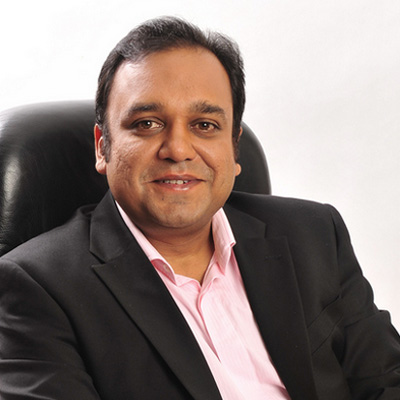
    Asked to “get off the fence” and “get in the game” as head of Zeel in 2008,Goenka has proved that he definitely is his father’s son. He ended the rivalry with Murdoch and formed a distribution joint venture company in 2011 to correct revenue leakages and lift subscription revenues. He has identified growth areas in regional, international and new media. His target: to reach a billion viewers internationally in three years.

    Punit (as he is called by his colleagues in the Zee group) is hungry to grow his charge; whether it is sports broadcasting, entertainment, overseas or in niche genres. In a tete a tete with Indiantelevision.com’s Sibabrata Das, he speaks pretty forthcomingly about the road ahead.

    Excerpts:

    Q. When did you first realise that your father was building a media powerhouse in India and that you would be part of this momentous history of television broadcasting?
    For over 12 years, he was practically handling the business by himself. He was running around, surmounting all hurdles, and being a pioneer in all ways to spearhead private satellite television in India. I never thought I would run this kind of organisation. But when he told me to get into it, I quickly became a part of the Zee culture and liked it.

    Q. Now when you look back, do you see any lost opportunities amid this explosive growth of the company?
    The company has grown so rapidly in such a short span of time that it completely overshadows everything else. Zee started in 1992 from a single channel network and two hours of original programming – and look at where it is today! In fact, the first ten years were maddening growth. We have grown to 31 channels spread across genres, languages and geographies. Our international business is also very healthy. And today Zee (read Zee Entertainment Enterprises Ltd) is one of the top ranked Ebitda delivered companies in the media sector.

    Q. What did you feel when the joint venture with Rupert Murdoch collapsed and your father bought out New Corp‘s stakes in Asia Today, Patco and Siticable?
    The split was bound to happen. Murdoch violated the JV agreement and began to show Hindi content. The pact prescribed Star to focus only on non-Indian language programming. When Zee bought out the JV companies, it was a proud moment for all of us.

    Q. You broke this 12-year divorce three years after you took charge as CEO of Zeel and inked a JV agreement for the distribution business. What made you overcome the past enmity?
    We formed Media Pro Enterprise to correct the faulty distribution structures of the analogue cable TV business. It took us almost a year to finalise the agreement. The purpose is to fix the problems of the industry. There are revenue leakages in the distribution business and broadcasters get a small share of the subscription income collected by the cable networks.

    The media industry has matured and we are living in a period of history when there is need to both compete and co-operate. That is what Star and Zee are doing in India. And it has been beneficial for all the partners. Zee and Star were growing their subscription incomes from domestic cable by 6-7 per cent when they were handling the distribution of their bouquet of channels independently. But both the companies are seeing 15 per cent growth from cable subscription income in the first year of operations of Media Pro itself. We are happy with the way Media Pro is shaping up.


    ‘The industry can’t survive on ARPUs of Rs 180. Broadcasters have heavily subsidised the content cost to support the DTH companies to grow. A similar trend is happening in digital cable‘


    Q. Media Pro is currently distributing 75 channels and more launches are planned by the JV partners. Won‘t this be too heavy a load and the logic of a distribution JV become irrelevant in a completely digitised television carriage-services environment? Are we completely different from the rest of the world where broadcast companies manage their carriage agreements independently?There is no reason why we can‘t work independently in India as well. In a transparent environment, there may not be a need. In any case, the JV agreement is only for five years. We will weigh the market conditions then and take a call after that.

    But having said that, Media Pro has been set up not to just take care of revenue leakages. There are other challenges in the distribution side of the business. The industry can‘t survive on ARPUs (average revenue per user) of Rs 180. Broadcasters have heavily subsidised the content cost to support the direct-to-home (DTH) companies and allow them to grow. A similar trend is happening in digital cable. But content is worth much more and we will have to lift ARPUs.

    Q. Zeel gets subscription income of Rs 4.58 billion from content supply to 20 million paying DTH customers while domestic income from analogue cable is Rs 4.14 billion. What is the potential revenue growth from cable after the networks are digitised?
    We expect healthy growth in subscription income over the next few years. As the cable TV subscriber universe becomes transparent, the paying subscribers will automatically become much more than DTH. Zee will be able to monetise its digital cable subscribers and the revenue gains will be significant. ARPUs will also have to go up.

    Q. Since you have taken charge of Zee‘s broadcasting business, what are the future growth engines that you have identified amid new challenges of digitisation, audience fragmentation and competition from multinationals and big Indian corporates who are tiptoeing into the media business?
    We have identified three-tier strategies for our growth. On the domestic front, regional will drive growth for us. We will participate in fragmenting the regional markets. Our launch of a Bengali movie channel, Zee Bangla Cinema, is part of this game plan. We are working on other genres and in other languages.

    On the international front, we plan to expand our reach from 650 million viewers to 1 billion viewers within three years. We will not just restrict our focus on South Asian audiences; we will have to address local audiences in those geographies as well.

    We have identified Middle East as a key market for us and intend to invest between Rs 1 billion and Rs 2 billion over the next two years. We have just launched our second Arabic channel, Zee Alwan. This will complement Zee Aflam, our first Arabic channel that shows Bollywood movies dubbed in Arabic. We plan to invest $100 million in that market.

    Q. What made Zee so bullish about the Middle East market?
    We had success with Zee Aflam which is a profitable channel. We are also look aggressively at growing in Russia (digitisation by 2014 in that market) and Africa. Russian audiences love Bollywood and our drama content. Besides, we are doing extensive research for the Indonesian and Malaysian markets where we are growing in single digits.

    Q. Is new media a big growth piece for you?
    Yes, this forms the third pillar of our future growth strategy. We have launched our over-the-top (OTT) television distribution platform, Ditto TV, in India and plan to take it to the rest of the world next year. We also have India.com and will continue to offer content across leading genres. With these content formats and advanced distribution avenues, we intend to target new audience segments. I cannot give you a number (in terms of investments or revenues), but we are committed to see that these businesses become successful.


    ‘On the domestic front, regional will drive growth for us. Internationally, we plan to expand our reach from 650 mn to 1 bn viewers in 3 years.New media forms the third pillar of our future growth strategy‘

     
    Q. Digitisation will throw open a lot of growth opportunities. Will we see a more aggressive Zee launching new genre channels and addressing new geographies as distribution costs fall?
    We are getting into the kids TV segment and will be launching Zee Q. The content will aim at ‘learning through fun and entertainment.‘ In the past year, we have already launched six channels.

    But only the four metros will have digital cable. The real action will start in the second phase of digitisation when we go to the smaller towns. We have not studied the potential yet. We will have to wait for knowing the impact after the first phase of digitisation rollout. And then possibly you will see a flurry of channel launches.

    We will also have to keep in mind what we are launching and whether it is going to cannibalise on our Hindi product. And let us not forget that there may be free-to-air (FTA) opportunities in the broadcasting space as well.

    Q. Zeel is sitting on a cash pile of Rs 11 billion. Will you acquire channels to grow in a digital environment?
    We are looking at acquisition opportunities if they come at the right price and make business sense for us. But we are also aware that it is cheaper to build.

    Q. Zee has always been conscious of its costs and its Ebitda margins from non sports business is around 34 per cent and is higher than Star‘s. But with plans to increase original content hours on flagship Hindi GEC Zee TV and more channel launches in the pipeline, will Ebitda margins fall?
    There should be some fall. Even in this fiscal, we are increasing our original content from 24.5 hours to 32-34 hours. This in itself will amount to a rise in content cost by 14-15 per cent. Our revenue in the first quarter of this fiscal has also seen strong growth.

    Q. Zee has already renewed the South Africa and Zimbabwe cricket boards at around 10 per cent inflation cost. But Star has bought out Disney‘s stake in ESPN Star Sports and Sony, deprived of the BCCI rights, will be hungry for acquiring cricket rights. There is also the threat of ESPN entering the marketplace after the two-year non compete contract with Star is over. So will we see Zee bid aggressively to renew the rights for the three boards that are going to come up?
    We are in active negotiations with two boards. But we will be aggressive up to a reasonable level. We realise that sports is a strategic business for us. It gives us dedicated youth and male audiences and adds to our viewership base.

    Q. Will forex fluctuations affect the earlier target of the sports business turning around in FY‘14?
    Yes it could, as most of our sports content is contracted in dollars. But we expect our sports business to come out of the negative zone. We also realise at the same time that sports broadcasting across the world is a low Ebitda margin business.

    Q. Is Zee News Ltd planning to launch an English-language general news channel?
    At ZNL, we are working on our English language strategy. We believe the news channel business will go through a phase of consolidation.

  • Sportscasters disappointed with hockey loss, brand endorses see opportunity from Olympic wins

    MUMBAI: With India winning six medals at the recently concluded Olympic Games in London, the question is what impact will it have on viewership of those sports. Industry experts feel that it will depend on the visibility of those sports as well as if they are TV friendly in the first place.

    On the brand endorsement front, there is a mixed reward system going to emerge depending on the visibility and personality of the sports persons.

    Sports Broadcasting

    Zeel CEO Sports Business Atul Pande says that shooting in which India won two medals is not a television friendly sport.

    “Badminton could see some viewership growth with Saina Nehwal. However viewership thus far for it has been low. Some sports are TV friendly. Other sports are not as visually appealing as like tennis.”

    In terms of boxing, he doesn‘t think that the sport will get a viewership push unless an Indian league for it comes up like the IPL in cricket. For this to happen though, the stakeholders have to adopt the right business model.

    “Wrestling is more of a rural sport. It has bigger appeal in the smaller towns, so I am not sure if it will get viewership across the country,” avers Pande.

    Calling the performance of the Indian hockey team abominable, he feels that in the short term the sport will take a hit in terms of viewership. “We even lost to weak teams like Belgium. I don‘t know what the long term impact will be but in the short term there will be an impact. So local leagues could be affected.”

    Nimbus Sport COO Yannick Colaco says interest in medal winning sports has to be converted to a fan following which needs product and a marketing push from the respective federations.

    “In sports like wrestling, there is no product. Also showing the product in television is one part of the business. You need to get viewers to come in by having a marketing plan. That is what our focus has rested on in World Series hockey apart from just having the product,” he quips.

    Neo Sports broadcast COO Prasana Krishnan says that product shortfall is an issue. “Are there international events in boxing, shooting, wrestling that feature Indians regularly that can be shown? You need a product that airs for eight months a year. Then a broadcaster can build it up. That is what we have been doing with badminton for the past five years. Badminton has seen a slow and steady growth which will continue. But Saina winning a medal will not suddenly make a dramatic difference to viewership. In these sports there are not dramatic success stories. It is not like cricket which is more evolved.”

    Multi Screen Media (MSM) president network sales, licensing and telephony Rohit Gupta says that India‘s performance in international events will determine if sports that India won medals in will show viewership growth. “It is too early to say what the impact will be. An Olympics event that happens once in four years is not enough to judge a sports popularity. For Six whether or not we take properties in these sports will depend on what is available and at what price.”

    GroupM ESP managing partner Hiren Pandit feels that the lack of visibility of Olympic sport will hurt their growth in the long run. “When was the last time you saw an event in shooting and wrestling apart from the Olympics? There needs to be more of a push given to these sports by sports broadcasters and also by news channels. The noise level has to be increased. Otherwise it will just be a once in four years phenomena.”

    If more events in shooting were to happen and be covered and India were to perform, viewership will be there but it may not be very high. As regards hockey, he says that while an event like World Series Hockey (WSH) has brought in value, the quality of play by Indians will determine interest. He too sees an increase in viewership for badminton but it will be a slow buildup.

    Brand Endorsement

    According to Pandit, the issue of visibility applies to the brand endorsement field as well. “After winning the Gold medal four years ago there was some hype created for Abhinav Bindra and then he disappeared. You need to stay in the limelight over a period of time for brands to approach you. This is why cricketers and film stars fare well. It is about being in the public eye.”

    Pandit feels that wrestlers will get associated with rural brands due to the profile of that sport. “But it is unlikely that any top end brand will form that association. With Mary Kom, I am not sure about the brand fit. What is it that she stands for? What are her attributes? There has to be a brand fit. The brand endorsement business is not one dimensional,” he says.

    He is optimistic about the brand endorsement prospects of Saina Nehwal who is more visible. “Saina will benefit as she is well covered in the media also. Badminton events happen more frequently. At the end of the day people have to know the sportsperson. That sportsperson‘s brand attributes have to built and be consistent over time”.

    Kwan COO Indranil Das Blah feels that the viewership impact for shooting and wrestling will be negligible. “That is because international events do not air. Also no big events take place in India. Badminton will benefit. It is on an upswing after Saina Nehwal appeared. Boxing is a contact sport. It is quick and fun to watch. So there could be a positive viewer impact here. Boxing and badminton have a firmer base compared to the other two sports.”

    In terms of brand endorsements, he sees Nehwal as benefitting the most. “Her price was Rs 10 million earlier. It will go up but it will not be a huge increase. She has five to six brands and I expect her to get two more deals within a month. Brands that are youth and women centric are looking at her. The key though is that these athletes should not get too greedy. That was a lesson learnt from the previous games. Athletes should focus on the long term when doing deals and build visibility over time rather than just focussing on money in the short term. They should focus on PR and image building. I see the shooters getting limited deals. It might come down to appearances over the next couple of months and that might be it unless they find a way to sustain visibility.”

    For Mary Kom, he notes that her win comes towards the end of her career which will affect the deals she gets. “Brands prefer youth. If the win had happened four years back, it would have been better. Having said that, companies who are targetting women and the East part of the country are interested. She will get two to three deals in the short term possibly in the form of appearances. Long term though, the prospects are limited as she does not have another Olympics appearance in her.”

    Blah believes Sushil Kumar is an interesting case as he is the only person to have won two individual Olympic medals. “He will do well. Also he will take part in the Olympics again. However, the other winner Vijay Kumar is not well known. He also doesn‘t speak well and you need to have personality to succeed in the brand endorsement game. Besides, he is the army and there are restrictions. So I don‘t see him getting any deals”. He feels that Kom and Sushil Kumar will get deals in the region of Rs 4 million.

    As regards hockey, he feels that the national pride and emotional connect has been eroded. “This will have a big impact on viewership. People are pissed off at the sport. I don‘t see hockey players getting brand endorsements for the next three years. There has also been negativity surrounding the sport with the politics. I wouldn‘t advise clients to touch the sport with a bargepole.”

    Alchemist Talent Solutions MD Manish Porwal sees the sportspersons as getting short term deals resulting from tactical opportunities in the coming 15-30 days. The exception to this is Saina Nehwal who would have gotten deals irrespective of what happened in the Olympics.

    “The sportspersons won‘t get deals that last for four years till the next Olympics. An aberration may happen like Bindra who got a lucrative deal with Samsung in 2008. Companies however will mostly use sportspersons for tactical opportunities. For instance if a campaign script demands a strong woman, then they might use Mary Kom. It is not that a company will sign her up and then look to create a script.”

    He adds that an endorsement bottleneck is created for the sportspersons who have excelled in non-spectator sports like shooting. “That is because people know the name but they do not know the face. If a company uses all six medal winners in a campaign, then that is a different issue. I would call the money that the sportspersons get as a moral fee rather than an endorsement fee in the true sense. A cricketer or a film star has a reach of lakhs if not crores of people. Boxing, on the other hand, may see a few more thousand people viewing it as a result of Mary Kom‘s medal but that is not going to get reflected in the ratings.”

    He also says that sportspersons who excel in non spectator sports become bigger than the sport itself.

  • Mahuaa TV ups Harsha V Dwivedi as head – national sales

    MUMBAI: Mahuaa Network Channels is elevating Harsha Vardhan Dwivedi to the position of national sales head.

    Dwivedi currently serves at the broadcasting company as regional head – North.

    Sources close to the development have confirmed the development to Indiantelevision.com.

    Prior to joining Mahuaa Network in March 2009, Dwivedi was with Zee Entertainment Enterprises (Zeel), serving as manager for over two years. He has also worked with Zee News and Sahara Samay.

  • Ten Sports sells 60% of ad inventory for India-Sri Lanka series, lines up sponsors

    MUMBAI: Zee Entertainment Enterprises Ltd (Zeel) has lined up three on-air sponsors for the India versus Sri Lanka series that kicks off on 21 July on Ten Cricket. The series will feature five ODIs and one Twenty20 match.

    Hero MotoCorp has come on board as co-presenting sponsor. The broadcaster is in talks with at least three advertisers for the second co-presenting sponsorship slot.

    Ten has signed up Royal Seagram and Lenovo as associate sponsors and is in advanced stage negotiations with Max New York life and Manipal University. Brands like Merck Pharma, Sony Vaio and Titan have also bought air-time.

    The channel has sold 60 per cent of its ad inventory. “We aim to sell 90 per cent before the tournament kicks off and the balance 10 per cent will be sold at a premium,” says Zee chief sales officer Ashish Sehgal.

    Kent RO is the title sponsor of the wraparound show, ‘Straight Drive‘. Luminous has taken Hawkeye sponsorship while Ambuja Cement is the Action Replay sponsor. “We are looking at four more associate sponsors for Straight Drive,” avers Sehgal.

    Indiantelevision.com had earlier reported that the company was looking at raking in Rs 900 million from the series, a target that media buyers had stated was too high. Micromax is the title sponsor while Royal Stag Cricket Gear is the on-ground associate sponsor.

    While not talking about revenue expectations, Sehgal notes that the series will generate interest as India has not played cricket for two months. “We are looking at a total of six on-ground sponsors,” he adds.

    The broadcaster will kick-off its 360 degree campaign with the theme of ‘One India One Jersey‘ starting 1 July. The aim is to convey the message that the team plays as one with one jersey.

    The idea, Sehgal says, came about as this is the first event after the IPL where players wore jerseys of different teams.

  • Slowdown to impact outdoor advertising

    Slowdown to impact outdoor advertising

    MUMBAI: The looming slowdown in the Indian advertising industry will badly hit the outdoor medium, according to media agencies who are revising their forecasts for this year.

    Zenith Optimedia CEO Satayajit Sen ranks it as the third most impacted, after print and radio. “We were expecting the outdoor  space to grow at 5-10 per cent this year. But it will now post low single-digit growth. All peripheral mediums like outdoor will experience ad budget cut,” he says.

    Lodestar UM COO Nandini Dias feels that outdoor and print will be the most affected ad mediums. “A number of sectors like retail, finance, and banking have pulled back advertising. Since outdoor and print have a higher CPT (cost per thousand) than TV or radio, they will be more affected. Even during the last pull back, cost effective mediums like TV were the least affected,” she says.

    From the advertisers’ point of view also, the availability of other “cost effective” options with “better metrics for measuring effectiveness” may affect the growth in outdoor.

    Broadcasters, who are one of the major spenders on outdoor advertising, are less bullish on splurging in hoardings than they were in earlier years. Zee Entertainment Enterprises Ltd. (Zeel) is reducing its ad spend on outdoor while increasing its exposure on digital.

    Says Zeel marketing head – national channels Akash Chawla, “If you see outdoor and billboards, it is involved in the marketing mix but that component has been going down for us since the last 3-4 years on a constant basis.”

    In 2008, Zeel’s ad spend on outdoor was around 40-45 per cent of the entire marketing spend, which has fallen down to 28-31 per cent now.

    “On an increasing ad budget, billboard advertising as a component has decreased. We look at hoardings from show to show perspective. In totality, ad spend on OOH is coming down. Reason being that there are lots of other options of advertising available and the metrics evaluation in the other mediums is far better. When you talk about the geographical coverage, the entire thing in outdoor is to get into smaller towns but issues like difference in printing and creative not being put up on time happen. On digital our ads spend has grown to 10 per cent from 2 per cent in 2008. How many people log on, cost per contact and pay per click help monitor the medium and get a better ROI. When it’s about BTL (below the line), we tend to do an aggressive job and that continues,” says Chawla.

    UTV Broadcasting, which spends almost 20 per cent of its marketing amount on outdoors, will keep the budget at the same level.

    Says UTV Broadcasting head marketing Kunal Mukherjee, “For us, it is a pretty much constant space. Outdoor is a good medium to be continuously present in smaller towns.”

    Sony Entertainment Television (Set) spends around 15 per cent of its overall marketing budget in outdoor and will keep it that way.

    However, outdoor ad agencies feel that the slowdown will not be as much impacted as the other mediums.

    Milestone Brandcom founder and managing director Nabendu Bhattacharyya admits that it is not a very good year for the industry. “The industry as a whole is suffering and not only the hoardings. Though Telecom does not spend like it used to earlier, it is still the highest spender on hoardings followed by BFSI and then M&E. Automotive industry is also very active and luxury cars have been utilising hoardings as a medium in a big way. In smaller markets, the major spenders are gems and jewellery, lifestyle and real estate. I see FMCG spending a lot more.”

    However, he hints that the need of the hour is a 15-20 per cent discounted rate. “With a 15-20 per cent discount, it (hoardings) will be preferred over other mediums. Because the demand and supply chain will change, the clients will look at it more because it has become cheaper. Hence, outdoor will be least impacted.”

    According to Posterscope MD Haresh Nayak, hoardings as a percentage to OOH‘s total revenues have fallen over the years from 80 per cent to around 50 per cent. “The demand for activation continues. Clients have been looking at malls and multiplexes activations in a big way,” he says.

    Nayak estimates the outdoor industry to grow by 10-15 per cent this year compared to 18 per cent a year ago.”It is a very localised medium. It is easy to adapt and so it gets least impacted,” says Nayak.

    Also Read:
    Ad Slowdown Looms
    Signals are for a mild ad slowdown: Mindshare‘s Lala

  • Zeel designates Ashish Sehgal as chief sales officer

    MUMBAI: Zee Entertainment Enterprises Ltd (Zeel) has re-designated its head – network sales Ashish Sehgal as chief sales officer.

    Indiantelevision had reported in November last year that Sehgal was promoted as head of network sales following the exit of Joy Chakraborthy.

    Sehgal will continue to report in to Zeel president Rajesh Jejurikar.

    The announcement was made by Jejurikar in an internal mail.

    Sehgal had joined Zeel in 2006 as AVP and was looking after the northern region and subsequently was promoted to EVP sales. Prior to Zeel, Sehgal was at Star India, serving as All India Sales Head of Star Gold.

    Also Read:

    Zeel promotes Ashish Sehgal to sales head

  • ‘We will keep aside Rs 10 bn for organic or inorganic growth opportunities’ : Zeel MD and CEO Punit Goenka

    ‘We will keep aside Rs 10 bn for organic or inorganic growth opportunities’ : Zeel MD and CEO Punit Goenka

    Punit Goenka is in control of the media empire that patriarch Subhash Chandra built assiduously over almost two decades. He is quick to take decisions, is unruffled by temporary ups and downs, and believes in continuity.


    The elder son of Chandra digs deep into the Zee culture, has his own ways of finding solutions and does not hesitate to bet on sports as he takes up the responsibility of shaping Zee‘s broadcasting business.


    “I have learnt a lot from my dad. He is no more hands-on. See, he has not called me for over an hour (during the interview). I have my own style,” says Goenka, a grin on his face.


    Soft-spoken and shy, Goenka is a people‘s man. He backs his senior team, even when certain decisions do not work in the short run.


    In an environment of raunchy reality TV shows, he believes in clean content and explains that Zee TV, the flagship channel, is designed for family viewing.


    Goenka crafts strategies that focus on profitability; he hardly plays to the gallery.


    Under his leadership, Zee ended its 12-year-old rivalry with Star to float a joint venture distribution company named Media Pro Enterprise India. The aim of the JV: to pave the path for consolidation and hasten the need for digitisation in the sector.


    In an interview with Indiantelevision.com‘s Sibabrata Das, Zee Entertainment Enterprises Ltd managing director and CEO Goenka talks about the lack of opportunity in the marketplace to make the right purchase, the need to bet on sports broadcasting and to stick to profitability in a high-cost environment.


    Excerpts:

    Zeel is sitting on a cash pile of Rs 14 billion (as of 30 June 2011). Are you looking at acquisition opportunities?
    There is nothing that is available today that is fitting our criteria; we see no opportunity in the marketplace for us to make the right purchase. Even in the southern states, we are taking the organic route and patiently building our businesses there.


    As a company philosophy, we have decided to keep aside a cash of Rs 10 billion at any stage for organic or inorganic growth opportunities.

    But isn‘t this the right time for consolidation in the industry?
    Every two years we think the time has arrived for the industry to consolidate. But then something happens and there are more launches. Last time, it was the private equity firms; before that, we had the international strategic investors.


    However, for the benefit of the industry, consolidation is the answer. The sector is sized at Rs 300 billion and there are 500 television channels in the country earning an average ARPU (average revenue per user) of $3. That is why we have become an unprofitable industry.

    In a drive to consolidate and digitise the industry, Star India and Zee Group recently ended their 12-year divorce to create a distribution company. Has the joint venture been able to shake up the pay-TV market?
    It has been three months since the merged entity got formally rolling (on 1 July). Although we have started billing as a joint entity, there are old individual contracts that have yet to run their full cycle. We have over 5000 contracts with cable TV networks individually. So the impact will be felt when we start inking new contracts. There will be no major revenue upside in the short run. The deal will have a deeper impact after 18 months of implementation.

    How deep in terms of percentage growth?
    Both Star India and Zeel are seeing single-digit growth in subscription revenue from cable TV networks. Our domestic subscription income from cable rose 16 per cent (Rs 3.88 billion) in FY’11, but that included sports. By pooling together the resources of both the partners, we hope to post strong growth and address various anomalies of the analogue market including piracy.


    A large part of the deal plays out in analogue cable. In case of DTH, both of us are in any case growing independently.

    Given our growth trajectory and contracts, the sports business should break-even in two years. In the worst case scenario, we should be able to turn it around by the middle of FY‘14‘

    How painful has been the integration process?
    We have had to let go 20-25 per cent of the combined workforce. Some of them, however, have been absorbed inside the network.

    Media analysts say Zeel’s share price will get a boost if the sports broadcasting business is hived off and capital raised by offloading equity. Has any investment bank got the mandate to hunt for an investor for the sports business?
    We have no capital-raising plans. Zeel will continue to fund the sports business till it turns around. We have taken a long term call and sports broadcasting is a strategic business for us.

    When do you expect the sports business to turn around?
    Given our growth trajectory and contracts, the sports business should break-even in two years. In the worst case scenario, we should be able to turn it around by the middle of FY’14.

    Zeel‘s sports losses for FY‘11 stood at Rs 2.08 billion on a revenue of Rs 4.4 billion (excluding a one-time revenue gain of Rs 700 million as one-time fee for the pre-mature termination of rights for AIFF). So what will drive this to profitability?
    Subscription revenue will drive the business to profitability while advertising will be event-led.


    Ad revenue is heavily dependent on cricket. And within that segment, it is India cricket. While advertising revenue is cyclical, subscription income is consistent throughout the year.

    Zeel has bagged the eight-year Cricket South Africa (CSA) television rights for $180 million. Considering that the earlier five-year rights went for $75 million, isn’t the new price tag on the higher side?
    The price is in our comfort zone. It is an inflationary rise and has been one of the most valuable boards for us. By having one of the strategic boards under our belt for a longer term, we are under less pressure.

    We get to learn from sources that the Zimbabwe board rights have been retained for $20 million (earlier it had gone for $6 million for four years). But Zeel will be able to give its sports business maximum firepower when it is able to retain the telecast rights for the other three boards – Sri Lanka, Pakistan and West Indies. So will you bid aggressively?
    We have not yet signed with the Zimbabwe board, so I can’t comment on that. The other three boards are up for renewal during FY’12 and FY’13. We have done our calculations and will not bid recklessly for these rights. There are boards outside these which are also coming up for grabs.

    When is the golf channel getting launched ?
    We are awaiting government approval. We are ready to launch the golf channel within 60 days of obtaining the regulatory clearances.

    Will Comcast be a partner for the channel?
    Earlier Taj Television (which Zeel later acquired) had some sort of an agreement with Comcast for the golf channel. We have decided that we will do it ourselves and completely own it.

    When are you launching a full-fledged HD channel in sports?
    We are launching Ten Sports in HD format later this month. This will be a full-fledged HD channel and will have varied content from the other channels. So we will have four sports channels (Ten Cricket, Ten Action+ and Ten Sports already exist) by this month-end. We have acquired a slew of properties across different sports such as football and tennis. This has enabled us to launch three different channels and post strong subscription growth.

    Are there other HD launches planned?
    Zee TV, Zee Cinema and Zee Studio will be launched in HD format soon.

    Zeel has posted a measly 0.5 per cent ad growth in the fiscal first-quarter. Do you see the market improving?
    On the ad front, we have had a flat first quarter and do not expect to post double-digit growth this fiscal. But we will have a high single-digit growth.


    Subscription revenues will continue to have a similar growth trajectory, both on analogue cable and DTH. Our international revenues should stay flat.

    International subscription income actually de-grew two per cent in FY’11. Do you have any plans to fix the international business?
    The problem is with UK and Europe; the wobbly economy there is affecting our subscriber numbers. We have launched a hybrid channel, Zee Café, in the UK to arrest our degrowth in that market. The content, aimed at the South Asian diaspora, includes cricket and regional fiction shows sub-titled in English.


    In the other markets like the US, We are seeing growth.

    Is your localisation strategy working?
    Zee Aflam has seen reasonable growth and has reached break-even status within three years of operations. But operating in free-to-air markets (FTA) means the channel can grow only at limited speed.


    The other experiment we have carried out is in Russia. The audiences there love Bollywood, soaps and dramas. However, it is early days yet.


    We are also planning to launch in 3-4 other markets.

    Zee TV has slipped to fourth position as Sony Entertainment Television rejuvenated on the back of its big-ticket game show Kaun Banega Crorepati (KBC). Will you change the programming strategy and bring in celebrity-backed reality shows?
    There has been a streak of bad launches but it has not convinced us enough to believe that we need to change our content strategy. We are relaunching these slots.


    A large part of a particular channel‘s growth still comes from one show. A reality show may bring in spikes but we will wait to see what happens after that concludes. We will not take to celebrity-based reality shows unless we feel that we have a concept that needs to engage them. We are happy with our homegrown formats.


    Our prime competitor is Star. And as a network, we are in close competition.

    We will be increasing original hours of content on Zee TV from 28 hours to 33 hours per week. There has been some delay in that because we have had a few bad launches and we want to first fix those slots. We have also had a slowdown in the ad market

    Will you increase the programming hours of Zee TV as you fight back to regain market share?
    We will be increasing our original hours of content from 28 to 33 hours per week. There has been some delay in that because we have had a few bad launches and we want to first fix those slots. We have also had a slowdown in the advertising market.

    Zee has kept away from purchasing big movie titles. Will that affect Zee Cinema when Viacom18 launches its movie channel?
    With movie acquisition costs touching the roof, we have reduced the number of big title purchases. But we have maintained our 30 per cent share in the genre due to the extensive reach the channel enjoys; we have also wisely worked on our library content. We control 2800 movies.


    Big titles give rating spikes but they are first run on GECs rather than on movie channels. The Hindi movie channel genre has become cluttered and unprofitable due to high acquisition costs. But we have stayed profitable.

    Star Gold has reduced ad inventory on the channel by 33 per cent and is showing six fresh movies a day. Will you follow suit?
    Such a move has to be compensated with an increase in ad rates. In the current market scenario, this may not be easy. But we are working on reducing the ad time on the channel. And don’t forget that Zee Cinema was the first channel to show five fresh movies a day.
    Sun TV is under attack from the Jayalalithaa government. With the launch of the state-owned Arasu cable, will you make aggressive investments in the Tamil Nadu market?
    With Zee Tamizh, we have a foot in that market. Arasu has got presence in some pockets of the state. It is still early days and we have to wait and see how the market gets impacted. But if we get more distribution, we will get more aggressive.

    Isn’t Zee under attack from Star in the Bengali and Marathi regional language markets?
    The growth of Star has only expanded the market. In the southern region, we have fortified our position in Telugu and Kannada. Going beyond the Marathi and Bengali and the southern belt, there is no distinct language difference and Hindi still rules. Bhojpuri, for instance, has not met with much success yet. The Punjabi market can see growth once TAM (the television ratings agency) starts reporting Punjab as an independent market. Now it is clubbed with Haryana, Chandigarh and Himachal Pradesh; there is no clear weightage in that market.


    Regional news, on the other hand, is easily doable.

    Isn’t the news genre too cluttered?
    The industry can support 6-7 national channels. With so much of fragmentation, the way forward is serious news.


    There should be more stringent norms in this genre as entertainment is also passing as news. We have positioned ourselves as a serious news channel and are seeing decent growth. Unlike other players, we also have a strong pay revenue from our news business.


    It is the regional markets that are getting cluttered. The Andhra market, for instance, has seen too many launches. Some national news broadcasters are also having issue over cost structures.

    Will you launch an English general news and business news channel or you feel the balance sheet of Zee News Ltd has to further strengthen before you go in for these high-cost launches?
    The balance sheet can support these launches. But strategically, we will focus on Hindi and regional news channels. Yes, we have two critical genres left. But we will first fill up the regional space.
    Are you looking at expanding through the franchise route?
    We will take the franchise route only if editorial content is with us. After all, that is what impacts our brand.
    When you started, you were part of the Agrani satellite project. Do you still nurture the ambition of owning a satellite?
    Agrani was a good project but the policies were not supportive. Banks also had no clue how satellite funding works. Owning a satellite doesn’t make sense now; it is more feasible to lease transponder space on a satellite.