Tag: Zee5

  • OTT platforms go beyond entertainment to score consumers

    OTT platforms go beyond entertainment to score consumers

    KOLKATA: Over-the-top (OTT) platforms have come a long way in the country now. Around 2015, these services were mere apps to catch up on favourite television shows and stream live sporting events. Cut to 2020 and the discussion has evolved to whether OTT is a threat to TV. After a transition from catch-up content to premium originals, homegrown OTT platforms are now heading in the direction of being a one-stop shop. 

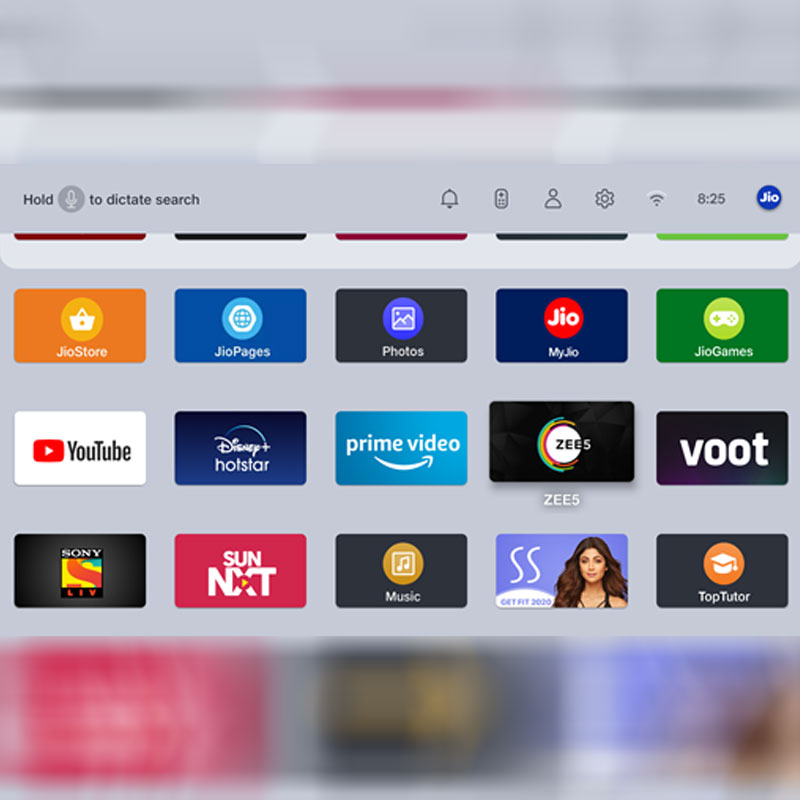
    In the last few months, many OTT platforms have enhanced their content catalogue, delving into segments like education and gaming. At the beginning of the year, ZEE5 announced a partnership with Eduauraa. Later, more players like VOOT also took the ed-tech road especially during lockdown thanks to the online learning boom. 

    While streaming services were already bullish about ed-tech and gaming, the lockdown period pushed them into health and fitness content, accelerating the next transition of those players. Disney+ Hotstar forged partnerships with Brilliant Wellness, Cult.Fit and Sarva recently. Another player VOOT also partnered with Cult.Fit and Isha Foundation. 

    KPMG India media and entertainment partner and head Girish Menon says that most of the OTT players were already looking at this strategy but the post-Covid2019 change has accelerated it. 

    “Consumers have been engaging with OTT platforms in a significant manner rather than certain hours. The idea is to increase the number of hours on the app, reduce video churn and increase retention,”  Deloitte India partner Jehil Thakkar says.

    “For us, constantly enhancing and improving our catalogue is important so that our existing and new consumers constantly keep seeing something new and different on the platform,” Viacom18 AVoD business head Akash Banerji says.

    Banerji adds that merely enhancing the catalogue is of no value unless it is also relevant to customers and can drive higher engagement. Moreover, forging partnerships with premium partners is also an important aspect. “We wanted to give something more,” he sums up.

    "For any platform, offering good content is more important rather than focusing only on entertainment. The content can educate , inform, entertain consumers. While OTT space has been largely focusing on entertainment, we have to offer more to get consumers back on the platform. Everything a person can do online, we want him to do it on ZEE5," ZEE5 SVoD senior vice president and business head Rahul Maroli says.

    He also mentions that when they talk to B2B partners, the latter will partner with an entity where their customer will get entertainment, infotainment, education at the same place. Moreover, as consumer tastes evolve they start moving around new content and that leads to a stronger brand affinity.

    While both Banerji and Maroli said they want to “offer more”, they also want to get more consumers. 

    “They are definitely looking to build an offering which is more comprehensive than pure-play content. The idea is that if you have a consumer who is coming to your app for entertainment, are there other services you can provide to them which will ensure that he continues to spend time and builds on that,” KPMG’s Menon adds. According to him, these deals make sense as an extension of offering rather than starting a separate segment.

    While its an offering about consumption right now, commerce around core offering and other deals can also become the norm.  

  • ZEE5 offers its premium subscription to JioFiber users

    ZEE5 offers its premium subscription to JioFiber users

    MUMBAI: While the world is still battling the effects of the pandemic and the resulting shutdowns and restrictions, ZEE5 has risen to the occasion to keep all those at home constantly entertained. With constant innovations and upgrades, the Super-App has been ceaselessly leading digital transformations to create a wholesome entertainment ecosystem that caters to each segment of their diverse audience.

    Furthering these efforts, ZEE5 now offers its premium subscription to JioFiber users. This complimentary subscription to ZEE5’s premium content is available to new as well as existing JioFiber users on Silver plan and above.

    The association offers JioFiber users unlimited entertainment through complimentary access to ZEE5’s library of 4500+ movies and 120+ originals for eligible customers. With continuous content additions across 12 languages, JioFiber’s users can look forward to an exciting library of content that is ready to keep them company 24/7. With ZEE5’s addition, Jio further strengthens its entertainment offering for its JioFiber customers.

    Speaking on this collaboration, ZEE5 India business development and commercial head Manpreet Bumrah stated, “As India’s Entertainment Super-App, ZEE5’s focus has always been on delivering the best of entertainment to every segment of our diverse audiences through custom plans. This association is in line with our vision to further consolidate our presence across the country by leveraging the synergies between the two iconic consumer brands. And this step will benefit the users of Jio and ZEE5 by bringing the convenience of streaming a choice of content, be it shows, originals or popular movies. With the lockdown, we have witnessed a significant uptick in subscriptions and streaming on our platform and this integration will help us keep JioFiber customers engaged and entertained, across spectrum of devices.”

  • Constant communication with consumers is Rahul Maroli’s mantra to grow ZEE5’s subscription

    Constant communication with consumers is Rahul Maroli’s mantra to grow ZEE5’s subscription

    KOLKATA: Streaming services have found more relevance in the post-Covid2019 period. ZEE5, one of the leading contenders in the ‘streaming war’, has brought a new head to build its subscription business when more consumers flocking to those services. ZEE5 senior vice president and business head Rahul Maroli aspires to touch the top both in terms of subscription and viewership.

    “We want to be relevant to every Indian. Content has to resonate with every Indian. An extension of that became the Atrangi campaign where we are trying to say that every person is unique, that’s what this country is all about and we respect your uniqueness. In terms of our specific goal, we want to be the largest OTT platform in the country both in subscription and viewership,” Maroli says in an interaction with Indiantelevision.com.

    Maroli comes with a rich experience but not within the media industry. He worked in automotive, mobility, e-commerce and consumer businesses earlier while his last assignment was with Ola. Asked about what learnings he wants to incorporate here, Maroli says that he has mostly looked after the consumer business in Ola, so the ethos remains same. 

    “As long as you understand who your consumers are and how are they reacting, what is it they like, what is it you don’t like, you keep constantly going back and talking to them and trying to understand, then your ability to communicate with them, to produce good services is absolutely the same,” he adds. 

    The reports and high-level data are not sufficient but the teams have to keep talking to the consumer. Talking about his other lesson, he said that working very closely with the team is very important. Hence, he would try to apply these lessons in his new role.

    He adds that partnership is a very important foundation of their business. “Telcos are looking at OTTs as means of building consumer loyalty. We want to go deeper into that and build more relationships. We clearly see that where you have provided access to OTT platforms there is much more consumer loyalty,” he shares. 

    Maroli further mentions that ISPs are also partners with strong propositions as they have direct access to last-mile consumers. ZEE5 has a deep partnership with ACT Broadband and the platform will roll out more partnerships in the coming days.

    ZEE5, like other OTT platforms, has gained more users and subscribers during this period. Although lockdown is easing, Maroli states that it has not seen much change in the platform’s retention cohorts. According to him, the number remained the same for both direct consumers and b2b partnerships. 

  • Inside ZEE5’s strategy to scale its upcoming UGC section

    Inside ZEE5’s strategy to scale its upcoming UGC section

    MUMBAI: In its quest to become an entertainment super app, ZEE5 is soon getting into user-generated content platform Hypershots. ZEE5 India expansion projects business head and product head Rajneel Kumar seems confident about the new user-generated content (UGC) venture with the expectation that it will start to spike soon.

    “Over the last year we have been focused on moving away from two primary types of content, catch-up TV content and original programming, to get into different types of content use cases that we create for users,” Kumar said in a virtual roundtable hosted by Indaintelevision.com. He added that it got into the music video, live TV, news bouquet sections including channels outside the Zee network.  

    He mentioned that it launched a gaming platform Play, which saw good traction initially. It has experienced upto six sessions per day per user each of eight mintues and which cemented the decision to build UGC as another use case on the platform.

    Kumar said that they had to approach tech stack and product stack very differently for UGC. He added that while consumers want an immersive experience of OTT content that happens on landscape mode whereas they have to look at a portrait mode for UGC coupled with a full-screen experience. To tackle UGC content, it went on even changing the kind of streams that it uses i.e., moving away from the traditional HLS with DRM etc., to moving on to mp4 and more importantly being able to optimise that. 

    Asked about the progress, Kumar answered that it is at the beta stage of testing for the UGC platform. He added that ZEE5 is trying to integrate it into the core application but carefully by taking into account performance on all device types.

    “For us, user experience suddenly has a new complexity. We are putting a mid-budget movie next to a creator from anywhere and for the user either of the content can be important or one might be more important than another. That’s why we are working on hyper-personalisation. At the very core of it, the more personal we make the platform, the better we will be able to alert the content for consumer and that cuts across UGC, catch-up, original and every other segment,” he added.

    During lockdown many users started discovering more original content. Hence, the platform has seen a spike in its subscription. It has seen a significant spike on its news content as well during this period. Kumar said that they put the high effort for personalising recommendation around news to make sure that it is localised.

    “When you are going from eight million to 100 million DAUs, of course, there is a completely new paradigm we will be dealing with. All of the systems will be tested because the concurrency of users coming on the platform also suddenly changes. Every single layer needs to scale up. The good part is companies like us have always been cloud-native and we are working with scalable companies. Also, core technology providers like AWS, Google have also moved to a serverless deployment where you don’t need to really linearly scale one after other, you could have multiple instances ready at the same time. The ecosytem is coming together to support,” Kumar said.

    However, he mentioned that it would be an interesting challenge to see how they differentiate the UGC section from existing ones by offering various propositions to bring more users to the platform.

  • Creative content, diversity, smart recommendation engine & community building are key to UGC platform growth

    Creative content, diversity, smart recommendation engine & community building are key to UGC platform growth

    MUMBAI: While the last few years have seen the rise of online premium content, several consumers have also emerged as creators. The boom of user-generated content (UGC) has led to the adoption of a plethora of apps other than traditional video-streaming platforms. UGC platforms are here to stay but those need to focus more on personalisation, user information security, smarter recommendation engine and scaled up technology.

    Under The Content Hub Tech Series umbrella Indaintelevision.com hosted a virtual roundtable on the topic which saw Firework head of content and strategic partnerships Sudarshan Kadam, Roposo co-founder and VP product management Glance Avinash Saxena, Samosa Labs founder and ex-CEO Abhilash Inumella, Bolo Indya co-founder and CEO Varun Saxena, Akamai Technologies director of products – APJ Media Rishi Varma, Zee5 business head expansion projects and head of products Rajneel Kumar, moderated by Indiantelevision.com founder, CEO and editor in chief Anil Wanvari.

    The moderator started the session by charting out basic differences between over-the-top (OTT) platforms and UGC platforms. Akamai’s Verma pointed out that the biggest difference between UGC and OTT is the amount of content where the former trumps. He stated that on an average day, some of their UGC consumers individually can have 25,000-30,000 concurrent people broadcasting at any given point in time. While it comes to short videos, they are to the tune of a few millions every minute. 

    Bolo Indya’s Avinash Saxena said that one of the fundamental difference is the users holding power when it comes to UCGs. Along with showcasing talents, users can create multiple opportunities for themselves, even taking financial capital out of it. Inumella mentioned that the proliferation of smartphones has made it easier for common people to create content, leading to a boom in UGC. However, the panellists also noted that having different use cases, OTTs and UGCs can’t be looked at as contenders.

    Interestingly, one of the largest OTT platforms in India, Zee5, will soon venture into UGC. It is prepping itself for its entry into the segment through Hypershots. ZEE5’s Kumar said that the platform has been moving away from two primary types of content, catch up TV and original content in several categories like music videos, live TV and news, consistently over the last year. He noted that it's gaming platform partnered with Gameloft has seen upto six sessions a day per user each eight-minutes long, cementing its decision to work on UGC. 

    One of the major concerns for UGC platforms is content processing and monitoring content so it does not offend anyone. Firework’s Kadam said that it has AI, ML and human moderation for any content goes up on the platform. He added that whenever they see content is flagged by their system or moderation team, they go through the content to see that it is not hurting anyone’s sentiment. Since the platform is available across countries, it also keeps track of country-specific guidelines and sometimes opts for geo-blocking. Bolo Indya’s Avinash Saxena and Roposo’s Varun Saxena also spoke of multi-layered content monitoring. The former added that if the content is flagged they may not necessarily always remove from the platform but restrict to a certain community. 

    The experts agreed that content security is not a big concern for UGCs as they want to grow by getting their content shared across multiple platforms. However, impersonation and manipulation of content can be damaging for the platform. As the platforms have a long run ahead, experts believe more creativity of content, smart recommendation engine, diversity and community building will be key to growth. Even UGC platforms can look at the subscription model if they can add value to basic service while Firework already experimented with such a model.

  • Modi 2.0: The year gone by for I&B ministry

    Modi 2.0: The year gone by for I&B ministry

    MUMBAI: The ruling Bharatiya Janta Party (BJP) recently completed one year in its second term in office at a time when the world reels under the novel SarsCoV2 crises. Through this year, the government has taken several key decisions and measures which have kept the ministry of information and broadcasting (MIB) busy.   

    Under the leadership of Prakash Javadekar, MIB doled out various significant measures and guidelines that will have a lasting impact on the media and entertainment industry. Here are some key announcements and proposals by the MIB in the past year.  

    OTT industry in self-regulatory mode

    Javadekar stressed on the importance of self-regulation rather than setting up a statutory body for the OTT industry and also assured stakeholders such as Netflix, Amazon Prime, Zee5, MX Player, ALTBalaji, Hotstar, Voot and Jio regarding the same. MIB had asked OTT content players in March this year to set up an adjudicatory body and decide on a code of conduct within 100 days. Most OTT players are in favour of mutually agreeable terms and not an imposing statutory body.

    Fake or fact?

    In 2019, the Press Information Bureau (PIB) decided to fight fake news by setting up a fact-checking unit. Aiming for better communication around the pandemic between citizens and the government, PIB also launched a Covid2019 fact check unit. In addition to that, it launched a Twitter handle, @CovidnewsbyMIB, and started #IndiaFightsCorona to share all pandemic-related updates.

    A year of guidelines, advisories and new policies

    From issuing several guidelines and regulations to implementations of advisories and policies, MIB under Javadekar, had a lot to offer in the past year.

    In June 2019, the ministry issued an advisory to all private television channels to carry end credits of the programmes in the language that they are being telecasted in. The step was an initiative towards promoting Indian languages.

    Following this, MIB announced the implementation of accessibility standard for TV programmes for those with hearing disability. It became mandatory for all news channels to carry at least one programme a day with sign language broadcast and subtitles, while other channels were asked to have at least one show a week with similar features.

    MIB also recently issued draft policy guidelines stipulating that social media platforms with 25 million monthly unique users will be eligible for government ads. Under the new policy, the bureau of outreach will also partake in the bidding process, including buying inventory or space for government messaging. To bring community radios at par with TV channels, Javadekar proposed to raise advertisement air time to 12 minutes from seven minutes.

    The ministry has also been issuing advisories to private satellite TV channels to adhere to the Programme and Advertising Codes as prescribed in the Cable Television Networks (Regulation) Act 1995.

    Staying informed

    In an effort to keep spirits uplifted during the pandemic, the MIB directed broadcasters and distribution platform operators (DPOs) to ensure uninterrupted supply of services to subscribers and to cooperate with other players. It also requested all states and union territories to provide a constant flow of authentic information for the public by ensuring operational continuity of the print and electronic media.

  • ZEE5 India unveils its new brand campaign

    ZEE5 India unveils its new brand campaign

    MUMBAI: ZEE5 has amassed a loyal following due to its unique premium content library on offer across genres and languages catering to diverse consumer taste clusters. With a mix of Originals, shows, music and movies in 12 languages, the platform has a bespoke catalogue of premium content for the audiences across the country.

    Recognizing this very diverse, new-age audience’s choices and expressive attitude, ZEE5 has launched its new campaign for their ZEE5 Premium offering – “Atrangi Dekho. Atrangi Raho”. ‘Atrangi’ celebrates eccentricity of audience choices pertaining to their life decisions and content that they consume and as part of the campaign, ZEE5 acknowledges the persona and content choices that are unique to this new-age audience. ZEE5 through its wide-ranging, premium subscription-based content encourages the viewers to become Atrangi.

    Today, content consumption is a driving factor in shaping up one’s identity and ability to connect to each other, either personally or professionally. The choices an aspiring youth makes to entertain themselves in the current digital era is also driven by the circle of influence, acceptance in peers, friends.

    The campaign attempts to narrate the reality that in an increasingly connected environment, where great ideas flow each minute, all of us have access to a creatively charged world. A world where individuality and quirks are celebrated. And this change in mindset is a result of the vast spectrum of content we have. Gone are the days of the saying ‘you are what you eat’. Today, ‘you are what you watch’. 

    ZEE5 India senior vice president SVOD head Rahul Maroli said, “India lives in their languages and ZEE5, through its bespoke and premium content offering in 12 Indian languages want to cater to all such audiences. Our new SVOD campaign ‘Atrangi Dekho. Atrangi Raho’, celebrates the very eccentric identity that an individual parades by challenging the status quo. As India’s Entertainment Super-app, we want to reimagine content by our unique storytelling approach which reflects the intrinsic fabric of our culture. We are thankful for all the love given to us by the audiences and we aim to enhance their content viewing experience as we move ahead in our journey to entertain India 24×7.”

    What’s Your Problem managing partner and COO Amit Akali explains, “When it comes to content, there’s a certain consumer who’s the pioneer and influencer, the one who always looks for different, cooler, Atrangi content, finds it and then is followed by the others. He/She is Atrangi and one of the ways this Atranginess is expressed is through Atrangi content. Which they find in abundance on ZEE5, be it original shows like Rangbaaz, or cutting-edge movies, Hindi or the best of original regional content. They are the one who others admire and wonder how they are always ahead of the curve. That’s the consumer we wanted to celebrate by saying, “Atrangi dekho, Atrangi raho.” While executing the film it was important that we captured this inherent coolness or Atranginess in every possible way; the cast, the music, the writing, the attitude. That’s where Arun Gopalan and Storytellers did their magic, making every frame look beautiful and celebrating the Atranginess in it. Like every WYP campaign, there’s a full-fledged digital burst planned across platforms. The idea is also to tie up with people connected to the large Zee family, innovatively as influencers, to reach out to the Atrangi in all of us.”

    The content we watch, the characters we identify with, the stories we live through, are great factors in shaping up our identities. And the campaign encourages one to connect with these Atrangi stories on ZEE5 and encourage to be an Atrangi yourself.

    ZEE5 has something to offer to everyone, right from original content, digital movies, shows, news and so on. As a new age platform, ZEE5 understands changing mindsets and trends of the changing landscape of India and the digital transformation. This campaign is a step in further in strengthening the ZEE5’s connects with their audience and giving them a space to happily be as Atrangi as they can.

  • We are in the race to build a niche product, not to increase user numbers: Aditya Pittie

    We are in the race to build a niche product, not to increase user numbers: Aditya Pittie

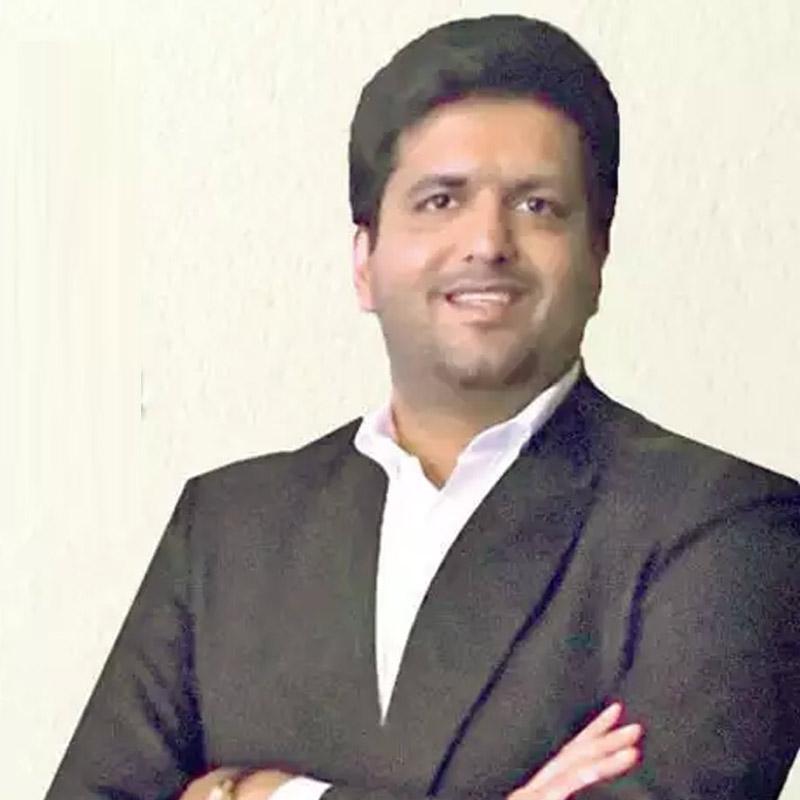
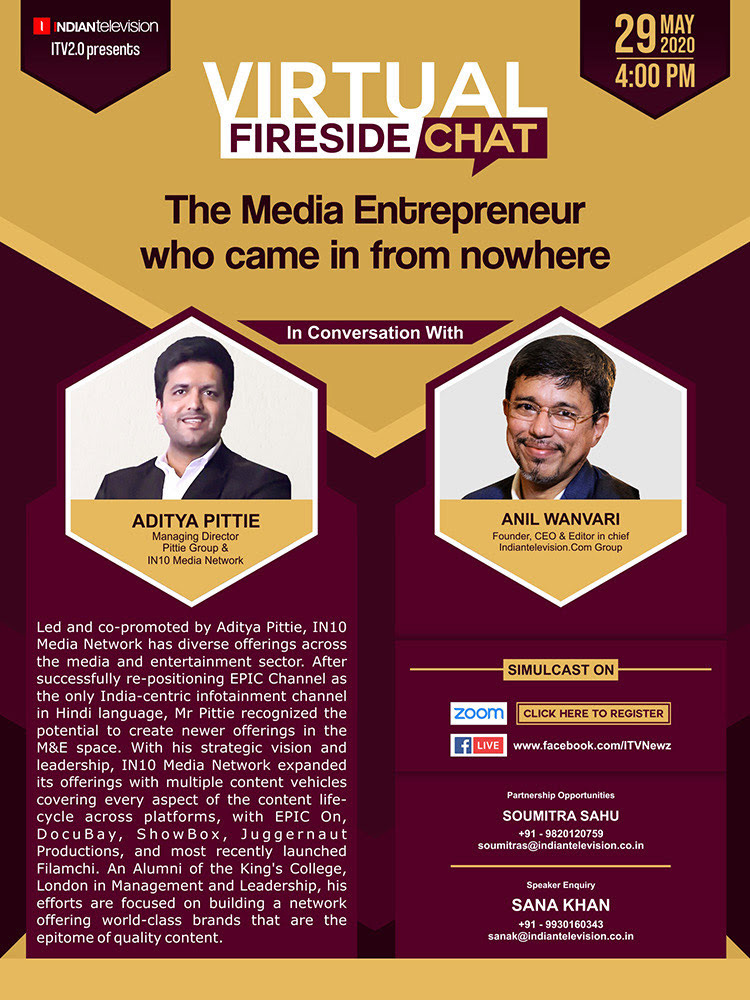
    “We are not in the race of having x million DAUS or MAUS or active users. We are in the race of building a niche product.” IN10 Media Network managing director Aditya Pittie is pretty much clear about where he wants to position the network’s OTT business in an ever-growing market. Anand Mahindra- and Aditya Pittie-promoted IN10 Media has a bouquet of varied media offerings such as television (Epic TV), OTT platforms (Epic On and Docubay), and production house (Juggernaut).

    During a virtual fireside chat with Indiantelevision Group founder, CEO and editor-in-chief Anil Wanvari, Pittie asserts that Epic On and Docubay are not driven by number of users. They are rather driven by time spent, organic tractions, etc. Instead of increasing the number of users, the aim is to build a niche product as a vertical player. That is the OTT strategy the company is following. He is also bullish about Juggernaut, which is going to be one of the company’s key businesses going forward. He says that having an asset like Juggernaut will definitely be a big value addition. “We have the probably largest order book in the industry right now with more than 11 shows confirmed for production,” he states.

    Here he dwells at length on the network’s OTT business, strategy, etc.

    Excerpts:

    After the successful entry into the broadcast business, you launched Docubay. Tell us about it.

    Docubay came about because of our love for factual entertainment. We were very interested in documentaries and we believed that as a genre it is the most popular in the world. Prominent OTTs like Amazon have a good library of documentaries. A lot of people across the world enjoy watching them. Then we thought: why don’t we look at a dedicated platform for documentaries. Then we thought of going global, instead of making India-centric. Today, Docubay is a very powerful product; the experience of watching documentaries on Docubay is far superior than any other platform. And we don’t call our subscribers. We call them members, because the idea is to build a community. That’s why it has the tagline of ‘one tribe, many stories.’ The message is that there are many things to explore in this planet, but we are all one tribe. That is the message of Docubay. We just went live on Roku in North America.  And we are one of the very few companies – in the smaller media networks segment – in India that has its own OTT technology in-house. We spent almost a year and a half in building that technology. As an organisation we are really proud of both our OTT products.

    How are Epic On and Docubay faring in terms of pricing and number of subscribers?

    As regards the KPIs and metrics, Epic On and Docubay are not driven by number of users. They are driven by time spent, how many organic tractions, etc. We are not in the race of having x million DAUS or MAUS or active users. We are in the race of building a niche product.  The pricing of Epic On or Docubay is far higher than any of the horizontal or generic OTT. We are very clearly a vertical player. We have very specific offering and then charge a premium for that offering. That is the model we are working on. By no way we try to fret about how many users we have or how faster our user base is growing. We are not hungry just to drive traffic. We wanted quality traffic. Some of the conversion rates that we have in terms of install vs number of people who are subscribing is probably one of the best in the industry. Those are the kind of models we try to work on. Stickiness, higher paying members who are looking for a specific service as opposed to getting everybody to come on the platform and give what they like. That is not our strategy.  

    Since you are not looking at metrics, what is your business game plan to monetise?

    Profitability in the media business is about how much content you want to put out. We have a business plan in place. We believe in a direction we want to take. Going forward, 15 to 20 years from now, when OTTs become mainstream, there will be a big market for vertical OTTs where people will subscribe and pay you a premium for the kind of content you create and curate for them, which is dedicated to the genre they prefer focusing on. So the differentiation is that in horizontal you have all kind of content under one umbrella, whereas vertical is slightly more focused on niche. That is the base model behind our OTT strategy. There are various other vertical OTT players all over the world. They have less number of users, but very viable business model.

    But here you have entered a global space. So are you competing with Curiosity Stream?

    Curiosity Stream has a lot of short-form content and docu-series. Docubay is a feature platform. We only do films. We carry content that has minimum duration of 20-25 minutes. The product offering thus is very different. Theirs is a very knowledge-based, and about science, research, etc. On the other, we give perspective for you to form your own opinion. That is how the documentary genre should be. If you look at the content at Docubay you will realise that they give perspective but let you form your own opinion about the topic. While they are in some degree competition to us, we believe that we are a completely different platform than Curiosity Stream. And we don’t necessarily consider them to be a competition.  

    What is the thinking behind having own production company and forging partnership with Applause?

    I think we need to separate the Applause Entertainment deal from us being in production. While they are connected they are two separate business models. We were able to foresee last year that the demand for content for OTT platforms is going to skyrocket. Unfortunately, good content creators who understand what kind of content works for OTTs are limited in our industry. There are only a handful of players that are able to create good quality content. As an organisation we have created so many hours of content for our broadcasting business. We felt that we could leverage that knowledge and expertise to build successful production business for other platforms. In terms of scale, we felt that the business can be large enough to justify our resources, time, and energy. That’s why we hired Samar Khan to lead our production business for OTT. And Code M was a super-hit (which came on ZEE5 and Balaji).

    And we have the probably largest order book in the industry right now. We have more than 11 shows confirmed for production, with an order book of over Rs 100 crore for the next one year. Juggernaut is going to be one of our key businesses going forward. We are really excited about the ability to create content at scale. Samar and his team have really worked hard to build our good talent of writers and convince OTT platforms that we have the ability to deliver solid products. I am really excited about the Juggernaut business. Having an asset like Juggernaut in our portfolio will definitely be a big value addition.

    You work for local OTTs or big international ones like Amazon, Netflix, etc.?

    I won’t be able to divulge specific contract details because that will be breach of confidentiality with them. We have one or two shows with every Indian platform. We are obviously in conversation with international OTT players. While Samar has a very big pedigree of content creation, Juggernaut as a company is new. So we are building some traction. Our aim is to deliver some hits this year and then start working with OTTs like Netflix, Amazon, Hulu, HBO Max, etc. at some point as well.

    What genre is Juggernaut positioned in?

    We have seen the success of Code M and Samar as a content creator has been very good at certain shows, but we don’t want ourselves to be restricted to that. Content creation is a collective effort. Success in content creation happens by bringing the right people together for the right type of project. So we are not focussed on just doing thriller shows, fiction or non-fiction. The idea is to create good content that is in demand by platforms. OTT is such a fast-feedback medium. It is not like television. You come to know the feedback – whether it works or not – the same day of launching the show. And there is so much data. The platforms specifically know what they want, what kind of content works, and in which region. So rather than focusing on a particular genre like thriller or non-fiction, etc., we want to focus on knowing what works with audiences, learning from experiences in creating good content, working closely with the platforms, leveraging our relationships to pre-empt what kind of concepts and stories are going to work down the lane and prepare our content bank to cater to that need. That’s the broad strategy we are looking at. You can see that we are creating shows across genres.  

  • Indian OTT platforms dish out special fare for kids

    Indian OTT platforms dish out special fare for kids

    MUMBAI: Streaming services have started taking the central stage of entertainment in Indian living rooms for quite a while now, catalysed more by the Covid2019 crisis. But it’s not possible to lay a strong foundation if the new-age entertainers don’t have anything in store for those loved little ones. While YouTube with numerous kids’ channels has been reigning  supreme over others for quite a while, the game is changing as over-the-top (OTT) platforms pay their attention to kids programming with new strategies. Along with international players, leading home-grown players have also made strides towards building noticeable offerings in the vertical.

    On last children's day, Viacom18’s VOOT, one of the major home-grown services in India, launched a dedicated service VOOT Kids, despite having a good portfolio of kids’ content on the main service. Rather than limiting it to entertainment, the new subscription-based service is a combination of fun and learning. VOOT Kids business head Saugato Bhowmik said the service started showing very good results from December onwards. Followed by customer acquisition, the journey from free trials to paid subscribers also started climbing significantly till February. From the mid-March when children started staying home, VOOT Kids’ daily subscriber additions jumped 6X from the pre-lockdown period.

    “In fact, in the early days of April, the peak we reached was nine times of pre-lockdown period. We were adding nine times and then we stabilized at about six times. So, the user base has expanded dramatically. Secondly, the time spent on the platform has also grown dramatically. So we already started this platform with a very high time spent, 70 minutes per viewer per day in December itself. Now 70 minutes is higher than most other OTT platforms. Today that number stands at 95 minutes, even some days it touched a hundred minutes,” Bhowmik added. The numbers shared by him relate to VOOT’s separate venture in kids’ space.

    Another leading OTT player in the country also revealed a hefty line-up of kids content recently; ZEE5 launched ZEE5 Kids, a dedicated section within the app. “It becomes an integral part of the content offering that we need to have on the platform, so it becomes holistic in nature. We are coming with hyper sports, there are kids content, premium content, direct-digital movies, there are movie premiers, catch-up content, news content. In that sense, there is something for everybody. Kids are an important target group that we needed to address on ZEE5,” said ZEE5 India programming head Aparna Acharekar commented.

    Acharekar mentioned that even before launching the section, the platform had kids content. It saw good viewership coming from limited hours of kids’ content leading to a full-fledged vertical, she said. However, both ZEE5 and VOOT Kids are not limiting the content bouquet to entertainment, but a blend of fun and learning.

    ShemarooMe, one of the newest entrants in the OTT race, is also focusing on the vertical. “At Shemaroo, we have always kept the preferences of audiences at the core of our offerings and our kids’ content is a high point for us with a special emphasis on learning about the rich Indian heritage, culture and values, which distinguishes us. The kids’ content on ShemarooMe is for a wider age group of two to 14 years, with focus on Indian mythology, stories, Indian personalities and early learning too. The kids’ genre has always been under-indexed,” Shemaroo Entertainment Animation, Digital Kids and L&M senior vice president Smita Maroo said.

    “However, the current situation has seen a growth in the overall kids’ genre across all platforms. Kids’ content on OTT platform helps in bringing the entire family together in consuming content which has seen a significant rise. There has been a spike of nearly 100 per cent in the viewership and the consumption has nearly doubled on kids’ movies and edutainment content since lockdown,” she added.

    Although international platforms lack content in local languages, Amazon Prime Video, Netflix, Disney+Hotstar have a significant amount of programming for the younger audience. Moreover, Disney+ recently making itself available in India has opened up a humongous amount of classics for the children. While Netflix has upped its local content in India, it has rolled very few original kids content in India. But in the limited store, Mighty Little Bheem has emerged as the most-watched preschool series on the service globally, and the second-most-watched kids’ series for the service worldwide. Released on Netflix in April 2019, it has now been watched by 27 million households around the world. The global streaming giant has also announced another animated show Ghee Happy.

    ZEE5’s Acharekar highlighted an important aspect: there is a great opportunity to create content for pre-teen age groups in the Indian market. While there is content like Chota Bheem for the younger age group, there is not much content available for the nine to 14 age group. While acknowledging that international content which has been created for those age groups coming to the country, she noted that there is a limitation of language. 

    “When you want to target nine to 14 years’ age groups, we need to serve content for them in languages they are comfortable with. In that sense, certain pockets of the kids segment are underserved.  There are opportunities to do better in regional languages and catering to Indian sensibility and creating more Indian viewers,” she added.

    VOOT Kids’ Bhowmik said that the space was underserved but now more and more players are coming in. He said that the ecosystem would only build more because kids need different solutions. Amid the rising competition, he is confident that VOOT Kids will always remain differentiated because of its approach to kids and solving their problems. He also added that the service is adding a lot more features in the next 90 days.

    ZEE5, on the other hand, intends to get into user-generated content for kids also. Describing its nature, Acharekar added that it could show auditions, talents that children can come forward and showcase on the platform. She also noted that they are building at the backend a very safe technology for children; so when they launch UGC, parents will find the platform safe to let their children be and brands realize it as a best bet.

    “As a content house, we continuously check the consumption patterns and trends in the kids’ space and plan our content pipeline accordingly while Indianness and Indian culture-inspired content always remain at the core of our hearts. We have a rich slate of films, shows and some very interesting edutainment content in the pipeline,” Shemaroo’s Maroo said.

    Yes, children will not fall out of options despite the exponential increase in screen time. 

  • SonyLIV 2.0 embarks on a journey with brand new identity, original premium content

    SonyLIV 2.0 embarks on a journey with brand new identity, original premium content

    MUMBAI: One of the early movers in the Indian over-the-top (OTT) ecosystem set out on its quest to reimagine the business in the latter part of 2019. Starting with a rejig in leadership last year, SonyLIV has now brought one of the most noticeable changes to its look: content strategy.

    Sony Pictures Network India (SPN) on Tuesday revealed a brand new look of its digital arm.

    A video on its social media gives glimpses of the redesigned logo which will replace its yellow background logo with a vibrant colourful one. The new logo emphasises the ‘liv’ part in a bright yellow colour in contrast to a colourful background with streaks of purple, blue, orange. Compared to the earlier one, it looks thinner and more refined reflecting warmth.

    Although being one of the oldest contenders, the platform has not been able to create much buzz lately. The ecosystem has not only grown but also the competition from both homegrown and international players. Netflix and Amazon Prime Video have started upping their investment in local content aggressively. Another giant player Disney+ also made its much-awaited entry into the market in March. Other broadcast-led players like ZEE5 and VOOT have also brought premium content to woo users, the former going deeper into the vernacular market.  Amidst all these ambitious players, a reimagining was required to make a mark and stand out.

    Better late than never. Along with re-designing, its content strategy is also set for an overhaul. Earlier, the new faces of SonyLIV spoke about the plan of focusing on originals. As the video reveals, the platform is going to bring original stories from the well-known storytellers in the country including Ashwini Iyer Tiwari, Ajay Monga, E Niwas, Hansal Mehta, Samar Khan, Nikkhil Advani, Nitesh Tiwari, Saumya Joshi, Tigmanshu Dhulia, Sachin Pathak, and Vir Das. It will also premiere international series including For Life, The Tudors. However, it promises to stay committed to the core strength, and sports content, too.

    The platform has struck a deal with Applause Entertainment announcing a content licensing deal of four premium drama series: Your Honor, Avrodh,  Undekhi and Scam 1992.  It has started its gradual rollout of its refreshed SonyLIV 2.0. app with the new visual identity and a distinct user interface.

    SPNI rejigged its digital team last year, with old-time SPNI executive Danish Khan leading it, with added responsibilities as business head of its leading GEC Sony Entertainment Television. Khan roped in his A Team who worked with him at SET, Ashish Golwalkar and Aman Srivastava, to also help him out to revitalise SonyLIV. The new faces revealed the wish for a rekindled focus on subscription-based service which just took off last year.

    Before this overhaul in brand identity, SonyLIV went through a change in 2016, after three years of its launch. The latest change comes at a time when all the OTT platforms have seen a huge surge in the viewership due to ongoing lockdown.

    At the time of publication of this story, the platform was reached for more details, but denied response.