Tag: Zee

  • Where is the ‘News’?

    News is back,” said Anurradha Prasad at the launch of B.A.G Films and Media‘s Hindi news channel News24. Now does that simply indicate that news channels in India are currently devoid of “news” in its truest and purest form? A content analysis reveals something more…

    India‘s experience with TV remains unique. It is the only country in the world with more than three dozen 24-hour TV channels broadcasting programmes on news and current affairs, barely a quarter-century after the world‘s first 24-hour TV news channel (CNN or Cable News Network) came up in 1980. Till 1991, television viewers in India could view only the channels broadcast by Doordarshan. That landscape significantly changed with the invasion of private satellite news channels.

    Hindi news channels have been consistently accused of invariably having less news and more entertainment. Litres of ink and loads of paper have been spent, arguing that news channels are no longer part of the anti-establishment group as they carry only those stories that fetch them gold.

    Agrees IBN7 managing editor Ashutosh: “Over the last few years, the concept of news has changed. Even for those who used to watch political news, it is no longer a good proposition, as there are no charismatic leaders. The UPA government has not thrown up any leader worth following as news. Even the newspapers‘ political coverage has changed. All this has happened mainly because it is now all about eyeball chasing, and it is getting from bad to worse.”

    While speaking to indiantelevision.com earlier, Aaj Tak news director QW Naqvi had said: “Talking of the year 2007, I feel the audience has changed its choice and appeal. Issues like corruption don‘t appeal to viewers anymore. Maybe, people have accepted it as an integral part of our society. Therefore, an exposé featuring corruption doesn‘t interest the audience, to a large extent.”

    Undoubtedly there has been a paradigm shift of news. While many argue that news in itself has shifted its meaning, others ask who defines news. For some, naag-naagin shaadi (marriage of snakes) is just as important as a barbaric killing in Singur or Nandigarm.

    To further quote Naqvi: “No doubt, television news industry has grown at such a frantic pace that it has created certain pitfalls. All-out efforts in the past year were made to grab viewership. In this mad race, at times content was compromised and true journalism took a back seat. Compounding this malady, mushrooming news channels tended to water down the impact of many meaningful news reports.”

    Says Media Content and Communications Services (MCCS) managing editor Shazi Zaman, “Central to our selection of news is the impact it will have on people and the interest that people have in the story. The last few years have seen new viewers added, many of whom have non-traditional preferences. The changes in the content of news channels are a reflection of this shift.”

    In the last one or two years, it seemed Hindi news channels took a cue from the Hindi film fraternity. Whatever was hit in the news space was seen as a formula and followed thereafter.

    First came a wave of family drama, matrimonial discord, violence and divorce. Once it reached its fatigue, the audience got bored and the news content searched for a different formula.

    Then came ghost stories. News channels vied with each other for showing horror stories. While this content was very short lived, it was also alleged that some of the news reports were concocted.

    After ghost stories, came the Baba wave, followed by amazing videos. This was a completely new phenomenon. In these videos, channels showed people performing crazy feats. But finally this, too, seems to be nearing its end.

    Says Zaman, “Experimentation is the result of a desire to reach out to more and more people and to cater to as many tastes as possible. In 2007, news became more encompassing than ever before. Thus, it was no coincidence that the year of experimentation was also the year that saw genre expansion.”

    A study by the Delhi-based Centre for Media Studies (CMS) says that the three C‘s of cricket, cinema and crime lord over politics in Hindi news channels. The study shows that news channels have undergone a radical transformation, whereby news has not only changed in its definition and content, but also in the manner in which it is presented.

    Hindi news channels have seen a rise in comedy and reality show content, the emergence and establishment of trivia in news, and most significantly, the end of political news dominance.

    According to the CMS Media Lab, the time spent on political news in the year 2007 has come down by more than 50 per cent. Political news coverage by Hindi news channels has dipped from 23.1 per cent in 2005 to 10.09 per cent in 2007.

    On the other hand, sports, entertainment, crime and human interest news have managed to almost double up from 27.9 per cent in 2005 to 53.1 per cent in 2007. At the same time, agriculture, education, health and environment-related news have not seen any net change; their coverage has been as insignificant in 2007 as earlier.

    Ashutosh reverts, “Careful studies show that it is not sports coverage that has gone up, but cricket. There is hardly any non-cricket sports news. For the past two years, there have been so many controversies, and cricket news is being covered even for other reasons like Sourav being dropped, Rahul Dravid becoming the captain, the entire Chappell controversy. Secondly, in cricket India has been doing exceedingly well. So far as crime reporting is concerned, there is a lot of drama, and it is just right for television.”

    “Besides, the entertainment industry has grown tremendously, and they have realised the power of news channels. They are marketing their products through news channels, and all the big films have media partners,” he adds.

    News broadcasters also feel that serious stories without any element of drama have a short life in the Hindi news space.

    Naqvi points out that “Operation Kalank” (the Aaj Tak-Tehelka exposé on the connivance of state administration in sheltering and helping the riot accused in 2002) in a normal news environment would have shaken the foundation of governance in both Ahmedabad and Delhi.

    “But the shelf life of this haunting exposé was hardly a few days. It did shake up the intelligentsia and society for a while, but it was not the topic of discussion in most drawing rooms after even a week. Not much changed either. Even though our channels kept the issue alive for a few days, the story did not really move forward. And this, I presume, is largely due to a variety of news being aired by a host of channels.”

    He says further that there was another good story on another channel, portraying a major scandal in UP. That exposé showed how police in UP has surpassed all levels of corruption. For as little as Rs 3,000, police officers were acting as contract killers and shooting down people in fake “encounters.” This was not an insignificant story. Rather, it was a crucial exposé showing the depths of corruption within the police force. Had this story appeared a few years ago, it would have made national headlines and would have been the talking point for a long time. But in today‘s circumstances, it vanished from the scene within days and could not even attract print media‘s attention.

    A few broadcasters also believe that in the last two years there has been a clutter in the Hindi news space with some addition to it, which subsequently had its toll on the quality and focus of the content.

    “This has to be attributed to the overcrowding in the TV news space, which has reduced the audience attention span. There are so many news items being dished out that your interest in something of importance vanishes swiftly. Rather, to retain audience interest many a time too many stories are being splashed, so that the audience doesn‘t move away,” added Naqvi.

    A general rundown of Tam‘s (television audience measurement) top five programmes on Hindi news channels cannot be hard to guess: wrestler Khali, stand-up comedian Raju Srivastav, Lord Ram have been a hot favourite with the Hindi news channels in the past few months.

    Star News‘ comedy capsules edited out from Star One‘s The Great Indian Laughter Challenge, which is hosted by an anchor in a virtual studio with good number of ad breaks, has figured highest in the top five programmes in the last few months as per the data provided by Tam.

    Cricket has been featured differently in Ye Cricket Kuch Kehta Hain (Aaj Tak), Nach Le Cricket (Aaj Tak), Disco Cricket (Star news) while Khali has seen a variety of presentations like Khali Ki Khalbali, Khali Karega Khatma and Khali Sae Bali. Gods blessed the news channels in shows like Zinda Hain Rawan, Sabko Mil Gaye Ram and Kaise Dekhe Ram.

    Star News claims that in the week 9 ending 1 March, 41 per cent of the content in its channel was news bulletin while the rest was religious, crime and cricket-centric stories. Religious stories were 8 per cent while sports reviews, comedies, business shows, crime and thriller were 7 per cent each. Cricket-based shows grabbed 10 per cent while film shows managed 1 per cent of the entire content pie.

    One of the senior editors of a Hindi news channel vehemently opposes the Tam rating system. He argues that content is mainly driven by the Tam ratings. Explaining further, he says that most of the time the editorial is forced to do stories which categorically caters to the places or states where the Tam Peoplemeters are placed.

    A man hit by a bull in the streets of Delhi will get more coverage and footage than five men killed in Darjeeling or Assam. The reason is only that peoplemeters are located in places of Delhi and not in the hill zones. For a Delhite, the former story is about the neighbouhood which compulsorily gets more hits in the peoplemeter.

    “The content is decided by the geographical placement of the peoplemeter to get spikes in the ratings chart. Hence, some parts of India (where peoplemeter is absent) and some stories are left untouched or given very little importance,” says the senior editor.

    Another complaint of the news broadcasters is the heavy distribution cost. Broadcasters say more than half of the outlay goes in the distribution cost, which cuts other costs like human resources. That is why a reporter cannot be placed in the interiors as it has its own costs. A virtual studio ultimately becomes the easy answer.

    Ashutosh says, “Distribution cost has gone up tremendously because of the clutter of channels. This is in fact affecting quality as a lot of money from a fixed budget goes into distribution, and channels have not learnt to be patient enough to give quality products. If only we could be patient, a lot of difference could come in.”

    All said and done, Hindi news content is still doubted of its news value. Instances like a sting operation on a Delhi school teacher gone horribly wrong by Live India have forced the Information and Broadcasting ministry to consider taking the editorial reigns in its hands by the Broadcast Bill. Until then it is a merry time for all.

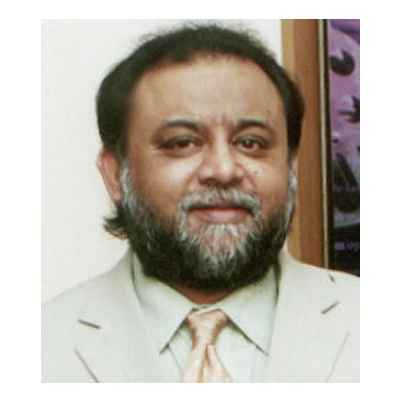
  • ‘Once digitalisation happens, let a thousand channels come’ – Sameer Nair

    ‘Once digitalisation happens, let a thousand channels come’ – Sameer Nair

    Concluding our three-part series of interviews looking at the year that was and on into 2008, we turn the spotlight on NDTV Imagine CEO Sameer Nair.  In a candid chat with Indiantelevision.com, the former Star Entertainment India CEO offers his take on the entertainment industry, why he feels the TV industry needs a kick up, the importance of not just ambling along, and the potential that 2008 offers.

    What were the key points of reference which defined 2007? One would be for you personally and also if you could offer a sense of where the industry is in general?
    Well, I left Star TV, in which I was working for about 13 years. But I think 2007 opened on a good note because we did KBC with Shah Rukh Khan and so I thought that was a good swansong of sorts for me. We also got Gajendra Singh from Zee to Star. He was with Zee for I think 16 years and so this was something equally dramatic.

    So those were the last good things to do at Star. On a personal level it was of course moving on and setting up a whole new company, a whole new business and preparing for the launch of a new channel.

    2007 basically marked preparation for 2008?
    Yes! As you can see, it’s been all the pre-production and production. And now we get ready for release. So it’s been a lot of that kind of hard work. It’s been about team building… It’s been about company building. It was about resource building and also financial resource building and putting it all together.
    I think by the time indiantelevision.com puts up this interview we will have over 132 people, which is I think a good collection of people across all disciplines.

    What were the positives that came out of this year?
    One positive of course is there seems to be a lot of interest in all things media, in all things entertainment. So there have obviously been so many more players entering the market, so much more money being put into the market.
    So that’s obviously a good thing, industry per se. I think a lot of people have announced or started new ventures, which shows that there is obviously place for growth and a place for new players to get into.
    There is some level of consolidation, there is some increased activity of international participation in local business. The movie business has gone through the roof.

    But was it a good year for the business?
    2007 was an interesting year because it, in my mind, remains a sort of a question mark. It will get resolved in years to come as to whether it was a good year or not. But right now everything is too close, so I mean this was the year where millions of dollars were pumped into the system. You know prices went through the roof, newer and newer players getting into it, each man with bigger and bigger claims and promises. Nobody talks the normal figures anymore.
    Everything is in a super inflated scenario. It’s like the wire where the string is really stretched. So whether it will be good or bad, it is hard to say now. Currently, everyone is into this valuation zone and everyone seems to be so rich.

    The rollout of digital cable, which was supposed to proceed in a particular manner, did not go the way it ideally should have. Your views on this?
    That is hardly a surprise. There was always this issue about how it would roll out and if it would be mandatory or voluntary. How does it all work? It didn’t really come as a surprise that it didn’t happen in A or B or C manner.

    So effectively nothing of any real note happened?
    No! There was no landmark legislation that occurred, there was no landmark regulation that occurred, there was no landmark activity. I don’t really think that there has been any major change. The world has not undergone a digital revolution, nor a mobile one. On television, some shows are doing better than others. The gap between Star and Zee narrowed, Zee came within a whisker of Star, than it again fell back. Now it is again coming back pretty much as per calculations. But there was nothing outstanding. It was straightforward.

    But for the industry in terms of sports, a lot happened.
    Sports was an interesting thing that happened. That was pretty good if you look at the high priced acquisition of the ICC rights (by ESPN Star for $ 1.1 billion).

    It is not looking so high-priced now because T-20 was not a factor in that purchase and now it’s there as a very high value part of the ICC rights.
    T-20 is the best thing that happened to Indian cricket. It completely re-energised sport and completely reignited interest in it. Now between ICL and IPL, it has really brought the sport back. But the price points, because there is no distribution revenue in this model of note, is not robust at all.

    The lament is that distribution channels are clogged and yet we have all these channels launching? Isn’t that a big contradiction?
    Well distribution and then everything that will happen as a result. Some people look at this business and they say that, ‘Oh so many new players are launching, there is no space.’ On the one hand we talk about how the market is growing, the media sector is growing. The other version is that it is growing but there is no space for new players, which is actually the exact opposite of growth. You know its like saying that the movie industry is growing but let’s any not make any more movies.
    They are completely contradictory terms. So once digitalisation happens, whichever version they choose to refer it by, I’d say let a thousand channels come. Because water finds it own level, and people decide what they want to see, when they want to see, how they want to see and what they want to pay for and it all sorts out in the end.
    But saying let not a thousand channels come, is not progress at all. It does not mark progress for consumers, or for operators. or for anyone as a matter of fact.
    What the TV business needs is one nice kick in the butt, like the telecom business got. This is what will help it really surge forward. So far it has been sort of ambling along.

    Everybody is expecting that Reliance will give that kick. Reliance is launching DTH this year, Bharti is launching.
    This is why 2008 will be a year to write home about. We hope that 2008 will be the year for the industry to really surge forward and make that big leap forward.

    Each year we talk of the big leap forward, but it’s not happened. 2004, 2005, 2006. You know few things occurred here and there, like suddenly in 2006 the cricket purchase was big. But the rest of the industry didn’t keep up. The whole $ 612 million price point (by Nimbus) was based on some assumptions, and those assumptions didn’t really come through.

    The fact is that all of business is predicated over some basic parameters, which is that people will go to movies, people will buy movie tickets. People will pay their cable bills. Advertisers do need to reach to consumers and they will buy advertising. That’s basic, and our problem is that we don’t have this in the TV part of the business. We don’t have this one little basic matter about people will pay their cable bills which will then be passed on. So it leaves a lot of things in the air when you talk about the television business.

    You are talking about pricing, subscription?
    It is already priced. Subscription is priced. But when you try and compare talk time, in the telecom context to TV, that doesn’t really work. Because the input cost on TV for example is not talk, it is real cash. If people play cricket, make movies, shows, that is like a real cost. It is not talk time. So when you say that every home will pay Rs 5 per month for a channel to see movies and serials, at some point the mathematics are not going to add up. So it is just that these things will get sorted out as it goes along. As more players get into it I think that the industry itself will sort it out.

    But there is also the theory that the government will not allow the market to determine costs of TV (and cricket) because other forms of entertainment are becoming too expensive for too many. Multiplexes for example are out of reach for many. So there is only TV. This would mean that tomorrow the IPL will be termed as being of national importance and will become free to view.
    You must note that there is no such thing as a free lunch ever, so somebody has to pay the bill. What’s been happening in the last so many years is that the advertisers have been paying the bill. The advertiser is the ultimate God who is paying for everybody’s lunch.

    Currently there is a combination of private equity money and advertisers who are footing the bill. But eventually, the bill will have to be paid by the consumers, who consume content in whatever manner or the price points will have to come down. So either all the price points return to normalcy by which the market settles and everything will sort, or you will have to pay the bill.
    Anywhere in the world in a mature TV / entertainment business, you have the twin model (advertising / subscription). That’s the way the business works. For us, it’s always been immature, fully lopsided towards the one side. Do you know any other market which boasts of 300-400 channels which are all essentially ad supported because distribution as a model is all over the place.
    You go to any other country where it is supported this way, you will find 5-10-15 channels. So that’s something which has to be sorted. It is not like players have to think that India is unique. And I think this has to happen.

    It is just a functional evaluation. This is what it needs, that leap forward. The input cost is going through the roof, return is coming down, and for the majors it is flattening their margins.
    For others what would the plan be then? So that, I think that has to happen and as they see that as the defining moment. Whether you define a moment or the moment defines you, in any case the industry will have to define the way forward. Whether it is collective or individual, something has to happen.

    That is exactly the contradiction in this. But it needs resolution. Otherwise a lot of these contradictions can co-exist for a long time. Things can go round and round and circle and circle without imploding or exploding.

    Something has to give?
    Over the last 6-8 months, and with the spate of these new announcements, there has been more addition into the TV space. This is obviously going to create an enormous amount of pressure on the current infrastructure. Obviously we are all new, we wish to make a mark for ourselves, so everyone will do things to try and make a good impression. There will be the existing players, who will obviously look to protect their turf.

    But it is at an interesting point because there is pressure on the system. Now this has never happened before, that there have suddenly been so much, forget new channels, so many new platforms that are all coming at the same time. There is this huge interest in the movie business all of a sudden. In the last year and a half all that has happened.

    Screens are opening up…
    Screens are opening up, It’s happening. So, as the pressure increases, obviously people will find newer and newer ways to do things. New minds enter into it, lots of different people, younger people, coming out with even cleverer ideas. It has to go through a change.

    So 2008 has a lot of potential?
    We hope, though these predictions have been made many times in the past and have sorely let you down. But 2008 seems to have a better chance than most years to make a real impact.

  • ‘Why would BCCI want its biggest new property on a new channel?’

    ‘Why would BCCI want its biggest new property on a new channel?’

    Looking at the larger perspective, what have been the big challenges the broadcast sector faced and will face, going forward?
    The pathetically slow pace of digital rollout (Cas) has been the biggest challenge for existing players. Though I do believe digital distribution will come into play from 2008 onwards.

    Combating all these new players will be the big upcoming challenge. The (leadership) pecking order will have to be reestablished. Star is not complacent in its position of number 1. Even Zee as a challenger is not complacent. Everybody will face challenge. The whole media business will face challenge.

    The industry is seeing huge churn now. The channel explosion is going to further fragment audiences. We will soon have 9/10 channels in each of the genres – news, sports and movies.

    You say pathetically slow digital rollout on the cable front is the biggest challenge for the new players as well as the existing players. But if we look at 9X, the numbers they are drawing are not due to cannibalization, but due to new viewers.
    It’s not cannibalization of GEC but other genres like music.

    So you don’t believe that people have an inherent desire to consume entertainment content but may have been tuned off by the lack of variety presently on offer so they are trying out channels like 9X?
    Its not just 9X. Even Bindass is getting new viewers. 9X is making a lot of noise but give me a name of one show that stands out. On NDTV Imagine also, nothing will stand out.

    What do we have in 2008. BCCI’s Indian Premiere League will take off and what else?
    I don’t know on which channel it will take off. I hope it is on ours.

    But as you yourself said, there will be new sports channels launching and we should expect bids from new players.
    They can of course bid but why would BCCI want its biggest new property on a new channel? Its not just money, they (the cricket board) have to make it successful.

    New players should enter digital distribution in the cable front. More people are required, more funding is required

    We do have an example of Ten Sports, which launched with World Cup Soccer in 2002.
    There were only two channels – ESPN and Star Sports – then. Today there are seven channels (DD Sports, Ten Sports, Zee Sports, ESPN, Star Sports, Star Cricket, Neo Sports). Additionally, Max is half a sports channel.

    Each time you launch a new channel, the space will get further fragmented. There is too much out there. There is going be a blood bath.

    What about a platform proposition, like in the case of Sky in the UK? For a rights holder, could IPL potentially become as critical as EPL was to Sky?
    Firstly, in India no exclusivity is being allowed. Secondly, the new guys bidding for the rights are channels which are not yet launched. If platforms like Dish TV or Reliance were to buy the rights, then I would understand but the guys buying are unknown people. They are all startups. They are doing it for their business valuations. They are not bothered whether IPL succeeds or not. Whereas BCCI wants IPL to succeed. IPL will collapse with new players.

    Coming back to the year ahead, how do you see 2008 for your network and the industry?
    As far as the industry is concerned, we would want to see the Reliance launches happening. It’s a very big thing. Then IPL should succeed. New players should enter digital distribution in the cable front. More people are required, more funding is required.

    As for ourselves, we will take some other new initiatives and continue to build our business. We need one hit show. Saat Phere was the starting point for Zee. I need one hit show from Monday to Thursday. That is my perspective. I have no problem in any other area of my business except that. We need to build up, which is not happening.

    Each channel is doing its own thing and so are we. In the meantime, I am doing syndication and international distribution. I am doing everything right except getting that one hit show.

  • ‘Sports broadcast ad market to grow to Rs 7 billion this year’ : Rukin Kizilbash – Taj Television India GM

    ‘Sports broadcast ad market to grow to Rs 7 billion this year’ : Rukin Kizilbash – Taj Television India GM

    It has been a busy and somewhat testing time for Ten Sports. Last year Zee took a 50 per cent stake in its parent Taj Television while this year the channel has had to make do without any India cricket showcase. As a result, it has had to push other properties.


    Additionally, a plethora of cricket rights that it holds come up for bidding in the coming months. Indiantelevision.com’s Sibabrata Das and Ashwin Pinto caught up with Taj Television India GM Rukin Kizilbash to find out more.


    Excerpts:

    How has not having India cricket this year impacted Ten Sports?
    It has impacted us quite a bit. It is a fact of life that things are not as smooth without India cricket. For each India series you make in the region of Rs 700 million to Rs 1 billion. Last year, Ten Sports had one series. The year before, there were two.


    However our reach and GRPs have not been impacted. This is in part due to WWE (wrestling). Our reach is at 30 per cent.


    Next year should be better though as we will have India’s tour of Zimbabwe and Sri Lanka.

    But wouldn’t it be a crucial phase for Ten Sports as two prime properties – Pakistan and Sri Lanka boards – come up for bids next year?
    It will be a crucial 12 months for us as the rights for Pakistan, Sri Lanka and West Indies come up for renewal. But we expect to renew our contracts.

    Will the acquisition price for these rights shoot up with Sony back in the race and the others showing hunger to pocket more cricket properties?
    I don’t think that the acquisition price will shoot up drastically. India, after all, visits them just once in four years. So when you buy board rights, you basically buy one India tour. It is not like the ICC events where India always participates.

    Why is it that you recently bought the South Africa rights for just one year?
    We got the rights for South Africa and Zimbabwe for one year. We will hopefully get these rights for five years once the current period gets over. India visits South Africa in 2010.

    Is cricket saturated in terms of ad rates?
    No! We believe that the spot rate can keep going up. To give you a parallel, in the US a 30-second spot for the Super Bowl sells for $2.5 million. For us it sounds unbelievable but in the US clients like Budweiser and Microsoft are willing to spend $25 million on one match. They create campaigns just for that event. An India series costs $4 million to sponsor. So there is room to grow.


    We sold the India Pakistan series last year for Rs 350,000 for a 10-second spot. I believe that ESPN Star Sports sold the final of the T20 World Cup for Rs 750,000 per 10 seconds. The next India versus Pakistan series could see spots sold for Rs 500,000 per 10 seconds – or even more. Advertisers realise that India cricket is the only way to reach the entire country at one shot. Even the highest rated soap does not reach the entire country. Its primary audience is the Hindi belt.

    Which is why the sports broadcasting market is going to see ad revenue growth this year?
    We expect the sports broadcast ad market to be in the region of approximately Rs 7 billion this year, up from Rs 4.5 billion a year ago.

    Industry estimates Ten Sports’ ad revenue to be around Rs 600-700 million this year. Is this true?
    I can’t comment on our revenue figures.

    In terms of rates, how do India cricket series stack up
    against each other?

    India versus Pakistan would be number one, followed by the series against Australia. A series against South Africa would be third. Clients need India cricket to create a big bang. Also a lot of the ad rates depend on when a series is held. Is it coinciding with the summer season or Diwali?

    To what extent did T20 rejuvenate cricket?
    It turned the sport upside down. It is certainly worth a lot more from an advertisers perspective than a 50 over ODI. The ratings for the T20 World Cup were double what you got for the India Australia ODI series. There is a lot more viewer retention as it lasts for just three hours. The instant cricket that T20 offers fits in with today’s lifestyle.

    IPL and ICL will not get in each other’s way. One initiative is from the governing body, while the other is from a private player trying to boost the game’s popularity and reach. They can co-exist

    Have ratings gone up for other sports?
    Not substantially. There has been some growth though for tennis, soccer. Moto GP has also shown a decent jump. We have gone from maybe 0.2 to 0.4.

    And what about ad rates?
    We are seeing a surge in football. When we telecast the World Cup in 2002, we got an ad revenue of $2.5 million. We believe ESPN Star Sports got around $8.5 million this World Cup.


    The ad revenue you get from a non-India series like Australia versus South Africa is probably about the same as what you make for a season of Uefa Champions League.

    How do you view the opportunities for broadcasters to grow other sports in India?
    The opportunities are there for other sports to grow. Soccer, hockey, tennis are doing quite well, which we are trying to develop. Having said that, Indian cricket drives the sports broadcasting space. The challenge is to take the other sports on par with India cricket.


    We have to figure out how to deliver more TRPs and revenues from these sports. India will evolve from being a one sports nation but it will take time – and a lot of marketing effort from sports broadcasters to push these properties.

    Can you offer an example of a non cricket sports event that has grown through nurturing?
    A good example of nurturing is the soccer World Cup. The response it got last year surpassed all expectations.


    When EPL first started airing in India not many people were familiar with it. It has developed over the years due to sustained coverage. We will be doing the same with our properties including motorsports.

    What marketing innovations are being done by Ten Sports to push these events?
    We are doing an On Tour innovation. This is a six-month on-air promotion and the sponsors are Tata Sky, Idea and McDonalds. We take four contest winners each month for a different event. We started off in September with WWE in Paris. In October we took them to Kuala Lumpur for the MotoGP. This month is the Uefa Champions League and next month is Sri Lanka Cricket.


    In January, we will be featuring South Africa cricket. In February, there will be horse racing in Dubai. And we are marketing them in different ways.

    Do you see Olympics becoming bigger in India this time?
    I would rather say that the Olympics as an event was bigger in the 1970s and 1980s compared to now. For next year I have heard that ESPN is looking to air it, besides DD. If that happens then the event will get a bigger marketing push that usual. Still the fact that Indian participation in the Olympics as well as performance is limited means that interest will accordingly be limited.

    What are the rights you have recently bagged?
    We have bought the soccer rights to the Dutch and French leagues. We believe that if we nurture them they can over the next three years reach the status of EPL.


    In terms of upcoming rights, the Australian Open tennis Grand Slam rights are currently being bid for. Wimbledon rights come up next year.

    There is a trend of sports broadcasters doing long-term deals with a few clients. Is Ten Sports examining this route?
    No! We prefer to do yearly deals as we know exactly what is on our calendar. Also if you do a long-term deal, you do not know what the ad rates will be the next year and the year after that. You could be under-selling.


    Another issue is that if I say lock in Pepsi for three years, then I exclude Coca-Cola and who knows? Maybe next year Coca Cola ups their marketing budget and launches three new products. I miss out on that action. With long-term deals you run the risk of ticking off companies by blocking them completely off the channel. These companies will then be more than happy to hop on to a rival channel.

    How do you see the ICL and IPL faring?
    ICL will rock. At the moment there is some uncertainty as it is a new format. But once it starts, it will catch on in a big way. You have established names, good production values, good stadium facilities. There will be Bollywood glamour. So it will be a fun experience for the family.


    While it is early for me to say anything about IPL, I don’t think that they will get in each other’s way. One initiative is from the governing body while the other is from a private player trying to boost the game’s popularity and reach. They can co-exist.

    After acquiring stake, why did Zee decide to sell ads through Ten Sports for its own sports channel?
    We already have a dedicated ad sales team in place. We are selling ICL for them. We are selling it on air while they are selling it on-ground. Sometimes we package some of Zee Sports’ properties along with our channel. At other times like for Indian soccer, it is done separately.


    It also depends on the client. If say someone like an LG is spending Rs 10 million, he may want to split it between the two channels. So we work out a package. We have products that Zee Sports does not have and vice versa. So it helps us sell better. It is a joint effort in terms of sales.

    Are you looking at organising a sports event at a
    grassroots level?

    Yes! We are working with Zee. We have identified three sports and we are deciding how to go about things. We might create an event from scratch or we might associate with an existing one and take it to another level. Zee is working with soccer. ESPN is working with hockey. We too are looking at a sport.

    In terms of other sports, do you see soccer or hockey
    becoming a number two sport?

    It is difficult to say which will come out on top. Hockey has picked up with our recent win and the whole Chak De spirit. Unfortunately, we are not playing in the Champions Trophy. Hockey has had its ups and downs. In terms of soccer, the Champions League is taking off. Both sports will depend on how India fares at them. But currently, soccer is bigger than hockey.

    How is Ten Sports gearing up for new media? And is marketing on the mobile going to go beyond just SMS?
    We are planning to do this next year. We are talking with Idea and Reliance in terms of how to take this forward. We are looking for a bigger platform.

    You did a film innovation last year where you aired
    sports films. Are you planning more of the same?

    Absolutely! We are planning to have the next batch soon. It is a question of getting sports movies. We are currently showing a series Simply the Best. Each episode looks at a great sports person like Sir Donald Bradman, Jesse Owens. Mohammed Ali, Sachin Tendulkar.

    Is a one-sport channel like a Golf channel economically
    viable with new distribution platforms like direct-to-home emerging?

    I think that a couple of years down the line it will be. When DTH reaches 5 million homes, you will see niche channels dedicated to topics like cooking, golf, travel and action adventure coming up.

  • Zee launches cricket website

    Zee launches cricket website

    NEW DELHI: Even as the Indian Eleven left for the West Indies for the World Cup, the Zee network has launched a cricket website, www.zeecric.com, to encash on the huge interest that the international tourney is bound to create’

    The site was launched by former cricket stars Maninder Singh, Nikhil Chopra and Vinod Kambli at the Ferozeshah Cricket Ground in the capital. Zaheer Abbas, Steve Waugh, Maninder Singh, Nikhil Chopra and Vinod Kambli are among some regular contributors to various columns on the web site.

     
    The commencement of the biggest Cricket event will see live coverage of multiple matches embellished with graphs, manhattans, wagon wheels, ball-by-ball commentary and a live scorecard on the site. Readers can relive the highlights through excerpts from the live commentary on the site.

    Moving a step further from recording the action, the panel of expert columnists discuss and dissect the nuances of the game.

     
    The website will also carry all records at a dedicated space called Number Game.

  • ‘The focus for Nick in 2007 is to drive reach’ : Nina Elavia Jaipuria – Nick India vice president & general manager

    ‘The focus for Nick in 2007 is to drive reach’ : Nina Elavia Jaipuria – Nick India vice president & general manager

    While Viacom’s smallest wonder, Nick India wants to be synonymous with fun and laughter, the network seems to have found the perfect fit in Nina Jaipura as a head for the channel. With ‘all smiles’ Jaipuria epitomizes the values that the channel stands for and bursts into sudden bouts of laughter as she describes her favourite shows on the channel like Bakkom, the funny bear, which she gladly advices her team to watch (even at work) to de-stress. Although, the channel entered the Indian terrain in 2000, there has been a singular lack of activity, but better late than never, the Nick team seems to have finally got their act together. In a free flowing conversation with Indiantelevsion.com’s Renelle Snelleksz, Jaipuria outlines the game plan for Nick in India, and the efforts to sprint ahead in 2007.

    Excerpts:

    On recently assuming the position to spearhead operations at Nick, what strategy have you outlined to up its presence in India this year?
    During the latter half of 2006, we made several programming and grid changes as well as modified content strategy to get our content right. We also made inroads into distribution and we are now No. 2 in distribution with about 42 per cent C&S connectivity in the country today. Following this we doubled our time spent by 110 minutes, similarly the market share of Nick also doubled from 6 to 12 per cent over 2006. Once all this fell into place we got a ‘sticky’ audience.

    Having said that, the focus for 2007 is to drive reach for the channel because just having a sticky audience is not good enough, you need to increase the ratings. We will use this year to establish our brand and characters. Basically, it is a year for consolidation since we now have the content right and with distribution and promotion in place, now it’s about driving reach.

    How does the channel plan to implement awareness building initiatives?
    The way we want to do this is through a 360 degree marketing approach and while we have our on-air presence and promotion we are also going to step outside the channel as well.

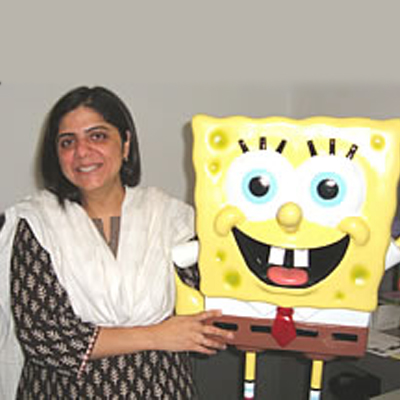
    In fact, we started our marketing activities last year with the ‘Masti Dosti’ contest and the marketing campaign we did around it. It was about consolidating all the pieces and putting it together for the kids, so while we did school contact programmes, we also did cross channel promotions and even painted school buses with Nick themes. In addition, we did a lot of meet and greet sessions for kids, because it involves getting kids to learn about the characters. We are planning to continue to extensively use school contact programmes with our brand ambassadors SpongeBob and Patrick. In fact, we are also looking at bring Dora from Dora The Explora to India this year for our pre-schoolers.

    By taking these characters into malls, multiplexes and getting them to run alongside kids during the Mumbai Marathon we wanted to give them a touch and feel experience as well as sample shows on the channel. That’s how we intend to look at Nick in the way forward.

    You will also see us across many other channels where kids are viewing other shows. We will have syndicated blocks and Nick advertising on Sony, Max, Zee and Zee Cinema. In addition, we are also into regional channels like an ETV Marathi or Zee Bangla. We are reaching out to kids through various means, as you have to touch them at their touch points.

    In the kid’s television space how will Nick differentiate itself from growing competition?
    As a channel we stand apart from the rest and what differentiates us is that everything on our channel today is something that is going to make you laugh. We are a comedy destination and this is the stand we want to take forward.

    The laughter quotient actually operates as a brand filter for all content that goes on our channel. The second aspect of our content is that it has to be appropriate in terms of being absolutely safe and completely non-violent. Therefore it goes through the gatekeeper, which is the mother and we have her trust as well. The content is also universal in terms of gender and is age appropriate catering to kids in the entire 4-14 age group.

    Apart from this, we do have a message for younger kids as well, with the Nick Jr. block which is a mix of education and entertainment. It’s about edutainment where you learn while you play and in which every story has a moral.

    Nick has been a leader in international markets especially US and UK. However, it hasn’t been able to deliver the same results in India despite its launch in 2000. Why so?
    Well it’s all about timing. The focus of the network is now on Nick which was not there earlier. We now have a core structure which is aligned to the business objectives of the channel. In fact we already saw it happening in the last quarter of 2006 and we will see more activity this year.

    We will continue to create a loyal audience and keep delivering on content that has been adopted globally, which has placed us in the first and second position in most countries.

    Why are Indian kids not yet hooked onto Nick, despite its seven year existence in India? Is it that they cannot relate to the content?
    It’s not about kids not liking the content on Nick, but more about kids not sampling the content on the channel because it’s not been out there for them. Once we spread awareness, we will get kids hooked as the content will speak for itself.

    It’s about how much we can do and how fast we can do it.

    Nickelodeon recently unveiled a virtual community playground ‘Nicktropolis’ – What about an interactive website for the channel in India?
    We are also looking at launching a grand website for ourselves as what you see today is a very small portion of it. It will be very comprehensive, telling kids about the initiatives at Nick, it will have all the shows and characters and of course it will host several contests and games. It will give kids a chance to interact and play around with these characters.

    In today’s digital environment, is there effectiveness in reaching out to kids via the mobile phone?
    I think this is a metro specific phenomena, as most kids have access to their parents’ phones, so its still too early to say now, but it will definitely grow. Therefore, all our websites have a mobile SMS function for contests and activities. Once we believe that kids have direct access to this medium we will get onto downloads, ring tones and wall papers. We have already started with digital based products with the SpongeBob PC game.

    Can we expect to see an expansion on the merchandise front?
    We tied up with Bombay Dyeing for bed linen, a SpongeBob PC game has been developed and is available at Planet M, Dora the Explora apparel range has been unveiled and can be found in Landmark and Pyramid and a whole collection of party products in Big Bazaar and Hypercity.

    We have also kicked off what is called a ‘Nicksters Club’ using a database, to send out monthly flyers via snail mail or email. Along with giving kids activities to do, it also announces their birthdays and sends out a little gift to them, which is nice gesture from the channel.

    Apart from International acquisitions, do you think it’s time to strengthen localized programming, a strategy that several other kids’ channels have also adopted?
    The strength of Nick lies in its pedigree and the of kind that has been produced for over 27 years in various countries. That content has proven itself across the world therefore we need to first optimize on the content that we already have. There is a lot of scope to bring that content to India, package it and give it an Indian flavour and then roll it out to kids.

    While we may look at local productions sometime in the future, currently there is a great opportunity to cash in on the pedigree that exists with us. Kids are not really very culture specific, they are so universal in nature that everything works for them, and it’s really how you deliver it.

    Will the channel introduce any new shows?
    Yes, in fact we will launch two acquired shows Tumoya Island and Meteor and The Mighty Monster Trucks on the pre- school block Nick Jr. this month.

    Any plans to bring to Indian initiatives like ‘Kids Lets Just Play’ that encourage children to go outdoors and play or the ‘Kids Choice Awards’?
    It is just a matter of time, as the focus currently is to create a presence that will connect with kid’s, activities such as these will then be a follow up. These are our own International properties and there is no reason why we will not bring them here. But there is still time for that, first we need to establish a larger viewer base.

    What is the time line that has been set to achieve this?
    My clock is already ticking! (She laughs) There is really no time line, it’s about how much we can do and how fast we can do it. Like I said, the intent is there we just have make it happen.

    Could you elaborate on the NDTV Media’s role and some of their activities? Which new advertisers have been roped in and by how much has ad sales increased?
    The last quarter has been good for us even in terms of ad sales, we put the infrastructure in place by outsourcing this to specialists like NDTV Media. They have helped us rope in four main new sponsors for SpongeBob Pakdra Pakdri contest including LIC as the main sponsors, co-presenting sponsors Maggi rice noodles Mania and associate sponsors Perfitti’s Big Babool and Tata Sky. Britannia, Liberty Shoes and Zapak.com are a few more advertisers that joined in, so we look forward to a happy year on that front with a lot more brands joining us.

    As for the ad sales increase, it would be an abnormal percentage to mention, as you could almost say we started from scratch, however we look forward to many more initiatives and NDTV is surely going to have its hands full.

    Currently, what’s the management structure like in terms of a marketing, content and creative team?
    Under my stewardship I have a programming director – Anu Sikka, a marketing director – Shalu Wadhwa, on air promotions – Shuchita and a research director – Shatrupa Thakar and a team of about 18 youngsters.

    What do you perceive as the way forward for a kid’s broadcaster in the highly competitive scenario in India? What is the biggest challenge in catering to kids?
    There is long way to go, we need to get to the top of the chain and that’s the intent right now. The kid’s category has always been dynamic and competition will continue to be there but there is definitely space for more players, giving more choice to the viewer.

    The challenge lies in the fact that kids have a short attention span so if you don’t capture them in the wink of an eye you might as well not at all. At any point of time if the child is surfing channels, you should be able to grab his attention, therefore everything that you put on your grid of the channel makes a huge difference.

  • Delhi High Court protects ‘Zee’ trademark

    Delhi High Court protects ‘Zee’ trademark

    NEW DELHI: No other company selling anything or providing any service from now on will be able to use the trade mark “Zee”, the Delhi High Court has ruled last weekend.

    In the order passed on February 5 on a writ petition filed by c., the Court restrained the Registrar of Trade Marks of all branches from processing pending applications pertaining to trade mark “Zee”.
    The Registrar is forbidden also from advertising any further applications that may be filed pertaining to the Trade Mark “Zee” or “deceptively similar mark by any third party”, the court has ruled.

    Arvind Mohan, Executive Vice President of the Essel group told Indiantelevision.com today: “This is a landmark decision and establishes our sole right to use the brad and trade mark that the company has so painstakingly developed over the years.”

    The court has also stayed the order dated 11.9.2000 and 15.9.2000 of Registrar of Trade Mark, Mumbai, by virtue of which the company Shri Venkateshwara Group of Industries obtained the registration of trade mark or logo “Zee” for its products known as Zee Gutkha and Zee Pan Masala.

    Zee Telefilms had filed a writ petition under Article 227 invoking extraordinary jurisdiction of Delhi High Court, challenging acceptance orders directing advertising passed by Registrar of Trade Mark permitting advertisement of at least 100 trade mark applications for registered mark or logo “Zee” or deceptively similar marks filed by Shri Venkateshwara Group of Industries, which is completely violative of the statutory provisions and contrary to the law.

    Various offices of the registrar situated at Mumbai, Ahmedabad and Delhi have also been made respondents in the case, apart from the Union of India through Secretary, Information & Broadcasting and Copyright Board, New Delhi.

    The counsels for Zee, Senior Advocate Rajiv Nayyar and Prathiba M. Singh pointed out that trade mark registrars have permitted advertising of around 100 trade mark applications for registration as “Zee”, or look-alike, deceptive marks and they continue to do so despite the detailed representation made by the Zee Telefilms Ltd.

    The argued also that this is also in complete disregard to the prevailing injunction order dated September 4, 2001 of the Division Bench of Mumbai High Court against the Shri Venkateshwra Group, restraining them to use the mark Zee Gutkha or any other deceptive look-alike mark.

    Zee Telefilms Ltd. had said that they are registered proprietors and lawful owners of the trade mark in India as well as in several other countries abroad., Besides, they also own the Common Law Rights, Statutory Rights as well as Copyrights in the “Zee” logo, written in any manner whatsoever.

    Zee reminded the court that it has several channels with the “Zee” mark, which are watched by 180 million viewers out of which 120 millions are in India. In fact, the broadcaster owns the trade mark since 1992.

    The most significant of the court’s orders are that it said that “before the Registrar of Trademarks proceeds to advertise a mark registration whereof is sought, the Registrar is obliged to cause a research to be made amongst the registered trademarks as also pending applications for purposes of ascertaining, whether there are on record, in respect of same goods or services or similar goods or services, any mark identical with or deceptively similar to the mark sought to be got registered.

    “The principle of the dilution of the trademark has been extended for the mark in question. Yet, in spite thereof, Registrar of Trademarks is admitting for registration, applications by hundreds of individuals who seek registration of the trademark “Zee” for purposes of sale of their goods.”

    In the meanwhile the court restrained all branches of the Registrar of Trademarks from processing pending applications pertaining to registration of the trademark “Zee”.

    “Further injunction is issued restraining Registrar of Trademarks from advertising any further application which may be filed pertaining to the trademark “Zee”, the court ruled.

    The court also stayed the order of the Registrar under which the other respondents had been allowed to use the Zee trade mark.

    Mohan opined that a brand is one of the most valuable elements in an advertising theme, as it demonstrates what the brand owner is able to offer in the marketplace. “Brand experience develops expectations creating the impression that a brand associated with a product or service has certain qualities and characteristics that make it special or unique,” he explained.

    He said also that the court order will help the consumers stay clear of false impressions about the identity of those companies not related to Zee’s activity, that is, providing healthy entertainment on television.

  • Sony beefs up 10 to 11 band with new soaps

    Sony beefs up 10 to 11 band with new soaps

    MUMBAI: Two new shows Durgesh Nandini and Jeete Hain Jiske Liye from the Sony stable will hit the small screen starting 5 February. The two soaps have been clubbed in the 10 to 11 pm band and will air from Monday to Thursday.

    While Durgesh Nandini replaces the recently concluded reality television series Bigg Boss slotted from 10 to 10:30 pm. The 10:30 to 11 pm slot was reserved for repeats of various shows on the channel. This slot will now air Jeete Hain Jiske Liye.

    According to the recently released TAM data for the last six months (15 July ’06 to 13 Jan ’07) – Sony is facing a long, hard climb at number three with its relative channel share at 12 to 13 per cent compared to Star Plus now at 40 per cent relative share and Zee hovering around 23 (Hindi GEC / TG CS 4+/ HSM Market).

    The two shows have been positioned to compete with Star’s K-sagas, especially the predominant players Star’s Kahaani Ghar Ghar Ki and Kyunki Saas Bhi Bahu Thi that airs within the same time band.

    Sony Entertainment Television chief creative director Sandiip Sikcand said, “It’s clear that Indian audiences will watch shows that bring out their best emotions. So Durgesh Nandini has a subtle tone of humour while Jeete Hain Jiske Liye is more intense. But both are essentially stories of women with grit and determination.”

    While the channel claims that its immediate focus is to spruce up this band, it has also revealed that it is planning to beef up its 9 to 10 prime time slot with new programming. Without giving out details, the channel is all set to look at a sitcom and even a game show.

    Sony Entertainment Television COO NP Singh says, “Around March-April 2006, we decided to take stock of our programming and come up with a healthy mix of fiction and non fiction programming. Reality series like Fear Factor, Jhalak Dikhla Jaa and Bigg Boss were results of that. While a third season of Indian Idols is already on the cards, we also wanted to get back to daily soaps.”

    While Durgesh Nandini is a comedy/drama loosely based on Bankim Chandra Chatterjee’s novel, SET India CEO Kunal Dasgupta revealed that Jeete Hai Jiske Liye has been adapted from an international telenovella. Both of them have women as their main protagonists. No surprises there. But Jeete Hain Jiske Liye star cast includes Renuka Shahane who will make a return to television after a five-year gap. Her popularity among television viewers should prove to be a huge factor in roping viewership for the show.

    Talking about bringing back some of the old shows in an attempt to garner viewership Singh says, “We believe that old brands which we have invested in and have been successful should be revived and made best use of. We decided to go back to shows like Boogie Woogie, CID, Aahaat and now Karamchand.”

    Sony made cricket and entertainment synonymous and the network is all geared up for World Cup 2007. While Max, Sab and Pix will air matches and shows around it , the channel is determined to keep Set cricket free and provide more entertainment for those taking a break from the game.

  • TDSAT adjourns Tata Sky vs Zee case

    TDSAT adjourns Tata Sky vs Zee case

    NEW DELHI: The Telecom Disputes Settlement Appellate Tribunal on Friday adjourned the hearing in the appeal by Tata Sky against Zee Turner’s demand for carrying all the channels they have on offer.

    The case, which relates also to the technical issue of transponder constraint, has been adjourned till 9 February, as the counsel for Zee Turner contested the contention of Tata Sky that the regulations of Trai did not have a “must carry” provison., but just a “must provide” provision.

    The Zee Turner counsel said that there exist two specific Trai-issued documents that could be placed in the court right away, or later, as the court thought fit, which show that Trai regulations carry a “must carry” provision. The court finally fixed 9 February as the date for filing those documents with a note from the Zee counsel.

    Reading out the affidavit to seek to prove his point, the Tata Sky counsel said that Trai had made four points in the affidavit: first, that it was considering the issue and consultative paper would be issued, without fixing a timeframe for that; secondly, that the affidavit does say that there are capacity constraints on the transponders; thirdly, that DTH is at par with the cable operations, being an addressable system; and finally, that Trai says its regulations did have a “must provide”, but not a “must carry” provision.

    Tata Sky’s argument was that since the regulations did not enforce any “must carry” provision, the DTH operator was not bound to carry all the channels provided as package/s by a broadcaster.

    To this, however, the Zee counsel asserted that there were two earlier documents by Trai that specifically assert a “must carry” provision, and these could be produced in the court.
    Part of the dispute between Tata Sky and Zee Turner rests on the fact that the latter has been insisting that the DTH operator carry all its channels and could not “pick and chose” from them.

    The former had argued that the transponder constraint does not allow them to run each and every channel from a broadcaster they take signals from.

    In this context, in the earlier hearing on 2 January, Tdsat had asked Trai to look into the transponder issue as well as other issues. Trai has said today that transponder constraint is a reality.

    On this, Tata Sky today pleaded that since Trai was considering issuing a consultation paper, and yet, not fixed a date for that, Tdsat may ask Trai to fix a date and issue an interim order to that effect.

    However, the proceedings took a different turn with the Zee Turner counsel bringing up the issue of Trai documents mandating a “must carry” provision.

  • Title sponsorship for Star’s ‘Antakshari’ goes to Colgate Maxfresh; Juhi Parmer to co-host

    Title sponsorship for Star’s ‘Antakshari’ goes to Colgate Maxfresh; Juhi Parmer to co-host

    MUMBAI: Star is poised to ramp up its offerings on sister channel Star One and has signed on Colgate Maxfresh as the title sponsor for it’s edition of the musical talent hunt show, Antakshari – The Great Challenge.

    The brain child behind Antakshari, producer Gajendrra Siingh has once again roped in Annu Kapur as host. In addition to this, the show has also selected Juhi Parmer to partner Kapur as co-host.

    A show that soon became a ‘fashion’ and ‘phenomenon’ on rival network Zee, Antakshari for the first time on Star promises to be “snazzier with new inclusions to the format and a reality aspect.” Geared to hit television in the second week of February, the first season will run for a 13 week period.

    Commenting on the association of Colgate Maxfresh with Antakshari, Star India advertising, sales and distribution Paritosh Joshi said, “Antakshari-The Great Challenge is a unique musical programme and is all set to add excitement to primetime viewing on Star One. With vibrant hosts and a lively and interactive format the viewers will be treated to a rich viewing experience each time. We are thrilled to be associated with a young brand like Colgate Maxfresh that will reach out to our audiences with innovative programming that is unique to Star One.” 

    On having initiated the partnership, Media Edge vice president Divya Radhakrishnan said, “Colgate Maxfresh is a brand targeting the youth. We have been constantly using platforms that engage this ever evasive TG beyond standard communication tools. In Antakshari, we saw an opportunity which was a good combination of a game show weaved in with a high entertainment quotient. This we believe will have a good appeal in our core TG.” 

    Four zonal auditions were conducted on the 12 and 14 January with guest judges including Ismail Durbaar at Indore, Abhijeet Bhattacharya in Kolkata and Annu Kapur in Delhi and Mumbai. 

    Following Gajendrra Siingh’s exit from Zee, the channel launched Antakshari last month with Titan as their main sponsor and Sunil Pal from the Laughter Challenge and Sa Re Ga Ma Pa 2005 champion Himani Kapoor as hosts. But with the original creator and host for the show propagating a fresh avatar for Antakshari on a new network – Star One, a fierce battle is yet to begin!