Tag: Zee

  • Ad cap petitions adjourned till 11 November

    Ad cap petitions adjourned till 11 November

    NEW DELHI: The case challenging the adcap regulations sought to be implemented on television channels was today adjourned to 11 November by the Telecom Disputes Settlement and Appellate Tribunal.

    TDSAT Chairman Justice Aftab Alam and member Kuldip Singh also rejected the interventions filed by Zee, Star and Viacom18, with the Tribunal asking them to file separate applications.

    The News Broadcasters Association had moved TDSAT challenging the constitutional validity of the regulations of Telecom Regulatory Authority of India enforcing the ad cap.

    Several other broadcasters – mostly general entertainment channels – had later moved TDSAT, but the Tribunal had in 30 August accepted the argument by NBA that the cases of the general entertainment channels could not be clubbed with the petition of NBA.

     The news channels are seeking relief from the 10+2 ad cap regulation prescribed by TRAI.

    Senior Counsel Abhishek Manu Singhvi on behalf of the NBA sought time as the pleadings were not ready.

    Some regional channels from Kerala also wanted to intervene as petitioners, but TDSAT said their matter would be heard after the main hearing.

    Channels that sought to move to the court today included 9X, B4U, TV Vision and Pioneer Channel Factory of Mumbai, Sun TV Network of Chennai, E24 Glamour, Polimer Media, Reliance Big Network, Eenadu TV, Sarthak Entertainment and Raj TV.

    Later, some general entertainment channels including music channels had also approached TDSAT in various petitions and the Tribunal had decided to hear these matters after the NBA matter.

    Counsel for TRAI said that an anomalous situation had been created with some channels having accepted the adcap with effect from 1 October. It was therefore requested that the matter be resolved once for all.

    Meanwhile, TRAI had been forbidden on 30 August from taking any ‘coercive action’ against news channels who are not abiding by the agreement relating to advertisement time on news channels.

    The Tribunal also said that while the news channels will maintain weekly records of the advertising time per hour on a weekly basis, they will not be required to submit this to the regulator as being done at present and will only submit these to TDSAT at the hearing of the case.

    Counsel for the NBA A J Bhambani had said on 30 August that a delegation of the Indian Broadcasting Foundation had submitted a formula to the regulator but that did not preclude the broadcasters from challenging the validity of the Regulations. He also said that this was only a compromise reached between the broadcasters and the regulator and could not form the basis of penal action since it was not a regulation or legal provision. He had added that there were many members who were common to both the IBF and the NBA, and therefore the IBF had submitted a ‘proposal’ on 29 May this year, which the TRAI accepted. But this could not be construed as a regulation.

    Even otherwise, he argued that TRAI was only empowered by its own Act to make ‘recommendations’ on issues like advertisements and not bring about or enforce regulations and resort to prosecution.

    When the law was invoked by the Authority in May 2012, it was disputed by television broadcasters which had also challenged the jurisdiction of TRAI in this regard before the Tribunal.

  • Life OK gets a content head in Aniruddh Pathak

    Life OK gets a content head in Aniruddh Pathak

    MUMBAI: Even as the folks at Star India’s second GEC Life OK were popping the champagne on the occasion of its second anniversary, it announced that it had promoted Aniruddh Pathak to the position of content head. Pathak is the man behind the channel’s successful properties like Mahadev and now soon-to-be-launched fantasy series Hatim.


    So what will be his new responsibility as the content head? Answers Pathak: “There will be two major responsibilities. One is to develop new content and second how to make the content which is on-air more engaging and contemporary for the audiences.”


    He further goes on to say that: “If we talk about Mahadev, for the first three months the show was going haywire, but after three months we changed some plots and storyline and now it is the face of the channel.”


    Pathak, a creative professional who has been writing TV for more than 10 years. At Zee, he started in 2000, with shows like Piya Ka Ghar and later Kasamh Se. In 2007 he became the associate creative head at Star India, launching 10 shows including Bidaai and Yeh Rishta Kya Kehlata Hai.

  • Zee Caf has a vibrant show line-up this December

    Zee Caf has a vibrant show line-up this December

    MUMBAI: With the holidays around the corner the English entertainment channel from the Zee stable – Zee Café – is all set to showcase an exciting new line up of shows for its viewers.


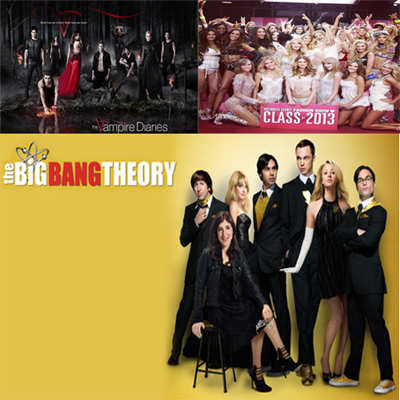
    The shows stacked up to unleash this December are: The Big Bang Theory (Season 7) that will be telecast on Sundays at 1:30 pm and 9:30 pm; The Vampire Diaries (Season 5) will follow suit on Sundays at 2:00 pm and 10:00 pm. Zee Café will also have the British crime series Poirot – based on Agatha Christie’s fictional eponymous detective Hercule Poirot -screening from Monday to Friday at 11:00 pm; the programme line-up also has Malibu Country – a sitcom starring the popular American country musician Reba McEntire – running from Monday to Friday at 8:30 pm.


    The channel is also digging back into some of the popular series aired earlier on the channel; it will air the newest seasons of the much loved Switched At Birth starting 11 December, Monday to Friday at 10:00 pm and Happy Endings beginning 23 December Monday to Friday at 8:30 pm.


    Keeping up with the spirit of the festive season, the channel has lined up some exciting content for Christmas and New Year’s Eve. Giving the viewer wholesome family entertainment on Christmas, it will air a marathon of the much loved sitcom The Middle on 25 December.


    Café’s New Year’s special will have both men and women glued to their TV sets as the Victoria’s Secret models sashay down the ramp for the Victoria’s Secret Fashion show 2013! The runway show will also include musical performances by Taylor Swift & Fall Out Boy, pink carpet interviews, model profiles and a behind-the-scenes look at the making of the show.


    So be ready to catch the world’s most gorgeous models walk one of the most coveted fashion shows, aired exclusively on 31 December. With so much entertainment packed into the month, Café has certainly ensured that December will be a viewer’s delight!

  • Zee 24 Gantalu faces acid test

    Zee 24 Gantalu faces acid test

    MUMBAI: Change is in the air at Zee Media Corp Ltd’s (ZMCL) Telugu news channel Zee 24 Gantalu. Reason: the management has decided to restructure the straggler in the ZMCL portfolio, which has been buffeted by competition in the hyper-news state of Andhra Pradesh.

    ZMCL had set up Zee 24 Gantalu in a 50:50 association with a local politician Satyanarayanan Botsa, whose brother Sateesh Botsa ran the channel.

    “It is not viable for us to run it in its current state. We have invested heavily in Zee 24 Gantalu and have tried many different strategies to make it work. But it has been losing a lot of money,” says ZMCL CEO Alok Agrawal. “We are currently reevaluating the options before us.”

    Among the options before it is shutting down the channel. But Agrawal says no decision has been taken in this direction. “We will know clearly in a couple of weeks what we will do,” he points out.

    What is clear is that the association between Botsa and ZMCL will not continue with Zee 24 Gantalu, if one goes by what Sateesh Botsa has told indiantelevision.com. Quoting him: “It was a management call to stop the channel due to several reasons. Now it is completely a ZMCL property. As a news channel it has stopped but they (Zee) may want to continue it as another channel.”


    Alok Agrawal admits that the channel has been incurring losses and that they are looking at restructuri

    A surf through the Telugu news channels space shows that Zee 24 Gantalu is airing only entertainment video footage and fillers without any ticker as of now. Additionally, rival channels told indiantelevision.com that Zee 24 Gantalu staff has started approaching them for jobs. An employee stated that the management has hammered out a severance package under the direction of ZMCL CFO Dinesh Garg which includes three months pay. Agrawal however stated that this is not true and that it could be possible that employees have chosen to look for jobs, because they know that a major restructuring is planned. Zee 24 Gantalu reportedly has 300 employees working with it.

    The channel has been in the news recently because of the cases which have been filed against it for the stories it has aired – the latest one involving the Andhra Pradesh Police DGP V Dinesh Reddy. According to sources, this was one of the reasons that prompted Botsa to opt out.

    Who chose to opt out is not clear, but clearly a new chapter is about to be written in the Zee 24 Gantalu saga.

  • Ad cap petitions adjourned till 11 November

    Ad cap petitions adjourned till 11 November

    NEW DELHI: The case challenging the adcap regulations sought to be implemented on television channels was today adjourned to 11 November by the Telecom Disputes Settlement and Appellate Tribunal.


    TDSAT Chairman Justice Aftab Alam and member Kuldip Singh also rejected the interventions filed by Zee, Star and Viacom18, with the Tribunal asking them to file separate applications.


    The News Broadcasters Association had moved TDSAT challenging the constitutional validity of the regulations of Telecom Regulatory Authority of India enforcing the ad cap.


    Several other broadcasters – mostly general entertainment channels – had later moved TDSAT, but the Tribunal had in 30 August accepted the argument by NBA that the cases of the general entertainment channels could not be clubbed with the petition of NBA.


     The news channels are seeking relief from the 10+2 ad cap regulation prescribed by TRAI.


    Senior Counsel Abhishek Manu Singhvi on behalf of the NBA sought time as the pleadings were not ready.


    Some regional channels from Kerala also wanted to intervene as petitioners, but TDSAT said their matter would be heard after the main hearing.


    Channels that sought to move to the court today included 9X, B4U, TV Vision and Pioneer Channel Factory of Mumbai, Sun TV Network of Chennai, E24 Glamour, Polimer Media, Reliance Big Network, Eenadu TV, Sarthak Entertainment and Raj TV.


    Later, some general entertainment channels including music channels had also approached TDSAT in various petitions and the Tribunal had decided to hear these matters after the NBA matter.


    Counsel for TRAI said that an anomalous situation had been created with some channels having accepted the adcap with effect from 1 October. It was therefore requested that the matter be resolved once for all.


    Meanwhile, TRAI had been forbidden on 30 August from taking any ‘coercive action’ against news channels who are not abiding by the agreement relating to advertisement time on news channels.


    The Tribunal also said that while the news channels will maintain weekly records of the advertising time per hour on a weekly basis, they will not be required to submit this to the regulator as being done at present and will only submit these to TDSAT at the hearing of the case.


    Counsel for the NBA A J Bhambani had said on 30 August that a delegation of the Indian Broadcasting Foundation had submitted a formula to the regulator but that did not preclude the broadcasters from challenging the validity of the Regulations. He also said that this was only a compromise reached between the broadcasters and the regulator and could not form the basis of penal action since it was not a regulation or legal provision. He had added that there were many members who were common to both the IBF and the NBA, and therefore the IBF had submitted a ‘proposal’ on 29 May this year, which the TRAI accepted. But this could not be construed as a regulation.


    Even otherwise, he argued that TRAI was only empowered by its own Act to make ‘recommendations’ on issues like advertisements and not bring about or enforce regulations and resort to prosecution.


    When the law was invoked by the Authority in May 2012, it was disputed by television broadcasters which had also challenged the jurisdiction of TRAI in this regard before the Tribunal.

  • Zee to launch one more GEC?

    Zee to launch one more GEC?

    MUMBAI: Indiantelevision.com has learnt that there is more in the offering from the Zee Network. Zee, which is known for its pioneering initiatives in the broadcasting space, soon plans to add one more general entertainment channel (GEC) to its kitty.


    According to highly placed sources in the industry, the network is preparing to launch the channel under the ‘&’ franchise. “The network is planning to launch yet another GEC which will have all original shows. In the coming six to eight months, viewers will have a clear picture,” reveals the source.


    The network launched their first interactive movie channel titled, ‘&pictures’ on 18 August. And within a few weeks, on 1 September, the network launched another channel – a GEC christened ‘Zee Anmol’ that airs re-runs of the best of Zee TV shows like Dance India Dance, Pavitra Rishta, Kasam Se among others.


    At the recently held Mipcom event at Cannes, the network announced that it has acquired 20 programs from Geo TV, a Pakistan based television channel.


    And if the source is to be believed, all the shows may be aired on this soon to be launched new GEC. “Right now, they are masking it all by saying it is for Zee Anmol but eventually it will be aired on the ‘&’ franchise sister GEC,” remarks the source.


    When we contacted the channel officials, they refused to comment. But with the recent developments, it seems something interesting is brewing up at the network.
    Keep watching this space for more!

  • Zees Buddha wows buyers

    Zees Buddha wows buyers

    CANNES: Mipcom presents the perfect opportunity to mix business with pleasure. And so it was that the producer of Zee TV’s latest series Buddha, BK Modi, hosted a lavish bash at Cannes’ La Mandala Beach on 8 October to introduce the series to the international market even as his guests partied the night away. 

    The party was organised by Indiantelevision.com’s ITV 2.0 Productions on behalf of Buddha Films.

    One couldn’t have asked for a better setting, what with the glistening waves, cool breeze and interim light showers coupled with scrumptious snacks and drinks that flowed freely.

    While the first episode of Buddha played out on the mammoth screen, the invitees – Indians as well as lovers of all things Indian from across the globe – set the dance floor on fire with some signature Bollywood moves. The party continued till the wee hours of the morning and Buddha surely impressed – with its costumes, sets, graphics and more so, its production quality.

    For those among the industry who’ve been waiting to see the actor who plays Buddha, here’s some dope: “He’s a debutant,” according to Modi and will be announced on 13 October. Apparently, he had to undergo rigorous training to get under the skin of the Buddha.

  • At Zee, we dont believe in growth without profitability : Punit Goenka MD & CEO Zeel

    At Zee, we dont believe in growth without profitability : Punit Goenka MD & CEO Zeel

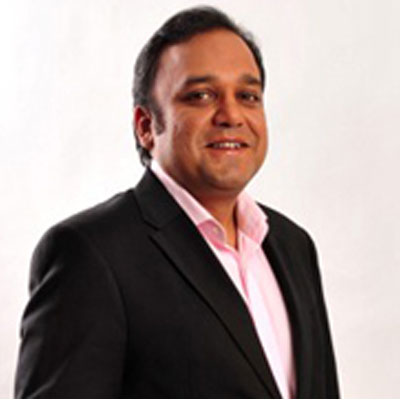
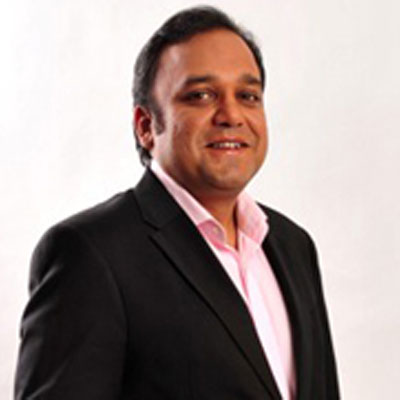
    Mipcom is the biggest event for all those in the broadcast industry. But this years Mipcom was even more special. For the first time in the history of Mipcom, an Indian addressed the gathering as a key note speaker. Present today was Zeel MD and CEO Punit Goenka, who elaborated on Zee, the changing Indian broadcast industry and the role of digitisation and the growth of new media.

    Digitisation is one big opportunity that everyone is looking at. It will also impact the advertising market positively. If you look at the advertising market; the growth in the past five years has been roughly nine per cent and television has been growing at 15 to 16 per cent. The advertising industry will see a great boost whether it is captured on traditional media or new media.

    Zee Entertainment Television was started in 1992 with just two hours of programming scheduled at that point of time; today we have 34 channels in India, 29 on a global basis.
    Our journey outside India started in 1995 so the international business is now 18 years old, but truly, the international business started only a few years back. In the first 15 years, we concentrated on the Indian diaspora.

    In the international market, to start with, we picked up the Middle East, Russia and Malaysia, where our content is re-purposed and re-formatted to suit the local audience. Our goal is to reach one billion audiences by 2020, thereby taking Zee to the top ten channels. These markets have a lot of connection with India, especially on the Bollywood side.


    Opportunities ahead of digitisation in India


    In the traditional analogue market, there was huge piracy, approximately 70 per cent. So a broadcaster like Zee did not get its fair share of valuation. This will change with digitisation.

    The second opportunity is that India is still the cheapest content market. The ARPUs that the consumers pay is $ 3 per month for almost 200 channels. I feel this number will go up to $ 10-12 with digitisation. So the opportunity is two-fold.

    Digitisation is one big opportunity that everyone is looking at. It will also impact the advertising market positively. If you look at the advertising market; the growth in the past five years has been roughly nine per cent and television has been growing at 15 to 16 per cent. The advertising industry will see a great boost whether it is captured on traditional media or new media.

    Another development taking shape in India is the new measuring body called Broadcast Audience Research Council (BARC). The advertisers, broadcasters and agencies have come together to form this measurement system. Currently, the sample size in India is less than 10,000 homes, which in the next five years will go up to 100,000 sample households. This again will prove beneficial for advertisers who can find the right consumers.


    The profit mantra…


    Revenue growth is first and profitability comes in later. But at Zee, we have always followed the mantra that growth without profitability is not good. So according to us, any investment on a sustained basis that does not give a 20-25 per cent return on the capital invested is a bad investment. So when the Indian broadcast industry operates at an average of seven to eight per cent, Zee operates at a healthy 25 per cent plus.


    Viewer segmentation…


    Going forward, both digitisation and the need of advertisers will lead to further segmentation. Also, fragmentation is the order of the day. We are continually developing more content and more products to further segment the audience and grow and reach the billion mark.

    As long as there are consumers at the end of it; yes, we will move to the second screen. In India, the concept of second screen is at an early stage. It is largely the same content that is being reformatted. For example a show which is 40 minutes on traditional media, is shortened to 15 minutes for the small screen or second screen. There have been some investments specifically for this content, largely to get the youth. But, this is still at an early stage. 


    Content creation…


    We have a strong internal team working towards ideation and content creation for shows. India is traditionally known for importing formats, Zee was the first one to develop local formats in India. A lot of credit goes to the in-house team, but the credit also goes to the execution department, because investing in formats is not easy, it is expensive and the returns come in only after three or four years. So we have to continuously innovate in terms of our content and formats. The taste changes and so we have to adapt to the changing needs.


    Criteria for choosing international partners…


    The first thing we see is if my partner shares the same passion and vision. The world today is moving towards more co-operation than competition. We are actually collaborating with our competitors to see how we can mutually create content. So we have partnered with our key competitors in India. So as long as the industry grows, a company like Zee will grow.


    Indian talent pool…


    India has a dearth of talent in this industry and this is because there are no specialised schools to train people. We at Zee recruit fresh talent every year and put them through rigorous training through institutes that we have partnered with. We have created an environment where people are given the right to decide and build a culture of entrepreneurship. And therefore they take ownership which leads to positive results. I have been talking to schools as well to see if a programme can be created to develop this pool.


    Attrition rate in the Indian broadcast industry…


    Being a traded organisation, we can give equity stock options to people and that has worked for us. Currently, almost three per cent of the company is owned by the people and this combined with the environment that we create helps us keep the attrition rate as low as possible. In India, people are still moving within the Indian broadcast industry. We are not really seeing too many attritions happening from Indian companies to international markets, but the day isnt far.


    Moving towards second screen…


    As long as there are consumers at the end of it; yes, we will move to the second screen. In India, the concept of second screen is at an early stage. It is largely the same content that is being reformatted. For example a show which is 40 minutes on traditional media, is shortened to 15 minutes for the small screen or second screen. There have been some investments specifically for this content, largely to get the youth. But, this is still at an early stage. As a content creator, we will catch up soon. We were the first in the country to launch a Video on Demand service on mobile called Ditto TV, under a subscription model. Today we have 200,000 subscribers for it. I think the biggest hindrance is lack of a good broadband service. As the infrastructure improves, in the next three to five years, we will grow in this segment as well.

  • At Zee, we dont believe in growth without profitability

    At Zee, we dont believe in growth without profitability

    Mipcom is the biggest event for all those in the broadcast industry. But this years Mipcom was even more special. For the first time in the history of Mipcom, an Indian addressed the gathering as a key note speaker. Present today was Zeel MD and CEO Puneet Goenka, who elaborated on Zee, the changing Indian broadcast industry and the role of digitisation and the growth of new media.

    Digitisation is one big opportunity that everyone is looking at. It will also impact the advertising market positively. If you look at the advertising market; the growth in the past five years has been roughly nine per cent and television has been growing at 15 to 16 per cent. The advertising industry will see a great boost whether it is captured on traditional media or new media.

    Zee Entertainment Television was started in 1992 with just two hours of programming scheduled at that point of time; today we have 34 channels in India, 29 on a global basis.
    Our journey outside India started in 1995 so the international business is now 18 years old, but truly, the international business started only a few years back. In the first 15 years, we concentrated on the Indian diaspora.

    In the international market, to start with, we picked up the Middle East, Russia and Malaysia, where our content is re-purposed and re-formatted to suit the local audience. Our goal is to reach one billion audiences by 2020, thereby taking Zee to the top ten channels. These markets have a lot of connection with India, especially on the Bollywood side.

    Opportunities ahead of digitisation in India

    In the traditional analogue market, there was huge piracy, approximately 70 per cent. So a broadcaster like Zee did not get its fair share of valuation. This will change with digitisation.

    The second opportunity is that India is still the cheapest content market. The ARPUs that the consumers pay is $ 3 per month for almost 200 channels. I feel this number will go up to $ 10-12 with digitisation. So the opportunity is two-fold.

    Digitisation is one big opportunity that everyone is looking at. It will also impact the advertising market positively. If you look at the advertising market; the growth in the past five years has been roughly nine per cent and television has been growing at 15 to 16 per cent. The advertising industry will see a great boost whether it is captured on traditional media or new media.

    Another development taking shape in India is the new measuring body called Broadcast Audience Research Council (BARC). The advertisers, broadcasters and agencies have come together to form this measurement system. Currently, the sample size in India is less than 10,000 homes, which in the next five years will go up to 100,000 sample households. This again will prove beneficial for advertisers who can find the right consumers.

    The profit mantra…

    Revenue growth is first and profitability comes in later. But at Zee, we have always followed the mantra that growth without profitability is not good. So according to us, any investment on a sustained basis that does not give a 20-25 per cent return on the capital invested is a bad investment. So when the Indian broadcast industry operates at an average of seven to eight per cent, Zee operates at a healthy 25 per cent plus.

    Viewer segmentation…

    Going forward, both digitisation and the need of advertisers will lead to further segmentation. Also, fragmentation is the order of the day. We are continually developing more content and more products to further segment the audience and grow and reach the billion mark.

    As long as there are consumers at the end of it; yes, we will move to the second screen. In India, the concept of second screen is at an early stage. It is largely the same content that is being reformatted. For example a show which is 40 minutes on traditional media, is shortened to 15 minutes for the small screen or second screen. There have been some investments specifically for this content, largely to get the youth. But, this is still at an early stage. 

    Content creation…

    We have a strong internal team working towards ideation and content creation for shows. India is traditionally known for importing formats, Zee was the first one to develop local formats in India. A lot of credit goes to the in-house team, but the credit also goes to the execution department, because investing in formats is not easy, it is expensive and the returns come in only after three or four years. So we have to continuously innovate in terms of our content and formats. The taste changes and so we have to adapt to the changing needs.

    Criteria for choosing international partners…

    The first thing we see is if my partner shares the same passion and vision. The world today is moving towards more co-operation than competition. We are actually collaborating with our competitors to see how we can mutually create content. So we have partnered with our key competitors in India. So as long as the industry grows, a company like Zee will grow.

    Indian talent pool…

    India has a dearth of talent in this industry and this is because there are no specialised schools to train people. We at Zee recruit fresh talent every year and put them through rigorous training through institutes that we have partnered with. We have created an environment where people are given the right to decide and build a culture of entrepreneurship. And therefore they take ownership which leads to positive results. I have been talking to schools as well to see if a programme can be created to develop this pool.

    Attrition rate in the Indian broadcast industry…

    Being a traded organisation, we can give equity stock options to people and that has worked for us. Currently, almost three per cent of the company is owned by the people and this combined with the environment that we create helps us keep the attrition rate as low as possible. In India, people are still moving within the Indian broadcast industry. We are not really seeing too many attritions happening from Indian companies to international markets, but the day isnt far.

    Moving towards second screen…

    As long as there are consumers at the end of it; yes, we will move to the second screen. In India, the concept of second screen is at an early stage. It is largely the same content that is being reformatted. For example a show which is 40 minutes on traditional media, is shortened to 15 minutes for the small screen or second screen. There have been some investments specifically for this content, largely to get the youth. But, this is still at an early stage. As a content creator, we will catch up soon. We were the first in the country to launch a Video on Demand service on mobile called Ditto TV, under a subscription model. Today we have 200,000 subscribers for it. I think the biggest hindrance is lack of a good broadband service. As the infrastructure improves, in the next three to five years, we will grow in this segment as well.

  • Zee Uttar Pradesh Uttarakhand tops channel race in its region

    Zee Uttar Pradesh Uttarakhand tops channel race in its region

    NEW DELHI: Zee Uttar Pradesh Uttarakhand is the most preferred channel in its region and has been a resounding hit. According to TAM data, the channel is No. 1 in terms of viewership. The channel has acquired the No. 1 spot leaving behind channels like ETV UP and Buland News UPUT.

    The channel has become the preferred channel in Uttar Pradesh and Uttarakhand, because of its informative content that caters viewers from all walks of life. Its programming mix has created a niche for itself, resulting in huge and loyal viewership. Source: TAM, Viewership data in (GTVT’000), CS 15+, Avg. 4 Weeks (Wk 31-Wk 34 ’13), Uttar Pradesh.

    Going by its philosophy “Apna Pradesh, Apna Desh”, the channel strikes the right balance between National and Regional News, Current Affairs Programming with Feature Programming like Naari, Money Matters, and recently started Debate@8. In a nutshell, the channel’s objective is to inform viewers not only about their region, but also about other relevant information from across the country.

    Speaking on the achievement, Zee News Regional Channels editor Vasindra Mishra said, “It’s due to the programming mix and content that we have been successful in educating and empowering our viewers, and this is the reason why most of the viewers in our genre patronise our channel. It has been our constant endeavour to innovate and create content tailor-made for the viewers’ needs and this is the cornerstone to the consistent success of the Channel. Hopefully we will continue to deliver content as per our viewers’ choice and they will continue to like us as always.”

    Zee Media CEO Alok Agarwal said, “We have put in the best of our efforts by adapting our self to the regular feedbacks, Zee Uttar Pradesh Uttarakhand resonates well with the people of both the states and best exemplifies the new-found zeal, aspiration and resilience of the people of the two states. Zee Uttar Pradesh Uttarakhand believes is filling a void in the viewing experience of our viewers in these two states. The viewers have selected us over competition and this surely makes us feel special as well as more responsible to our duties.”

    Zee Media, which beams Zee Uttar Pradesh Uttarakhand is the pioneer of News Channels in the country and has always been on the forefront of promoting regional programming. With over 100 million viewers, the largest news network in the country has always provided content to its viewers which is topical and of relevance to the viewer, keeping in mind the ever-dynamic taste of the viewers.