Tag: Zee

  • 24 Ghanta to get HT’s Anirban Choudhary as editor

    24 Ghanta to get HT’s Anirban Choudhary as editor

    KOLKATA: Zee Entertainment Enterprises owned 24×7 Bengali news channel, 24 Ghanta, is all set to get on board veteran journalist and Hindustan Times deputy resident editor (RE) Anirban Choudhury, as editor.


    “Bye bye Hindustan Times…. shall remain ever grateful to you…forever,” he wrote on a social networking site.


    Choudhury, agreed to the development, but refused to reveal the date of his joining. “I would like to finish off all my assignments at HT before moving on to 24 Ghanta,” he said.


    In his new role, he will be looking after the overall operations of the channel. “Bengal is not just about politics. We would like to tell a story of a common man,” he said about his plans for the channel.


     “Zee has spent a huge amount on this channel, but still something was missing. The channel could not make its mark even after recruiting so many senior journalists. Hope Choudhury’s appointment works as a miracle,” said an official from the channel.


     “There is an urgent need to revamp the whole structure and the schedule of the channel. With Anirban at the helm of affairs, we hope that the channel would get back to winning ways. He was responsible for creating a market for HT in the eastern region and hope he would do the same for 24 Ghanta,” said an industry expert.


    24 Ghanta was launched in the year 2006 and it covers local, national as well as international news.

  • SET: The only loser in week 42

    SET: The only loser in week 42

    MUMBAI: It was a no different week for the Hindi general entertainment channels (GECs), according to the week 42 of TAM TV ratings, as all the channels maintained their ranking order. 


    On the viewership front, except for Sony Entertainment Television (SET), rest all the channels have observed a rise.


    Star Plus continues to lead the chart with 600,523 GVTs, up from 598,185 GVTs. The channel’s talk show, which deals with social issues and hosted by Aamir Khan, Satyamev Jayate, lost few numbers and registered 2,444 TVTs, down from 4,916 TVTs.


    Its fiction offerings have done well. The chart leader series Diya Aur Baati Hum seems to earn new numbers every week as it scored 9,075 TVTS, up from 8,455 TVTs, Saathiya Saath scored 8,105 TVTs, up from 7,879 TVTs and Ye Hai Mohabatein recorded 7,498 TVTs, up from 7,353 TVTs.
     

    At number two stood Colors with 436,422 GVTs, up from 432,481 GVTs. Sasural Simar Ka continues to be number one in the fiction space with 6,375 GVTs, up from 5,771 TVTs. At number two is Udaan which saw a hike in the viewership as it reported 6,006 TVTs, up from 5,480 TVTs and Balika Vadhu ranks third with 4,809 TVTs, up from 4,412 TVTs.
     

    Zee at number three garnered 418,103 GVTs, up from 412,888 GVTs. Jodha Akbar continues to be the number one show for the channel as it scored 8,075 TVTS, up from 7,732 TVTs. Kumkum Bhagya seems to attract good amount of eyeballs as it reported 7,351 TVTs, up from 6,953 TVTs and Jamai Raja stood at 6,553 TVTs, up from 6,232 TVTs.
     

    Life OK stays happy at number four with 301,763 GVTs, up from 292,327 GVTs. The channel’s crime property Savdhan India reported 2,380 TVTS, up from 2,247 TVTs. The much hyped Ekta Kapoor’s series with Sonali Bendre as the lead – Ajeeb Daastan Hai Ye observed a fall in the viewership and stood at 1,201 TVTs, down from 1,223 TVTs.
     

    At number five stands Sab with 276,437 GVTs, up 272,524 GVTs. The channel’s top leader Taarek Mehta Ka Ooltah Chashmah scored 6,047 TVTs, up from 5,753 TVTs and Chidiya Ghar lost numbers and registered 2,115 TVTs, down from 2,383 TVTs.

    SET shed numbers and noticed 228,235 GVTs, down from 244,573 GVTs. Its crime property CID continues to be the number one and witnessed 2,805 TVTs, up from 1,307 TVTs. Maharana Pratap ranks second with 2,698 TVTs, up from 2,642 TVTs. 
     

    Sony Pal, the second GEC from Multi Screen Media (MSM) plate, observed a marginal rise in the ratings and delivered 25,326 GVTs, up from 23,814 GVTs. On the other hand Zindagi too witnessed a hike in the ratings and reported 21,028 GVTs, up from 19,978 GVTs and Big Magic recorded 55 million GVTs, down from 57 million GVTs, it recorded in week 41 of TAM TV ratings.

  • BARC India adopts NCCS as new classification

    BARC India adopts NCCS as new classification

    MUMBAI: In its endeavour to interact, engage and share with its stakeholders – key developments and initiatives – Broadcast Audience Research Council (BARC) India has embarked upon itself to unravel the puzzle of TV audience measurement system in India.
    One of the biggest changes that the measuring body has adopted is the New Consumer Classification System (NCCS).  The ‘New SEC’ system as it is referred to in the MRSI documents was co-developed by Market Research Society of India (MRSI) and Media Research Users Council (MRUC) as the new classification system for industry use.
    The new SEC system, which has been in existence since 2008, was developed after rigorous research as a better discriminator of the purchasing power of a household compared to the SEC. “Research has to evolve over time; and so have systems. In the 80s, MHI was used to classify purchasing power, which gave way to a better system called the SEC in the 90s. It is now time to embrace the new age system,” points out BARC India CEO Partho Dasgupta.
    Alternative systems – a point-based system including education of CWE, press exposure of housewife, ownership of durables and usership of consumer goods; and a system considering ‘best type’ of consumer durables owned – were considered before settling on the present NCCS.
    It is based on the assumption that a system that throws up more inequalities is more discriminating.
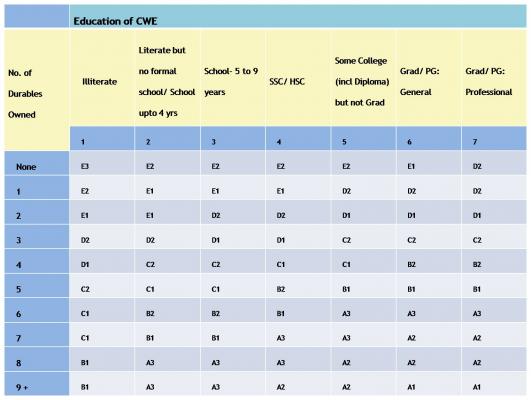
    The new SEC system is used to classify households in India and is based on two variables:  education of chief wage earner and number of consumer durables (from a predefined list) owned by the family.
    The 11 shortlisted durables (electricity connection, ceiling fan, gas stove, refrigerator, two wheeler, washing machine, colour TV, computer, four-wheeler, air conditioner, agricultural land (in rural areas) were identified as the best discriminators of the ‘purchasing power’ of a household after evaluating the series of variables, including education of housewife, type of dwelling (house), amenities, number of rooms, ownership of durables and usership of consumer goods.
    Dasgupta believes that the new system will be of great value to the industry due to various factors. “To name a few; (a) Advertisers do not discriminate between urban and rural India from their sales perspective; and the NCCS is a single system for urban and rural India, (b) It is not linked to only one individual in the household, but to the entire household, (c) It is dynamic, having the ability to change over time as discriminators change, and (d) It captures the affordability quotient of household and hence marketers can target more precisely.”
    NCCS v/s SEC – A Comparison:

    NCCS Grid has 12 grades ranging from A1 to E3:


  • Zee initiates campaign for Kashmir floods- “HUM HAIN… Umeed-e-Kashmir”

    Zee initiates campaign for Kashmir floods- “HUM HAIN… Umeed-e-Kashmir”

    MUMBAI: The entertainment industry led by the Event and Entertainment Management Association (EEMA), the Film and Television Producers Guild and the global mediaconglomerate Zee Entertainment Enterprises Ltd.(ZEE) has initiated a fund-raiser campaign, “HUM HAIN… Umeed-e-Kashmir” to raise funds and awareness for flood-stricken Kashmir. The recent floods in Kashmir have devastated and unhinged the lives of many leaving many casualties and loss of homes, property and livelihoods in its wake.

     
    Acknowledging our chance to be one, the relief campaign kicked off on Gandhi Jayanti and ZEE’s 22nd Anniversary – 2nd October,  with a message from youth icon Ranbir Kapoor calling on the nation to join hands and raise hope for the people of Jammu and Kashmir. The message was released along with a thematic music piece composed by Gulzar & Vishal Bharadwaj and sung by Sukhwinder Singh.


    HUM HAIN: Umeed-e-Kashmir will strive to work alongside several NGOs, Government bodies, celebrities and civilians to give the cause a unified voice. The concert will include a list of celebrity performers will appeal and urge viewers to donate to key NGOs and specified Disaster Relief Funds in support of the Kashmir relief project. Many other stars and performers will be shortly announced.


    On 18 October, HUM HAIN…Ummeed e Kashmir is being hosted at the Indira Gandhi Indoor stadium in Delhi and features a veritable who’s who: Aamir Khan, Vishal Bhardwaj, Farhan Akhtar, Ranbir Kapoor, Sharmila Tagore, Gulzar, Ayushman Khurrana, Daler Mehndi, Sonu Nigam, Shaan, Sukhwinder Singh, Rekha Bhardwaj, Pritam, Shantanu Moitra, Kavita Krishnamurthy and Dr L Subramanium, Anupam Kher, Imtiaz Ali, Vidhu Vinod Chopra, Mukesh Bhatt, Swanand Kirkire, Zaheer Khan, Boney and Sridevi Kapoor and multiple celebrities. More celebrities will continue to join as performers, as the build-up to the event begins. Tickets for the event and all proceeds, which will completely go to the charity United Way will soon be available on Bookmyshow.com and other outlets across the Delhi NCR region.
     

    The campaign’s highpoint is the creation of simultaneous live events on ground across 7 cities on 18th October with the main event at the Indira Gandhi Stadium in New Delhi and simultaneous events being held in Mumbai, Chennai, Bangalore, Hyderabad, Kolkatta and Jaipur.  The spread of events across the country will help demonstrate that India cares.

     
    Zee TV’s 10 News channels will come together to connect the multiple events being held simultaneously across the country. India will be one as the event management industry in Delhi, Mumbai, Hyderabad, Bangalore, Chennai, Jaipur, and Kolkata will feature their respective film and entertainment industries. Zee’s anchors and network will connect the cities and performers live from 3 pm onwards on 18th October.


    A total of 38 Zee channels will SIMULCAST this initiative on Sunday 26 October including Zee TV, Zee Cinema, & Pictures, Zee Classic, Zee Action, Zee Premiere, Zee Café, Zee Studio, ETC, Zing, Zindagi, Zee Tamil, Zee Talkies, Zee Bangla, Zee Bangla  Cinema, Zee Anmol, Zee Smile, Zee Salaam, Zee Jagran, ZQ, Khana Khazana, Zee TV HD, Zee Cinema HD, & Pictures HD and Zee Studio HD, Zee Kannada, Zee Telugu, Zee Marathi Zee News, Zee Business, Zee 24 Taas, Zee 24 Ghanta, Zee MP CG, Zee Punjab, Zee Sangam, Zee Marudhara, Zee Kalina and Zee Purvaiya.

        
    Studios will also be set up in both New Delhi and Mumbai where celebrities will also send across poignant messages, performances and showcase footage films that bring alive the devastation and relief work undertaken in an effort to strengthen the appeal. Concert tickets for the same will be sold, with all proceeds going to charity. A collection of celebrity memorabilia will also go on auction. ALL money generated through the fund-raiser through sale of tickets, donations, sponsorships, commercial time, auctions, etc. will be given to charities in Jammu & Kashmir and the most-recently hit Assam that the organisers will painstakingly select.

    Amitabh Bachchan speaking about the initiative said, “As human beings and as Indians we need to do all that we can to help our countrymen in need. The plight of the people of Jammu & Kashmir has always been a matter of concern and the floods have only made it worse. All that we do simply won’t be enough to meet the various challenges facing the people; but every drop counts. Hence we call on everyone in our country and from the world community to come forward and provide their support.”


    Punit Goenka, MD & CEO, ZEE said “As a nation, we have always treasured Kashmir the most, our precious crown that it has always been. In such a calamity, it is nothing less than a moral responsibility of every citizen and corporate in India to step forward and extend the best possible support towards the relief. As a global media company, with a wide bouquet of multiple channels across the nation, and a strong connect with over 730 million viewers, ZEE aims at offering a dual support to this initiative. Firstly, through the advertisement revenues generated from the broadcast, which would be entirely donated to the relief work, and secondly by offering a nationwide reach to the event. Committed to ‘Vasudhaiva Kutumbakam’, which we espouse as our brand positioning, it is ZEE’s responsibility to step forward and work for its Family, of which the people of Kashmir are an integral part.”  


    Ranbir Kapoor speaking about the initiative said, “Kashmir has always been an intrinsic part of our film industry. The happiness and joy that the Kashmiri people brought me and my Rockstar crew was incredible. The people are peace-loving and love all of us from the entertainment industry. I am grateful to the EEMA and the Film  Producers Guild for initiating this project with Zee TV. It’s important that the country comes together to demonstrate our solidarity with them at this time”


    Sabbas Joseph, President of Event and Entertainment Management Association said today, “As we continue to plan the relief campaign, there is an optimistic energy building that we will be able to help rebuild Kashmir with a sense of solidarity that is representative by every film, music and sports icon coming together. The idea of creating multiple simultaneous live events showcases the strength, diversity and unity of our country; it also demonstrates the growing strength of the live and event management industry across the country. Bringing the country together, is at the core of the initiative that we are building.”


    Mukesh Bhatt, President of the Film & TV Producers Guild, said, “The land of ethereal beauty & purity is in tatters, devastated by nature’s fury. Kashmir, the embodiment of Indian culture & tradition, is crying for help from millions of fellow Indians. The Indian entertainment industry has shared a wonderful symbiotic relationship with the land of Kashmir over the years & the time has come to repay the generosity & hospitality of Kashmiris in their time of strife. The industry has forever pioneered charitable causes whenever India has been ravaged by tragedies & this time too, we would like to support our Kashmiri brethren & contribute in our own humble way to this gargantuan task of relief & rehabilitation.”Hum Hain ….. Umeed-e-Kashmir” will not only assemble industry forces on a common platform of compassion & nobility but more significantly appeal to the consciousness of the vast multitude of Indians to generously donate funds in our endeavour to provide some succour to the survivors in Kashmir.”


    This October, the Event and Entertainment Management Association, along with Zee Entertainment Enterprises Ltd. and the Film and Television Producers Guild of India have come together in solidarity with the people of Kashmir and India, at large and is sending out a call-to-action.

     

  • TDSAT directs Hathway to enter into RIO pacts with Zee, Star India

    TDSAT directs Hathway to enter into RIO pacts with Zee, Star India

    NEW DELHI:  After a fiery battle that lasted over seven months, Hathway Datacom and Star India have been are directed to execute an interconnect agreement based on Star’s Reference Interconnect Offer for Star general entertainment channels and Star Sports channels by 30 September.


    The Telecom Disputes Settlement and Appellate Tribunal (TDSAT), which had reserved orders in the ‘deep-rooted’ dispute between Hathway and others and Taj TV after a hearing that commenced on 25 August and continued on a day-to-day basis, also said Zee would also execute the RIO by 30 September in case it had not so far countersigned the RIO sent to it duly signed on behalf of Hathway.


    TDSAT Chairman Aftab Alam and member Kuldip Singh in a 51-page judgment said in case Hathway has any objections to any of the clauses in the RIOs of Star and/or Zee, it would be open to it to make representations in that connection to TRAI. But the clauses under representations would continue to be binding upon it unless and until those are set aside or modified by TRAI.


    Hathway has also been asked make payment of licence fees to the broadcasters at the RIO rates from the date of execution of the RIO based agreement.


    For the interregnum between the expiry of the previous agreement and coming into existence of the new RIO based agreement, the Tribunal said Hathway will pay for the Star GEC channels and Zee at the rate of Rs 23 cost and Rs 21.50 respectively per subscriber. The licence fee on CPS basis as directed will be computed by taking into account every set top box by means of which any Star channel is viewable.


    Hathway will pay the licence fee to Star Sports at the rate of Rs four cost per subscriber for the interregnum between the expiry of the previous agreement and coming into existence of the new RIO based agreement. The licence fee on CPS basis as directed will be computed by taking into account every set top box by means of which any Star Sports channel is viewable.


    Taking into consideration the payments made earlier by Hathway, the payments will be made following reconciliation of the accounts.


    Before parting with the case, the Tribunal said it was “constrained to observe that the TRAI has failed to examine the rates quoted in the RIO submitted before it from the point of view indicated above. In an earlier judgment [Petitions nos.836(C)/2012 & 382(C)/2011 – Dish TV India vs. ESPN Software India, we had asked the TRAI to pay attention to this aspect of the matter but unfortunately our observations failed to receive due attention. We reiterate the urgent need for TRAI to examine the RIOs submitted to it, especially the rates quoted by broadcasters and MSOs, to make these serve the purpose as intended in the regulations.”


    The Tribunal “categorically rejected” the submission made on behalf of the broadcasters that publication of their RIO on their websites satisfies the condition to act non-discriminatingly. However it added that though this may be the ideal, it can never be accepted as valid having regard to the way RIOs are being framed by the broadcasters and the MSOs at present. “In the state in which we find the RIOs at present, this argument becomes a ploy to turn the RIO into a coercive tool and a threat to the seeker of the TV channels, and it undermines the essence of the regulations, which is to promote healthy competition by providing a level playing ground”, the Tribunal added. 


    The Tribunal also clarified that its observation was not directed to the broadcasters in this case alone, but found true not only of most of the broadcasters but also of multi-system operators in their dealings with the seeker of the signals below them in the distribution line. “We find, in case after case, an MSO or an LCO complaining that it was being required (by the broadcaster or the MSO, as the case may be) to take the signals at the price quoted by the provider or to sign on the dotted lines in the RIO.”


    It noted that the “Reference Interconnect Offer”, as defined under the Regulations, is a positive concept and if framed properly it should go a long way in ensuring a level playing ground. In Europe, and in an increasing number of jurisdictions worldwide, incumbent operators and/or those with significant market power are required to produce a RIO. This Specimen offer provides a common and transparent basis for all agreements for the provision of interconnection services subject to regulation. It also helps to ensure that new entrant operators can be confident of gaining terms which will not be less favourable to those applied to others (including the interconnection provider’s own retail operation).


    The RIO may therefore be said to define the parameters of negotiations for arriving at an agreement on mutually acceptable terms. It may be argued that the RIO must contain the details and rates relating to all the bases on which the maker of the RIO intends to enter into a negotiated agreement, the Tribunal said.


    It noted that ‘unfortunately’, RIOs are framed in India seemingly in negation of these attributes. “RIOs mostly give only a-la-carte rates and even those rates are fixed with reference to the maximum permissible under the tariff orders. But in reality the maker of the reference would be giving signals to most parties, or at least its favoured ones, at rates far lower than those stated in the RIO. In other words, the RIO rates are completely divorced from the market rates. The vast difference between the realistic market prices and the rate in the RIO gives the provider a free hand to quote a price much higher than the market price to a new seeker or one in disfavour, a price that would be commercially unviable and force the seeker either to accept that price or to accept the RIO.”


    Furthermore, Clause 4(1) of the DAS Regulations requires the RIOs to be submitted to the TRAI and clause 6 requires that any amendments in the RIO must also be similarly submitted to the Telecom Regulatory Authority of India. The Regulations thus imply the endorsement of the RIOs by TRAI and that gives the RIOs a certain degree of sanctity. “


    Before the Tribunal reserved its order on 10 September, Star India had filed an affidavit in which it said it would ‘henceforth’ enter into agreements under the RIO on a year-to-year basis with all multi-system operators. It said the RIO would commence three months after the expiry of the erstwhile agreement and would only be on the basis of a published RIO. It also said it was sign any new agreement on cost per subscriber basis with MSOs operating at national level.


    However, it listed eight MSOs working at regional or state level with which it already has CPS agreements and said these will continue for the term for which they are valid and thus last the full term.


    The eight MSOs are Inspire Infotech Pvt Ltd of Delhi, Novabase Digital Entertainment Pvt Ltd of Delhi, E-Infrastructure and Entertainment Pvt (India) Ltd of Bangalore, Satellite Channels Pvt Ltd, of Delhi, Poona Cables Systems and Services of Pune, Sky Channel of Delhi, Home Cable Networks of Chittore District in Andhra Pradesh, and City TV of Coimbatore.


    During the hearing, the Tribunal heard various counsel on behalf of Taj TV and Zee TV, Star India, Hathway, Bhaskar (MSO) from Jabalpur and Scod, an MSO from Mumbai and Navi Mumbai.


    When listing the case for 25 August, the Tribunal had said: ‘unfortunately, the dispute between the two sides is playing out in highly aggressive way and one may add in a rather unpleasant manner. It seems to be affecting a large number of people in viewing their favourite TV channels. The disputants themselves are approaching the Tribunal on a weekly basis complaining against the actions of each other and seeking some interim directions of the Tribunal consuming a lot of time on arguments on miscellaneous applications.”


    The Tribunal noted that both sides had assured the Tribunal that they would avoid issuing the offensive advertisements against each other.


    In the order last month, the Tribunal directed Taj TV to file their respective replies in petitions nos.319(C) of 2014 and 47(C) of 2014 and asked Hathway to file its rejoinder.


    The Tribunal noted that the dispute has arisen at a stage when the earlier fixed fee agreement between the parties has come to end and they are unable to come to agreed terms for a fresh agreement and under the circumstances the MSO has no option but to take the broadcasters’ channels on their RIO terms.


    Earlier last month, TDSAT had directed Taj Television to restore with immediate effect the signals of Zee TV channels to Hathway Cable and Datacom pending the final hearing a petition by the latter.


    It had also directed Hathway as an interim measure to make payment of the monthly subscription fees from 1 April 2014 (in case of in case of Kolkata and Digital Addressable System – II areas) and from 1 May 2014 (in case of Delhi and Mumbai) up to 31 July at the of Rs.21.60 cost per subscriber basis.


    Zee Channels were earlier being distributed to Hathway by Media Pro but the latter was not in a position to renew the agreements In view of the Aggregator Regulations issued by the Telecom Regulatory Authority of India in February this year, around the same time the earlier agreements came to end.


    Thus, the Zee group of channels came to be handled by Taj Television. But when discussions between Hathway and Taj Television for Zee TV channels failed to yield any results, Taj TV on 26 June sent the RIO based agreement executed from its side. There was delay on the part of Hathway in executing the RIO based agreement and in the meanwhile Taj Television issued the disconnection notice under regulation 6.1 on 8 July 2014 and the public notice under regulation 6.5 on 11 July 2014. However, Hathway later counter-signed the RIO based agreement and sent it back to Taj Television which refused to accept a cheque sent by Hathway. This led to the petition by Hathway.

  • GEC is not Disney’s priority, says Siddharth Roy Kapur

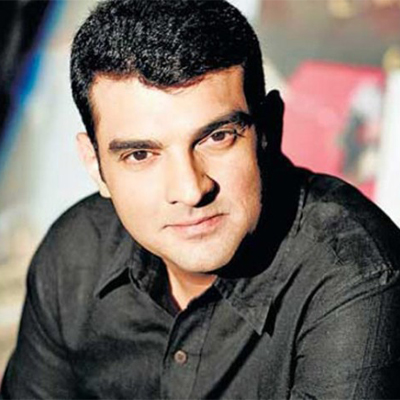
    GEC is not Disney’s priority, says Siddharth Roy Kapur

    MUMBAI: The more the merrier seems to be the chant of all networks, these days.


    It was in 2011 that Star India launched its second general entertainment offering, Life OK. The sister channel of Star Plus, which replaced the defunct youth-oriented channel Star One, made headlines for its bold steps and differentiating content from the usual melodrama shown on the leading ones.


    Soon, Zee, the number two channel as per TAM TV ratings, plunged into already congested market with Zindagi. The second GEC from the network brought in popular shows from across the border to please the niche premium audience.


    If the two big networks had ventured into second GEC place, how could Sony stay behind? With Sony Pal, launched on 1 September, the Multi Screen Media (MSM) network added one more channel to its kitty.

    However, Disney, which has created content for channels, has popular television channels as well as numerous successful movies in different genres in its bag, still doesn’t have a GEC on its mind.


    “With kids’ channel we have presence among 4 to 14 years old, with bindass offerings we will be strongly placed for 14 to 34 years old and movie channels capture all across the age segments,” says Disney MD Siddharth Roy Kapur. The network will soon launch bindass Play, a music channel, which will take forward the philosophy and brand values of its most revenue generating channel, bindass.


    So will we see a GEC coming from the network’s stable? “We want to only concentrate on categories which are profitable and work with our core strengths,” he replies while elaborating that though everyone expects it to come up with a GEC, the network is not even thinking about it.

  • Broadcaster or distributor has to give reasons for differential rates for different MSOs: Naveen Chawla

    Broadcaster or distributor has to give reasons for differential rates for different MSOs: Naveen Chawla

    NEW DELHI: While stressing that negotiated settlements had also been provided for in the regulations other than an agreement under the Reference Interconnect Order (RIO), two multi system operators (MSOs) apart from Hathway Cable & Datacom contended today that Star had failed to give reasons for having different rates for them as compared to Den or Siticable.


    Naveen Chawla, counsel for MSO Bhaskar, which operates in Jabalpur and Scoda which operates in Navi Mumbai and Mumbai, said his contention was for a reasonable and non-discriminatory rates and he was not challenging the concept of RIO.


    He said according to Clauses 3(1) and 3(2) of the Telecommunications (Broadcasting and Cable) Interconnection (Digital Addressable System) Regulations 2012 were clear that any agreement has to be reasonable and non-discriminatory and all MSOs will be treated equally.  In fact, the provision 3(2) clearly indicated that an RIO that is discriminatory and unreasonable is not acceptable.


    ‘Reasonable’ can mean the rate provided by law or the rate that is negotiated with a client in keeping with market forces.  Thus, RIO itself has to be reasonable and in relation to market conditions, Chawla said in the ongoing hearing before the Telecom Disputes Settlement and Appellate Tribunal (TDSAT) in the cases linked to Star signals for Turner and Zee TV.


    A RIO may be a la carte or bouquet, but has to be linked to the subscriber, he said. He also said it was the responsibility of the broadcaster and not the MSO under Clause 3(3) to provide RIO agreements or to give reasons within 60 days for any demands.


    Clause 4 was clear that it was the broadcaster who had to submit the RIO or agreement to the authorities and also publish it on its website.


    Stressing that his main contention was that the RIO agreement given to him by Star was unreasonable and discriminatory, he said TDSAT had in 2006 held that there should be parity in the rates charged and broadcasters have to give reasons in case the rates are different.


    Meanwhile, Chawla quoted from a judgment of TDSAT of August 2005 in which the Tribunal had said that an MSO cannot be an agent of the broadcaster and thus not a competitor to other MSOs, and this view had been upheld by the Supreme Court in 2007. He quoted other judgments to say that broadcasters cannot create exclusivity or monopoly of particular MSOs as that would be discriminatory.


    He said the only way to judge whether an agreement was not discriminatory or unreasonable was to go by the previous judgment between the parties.

  • RIO is a non-discriminatory agreement between parties under DAS: Taj

    RIO is a non-discriminatory agreement between parties under DAS: Taj

    NEW DELHI: On the third day of the Hathway Cable & Datacom and Taj Television hearing in the Telecom Disputes Settlement and Appellate Tribunal (TDSAT), Taj Television described agreements under the Reference Interconnect Offer (RIO) as ‘a uniform, non-discriminatory mechanism which ensures an agreement between parties.’


    Taj Counsel Pratibha Singh also told the TDSAT that RIO was a kind of wholesale rate in the scheme of digital addressable system (DAS). According to her, if no agreement was reached during negotiations, then the payment for TV channels in DAS areas would be fixed as specified in the RIO.


    “It is a default programme on a computer – if there is nothing by way of agreement, then there is RIO,” she said.


    In the ongoing hearing before the Tribunal in the cases linked to Taj TV, she said that it was also clear that the rates under DAS were 35 per cent of those under analogue, which was later raised to 42 per cent.


    Referring to an earlier case in TDSAT, Singh said that though the Quality of Service regulations under DAS tended to curtail freedom, they had protected the consumer until there was adequate competition.


    The Telecom (Broadcasting and cable Services) Interconnect (Digital Addressable Systems) Regulations 2012 was clear in section 5(16) that negotiations have to be held.


    She reiterated that Hathway had been told on 26 June through a letter that since the negotiations had failed, Taj TV was forwarding a signed RIO. Hathway had also been told that they would be according to RIO if they sent a subscriber report.


    She alleged that the multi system operator (MSO) had not reduced the prices of the packages even after receiving the RIO.


    She also said that Hathway had failed to respond to the letter sent on 26 June until Taj TV stopped the signals from 1 August. “After failed negotiations, Hathway as late as 18 August claimed that Taj TV was not negotiating despite having admitted earlier that negotiations had been held,” she clarified.


    She said it was unfortunate that MSOs and local cable operators felt that they did most of the work and their share should be larger. “They overlook the fact that the broadcaster pays for content, spectrum, government taxes, journalists and producers and so on,” she concluded.

  • TDSAT to hear IBF case on tariff in November

    TDSAT to hear IBF case on tariff in November

    MUMBAI: It has been a busy week for the courts. While on one hand, the Telecom Disputes Settlement Appellate Tribunal (TDSAT) on 21 August heard a case from the Indian Broadcasting Foundation (IBF), Viacom 18 and MSM India challenging the tariff order amendment of 16 July that was passed by the Telecom Regulatory Authority of India (TRAI). On the other, Star India’s case challenging the TRAI order dated 18 July was heard in the Delhi High Court.


    Taking into account the Delhi HC order for the Star India case which came out on 19 August, the TDSAT today postponed the next hearing date for 18 November.


    The Federation of Hotel and Restaurants Association of India (FHRAI) had asked for refund from broadcasters for deals signed before the order came into existence that will be applicable for the current duration. However the IBF counsel stated that the order only talks of deals taking place in the new regime and the deals for which the FHRAI is asking for refunds have been done in advance.


    Considering the Delhi HC order and also IBF’s proposition that in a 2012 judgment, the TDSAT had itself said that when an arrangement is ongoing between parties and a tariff order is issued, it is not applicable with retrospective effect unless mentioned in the order.


    Therefore, the current deals signed will be dormant but not terminated till the end of the case. It has asked both parties to ensure all their pleadings are in place by 28 October so that a final verdict can be given on 18 November.


    Star India’s case is set for its next hearing on 26 September where it has challenged the regulation itself to which Zee is also a party.


    Click here to read order

  • Star, Zee and Viacom 18 among successful bidders for FTA channels on DD Freedish

    Star, Zee and Viacom 18 among successful bidders for FTA channels on DD Freedish

    NEW DELHI: Rishtey owned by Viacom18, Zee Anmol and Star Utsav are among the six slots filled through the 14th online e-auction for the direct-to-home (DTH) service of Doordarshan Freedish conducted on 11 and 12 August.


    Doordarshan sources told indiantelevision.com that the slots were auctioned in the range of Rs 4.5 crore to Rs 4.7 crore, while the reserve price had been Rs 3 crore. The other slots went to Big Magic, B4U Music, and Shree News.

     
    The e-Auction was conducted by Synise Technologies, Pune, on behalf of Prasar Bharati.

     
    Prasar Bharati CEO Jawhar Sircar had said earlier this month that the aim was to reach the target of 97 channels by October-end and 125 by March-end.


    The participation amount given by the channels had been Rs 1.5 crore which was deposited in advance along with processing fee of Rs 10,000 (non-refundable).

     
    Applicants also deposited a demand draft of Rs 5,500 as registration amount (mandatory) favouring Synise Technologies, payable at Pune at the time of submission of the application.
     

    Prasar Bharati sources said that the demand drafts of unsuccessful bidders were to be returned within a week after the e-auction process was completed.