Tag: Zee

  • Major Indian channels removed from Chitram TV app

    Major Indian channels removed from Chitram TV app

    NEW DELHI: In a major break-through sending a strong message to organised pirates of content in the digital space, certain members of Indian Broadcasting Foundation (IBF) have succeeded in their efforts to remove their channels from the recently launched android and iOS applications of Chitram TV on Google Play and Apple’s App Store.


    Chitram TV is an IPTV/OTT service provider, which has been illegally broadcasting the signals of the Indian origin channels: MSM (Sony), Zee, Star, Viacom18 and certain other regional Indian television networks, which are members of IBF for quite some time. Recently, Chitram TV launched its mobile application on android and iOS devices in an attempt to widen its distribution and reach. The broadcasters took up the issue of Chitram’s illegal broadcast and Apple and Google have now removed the app from their iOS and Android platforms. This is a major victory for the members of IBF in their fight against online piracy, according to an IBF spokesperson.


    Indian broadcasters, who have joined hands to collectively fight digital piracy, are considering initiating legal proceedings against Chitram TV and other pirate platforms in multiple jurisdictions outside. None of the members of IBF (viz. MSM (Sony), Zee, Star and Viacom18) has authorised Chitram TV to carry their channels on any media platform let alone digital.


    IBF said it understands that Chitram TV continues to distribute the Indian channels via IPTV/OTT particularly outside India. IBF members have buckled up to fight the pirates like Chitram TV to preserve the integrity of their channels and content.


    With the rapid advent of technology enabling the dissemination of content across digital platforms, there are enormous revenue opportunities for broadcasters and other content owners. The Indian channels, which are available in more than 100 countries around the world, are extremely popular amongst the South Asian diaspora. 


    All of these channels have launched their own digital platforms and mobile apps but piracy has been a major stumbling block in revenue monetisation. Isolated efforts of the broadcasters could have achieved little. Now that the Indian broadcasters stand united, their efforts will provide a greater impetus in the global effort to combat digital piracy.


  • 2014: The year of fatigue for Hindi movie channels

    2014: The year of fatigue for Hindi movie channels

    2014 has been an interesting year for the Hindi movie genre.


    The Hindi movie genre holds about 17 per cent of the total TV viewing pie which has been flat compared to 2013 and on an average per week, it clocked 1,187 GVM (Gross Viewership in Millions) in the year. One of the most positive trends observed in the category is the rise of new and smaller channels finding their share of voice in a cluttered environment. Digitisation has given the consumers today many options to tune in to varied content. Riding on this phenomenon, the Hindi movie genre has finally started to carve out more differentiated offerings and the viewership trends on these channels have been extremely positive.


    Let me first share our experiences on Zee’s Hindi movie cluster.  Zee Cinema, the premier leading movie channel launched in India, also enhanced its movie library by premiering recent releases like ‘Entertainment’ and ‘Holiday’. In fact, ‘Entertainment’ was the highest rated premiere of this year. The Independence Day premiere of ‘Holiday’ also raked in good ratings for the channel.  In a unique offering, the channel also premiered Prakash Jha’s ‘Satyagraha’. The film was extensively promoted by the film’s lead talent Amrita Rao and director, Prakash Jha in key HSM regions.


    &pictures was launched as India’s first interactive and premium Hindi movie channel in August 2013 and it continues to deliver on its brand promise. The channel that has grown from strength to strength in a very short span of time has pioneered trends in the movie channel industry. For instance, &pictures launched a documentary movie ‘Chale Chalo’ endorsed by Aamir Khan receiving thunderous response for this one-of-a-kind initiative from the industry and consumers alike. It also opened avenues for interactivity by introducing live call-ins for viewers with Aamir Khan for the first time in India. In fact, this concept of engaging with the viewers was again replicated by Aamir in promoting ‘Dhoom3’ television premiere and ‘Satyamev Jayate’. Helming the social cause, &pictures also premiered ‘Manjunath’ a true story of a whistleblower murdered for exposing the petrol adulteration scam in UP.


    Zee Classic, on the other hand, has progressed tremendously this year. This re-instates our faith in good quality timeless cinema. The season 3 of ‘Classic Legends’ hosted by Javed Akhtar is the most viewed film based show on television. Zee’s Hindi movie cluster has gained its dedicated viewer base. The entry of Sony Max 2 in the same content space as Zee Classic has created exciting competition and it will only help us nurture the category and carve a niche in this segment.


    2014 has also seen bigger channels undergoing a slight decline in viewership. One of the key reasons for this can largely be attributed to their dependence on premiering the latest blockbuster commercial films which add immense excitement to the content mix for all the channels. The comeback of commercial potboilers such as ‘Wanted’ and ‘Dabangg’ in 2009-10 made way for a series of such content being dished out from Bollywood.


    However, 2014 shall be remembered as ‘the year of fatigue’ for such films.  For instance, the TV premiere ratings of films like ‘Kick’, ‘Singham Returns’ and ‘Dhoom 3’ almost shrunk by 50 per cent as compared to the record breaking ratings achieved by movies like ‘Singham’, ‘Dabangg’ and ‘3 Idiots’ between 2010-2012. 


    This fatigue was even more startling at the box office with releases like ‘Humshakals’ and ‘Action Jackson’ that were expected to do well in theatres failed miserably. This occurrence also indicates that there is no fixed formula for success. Bidding for any film after a certain price is definitely not a commercially viable option and even exclusive star led deals struck with A-list actors such as Salman Khan and Ajay Devgn cannot guarantee definite success. Interestingly, these trends in overall viewership and revenues have finally led to the long overdue correction of overpriced satellite rights of most Hindi Movies in 2014. 


    2014 has been a great year for Indian cinema as the so-called small films not only increased in numbers but also emerged into huge commercial blockbusters and with them, we also witnessed the younger actors achieve huge successes at the Box office.  Cinema like ‘Queen’, ‘2 States’, ‘Main Tera Hero’, ‘Heropanti’, ‘Highway’ and ‘Mardaani’ are clearly indicating  the mood of the cinegoers and the need of fresh and new ideas right now is more than ever before.  It’s only a matter of time such movies that get maximum footfalls in a multiplex will also find its space on television. The acceptance of such films will help us garner more eyeballs and I see a wonderful fit for such movies with the High Definition (HD) movie channels.  Zee Cinema HD and &pictures HD have already pioneered its presence in this space.   


    With the unremitting motto to engage, innovate and entertain, we are excited and geared up with all our six movie channels. Zee’s Hindi movie cluster offers a very distinct and differentiated content mix and has a lot to look forward in the year 2015.


     (These are purely personal views of Zee’s Hindi movie cluster business head Ruchir Tiwari and indiantelevision.com does not necessarily subscribe to these views.)

  • All channels gain in week 1 of TAM TV Ratings

    All channels gain in week 1 of TAM TV Ratings

    MUMBAI: The year has begun on a positive note for the Hindi general entertainment channels as most of them saw a hike in TAM TV ratings of week 1.

     
    Star Plus continuing its reign in the genre, gained 654356 GVTs up from 596014 GVTs. The channel’s chart topper Diya Aur Baati Hum lost some numbers and registered 10641 TVTs, down from 10743 TVTs, Saathiya Saath too saw a drop and scored 7949 TVTs, down from 7951 TVTs. Big Star Awards reported 9910 TVTs.

     
    Colors at number two registered 519544 GVTs up from 492307 GVTs. Sasural Simar Ka leads the chart with 7346 TVTs, up from 6769 TVTs followed by Udaan at 6877 TVTs, down from 7038 TVTs.  Got Talent World Stage Live delivered 6195TVTs.

    Zee TV saw a marginal gain with 429663 GVTs up from 427256 GVTs. Kumkum Bhagya tops the chart with 8508 TVTs, down from 8998 TVTs, Jodha Akbar at number two garnered 6705 TVTs, down from 6757 TVTs and Qubool Hai  stood at 6190TVTs, down from 6587 TVTs.
     
    With 337915 GVTs up from 329200 GVTs, Life OK kept its hold at the number four position. Comedy Classes stood at 2716 TVTs, down from 2718 TVTs and Savdhan India scored 2636 TVTs, down from 2689 TVTs.
     
    Multi Screen Media (MSM) comedy channel, Sab, gained 335130 GVTs up from 319608 GVTs. Its chart leader Taarek Mehta Ka Ooltah Chashmah continued getting eyeballs and reported 8006 TVTs, up from 8002 TVTs. Chidiya Ghar too added some numbers and registered 3236 TVTs, up from 3085 TVTs and Family Antakshari observed 2035 TVTs, up from 1652 TVTs.

    Sony Entertainment Television (SET) too witnessed a hike of 264461 GVTs up from 236682 GVTs. The channel’s crime property Crime Patrol saw a significant rise in the viewership and recorded 2836 TVTs, up from 2381 TVTs, Adaalat too saw a hike in the ratings with 2522 TVTs, up from 2399 TVTs. Maharana Veer Pratap saw a drop with 2498 TVTs, down from 2568 TVTs.
     
    The newest entrant in the genre, Epic, gained 6330 GVTs up from 5281 GVTs. Sony Pal gained 26254 GVTs up from 23007 GVTs. Zeel’s Zindagi fell from 28541 GVTs to 28232 GVTs. Similarly, Big Magic fell to 61055 GVTs from 63489 GVTs.

  • Dr. Subhash Chandra to share his entrepreneurial secrets!

    Dr. Subhash Chandra to share his entrepreneurial secrets!

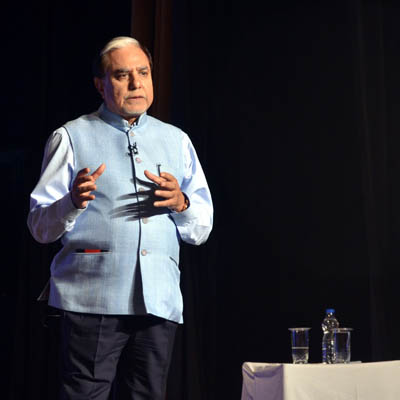
    MUMBAI: Essel Group and ZEE chairman Dr. Subhash Chandra will commence his New Year by hosting a special episode dedicated to his favourite topic, ‘Entrepreneurship’ on Zee Media Corporation’s flagship show, Dr. Subhash Chandra (DSC) Show.

    Dr. Chandra will address over 200 budding and established entrepreneurs as well as Management students from Mumbai’s premier management institute, Welingkar Institute of Management Development & Research on 3 January 2015 at Welingkar Institute.

    Speaking on the upcoming episode, Dr. Chandra said, “Entrepreneurship has been an integral part of my life for more than four decades. Over time, I have learnt that it is only through persistence that an idea will bloom into reality. I wish to share with these passionate entrepreneurs as well as with the motivated management students some of the entrepreneurial secrets and success mantras that I have obtained while setting up and running diverse businesses within the Essel Group.”

    Dr. Subhash Chandra (DSC) Show is aired every Saturday at 10 pm on Zee News and 7pm on Zee Business and on Sundays at 11 am on both Zee News & Zee Business.  This show is also aired on other channels of Zee Media.

    Dr. Chandra is rightly referred to as the Media Moghul of India. With his pioneering vision and entrepreneurial mindset to achieve growth, he revolutionized the television industry by launching the country's first satellite television channel – Zee TV in 1992 and later the first private news channel, Zee News. Dr. Chandra started the Essel Group which is among India's most prominent business houses with a diverse portfolio of assets in media, packaging, entertainment, technology-enabled services, infrastructure development and education.

    Dr. Subhash Chandra Show Timings:

    Learn how to innovate, set up and make your business flourish from the expert himself, a man of a thousand ideas, Dr. Subhash Chandra. Don’t miss the Dr. Subhash Chandra Show for an enterprising and entertaining weekend!

  • BCCC directs Sony to run apology scroll on 30 Dec

    BCCC directs Sony to run apology scroll on 30 Dec

    MUMBAI: On 17 December, the Broadcasting Content Complaint Council (BCCC) had held a meeting in Mumbai to discuss the 30 – 40 complaints received against numerous channels and what action should be taken.

    One of the biggest decisions taken from it was for Sony. The channel management has been asked by the council to run an apology scroll on 30 December. The complaint was filed with regards to the display of a board promoting abortion in Madana Khurd village during an episode of Kaun Banega Crorepati (KBC) aired on 19 August.

    However, sources from BCCC said that the issue was raised against the show’s producers a couple of months back on a complaint by the Haryana Health Department. As per reports, the board read “500 rupees me garbhpaat karwao aur 5 lakh ka dahej bachao (Get the abortion done in Rs 500 and save dowry of Rs 5 lakh).”

    As per the directive, the channel has to run an apology scroll in Hindi and English during now-off-air KBC’s time slot i.e. from 8.30 pm to 9 pm on 30 December.

    Of the numerous complaints, the independent council, set up by the Indian Broadcasting Foundation (IBF) to examine complaints about television programmes received to ensure that the programmes are within the self-regulatory content guidelines, also discussed complaints against Zee TV amongst other networks as well.

    “One of the episodes of Zee’s popular programme Qubool Hai showed a woman being tortured and hence, a complaint was filed against it,” informs the source from the council while adding that an explanation has been asked from the channel and the decision on what should be done next will be taken on 20 January.

    Similarly, south India’s Asianet also received complaints against its two programmes out of which one was disposed off while the other’s decision will be taken on 20 January as well.


  • 2014: The year of bold steps

    2014: The year of bold steps

    The year 2014 will go down in history as the year of bold steps.  Whether it was the postponement of digitisation, the introduction of many a forward-thinking and hard-hitting paper and regulation by government regulator Telecom Regulatory Authority of India (TRAI), the industry’s punts at experimenting with big ticket shows, the completion of the acquisition of the Network18 group by Reliance Industries and the departures that followed thereafter, the push by YouTube into creating  a platform that could disrupt audiovisual content viewing, followed by the drive by broadcast networks to build their own independent digital platforms, the increasing importance of social media for television, the introduction of Reference Interconnect Offer (RIO) deals by Star India in a bid to force the industry to speed up digitisation,  big 4K announcements by Videocon and Tata Sky, the rise and rise of Life OK and SabTV, or the slow descent of Sony (once amongst the top two Hindi general entertainment channels -GECs ) to the number sixth spot, the continuing stranglehold of Star Plus over the Hindi GEC viewer,  the industry’s total disillusionment with existing TV rating provider TAM India, and the swing towards the new industry-backed BARC, the news and niche TV channels’ battle with the the government imposed advertising cap of 10+2 in the courts, the launch of three specialised Hindi general entertainment TV channels, a gradual increase in carriage fee payouts to the cable TV sector by smaller channel owners – all these and many were formed the highlights of the television business in 2014.

    To start with, the government took a firm decision to push ahead the analogue cable TV sunset date to 2016, seeing the state of progress by India’s 60,000 cable TV operators and seven-odd so called national multi system operators (MSOs). Of course, digitisation delay led to a lot of carping by many in the trade, but then it was back to business as usual very quickly. For some, no change was more comfortable than having to reinvent thinking, processes, and also business models – which was proving painful. Those who had pressed their foot on digitisation’s accelerator eased off a bit as they had been given some breathing space.

    The new government

    public://Narendra_D_Modi.jpg2014 was the year of the big change, with the Narendra Modi led Bharatiya Janata Party (BJP) sweeping the ‘election of the century’ and coming to power.  In the new government, the mantle of Information and Broadcasting Ministry was given to Prakash Javadekar, who in his five months tenure made numerous public appearances, making major announcements. Before, the portfolio was passed on to Arun Jaitely in November, Javadekar had made some crucial changes, that of pushing the deadline for digitisation of phase III to December 2015 and of phase IV to December 2016. The move was  done in order to help the indigenous set top box (STB) manufacturers’ boost their businesses as well as allow the MSOs and cable TV operators’ enough time to do it right.

    The year saw the tech savvy Prime Minister announcing his dream of seeing a ‘Digital India’, which was followed by numerous campaigns. It was also the year, when the Media and Entertainment sector envisaged of becoming a $100 billion industry by 2020.


    Cable, DTH and Distribution

    public://222222.jpgIn the cable TV sector, while the tiff between the last mile owners (LMOs) and MSOs over ownership of consumers, billing and revenue share continued like in 2013, some unity could be seen amongst the MSOs with regards to voluntary digitisation after the I&B decided to push digitisation to a later date. The LMOs on the other hand united in several parts of the country to form cooperatives in a bid to get some financial muscle to be able to digitise apart from strengthening their customer base. The year saw not only Hinduja’s headend in the sky (HITS) project taking strides, a new model of distribution: Cable Virtual Network Operator (CVNO) too came up in a few cities like Mumbai and Kolkata.

    Another major development towards the end of the year was the decision of Star India to apply the RIO deal approach with the MSOs. The move while aimed at bringing in addressability and packaging in the DAS markets, saw a number of MSOs coming up with either different packages or putting the network’s channels on a-la-carte.

    With the Average Revenue Per User (ARPU) not showing much signs of improvement, a number of MSOs have started shoring up their broadband offering to customers.  The year also saw Den Networks launching its broadband service in Delhi, with plans of expansion in the coming year.  

    The direct to home (DTH) operators too were seen taking some bold steps with Dish TV launching a sub-brand Zing for the regional markets and Tata Sky and Videocon d2h announcing that they would be introducing 4K set top boxes in India. Not only this, DD Freedish too decided to seed MPEG4 STBs along with MPEG2 boxes in interior areas.

    The icing on the cake was TRAI’s regulation on unbundling, which saw distribution giants, MediaPro and TheOneAlliance parting ways. A lot of other broadcasters too were seen setting up distribution initiatives of their own. 

    Advertising

    public://bjp.JPGThe 16th Lok Sabha elections were not only fought on the ground, but political parties laid siege to the airwaves as well. This general election was the first among many, where media was so extensively (and blatantly) used by political parties.  Far from fighting shy of marketing themselves, the main players – Congress and BJP –spent nearly Rs 400 to Rs 500 crore each on publicity campaigns. An additional Rs 500 to Rs 1,000 crore was spent on related activities such as banners, hoardings, organisation of public meetings and transportation of key campaigners, among others. Not surprisingly, media agencies had estimated around 2 to 2.5 per cent of overall advertisement spends this year to come from elections.

    The year also saw the growth of the e-commerce sector as they intensified their battle. As investments rolled in, the market spends increased to woo customers. And with Finance Minister Arun Jaitley in his maiden budget announcing that manufacturing units will be allowed to sell their products through retail including e-commerce platforms without any additional approval, paving a path for the foreign direct investment (FDI) in the manufacturing sector, the upsurge is expected to continue.

                                                                                                                                                                      News Broadcasters

    public://Mukesh-Ambani-1.jpgThe first half of the year went in covering what seems the country’s biggest election. From exit polls to election result day, one thing was clear that it was a battle of individuals and not parties. And one man leading it all was none other than, BJP’s Narendra Modi.

    The news channels went all out to outdo each other as far as presentation was concerned vis-a-vis live graphics and coverage.  As per industry sources, the channels had earmarked Rs 1 crore to Rs 1.5 crore for the day, but spent a lot more. And with youth stepping out to vote, the channels went all out to social media to gather the pulse of the nation. Channels tied up with Microsoft and Google as well.

    The second big thing, which shook the industry, was when India’s largest company Reliance Industries announced its takeover of India’s largest media companies–Network 18.

    In May, RIL said it would invest about Rs 4,000 crore through Independent Media Trust, of which RIL is the sole beneficiary, to acquire 78 per cent stake in NW18 and about 9 per cent stake in TV18. Founder Raghav Bahl continues to be on the board as a non-executive director.

    The announcement saw senior level exits from the network. The CEO, CFO, COO quit in the days after it. The network’s news channels too saw famous faces like Rajdeep Sardesai moving on.

    The move did make many ask: Is this the death of media independence? But Reliance managers took quick initiative to assuage any such doubts, essentially keeping a hands-off approach from the news network.

    Programming

    public://star.jpgThe television industry saw two major appointments – Uday Shankar taking over as president of Indian Broadcasting Federation (IBF) and NP Singh being elevated as Multi Screen Media (MSM) CEO. Then his predecessor Man Jit Singh was given a US posting and global responsibility in Sony’s home entertainment division.

    As for the programming, the number one channel as per TAM TV ratings, Star Plus intensified its youth turn by launching shows like India’s Raw Star, Airlines and Everest. 

    Zee experimented with content through its new channel, Zindagi, with a slate of programming from across the border – Pakistan . A relief from daily melodramatic soaps got another boost as the country’s first genre-specific Hindi entertainment channel, Epic, finally got a nod from the MIB after more than a year-long wait. MSM too launched two new channels – Max2 and Sony Pal – to add a little more flavour to its pack.

    As industry awaits Broadcast Audience Research Council (BARC) to give out ratings, the body held roadshows across the country to share its updates with all constituents across the entire broadcast value chain, and, equally important, to receive feedback and suggestions.

    Sports

    public://kabbdi.jpgThe year saw India embracing a number of sports leagues apart from cricket, like football, tennis, kabaddi and basketball, that too in different formats. The Pro Kabaddi League, an initiative to revive India’s contact sports was a success and a surprise, not just on television but also at the stadiums, as Indian families cheered  the country’s lost sport. Bud sadly enough, advertisers decided to play a wait and watch game and missed the bus. It was initiated by Mashal Sports and broadcaster Star Sports.

    The Hero India Super League, an IPL styled football domestic tournament was a hit too, on television, social media and fans flocking to the stadiums. Conceptualised by Star Sports, IMG-Reliance and All India Football Federation (AIFF), it garnered a strong advertising support in its maiden year. While bigger brand like Hero, Puma and Amul came on board for the league as title and associate sponsors, individual franchises too drew support from brands.  With advertising and sponsorships stakes high in the Indian Premier league (IPL), these formats have allowed brands with smaller advertising budgets to have a play in the sports television business.

    While the industry did take some bold steps in the year, it hopes to reap the benefits in 2015.

  • After dominating TV and digital, ZEE Americas to enter radio and event management

    After dominating TV and digital, ZEE Americas to enter radio and event management

    MUMBAI:  In 1998, Zee TV incubated the South Asian TV market in North America. Over the next 17 years the brand has not only become synonymous with entertainment but also an ambassador of Indian culture, abroad. As per Nielsen US, a typical South Asian viewer spends an average of 2 hours 13 minutes per day watching Zee TV, making it one of the most loved channels in the US, including the mainstream ones.


    After being the consistent #1 TV network – ZEE US successfully ventured into the digital space in 2012 with Zee Dil Se, a video-based social media, that allows people to record a ‘Broadcast quality’ personalized video message and push it on TV at a click! The Dil Se platform was later on used to solve the local auditions problem thus allowing thousands of NRIs to participate in reality shows like DID and SRGMP.


    Later in the fall of 2013, ZEE US launched a localized version of www.india.com with a positioning of ‘Proudly Indian’. In a short span of one year the site delivers 7 million unique visitors per month, just from US and Canada alone, thus making it one of the top sites for NRIs in North America. The site already has all the leading advertisers from TV with annual spend commitments. India.com serves as a one-stop destination for news from India, Community News from US and Canada, Bollywood, Cricket, blogs, event ticketing and classifieds.


    Now ZEE is all geared up to get into the Radio and Event management space. Initially the services will be started in the top 5 south Asian DMAs. A respective business head supported by the operations team will head each of these verticals. 


    “As a market leader we have to constantly reinvent and redefine our value proposition to our consumers. We have been looking at need gaps and the two most visible opportunities sprung up that matched our strengths. A strong 55% of South Asians use personal transport 5 times a week for an average of 28 minutes per day, either for work or leisure and a strong 27% of South Asian woman are non-working (Stay at home) at any given point in time but do not have access to good Indian RJs. Of the 600 plus, small & large South Asian events that take place in USA, only a handful manage to put up a good show and attract a couple of blue chip sponsors. The rest all struggle or depend on individual donations/sponsors to make ends meet. The most worrying sign at these events is the declining footfalls of the youth. The mainstream brands completely recognize the arrival of the Indian community in USA but are hesitant to invest their dollars given the unorganized nature. These opportunities will allow us not only to bring companion like RJs or entertain the South Asian community with exciting and enriching events (like an Indian Rock concert or an Asian Indian corporate leadership summit) but also bring bigger and better sponsors to the market thus expanding the total market states Sameer Targe, Business Head – Zee Americas.

  • Zee will launch a new GEC towards the end of FY15, says Punit Goenka

    Zee will launch a new GEC towards the end of FY15, says Punit Goenka

    MUMBAI: The delay in digitisation of phase III and IV markets has got even the industry giants to speak up. And adding to the list is ZEEL MD and CEO Punit Goenka who feels that the delay in digitisation will invariably have negative impacts on the overall industry.

    In an interview with CNBC-TV18’s moneycontrol.com as part of the IDFC Annual India Conference, Goenka spoke about the delay in digitisation, a new GEC launch and his expectations from the advertising revenue in FY15.

     “The growth levels have slowed down for the industry and therefore for us, as well. The consumer billing has not started to happen the way it was envisaged. All this is having a negative impact on the overall industry,” he said.

    When asked if the delay caused a drop in subscription revenues, Goenka explained that the dip in subscription revenues was mostly due to some accounting changes.

    He elaborated, “The dip is largely on account of some accounting changes that we have had since the aggregate of paper that came out of TRAI. Like-for-like, these are flat or just low single digit kind of growth but as I said, it is attributable to the ongoing delay in the digitisation process. But I do expect that this will pick up hopefully in the next fiscal itself.”

    Goenka also revealed that Zee Entertainment plans to launch a new Hindi general entertainment channel (GEC) towards the end of FY15.

    “It will be in line with the cost structures of any other GEC because it is a mainstream GEC launch competing with the current incumbent players in the market. So, it will not be very different from those,” he said.

    Speaking about the sports business, Goenka explained that the losses seen in the sports business were envisaged by the company and they had guided that the losses would be similar to that seen last year.

    Goenka added that he expects advertising revenues to see 11-12 per cent growth in FY15 as from 8-9 per cent seen in earlier two fiscals. He said, “We have seen some improvement in the ad spends especially during the first half of the year. I do expect that the advertising revenues will be seeing healthy numbers from 8-9 per cent that we have been seeing over the past few years to 11-12 per cent.”


  • Dolby Institute’s sound designing techniques to help broadcasters

    Dolby Institute’s sound designing techniques to help broadcasters

    MUMBAI: A movie experience is usually about compelling video effects that has the power to blow one’s mind away. But have you ever paid attention to the sound of an aeroplane crashing into a building or a fast moving car bashing against another one. The effort that a sound designer puts into layering sounds and making it sound real is hardly ever recognised.

    In order to create more awareness about sound designing, two renowned sound designers from the US are undertaking a unique teaching model along with Dolby Laboratories. The Dolby Institute, created over a year ago, is a non physical place that aims to reach out to producers and writers both professional and budding. As part of this training, Dolby Institute director Glenn Kiser and supervising sound editor Steven Cahill are traveling to various countries.

    Currently amazed with the Indian culture as they tour film schools and broadcasters, the duo are trying to spread the word about the opportunities sound designing can provide to film and TV. In its India leg, they are meeting students at FTII and Whistling Woods as well as providing insights to broadcasters such as Star India, Viacom18, Epic TV, Zee Network etc. “We are presenting case studies where sound was used creatively to enhance quality. The idea is to bring rich experience from outside to India,” says Kiser.

    While students get an introduction into the sector, broadcasters will learn the aesthetics and nuances of the technique. This apart, the Dolby Institute has tied up with the Sundance Film Festival to provide aid to low budget movie producers who have the idea but not the technique to execute it.

    According to them, VFX has made its mark as to how fulfilling it is for storytelling and the institute’s hope is to get sound designing to the same level. However, while sound has been created in 3D for nearly five decades, it is actually picture that has taken time to change from SD to HD.

    It was in the 1990s when sound became an important aspect of storytelling but in India it is only now that some directors have started giving it a thought. “Between Indian personality driven stories and music being so overly thought of before, the chances are that they would be less apt of sound driving at the moment,” says Cahill.

    The four day workshop will demonstrate how to use sound as a budget saving device as well as script writing and directing with sound in mind. “The entire sound budget of a film could be less than five VFX shots,” says Cahill adding that it constituted just 1 per cent of the budget of blockbuster Avatar.

    In the American television scenario, a lot of film directors shifted to TV in the 1990s, primarily due to HBO, bringing along with them their teams and sophistication. “The technology and aesthetics of a film director made an immersive experience on both broadcast as well as OTT,” says Kiser naming NCIS, True Detective, House of Cards, 24 and Game of Thrones as examples of fantastic sound designing.

    Action, thriller and horror lend themselves as most apt for good sound designing. Kiser adds that it is also possible to alter sounds so that the viewer can experience it from the character’s point of view. With lesser processes and people, sound can have the same narrative impact as visuals, he says. This was adapted by Pixar in its animated movies where they built a whole realistic audio world that could be experienced with closed eyes.

    However, the challenge that sound designers face is about being the last in the chain of processes. “The best ones were where the scriptwriter and sound designer would collaborate to imagine the sound while the script was made,” says Kiser. Usually, sound is added once the entire film is cut so the options are limited. He adds that scenes have to be thought of by the director and executed by the sound designer.

    Nowadays, too little time is allotted for post production, so this crucial part gets pushed to the end. “If you don’t give sound its full due, it’s only 50 per cent good because you aren’t giving it even 50 per cent of the time or talent,” says Cahill.

    The duo seem to be elated with the response they have been receiving from India and will be looking forward to return and check some of the students’ projects to provide tips and criticism.


  • TS Panesar quits Star India as EVP Distribution

    TS Panesar quits Star India as EVP Distribution

    MUMBAI: Star India’s EVP for distribution TS Panesar has decided to move on to the company sources told indiantelevision.com.

    He is currently serving his notice period and will move out of the company at the end of the month.

    Panesar had been entrusted with the responsibility of handling distribution for national DTH and digital addressable systems (DAS) earlier this year when the JV between Star and Zee- MediaPro was broken.

    He was earlier ESPN Software India VP for affiliate sales.

    Industry sources hinted that Panesar could be moving to Discovery Networks.