Tag: Zee Zindagi

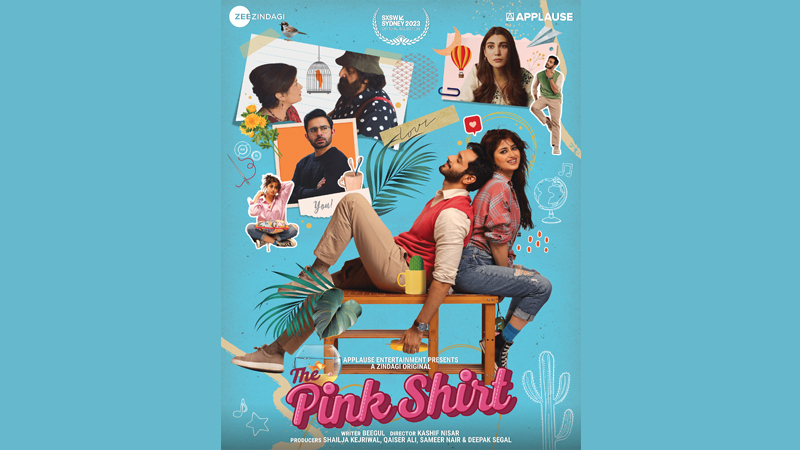
  • Zindagi and Applause Entertainment present ‘The Pink Shirt’

    Zindagi and Applause Entertainment present ‘The Pink Shirt’

    Mumbai: In a recently announced strategic partnership between the two renowned content studios Applause Entertainment and Zee’s Zindagi, for creating South Asian content; Sameer Nair and Shailja Kejriwal have announced yet another project- The Pink Shirt. The eight-episode web series, starring Pakistani superstars Sajal Aly and Wahaj Ali, marks Applause Entertainment and Zindagi’s second project together. The content studios together promise to be a remarkable addition to the world of entertainment as the drama gears up for its world premiere at the South by Southwest Film Festival 2023 Sydney (SXSW) at Palace Central Cinema on 16th October. Moreover, The Pink Shirt is the only South Asian web series selected at the SXSW, Sydney this year.

    Following the announcement of Farar’s world premiere at the Chicago South Asian Film Festival earlier this month, The Pink Shirt adds a new feather to Zindagi and Applause Entertainment’s hat of achievements. To witness this global recognition at one of the largest annual festivals celebrating conglomeration of parallel cinema, interactive media, music, and much more; Pakistani superstars and lead actor Sajal Aly along with director Kashif Nisar, writer Bee Gul, and producer Shailja Kejriwal will be attending the grand festival in Australia.

    The Pink Shirt is a riveting take on modern-day relationships, their love, challenges, and struggles in a raw & real way. The drama revolves around the journey of Sophia cast as Sajal Aly and Umer as Wahaj Ali being stuck in their respective toxic relationships with their partners Sameer and Sara and how they then discover an alluring intensity and embark on a transformative journey towards love that mends them as people.

    The renowned SXSW festival marks its debut in Sydney this year, making its first foray outside Austin, Texas. The festival will have a diverse array of content, with an emphasis on the Asia-Pacific region.

    Expressing her excitement, lead actor Sajal Aly said, “The Pink Shirt challenged me in ways I never imagined, delving deep into the complexities of human connections. It’s a journey I’ve embraced with open arms, and as we prepare for its world premiere in Sydney, I can’t contain my excitement to share this emotional voyage with the world.’

    Sajal Aly’s co-actor and Pakistani heartthrob Wahaj Ali added, “Portraying the complexities of human relationships in The Pink Shirt has been a remarkable challenge and the script demanded an exploration of emotions and vulnerabilities that pushed me as an actor. My experience working with Sajal and Kashif has been an absolute delight. I can’t wait for the audiences to embark on this emotional rollercoaster with us.”

    Director Kashif Nisar said, “As the director of The Pink Shirt, I am humbled and thrilled by the opportunity to showcase our work at the prestigious SXSW Sydney as the only representative of the South Asian web series, hoping it will resonate with audiences worldwide and contribute to the rich tapestry of storytelling from our region. It was an absolute pleasure working with Shailja and Bee Gul on this project, and we couldn’t be happier for Zindagi and Applause Entertainment’s collaboration as this merger provides us with the ultimate platform this special project really needs.”

    Reflecting on this significant milestone, Zee Entertainment Enterprises Ltd chief creative officer (special projects) Shailja Kejriwal added, “I couldn’t be happier to announce our yet another collaboration with Applause Entertainment. It’s truly thrilling to see ‘The Pink Shirt’ selected as the only South Asian web series at the prestigious SXSW Film Festival Sydney. This achievement underscores our commitment to bringing diverse narratives to a global stage. I’m immensely proud of our team and excited to witness The Pink Shirt captivate audiences at SXSW Film Festival, Sydney”

    Writer Bee Gul added, “As the writer of ‘The Pink Shirt,’ my intention has consistently been to weave a tale of love, loss, and unwavering strength that deeply connects with audiences around the globe. The exhilarating debut of our show at the SXSW Film Festival in Sydney is the realization of a long-held dream, affording us a worldwide stage to share this emotionally resonant narrative. I’m profoundly grateful to Shailja for recognizing the same potential we envisioned in ‘Pink Shirt’ and selecting it as the second collaborative endeavor between Zindagi and Applause Entertainment.”

    Presented by Applause Entertainment, a Zindagi original ‘The Pink Shirt’ an eight-part web series, is a South Asian collaboration between India and Pakistan. Directed by Kashif Nisar & written by Bee Gul, starring Sajal Aly and Wahaj Ali, the series highlights a riveting take on modern-day relationships, their love, challenges, and struggles. Narrated in a raw & real way The Pink Shirt is a simple & confusing, tragic yet funny tale of broken and complex relationships.
  • “Let India open its market, we will open ours” – PEMRA chairman Absar Alam

    “Let India open its market, we will open ours” – PEMRA chairman Absar Alam

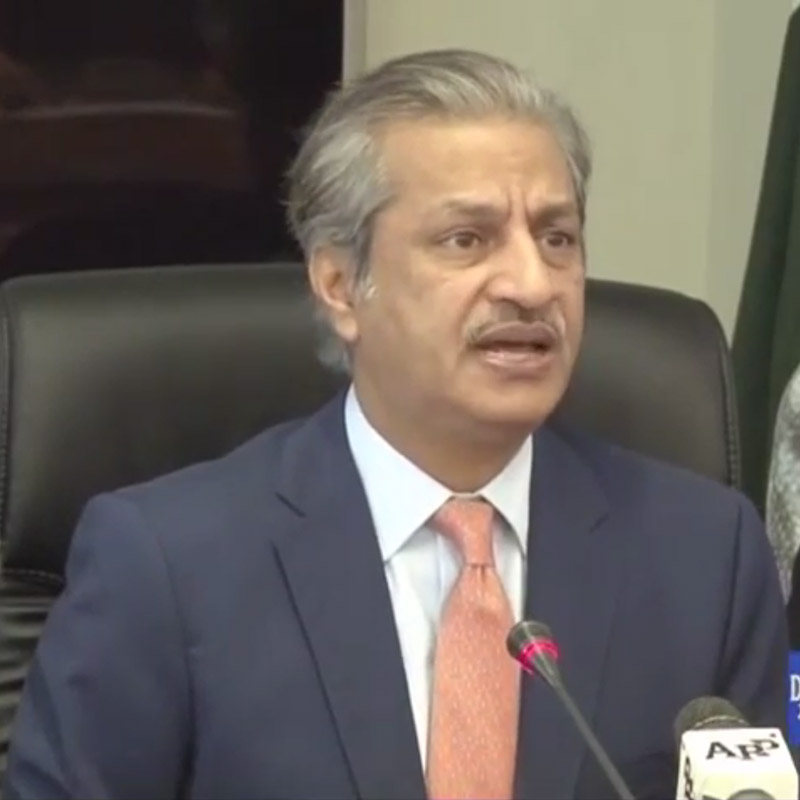
    Pakistan’s TV watchdog – the Pakistan Electronic Media Regulatory Authority (PEMRA) – charimanAbsarAlam was in the line of Pakistan’s Geo News anchor Shahzaib Khanzada’s fire last week. In his Monday to Thrusday current affairs talk show Aaj ShahzaibKhanzada Kay Sath – the anchor grilled him time and time again on PEMRA’s one-sided decision to ban Indian content.

    Alam, a former journalist, answered as best as he could, but not to Shahzaib’s satisfaction.The interview on Geo News was hard hitting and no-holds barred. Shahzaibwas clear that while he was in favour of blocking Indian content which could cause unrest in Pakistan, PEMRA’s decision to take away choice from the Pakistan consumer was unwelcome.

    We, at indiantelevision.com, believe that the interview could help throw some light on what transpired from Pakistan’s viewpoint that forced the watchdog to pull the plug. Read on for the excerpts from the interview:

    Why have you taken a decision to blanket ban Indian content?

    Pakistan industry was being hit courtesy the Indian TV shows, films and music. But the reason is not only because all Indian dramas are popular; there are others too. Probably one or two are popular. The problem is low quality Indian dramas are made in India and are made available to Pakistani channels at low prices who then air them in prime time. The lay Pakistan viewer then watches them as he has to watch something or the other when he sits in front of the TV, especially during prime time. The thing is if cheap Indian dramas are airing during prime time, expensive Pakistani dramas and series will not  get space.

    Indian dramas want to enter Pakistan, they will have to open on a reciprocal basis to Pakistani dramas. I don’t think Indian dramas are so popular that Pakistan viewers will come down to breaking windows. I am not talking about films I am talking about TV dramas.

    How are you going to stop Indian DTH?

    These days illegal Indian DTH is not flocking in to Pakistan.  If it is anywhere, please let me know, I will crack down on it. Indian DTH is running in rich households in Pakistan. Cantonments, DH (defence housing).

    Islamabad’s E7, Karachi has Clifton, Lahore’s Gulburg are the places where Indian DTH has popped up. We will go there also. We have written to the defence ministry to stop Indian DTH in their cantonment and DH houses.  The second line we are taking is on their subscription payment methods. We will start working on their money trail of the monthly renewal from next week. I hope to block this totally so that Pakistan can have its own DTH too.

    Will you raid people’s homes, which have DTH dishes?

    Why would we want to do that? We will not be raiding houses, we don’t want to intrude on people’s privacy. In most societies, there are laws that prevent you from hanging your clothes on the railing, then how are they allowing illegal Indian DTH services to run? The housing societies will have to cooperate. And people will themselves cooperate with us and remove the dishes that are already installed.  

    In the past, Pakistan banned Indian films. That did not help, it encouraged the parallel economy or piracy, which did not allow tax to come Pakistan’s way. Yet it also enriched the pockets of a few. Won’t this current ban result in the same what with the internetand DTH proliferating now?

    We have studied and tracked that at least 36 arab rupees are going India’s way courtesy its DTH services. When we tackle this through the banking sector, you will see results. People will not swing towards Indian DTH.

    In India, Zee Zindagi dropped Pakistani shows without any government interference. Almost 73 per cent of Pakistan’s revenue is coming courtesy Indian films. Ever since Indian films were shown, Pakistan films also got an audience. It is the choice of Pakistani viewers to watch what they want to watch. Aren’t you doing away with that freedom by regulating what comes on the screen. Why is the government intervening?

    We have our own drama industry. It is our duty to protect their rights. We have our artistes. In India, there are some forces which are not allowing a film starring Pakistani artistes not to be released. In Pakistan, there are media houses insisting which want Indian dramas to be shown. Is it not ironical?

    Be that as it may. India’s foreign minister has said he has not banned any film. There are right wing fundamentalists who are taking that stance. The Indian government is not imposing anything. Why are you?

    The government there is resorting to double speak. It is saying we are not compelling anyone. But tell me: is everything happening there without the government’s consent? You have an entertainment channel, try playing your entertainment dramas there now? Try getting an entertainment licence for GEO Entertainment from India.  Can you get it? I will give Zee a licence for the landing rights. I am giving you that assurance (if a Pakistani channel gets one)

    Once again, I am reiterating, it is about restricting choice. And it’s about the government being unable to reverse a legislation in future about banning Indian content.

    Who told you it is going to be difficult to reverse any decisions. You have a misunderstanding that PEMRA takes its decision under someone’s pressure. It takes its own decisions.

    Remember YouTube. You could not open it up after you restricted it.

    YouTube has opened up.

    For two and a half years it was shut.  Yes, but you were constrained from making any announcements. And are you reacting now to India’s position on Pakistan?

    Comparing YouTube and this is not proper. The reason why we banned Youtube was a sensitive issue. It did not shut down because of Indian content. It is open now. Should not there be parity between India and Pakistan? Should there not be reciprocity? Let India open its market, we will open ours.

    No1. Anything that is happening in Pakistan which is illegal under PEMRA’s framework, we will act on it – whether it is Pakistan’s news channels. Or entertainment channels. Or FM Radio channels. Or cable operators. Or excessive Indian contentWhoever is violating laws, we will go after them from time to time with increasing frequency.

    And it was part of our campaign, our schedule to do away with Indian DTH. Which we have now done.

    The third reason is that our local drama industry is getting destroyed. We have to protect their rights. Like Indian cars that cannot be sold in Pakistan though they are cheaper to make there. Or you allow free trade with India on all goods. Why should only drama come, why not others? Why should not our goods go there? This one way traffic cannot go on. We are not being reactive.

    On the music front, will you allow Hindi songs sung by Pakistani singers in Indian films to be played on Pakistan FM radio?

    The songs sung by Pakistani singers are our songs sung by our artistes. They are ok if they have sung the songs here. And on radio you will not come to know what is the background of the songs, whether it is a film or not. Even on TV if Rahat Fateh Ali Khan or Atif Aslam have made videos of the film songs they have sung, they can play those.

    It was six per cent earlier of Indian content on FM radio. One hour 15 minutes Indian content. You mean to say that Pakistan’s stations can’t fill that up with Pakistan songs?

    But you could have been firm on the six per cent rule. You could have enforced it. Why did you go for a ban?

    We did. We did. We are under tremendous public pressure and we have done it in the public interest. People did not want Indian music to come on Pakistan radio. I don’t want to provoke people, there was a lot of anti-India sentiment. People were asking why are Pakistani songs playing on Indian radio?

    You are becoming a victim of populist speak.  Indian right-wingers are doing the same. If someone does not like content on a Pakistan a channel, he can change it? Why do away with choice of Pakistani people?

    I agree if someone does not like Pakistani content, he can switch it off.

    So if someone does not want to watch Indian content, can’t he switch it off?

    This will not happen. It is damaging our economy – our dramas are suffering. There was so much of Indian content being shown there was very little space for Pakistani shows.

  • “Let India open its market, we will open ours” – PEMRA chairman Absar Alam

    “Let India open its market, we will open ours” – PEMRA chairman Absar Alam

    Pakistan’s TV watchdog – the Pakistan Electronic Media Regulatory Authority (PEMRA) – charimanAbsarAlam was in the line of Pakistan’s Geo News anchor Shahzaib Khanzada’s fire last week. In his Monday to Thrusday current affairs talk show Aaj ShahzaibKhanzada Kay Sath – the anchor grilled him time and time again on PEMRA’s one-sided decision to ban Indian content.

    Alam, a former journalist, answered as best as he could, but not to Shahzaib’s satisfaction.The interview on Geo News was hard hitting and no-holds barred. Shahzaibwas clear that while he was in favour of blocking Indian content which could cause unrest in Pakistan, PEMRA’s decision to take away choice from the Pakistan consumer was unwelcome.

    We, at indiantelevision.com, believe that the interview could help throw some light on what transpired from Pakistan’s viewpoint that forced the watchdog to pull the plug. Read on for the excerpts from the interview:

    Why have you taken a decision to blanket ban Indian content?

    Pakistan industry was being hit courtesy the Indian TV shows, films and music. But the reason is not only because all Indian dramas are popular; there are others too. Probably one or two are popular. The problem is low quality Indian dramas are made in India and are made available to Pakistani channels at low prices who then air them in prime time. The lay Pakistan viewer then watches them as he has to watch something or the other when he sits in front of the TV, especially during prime time. The thing is if cheap Indian dramas are airing during prime time, expensive Pakistani dramas and series will not  get space.

    Indian dramas want to enter Pakistan, they will have to open on a reciprocal basis to Pakistani dramas. I don’t think Indian dramas are so popular that Pakistan viewers will come down to breaking windows. I am not talking about films I am talking about TV dramas.

    How are you going to stop Indian DTH?

    These days illegal Indian DTH is not flocking in to Pakistan.  If it is anywhere, please let me know, I will crack down on it. Indian DTH is running in rich households in Pakistan. Cantonments, DH (defence housing).

    Islamabad’s E7, Karachi has Clifton, Lahore’s Gulburg are the places where Indian DTH has popped up. We will go there also. We have written to the defence ministry to stop Indian DTH in their cantonment and DH houses.  The second line we are taking is on their subscription payment methods. We will start working on their money trail of the monthly renewal from next week. I hope to block this totally so that Pakistan can have its own DTH too.

    Will you raid people’s homes, which have DTH dishes?

    Why would we want to do that? We will not be raiding houses, we don’t want to intrude on people’s privacy. In most societies, there are laws that prevent you from hanging your clothes on the railing, then how are they allowing illegal Indian DTH services to run? The housing societies will have to cooperate. And people will themselves cooperate with us and remove the dishes that are already installed.  

    In the past, Pakistan banned Indian films. That did not help, it encouraged the parallel economy or piracy, which did not allow tax to come Pakistan’s way. Yet it also enriched the pockets of a few. Won’t this current ban result in the same what with the internetand DTH proliferating now?

    We have studied and tracked that at least 36 arab rupees are going India’s way courtesy its DTH services. When we tackle this through the banking sector, you will see results. People will not swing towards Indian DTH.

    In India, Zee Zindagi dropped Pakistani shows without any government interference. Almost 73 per cent of Pakistan’s revenue is coming courtesy Indian films. Ever since Indian films were shown, Pakistan films also got an audience. It is the choice of Pakistani viewers to watch what they want to watch. Aren’t you doing away with that freedom by regulating what comes on the screen. Why is the government intervening?

    We have our own drama industry. It is our duty to protect their rights. We have our artistes. In India, there are some forces which are not allowing a film starring Pakistani artistes not to be released. In Pakistan, there are media houses insisting which want Indian dramas to be shown. Is it not ironical?

    Be that as it may. India’s foreign minister has said he has not banned any film. There are right wing fundamentalists who are taking that stance. The Indian government is not imposing anything. Why are you?

    The government there is resorting to double speak. It is saying we are not compelling anyone. But tell me: is everything happening there without the government’s consent? You have an entertainment channel, try playing your entertainment dramas there now? Try getting an entertainment licence for GEO Entertainment from India.  Can you get it? I will give Zee a licence for the landing rights. I am giving you that assurance (if a Pakistani channel gets one)

    Once again, I am reiterating, it is about restricting choice. And it’s about the government being unable to reverse a legislation in future about banning Indian content.

    Who told you it is going to be difficult to reverse any decisions. You have a misunderstanding that PEMRA takes its decision under someone’s pressure. It takes its own decisions.

    Remember YouTube. You could not open it up after you restricted it.

    YouTube has opened up.

    For two and a half years it was shut.  Yes, but you were constrained from making any announcements. And are you reacting now to India’s position on Pakistan?

    Comparing YouTube and this is not proper. The reason why we banned Youtube was a sensitive issue. It did not shut down because of Indian content. It is open now. Should not there be parity between India and Pakistan? Should there not be reciprocity? Let India open its market, we will open ours.

    No1. Anything that is happening in Pakistan which is illegal under PEMRA’s framework, we will act on it – whether it is Pakistan’s news channels. Or entertainment channels. Or FM Radio channels. Or cable operators. Or excessive Indian contentWhoever is violating laws, we will go after them from time to time with increasing frequency.

    And it was part of our campaign, our schedule to do away with Indian DTH. Which we have now done.

    The third reason is that our local drama industry is getting destroyed. We have to protect their rights. Like Indian cars that cannot be sold in Pakistan though they are cheaper to make there. Or you allow free trade with India on all goods. Why should only drama come, why not others? Why should not our goods go there? This one way traffic cannot go on. We are not being reactive.

    On the music front, will you allow Hindi songs sung by Pakistani singers in Indian films to be played on Pakistan FM radio?

    The songs sung by Pakistani singers are our songs sung by our artistes. They are ok if they have sung the songs here. And on radio you will not come to know what is the background of the songs, whether it is a film or not. Even on TV if Rahat Fateh Ali Khan or Atif Aslam have made videos of the film songs they have sung, they can play those.

    It was six per cent earlier of Indian content on FM radio. One hour 15 minutes Indian content. You mean to say that Pakistan’s stations can’t fill that up with Pakistan songs?

    But you could have been firm on the six per cent rule. You could have enforced it. Why did you go for a ban?

    We did. We did. We are under tremendous public pressure and we have done it in the public interest. People did not want Indian music to come on Pakistan radio. I don’t want to provoke people, there was a lot of anti-India sentiment. People were asking why are Pakistani songs playing on Indian radio?

    You are becoming a victim of populist speak.  Indian right-wingers are doing the same. If someone does not like content on a Pakistan a channel, he can change it? Why do away with choice of Pakistani people?

    I agree if someone does not like Pakistani content, he can switch it off.

    So if someone does not want to watch Indian content, can’t he switch it off?

    This will not happen. It is damaging our economy – our dramas are suffering. There was so much of Indian content being shown there was very little space for Pakistani shows.

  • Zindagi campaign breaks the story-telling code

    Zindagi campaign breaks the story-telling code

    BENGALURU: Zindagi, a premium mass Hindi GEC from the bouquet of Zee Entertainment Enterprises (Zeel), kick-started its marketing campaign with brand films highlighting Zindagi’s channel proposition ‘Jodey Dilon Ko’.


    The channel is upbeat about its pan-India launch. “Probably for the first time in the country, a Hindi channel launch is being announced in the south,” said Zeel marketing head (national channels) Akash Chawla in Bengaluru. “We have seen increase in consumption of Hindi entertainment content in the Hyderabad-Bengaluru-Chennai regions in recent times. The south is now an important market for Hindi content,” he added.


    The channel has brought on board Askme.com and Fogg as brand partners. “Talks are on with other partners as well, and we are sure to have more brands tying up with us,” revealed a source at Zeel.


    The marketing campaign created by FCB Ulka comprises two brand films directed by ‘Kai Po Che’ director Abhishek Kapoor. The objective behind the campaign is to showcase the similarities in different cultures and emotions despite the differences in language, attire and lifestyle of people across the borders.


    FCB Ulka NCD KS Chakravarthy said, “The insight behind the whole campaign is as simple as it is powerful – we may come from different countries, different cultures, but our emotions, our joys, our triumphs are all surprisingly similar. And it is this simple human truth that the two launch television commercials capture in a simple, believable manner. The device of literally cutting mid-sentence from one protagonist to the other brings this alive in a vivid manner – and leads beautifully into the summing up thought for the channel, Jodey Dilon Ko.”


    Director Abhishek Kapoor added, “My family traces its roots to pre-partition to Pakistan.  I grew up to stories of shared lives and times, subsequently lost to borders. Deep within, there was a heart-felt hope that this cultural legacy would one day find its way back, reunited. My association with Zindagi is a manifestation of this.”


    Chawla said, “Zindagi’s brand proposition ‘Jodey Dilon Ko’ has been the key thought around every medium of communication. The storytelling possesses an ability to convey beauty and emotion in a way that no other medium can. The films also use language that is heartwarming with a story that is rich in human elements such that it inspires empathy, makes us think differently, appreciate something more, and understand something more thoroughly. Abhishek Kapoor and FCB Ulka have done a brilliant job of creating profound and touching films that clearly translate our vision on screen. It’s heartening to know that the freshness of this campaign has become the talking point everywhere. The TVCs exhibit our distinct promise of Zindagi being a category creator in the GEC space.”


    Detailing the concept behind these films, Akash explained, “The narrative approach adopted in the storytelling begins with a ‘universal truth’ or situation that transcends culture or language. Also, the use of emotion conveyed in every situation portrayed in the brand films plays an important role as it captures the real emotion that we can trust. Viewers want to connect with their innate human nature. We believe that with Zindagi, we have something universally relatable, emotional and powerful to showcase and that is reflected in the films.”


    The TV campaign is ably supported by its promotion in print, OOH and digital mediums.

  • I go by my gut feeling: Punit Goenka

    I go by my gut feeling: Punit Goenka

    MUMBAI: Carrying forward Zee Entertainment Enterprises (ZEEL) brand positioning statement, ‘Vasudhaiva Kutumbakam – The World is My Family’, the country’s oldest entertainment network, is launching a new GEC, Zindagi, on 23 June. The third GEC offering from the Zee stable will showcase soaps and telefilms from across the border. That the network had acquired Pakistani shows during Mipcom 2013 had been reported by indiantelevision.com.

    According to Zeel MD & CEO Punit Goenka, “The focus will not be on the negativity but to bring out positivity between the two countries.” The two countries are separated by borders but the emotions and lifestyle of people on either side remains the same. “We want to join the two hearts,” he adds while emphasising on the tagline of the channel, Jodey dilon ko.

    Replying to a question about whether the move will go down well with the Indian audiences, Goenka says, “I have always gone by my gut feeling and that is the most important for me.” Apparently, the network spent close to two and a half years on the process before making the announcement.

    The channel did a lot of homework; so much so, that the channel roped in research agency AC Nielsen, to know what people want and what was their reaction when the promos of the shows was shown to them.

    About Urdu posing a barrier, Goenka feels that like Hindi, Urdu too has undergone a change with the changing times. “Actually, the USP of the channel is the language. People are tired of the colloquial language and want that sophistication,” he says, adding that the channel caters to the classes and not the masses.

    On one more GEC’s launch, BPN India CEO Suresh Balakrishnan feels that there is never too much of entertainment and more the merrier. As for the content from across the border he feels that a few years back Pakistani content was very popular amongst Indians. “But whether it will be able to work in today’s time is a little doubtful and one will have to wait and watch to see what happens next,” he says while applauding Zee’s attempt.

    “News faces, new stories are bound to capture people’s attention and maybe down the line, the channel will be able to create a special niche of audience for itself,” he adds.

    Shows like Zindagi gulzar hai, Aunn zara, Humsafar, Ishq ghumsguda promise to break the studio set-up of Indian daily soaps and promises to take one to the outer surroundings, as shown in the channel’s promotional video.

    A separate team was created for the channel which the network doesn’t want cast in a similar mould as it other GECs. The team comprises Priyanka Datta as business head, Rahul Sharma as national sales head, Vanita Jain as programming head, Sumona Roy Sen as brand head, Shailja Kejriwal as the chief creative head for special projects and Akash Chawla as national channel marketing head.

    Chawla has big plans for the channel’s pan-India launch. The marketing campaign teaser went online on 5 May and will spread to other mediums from 10 May onwards. A mix of 40-45 channels will soon start showing the brand film created by Kai Po Che director Abhishek Kapoor. Network channels too will put across the new channel’s message in their content. “The marketing campaign is going to be very innovative, be it print or otherwise. We are focusing a lot on OOH as well, this time,” said Chawla. Talks are on with various OOH players and more than 500 hoardings will be bought across the nation.

    The channel’s creative duties will be handled by FCB Ulka while MEC is the media agency.

    A staggering Rs 80-100 crore is expected to be invested on the campaign. “This is the first time a channel is being launched across the country, otherwise one focuses on the Hindi speaking markets (HSM) and then forgets about other markets,” Goenka points out.

    In the near future, the plan is to get content from other countries (Middle East) as well if the content connects with viewers. At the same time, Zee will not shy away from creating original content for Zindagi either.

    South East Asia is the main focal point for the channel and soon after its launch in India, Zindagi will go abroad. Talks are already on for output deals with Pakistan to simulcast content especially that created in India.

    As of now, the channel is available only on SD and is priced much higher than other GECs at Rs 25.81. It will be available on both analog and digital platforms in the country.