Tag: Zee TV

  • Why the Barun Sobti starrer ‘Mohra’ failed to kick off

    Why the Barun Sobti starrer ‘Mohra’ failed to kick off

    MUMBAI: Speculation about BBC Worldwide India’s the fate of the new show Mohra earlier named Satya Ki Kiran to be aired on Zee TV can finally be laid to rest

    Originally, the BBC crime thriller was to be a finite series of 26 episodes and was supposed to air as a weekend property. However, in last few months the show underwent a few major changes that included extending 26 episodes to a 120 episodic daily soap and a changed moniker.

    Rumours like the channel changing its programming strategy and the show not quite fitting into the new strategy, the production house failing to give value to the show, a lot has been said about SKK/Mohra. 

    Giving rest to all speculation, BBC Worldwide creative head of fiction Richa Yamini explained, “In light of the current programming the new management at Zee decided to re-evaluate its strategy and wanted to opt for something different. We of course, had complete faith that the audience would love a story with a different setup but very relatable emotions.”

    The channel has refused to comment on the entire issue. 

  • Why the Barun Sobti starrer ‘Mohra’ failed to kick off

    Why the Barun Sobti starrer ‘Mohra’ failed to kick off

    MUMBAI: Speculation about BBC Worldwide India’s the fate of the new show Mohra earlier named Satya Ki Kiran to be aired on Zee TV can finally be laid to rest

    Originally, the BBC crime thriller was to be a finite series of 26 episodes and was supposed to air as a weekend property. However, in last few months the show underwent a few major changes that included extending 26 episodes to a 120 episodic daily soap and a changed moniker.

    Rumours like the channel changing its programming strategy and the show not quite fitting into the new strategy, the production house failing to give value to the show, a lot has been said about SKK/Mohra. 

    Giving rest to all speculation, BBC Worldwide creative head of fiction Richa Yamini explained, “In light of the current programming the new management at Zee decided to re-evaluate its strategy and wanted to opt for something different. We of course, had complete faith that the audience would love a story with a different setup but very relatable emotions.”

    The channel has refused to comment on the entire issue. 

  • Private broadcasters, DD, telcos and the terrestrial TV dilemma

    Private broadcasters, DD, telcos and the terrestrial TV dilemma

    MUMBAI: There was once a treasured medium. Everyone – 300 million when it started and -800-odd million two decades ago – flocked to it everyday. Every evening and more so on Sunday mornings they gathered around the one eyed God in their homes. They switched it on manually – and later with a remote device – waited for the picture to appear on the glass screen to be transported to another universe. Where they could laugh, learn, cry, enjoy unencumbered. In the comfort of the home.

    For years, terrestrial television run by the state owned broadcaster Doordarshan – and later by its parent Prasar Bharati – was our main source of information, entertainment, and education. We Indians used to carp and crib that it gave us one sided information, did not entertain us enough, delivered low quality images, was too rigidly controlled. But the reality is it did engage the nation – at least three generations – during different periods since 1960 when TV was flagged off in India – in internet-before times, in prior-to- liberalisation times.

    And yes it did present a platform to a preferred few, to churn out content, which would become the opium for many. Allegations of nepotism, favouritism, corruption were hurled at the powers that be in the portals of Doordarshan and in the ministry of information and broadcasting as a few producers became rich. As did the paanwala below Mandi House who directed and passed on the scripts and proposals of producers to the higher ups or so it was rumoured

    Doordarshan was a God supreme. Impenetrable. Ubiquitous. And all pervasive. It reached out to every nook and cranny of this nation of ours thanks to the lavish spread of transmitters. In TV set and electricity poor regions of heart land India, its magnetic appeal was so great, that villagers would bring out a generator, which would crank out power, and supply it to a single TV as an entire community sat enthralled before it. In urban India, streets used to be deserted as cities’ denizens huddled around it in worship like awe.

    The Doordarshan of today has the same reach. But not the appeal. The terrestrial network has over the years become a very poor shadow of its earlier muscular self. Indians have fled to cable TV, DTH TV, online and OTT linear services on their mobile phones. A new crop of Gods has emerged – Star India, Zee TV, Sun TV, Sony Pictures, Viacom18, Youtube, Facebook, Hotstar, Voot, dittoTV, Netflix – and they are obsessing a nation wanting to be entertained.

    An archaic government diktaat – passed under the Cable TV Regulations Act- forces both cable TV and DTH networks to carry DD channels at no cost to government, even as other services struggle to pay top dollar to get carriage.

    The spectrum that Doordarshan occupies for its terrestrial transmissions nationally is extremely valuable. And the Modi-led government probably realizes this. Hence, the recent release of the consultation paper by the Telecom Regulatory Authority of India that seeks to understand how private players could be allowed in the terrestrial broadcasting space. Auctioning it or allowing public private sector participation could provide tens of thousands of crore to the exchequer. And possibly to the ailing Doordarshan, which depends on government dole and tax payer money for its continued existence. Prasar Bharati CEO Jawahar Sircar has been tearing his hair out but has admitted that he has found it very difficult to bring a sense of discipline to its vast employee force nationally. He has said that he is sitting on a gold mine with Prasar Bharati but he has confessed the culture in the organization has made it very difficult to mine and yield profits.

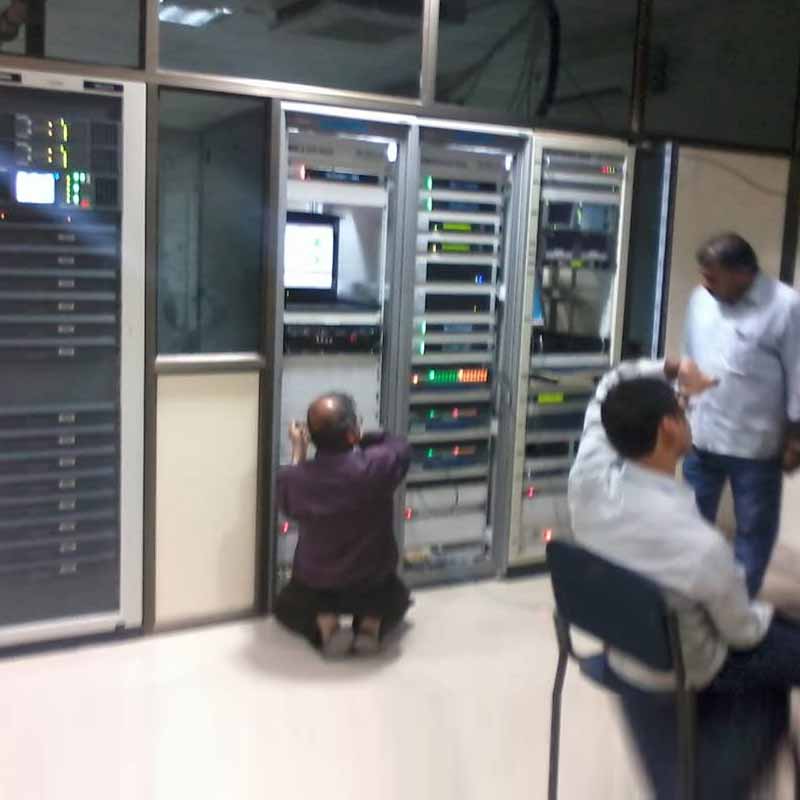
    Globally, broadcasters in most markets have migrated to digital using one of the four technical standards: DVB-T (European), ATSC (American), ISDBT (Japanese), and Chinese (DTMB). DD has been tentative about the migration; it has stayed put in standard analog mode with its 1,400 transmitters standing tall. It has installed only some 20-odd DVB-T transmitters; another 40-odd are planned; altogether 600 odd digital transmitters are to replace the current analog ones.

    The cost of this migration is going to run into tens of thousands of crore as old archaic transmitters and analog work flows are converted to digital. It’s something which Prime Minister Narendra Modi would definitely like to be done. But the question is: does it make economic sense under Doordarshan and Prasar Bharati?

    DD is taking the slot sale route once again and inviting private producers to create content, sell the advertising air time, and pay it a flat fee. Sounds interesting, but it’s not something that’s attracting successful private sector producers by the truck load. Most of them are tied up with productions on private channels like ZeeTV, Sony, Star and Colors. The risk factor of producing something on DD is proving daunting for them. So only time will tell whether DD’s private slot sale scheme will work or not. The previous attempt was a sheer disaster as at that time DD dished out oodles of cash to producers who did not really care about what they put out on air. They only pocketed their high margins, which they made, according to DD sources.

    Does DD have a future on its own? Yes, its FreeDish DTH service has caught on like wildfire because of its low cost. But research has shown that some viewers are not staying loyal to it; they are rotating the small dish around to catch signals from other private providers. Also, overall, churn in the DTH space is pretty high as consumers have been service-hopping to avoid paying the high tab each of the operators is charging.

    An issue that the government could think about is: why not privatise the analogue DD as well instead of just selling out slots? The reasons governments at the Centre in the past have held on to the public caster is because they wanted to have a media outlet through which their viewpoint could be heard, and also provide public service programmes to help those in the rural heartlands. But of what use is a network that fewer and fewer viewers are opting for is something those in power need to think about. Private newspapers and TV news channels are anyway behaving like handmaidens of the Narendra Modi-led government. And it could easily sell most of the DD network to private players while retaining some time slots for itself to propagate its views. Additionally, it could mandate leading Indian broadcasters to do really good public service TV programmes on their more popular channels even while paying them to do so. That could prove a cheaper proposition, than running a unwieldy behemoth.

    So does it make sense to privatize the digital terrestrial television space? And who else apart from Doordarshan could venture into it? Prima facie it does: the world over DTT is holding its own against cable and satellite television. Of course, in India’s case, the impact of mobile has been humungous with nearly a billion subscribers, and around 250 million mobile internet users.

    The 4G LTE revolution has yet to hit India. The era of fast cheaper data and internet access is knocking on its doors. Things will change drastically when it does arrive. Among the major players in this segment everyone has been watching to turn on the data juice are: Reliance, Airtel, Idea, Vodafone. 4G LTE and DTT can easily be married to each other thus allowing users to watch terrestrial television on their tablets and phones while on the move. All it requires is a dongle or a chip to be inserted into the smart HD-ready handsets. And viola, you could get a clutch of digital channels.

    And that brings us to the answer of who could get into DTT – obviously the telcos, and primarily Reliance Industries, which is bidding to revolutionise India’s mobile habits.Yes, its Jio venture is heavily laden with debt, but even that is a drop in the ocean, compare to what the megacorp makes from its oil and gas businesses. Then possibly Airtel; the company is already in the DTH platform space. The Tata group: it operates a platform along with Rupert Murdoch’s Sky. The ZeeTV-Essel group which has a strong presence in cable TV, DTH, OTT, and broadcasting. Star India, which has stuck to being a content creator, but its parent Twenty First Century Fox has deep and rich experience in DTH, and terrestrial TV.

    However, a note of caution here: they will get in only if it is economically feasible. On the face of it, the RoI will take a long time – a very long time. Unless innovative models are resorted to. One of these could be to have the private sector bid for either cities, states or regions. This will help distribute the capital risk among several players, each of who could take up a city or a region for their individual DTT service.

    The DTT solution could take some time finding. And it may well be buried because of the rapid strides that online content consumption is making. But at least a start has been made.
  • Private broadcasters, DD, telcos and the terrestrial TV dilemma

    Private broadcasters, DD, telcos and the terrestrial TV dilemma

    MUMBAI: There was once a treasured medium. Everyone – 300 million when it started and -800-odd million two decades ago – flocked to it everyday. Every evening and more so on Sunday mornings they gathered around the one eyed God in their homes. They switched it on manually – and later with a remote device – waited for the picture to appear on the glass screen to be transported to another universe. Where they could laugh, learn, cry, enjoy unencumbered. In the comfort of the home.

    For years, terrestrial television run by the state owned broadcaster Doordarshan – and later by its parent Prasar Bharati – was our main source of information, entertainment, and education. We Indians used to carp and crib that it gave us one sided information, did not entertain us enough, delivered low quality images, was too rigidly controlled. But the reality is it did engage the nation – at least three generations – during different periods since 1960 when TV was flagged off in India – in internet-before times, in prior-to- liberalisation times.

    And yes it did present a platform to a preferred few, to churn out content, which would become the opium for many. Allegations of nepotism, favouritism, corruption were hurled at the powers that be in the portals of Doordarshan and in the ministry of information and broadcasting as a few producers became rich. As did the paanwala below Mandi House who directed and passed on the scripts and proposals of producers to the higher ups or so it was rumoured

    Doordarshan was a God supreme. Impenetrable. Ubiquitous. And all pervasive. It reached out to every nook and cranny of this nation of ours thanks to the lavish spread of transmitters. In TV set and electricity poor regions of heart land India, its magnetic appeal was so great, that villagers would bring out a generator, which would crank out power, and supply it to a single TV as an entire community sat enthralled before it. In urban India, streets used to be deserted as cities’ denizens huddled around it in worship like awe.

    The Doordarshan of today has the same reach. But not the appeal. The terrestrial network has over the years become a very poor shadow of its earlier muscular self. Indians have fled to cable TV, DTH TV, online and OTT linear services on their mobile phones. A new crop of Gods has emerged – Star India, Zee TV, Sun TV, Sony Pictures, Viacom18, Youtube, Facebook, Hotstar, Voot, dittoTV, Netflix – and they are obsessing a nation wanting to be entertained.

    An archaic government diktaat – passed under the Cable TV Regulations Act- forces both cable TV and DTH networks to carry DD channels at no cost to government, even as other services struggle to pay top dollar to get carriage.

    The spectrum that Doordarshan occupies for its terrestrial transmissions nationally is extremely valuable. And the Modi-led government probably realizes this. Hence, the recent release of the consultation paper by the Telecom Regulatory Authority of India that seeks to understand how private players could be allowed in the terrestrial broadcasting space. Auctioning it or allowing public private sector participation could provide tens of thousands of crore to the exchequer. And possibly to the ailing Doordarshan, which depends on government dole and tax payer money for its continued existence. Prasar Bharati CEO Jawahar Sircar has been tearing his hair out but has admitted that he has found it very difficult to bring a sense of discipline to its vast employee force nationally. He has said that he is sitting on a gold mine with Prasar Bharati but he has confessed the culture in the organization has made it very difficult to mine and yield profits.

    Globally, broadcasters in most markets have migrated to digital using one of the four technical standards: DVB-T (European), ATSC (American), ISDBT (Japanese), and Chinese (DTMB). DD has been tentative about the migration; it has stayed put in standard analog mode with its 1,400 transmitters standing tall. It has installed only some 20-odd DVB-T transmitters; another 40-odd are planned; altogether 600 odd digital transmitters are to replace the current analog ones.

    The cost of this migration is going to run into tens of thousands of crore as old archaic transmitters and analog work flows are converted to digital. It’s something which Prime Minister Narendra Modi would definitely like to be done. But the question is: does it make economic sense under Doordarshan and Prasar Bharati?

    DD is taking the slot sale route once again and inviting private producers to create content, sell the advertising air time, and pay it a flat fee. Sounds interesting, but it’s not something that’s attracting successful private sector producers by the truck load. Most of them are tied up with productions on private channels like ZeeTV, Sony, Star and Colors. The risk factor of producing something on DD is proving daunting for them. So only time will tell whether DD’s private slot sale scheme will work or not. The previous attempt was a sheer disaster as at that time DD dished out oodles of cash to producers who did not really care about what they put out on air. They only pocketed their high margins, which they made, according to DD sources.

    Does DD have a future on its own? Yes, its FreeDish DTH service has caught on like wildfire because of its low cost. But research has shown that some viewers are not staying loyal to it; they are rotating the small dish around to catch signals from other private providers. Also, overall, churn in the DTH space is pretty high as consumers have been service-hopping to avoid paying the high tab each of the operators is charging.

    An issue that the government could think about is: why not privatise the analogue DD as well instead of just selling out slots? The reasons governments at the Centre in the past have held on to the public caster is because they wanted to have a media outlet through which their viewpoint could be heard, and also provide public service programmes to help those in the rural heartlands. But of what use is a network that fewer and fewer viewers are opting for is something those in power need to think about. Private newspapers and TV news channels are anyway behaving like handmaidens of the Narendra Modi-led government. And it could easily sell most of the DD network to private players while retaining some time slots for itself to propagate its views. Additionally, it could mandate leading Indian broadcasters to do really good public service TV programmes on their more popular channels even while paying them to do so. That could prove a cheaper proposition, than running a unwieldy behemoth.

    So does it make sense to privatize the digital terrestrial television space? And who else apart from Doordarshan could venture into it? Prima facie it does: the world over DTT is holding its own against cable and satellite television. Of course, in India’s case, the impact of mobile has been humungous with nearly a billion subscribers, and around 250 million mobile internet users.

    The 4G LTE revolution has yet to hit India. The era of fast cheaper data and internet access is knocking on its doors. Things will change drastically when it does arrive. Among the major players in this segment everyone has been watching to turn on the data juice are: Reliance, Airtel, Idea, Vodafone. 4G LTE and DTT can easily be married to each other thus allowing users to watch terrestrial television on their tablets and phones while on the move. All it requires is a dongle or a chip to be inserted into the smart HD-ready handsets. And viola, you could get a clutch of digital channels.

    And that brings us to the answer of who could get into DTT – obviously the telcos, and primarily Reliance Industries, which is bidding to revolutionise India’s mobile habits.Yes, its Jio venture is heavily laden with debt, but even that is a drop in the ocean, compare to what the megacorp makes from its oil and gas businesses. Then possibly Airtel; the company is already in the DTH platform space. The Tata group: it operates a platform along with Rupert Murdoch’s Sky. The ZeeTV-Essel group which has a strong presence in cable TV, DTH, OTT, and broadcasting. Star India, which has stuck to being a content creator, but its parent Twenty First Century Fox has deep and rich experience in DTH, and terrestrial TV.

    However, a note of caution here: they will get in only if it is economically feasible. On the face of it, the RoI will take a long time – a very long time. Unless innovative models are resorted to. One of these could be to have the private sector bid for either cities, states or regions. This will help distribute the capital risk among several players, each of who could take up a city or a region for their individual DTT service.

    The DTT solution could take some time finding. And it may well be buried because of the rapid strides that online content consumption is making. But at least a start has been made.

  • BARC week 24: Sun leads across genres, Colors replaces Star Plus at No 2

    BARC week 24: Sun leads across genres, Colors replaces Star Plus at No 2

    MUMBAI: Sun TV continued to be on top across all genres in week 24 of Broadcast Audience Research Council (BARC) All India data. Meanwhile Colors toppled Star Plus from its second position.

    Even though its ratings fell, Sun TV continued to lead across all genres with 866987 Impressions (000s) in week 24 as against 879042 Impressions (000s) in week 23.

    Colors notched up 696785 impressions (000s) followed by Star Plus which generated 688075 Impressions (000s).

    Zee TV maintained it fourth place in week 24 with 570088 Impressions (000s) while Star Utsav climbed up to number fifth with 521629 Impressions (000s) followed by Sony Max at number six with 484634 Impressions (000s). Zee Anmol was at the seventh position with 458530 Impressions (000s).

    Sony Pal slipped to umber eight from five with 447151 Impressions (000s) and Zee Telugu bagged the ninth spot with 446104 (000s). In week 24, Life OK stood at number ten with 428598 Impressions (000s).

  • BARC week 24: Sun leads across genres, Colors replaces Star Plus at No 2

    BARC week 24: Sun leads across genres, Colors replaces Star Plus at No 2

    MUMBAI: Sun TV continued to be on top across all genres in week 24 of Broadcast Audience Research Council (BARC) All India data. Meanwhile Colors toppled Star Plus from its second position.

    Even though its ratings fell, Sun TV continued to lead across all genres with 866987 Impressions (000s) in week 24 as against 879042 Impressions (000s) in week 23.

    Colors notched up 696785 impressions (000s) followed by Star Plus which generated 688075 Impressions (000s).

    Zee TV maintained it fourth place in week 24 with 570088 Impressions (000s) while Star Utsav climbed up to number fifth with 521629 Impressions (000s) followed by Sony Max at number six with 484634 Impressions (000s). Zee Anmol was at the seventh position with 458530 Impressions (000s).

    Sony Pal slipped to umber eight from five with 447151 Impressions (000s) and Zee Telugu bagged the ninth spot with 446104 (000s). In week 24, Life OK stood at number ten with 428598 Impressions (000s).

  • BARC week 23: Sun TV continues to top all genres, Sony Max moves even lower

    BARC week 23: Sun TV continues to top all genres, Sony Max moves even lower

    MUMBAI:  Sun TV continued its run at the top position in week 23 of Broadcast Audience Research Council (BARC) All India data, followed by Star Plus and Colors at second and third place respectively with Sony Max, now bereft of the IPL luxury, moving even lower down in the pecking order from its last week’s fourth place to seventh. The list covers the top 10 channels across all genres.

    Placed at the top slot, Sun TV reported lower ratings in week 23 at 879042 Impression (000s) as compared to 979272 Impression (000s) in week 22. Star Plus with lower ratings than last week’s 771342 Impression (000s) retained second spot with 749377 Impression (000s) in week 23.

    Colors also retained third place with 718225 Impression (000s) in week 23 as compared 720052 Impression (000s) in week 22. Zee TV moved up to fourth place in week 23 with ratings of 552118 Impressions (000s) as compared to 567178 Impressions (000s) in the previous week.

    Sony Pal moved up two places from its last week’s position to fifth place with 521869 Impressions (000’s) as compared to 526739 Impressions (000’s) in week 22. Star Utsav retained sixth place in week 23 with 513660 Impressions (000’s) as compared to 527825 Impressions (000’s) in week 22.

    Sony Max with a far lower score in week 23 of 483717 Impression (000s) as compared to 618756 Impression (000s) in week 22 was demoted to seventh place. Zee Telugu moved one up place to eight spot in week 23 with 448342 Impressions (000s) as compared to  472509 Impressions (000s) during week 22, hence pushing down Life OK, which slid down two positions to tenth place.

    Zee Anmol move up one place to ninth in week 23 with 444174 Impressions (000s) as compared to 431517 Impressions (000s) in week 22. Life OK was at tenth place in week 23 with 433932 Impressions (000s) as compared t0 438899 Impressions (000s) in week 22.

  • BARC week 23: Sun TV continues to top all genres, Sony Max moves even lower

    BARC week 23: Sun TV continues to top all genres, Sony Max moves even lower

    MUMBAI:  Sun TV continued its run at the top position in week 23 of Broadcast Audience Research Council (BARC) All India data, followed by Star Plus and Colors at second and third place respectively with Sony Max, now bereft of the IPL luxury, moving even lower down in the pecking order from its last week’s fourth place to seventh. The list covers the top 10 channels across all genres.

    Placed at the top slot, Sun TV reported lower ratings in week 23 at 879042 Impression (000s) as compared to 979272 Impression (000s) in week 22. Star Plus with lower ratings than last week’s 771342 Impression (000s) retained second spot with 749377 Impression (000s) in week 23.

    Colors also retained third place with 718225 Impression (000s) in week 23 as compared 720052 Impression (000s) in week 22. Zee TV moved up to fourth place in week 23 with ratings of 552118 Impressions (000s) as compared to 567178 Impressions (000s) in the previous week.

    Sony Pal moved up two places from its last week’s position to fifth place with 521869 Impressions (000’s) as compared to 526739 Impressions (000’s) in week 22. Star Utsav retained sixth place in week 23 with 513660 Impressions (000’s) as compared to 527825 Impressions (000’s) in week 22.

    Sony Max with a far lower score in week 23 of 483717 Impression (000s) as compared to 618756 Impression (000s) in week 22 was demoted to seventh place. Zee Telugu moved one up place to eight spot in week 23 with 448342 Impressions (000s) as compared to  472509 Impressions (000s) during week 22, hence pushing down Life OK, which slid down two positions to tenth place.

    Zee Anmol move up one place to ninth in week 23 with 444174 Impressions (000s) as compared to 431517 Impressions (000s) in week 22. Life OK was at tenth place in week 23 with 433932 Impressions (000s) as compared t0 438899 Impressions (000s) in week 22.

  • Zee TV joins weekend ratings battle with ‘Amma’ at 10.30pm time slot

    Zee TV joins weekend ratings battle with ‘Amma’ at 10.30pm time slot

    MUMBAI: Zee has joined the bandwagon in the race for ratings among shows and slots. The Subhash Chandra led Zee Entertainment Enterprises Limited premier Hindi GEC has pulled out its first 10.30 slot for an original fiction show.  Zee is set to air its new finite series Amma at that slot from 25 June every Saturday and Sunday. 

    With this, Zee has joined Star Plus and Colors in the weekend ratings chase. Star Plus initiated the trend of airing fiction on weekends that was later followed by Colors which aired super hit shows such as  24 Season 1 in 2015 at the 10 pm slot on Friday and Saturday. Colors added the just concluded Naagin at the 8 pm slot which has now been replaced by Kawach. The entrance of Zee in the 10.30 pm time slot will surely to heat up the competition. There are other GEC’s too which are exploring weekend opportunities according to sources. 

    Produced by Farhan P Zamma, Amma is based on life of Jenabai Daaruwala, who is a well – known name in the Mumbai underworld mafia.  The finite series will explore the journey of the rise of this female don.  A source revealed that the per episode production cost is approximately Rs 8 to Rs10lakhs. 

    In the past also Zee also experimented with fiction series on the weekend slot. In 2014, the channel launched Neeli Chatri Waale, a mix of comedy and drama at the 8 pm time band on Saturday and Sunday.  Apart from this, the channel also took its Sunday programming a notch higher with the new adventurous show Janbaaz Sinbad at the 7 pm time slot which was launched on 27 December 2015. 

    Amma has been pitched against Star Plus’ new show Jaana Na Dil Se Door. &TV has no original content airing on Saturday at 10.30pm but on Sunday it has a new show Life Ka Recharge at that slot. Life OK airs the repeat telecast of Savdhaan India at 10pm. Sony Entertainment Television has a CID telecast on at the same time band. Sab TV telecasts the repeat of Tarak Mehta Ka Oolta Chashma and Colors has its comedy shows at 10pm Comedy Nights Bachao on Saturday and Comedy Nights Live on Sunday. 

    Could this just be a beginning of a new era in television? 

  • Zee TV joins weekend ratings battle with ‘Amma’ at 10.30pm time slot

    Zee TV joins weekend ratings battle with ‘Amma’ at 10.30pm time slot

    MUMBAI: Zee has joined the bandwagon in the race for ratings among shows and slots. The Subhash Chandra led Zee Entertainment Enterprises Limited premier Hindi GEC has pulled out its first 10.30 slot for an original fiction show.  Zee is set to air its new finite series Amma at that slot from 25 June every Saturday and Sunday. 

    With this, Zee has joined Star Plus and Colors in the weekend ratings chase. Star Plus initiated the trend of airing fiction on weekends that was later followed by Colors which aired super hit shows such as  24 Season 1 in 2015 at the 10 pm slot on Friday and Saturday. Colors added the just concluded Naagin at the 8 pm slot which has now been replaced by Kawach. The entrance of Zee in the 10.30 pm time slot will surely to heat up the competition. There are other GEC’s too which are exploring weekend opportunities according to sources. 

    Produced by Farhan P Zamma, Amma is based on life of Jenabai Daaruwala, who is a well – known name in the Mumbai underworld mafia.  The finite series will explore the journey of the rise of this female don.  A source revealed that the per episode production cost is approximately Rs 8 to Rs10lakhs. 

    In the past also Zee also experimented with fiction series on the weekend slot. In 2014, the channel launched Neeli Chatri Waale, a mix of comedy and drama at the 8 pm time band on Saturday and Sunday.  Apart from this, the channel also took its Sunday programming a notch higher with the new adventurous show Janbaaz Sinbad at the 7 pm time slot which was launched on 27 December 2015. 

    Amma has been pitched against Star Plus’ new show Jaana Na Dil Se Door. &TV has no original content airing on Saturday at 10.30pm but on Sunday it has a new show Life Ka Recharge at that slot. Life OK airs the repeat telecast of Savdhaan India at 10pm. Sony Entertainment Television has a CID telecast on at the same time band. Sab TV telecasts the repeat of Tarak Mehta Ka Oolta Chashma and Colors has its comedy shows at 10pm Comedy Nights Bachao on Saturday and Comedy Nights Live on Sunday. 

    Could this just be a beginning of a new era in television?