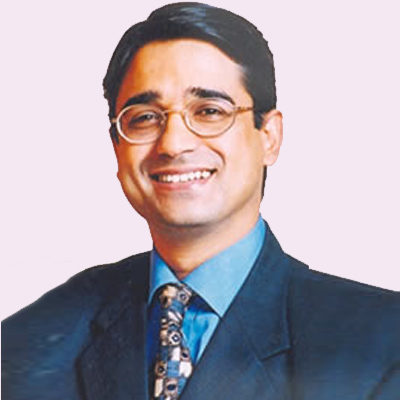
India is probably one market where BBC has a lead over CNN. It is also one of the few markets where Cartoon Network has been amply Indianised, which includes introduction of a Tamil language feed too. But as the managing director of Turner International India, part of the AOL Time Warner group, Anshuman Misra still has lot of work to do in this region. What‘s more, as the managing director of Zee Turner Pvt Ltd (a 74:26 per cent distribution joint venture between Zee Telefilms and Turner India), Misra also has to take care of about 17 channels which the JV company distributes.
Misra, who also oversees the distribution and marketing of CNN International, Cartoon Network and Home Box Office (HBO) in Pakistan, Sri Lanka, Maldives, Bangladesh, Nepal and Bhutan, successfully encrypted Cartoon Network/ TCM in India, and was responsible for the successful launch of HBO and the CNN South Asia feed.
Now his mandate is to make all the channels ready for the digital age and be the leading content provider on all available platforms whether it is television, Internet or wireless.
Prior to his current appointment, Misra was general manager of BBC World (India) where he managed the distribution and sales of the international news & current affairs channel. Before joining BBC, Misra was with Turner Broadcasting System in Atlanta in the licensing and merchandising division, Turner Home Entertainment (THE) and in 1994 he moved to New Delhi to establish Turner Home Entertainment in India.
In this interview with indiantelevision.com‘s Anjan Mitra, Misra, educated in the US where he received a master‘s degree in business administration from University of Louisiana, discusses the state of the broadcasting industry in India and other issues related to his own company. Excerpts from the interview:
How would you view the broadcasting and cable industry in India at this juncture ?
The industry has been growing for a while and it has grown quite a lot over the last few years. This is evident from the fact that penetration of cable TV has increased in smaller cites of India too and more people have access to cable now in places which are not so urban. The advertising market too has grown, (economic) difficulties notwithstanding. The industry has been chugging along as also is the viewership. All this points to the fact that TV is no more a niche medium.
Has the cable penetration in the country increased as fast as had been envisaged by the players concerned or has the growth been slow ? Growth in this industry has been more than anticipated and it has become a sophisticated medium. These are all signs that the industry is maturing and has matured a lot.
| “The advertising market too has grown, (economic) difficulties notwithstanding. The industry has been chugging along as also is the viewership. All this points to the fact that TV is no more a niche medium” __________________ |
What would be the cable penetration figures for CNN and other Turner channels in India, considering that BBC still retains its leadership position as far as Indian viewers are concerned ? Has there been a slowdown in this after the channels were encrypted?
The penetration figures for CNN are approximately 5.5 million cable homes, while those for HBO and Cartoon Network is 15 million homes each. I won‘t say that the penetration has dropped or slowed down after encryption. Cartoon Network signals were encrypted in the beginning of 1999, while HBO was launched as a pay channel in March 2000. The growth has been steady and is evident from the fact that even in smaller towns, these channels are available and seen.
CNN‘s South Asia feed was started with much fanfare to cater to the Indian viewer with programmes which are aired at times more suited to Indians. Have tangible benefits accrued to the company in the form of ad revenues?
The South Asia feed was launched in July 2000. The response from advertisers, since then, has been positive, and we have seen a year-on-year growth. Though I cannot reveal exact figures, we have attracted brands of worldwide caliber. This speaks of the power we have as a targeted medium and the trust in our advertising environment. Some of our advertisers include Alcatel, Samsung and Fiat and we are hopeful that in the future more big time advertisers from India and those targeting India will come on board.
What is the current revenue mix and are you looking at pushing up any particular stream of revenue ?
As a whole, Turner India‘s revenue mix (slightly skewered towards ad sales as compared to subscription) is 65:35 per cent. The way we look at it is to put our best foot forward and act as the market behaves. We realise that at the moment the market is growing and so there is no immediate need to change the strategy drastically.
There have been talks of Turner launching CNN India to be more region specific and a senior CNN executive has also been quoted in the media saying that “we would be a fool to wait any longer to start CNN India.” Your comments.
The Indian market is very important for us and we are looking at various ways to approach it (to maximize viewership and revenue). But if you ask me to tell you the specifics, then I cannot as we don‘t have anything specific on the table at the moment.
Is CNN India or an Indian version of CNN on the radar screen or not?
There is still a lot that can be done in this market and as I said there are several ways to approach it. It‘s been a while that media has been speculating (about CNN‘s newer moves), but we are looking at opportunities. We have talked to lots of players here.
How is the Zee Turner distribution company performing ?
It‘s quite an incredible story as we managed to bring together the company in a very short time, including the management and work responsibilities. The JV was announced in February 2002 and in this short time I can say a lot of work has been done. The bouquet of channels that we have (17-odd channels comprising Zee and Turner channels) brings not only value to the customer but also offers a variety of options and choices to cable operators. Both the partners have gained from this.
| “It‘s been a while that media has been speculating (about CNN‘s newer moves), but we are looking at opportunities. We have talked to lots of players here “ __________________ |
There have been talks about extending this relationship into other areas too. Is anything happening on that front?
Primarily the relationship is that of a distribution company, and for other things we‘ll have to wait and see. The distribution JV is a growing venture and we‘ll have to see about adding more channels in future.
Have talks been initiated to bring in other third-party channels into the bouquet?
We have been talking to potential partners.
Have talks been held with CNBC India and MTV too?
CNBC India is part of the Sony bouquet at the moment and I can‘t comment on it. You see, there is no specific genre of channel that we are looking at. Talks are on and in due course of time maybe something will emerge.
As a broadcaster are you opposed to conditional access system (CAS) ?
As a concept, Turner is not opposed to CAS. Any system that brings about transparency and choice to the consumer is welcome and we are for it.
Then why is CAS bothering the broadcasters so much and why are they lobbying against its implementation?
As I said, as a concept, Turner is not opposed to CAS, but it has to be seen how it is implemented. Issues like piracy of signals and the technology for it do bother us. It all depends how it is implemented. Once our doubts are clarified, we‘ll be more than happy.
Do you feel that if CAS is implemented, in the short term, the viewership of pay channels will dip ?
I don‘t think there will be any problem on the viewership front. It‘s a huge market here. And at the end of the day, if one has good content there is nothing to worry about, CAS or no CAS.