Tag: Zee Turner

  • SC declines to crush TDSAT order that HITS players be treated at par with pan-India MSOs

    SC declines to crush TDSAT order that HITS players be treated at par with pan-India MSOs

    NEW DELHI: In an order that will not only have far-reaching consequences for broadcasters but may encourage others to take the headend-in-the-sky (HITS) route, the Supreme Court today rejected the challenge to the Telecom Disputes Settlement and Appellate Tribunal (TDSAT) view that HITS players should be treated at the same level as pan-India multi-system operators (MSOs). 

    The Tribunal had on 7 December last mandated that the reference interconnect order would be the starting point for negotiations between them and the distribution platforms. 

    The apex court decided the matter after hearing both sides on the issues raised.

    The appeal had been filed by the Indian Broadcasting Foundation (IBF), Star India and Taj TV after a similar appeal had earlier on 22 Januarybeen dismissed in the Delhi High Court as not maintainable on the ground that the broadcaster had an alternative remedy of appealing in the Supreme Court.

    The Tribunal had said, “It is difficult to see a HITS operator as different from a pan-India MSO and in our considered view a HITS operator, in regard to the commercial terms for an interconnect arrangement has to be taken at par with a pan-India MSO and must, therefore, receive the same treatment.” 

    The broadcasters had contended that the Tribunal through its order dated 7 December had completely taken away the freedom of contract. They also contended that the Tribunal had crossed its jurisdiction by passing an order on the TRAI regulation.

    The High Court had said that it did not feel the need to examine whether TDSAT had the jurisdiction to direct broadcasters to treat the HITS operator Noida Software Technology Park Ltd (NSTPL) at the same level as pan-India MSOs.

    That Court had heard arguments presented by Star India and NSTPL, whose petition had been accepted on 7 December by the Tribunal, which had asked Star India and Taj TV to execute fresh agreements with NSTPL. However, TDSAT had kept the operation of the judgment pending till 31 March this year.

    It had said that on past occasions as well similar suggestions were made with the hope of nudging the TRAI to take proactive steps to reduce the scope of disputes arising out of the regulations. “At the same time, the fact that regulatory intervention may be the ideal way forward cannot and should not be an excuse for this Tribunal to shirk the interpretative issues that have come before us. This is particularly so when there appears to be regulatory inertia,” TDSAT had said.

    The Tribunal had, on 18 December, impleaded Zee Turner and others in another petition by Star India against NSTPL and asked the broadcasters to produce the agreements between the broadcasters and major MSOs. It opined that some agreements have to be suspended by Star and Taj TV. 

    Though the TDSAT petition had been filed by NSTPL, it will also help Hinduja Group’s HITS platform NXT Digital, which entered into the fray last year. 

    TDSAT had directed Star and Taj, as well as the other broadcasters who had joined the proceedings as intervenors, to issue fresh RIOs in compliance with the Interconnect Regulations, as explained in the judgment within one month from the date this order becomes operational and effective. It will be then open to NSTPL to execute fresh interconnect agreements with Star and Taj, and with any other broadcasters on the basis of their respective RIOs or on negotiated terms within the limits.

  • SC declines to crush TDSAT order that HITS players be treated at par with pan-India MSOs

    SC declines to crush TDSAT order that HITS players be treated at par with pan-India MSOs

    NEW DELHI: In an order that will not only have far-reaching consequences for broadcasters but may encourage others to take the headend-in-the-sky (HITS) route, the Supreme Court today rejected the challenge to the Telecom Disputes Settlement and Appellate Tribunal (TDSAT) view that HITS players should be treated at the same level as pan-India multi-system operators (MSOs). 

    The Tribunal had on 7 December last mandated that the reference interconnect order would be the starting point for negotiations between them and the distribution platforms. 

    The apex court decided the matter after hearing both sides on the issues raised.

    The appeal had been filed by the Indian Broadcasting Foundation (IBF), Star India and Taj TV after a similar appeal had earlier on 22 Januarybeen dismissed in the Delhi High Court as not maintainable on the ground that the broadcaster had an alternative remedy of appealing in the Supreme Court.

    The Tribunal had said, “It is difficult to see a HITS operator as different from a pan-India MSO and in our considered view a HITS operator, in regard to the commercial terms for an interconnect arrangement has to be taken at par with a pan-India MSO and must, therefore, receive the same treatment.” 

    The broadcasters had contended that the Tribunal through its order dated 7 December had completely taken away the freedom of contract. They also contended that the Tribunal had crossed its jurisdiction by passing an order on the TRAI regulation.

    The High Court had said that it did not feel the need to examine whether TDSAT had the jurisdiction to direct broadcasters to treat the HITS operator Noida Software Technology Park Ltd (NSTPL) at the same level as pan-India MSOs.

    That Court had heard arguments presented by Star India and NSTPL, whose petition had been accepted on 7 December by the Tribunal, which had asked Star India and Taj TV to execute fresh agreements with NSTPL. However, TDSAT had kept the operation of the judgment pending till 31 March this year.

    It had said that on past occasions as well similar suggestions were made with the hope of nudging the TRAI to take proactive steps to reduce the scope of disputes arising out of the regulations. “At the same time, the fact that regulatory intervention may be the ideal way forward cannot and should not be an excuse for this Tribunal to shirk the interpretative issues that have come before us. This is particularly so when there appears to be regulatory inertia,” TDSAT had said.

    The Tribunal had, on 18 December, impleaded Zee Turner and others in another petition by Star India against NSTPL and asked the broadcasters to produce the agreements between the broadcasters and major MSOs. It opined that some agreements have to be suspended by Star and Taj TV. 

    Though the TDSAT petition had been filed by NSTPL, it will also help Hinduja Group’s HITS platform NXT Digital, which entered into the fray last year. 

    TDSAT had directed Star and Taj, as well as the other broadcasters who had joined the proceedings as intervenors, to issue fresh RIOs in compliance with the Interconnect Regulations, as explained in the judgment within one month from the date this order becomes operational and effective. It will be then open to NSTPL to execute fresh interconnect agreements with Star and Taj, and with any other broadcasters on the basis of their respective RIOs or on negotiated terms within the limits.

  • TDSAT directs 3 LCOs to clear Media Pro’s dues

    TDSAT directs 3 LCOs to clear Media Pro’s dues

    NEW DELHI: Media Pro Enterprise India Pvt. Ltd., Mumbai has secured orders from the Telecom Disputes Settlement and Appellate Tribunal (TDSAT) for recovering payments from three different cable operators namely Madhumati Cable Network, Shiv Cable Network, and Mauli Cable Network of Maharashtra.


    In separate judgments, TDSAT chairman Justice Aftab Alam and member Kuldip Singh directed Media Pro to file a computation of accounts up to 31 March, 2013 within two weeks in the cases of Madhumati Cable Network and Shiv Cable Network for a decree to be dawn up accordingly. The decretal amount will also carry interest at 10 per cent per annum from the date of filing of the petition till the actual payment.


    In the case of Mauli Cable Network, the petition was allowed to the extent of the claims of Rs 10,94,481.16. The amount will also carry interest at 10 per cent from the date of filing of the petition till the date of actual payment. The office is directed to make a decree accordingly.


     The petition against Madhumati is for recovery of the sum of Rs 8,03,125 along with interest at 18 per cent per annum from the petitioner as dues of subscription fee. Media Pro had executed an interconnect agreement with Madhumati on 20 June, 2012 for supply of its signals to the respondent for retransmission from 1 April, 2012 till 31 March, 2013. In terms of the agreement, the LCO was required to pay Rs 99,000.66 to Media Pro as the monthly subscription fee.


    Media Pro alleged that the LCO defaulted in payments and as a result the dues of subscription fee accumulated to Rs 8,03,125. The LCO did not appear despite service of notice.


    In the case against Shiv Cable Network, Media Pro claimed for recovery of the sum of Rs 6,28,658 along with interest at 18 per cent per annum as dues of subscription fee. According to Media Pro, the LCO executed an interconnect agreement with it on 1 January, 2012 for supply of its signals for retransmission. The agreement commenced from the date of execution and came to end on 31 March, 2013. In terms of the agreement, the respondent was required to pay Rs 99,778.31 to Media Pro as the monthly subscription fee.


    The Tribunal, which also examined witnesses in the latter cases, said there is no reason not to accept the claim of Media Pro for the term of the agreements.


    The claim of Media Pro, however, extended to 18 October, 2013 as it is claimed that it continued to supply signals to the LCOs till that date. But the Tribunal rejected this claim in the absence of any renewal agreement.


    Both Madhumati and Shiv Cable did not appear despite service of notice and hence, the petition proceeded ex parte.


    While allowing the claims of Mauli Cable Network on the basis of the Interconnect agreement, TDSAT rejected the claims made by Media Pro in respect of Zee Turner, which the Tribunal said “appears to be on a different footing. The petition filed on behalf of Media Pro is very sketchy and in so far as the alleged dues of Zee Turner are concerned.” The Zee Turner claim is for Rs 7,71,802.04 on the basis of an undisclosed agreement between the LCO and Zee Turner.


    No agreement between Zee Turner and the LCO (or for that matter for supply of signals of Zee Turner prior to 1 December, 2011), which alone can form the basis for the claim for the arrears has been produced before the Tribunal. Five invoices are produced of which the first one is dated 15 December, 2011, that is, shortly after the execution of the agreement on 8 December, 2011. It shows the payment due date as 22 December, 2011 and shows previous period outstanding as nil. Though, apart from the statement of account of Media Pro, a statement of account of Zee Turner has been filed along with the petition, it is of no help in the absence of any agreement between Zee Turner and the respondent. Moreover, the witness examined in the case identified and proved only the Media Pro statement of account and not the Zee Turner statement of account.

  • TDSAT dismisses Media Pro’s 14 petitions seeking payments from cable ops

    TDSAT dismisses Media Pro’s 14 petitions seeking payments from cable ops

    NEW DELHI: The Telecom Disputes Settlement and Appellate Tribunal (TDSAT) has dismissed 14 petitions by Media Pro Enterprise India, Mumbai against cable operators as “there is no material on record even to show what were the dues, if any, of the respondents on the date their respective agreements came to end.”


    TDSAT chairman Justice Aftab Alam and member Kuldeep Singh said in fact that three cases by the petitioner were plainly barred by limitation. 


    The judgment said, “We are satisfied that in none of the cases in the batch, the claim of the petitioner is fit to be allowed. All the petitions are accordingly dismissed with costs at Rs 5,000 per petition payable to the TDSAT Employees’ Welfare Society. A receipt showing payment of the cost should be filed in the Registry within a month from the date of the judgment.”


    The three petitions barred by limitation (time-barred) were against S.M. Advertising, Maharashtra; Nileshwar Cable TV Network, Kerala; and Tara Cable Network, Maharashtra.


    The other local cable operators (LCOs) against whom the petitions had been filed included five from Gujarat – Narmada Cable Service, Five Star Network, Star Marketing, Anjali Cable Network, and Jai Santoshi Maa; two from Maharashtra – Bhusawal Network and H.R. Entertainment; Rathore Network, Rajasthan; Apna In Cable Broad Band Services, Andhra Prdesh; Nandgaon Cable Network, Chhattisgarh; and Haridwar Cable Network, Uttarakhand. 


    Media Pro used to be the agent and intermediary of several broadcasters, including Zee Turner Ltd and StarDEN Media Services on the basis of agreements executed with the broadcasters. According to the averment made in the petition, it started its operations as their agent in July 2011. Before that the channels of the aforesaid two broadcasters were given to the distributors on the basis of agreements executed by the broadcasters themselves. 


    The 14 petitions are for recovery of different sums of money as dues of monthly subscription fees. According to the petitioner, the 14 LCOs were receiving the signals from Zee and Star DEN on the basis of agreements executed with them on different dates, on payment of different sums of money as subscription fees in terms of their respective agreements. It is further the case of the petitioner that on the basis of agreements executed with the broadcasters, it took over the control and distribution of their channels and was also authorised by its principals to collect their outstanding dues from all the distributors, including the present LCOs.


    According to Media Pro, after assuming the role of agent and intermediary, it raised invoices against the LCOs for payment of monthly subscription fees as also the past dues of the principal broadcasters. The LCOs, however, failed to make payments against the invoices and as a result dues accumulated, leading to the petitions. Media Pro has claimed the amounts due along with interest at 18 per cent from the date the amount became due till the date of the filing of the petition. 


    The Tribunal noted that in all cases, the subscription agreement had come to end before Media Pro stepped into the shoes of the agent and the intermediary of the broadcasters. Furthermore, the supply of signals to the LCOs continued for many months even after the agreements had come to end – a fact admitted in the petitions and by witnesses examined.


    None of the 14 cable operators appeared despite service of notice. Hence, all the petitions in the batch were proceeded with ex parte. As all are based on similar facts with the exception of the amounts of money claimed and the date of disconnection of signals, all were heard together. 


    The witnesses said Media Pro requested the LCOs to renew the expired agreements but the latter delayed this on one pretext or other and invoices were raised. The TV channel signals accordingly continued to be retransmitted by LCOs to their subscribers until May 2012. 


    The said retransmission by the respondent to its subscribers has been duly verified and corroborated by the petitioner through ground verification conducted from time to time and as recent as on April – May 2012.  


    However, the Tribunal noted, “the averment of Media Pro is thus directly in teeth of the clear directive of the Regulations.” 


    The Tribunal said clause 4A of the Telecommunication (Broadcasting and Cable Services) Interconnect Regulations 2004 with effect from 17 March, 2009 is clear that the Interconnection Agreements have to be in writing. It further says no broadcaster of pay channels or distributor of TV channels, such as multi system operator or headend in the sky operator shall make available signals of TV channels to any distributor of TV channels without entering into a written interconnection agreement.

  • Taj Television issues switch off notice against Hathway

    Taj Television issues switch off notice against Hathway

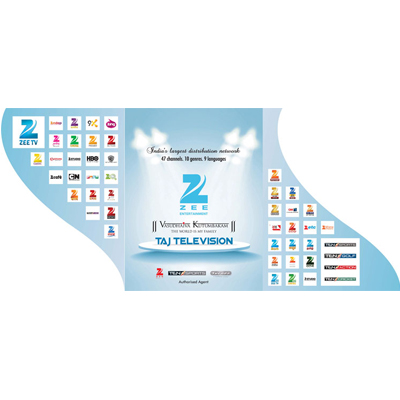
    MUMBAI: Two days after Star India issued a notice against Hathway Cable and Datacom, it’s now the turn of the newly formed Taj Television Network to do the same. In a notice issued in the leading dailies, the distribution arm of Zee and distribution agent for Turner channels has stated that Zee and Turner channels are likely to be switched off for subscribers of Hathway Cable and Datacom and its franchisees.

    The cities where the switch off is likely to happen are the DAS areas of Greater Mumbai, Thane, Kalyan-Dombivali, Jaipur, Pune, Nashik, Delhi, Bengaluru, Aurangabad, Lucknow, Allahabad and Kolkata Metropolitan Area.

    The reason for deactivation has been stated as ‘non signing of subscription agreement/interconnection agreement’, ‘non submission of subscribers reports’ and ‘non-payment of subscription fees’.

    The channels included in the list are Zee TV, Zee Cinema, Zee Marathi, Zee News, Zee Café, Zee Studio, Zee Punjab Haryana Himachal, Zee Bangla, Zee Business, Zee Salaam, ETC, Zing, Zee Jagran, Zee Talkies, Zee 24 Taas, Zee Smile, Zee Kannada, Zee Telugu, Zee Kalinga, Zee Classic, Zee Action, Zee Premier, 9X, Zee Madhya Pradesh Chattisgarh, Zee Bangla Cinema, Zee Marudhara, Zee Tamil, & Pictures, Zee Anmol, Zee Q, Zee Khana Khazana, Zee Sangam, 24 Ghante, Zindagi, Zee TV HD, Zee Cinema HD and Zee Studio HD from the Zee stable as well as CNN International, Cartoon Network, HBO, POGO and WB of Turner International India.


  • Gurjeev Singh to head Star India international business

    Gurjeev Singh to head Star India international business

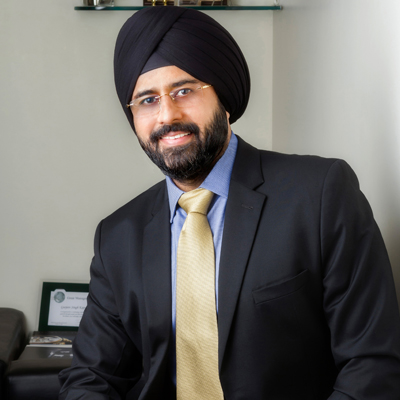
    MUMBAI: After the big split last month of Star and Zee’s distribution JV MediaPro, Star India has announced that MediaPro former COO Gurjeev Singh Kapoor will head the company’s international business initiatives.


    Once the MediaPro transition is complete, Singh will shift to his new base in London and report to Star India COO Sanjay Gupta. In his new role, Singh will handle distribution, syndication, ad sales and new content development in the US, South Afriaca, West Asia, the UK, Europe, south Asia and Southeast Asia.


    “The international business has huge growth potential which has not yet been fully tapped and we believe Gurjeev will add tremendous value to the organization and will build on the foundations that have been put in place and take the International business to new heights,” said Gupta.


    “Gurjeev shares our values and our focus on the business and he has proved to be an extraordinary leader throughout his stint with Star and its ventures,” he added.


    Singh will take up his new posting only after a few months. Speaking on his new role Singh said, “I am looking forward to be back into Star’s fold and delighted with the opportunity to expand our global footprint. Star is uniquely placed to drive aggressive growth in the international markets based on its great content advantage.”


    Star India’s channels are available in more than 120 countries globally. And Singh has his task cut out for him: Zee Entertainment Enterprises channels are available in more than 160 countries globally and a very aggressive IndiaCast has been working aggressively to further the distribution of the Viacom18, Network18 channels worldwide.


    Concurrent with Singh’s new responsibility, Star India’s national distribution has been split into two: TS Panesar has been given the task of handling national distribution on DTH and in the digitised markets, while Summit Grover has been brought in to look after  distribution in the emerging markets of DAS phase III and IV. Both are expected to report into Singh.


  • Media Pro: The unwinding of a joint venture

    Media Pro: The unwinding of a joint venture

    MUMBAI: When the Telecom Regulatory Authority of India (TRAI) came out with its regulation on the role of aggregators, everyone in the industry was sure that this would herald the death of content aggregators, at least in their current form. Industry insiders revealed that the leading and strongest content aggregator Media Pro would be among the first to break up, but it would take time, probably by mid-2014 or probably a little later.


    So when the announcement came last week that the Zee Turner and Star Den joint venture had decided to go their separate ways, it sent shock waves through the industry.  Some said it was premature and that the joint venture could have run a little longer. But sources indicate that the decision was taken at the very top between Subhash Chandra, Punit Goenka and Star India head Uday Shankar directly with only a handful of executives being informed. Industry insiders say that the joint venture had hired a consulting firm to give guidance on what should be done and when.


    The breakup will see the two partners setting up independent cable TV affiliate distribution teams. Exactly as it was like almost three years ago when both decided to get together to extract more revenues out of India’s reluctant cable TV operators and multi system operators (MSOs).


    Questions are being raised as to where will Media Pro India CEO Arun Kapoor – an old Essel group hand – be placed?  Will he head the Zee Entertainment distribution initiative or will he go the Star way? He was earlier group CEO distribution businesses at Essel Group (he also headed the joint venture which had been set up to distribute the Zee TV and Turner channels in India).


    Sources indicate that the Turner channels will continue to be distributed by Zee Entertainment at least for now without any cross network bundling. So does that mean that the Zee and Turner joint venture arrangement will in effect not be revived?


    Most observers expect COO Gurjeev Singh Kapoor to move onto the Star distribution team. Gurjeev began his media career with Zee and then went to Discovery before moving on to The OneAlliance as its business head. He was finally lured to lead Star Den Media services when it was set up as a joint venture between Sameer Manchanda’s DEN and Star India.


    The bets are out whether the Star Sports bouquet will be distributed by the Star India team or whether an independent team will be given that responsibility.  Most expect the former proposition to be realised.


    Industry observers state the Media Pro office in north Mumbai is a hub of activity with senior management working on splitting up the teams and also drawing up plans for recruitment wherever needed.


    “There is a lot of movement which is taking place currently, with some of the executives already going the Star India way,” says a source from the industry.


    MSOs and cable TV operators expect the two new teams to start approaching them soon with new packages and offerings. Others however indicate that this could be a month or two away, until Star and Zee draw up their individual teams. Gurjeev had told indiantelevision.com around a month ago that most of the MediaPro contracts with both cable TV and DTH operators are slated to come up for renewal by sometime in April.


    If that is true then Zee Entertainment and Star India don’t have much time on their hands. And the teams have their task cut out for them.   

  • MediaPro breaks up

    MediaPro breaks up

    MUMBAI: In one of the biggest announcements after the Telecom Regulatory Authority of India (TRAI) came out with its regulation, two months ago, that prevented aggregators from bundling channels of different broadcasters, Star Den Media services and Zee Turner have decided to part ways with distribution JV MediaPro coming to an end.


    The networks will be setting up their independent affiliate sales team for their respective channels. The networks are also banking on the recent tariff hike given by TRAI as a positive boost to subscription revenues.


    Zee Entertainment MD Punit Goenka said,  “We  had  created  this  Joint  Venture  to  address  various  anomalies  in  the  analog market, curb  piracy  and introduce  transparency for the benefit  of all stakeholders.  I must say that we have been very satisfied with the outcome  of the partnership.  In the last three years, with  DAS getting  implemented, India  is truly on  the path  to digitization. First  two phases of DAS have already been implemented. Given the new regulation, Uday and I have taken a call to continue the business at an independent  level. I wish our JV partners all the very best in their future endeavors.”


    Star India CEO Uday Shankar  added,  “MediaPro  has been  a truly delightful and path breaking  partnership.   Punit  and I created MediaPro with the objective of accelerating  digitization, promoting transparency and introducing best practices  in distribution.  Thanks to the commitment  of both parties the JV has delivered exceptionally well on each of these.   I am proud  to say that MediaPro also led the industry consensus for the most efficient way of moving to a digital domain.  This in turn allowed  us to offer better content to our viewers.  In the light of new regulation, both partners have decided  to build independent affiliate sales. I take this opportunity to compliment the entire MediaPro team lead by Arun Kapoor for creating  a best-in-class organization  that  helped  pioneer  digital transformation of cable.”

  • Jayaraman to head Zee’s distribution and placement business

    Jayaraman to head Zee’s distribution and placement business

    MUMBAI: Former Hathway Cable & Datacom managing director and CEO K Jayaraman is joining Zee Group as head of distribution and placement business. He will also guide and anchor all such roles across the businesses of the Zee group which requires his specialisation.

    Designated as president, Jayaraman will take over his new role from 12 March and will report directly to Zee Entertainment Enterprises Ltd MD and CEO Punit Goenka.

    He can also advise and guide the directors on the board of Media Pro to maximise the revenue for the distribution company. Media Po is a joint venture between Star Den and Zee Turner.

    “He will be responsible to the promoters of the group in updating and providing necessary heads up on various issues of the domain. He will hold hand and provide all kind of support to the CEO of Siticable business, without getting involved on day to day affairs of the business,” Goenka wrote in an internal note.

    Deepti Verma, who has been leading the initiatives so far, will report to Jayaraman.

    A Chartered Accountant and with more than 15 years experience in the media distribution industry, Jayaram had resigned from Hathway after Jagdish Kumar took over as MD and CEO of the company. Jayaraman was made vice chairman of Hathway, a post he did not accept.

  • Trai’s DTH paper stresses on QoS, interconnect

    Trai’s DTH paper stresses on QoS, interconnect

    NEW DELHI: The Telecom Regulatory Authority of India (TRAI) just released a Consultation Paper on the issues issues arising out of the provision of the direct-to-home television service.

    The Trai paper’s focus is on three issues – interconnect agreements, quality of service standards and technical and commercial interoperability for set top boxes.

    On the Interconnection issues, Trai is taking up those relating to standardisation of interconnection agreements and use of the reference interconnect offer methodology. Additionally, issues relating to provision of access to broadcasters, must carry obligations and the related issue of carriage fee are also being taken up.

    On the tariff question, the Trai paper remains consistent with the line taken earlier as well by the sector regulator that it will not intervene or regulate matters of pricing of DTH services.

    On the subject of quality of service standards, the paper has issues of whether QOS standards for DTH should be mandated.

    The other two issues on this subject are

    Whether the approach suggested by Trai for the telecom sector where it mandates the details of the grievance redressal machinery – maintenance of call centre, appointment of nodal officers for grievance redressal and establishment of appellate body – can be followed in the case of DTH also.

    And whether quality of service standards can be voluntarily evolved by the service provider.

    Another major issue is whether technical interoperability of STBs should be retained or whether it should be replaced by commercial interoperability. And then again, if commercial interoperability is to be introduced then what is the manner in which this is to be done.

    “Interconnection for DTH is already covered on issues relating to “must provide”. However, the reverse obligations regarding “must carry” as well as issues relating to standardisation of agreements have not yet been addressed and these have been raised in the consultation paper.

    “On the quality of service standards, the basic issue is whether these should be mandated and if so, in what manner.

    “Finally, the regulatory issues regarding set top boxes focus on the need for commercial interoperability and whether this should replace the technical interoperability. The major issues posed for consultation are indicated in the box placed alongside,” the statement concluded.

     
    As regards pricing, it may be mentioned that in relation to the case between Zee Turner versus TataSky, the Telecom Disputes Settlement Appellate Tribunal had asked a few weeks ago, whether Trai would be looking into this. Trai had later responded that the process is on, and this paper now comes in part as a result of that exercise.

    “At present, apart from Doordarshan, which provides free to air channels, there are two other DTH service providers for pay channels and two more have obtained license to commence operation, a statement from Trai said today.

     
    The statement says that there are a number of issues relating to tariffs, both at the wholesale and at the retail level.

    “The foremost issue is whether there is need for any regulation of DTH tariffs since the DTH service is in fact providing some competition to cable television. Competition provides an excellent method for ensuring the consumer’s interests are protected.

    “Accordingly, regulation has a rationale when the market does not function or the level of competition is inadequate. It has been seen in the recent past that there has been some competition between the two DTH service providers as well as between DTH and cable.

    “Competitive packages and offers have been made by all the service providers as against the situation just one year back when the consumer had virtually no choice and options.

    “Considering all these developments, it has been decided that these issues should be looked at after some time when the impact of the competition in general, and impact of roll out of the CAS in cable TV in particular can be assessed. Accordingly the tariff issues have not been posed for consultation at present,” the statement said.

    The major issues posed for consultation related to interconnection, quality of service standards and regulatory issues regarding set top boxes.

    The consultation paper can be found on the Trai website, at www.trai.gov.in.