Tag: Zee Television

  • ‘Chawal’ to channel: Zee’s 24 years of a memorable roller-coaster ride

    ‘Chawal’ to channel: Zee’s 24 years of a memorable roller-coaster ride

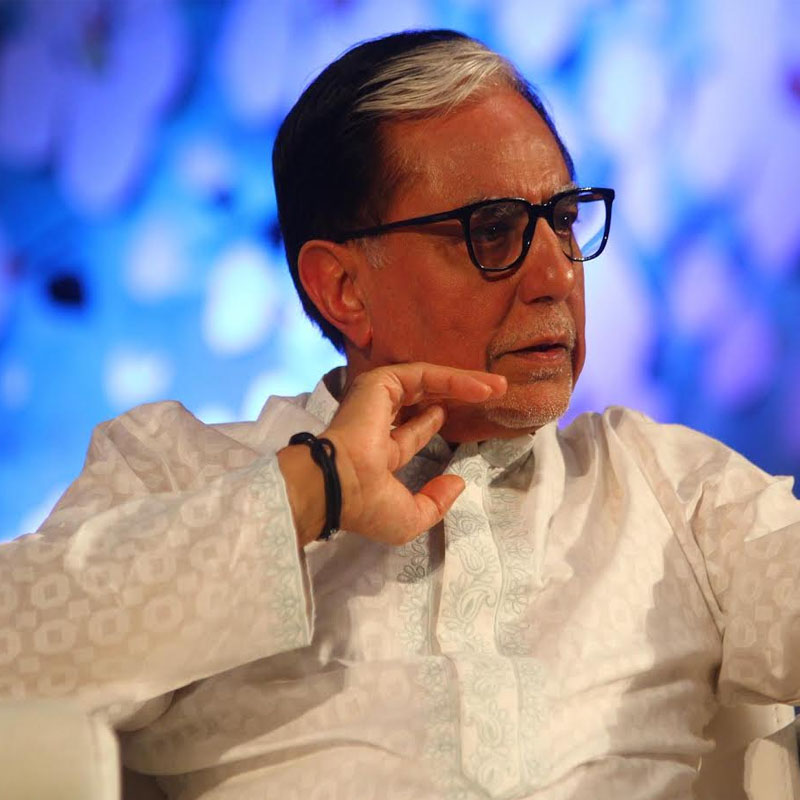
    It was a hot and humid Delhi afternoon sometime in the very early 1990s. A few journalists, mostly clueless about electronic media as we know it today, were milling around in a room in a central Delhi five-star hotel waiting for a press conference to begin. The host was a hitherto unknown company called Essel. When the conference began, one of the gentlemen, sporting former PM Indira Gandhi-style white streak in his hairs, announced that his company would start India’s first Indian-owned satellite TV channel. The other gent present on the occasion was Rajat Sharma, who was till then known as a print media journalist of some repute. The confusing series of question-answer that followed highlighted that few (including yours truly) had any idea of cable and satellite TV (CNN coverage of the first Iraq War was a trailer for Indians and later Star TV’s Santa Barbara and Bold & The Beautiful were like manna from the sky) and fewer understood fully the gravity of what Subhash Chandra was telling the Delhi scribes.

    The rest, as they say, was history. Over 24 years, this journey has not only created India’s first home grown electronic media company, but inspired many others to venture out, as Star Trek’s Captain Kirk & Co would say, where no man or entrepreneur has gone ever before.

    Zee Telefilms or Zee Television or Zee Entertainment Enterprises Ltd — as Zee group has been known in corporate circles from time to time — is itself a testament of the changing ethos of the company and the evolving Indian media landscape. But never has there been a time when the group — now housed over several floors in a swanky building in Mumbai’s Lower Parel area — been not associated with Chandra. To borrow a clichéd political line of the 1970s, it could be said that Zee is Subhash Chandra and Subhash Chandra is Zee.

    From those early days — Zee News started late 1990s used to function out of a four-bedroom residential flat in Delhi’s South Extension and the main office on Mumbai’s Annie Besant Road comprised a series of thatched mostly non-AC rooms — it has a been a long journey not only in terms of time, but also business and expansion.

    One of last annual reports (if we go back in time) on Zee’s corporate website pertains to 1998-99 financial year. Message from Chairman Chandra read: “For Zee Telefilms, 1998-99 was yet another year of exceptional accomplishment and growth. Having made its debut in 1992 as a software production company and marketing concessionaire, Zee has come a long way with its recognition as an emerging company of the year. The 35.8 percent total return our Company produced on the capital employed is of utmost importance to us. We’re not content with that…”  

    In 2016, addressing the investors and public at large in the 2015-16 annual report, the vision is gets contemporaneous as Chandra says: “ZEEL is proactively reorganising its operations focusing on newer delivery formats and ramping up its digital business in line with the changing dynamics of the operating environment. Multiple initiatives are being undertaken. Just as consistency has been a hallmark of our journey, so has change!”

    Change? Yes, of course. And why not? From a humble beginning, Zee now straddles the world, growing its business portfolio along with global presence and revenues. With a strong presence in over 171 countries and a total viewership of 1 billion plus people around the globe, when Zee claims it’s a worldwide media brand, it isn’t off the mark.

    Sample some facts. With a networth of Rs 62,315 million, Zee closed the 2015-16 financial year ending March 2016 with a total income of Rs. 58, 515 million and EBITDA of Rs 15, 095 million wherein global advertising revenue was Rs. 34, 297 million and subscription income was Rs. 20,579 million. Add to these vital stats the fact that the group offers content in multiple Indian and foreign languages and various formats with more than 2,22,703 hours of television content and rights to more than 3,818 movie titles from premiere studios featuring Indian film stars, making it one of the largest Hindi film libraries in the world. All this content is aired via 38 international and 33 domestic channels.

    If Essel group, Zee’s parent, made money from trading in commodities in the early parts of its 90-year existence (having begun in a small town in Haryana state), in the 1980s it upgraded itself to export chawal (rice) to the erstwhile USSR, apart from other more urban-centric business activities. This evolution and flirting with little-known businesses has been a hallmark of Zee’s progress too.

    public://SC-Modi.jpg

    Very few would remember that Chandra’s Essel Group wanted to be the first private sector Indian satellite operator having realised that synergies in entertainment, broadcast and delivery business could have its advantages (as also disadvantages). Though the satellite dream is still to fructify as Agrani started and folded quietly in the 1990s, it helped initiate Chandra’s elder son and present MD of Zee Entertainment, Punit Goenka, into the business.

    Though Zee had a blow-hot-blow-cold relationship with Rupert Murdoch’s 21st Century Fox (in the 1990s it was News Corp) and it’s Indian subsidiary Star TV, the three joint ventures that Zee had with Murdoch’s company in those early days, including a 50:50 shareholding in MSO Siti Cable, helped Chandra and his band of colleagues to firm their footsteps in the broadcast world in India first and then globally.

    The joint ventures with Star, which was bought over by Murdoch mid-1990s from Hong Kong-based Chinese businessman Li Ka-Shing, also helped Zee raise himself to broadcast and entertainment’s international levels where negotiations are cut-throat and not an inch is given to even business partners.

    A description of a Chandra-Murdoch meeting in New York is telling. An expat, then working with Chandra for the Agrani project, glowingly says that despite Murdoch’s reputation of being a ruthless businessman, the comparatively younger and inexperienced Indian businessman (Chandra) discussed business with the Star TV boss on an equal footing over drinks— as a CEO would talk shop with another CEO. India, probably, is one of those rare instances where even the mighty Murdoch got bought out by his Indian partner in joint ventures.

    Just when the 1990s was preparing to bid goodbye, Zee announced it was buying out Star’s shareholding in three joint ventures in a stock-and-share deal worth approximately USD 300 million. Yours truly very well remembers that in an interview soon after the historic deal, Chandra, though jubilant, said in a measured tone said at about 1 am, “Yes, it feels exciting being an Indian (to have bought out the foreign partner), but the tough part has just begun now for Zee.

    And he was bang on target— like he has been so many other times. These 24 years for Zee have not been all smooth sailing; especially so after Zee broke its business chords with Star. There have been decisions taken on fronts like programming, corporate and personnel appointments as also distribution that have been questioned by viewers, investors and media observers alike.

    Take, for example, the introduction on Zee TV around late 2000 and early 2001 a show titled Sawaal Dus Crore Ka (A Question for Rs. 10 crore or Rs 100 million). Put on air in an effort to counter the runaway success of rival Star Plus’ Amitabh Bachchan-anchored Kaun Banega Crorepati, an Indian version of the UK game show Who Wants To Be A Millionaire, Zee’s Swaal… was a major flop and the channel had to terminate it mid-way blaming its two anchors, film stars Anupam Kher and Manisha Koirala, for its failure after having burnt its fingers and loads of cash. Not to mention Zee’s two failed bids to mount a cricket league (Indian Cricket League), which were shot down by cricket politics, but paved the way for the now hugely successful Indian Premier League, blessed by the Indian cricket Board and cricket’s international apex body ICC.

    There have been leadership position appointments that have been also questioned. Adman Sandeep Goyal’s tenure as Group CEO of Zee in 2001, handpicked by Chandra, was regarded controversial.However, destiny’s child that Chandra could be had managed to build a company that was populated with professionals and such decisions helped Zee get over several mishaps over the 24 years.

    Some of the best professionals — many of them who have now left Zee to make a name for themselves independently —  that worked along with Chandra and later his son Punit included people like programming specialist Kanta Advani, marketing whiz Meenakshi Madhvani (now Menon), newsperson Rajat Sharma (he now owns the Hindi news channel India TV), former Times of India group’s Vijay Jindal and Pradeep Guha (both served as successful CEOs at Zee), strategist Bharat Ranga, communications expert Ashish Kaul, Deepak Shourie, newspersons (at Zee News) Alok Verma and Rohit Bansal, operations specialist Rajiv Khattar (Siti Cable and Dish TV), legal eagle A. Mohan, government relations expert PC Lahiri  and, of course, Chandra’s friend, philosopher and guide Ashok Kurien. But most of all, the whole Zee group — now diversified and broken down into separate business entities owing to regulatory restrictions and compulsions — benefited a lot from a harmonious family that controlled it. Chandra’s two younger brothers, Jawahar and Laxmi Goel, at various stages had been instrumental in pushing things and being the balancing factor, but never publicly having a spat with their elder brother.

    Because Zee (and Chandra) valued professionals, it was no surprise when Chandra, during his acceptance speech for Asian industry organisation CASBAA’s award for “Lifetime Contribution to the Asian Pay-TV Industry’ in 2009, said, “The achievement is not my own. Many others have made this possible, most notably my old colleagues Ronnie Screwvala of UTV Software, Prannoy Roy, the Chairman of NDTV and Raghav Bahl who now leads Network 18 Group.” Both Screwvala and Bahl since then have exited the companies after selling their shareholding. But even they were taken aback by the graciousness shown by Zee boss.

    At a time when Zee could well look back over its shoulder and afford to smile while preparing for the 50th anniversary in a growing digital world, the present leadership of Zee could well borrow poet Robert Frost’s lines, echoed also by India’s first Prime Minister Jawaharlal Nehru at the time of Independence, `But I have promises to keep, And miles to go before I sleep.’ We shall certainly Zee (as in see).


  • ‘Chawal’ to channel: Zee’s 24 years of a memorable roller-coaster ride

    ‘Chawal’ to channel: Zee’s 24 years of a memorable roller-coaster ride

    It was a hot and humid Delhi afternoon sometime in the very early 1990s. A few journalists, mostly clueless about electronic media as we know it today, were milling around in a room in a central Delhi five-star hotel waiting for a press conference to begin. The host was a hitherto unknown company called Essel. When the conference began, one of the gentlemen, sporting former PM Indira Gandhi-style white streak in his hairs, announced that his company would start India’s first Indian-owned satellite TV channel. The other gent present on the occasion was Rajat Sharma, who was till then known as a print media journalist of some repute. The confusing series of question-answer that followed highlighted that few (including yours truly) had any idea of cable and satellite TV (CNN coverage of the first Iraq War was a trailer for Indians and later Star TV’s Santa Barbara and Bold & The Beautiful were like manna from the sky) and fewer understood fully the gravity of what Subhash Chandra was telling the Delhi scribes.

    The rest, as they say, was history. Over 24 years, this journey has not only created India’s first home grown electronic media company, but inspired many others to venture out, as Star Trek’s Captain Kirk & Co would say, where no man or entrepreneur has gone ever before.

    Zee Telefilms or Zee Television or Zee Entertainment Enterprises Ltd — as Zee group has been known in corporate circles from time to time — is itself a testament of the changing ethos of the company and the evolving Indian media landscape. But never has there been a time when the group — now housed over several floors in a swanky building in Mumbai’s Lower Parel area — been not associated with Chandra. To borrow a clichéd political line of the 1970s, it could be said that Zee is Subhash Chandra and Subhash Chandra is Zee.

    From those early days — Zee News started late 1990s used to function out of a four-bedroom residential flat in Delhi’s South Extension and the main office on Mumbai’s Annie Besant Road comprised a series of thatched mostly non-AC rooms — it has a been a long journey not only in terms of time, but also business and expansion.

    One of last annual reports (if we go back in time) on Zee’s corporate website pertains to 1998-99 financial year. Message from Chairman Chandra read: “For Zee Telefilms, 1998-99 was yet another year of exceptional accomplishment and growth. Having made its debut in 1992 as a software production company and marketing concessionaire, Zee has come a long way with its recognition as an emerging company of the year. The 35.8 percent total return our Company produced on the capital employed is of utmost importance to us. We’re not content with that…”  

    In 2016, addressing the investors and public at large in the 2015-16 annual report, the vision is gets contemporaneous as Chandra says: “ZEEL is proactively reorganising its operations focusing on newer delivery formats and ramping up its digital business in line with the changing dynamics of the operating environment. Multiple initiatives are being undertaken. Just as consistency has been a hallmark of our journey, so has change!”

    Change? Yes, of course. And why not? From a humble beginning, Zee now straddles the world, growing its business portfolio along with global presence and revenues. With a strong presence in over 171 countries and a total viewership of 1 billion plus people around the globe, when Zee claims it’s a worldwide media brand, it isn’t off the mark.

    Sample some facts. With a networth of Rs 62,315 million, Zee closed the 2015-16 financial year ending March 2016 with a total income of Rs. 58, 515 million and EBITDA of Rs 15, 095 million wherein global advertising revenue was Rs. 34, 297 million and subscription income was Rs. 20,579 million. Add to these vital stats the fact that the group offers content in multiple Indian and foreign languages and various formats with more than 2,22,703 hours of television content and rights to more than 3,818 movie titles from premiere studios featuring Indian film stars, making it one of the largest Hindi film libraries in the world. All this content is aired via 38 international and 33 domestic channels.

    If Essel group, Zee’s parent, made money from trading in commodities in the early parts of its 90-year existence (having begun in a small town in Haryana state), in the 1980s it upgraded itself to export chawal (rice) to the erstwhile USSR, apart from other more urban-centric business activities. This evolution and flirting with little-known businesses has been a hallmark of Zee’s progress too.

    public://SC-Modi.jpg

    Very few would remember that Chandra’s Essel Group wanted to be the first private sector Indian satellite operator having realised that synergies in entertainment, broadcast and delivery business could have its advantages (as also disadvantages). Though the satellite dream is still to fructify as Agrani started and folded quietly in the 1990s, it helped initiate Chandra’s elder son and present MD of Zee Entertainment, Punit Goenka, into the business.

    Though Zee had a blow-hot-blow-cold relationship with Rupert Murdoch’s 21st Century Fox (in the 1990s it was News Corp) and it’s Indian subsidiary Star TV, the three joint ventures that Zee had with Murdoch’s company in those early days, including a 50:50 shareholding in MSO Siti Cable, helped Chandra and his band of colleagues to firm their footsteps in the broadcast world in India first and then globally.

    The joint ventures with Star, which was bought over by Murdoch mid-1990s from Hong Kong-based Chinese businessman Li Ka-Shing, also helped Zee raise himself to broadcast and entertainment’s international levels where negotiations are cut-throat and not an inch is given to even business partners.

    A description of a Chandra-Murdoch meeting in New York is telling. An expat, then working with Chandra for the Agrani project, glowingly says that despite Murdoch’s reputation of being a ruthless businessman, the comparatively younger and inexperienced Indian businessman (Chandra) discussed business with the Star TV boss on an equal footing over drinks— as a CEO would talk shop with another CEO. India, probably, is one of those rare instances where even the mighty Murdoch got bought out by his Indian partner in joint ventures.

    Just when the 1990s was preparing to bid goodbye, Zee announced it was buying out Star’s shareholding in three joint ventures in a stock-and-share deal worth approximately USD 300 million. Yours truly very well remembers that in an interview soon after the historic deal, Chandra, though jubilant, said in a measured tone said at about 1 am, “Yes, it feels exciting being an Indian (to have bought out the foreign partner), but the tough part has just begun now for Zee.

    And he was bang on target— like he has been so many other times. These 24 years for Zee have not been all smooth sailing; especially so after Zee broke its business chords with Star. There have been decisions taken on fronts like programming, corporate and personnel appointments as also distribution that have been questioned by viewers, investors and media observers alike.

    Take, for example, the introduction on Zee TV around late 2000 and early 2001 a show titled Sawaal Dus Crore Ka (A Question for Rs. 10 crore or Rs 100 million). Put on air in an effort to counter the runaway success of rival Star Plus’ Amitabh Bachchan-anchored Kaun Banega Crorepati, an Indian version of the UK game show Who Wants To Be A Millionaire, Zee’s Swaal… was a major flop and the channel had to terminate it mid-way blaming its two anchors, film stars Anupam Kher and Manisha Koirala, for its failure after having burnt its fingers and loads of cash. Not to mention Zee’s two failed bids to mount a cricket league (Indian Cricket League), which were shot down by cricket politics, but paved the way for the now hugely successful Indian Premier League, blessed by the Indian cricket Board and cricket’s international apex body ICC.

    There have been leadership position appointments that have been also questioned. Adman Sandeep Goyal’s tenure as Group CEO of Zee in 2001, handpicked by Chandra, was regarded controversial.However, destiny’s child that Chandra could be had managed to build a company that was populated with professionals and such decisions helped Zee get over several mishaps over the 24 years.

    Some of the best professionals — many of them who have now left Zee to make a name for themselves independently —  that worked along with Chandra and later his son Punit included people like programming specialist Kanta Advani, marketing whiz Meenakshi Madhvani (now Menon), newsperson Rajat Sharma (he now owns the Hindi news channel India TV), former Times of India group’s Vijay Jindal and Pradeep Guha (both served as successful CEOs at Zee), strategist Bharat Ranga, communications expert Ashish Kaul, Deepak Shourie, newspersons (at Zee News) Alok Verma and Rohit Bansal, operations specialist Rajiv Khattar (Siti Cable and Dish TV), legal eagle A. Mohan, government relations expert PC Lahiri  and, of course, Chandra’s friend, philosopher and guide Ashok Kurien. But most of all, the whole Zee group — now diversified and broken down into separate business entities owing to regulatory restrictions and compulsions — benefited a lot from a harmonious family that controlled it. Chandra’s two younger brothers, Jawahar and Laxmi Goel, at various stages had been instrumental in pushing things and being the balancing factor, but never publicly having a spat with their elder brother.

    Because Zee (and Chandra) valued professionals, it was no surprise when Chandra, during his acceptance speech for Asian industry organisation CASBAA’s award for “Lifetime Contribution to the Asian Pay-TV Industry’ in 2009, said, “The achievement is not my own. Many others have made this possible, most notably my old colleagues Ronnie Screwvala of UTV Software, Prannoy Roy, the Chairman of NDTV and Raghav Bahl who now leads Network 18 Group.” Both Screwvala and Bahl since then have exited the companies after selling their shareholding. But even they were taken aback by the graciousness shown by Zee boss.

    At a time when Zee could well look back over its shoulder and afford to smile while preparing for the 50th anniversary in a growing digital world, the present leadership of Zee could well borrow poet Robert Frost’s lines, echoed also by India’s first Prime Minister Jawaharlal Nehru at the time of Independence, `But I have promises to keep, And miles to go before I sleep.’ We shall certainly Zee (as in see).


  • TDSAT: ZEEL not to disconnect signals to Star Broadband Service

    TDSAT: ZEEL not to disconnect signals to Star Broadband Service

    NEW DELHI: The Telecom Disputes Settlement and Appellate Tribunal has directed Zee Entertainment Enterprise Ltd not to give effect to the disconnection notice sent to Star Broadband Services (I) Pvt. Ltd and continue to supply its TV signals in terms of the earlier arrangements subsisting before the issuance of the notice.

    Listing the matter for 9 August, Chairman Justice Aftab Alam and member B B Srivastava felt the validity of the RIO and whether or not it is fully in compliance with the directions of the Tribunal, requires serious consideration.

    It said the expression “earlier subsisting arrangement” would include not only the previous interconnect agreement in writing between the two sides (though it might have expired before the publication of the RIO) but also any carriage agreement / placement agreement / discount agreement etc., in case the latter was co-terminus with the interconnect agreement.

    In the next hearing, the Tribunal may hear the parties and make ‘a proper and equitable interim arrangement till a final decision is rendered on this petition’. However, the Tribunal said “It is made clear in case of any default in payment in terms of the subsisting arrangement, it will be open to the broadcaster to proceed in accordance with law.”

    A reply has been filed on behalf of Zeel. Rejoinder, if any, may be filed within two weeks, the Tribunal said.

    Zeel counsel Tejveer Singh Bhatia had with him in a sealed cover the list of MSOs with whom his client entered into interconnect agreements during the period between the Tribunal’s decision of 7 December ( Noida Software Technology Park Ltd. Vs. M/s ZE Zeel. & Others) and the publication of its RIO on 11 May this year.

    Zeel counsel Meet Malhotra, learned senior counsel appearing for Zee Entertainment submitted that the RIO had been framed and issued directly in pursuance of the Tribunal’s decision and it was being offered on a uniform basis and therefore, there is no reason for the petitioner or for anyone else, not to accept it.

  • TDSAT: ZEEL not to disconnect signals to Star Broadband Service

    TDSAT: ZEEL not to disconnect signals to Star Broadband Service

    NEW DELHI: The Telecom Disputes Settlement and Appellate Tribunal has directed Zee Entertainment Enterprise Ltd not to give effect to the disconnection notice sent to Star Broadband Services (I) Pvt. Ltd and continue to supply its TV signals in terms of the earlier arrangements subsisting before the issuance of the notice.

    Listing the matter for 9 August, Chairman Justice Aftab Alam and member B B Srivastava felt the validity of the RIO and whether or not it is fully in compliance with the directions of the Tribunal, requires serious consideration.

    It said the expression “earlier subsisting arrangement” would include not only the previous interconnect agreement in writing between the two sides (though it might have expired before the publication of the RIO) but also any carriage agreement / placement agreement / discount agreement etc., in case the latter was co-terminus with the interconnect agreement.

    In the next hearing, the Tribunal may hear the parties and make ‘a proper and equitable interim arrangement till a final decision is rendered on this petition’. However, the Tribunal said “It is made clear in case of any default in payment in terms of the subsisting arrangement, it will be open to the broadcaster to proceed in accordance with law.”

    A reply has been filed on behalf of Zeel. Rejoinder, if any, may be filed within two weeks, the Tribunal said.

    Zeel counsel Tejveer Singh Bhatia had with him in a sealed cover the list of MSOs with whom his client entered into interconnect agreements during the period between the Tribunal’s decision of 7 December ( Noida Software Technology Park Ltd. Vs. M/s ZE Zeel. & Others) and the publication of its RIO on 11 May this year.

    Zeel counsel Meet Malhotra, learned senior counsel appearing for Zee Entertainment submitted that the RIO had been framed and issued directly in pursuance of the Tribunal’s decision and it was being offered on a uniform basis and therefore, there is no reason for the petitioner or for anyone else, not to accept it.

  • Big B on Zee’s Titan Antakshri

    Big B on Zee’s Titan Antakshri

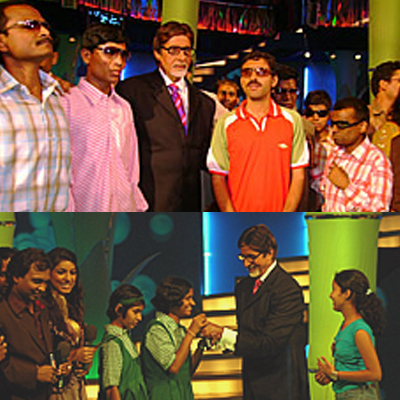
    MUMBAI: The special episode of Titan Antakshri on Zee Television was made even more memorable for the visually impaired participants with the presence of Amitabh Bacchan. Big B regaled the audience with a rendition of Khalid Hashmi’s “Main Prakash Hoon, ajar amar andhakar ek nirav gunjan”. The poem specifically reflected the fact that blindness in not a drawback.

    Zee TV Titan Antakshari has devoted a six-part mini series looking at socially relevant issues like problems faced by the visually impaired, shelter for senior citizens and rehabilitation of street children. The series called Music for a Cause. The telecast of the mini series will start from 23 March at 8:30 pm. The show featuring Amitabh Bacchan will be aired on 31 March.

    The show will also feature two visually challenged girls who presented a letter to Bacchan wishing his mother Teji Bacchan a speedy recovery.

    Bacchan had himself played the role of a teacher training a visually impaired student to understand the world and stand on her own feet in Sanjay Leela Bhansali’s Black and was touched by the gesture.

    Zee Titan Antakshari was brought back on the channel this year after the original team led by Gajendra Singh moved to Star camp.