Tag: Zee Telefilms.

  • Zee looks for a winner in Rs 110 mn ‘Business Baazigar’

    Zee looks for a winner in Rs 110 mn ‘Business Baazigar’

    NEW DELHI: Now Mumbai denizens need not worry about cleaning their countless shoes at home or go looking for the friendly neighbourhood cobbler. A shoe laundry, like a dry cleaner’s shop for clothes, will take care of all the shoe needs.

    The shoe laundry is a dream come true for a young woman entrepreneur who was in need of funding the idea. Zee Telefilms came to her help with the initial money. Though the girl and her idea failed to make it to the last round of Zee TV’s soon-to-start reality show Business Baazigar, she is busy shaping her business venture.

    “The shoe laundry is already operational for about four months and the young woman will be coming back to us with a progress report,” Zee TV business head Punit Goenka told Indiantelevision.com on the sidelines of a press conference here, to announce the launch of Business Baazigar where the underlying theme is: “idea lao, paise le jao” (bring an idea and get funded).

    And, that’s the magic of the reality show, as Zee funds innovative ideas of people who have been eliminated during the show.

    Business Baazigar is a journey of 250 participants who will eventually be scaled down to 50 finalists. Among them, the final 20 will be put through gruelling tasks that will test their business acumen and team spirit.

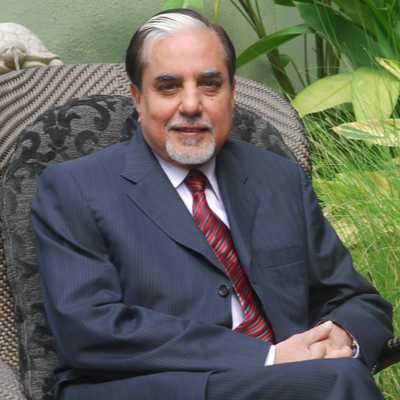
    After every task, the jury, comprising Zee Telefilms non-executive chairman Subhash Chandra, himself a rags-to-riches success story, will decide the fate of the contestants. Eventually, one participant will emerge triumphant and will have Zee Telefilms funding his/her business venture.

    An expensive show with high-decibel marketing

    Business Baazigar is also one of Zee TV’s costliest shows to be mounted. At Rs 110 million, this 25 FPS-produced 24-episode programme attempts to what other game shows have failed to do for Zee Telefilms’ flagship channel, Zee TV — deliver ratings and viewer ship.

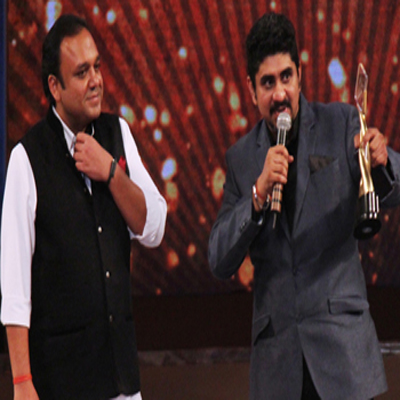
    “This show promises to entertain the audience with its intense reality drama and unique concept. We have given our best and hope the audience likes it,” said Goenka, the eldest son of Chandra.

    While admitting that an ongoing game show Kam Ya Zyada failed to live up to expectations, Goenka added that it’s Zee TV’s endeavour to give the audience what it likes, but “sometimes ideas click, while at other times they don’t.”

    “So, in deference to viewers’ preferences, we take off programmes that fail to tickle the viewers,” he added, hinting that Kam Ya Zyada will be phased out after its present run.

    However, the network is leaving very few stones unturned in promoting Business Baazigar, which is also hopeful of a second season.

    Apart from the traditional cross channel promotions on various Zee channels, which are likely to attract a diverse profile of audience, the new reality show will be promoted via outdoor, print and some innovative initiatives on the Internet. Cellular phones, too, would be extensively used for promotion.

    “We do have some new marketing initiatives (costing a packet) lined up that’ll unfold from Thursday. The aim is to arouse curiosity amongst viewers of all hues,” Goenka said.

    Concurring with Goenka was 25 FPS managing director Alankar Jain who said that marketing is an important tool to write a successful TV show. Especially one like Business Baazigar as the ramp up time is small.

    “We are hoping that the show connects with the people in its early episodes only as the whole series is time bound, ending with the 24th episode,” Jain added.

    Business Baazigar debuts on 31 March, airing one-hour episodes on Fridays and Saturdays at 8 pm.

    Apart from Chandra, the jury consists of Passionfunds CEO Mahesh Murthy and Prof. Anil Gupta of Indian Institute of Management. Cyrus Sahukar will host the series.

  • India, Pak cable ops form SAARC Electronic Media Association

    India, Pak cable ops form SAARC Electronic Media Association

    NEW DELHI: At a time when relationship between India and Pakistan are thawing a bit for the better, Indian and Pakistani cable operators have joined hands to push for a regional body that would take up industry issues in the SAARC (South Asian Association for Regional Cooperation) region.

    The campaign for such a body has been jointly launched by India’s Aavishkar Dish Antenna Sangh and Pakistan Electronics Media Association (PEMA).

    According to Aavishkar Dish Antenna Sangh founder-president AK Rastogi, “The time has come when an organisation is launched that will work for the interest of cable operators and the cable and broadcast industry in the SAARC region, including interfacing with various governments.”

    SAARC region includes countries like India, Pakistan, Bangladesh, Sri Lanka, Nepal and Bhutan. “A meeting of the new organisation, attended by Pakistani and Indian representatives, has been held. Consent from those in other countries had been taken earlier,” Rastogi added.

    Such a body, according to Rastogi, would go a long way in creating awareness about the industry and its intricacies amongst the general populace of various South Asian countries.
    Concurring with Rastogi, PEMA’s founder chairperson Muhammad Ibrahim Rana told Indiantelevision.com on the sidelines of the ongoing 14th Convergence India 2006, that even the Pakistani government has realised the futility of banning Indian TV channels.

    “There is a growing feeling in Pakistan that Indian TV channels like Zee TV, Star Plus, NGC and Sony can be given landing rights with certain riders like inclusion of a certain percentage of Pakistani content on the channels’ Pakistan feed,” Rana said.

    However, these content-related riders are worrying some Indian and foreign broadcasters who have sought permission from the Pakistani authorities to beam there.

    For example, a senior executive of Zee Telefilms, India’s largest vertically integrated media company, said, “These conditions being flaunted by Pakistani authorities for giving a green signal to us will only increase cost and red tapism. Does the Indian government put such conditions on Pakistani channels, including PTV?”

    Pakistan may not see eye to eye with India over various issues, but when it comes to watching Indian cable television, most Pakistanis will tune in faster to Indian general entertainment channels than a runaway rickshaw.

    It is this factor, according to some critics, that has stopped the Pakistani cable industry and subscriber homes from growing as fast as their Indian counterparts.

    While India boasts of over 61 million C&S households, PEMA’s Rana said that the total number of cable TV homes in Pakistan would be approximately 2 million. Though Dubai-based ARY Digital has obtained a DTH licence, it is yet to start the service.

    “But if Indian TV channels agree to about 20 per cent of Pakistani programming on their Pakistan feeds, we don’t see any reason why the likes of Zee and Star cannot be seen in our country,” Rana said, admitting that before a ban was put in place Zee News, notably, had seized a fair market share.

    The SAARC Electronic Media Association can work towards removal of such governmental, political and social barriers, Rana asserted.

  • ‘I never lose sight of topline, bottomline growth’ : Subhash Chandra – Zee Telefilms Chairman ( Gave the interview to Awaaz )

    ‘I never lose sight of topline, bottomline growth’ : Subhash Chandra – Zee Telefilms Chairman ( Gave the interview to Awaaz )

    It’s been a long haul back on the upward curve for Subhash Chandra’s Zee Telefilms but things are certainly moving north for his network (including the Zee scrip which is currently quoting at Rs 250). With flagship channel Zee TV firmly ensconced in the number two slot in the Hindi entertainment stakes, Chandra’s has a lot to say on the heightened action in the media and entertainment.

    Given below is an interview the media baron gave to Sanjay Pugalia, editor of CNBC TV 18’s Hindi news channel sibling Awaaz, which aired on 17 March. Indiantelevision.com has excerpted it with due permission:

    There is a perception about you that you start something and then forget about it. You move on and start a new project. Whatever you do is known for its novelty. There are reports that you are planning a mega entertainment city. We want to know more about that.
    Our newspaper friends broke the news before time. Still I will say that we are planning an entertainment, health and sports SEZ. Several SEZs have been planned in the country but none in the field of entertainment, health and sports. I clearly see an opportunity in these areas. As you know getting treatment is very costly abroad. Several insurance companies are thriving on this. I have heard insurance companies abroad asking its customers to go to India and get themselves treated. They are even willing pay for airline ticket. Such is the cost advantage in India.
    Similarly, so many people in Hollywood are interested in shooting their films in India. But the process is so complicated. They need 70-80 clearances to shoot their films here. With such SEZ in place, they can come and shoot their films without any hassle.

    How hopeful are you of getting clearance and tax concessions for such SEZ?
    We had applied for it when the SEZ policy was being formulated. We have been planning such a venture for almost five years now. This is not an overnight affair. I am not asking for any extra favour. We are hopeful of getting what is due.

    What is the kind of investment do you see and when do you expect to complete the project?
    What we will do is to build the infrastructure so that others can come and make use of that. We have some land and have asked for some more from the Maharashtra government.

    After such hard work, Zee Telefilms has finally become number number two. When you look back what do you think went wrong?
    Let me correct you. Zee Telefilms has always been number one. It is Zee TV that had slipped. Now Zee TV has reached number two position. However, with the kind of effort that has been put in now I am confident that it will soon regain number one position.

    Suddenly we see Zee stepping up its expenditure on marketing, new shows and new channels. What will be its impact on the revenue side of the company?
    Once you slip you need to put that extra bit to regain the top slot. We are doing exactly that. But this is an investment which will pay rich dividends. As far as new channels are concerned, I am of the opinion that entertainment space is going to expand further and you need to be present in all the segments. While existing players can afford that, it is going to be pretty tough for the new players.

    One of the criticisms against you has been that you spread yourself too thin. That you lose focus. That you are present everywhere even if that means some compromise on quality. Can you recall how many channels the group has at the moment?
    Yes I can. There are nearly 25 channels. I don’t need to personally focus on all the channels. There are good people in our group. Four of my brothers and five people from the next generation are involved with various projects. Then there are capable people who are almost like my family. They are capable enough to handle things on their own. At the level of perception, though, we are seen to be compromising with quality. But that is only at the level of perception. I am confident that this will also change soon.

    What are you focusing on currently? There’s the sports channel about which there is a view that it will take some time before making its presence felt as it didn’t get cricket telecast rights?
    Those who follow the beaten track think that sports channel cannot survive without cricket. I am not one of those. It is a different matter that we could have got a head start if we had cricket. But there are other areas to be explored. India is a cricketing nation. I want it to be a sporting nation. We have got telecast rights for football for ten years. In association with the Indian Football Federation we want to establish many football clubs across the country. I believe that in the next five years, football will be bigger than cricket in the country. As per my own focus, I look after the sports channel and with my colleagues I look after the launch of new channels in South India.

    As you said you are focusing on sports and regional channels. What are the other new initiatives?
    We are doing so many things in the existing ventures. As per new initiatives, we have just launched channels in Indonesia and Malaysia. What we are doing is dubbing Indian content in their local languages. Soon we are going to launch a similar channel in Afghanistan. Efforts are on to dub Indian content in four foreign languages. This will be over and above what we have been doing so far. Zee network is already present in 120-125 countries.

    There are reports that you are planning a channel with international content. Maybe a news channel?
    Now you are forcing me to say things. It is true that we are planning a channel for more than two years. The work on content has already begun and I can assure you that it will be quite unique. Now I will tell you why we slipped. As long as we tried out new and innovative ideas we had no competitor. We launched a show on extra-marital affair theme way back in 1994-95. The launch of Sa Ra Ga Ma was equally unique. We slipped because we started imitating others. Now this is going to change. We have started doing new things. We have realized that the spirit of entrepreneurship is quite strong among Indians. So many people want to do things on their own. To catch that spirit we have planned a new show called Business Bazigar. The contest is open to all. We invite ideas, scrutinize them and if they are worthwhile, arrange for funding.

    Maybe this programme is a reflection of your business journey. Will you please elaborate on this? How will it help people with ideas?
    We invite entries. So far we have received 1.2 lakh (120,000) entries. Our experts scrutinize those ideas. If they feel that ideas are good we invite people to explain their plan. When we realize that they have a sound plan to execute their ideas we make them go through difficult tasks like setting up office in four hours, surviving in Mumbai on a rupee and a glass of bottle for 24 hours. Once through this also, we arrange for funding those projects. It could be five lakhs or ten crore rupees (Rs 100 million). We arrange funds.
    From a shareholders’ perspective, when they see you going for so much investment they often wonder what will be the value of their investment?
    I never lose sight of topline, bottomline growth. As long as topline is growing bottomline will keep growing. So more investment means more topline growth.
    So many people would have asked you this question before. Do you think Indian television space is crowded? Will so many players survive? Is consolidation bound to happen?
    Consolidation has already begun. Your group has bought over Channel 7. Some more things are happening behind the scenes. So consolidation is bound to happen and it has already started. I believe that it will be tough for independent channels to survive.

    So you mean to say that groups with one, two or three channels will find it tough to survive?
    It will be difficult. But you never know. The country never fails to surprise us. I see so many newspapers coming out from so many towns and cities. I cannot figure out what is their source of revenue. But they are there. Maybe they have some other income.


    I keep telling Mr Murdoch that India is not a soft state. It has certain laws which need to be followed


    Quite a strong view on other income of newspapers. What is your assessment of the journey of DNA so far?
    It started off with two lakh copies and the figure is growing everyday. The circulation has reached 2.3 lakhs. We expect that in the next 12 to 18 months it will be close to The Times of India.

    Planning new editions of DNA?
    Yes.
    I believe the next edition will be from Delhi.
    Not necessarily.
    Your group has presence in whole host of businesses.Will you please list out your businesses- from real estate to wireless radio- for people who are not so familiar with those aspects of your group?
    In real estate we are developing properties in Delhi and other cities in North India under the brand name Sun City. We have a partner in this venture. And our joint venture is doing quite well. In the business of wireless radio, we have 18 operating licenses and 80-85 per cent market share. We are thinking of expanding this business.
    In percentage terms what is the contribution of your different businesses to the entire group?
    In percentage terms, media and entertainment business contributes 20 per cent to the group’s revenue, rest 80 per cent comes from elsewhere. There is a group company called Essel Propack. It has 19 plants in 12 countries. It is truly a multinational company and number one in the world in its area of operation. It manufactures tubes for toothpaste and cosmetic items. It has 40 per cent market share in the world.

    Following the High Court order where do you see the implementation of CAS headed now and how will CAS and DTH impact each other?
    I don’t think CAS is an appropriate name. The name sounds a bit negative. CAS is bound to happen. The toss up is between analog and digital signal and I think it is in viewers’ interests to have digital signal. In this respect CAS is bound to happen. One broadcaster is opposing the implementation of CAS because it wants to roll out its DTH business. But I don’t think that is fair.

    How is your DTH business doing?
    We have got one million subscribers so far.

    DD has more?
    Yes, DD has more. It caters to a different segment. It doesn’t charge anything whereas our subscribers have to pay some amount every month.

    This has happened without Sony or Star?
    Yes. Now Sony, Discovery and some other channels are joining our platform. However, we have proved that one million customers can live without Saas Bahu.

    Now that Star too is gearing up to launch its DTH business what will be its impact on the DTH business? What about must carry clause?
    Must carry clause came into force in December 2004. However, Star group never bothered to comply with the clause. Star Group doesn’t seem to have any respect for the law of the land.

    With recent reorganization and all where do you see Star Group headed now?
    My best wishes for Mr Rupert Murdock. We do talk to each other sometimes. He was my partner earlier. I keep telling him that India is not a soft state. It has certain laws which need to be followed. You cannot keep flouting rules and regulations every now and then. Law of land will catch you in due course. But when you are successful you don’t listen to even sane voices.

    Do you think broadcasting sector should have a separate regulator?
    Definitely. Indian media houses representing print, radio and television businesses came together to form Indian Media Group. We have demanded that broadcasting sector should have an independent regulator.

    Given the favourable response of the present government towards globalisation do you see other media giants freely accessing Indian market, something you may not like?
    India already is the most open country in this respect. Each and every country worth its salt has some restriction in this sector. Almost everywhere preferential treatment is being given to local players. We don’t want preferential treatment. We want level playing field. All businesses that operate in this country have to pay taxes.

    One final question. Are you satisfied with the
    present rating system? Do you think it is authentic?

    Like all areas, competition should be there in the
    rating business also. It is not fair to judge people’s mood on the basis of 4 to 5 thousand meters. I think given India’s size, there should be at least 20,000 meters to gauge people’s perception.

  • Trai moots Rs 50 million entry fee for convergence licence

    Trai moots Rs 50 million entry fee for convergence licence

    MUMBAI: Cable TV operators will have much to cheer with this recommendation from the Telecom Regulatory Authority of India (Trai). The broadcast and telecom regulator has suggested a much lower levy of Rs 50 million as entry fee for national and international long distance licence (NLD/ILD) in the converged scenario.

    Trai had earlier suggested Rs 1.07 billion, making it expensive for cable operators to move into telephony services. “If the government approves Trai’s recommendation, it will particularly benefit us as we are planning to enter into the triple play area,” says Siticable CEO Jagjit Kohli. Siticable, a leading multi-system operator (MSO), is a wholly owned subsidiary of Zee Telefilms.

    While asking the government to approve its unified licensing recommendations at the earliest, Trai also said in a release today that there should be reduction in the entry fee to reflect the changes made in the entry fee for NLD/ILD licence. “The entry fee should come down to Rs 50 million as against Rs 1.07 billion recommended earlier and this should further reduce to Rs 300,000 after five years as already recommended,” it said.

    In order to promote convergence and competition in broadcasting and telecommunications, the regulator has called for the clearance of the Communications Convergence Bill, 2001, albeit with some modifications. “There should be converged regulatory regime. The starting point for this exercise should be the Communications Convergence Bill, 2001. However, several changes need to be made in this Bill. Content regulation should be kept out of the purview of the converged regulator. The division of powers between the Government, TDSAT and TRAI should also broadly correspond to what is presently the position,” Trai said, releasing the recommendations on convergence.

    “Convergence of technologies is rapidly blurring the boundaries between telecommunications and broadcasting. It is necessary for the legal and regulatory framework to adapt to this convergence and actively promote such convergence. This would also help in facilitating competition,” the regulator said.

  • ‘Sa Re Ga Ma Pa Challenge’leads to ‘Ek Main Aur Ek Tu’

    ‘Sa Re Ga Ma Pa Challenge’leads to ‘Ek Main Aur Ek Tu’

    NEW DELHI: Zee TV, the flagship of Zee Telefilms, has announced a brand new show with the same flavor of its successful Sa Re Ga Ma Pa Challenge 2005.

    Ek Main Aur Ek Tu, with double the frenzy will give the viewers an opportunity to see the talent and chemistry between couple contestants. The contestants will feature in duet performances with an aim of enhancing the richness of the show, the channel said.

    Speaking about the new show, Sa Re Ga Ma Pa creative director Gajendra Singh offers, “As in all competitions, Challenge 2005 could have only one winner claiming the voice of India title. And the success of the show with solo performers was immense. We thought duet performances would only add more sheen to the already established equity of the show.

    Further reinforcing the point, Zee TV programming head Ashvini Yardi says, “Ek Main Aur Ek Tu is actually for the benefit of millions of viewers worldwide who just cannot get enough of Sa Re Ga Ma Pa. As a channel committed to provide desirable entertainment, we were sure that this new version will bring in a fresh new look and a enhance the already existing popularity for the contestants, only this time with added grandeur and fanfare.”

    The series will revolve around the contestants who will be singing in couples. The best of the Challenge 2005 contestants will be selected for this and the viewers will be asked to select their favorite pair. Public voting would eliminate one couple every week and as the tensions mounts, India will get to choose the Ek Main Aur Ek Tu duo.

    The show launches of 16 March 2006 and is scheduled to air every Thursday and Friday at 10 pm.

  • Murdoch on India visit this weekend?

    Murdoch on India visit this weekend?

    Is global media baron Rupert Murdoch coming to town? If reports are to be believed a visit is being planned for the News Corp chief to visit Bangalore, Delhi and Mumbai, (if possible) over this weekend. Murdoch last visited India, if reports are to be believed in a hush-hush meeting with the then Congress (I) strongman, Sharad Pawar in 1996 at an army base in Pune.

    His earlier visit to India was in 1993-94 which was much hyped up when he was seen with various politicians, dignitaries and businessmen. He was feted wherever he went. Since 1996 he has been unable to fly into India because of a flimsy obscenity case that was pending against him for the airing of a bit of skin on Star Movies. The case apparently took an ugly turn when summons were sent to his residences/offices in Australia and the US, and an arrest warrant issued against him. The situation was so bad that he was not permitted to enter the country and declared a criminal because he did not attend court when he was summoned. He would have been arrested had he landed in the country. Since then, however, the case has been set aside and Murdoch can visit India.

    During his current visit – if it takes place over the weekend – he is expected to meet the Prime Minister, information technology minister, Pramod Mahajan. His focus is expected to be on the information technology sector, in which he has suddenly begun to see lots of promise. He is also expected to give a direction to Star TV India CEO Peter Mukerjea as to how much he is willing to commit to India and in which areas. And obviously, he is going to be tomtomming Star TV’s forays into the information technology and convergence sector.

    Currently, hectic preparations are on within Star TV and his once Indian partner in Star TV’s Indian DTH project Pramod Mittal who is trying to smoothen his visit out here. Obviously, a meeting with his old mate Zee Telefilms chairman Subhash Chandra is planned. For sure, he is going to thank him, Chandra has helped Murdoch make more money on his investment in Zee Telefilms than he has made through his entire Star TV operations in the past six years, thanks to an appreciation in Zee’s share price over the past six months.

    Meanwhile, the media can expect to have a rollicking time. Murdoch is eminently quotable as we have known him to be.