Tag: Zee Telefilms.

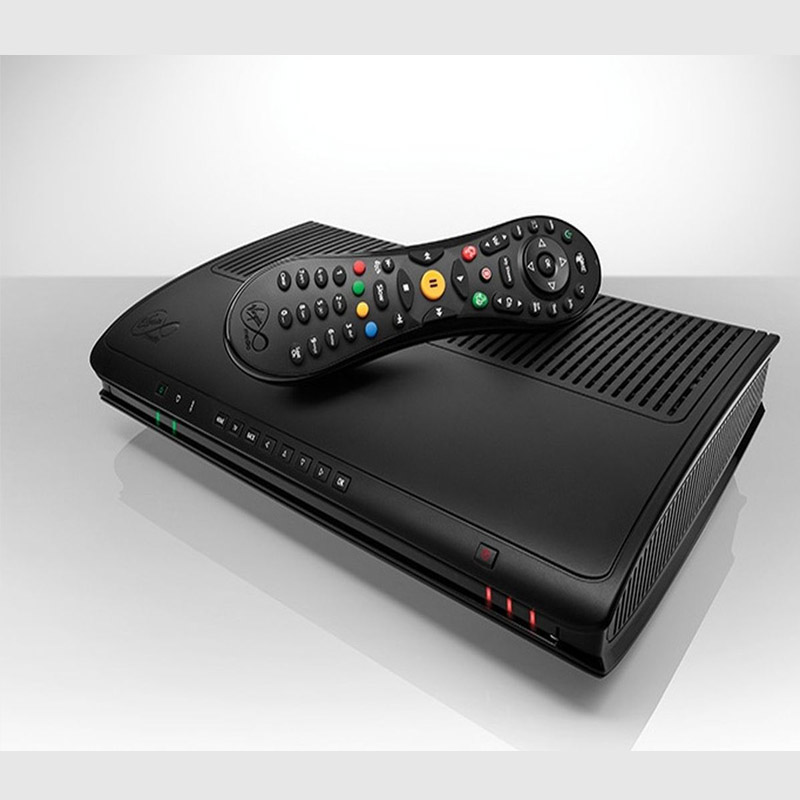
  • TDSAT to Star: give channels to Dish TV

    TDSAT to Star: give channels to Dish TV

    MUMBAI: In another 15 days time, all Star channels may well be made available to the country’s only private direct-to-home operator Dish TV.

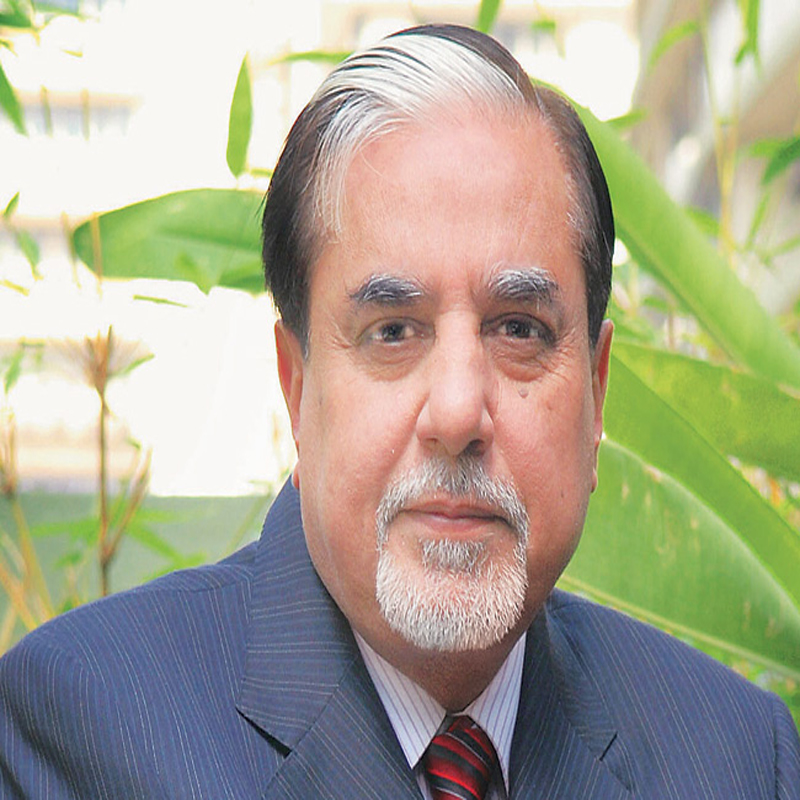
    Subhash Chandra’s DTH service Dish TV has won a favourable judgment from by the Telecom Disputes Settlement and Appellate Tribunal (TDSAT) in this regard. As per the tribunal’s directive, Star India will have to distribute the signals of all its channels to Dish TV.

    In an order passed this morning, TDSAT, while directing the sector regulator to set a benchmark for channel prices for DTH services, said that Star channels should be made available to Dish TV at half the price at which they are available to cable operators.

    The reason for this, according to TDSAT, is that DTH is an addressable system where loss of revenue down the value chain is negligible if not zero.

    An interpretation of this observation on rates would mean that all Star channels (comprising bouquets I & II) will cost Dish TV Rs 27 exclusive of taxes, as against the cable operators paying Rs 54 per subscriber/per month.

    While issuing the order, which had been kept reserved since 5 July when arguments concluded, TDSAT said, “We have no basis to lay down the actual rates per channel, which we feel is the prerogative of Trai. However, to begin with, we feel that 50 per cent of the rates being charged for cable platform be made applicable to the DTH platform.”

    Reacting to the developments, a jubilant Zee Telefilms vice-chairman and Dish TV business head Jawahar Goel said, “The verdict vindicates our position. We will be sending a letter to Star by tomorrow requesting them to conclude an agreement for their channels.” Everybody should respect the law of the land, Goel added.

    Said a Star India spokesperson, “We have received the judgment of the TDSAT in the matter of ASC Enterprises vs. Star India Pvt. Ltd. earlier today and we are now in the process of examining it in detail.

    “The judgment comes at an opportune time as we believe it will help in clearing the air on a number of critical areas that impact addressable systems in general and DTH in particular and will be a positive impetus to their development. However, it appears to us that there may be some specific areas within the judgment that will require further clarification.

    “Our intention is to seek clarification on these areas at the earliest opportunity and make a response accordingly. Star has been and will continue to be an active supporter of all addressable platforms and will work with them to ensure that the viewer’s interests are best served.”

    Interestingly, TDSAT has also said that no minimum guarantee needs to be given by Dish TV for the Star channels and the payments would be made on actual number of subscribers.

    It directed Dish to submit a list of subscribers from the subscriber management system (SMS) every month to Star — a model that TDSAT said would be applicable to all DTH operators entering into commercial deals with broadcasters.

    Respondent Star had pointed out that the minimum guarantee requirement is an internationally prevalent norm in the DTH industry as it incentivizes the DTH operator to ensure higher subscribers.

    TDSAT, in its order has said that in case of any denial of the signals, the DTH operator may approach the tribunal for further relief.

    For the record, Chandra’s ASC Enterprises, which holds a DTH licence, had moved TDSAT alleging that Star India was delaying making available its channels in breach of a regulatory order that states all content should be made available to all platform on a non-discriminatory basis.

  • Zee unveils state-of-the-art digital studio in UAE

    Zee unveils state-of-the-art digital studio in UAE

    MUMBAI: Zee Telefilms International has opened a state-of-the-art digital studio in Sharjah, UAE. The studio been launched with the purpose of telecasting locally-produced programmes in the region.

    UNI has quoted Zee Telefilms International regional MD Yogesh Radhakrishnan as saying that, the system would complement the network’s increasing emphasis on Arab viewership and indigenous content as exemplified by its Arab-oriented channel Zee Arabiya.

    The six million dollar high-end studio and post-production facilities located at the ISO certified Airport Free Zone will serve several purposes, including support to the new, Arabic based and youth-focused channel Zee Arabiya, as per the report.

  • Zee Telefilms mulls an entry into China

    Zee Telefilms mulls an entry into China

    MUMBAI: Foreign media companies seem to have hit a wall when it comes to China. Star Group, for example, continues to bleed in that market despite pumping in big money for years. This, however, has not stopped global firms from eyeing a slice of the cake that a 1.3 billion population promises.

    Subhash Chandra is the latest media baron willing to throw his hat in the ring. Zee Telefilms Ltd. (ZTL) is planning to enter China, the toughest market to crack with its tight controls on foreign media.

    “We will be entering that market. We have not yet applied for the landing rights. It will take time and we expect it to happen sometime towards the end of this fiscal,” says Essel Group chief executive officer of corporate strategy Rajiv Garg.

    Though Zee plans to have a presence in China in the broadcasting space, it has not yet finalised on what content and channel it should set up to lure viewers. ZTL chairman Chandra recently said Zee would launch a dubbed movie channel in Russia.

    ZTL also plans to launch in Afghanistan, Cambodia and Indonesia to expand its international operations which account for almost one-fourth of the company’s revenues. Running businesses which have matured in the UK and US, Zee’s strategy is to launch dedicated channels in certain markets which it has identified. The company has stitched a deal with Malaysia’s multi-channel pay TV operator Astro to create a channel with Hindi content drawn from Zee TV, Zee Cinema, Zee Music and Trendz for the Indonesian, Malaysian and Brunei audiences. For tapping youth audiences in the Arab region, Zee also has launched Zee Arabiya, a music and lifestyle channel.

    Global media companies like News Corp, Time Warner and Viacom see China as a fertile revenue market in the long term, though it is currently spoilt by heavy-handed regulation on foreign media.

  • Zee’s Q1 net shows a marginal rise of 5%

    Zee’s Q1 net shows a marginal rise of 5%

    Zee Telefilms along with its subsidiaries has registered what could be its lowest Q1 net profit in the recent past. The company showed a rise of a meagre 5% in its net profit for the first quarter of the year 2000-2001. The consolidated net profit for the current quarter is Rs 32 crore as against the corresponding figure of Rs 30.5 crore for the same period of the last year.

    Various reasons can be stated for this poor performance. To begin with, the unaudited results of the company reveal that a large amount has been written off for the total operating profit of 50 crore. Zee has hived off Rs 18.3 crore as “exceptional items”. Of these exceptional items, Rs 9.8 crore has been written-off on account of the film library sold by ZTL to its subsidiary. It can be mentioned that a lot of controversy was generated when this sale was shown by ZTL as a profit in its books in the previous financial year. And according to analysts, it is likely that the remaining amount from the sale of the library might be written-off over a period of time, which in turn might mean that Zee might show lower net profits for the remaining quarters as well.

    Also the company has accrued losses on account of its new interactive services like E-Connect and Zee Interactive Learning Systems. Zee has registered losses of 5.2 crore and 1.4 crore respectively on the two new subsidiaries.

    Interestingly, the company has shown other income as Rs 10.9 crore. This is a five times increase from the previous years figure of Rs 2 crore. Had it not been for this income, the consolidated net profit would have been even lower.

  • Zee Tele’s stock soars on ratings upswing, future prospects

    Subhash Chandra touts his plans to disassemble Zee Telefilms Ltd (ZTL) into four separate entities as a necessary move to unlock value. As he stands on the eve of the digital age, he feels he can size up each line of his media business spreading across cable TV, direct-to-home (DTH), content and broadcasting with independent focus and management care.

    What this means is that the core ZTL, after the trimming, would have all the network channels except in the news and regional genres which raked in Rs 2.01 for the 2005-06 fiscal. Operating revenues of Rs 1.54 billion from cable TV would also be transferred out, further eroding the company‘s consolidated turnover.

    Even after cropping the topline, there is a mandate for robust growth. Riding on the wave of Zee Cinema and a resurgent Zee TV, the company expects to clock a 10 per cent rise from last year‘s turnover of Rs 10.51 billion.

    Says Essel Group CEO of corporate strategy and finance Rajiv Garg, “We expect an advertising revenue growth of 12-15 per cent this fiscal. While international business will sustain its 10-12 per cent growth (adding of channels and gain from Middle East operations), domestic subscription will stay steady.”

    Zee‘s road to recovery came last year as the flagship Hindi general entertainment channel bounced back big time on the ratings scale with simple storyline soaps like Saat Phere and Kasamh Se. Zee TV smelt the first scent of success since its continuous slide for over six years, with Sa Re Ga Ma Pe Challenge, a singing talent show.

    “It is not that we came out with any magic potion in programming. We just stuck to the basic rules. What made the difference this time is that we jelled as a team and came out with a winning mindset. The external environment also played a role as Sony lost audiences and Star Plus was still lighted up by the three long-running flagship soaps,” says Zee Network senior vice president Ashish Kaul, explaining the turnaround story.

    Zee‘s resurrection was born out of a long sequence of internal discussions and, in a reshuffle, Chandra‘s elder son Punit Goenka was made business head of Zee TV. In an interview with Indiantelevision.com, Goenka had then said that his induction would bring stability to the channel. “You can expect one change. We want a planned execution of what we do. We won‘t resort to any knee-jerk reactions… Here, internal palpitations happen whenever crucial projects come up. There have been instances when we started a project and left it midway… It is more like using someone who can handle pressure and bring in stability. I consider myself as one of the Zee professionals, not as a family hand. But, being a family man, I think I can bring in stability.”

    The duo of ZTL CEO Pradeep Guha and Goenka clicked and the strategy to build an entire programming wall with focus on a time band approach was chalked out. Programmes were jazzed up and a marketing buzz was created around them. The investments on Zee TV‘s content and marketing rose almost 20 per cent to Rs 2.2 billion in FY06. “There is usually a lag of 4-6 months between improvement in TRPs and ad revenue growth. So with an improvement in ratings, we are predicting a recovery in ad revenues going ahead this year with a return in pricing power,” says an analyst.

    Meanwhile, Zee Cinema, ZTL‘s second major revenue earner, continued as the numero uno in its space and posted an almost 20 per cent rise in turnover to end FY06 with Rs 1.45 billion in earnings. The channel banked on Amitabh Bachchan‘s films and a mix of new and old movies to fend off competition from Max and a revamped Star Gold.

    The change was reflected in the financial health of the company. Facing rough weather, Zee had reported a CAGR (compounded annual growth rate) of 7 per cent in revenues for the period FY02-05. This was contributed by a 28 per cent CAGR in subscription revenues and an annual decline of 8 per cent in ad revenues. The picture changed last fiscal and Zee posted a 13 per cent ad revenue growth, fueled by the ratings ramp up.

    International revenues, which account for one-fourth of Zee‘s earnings, will continue its good run, though operations from UK and US have matured. The Middle East and South Eastern region would ride on a growth wave and Zee is also planning to launch a dubbed movie channel in Russia.

    The worry, though, is the losses from new businesses which remain large at Rs 1.65 billion. But Zee Telugu, which suffered a loss of Rs 460 million last fiscal, now forms a part of Zee News Ltd. Operational expenses will continue to rise as several businesses will be in investment mode.

    The positioning of Zee Smile, a humour-based light entertainment channel, will be up for change. “We are considering whether we should turn it into a flanking second general entertainment channel or design it as a full fledged comedy channel. We have not taken any decision yet,” says Kaul. Zee is also planning to beef up content on its English channels, particularly Zee Cafe which would get a facelift.

    Some analysts have projected a high growth for the whole of Zee. “We model ad revenues to grow to Rs 8.24 billion in FY07, compared to Rs 6.44 billion in FY06 as the non ICC cricket matches pick up. We model subscription revenues to grow to Rs 13.1 billion in FY11 from Rs 7 billion in FY06. The bulk of our expected growth comes from domestic pay TV revenues which we model to grow to Rs 6.45 billion against Rs 2.95 billion in FY06,” writes an analyst in a research report.

    Several analysts, however, play these figures down, saying a lot will depend on how Zee shapes up its content businesses against intense competitive pressure.

    But what will the demerged ZTL look like? “The topline would be lower than what one would see today but bottomline would be healthier,” Chandra said in a recent interview to a business news channel.

    Zee‘s stock price has almost doubled in the last one year and is currently trading at Rs 260. The sum-of-the-parts value is what is driving the scrip up. It will further balloon when the demerger implementation is closer to date,” an analyst at a brokering firm says.

    So what are the potential downsides? There is of course Zee Sports, by virtue of its being a start-up proposition at the present. We do feel though that the new sports channel kid in the Zee family feel has the potential to contribute to ZTL‘s topline growth.

    Zee Sports

    Zee Sports is ready to play the high-cost game of sports broadcasting. After losing the four-year India cricket telecast rights to Harish Thawani-promoted Nimbus Communications, Chandra bowled just about everybody with his googly: a whopping $219.15 million bid to grab cricket rights for 25 one-dayers played by India in offshore non-ICC venues over five years.

    Even Thawani‘s humungous $612 million bid for BCCI (Board of Control for Cricket in India) cricket in India pales in comparison. With 115 days of Test cricket and 54-56 ODIs for four years, Thawani‘s payout for each match works out to around $3.57 million against Chandra‘s $8.77 million.

    Analysts are not enthused by such a high-cost bid. “We do not expect Zee to be able to recover its costs unless there is substantial rub-off effect on its distribution business. The positive aspect is that costs are back-ended, which will mitigate cash flow and balance sheet risks partially and allow Zee sufficient time to scale up its distribution business. The pace of adoption of addressability in India remains the key to Zee‘s future earnings and valuations,” an analyst at an institutional equity firm writes in a research report.

    For the first two ODIs in Abu Dhabi between India and arch rival Pakistan, Zee Sports suffered a loss. On a paying price of $10 million (Rs 450 million), sources say gross revenues from India stood at Rs 240 million (Rs 130 million on Doordarshan and Rs 110 million on Zee Sports channel). If you cut out a 15 per cent commission as media agency fee and a 25 per cent revenue share to DD (Rs 27.6 million), Zee‘s trimmed earnings would be Rs 176.4 million.

    Zee Sports business head Himanshu Mody does not agree that the offshore properties are a big hole in the company‘s pocket. The commercial exploitation from overseas markets fetched as much as was generated from ad revenues in India, he says. “Incremental subscription revenues from Zee TV‘s global channels, ad sales and earnings from content syndication were healthy. Besides, it increased the reach and visibility of Zee Sports in India.”

    Chandra is optimistic about his big bet on cricket. “We got only four days to sell the two ODIs and incurred a small loss of Rs 20-30 million. We have a staggered payment schedule which increases towards the end of the five-year period. We believe we will make money on this because of broadband and pay-per-view opportunities which are emerging. This will establish Zee Sports as a channel and boost our international subscription and domestic growth,” he told analysts.

    Chandra also believes he is paying only for the ODIs which are high-value properties. Besides, these are all India matches and will involve strong teams including Pakistan, Australia and England.

    Still, there is no getting away from the fact that Zee‘s cricket gamble needs to be backed up with good properties. Chandra will get just five matches on an average every year (the final calendar of matches hasn‘t yet been finalized), which is a spread too thin for any sports channel to command distribution clout and revenues. “A sports channel needs at least a long drawn cricket series to ramp up its subscription revenues,” says the distribution head of a leading network.”

    Having paid dearly for these spike properties, Chandra will have to build up a breadth of live mass-watched programming which will have a longer enduring value. If he is not able to manage a stream of supply that is more widespread, the property that he has acquired will lack bite and value. The youngest channel in the Zee bouquet will have to be fed with more days of live cricket or bankable international football.

    Even if Chandra loosens his purse strings, where is the cricket or football of value available to fill up the plate?

    Some options will open up for Zee like the Octagen-CSI cricket telecast rights (with ESPN Star Sports now) and the Pakistan and Sri Lanka domestic cricket (with Ten Sports), but the content will not be available before 2008. Even the ICC World Cup will be up for grabs after SET India‘s rights expire in with the 2007 World Cup in the West Indies.

    So, what does Zee do till 2008? The challenge is to develop Zee Sports as a platform for second-tier sports like football and wait till it can snap up bigger properties. Having acquired 10-year rights to AIFF (All India Football Federation) football, the task is to build this as a long term property.

    Zee Sports will focus on cricket, football and tennis, says Mody. “We hope to reap profits from football where our cost will be up by 5-7 per cent year-on-year while revenues can leapfrog. We have also got Mumbai and Delhi marathons as long term properties.”

    Working on collaboration with other sports channels is also a route Mody is going to push for. “Competition has to be more collaborative as acquisition prices of sporting events shoot up. The French Open is an example of how this can be achieved with Ten Sports allowing us to telecast the event as they had cricket on their channel,” he says.

    Zee Sports is at an incubation stage and will require long term investments for the development of the channel. For the fiscal ended March 2006, Zee Sports posted a loss of Rs 600 million. “Obviously, in the initial period there will be losses. We are not going to stop at the 25 ODIs. We will bid for the World Cup and the other boards as well. Sports as a business would grow for us,” Chandra told analysts.

    The decision to bring Zee Sports under the ZTL umbrella was something Chandra had not originally planned for. “We had created it as a separate entity because we were thinking of bringing a strategic partner in the business. But some developments took place and we decided it should become a division of ZTL,” he replied to analysts.

    The losses of Zee Sports, in fact, had a beneficial impact on ZTL‘s bottomline in FY06 as it acted as a tax shield. “It had a positive impact. Our tax liability has been reduced by at least Rs 180-200 million,” Chandra admitted.

    But by kicking in losses for a longer period, will Zee Sports be a drag on the profitability of ZTL? Making calculations based on the existing properties, Mody believes Zee Sports‘ losses would reduce this fiscal and the entity would be profitable by FY08. “We realise sports broadcasting is a long term play. As it was the only genre where Zee was not present in, we launched it with the idea of now or never. But we are in a special position by being part of a larger bouquet for both distribution and ad sales revenue exploitation. Since we also have a large global presence, we can also leverage it better,” he says.

    Zee Sports will spruce up ZTL‘s topline which has under its umbrella channels like Zee TV, Zee Cinema, Zee Café, Zee Studio and Zee Sports. Among all the horses within ZTL, it is Zee Sports which, as a startup, can provide faster growth for the company if properly incubated.

    Perhaps, it is with this logic that Chandra is putting big money behind the sports channel. Perhaps, it is also the ego of a media baron who wants to prove that he can win in sports broadcasting (after being deprived of ICC World Cup and BCCI cricket despite bidding higher on both the occasions) as well. Or is it a mix of both?

    Whatever it is, Chandra will have his task cut out for him to make money from a bid that, at the surface, seems ridiculously so high that it made Sony stay out and ESPN Star Sports come out with an offer lower than the floor price of $5 million per match.

    But it is exactly this quality which separates Chandra from the other Indian media entrepreneurs. Where others see risk, he sees an opportunity to make money.

  • Zee to launch dubbed movie channel in Russia

    Zee to launch dubbed movie channel in Russia

    MUMBAI: One area where Zee Telefilms is clearly ahead of rivals Star and Sony is in channel initiatives internationally. Keeping that tradition alive, Zee is launching a 24-hour movie channel in September that will air Indian films dubbed in Russian.

    Zee group chairman Subhash Chandra revealed his channel plans to Hindu Business Line on the sidelines of an address he gave to the Madras Management Association in Chennai yesterday.

    Considering how well Hindi movies in particular have been received in Russia (the late Raj Kapoor’s films were a rage there), it would surprise no one if Zee has a winner here.It was on 13 March that the Network began beaming Zee in Indonesia. There too the channel was dubbed in the local language Bahasa. Zee is available on the multi-channel satellite pay-television platform Astro Nusantara as a package.

    In Indonesia, the channel’s content is sourced from the flagship channel Zee TV library and localised with Bahasa Indonesia dubbing and Bahasa Melayu subtitling, to reflect the different language, lifestyle and viewing habits of audiences in the three countries Indonesia, Malaysia and Brunei.

  • Broadcast bill ready; scheduled to be tabled in Monsoon Session of Parliament

    Broadcast bill ready; scheduled to be tabled in Monsoon Session of Parliament

    NEW DELHI / MUMBAI: After many years of meandering on the margins (since 1997), the information and broadcasting ministry is ready with a final draft of the Broadcast Bill 2006, which in all likelihood is going to turn out to be controversial and stringent at the same time.

    The recommendations that have been proposed in the bill, if they finally become law, are bound to have seismic repercussions in the industry. The draft bill, which calls for the setting up of a separate Broadcast Regulatory Authority of India (Brai), has covered four major areas in its ambit, which would call for major corporate restructuring by media companies, foreign and domestic, operating in India. These include content, cross media ownership, subscriptions and live sports feeds (which are already part of the downlink norms).

    Some of the key recommendations as per the draft bill:

    * The bill introduces restrictions on cross media holdings in all electronic ventures capping it a maximum 20 per cent. While print media companies have not been included in the ambit of the bill for the present, this could be later extended to them as well.

    On restrictions on accumulation of interest, the draft bill states, “The Central government shall have the authority to prescribe such eligibility conditions and condition with regard to accumulation of interest in the print and broadcast segments as may be considered necessary from time to time to prevent monopolies across different t segments of the media.”

    What this means is that a broadcaster like Star, for instance, can have a maximum 20 per cent stake in an FM radio venture or a multi system operator.

    The immediate fallout of such a bill becoming law would be that Star, which has a 26 per cent holding in the Rajan Raheja-promoted Hathway Cable & Datacom MSO, would have to bring down its stake by 6 per cent.

    It seems that the demerger that took place in Zee Telefilms could prove to be beneficial for the company. Down South, the Sun TV group would also have to restrict its interest in cable distribution companies like Sumangli.

    In this regard, the draft bill states, “No broadcasting network service provider and its associated companies shall have more than 20 per cent share of paid up equity or have any other financing or commercial arrangement that may give it management control over the financial, management or editorial policies of any other broadcasting network service provider…”

    * No broadcasting service provider (television company) can hold more than 20 per cent equity in another TV company. Additionally, no TV company can own more than 15 per cent of the total number of television channels beaming in the country.

    “No content broadcasting service provider shall have more than the prescribed share of the total number of channels in a city or state, subject to overall ceiling of 15 pr cent for the whole country,” the draft states.

    * A broadcast network service provider (presumably multi system operator / cable operator) cannot have more than 15 per cent of the national average in regards to subscriber numbers.

    What this means, at the moment as an explanatory annexure are not available, is that if 60 million is the C&S national subscriber average, an MSO like Zee group’s SitiCable or the Hinduja-owned INCablenet or Sumangli, for example, cannot exceed 9 million paid subscribers in a city or a state.

    “No broadcasting network service provider shall have more than the prescribed of the total number of consumer/subscribers in city or a state subject to the overall ceiling of 15 per cent for the whole country,” the draft bill states.

    * TV channels on a mandatory basis would have to have a certain prescribed percentage of content produced locally and also carry socially relevant programmes.

    “The share of content produced in India shall not be less than 15 per cent of the total content of a channel broadcast during every week,” the draft bill states.

    It also goes on to state that the share of public service/socially relevant programme content shall not be less than 10 per cent of the total programme content of a channel broadcast during every week.

    This would mean that channels like Cartoon Network, Animax, Discovery, Animal Planet and Discovery Travel and Living would have to have a prescribed percentage of content generated from India, which has been a long-standing demand of Indian animators.

    *Cable Ops / MSOs to operate only on licence from Brai.

    This could well be the catalyst that brings in some order into the cable industry. At present, the only requirement for anyone wanting to start cable services is that he/she should fill in the prescribed form at any post office and pay the nominal fee.

    * Existing laws and guidelines relating to broadcasting, TV and radio, would subsume under this over-arching regulatory framework.

    This would mean that laws and guidelines relating to FM radio, DTH, community radio, uplink and downlink of channels and use of SNG/DSNG infrastructure would cease to exist and assimilate with the broadcast law.

    The Broadcasting Services Regulation Bill 2006 is presently being circulated among members of the Union Cabinet. Depending on the Cabinet direction, the bill is scheduled to be tabled during the Monsoon Session of Parliament.

    TV and cable companies refused to comment on the draft proposals today, saying they are yet to see the government paper, which needs to be studied in detail.

  • Corpus Inc. buys out Recreate Solutions for Rs 600 million

    Corpus Inc. buys out Recreate Solutions for Rs 600 million

    MUMBAI: US-based Corpus Inc. has acquired Recreate Solutions, a media and entertainment software outsourcing company floated by former Zee Telefilms employee Bhaskar Majumdar, for Rs 600 million.

    “It is a cash-and-stock deal. The acquisition price is around Rs 600 million,” says a source.

    The shareholders of Recreate Solutions will hold seven to eight per cent in Corpus, the source says. Insight Capital Partners, which had made two rounds of funding totalling $6 million, holds 75 per cent in Recreate Solutions while founder- promoter Majumdar has the balance 25 per cent.

    With the acquisition, Corpus will enjoy a footprint in Europe and India where Recreate Solutions has a wide range of clients. A provider of technology services to the telecom, banking and financial sector, Corpus will now be able to also offer to its big clients like Verizon solutions for IPTV and interactive TV.

    “The acquisition will help Corpus enter a new vertical. The company so far was doing backend work for telecom and financial companies. The acquisition will help them to offer front end skills like gaming, IPTV and ITV. The geographical areas are also complementary as they were strong in the US while we had a presence in Europe and India,” says Recreate Solutions CEO Majumdar.

    Corpus, which has several Fortune 100 clients and is eyeing a revenue of $100 million, will make the current facilities of Recreate Solutions as its main outsourcing hub, though it has a small base in Bangalore. With the acquisition of the Recreate Solutions’ team of 100, Corpus has now grown its worldwide team to 580.

    The acquisition will also help tap telecom operators in India who have IPTV and other convergence plans. Recreate Solutions was in talks with some of the operators but couldn’t make a breakthrough. “The interactive media industry is maturing across platforms. It is consolidating around companies that have viable cost structures and revenue streams that generate healthy margins. Outsourcing of non-core technology functions is a proven method to increase profitability. Recreate Solutions is focused on providing high quality outsourced solutions that add value to clients in our service segment: Digital Interactive Content. Under the Corpus banner we will now we able to take our solutions to Corpus’s Fortune 100 client base,” says Majumdar.

    Recreate Solutions has clients like Bell ExpressVu, Canada, Exit Games, YooMedia and CNBC in India. The company is also doing product development work for Espial, a company which specialises in browser solutions on the set top boxes

  • ‘Consolidation in news business is an inevitability’ : Laxmi Goel – Zee News Ltd director

    ‘Consolidation in news business is an inevitability’ : Laxmi Goel – Zee News Ltd director

    Laxmi N Goel, director Zee News Ltd and the second of the three brothers of Essel Group chairman Subhash Chandra, is not given to hype and hoopla.

    Even when he has to announce his organisation’s achievements, true to his style, he’s most likely to hold the event in modest surroundings. A case in point being the launch of the book Pehal, which he authored, done in Federation of Indian Chambers of Commerce and Industry auditorium in Delhi instead of a five star hotel. As he says, every paise or penny saved is that much earned, which can be reinvested into the company.

    He doesn’t have any formal training in business management or television programming, but has still managed to oversee the functioning of Zee News channel quite successfully over the years after it was decided to do away with professional CEOs at the helm to manage news.

    These days Laxmi Goel spends more time discussing annual budgets and increments of his colleagues than on the exercising cycle. After all, the restructuring of Zee Telefilms has landed him added responsibilities of all the Zee family regional channels, which have been hived off into Zee News Ltd to conform to government guidelines on foreign investment in television news entities. “I wish I could find some more time for my daily walks,” Goel rues.

    In an interview with Indiantelevision.com, held at the Zee News’ headquarters in Noida on the outskirts of Delhi, Goel discusses some aspects of the restructured Zee News.

    Excerpts:

    Why was the de-merger of Zee News necessary?
    When the organization becomes big, this type of de-merger helps in better control of various aspects of business. However, for me, things still remain the same. We have to do well and show good results to our shareholders. That was the theme earlier. It’s still so.

    Have you settled down in your new role and what would be the agenda now?
    It’s still early to spell out agendas as it’d take five to six months for things to settle down completely.

    But, as I said earlier, the basic process remains by and large the same. We have started a Bengali news channel (24 Ghanta or 24 Hours) and we would evaluate our expansion options as the market pans out.

    The Bengali channel seems to be a case of the Right shaking hands with the Left. Zee’s promoter family are said to be Bharatiya Janata Party and parent RSS sympathizers, while Bengali channel partner Akaash Bangla owners are known backers of the Left parties. Comment.
    I don’t understand what political ideologies, if at all there is one, has to do with business decisions? 24 Ghanta was a business decision where Zee News thought Akaash Bangla to be the right business partner. Moreover, as Akaash Bangla is an existing TV channel, its owners had the advantage of understanding the TV business.

    What would you like to do with the organization now that you have more properties to look after, apart from Zee News and Zee Business?
    The functioning of the organization remains more or less the same. It has just taken a different avatar. What is remarkably different is that there would not be any consolidated profit and loss account for Zee News any more. You journalists can say that we would not be able to hide behind Zee Telefilms with our financial performance any more. Now, that’s a challenge too. We would have to continue showing good results and keep our shareholders happy by nurturing the bottom-line.

    Apart from that, we are now free to take independent decisions on expansion, which will always be guided by market forces. At the moment, we are not actively considering any addition to the present crop of channels, but I cannot predict the future. If a sudden need arises to have a product in a certain segment of television business or geographical area, we can consider it then.

    Do you feel that so many news channels, including those from the Zee News stable, will survive in the long term?
    India is a growing market where increasingly people are formally getting educated. A combination of this has fuelled consumption of news. The trick lies in delivering news quickly and in a manner that is consumer friendly.

    But such mushrooming of news channels all over is unlikely to be supported by the market in the long term. The process of consolidation has started.

    We would have to continue showing good results and keep our shareholders happy by nurturing the bottom-line

    Will the economics of running news channels force consolidation?
    Partly yes. Let’s take, for example, a news channel that aims to have a national presence. On an average capital expenditure on national news channel can range between Rs 800 to Rs 900 million. At times it can go beyond that too. Then the running expense per month for a national news channel comes to approximately Rs 80 million, which would include expenditure on news gathering and marketing activities. Now these figures are not small, though not huge either.

    As different news channels have different business models, over the years mounting expenses will force consolidation. This can happen in the form of mergers and acquisitions or can result in cutting down cost on news gathering and infrastructure by evolving a model where some sharing is done by various players in the industry.

    Carriage fee that most TV channels pay to cable operators, coupled with growing employee wage bill in news organizations, also add to the cost. To outsiders, these costs might not look very important, but let me assure you that carriage fee and increasing pay packets of TV journalists do weigh down a TV news organization.

    Since the Indian news market is still very active, the exact shape of consolidation is difficult to predict accurately. But consolidation is an inevitability.

    How is Zee News Ltd addressing the problems of carriage fee and bloating wage bills?
    We are not as aggressive as other news channels in holding back people who want to leave for another channel for a better pay packet. We do talk to people who want to leave and try to reason out the advantages of Zee News Ltd. However, we feel that beyond a point it’s futile to negotiate on remuneration as the demands and wish list of some people just don’t seem to end. Such people would leave anyway. If not today, then tomorrow.

    In such cases, Zee News lets people go for the larger benefit of the company and its bottom-line. And, there have been innumerable cases when former Zee News employees have requested to be taken back at the salary that they had been drawing at the time of leaving.

    As far as carriage fee is concerned, we feel CAS is the solution. Newer technologies like CAS and DTH would help in arresting the demands of cable operators, which can be unreasonable at times.

    What is the revenue mop up level for Zee News and Zee Business channels?
    A majority of the revenue, of course, comes from Zee News, which is in the range of Rs 10-20 million per month. Out of this, subscription revenue is more than advertising money.

    How are the regional channels doing financially and ratings wise?
    Most of the channels are doing well, but the actual process of consolidation is still on. Only after the formal work is complete, we’d get down to evaluate the prospects of each channel in our company (which include Zee Bangla, Zee Telegu, Zee Gujarati, 24 Ghanta, etc).

    How many news channels do you foresee in the next two to three years?
    At the national level, I foresee 2-4 channels surviving in the next three to five years time.

  • Spatial Access Solutions founder Meenakshi Madhvani

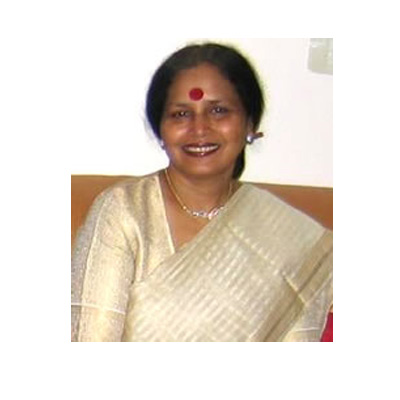
    Spatial Access Solutions founder Meenakshi Madhvani

    She’s one woman who’s been there, done that! However, hers has been a long journey spanning 25 years wherein she has faced a lot of brickbats for anything that she touched in the industry. Be it shifting gears from the account planning and managing division of Lintas to its media division; joining Zee Telefilms; setting up India’s first media independent – Carat – or for that matter even launching India’s first media audit firm – Spatial Access Solutions… it’s been a tough fight all the way.

    And Meenakshi Madhvani has come out of it all and successfully so. She literally felt her skin getting tougher and tougher with each passing day.

    Her tryst with the advertising and media industry began with a small agency called Ad Plan, where she spent one and a half years. This initial learning in a small agency was instrumental in shaping her as a person. “The small agency introduction to advertising was fantastic because in a small agency you do everything from accounts, copy, visualization, invoices, client interactions etc. It was terrific because at the superficial level, I understood all aspects of the business and that helped me in understanding what I really liked doing and what I didn’t,” says Meenakshi.

    LONG YEARS AT LINTAS

    Then came a rock solid 12 years at Lintas, where Meenakshi joined in the account planning and management division under the able guidance of Alyque Padamsee. Meenakshi joined the agency in 1980 and was with them all the way till 1992. However, she quit the agency for a year to try her hand at ad films with a company called Art Commerical; only to come back.

    It was in this one year that she was involved in the production of yesteryears’ cult comedy serial – Yeh Jo Hai Jindagi, which was being produced by Art Commercial. Her interest in film and television production is what made her break away from Lintas. “I was interested in looking at the production side of things and wanted to see if I like film or television production so I joined Art Commercial for one year. I learnt film and art commercial production and then decided to come back to Lintas,” says she.

    Alyque Padamsee described this as the rubber band effect, wherein people would leave only to come back. “Lintas had told me that I could come back to them anytime and so I went back,” Meenakshi explains.

    At Lintas she worked on a variety of clients including Johnson & Johnson and a variety of brands from the Hindustan Lever Limited (HLL) portfolio. “I had some phenomenal bosses and I think it was in those years that I discovered that a good boss can make or break your career. If you have a good boss who tests, challenges and pushes you; you actually find the strengths and reserves in yourself that you did not know existed. I had two really fantastic bosses – Atul Shrikhande (who is now in the Gulf) and Atul Sharma (who is now the China marketing head for Yum Restaurants),” says she.

    What’s more, apart from the length and breadth of exposure in the advertising industry in those early days, Meenakshi also made some great friends for life. “Deepak Roy, Khursheeda Modi and Amit Bose are all friendships that have built up because of the intensity of that experience. Those were the test years of advertising as we were developing new techniques and experimenting. Also television had just come into the market. The media scene and consumers were changing rapidly. From a protected economy, we were moving to a market economy. The 80s were very exciting times and for me the primary motivation through my working career has been enjoying what I am doing as long as I can feel that I can add value to the business and myself. So for 12 years I did not think of a change as I just enjoyed work thoroughly,” explains Meenakshi.

    At Lintas, she was the head of HLL soaps and detergents for five years and the head of HLL personal products for four years. But then fatigue set in as she had been doing the same thing for more than a decade. That’s when Meenakshi decided to try her hand at media. “After 12 years I was bored of servicing and that’s when I decided to move into Lintas’ media department. The whole media buying experience was really fantastic; because that’s when I realized that the 90s were actually going to be the era of media, and media was going to start becoming the differentiator,” she says.

    Her move into media planning and buying got her a lot of criticisms because in those early days, media was looked at as a backend function. But Meenakshi’s vision of media was totally different. “I saw media as an opportunity to make deals, strike relationships and build on data that was available,” she says

    Her aim was to change the mindset of the agency so that media buying started being looked upon as a function and not just operations. Her claim to fame here was bagging the Coca Cola and ITC accounts. “We pitched for the Coca Cola business because Coke was coming back to India in 92-93. McCann was handling the planning as the business came in with their international alignments. But in India, McCann’s buying was very weak so we pitched and won the business. Then we pitched for ITC, which was looking at aggregating business with one agency. We won that account too,” she recalls.

    However, all was not well in paradise. Differences with the top management of Lintas cast doubts in Meenakshi’s mind and she finally quit in 1994. “I had a boss who I didn’t really like working with. To be honest, I did not want to leave Lintas but my boss was making it less and less fun and I always wanted to enjoy my work. I had the option to stay back and get into strife with my boss or to take it as an opportunity to leave and do something else,” she says.

    At this point in time, she had decided that if she had dedicated the first 10 years of her career to servicing, the next 10 would be in media. “It was a conscious decision because I felt that’s where the future would be in terms of the complexity of the environment. The function needs to actually have people who had analytical skills and yet were able to look at media from the ‘outside in’ rather than ‘inside out.’ So in 1994 I joined Zee Telefilms as vice president of sales and marketing,” she says.

    ZEE HEY DAYS

    Zee TV had just launched and Subhash Chandra asked Meenakshi to come on board. “I decided to take the plunge and it was a great learning experience,” recollects Meenakshi. Zee was a joyride for her and Chandra joined the likes of Shunu Sen and Alyque Padamsee to become one of her mentors.

    What’s more, the rate card system that she introduced back in 1994 is still being followed by the industry today. She joined Zee in September 1994 and in October she decided to bring about a rate hike and sent a circular to agencies and advertisers. “There is much consternation around the rate hike but the beauty of that structure is that it allows you to take a rate hike 365 days a year because all you do is re-classify programmes depending on the kind of ratings. So the rates don’t change but your programme list within that, changes. That rate card structuring has become a standard in the industry. While the absolute costs may not go up but because programmes keep moving up as deliveries improve, your ability to charge more for the programmes is enhanced,” she explains.

    Dwelling on the feeling of having introduced a structure that is still being followed by the industry, Meenakshi says, “It is a great feeling. Sometimes these concepts are lucky accidents and sometimes they are actual brain waves. How the mind works you really never know but at the end of the day if you are able to create an approach or concept that outlasts you, then I think that it’s a true source of satisfaction. So whether it was the rate card structuring at Zee or the whole sales network that was set up; it was truly a good feeling.”

    At Zee, Meenakshi was also instrumental in tapping revenue sources from outside the country. She set up sales offices in Dubai, Singapore, Australia, Tokyo, Bangladesh and Pakistan. “We had revenue coming in from all across the region and the good thing was that we were getting rid of our inventory, creating a lot of interesting marketing opportunities around the channel whether it was sponsored film, corporate films or infomercials,” says Meenakshi.

    Working with Chandra was a great experience for Meenakshi. While her earlier boss – Alyque was an emotional and involved person; Chandra, on the other hand was cold, unemotional and impersonal. “But he is a very driven person because his only measure of people is their output and delivery. The great thing about him is that if you earn his respect, he completely backs off and gives you a free hand in whatever you do,” she says.

    Interestingly, when she joined Zee, she had told Chandra that she would not be able to work well under close supervision. “If you want me to do my best then you need to give me space. If I make a mistake pull me up; if I make serious mistakes then sack me but give me space till then,” is what she told him.

    Confidently she told him that he just needed to tell her what he wanted delivered for the network and she would do it her way. “Don’t tell me how to do it, when to do it, where to get it from. Just give me a number and it will be yours,” were her words.

    Reminisces Meenakshi, “Obviously for the first three months he must have been be very concerned but don’t forget that at that time the stakes were not that high. It’s always easier to trust somebody when the stakes are not that high. When the stakes get really high, the tension and involvement gets more and more.”

    What she learnt from Chandra was how to manage a business and how to look at its legal and financial aspects. “I also learnt to use the power of information and how some bit of information needs to be distributed, while some other needs to be protected,” she says.

    It was fortunate for her that when she joined Zee there was nothing and she was a part of the core team that had to build the company. “Another thing was that we did not know the rules. We were inventing them as we went along. My perspective when it came to creating rules is to always think of the long term. Sometimes short term approaches tend to be detrimental to the long term business interests and I was able to convince Subhashji about the need to look at the long term interests,” she says.

    One challenge she faced at Zee was that now she was on the other side of the fence – from being a buyer of media to being a seller. The first challenge for her was to understand the whole new business of television. “I had to understand the business of the television market at the macro level. At the micro level, one very big issue was the mindset change that one had to go through from being a buyer of advertising to being a seller of advertising services,” says Meenakshi.

    Also the fact was that now she was dealing with the same people who, only six months ago, were her competitors. “In the Indian context the buyer is always in a stronger position than the seller so I had to start going to agencies, meet people, seek appointments, talk to them about the channel, educate them on what the channel could do for them and why they needed to invest in us, etc. I may have been a buyer six months ago but now I was a seller and therefore I needed to start thinking like a seller and look for opportunities,” she says.

    One thing that could have been in her favour was that she knew the people on the other side and hence it might not have been that difficult to get them on board. But Meenakshi disagrees, saying, “A lot of people I was going to see as a representative of Zee were actually my competitors earlier. For them, it was a nice and happy situation to be in because somebody who was a competitor and was fighting for the same business; now was asking you for an appointment in order to make a sales pitch to you. It’s a perfect opportunity to humiliate somebody if you want to and I had more than my fair share of people who wanted to put me in my place.”

    At that time, Zee had a separate subsidiary company that looked after sales and marketing with Meenakshi at the helm. Credit goes to her for increasing the company’s revenues from Rs 500 – 600 million to Rs 3.5 billion. “One year down the line, things became easier for me because by then I had been able to convince people that Zee had to be an integral part of their media plan. But for that first year it was very difficult,” she recalls.

    After three years with the company, trouble was brewing yet again in Meenakshi’s professional life. Chandra had roped in Vijay Jindal as the CEO and managing director of Zee Telefilms and Meenakshi couldn’t see eye to eye with him.

    When Jindal was roped in, Meenakshi was managing director of Zee’s marketing company. “Jindal’s focus was completely driven by finance. His primary objective was to enhance shareholders’ value. But while looking at enhancing shareholders’ value, he was not as committed to enhancing customer value. Apart from this, I also went and told Subhashji that I wouldn’t be able to work with Jindal because there was a big difference between his and my philosophy and approach to the broadcasting business,” Meenakshi says.

    CARAT CHALLENGE

    Around the same time that this was happening, she got an offer to set up and head Carat, which was looking at entering the Indian market. Chandra tried to convince her not to leave. In fact, Chandra, who had just bought over the East India Trading Company, also offered Meenakshi the chance to take on that project and see what she could do with it. But Meenakshi was adamant. The challenge she saw in Carat was that she wanted to experience what it was to be a “small fish in a big pond”.

    “The thing with Zee was that I was heading a large business but working in a fairly limited market. Yes, I had sales offices across the globe but I wasn’t pitting myself against the best in the business. It’s great being a big fish in a small pond but I wanted to know what it would be like being a small fish in a big pond,” she says.

    Setting up Carat in 1997 was no cakewalk. Once again the advertising industry was all out against her because industry veterans thought that the Indian market was not yet ready for a media independent. Meenakshi remembers Madison Communications chairman and managing director Sam Balsara and present Starcom Mediavest Group Asia CEO D Sriram (who at that time was with Madison) going on record to say that they would give Carat six months.

    “Every conceivable criticism that can be thought of against a media independent was said. Obviously I was very concerned because if the stalwarts of the industry were saying that it won’t work then was I making a mistake? But ultimately you have to give it your best shot and that’s what I decided to do,” says Meenakshi.

    What came in handy while setting up Carat was Meenakshi’s experience at Zee. “I was able to use the financial and legal exposure that I got at Zee to set up Carat. What I had going for me was the fact that I was setting it up for an entity that was known globally and there was some amount of equity about the parent company. There was the financial strength and support of the parent company and they were willing to invest in the market,” she says.

    While her goodwill in the industry and team she built at Carat were things that worked in favour of the agency, there were a lot of things going against it.

    “One of the problems in setting up Carat was the stern resistance from the advertising agencies. The Advertising Agencies Association of India (AAAI) got together and tried to get the Indian Society of Advertisers (ISA) to actually stay away from media independents,” recalls Meenakshi.

    Another thing that can be counted as a personal achievement for her but worked against her was that at 38, she was the youngest country head of Carat globally anywhere across the network. Hence, within the group too, there was scepticism if she would be able to deliver.

    And if that was not all, another problem was that Carat did not have accreditation and hence the agency could not get commissions or credit. “I had to find a creative way to work around that issue and I did manage to get accreditation. The amazing thing is that even today, Carat is the only media independent that has got accreditation,” says Meenakshi with pride.

    Barring these initial hitches, Carat’s first big break came in December 1997 when the agency signed on Bacardi as its first major client. After that Cadbury and many other clients followed.

    “One of my biggest achievements at Carat was that I was able to conclusively prove to the industry that there was an opportunity for media independents. Two years after I launched Carat, every agency in the country launched their media divisions starting off with Sam. Then came Mindshare, Starcom and Lodestar,” says she.

    So what brought about the change in people’s mindset? Meenakshi explains, “It’s very simple. If it’s working, let’s jump in. If it’s not, then we can stay on the sidelines and pontificate. Nobody wanted to make the first move. Let’s wait and watch was their mantra. They wanted someone else to be the guinea pig and if it worked then they would marshal their resources and line up. I am sorry for being so brutal but that’s the reality and the kind of impediments that the creative advertising agencies put in were phenomenal.”

    Another boost that Carat got was with Bharti signing on as a client. “Bharti asked us to set up offices across the length and breadth of the country. Bharti marketing head Hemant Sachdev gave me the business on one condition that I set up offices in seven cities within 90 days. At the end of 80 days, I went back to him and said it was done. So suddenly from being a two office (Mumbai and Delhi) network, we became a very large network across the country,” she says.

    After that Meenakshi launched Carat Pakistan and also took over supervising the Thailand and Malaysia offices of the agency.

    FINAL CALLING – SPATIAL ACCESS

    Her stint with Carat lasted six years. In 2003, after some introspection, Meenakshi realized that till now she had built business for others, whether it was setting up the marketing and sales division at Zee or setting up Carat from scratch. Now it was time for her to do something of her own.

    Again it was disagreements with her boss that made Meenakshi quit. “I had reached a state in my life where I had decided that I am not going to compromise on issues that are very important to me. I have been fortunate that I can take a stance. I had disagreements with my boss again… the wonderful history with Peter Paska… and decided to take a stance and quit,” she says.

    In retrospect, she thinks it might have been an emotional decision and maybe she should have stayed back, fought and resolved her disagreements with him. But at the same time, she doesn’t have any regrets because she feels it was the right thing to do.

    With that, India’s first media audit firm – Spatial Access Solutions – emerged. Yet again the industry turned foe. “I had seen what was going on in the media planning and buying industry and incidentally this is something that the industry holds against me. A lot of people felt that I used to be an insider and was exposed to everything that was going on. ‘How could I turn around and become an auditor?’ was what was thrown at me,” says Meenakshi.

    “The industry felt that it was much better to have a financial auditor because they don’t know their ass from their elbow. You can hide a lot of things under the carpet when there is incompetence because of lack of knowledge, not because of lack of ability,” she adds.

    For Meenakshi, it was a logical progression to set up Spatial Access Solutions. “All industries go through phases and I knew that the industry in India was following a path. I, too, was a part of that change… whether it was from servicing into media to broadcasting to media independents. Media audits was the next logical progression for me,” she says.

    Meenakshi feels that the media scenario has now changed as more and more clients are now consolidating their media with one agency rather than dividing it between different agencies. In the earlier scenario, a series of natural checks and balances came into place because there was more than one agency involved.

    As a media auditor, there are 3 things I tell agencies:

    Do the right thing for your client – Ensure that you are actually providing him with an outstanding media service and buying.

    Charge the right fees – Don’t be pushovers where it comes to your fees. Every single agency says that others are willing to undercut commissions but the fact of the matter is if you believe in what you are doing and you know what you are doing is good why should you compromise on your fees?

    Don’t make money at the cost of the client – The fact is that today very often recommendations are made on media plans, not on the strength on whether or not the media is good for the client but on the strength of how much extra commissions the agency is getting from the media.

    “Now with all the media being aggregated and consolidated with one media agency those natural checks and balances no longer exist. The size of the business has increased and also the number of people required to service a business. Therefore the trauma of a review or moving to another agency was becoming more and more large and clients were getting stuck in that rut. The beautiful thing with a media auditor is that it acts like a marriage counsellor, who explains what the problem is with the marriage and tells the client to get their agency to give them better service, work and cement the marriage and not to walk away from it,” she explains.

    When queried as to how it felt to work with the same people who at one point in time criticised her for setting up Spatial Access? She says, “These are all creatures of convenience not conviction. Two and half years ago when I set up Spatial Access, there were allegations made about my integrity and credibility. The fact is that those same people today are happy to queue up when I am helping a client put his business up for a pitch. Today they are willing to treat me with respect, maybe behind my back they still say nasty things about me but I don’t care.”

    Many people in the industry feel that she is biased towards some agencies but Meenakshi is undeterred. She clarifies, “People in the industry think I have an agenda. I am saying this categorically and for the record that I do not have an agenda. I do not have any friends or enemies among the media agencies. I am completely transparent and fair regardless of who the agency is.”

    So after two-and-a-half years, are there still some who are not open to media audits? “Well, most of them have seen the benefits of it. Sam Balsara has gone on record to say that he’s not willing to be audited and of course prior to that he went on record to say that he was supportive of audits and the industry needed audits. Group M has been silent as far as the record is concerned, but has actively gone around telling their clients that they cannot share rates and can’t have an auditor. They are very supportive of financial auditors like Ernst & Young because they do a process and a financial audit. Out of these two, one has taken a stance and I respect him for that. He at least had the courage to speak out. But the other has not taken a stance in public but is doing everything to make sure that they roadblock their clients from going ahead with audits,” quips Meenakshi.

    Three issues on my agenda right now:

    Grow the business in terms of the size of clients and the reach of services. One of the new services we have just added on is media performance monitor. So every month we can monitor our clients’ media performance and give him a comparative analysis, which goes to him in the form of a report.

    The second thing is expansion. We are happy with what we have been able to do in the Indian market. Now we are looking at expansion outside the country. We’re in the process of signing on clients in Greece and Singapore.

    The third thing is that I have bought a small plot of land in Kamshet, which is 11 kilometers away from Khandala and Lonavala. My objective is to build my house there, plant some trees and have my own little farm.

    However, the rest of the industry has been pragmatic about media audits and have realized that they are much better having an auditor who does not have an agenda, understands this space and can add value to it.

    Today, Spatial Access has 44 clients across six cities. The firm also has three tie-ups with European companies. If these firms have clients who need an audit in India, Spatial Access provides them with the expertise.

    “We have expanded our service basket because we started out only with media expenditure, thanks to the myopic perspective of the media agencies. But because clients were migrating a lot of their marketing budgets into non media areas, we decided to look at the entire marketing investments. Now we have media as well as non media marketing investments. We look at production audits, print production, whether it’s creative fees, printing, processing etc. We also look at film production and the amount that an advertiser should be paying for a film because film production costs are going through the roof and advertisers need to understand the nuances of that costing exercise. We do PR audits, direct mailer audits, ground event evaluation as well as a reality check on the marketing expenditure,” she elaborates.

    At the end of the day, Meenakshi has no regrets. “I have made some fantastic friends and I have made some enemies also, but those are enemies worthy of respect,” she says.