Tag: Zee Telefilms.

  • Shemaroo ropes in Disney’s Kaushal Nanavati as VP – international biz

    Shemaroo ropes in Disney’s Kaushal Nanavati as VP – international biz

    MUMBAI: Shemaroo Entertainment has appointed Kaushal Nanavati as vice president – international business.

    Nanavati will be responsible for driving the business in the international markets and scaling up Shemaroo’s international business on television and digital platforms.

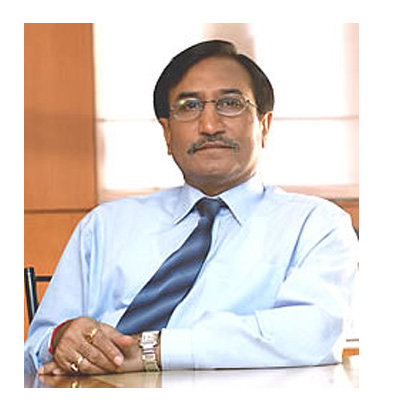
    Prior to joining Shemaroo Entertainment, Nanavati was with Disney India as director – international distribution & syndication. He has also worked with several other media companies including UTV and Zee Telefilms.

    Nanavati has an extensive experience of 18 years, of which more than 15 years has been in the television space having handled roles encompassing international channel distribution, content syndication & domestic distribution.

    Shemaroo Entertainment director Jai Maroo said, “We are glad to welcome Kaushal to the family of Shemaroo Entertainment. Shemaroo has a vast and diverse content library, whose demand has been growing phenomenally in the international markets. Kaushal will lead the team to leverage the opportunity and scale up the business.”

  • Zee’s Subhash Chandra plans succession; names Amit Goenka as head – international biz

    Zee’s Subhash Chandra plans succession; names Amit Goenka as head – international biz

    MUMBAI: In a bid to steer to company towards the future, Zee Entertainment Enterprises Ltd’s (Zeel) Next Gen is stepping into pivotal roles. While Zeel chairman Subhash Chandra had pulled in his elder son Puneet Goenka into the firm a decade ago, he is now shoring up the senior management by bringing in his younger son Amit Goenka as CEO of Zeel’s international broadcasting business.


    Even as Puneet has steered Zeel to greater heights as its managing director and CEO, Amit, who was earlier the non executive chairman of the company, has been entrusted with the responsibility to provide clear focus to the company’s international operations. 


    To this effect, Zeel is reorganising its overseas broadcasting operations of all international channels, excluding sports, English channels and uplinking activities, under a wholly owned subsidiary of its company Asia Today Ltd (ATL). Currently, these operations are housed under Zeel’s overseas subsidiaries ATL, Mauritius (being renamed as ATL Media Ltd) and Zee Multimedia Worldwide (Mauritius) Ltd and their respective subsidiaries.


    Additionally, Zeel has also got board approval to write-off of an investment of GBP 3.25 million (equivalent to Rs. 33.06 crore) made by ATL, in 2013 for acquiring a minority stake in MirriAD Ltd., UK. This write-off was on account of continuing losses and consequent capital reduction and restructuring in the latter.


    “Bringing in Amit is a good move by Chandra as he has successfully been working behind the scenes at the Essel Group on innovations and business development despite heading Playwin as its CEO. He has a good deal of experience under his belt, which should help Zeel achieve Chandra’s global vision for Zee,” says a media observer. “It’s good succession planning by the savvy mediapreneur. And it’s quite akin to what his former partner Rupert Murdoch has done in recent times by bringing in his elder son Lachlan in a non-executive capacity as News Corp co-chairman and 21st Century Fox. His younger son James has been running 21st Century Fox as its CEO much earlier.”


    A techie at heart, Amit has more than 10 years experience and is the CEO of Pan India, which runs the online lottery business under the Playwin brand. Some of the other projects where he is involved are ITZ Cash, animation division, wireless mobility, 7575 short code business, Digital Media Convergence Limited, Mumbai Football Club, All Sports Bar and All Sports Magazine amongst others. Amit has also worked with Zee Telefilms and was closely associated with the group’s investment and restructuring of the ICO project, a global mobile telephony project during his early days.


    Additionally, Zeel executive vice chairman Subodh Kumar has resigned from his post with immediate effect. He will, however, continue as a non-executive director on the Board of the company.

  • Viacom18 Digital Ventures names Monika Shergill as content head

    Viacom18 Digital Ventures names Monika Shergill as content head

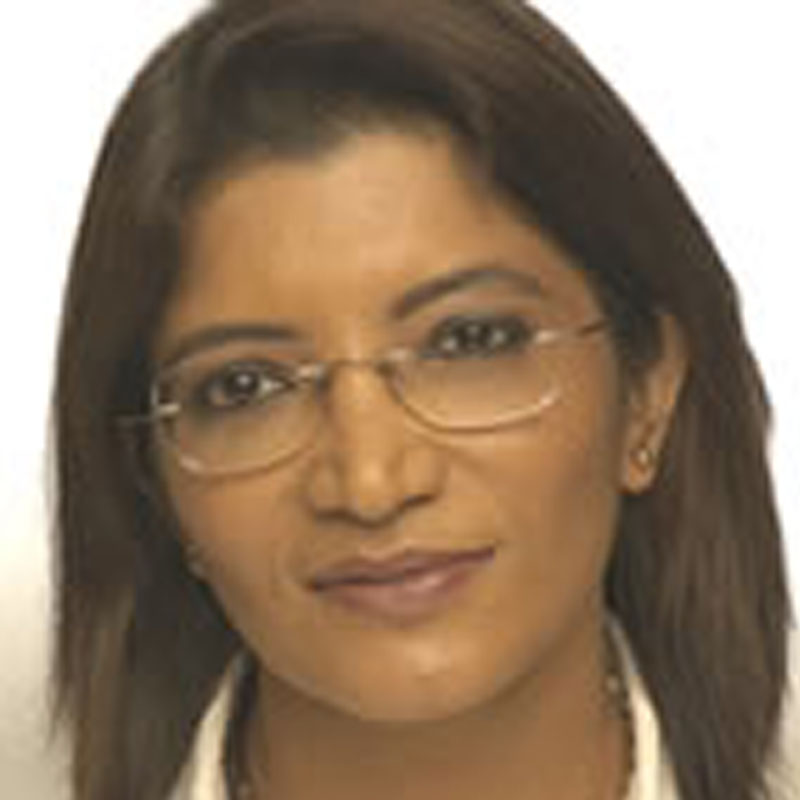
    MUMBAI: Viacom18 has appointed Monika Shergill as content head of Viacom18 Digital Ventures. As a part of her mandate, Shergill will be responsible for driving content and programming strategy for Viacom18’s new digital business.


    She will be reporting to Viacom 18 COO Gaurav Gandhi.


    Gandhi said, “We are delighted to have Monika Shergill on board to drive the content initiatives for our digital business. She brings with her a wealth of experience in content development and creative strategy, which, we believe, will enable us to create differentiated and compelling offerings across audience groups.”


    Shergill added, “I hold tremendous regard for the various businesses that Viacom18 has explored keeping in tune with viewer preferences. The digital platform is fast-evolving and I am looking forward to working towards developing this segment further for Viacom18 Digital Ventures, along with its extremely talented team.”


    Shergill has close to 20 years of experience in the broadcast industry in creating content, mounting big scale productions, running network teams for channel brands and being responsible for budgets and promotions.


    Prior to joining Viacom18 Digital Ventures, she worked with companies like Star India, Sony Entertainment Television, Zee Telefilms and SAB TV.

  • MEASAT elevates Vishal Mathur to senior sales director

    MEASAT elevates Vishal Mathur to senior sales director

    MUMBAI: MEASAT Satellite Systems Sdn. Bhd. (MEASAT) has elevated Vishal Mathur from director (south Asia) to senior director, sales and marketing.

    In his new role, Vishal will be responsible to build the MEASAT’s customer base with a focus in the broadcasting and DTH customer segments.

    Vishal will be responsible to build the MEASAT’s customer base with a focus in the broadcasting and DTH customer segments

    Vishal joined MEASAT in 2006. During his seven years with MEASAT, he has been instrumental in expanding the company’s position across south Asia.

    Prior to joining MEASAT, Vishal has also served as assistant VP at Zee Telefilms – international division, ESPN Star Sports and Ten Sports channels handling the affiliate sales business in India.

    Vishal holds a Bachelor of Commerce and a post graduate diploma in Business Management from the University of Rajasthan, Jaipur

    MEASAT is a premium supplier of satellite communication services to leading international broadcasters, DTH platforms and telecom operators. With capacity across five satellites, the company provides satellite services to over 150 countries representing 80 per cent of the world’s population across Asia , Middle East, Africa, Europe and Australia.

  • Sony bowls a fast one with ‘made for TV’ cricket

    Sony bowls a fast one with ‘made for TV’ cricket

    Ever thought of making an eminent cricketer dance with a click of a computer mouse or a phone call? Chucking them in and out of a one-day cricket match as and when one wished if he’s messing up on the field. That’s precisely what Sony Entertainment Television has promised to cricket buffs while announcing its entry into what CEO Kunal Dasgupta termed a new genre of television programming with cricket as its centrepiece.


    Close on the heels of Zee Telefilms announcing its entry into reality television with POW, Sony is brewing its own unique version of reality television centred around cricket, whose driving force would be a great level of interactivity with the viewing public.


    Something akin to the rolling substitutions in hockey, here the public would be able to decide who should be on and off the field during timeouts seems to be the general drift of what is being conceptualised.


    Bidding to dispel media talk that Sony was planning a new version of masala cricket a la Kerry Packer in the early eighties, Dasgupta said the matches would be held only during the off season. There was no question of taking on any national cricket boards by putting together rebel teams, Dasgupta said. He, however evinced the hope that the endeavour will “generate unparalleled entertainment for the cricket loving public so that the cricket establishment will recognise Sony’s innovation and contribution to the game.


    The programme is to be aired over a 10-15 day period per season over three seasons in a year live on MAX. It is aiming for a nationwide audience and says it is hopeful people would participate in this made for television cricket game. According to Dasgupta, they were working with a group of associates to develop an innovative, transparent “made for television” cricket format using the latest available technology. Subject to their availability, Sony was planning to rope in the best national and international cricketers, Dasgupta said.


    Dasgupta was unable to provide details of the format, who were the players who had signed on, or even when it would take off other than saying that it would be sometime in April or May.


    A problem Sony will have to get around is the problem of uplinking. Sony has no uplinking facility in India but uplinks from Singapore. For the live feel of viewer interactivity this will have to be addressed. Anand Desai, senior vice-president corporate development, who is responsible for the show, admitted as much and said they were working on it. Desai, however, gave a categorical assurance that the programme would be real time live.


    Referring to the interactive element of the game, Dasgupta said one of the top cricket portals would be hosting details on the match through which viewers could participate. Dasgupta admitted that Sony was entering uncharted territory with this effort but said it was worth a shot anyway.

  • Clearances to TV proposals after review of FDI rules

    MUMBAI: Applications for starting around ten news television channels have been referred to the Finance ministry for veracity of their claims about foreign investment.

    While sources in both Information and Broadcasting and Finance ministries insisted that such reference to the sister ministry was made every time a proposal came for any venture with a foreign component, it was clarified by the Finance ministry that the rules pertaining to foreign direct investment were being reviewed and the proposals would be cleared after this was completed.
    But Finance ministry sources told Indiantelevision.com that an announcement about the changed and simplified rules was expected shortly.

    I&B ministry sources told Indiantelevision.com that this will not mean any further delay in clearing various applications pending with it for licences to start new television channels.

    Finance ministry sources said the relevant files had been referred to the Foreign Institutions Unit (FIU) which would refer them to the Foreign Investment Promotion Board (FIPB) after examination.

    The examination by the Finance ministry becomes important in view of the overall cap of 26 per cent on foreign direct investment. The specific purpose would also be to examine the ownership pattern of the channels as the government regulations say that the ownership of a channel uplinking from within the country has to be Indian irrespective of the FDI investment.

    Proposals of 71 private satellite channels from 52 different companies awaiting permission as on April 30 to uplink from within the country were at different stages of scrutiny, which included clearances from other ministries.

    The Uplinking Guidelines issued in November 2005 prescribe two categories of channels: news and current affairs, or non-news and current affairs.

    Meanwhile, a total of 222 private satellite television channels have been permitted to uplink from India as on April 30 apart from six channels uplinked from abroad which have been permitted to downlink in India. In addition to this, 54 foreign TV channels have been provisionally permitted to downlink in India.

    Ministry sources said only 25 of the proposals are in the non-news category – some relating to music – while the balance are in the news category.

    The highest number of proposals – seven – is from three companies linked to the NDTV group. There are four proposals each from ZEE Telefilms, BAG Films group, and the TV 18 group, and three each from Malar Network, Maa TV Network, and STV Enterprises. Two proposals have come from the INX group. The rest of the proposals are from companies wanting to beam single channels. 

    One proposal for two channels from Raj TV Network has been pending since May 2005. While 23 proposals were sent in during 2006, the rest were all made this year.

  • DTT should be completed in Delhi by 2010

    DTT should be completed in Delhi by 2010

     NEW DELHI: A sub-group on ‘Going Digital’, set up by the Planning Commission, has recommended that digital terrestrial transmission by Doordarshan should be launched with a slogan Digital Delhi by 2010 to coincide with the Commonwealth Games in that year.

    The Sub-Group headed by Rajeev Ratna Shah, Member Secretary in the Planning Commission and a former CEO of Prasar Bharati, said a phased approach should be taken for going digital covering all the seven mega cities by 2011 in the first phase and the rest of the country by 2013.

    The sub-group, comprising 17 members, was set up by the Committee on Information, Communication and Entertainment (ICE) that has been examining the larger issue of convergence and advent of modern technology. Members include the secretaries in Information and Broadcasting and Department of Telecommunications, the Prasar Bharati CEO, the presidents of Cetma, Mait, Nasscom, and ISP Association of India, co-chairman of the Ficci entertainment committee Kunal Dasgupta, chairman of the CII entertainment committee, chairman of the Film & Television Producers Guild of India, president of the Cable TV Operators Association, Rajiv Mehrotra who is the managing trustee of the Public Service Broadcasting Trust, Virat Bhatia from AT&T Communications Services, Zee Telefilms President Abhijit Saxena, Sameer Rao who is vice-president in charge of strategy, planning & regulatory in STAR India, and a representative of the Prime Minister’s Office.
     

    It was also agreed that a group chaired by BS Lalli, the CEO of Prasar Bharati who is also chairman of the Indian Broadcasting Foundation, and some private broadcasters like Star, Zee, Sony, Eenadu etc. and their major MSOs will examine an 11-stage process and firm up their sequencing and put the entire process on a “digital upgrade timeline”.

    Digital migration process

    Ideally, the Sub-Group said the migration process must commence from Delhi in 2010, coinciding with the Commonwealth Games, and proceed to other mega cities by 2011 and Tier II and Tier III cities by 2012. In non-urban areas simulcast can continue for a few more years. Analogue transmission should be completely phased out by 2015 as the outer limit. It was decided that to keep the transition costs to the minimum, the switching over time as well as the simulcasting period should be kept to the minimum.

    There is need for convergence in regulation in the light of developments in technology and the I&B Ministry was requested by the sub-group to take a fresh look at the proposal for having a common communications convergence regulator with separate bureaus under it for dealing with content and carriage. A supplementary report will be submitted with regard to regulatory issues relating to going digital.

    All the content producers – Prasar Bharati as well as private operators – should provide agreed and identified channels in the digital / HDTV format to MSO / cable operators under “Must Carry” clause.

    High Definition TV should be introduced in a phased manner starting from Delhi (2008-09), extending it to all the six mega cities. Commonwealth Games should be covered in HDTV format in 2010.
     
    Spectrum planning

    The I&B Ministry, private broadcasters and service providers along with the Department of Telecommunications (WPC cell) should work in a coordinated manner to identify spectrum requirements keeping their rollout plans so that spectrum planning could be proactively made. A Spectrum Management Group could be set up to achieve this.

    Prasar Bharati should work out the financial implications of going digital, covering AIR and Doordarshan operations and submit the same to the Planning Commission.

    Prasar Bharati should digitally archive all its contents including educational contents for providing them for distribution streaming audio-video technologies. Prasar Bharati may also work out a mechanism to leverage the rich content available by appropriately pricing them and retailing them. All Prasar Bharati content of Classics or Fiction should be made web accessible with premium content accessible through payment gateway. Public service broadcasting content should be freely accessible on the web.

    Digital cinema

    The Sub-Group has also recommended amending the Cinematograph Act 1952 for inclusion of digital cinema. It said digital cinema should be seen as a means of securing the Intellectual Property Rights of the producer. Digitally recorded content taken from satellite in an encrypted conduit provides a failsafe method of delivering films to exhibitors directly, without intermediary or distributor’s interface at multiple locations simultaneously, in streaming audio-video-mode. It said this was the best guarantee against piracy. Digital cinema should, therefore, be encouraged by recourse to various fiscal and non-fiscal incentives.

    Production of cinema in digital format could be on lower tax regime and the theaters that have installed digital cinema exhibition facilities can be subjected to say lower entertainment tax. This would need to be taken up with State Governments, the Sub-Group said.

    It said all conditional access devices (and Set Top Boxes) should be built on common standards for inter-operability, so that customers are not put to inconvenience. This will also help in better absorption, acceptability of digital technology. The plain-vanilla-STB should lend itself to modular insertion of proprietary data to include value-added services.

    Content providers should be encouraged to work on creation of domain specific server farms and data depositories. The concept of digital libraries promoted by the Department of Information & Technology should also be publicly made available. Create open access platforms like Google libraries and others should also be encouraged. Memory modules could specially be created for lawyers, doctors, accountants and other professionals for instant data mining and retrieval in respect of their domain.

    Triple play services

    Triple play services riding on entertainment related applications would be able to create the most viable business models for spread of rural connectivity. Applications of Wi Max technology will allow entertainment to rural areas and this will provide ubiquitous Broadband experience to rural areas. Just as Wi Fi band has been delicensed, we need to move to the next step in encouraging proliferation of Wi Max technology for which the Wi Max band (2.5 GHz / 3.5 GHz / 700 MHz or existing Wi Fi band 2.4 – 2.48 GHz) could be delicensed for rural connectivity.

    Content creation would be a specialised area requiring thorough understanding of the local requirements and language that can only be done through local entrepreneurs. The Rural Content Provider (RCP) would provide content and other facilities, including entertainment, which will be of interest to the rural population. Delivery of services could be through home TV or Mobile telephone. The business model of such an RCP would vary from region to region and would be driven by the market. The department of IT and the Department of Telecommunications need to evolve a suitable policy framework that would encourage such RCPs.

    The Deparment of Information & Technology/National Informatics Centre should work out a comprehensive plan for rollout of statewise, regionwise and citywise GIS database and encourage private enterprise to do customized applications and value addition for various public sector as well as private sector applications.

  • ‘Investors are waiting for Cas to roll out before they come up with definite valuations’ : Ravi Mansukhani – IMCL director-in-charge

    ‘Investors are waiting for Cas to roll out before they come up with definite valuations’ : Ravi Mansukhani – IMCL director-in-charge

    Cable TV is in the midst of transition. We are seeing Cas being just implemented. Consumers are wanting set-top boxes (STBs) so that they can see their favourite pay channels. Multi-system operators (MSOs) are gearing up so that demand doesn’t outstrip supply. They know this is their last chance: if they don’t do it right, direct-to-home (DTH) will take over and they will become dinosaurs.


    In an exclusive chat with Indiantelevision.com’s Sibabrata Das, IndusInd Media and Communications Ltd director-in-charge Ravi Mansukhani discusses the dynamic changes taking place in the area of cable TV, the exciting prospects for digitisation, and the challenges that lie ahead as way of competition from emerging technologies.


    Excerpts:

    HTMT had earlier decided to consolidate its media businesses under InNetwork Entertainment Ltd (INEL). What made it change track and bring IndusInd Media and Communications Ltd (IMCL) as the umbrella entity?

    Suddenly the cable distribution business, which is with IMCL, has become big and is heading towards transparency under conditional access system (Cas). It has got a definite growth path now. That was not the case earlier and we thought we would bring everything under INEL which is the content company. The track has changed and content will sit on distribution. So we are merging In2Cable ( the broadband subsidiary) and INEL into IMCL. The parent company for the consolidated media business will be HTMT (an existing listed entity). The demerged IT/ITES entity will be listed under HTMT Technologies.

    While Zee Telefilms has demerged its media entity, your restructuring process is actually consolidating the media business. Is this because the different lines of media business are still having nascent revenues?

    We couldn’t have separated the different media activities as we don’t have size at this stage. We are only demerging the IT/ITES business from the media activities as we believe these have separate identities, will need independent focus, and can unlock value for the shareholders.

    Will HTMT (residual) also house the real estate business?

    The company will have the media businesses, Shop 24 Seven (shopping channel) and the real estate business. The demerger process is underway and a listing is expected by February-end after the restructuring process gets the necessary regulatory approvals.

    Isn’t this a strange mix for an investor in the company?

    There is some real estate property which was sitting there earlier in the company. Since we aren’t expanding on that at this stage, we are leaving it as it is. Real estate may become a play later.

    How much cash will be allocated towards expanding the media business?

    We will have Rs 5 billion for this. This will be used for new business initiatives, acquisitions and funding the expansion of the media and entertainment business.

    Like Zee’s Wire & Wireless India Ltd (WWIL), are you planning to make last mile acquisitions to expand your network?

    We are adopting a different business plan where we want to partner rather than buy out operators. WWIL, on the other hand, wants to acquire 51 per cent in cable networks. Our expansion plan includes offering to operators shares in HTMT (after demerger) as they form an integral part of our distribution chain. This will be based on the subscribers they declare. No decision has been taken as to the exact ratio that would be on offer.

    Will one share be issued to operators for every declared subscriber?

    We are working towards that.

    Do you think your strategy will be more acceptable?

    We have decided that is the best way to go forward, even in the non Cas (conditional access system) areas. By becoming shareholders, operators won’t perceive us as a threat. They can own their network while we make the investments on technology and digital cable. This way they can retain their customers, particularly as they face threat from DTH and other digital cable service providers. We are not exercising the buying option yet. If they want to sell, we may step in later. And by having ownership over the network, it would be in their interest to drive up ARPUs (average revenue per user) and launch value-added services.

    Will ARPUs fall?

    Initially, it will fall or stay flat. The subscriber ARPU in the Cas areas where we are operating is Rs 250. We see this going up to $10 (Rs 450) in two years and, perhaps, to $15 (Rs 675) in five years because of value-added services. Our topline is going to be rammed in the first year, but the bottomline is going to improve immediately as we will have an assured distribution margin.

    Would you prefer inducting a strategic rather than a private equity investor?

    We would favour a strategic than a pure financial investor. We feel inputs from a strategic partner would give us a competitive edge.
    But the possibility of roping in an investor would likely be after the listing of the two entities.

    We are not looking at customer acquisition via bouquet packages. For the ground to open up territorially for the MSOs, it will take time.

    Are investors keen to know about the content side of your story?

    Investors at this stage basically want to know our distribution plan. Our focus right now is on the distribution side of the business. Perhaps, by April we will have an investment plan for content and the other lines of media business.

    Have you initiated talks with global major Liberty which has shown interest in entering into India?

    There are a bunch of them who are interested in India’s cable story. But all the investors are waiting for Cas to roll out before they come up with definite valuations.

    Multi-system operators (MSOs) have announced bouquet packages. Do you see this as a price war to win consumers or local operators from rival networks?

    Our schemes are directed to make our existing consumers happy. We are not looking at customer acquisition via packages.

    Isn’t there a conscious effort to protect your turf from WWIL, which wants to poach operators to increase its thin presence in Mumbai, and DTH service providers like Tata Sky?

    We took care to offer a better quality package than WWIL or Tata Sky. We are offering six months of free subscription for consumers who have to pay just Rs 1500 (plus taxes) in the Cas areas. We are offering three bouquet packages – Star loaded (Sitara with 18 pay channels), Sony-led (Sona with 20 channels) and Zee-Turner (Zabardast with 35 channels). Under the STB rental scheme, we are offering the Optimiser package (Star and Sony bouquets) at Rs 120 (second TV set Rs 55) and the Super Saver scheme (Star, Sony and Zee bouquets) at Rs 190 (second TV set Rs 100). DTH has a high entry barrier as installation of the boxes are costlier than cable. And for the ground to open up territorially for the MSOs, it will take time.

    With WWIL intending to poach operators, do you have a truce on the ground with Hathway Cable & Datacom?

    We would like to keep the peace on the ground.

    With Cas already on, do you see a situation where demand for STBs will outstrip supply?

    We are confident of tackling it. We have in stock 168,000 STBs and have seeded over 40,000 boxes. We are installing more than 5,000 boxes a day. People are waking up as the pay channels are blacked out. We are ready to meet the surge in demand. We have also ordered for over 100,000 STBs from a Korean vendor.

    How keen are you to beef up the content side?

    We will put all our energies into distribution now. Once we have a solid distribution platform, then we are actually de-risking on the content front. We want to get into movie production and are looking at the distribution chain as well. We have earlier done movie financing and have funded around 14 movies from the current crop.

    Are you going to line up special channels for Cas subscribers?

    We are launching thematic channels without advertisement breaks. We have already started In Digital Premium which was made available first in Mumbai. It will also be seen in Delhi and we have movies in different themes – action-oriented, comedy and drama. We are planning to charge Rs 5-10 per movie. We will add more channels.

    What are your plans for CVO?

    The cable movie channel is highly popular and is licensed across 55 cities. But it has been stagnating over the last few years. With our distribution growing, it will bounce back into the growth path. We continue to acquire movies. Last year, we bought 150 movies.

    Revenues from cable internet and content have been depressed. How are you planning to promote your broadband business?

    We are revamping our broadband business. We will be aggressive on pricing. Our focus so far was on quality, not price. We never believed in LAN-based (local area network) internet. Now we will be doing that model. For the last two years, we concentrated on consolidating and upgrading our networks. Even we will start VoIP (Voice over Internet Protocol). We have this system connecting all our Hinduja offices across the globe. We will have to see how we can expand on that and launch commercially.

    What are your revenue projections this fiscal?

    We did Rs 1.6 billion last fiscal, with cable distribution accounting for Rs 1.38 billion, INEL Rs 170 million and In2Cable Rs 50 million. We are not sure how we would finally end up this fiscal as we expect the last quarter to be chaotic. But the topline should leapfrog by FY08.

  • Zee TV expands DTH offering with Snell & Wilcox standards converters

    Zee TV expands DTH offering with Snell & Wilcox standards converters

    MUMBAI: Zee Telefilms Limited (Zee), is using advanced CVR 550 multiformat standards converters from Snell & Wilcox to expand its direct-to-home offering. Twelve new CVR 550 standards converters, part of the high-performance Kudos Plus line, allow Zee TV to convert television programming from any standard, including PAL, SECAM, and NTSC, for delivery to its viewing audience.

    “As India’s pioneering general entertainment network, broadcasting in six languages nationally as well as supplying feeds to international audiences, we are providing our viewers with offerings in every genre — film, news, fiction, action, celebrity shows, comedies, game shows, and more,” said Zee TV Assistant VP Technical Ravi Puri. “To provide this range of programming, we require high-quality standards conversion.

    The Snell & Wilcox Kudos Plus range provides this quality and enables us to expand our offerings to the direct-to-home market seamlessly while maintaining the programming quality on which we have built our reputation.”

    “The tremendous reach of Zee TV and the diversity of its programming requires a high quality of standards conversion ” said Snell & Wilcox Limited VP of marketing Joe Zaller.“With a dozen CVR 550 systems in place, Zee TV is able to convert and distribute virtually any media asset without compromising quality, regardless of the standard in which that material was originated.”

    The Kudos Plus CVR 550 is an advanced multiformat four-field, four-line aperture standards converter designed to delhver excellent results at an economical price point. Just 1 RU in size, the CVR 550 provides full bidirectional operation between composite PAL, NTSC, and SECAM standards, as well as 10-bit SDI signals, along with AES audio handling.

    The compact converter’s performance, size, and price make it ideal for a wide range of applications including mobile applications, news, and transmission. Like all Snell & Wilcox conversion solutions, the CVR 550 is fully compatible with the RollCall monitoring system and IQ Modular infrastructure systems, which simplify management of processing and distribution across the Zee facility and television channels

  • Demerged Zee Telefilms starts trading on a strong note

    Demerged Zee Telefilms starts trading on a strong note

    MUMBAI: Subhash Chandra couldn’t have hoped for a better start to the first day’s trading of Zee Telefilm’s demerged entity. Zee Entertainment Ltd, which also temporarily houses the direct-to-home (DTH) business, opened on Monday at Rs 249 on the BSE, touched a high of Rs 297.80, before closing the day at Rs 272.20 with 3.45 million shares changing hands at the counter.

    On the NSE, the scrip opened at Rs 275 and closed marginally lower at Rs 273. “This was more or less in line with the market expectations. Though the scrip fell 20 per cent from the previous close of Rs 341, this was the first day’s trading of the demerged entity. The stock witnessed heavy trading,” a market analyst said.

    Zee’s other two demerged entities – Wire & Wireless India Ltd. (WWIL) and Zee News Ltd. (ZNL) – would get listed independently, after relevant approvals from the stock exchanges. Listing is likely in January 2007.
    The process of getting approval of Zee’s DTH business under Dish TV is underway. A separate record date for the demerger of Dish TV will be announced. Till then, Zee Entertainment Ltd will include Dish TV while trading on the stock exchanges.

    “The value of both the companies is embedded in the current scrip price. Investors, after all, will get shares in Dish TV when it is demerged,” said an analyst in a stock broking firm.

    After Dish TV gets listed, Zee Entertainment Ltd could see a drop in price. “But the sum of parts will be higher than the current level. We see it somewhere in the Rs 320-330 range,” the analyst said.

    Zee TV’s ratings are also going up and as the second largest general entertainment channel, it will be able to exploit advertising revenues which should get more properly reflected in the next fiscal, the analyst added.