Tag: Zee Sports

  • Zee Sports joins hands with UPKL for 3 Years

    Zee Sports joins hands with UPKL for 3 Years

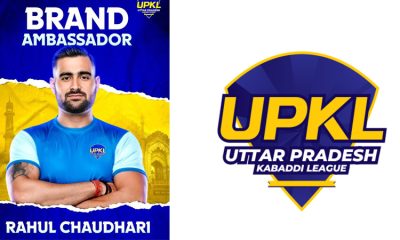
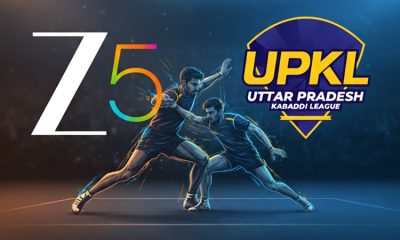
    MUMBAI: Zee Sports is making a power play in India’s sporting landscape. The network has entered into a three-year strategic partnership with Uttar Pradesh Kabaddi League (UPKL), becoming the exclusive broadcast and digital partner for the state’s flagship Kabaddi property.

    The collaboration, the first of its kind for a state-level sports IP, will bring the next three UPKL seasons to TV audiences on Zee Sports and to digital viewers via Zee5, expanding the league’s footprint across India.

    With the addition of four new franchises, UPKL now boasts 12 teams representing key cities across Uttar Pradesh. The partnership marks a pivotal step in UPKL’s evolution from a regional league to a nationally recognised sports enterprise focused on nurturing grassroots talent.

    “At Zee Sports, we believe in championing India’s own sporting heritage,” said Zee Sports business head Bavesh Janavlekar. “Through our vast TV network and Zee5’s digital ecosystem, this partnership will help Kabaddi get the scale and storytelling it truly deserves.”

    Echoing the sentiment, SJ Uplift Kabaddi founder and director Sambhav Jain said, “This collaboration transforms UPKL from a promising local initiative into a nationwide platform for players and fans alike. With season 2, we’re taking Kabaddi from local stadiums to living rooms across India.”

    The three-year deal will cover seasons 2, 3 and 4 of UPKL. The upcoming season 2 kicks off on December 25, 2025, in Noida, featuring 71 matches over 19 days, with live Hindi telecasts capturing the sport’s traditional spirit.

    With this move, Zee Sports and UPKL are set to turn a regional game into a national sensation, one raid at a time.


  • Zee sports new look in changing media landscape

    Zee sports new look in changing media landscape

    MUMBAI: India’s biggest television media company, Zee Entertainment Enterprises Ltd (Zeel), is turning “cool”, in a major rebranding exercise that aims to reflect the progressive outlook of its channels.

    The need for change has come after a gap of six years, a period in which the television landscape has changed dramatically and the reach has exploded.

    Zeel has coined the tagline ‘Umeed Se Saje Zindagi‘’ for all its channels (barring the sports channels) and sported a new corporate brand identity.

    Behind the new look is the company’s objective to take forward a progressive outlook.

    Unveiling the new brand identity for flagship Hindi general entertainment channel Zee TV, Zeel MD and CEO Punit Goenka said he believes that the time is right to “infuse renewed freshness into the brand and reflect an identity that truly articulates our spirit.”

    The essence is captured in the new tagline. “The new positioning is about a celebration and vindication of a woman’s emerging beliefs and a reflection of her changing hopes, dreams and optimism,” said Goenka.

    The new logo is designed by the in-hose team at Zeel, based on the creative inputs from its agency Draft FCB-Ulka.

    The aqua blue colour new logo features a stylish font. Zeel said that the new age design with its upward flourish signifies the upward movement of desires and wishes.

    The abstract form of the ‘Z’ and vibrancy of aqua blue bring in modernity and freshness to the brand.

    “The unshackling of the ‘Z’ from the box symbolises today’s woman’s zest for life and confidence to go out in the world beyond her home. The overall design has a progressive feel and reflects the idea of looking into the future with hope and depicts a more dynamic and spirited outlook. The rainbow of hope is a very important element of the new packaging. It is colourful, ethereal and symbolically emphasizes the promise of ‘Umeed Se Saje Zindagi’… celebrating hope and life,” said Goenka.

    Draft FCB-Ulka has also developed the new corporate brand TVC. Produced by Equinox, the TVC captures “the sky” in “our canvas”. This was brought through by the protagonist in the TVC—the girl-child—and her desire to succeed. It’s a metaphor for the woman, echoing the emerging paradigms with fresh beliefs and a zest for life.

    The film is directed by ad film-maker Ram Madhvani while the music is composed by Rajat Dholakia.

    The new logo, packaging and positioning was unveiled in the event ‘Umeed ka Naya Chehra’ on 19 June at 9 pm.

    Zeel is also kicking off a 360 degree advertising campaign to promote the new brand identity.

  • ‘Our focus in 2009 will be to maintain profitability and not get into adventurous ventures’ : Bharat Ranga – Zee Entertainment Enterprises Ltd. COO international operations

    ‘Our focus in 2009 will be to maintain profitability and not get into adventurous ventures’ : Bharat Ranga – Zee Entertainment Enterprises Ltd. COO international operations


    A sliding global economy has turned up the heat on the international businesses of the Hindi content broadcasters.


    In 2008, Zee group stretched its wings in Russia while deepening its presence through the launch of Veria (the natural wellness channel is part of the Essel Group initiative) and Aflam (a Hindi movie channel with subtitles in Arabic) in the US and the Middle East respectively. Riding on a bull market, the group also launched a radio business in the UK.


    The 2009 landscape will be far different, more punitive, and starkly grim. Delinquent ventures will be avoided and risky bets put on hold.


    Zee Sports, thus, will not travel to other countries as the RoI (return on investments) just does not work out. In the US, it was launched as Zee Sports America because a partnership was hatched with EchoStar.


    Zee Entertainment Enterprises Ltd (Zeel) will make efforts to guard turf in its two main markets – UK and the US – which make up 70 per cent of its total international revenues.


    With around one-fourth of its revenues coming from its international business, Zeel’s drive will be to maximise revenue opportunities from each market.


    In an interview with Indiantelevision.com’s Sibabrata Das, Zeel COO international operations Bharat Ranga talks about the need to value content appropriately, keep away from reckless expansion, and be tough on costs.


    Excerpts:

    Zee took several initatives to expand its global presence in 2008 like tapping the Russian market and launching channels in the Middle East and the US. Will the global downturn force a more conservative strategy in 2009?
    Our focus in 2009 will be to maintain our profitability and not get into adventurous ventures. In these uncertain times, it is important to maintain stability. It is better to hold on to your growth plans than to expand recklessly in this market. We will have to be tough on our costs without compromising the value of our product.

    Will there be a drive to take Zee Sports to other markets after launching the sports channel in the US?
    We launched Zee Sports in the US in partnership with EchoStar. We work along with EchoStar on that brand. For launching in other markets, we feel that the RoI (return on investments) is not there at this stage.

    Will there be more subscriber churn and slowdown in Zee’s two main international markets, UK and the US?
    The global economic turmoil is bound to have an impact on these two markets, which make up around 70 per cent of Zee’s total international revenues. But growth in the US will be faster than in UK.

    Zee treats its international biz as a SBU. The irony is that the South Asian players have not valued their content appropriately. Hence, the revenue potential remains untapped

    Why?
    UK is a tougher market because not all South Asian content is pay. This is not the case in the US. We, however, are pay in the UK and have five channels in that market – Zee TV, Zee Cinema, Alpha ETC Punjabi, Zee Gujarati and Zee Muzic. We have a subscriber base of 200,000, but it is growing slower. The yield, however, is higher and we are priced at 13 pounds a month for two channels. For each additional channel, we charge 5 pounds a month.

    Have you priced yourself lower in the US?
    No. But unlike UK, we are not retailing ourselves. We are part of EchoStar and other cable companies like Comcast and Time Warner. We enjoy a revenue share with them.


    One of our group initiatives to expand in that market was the launch of Veria, a natural wellness channel, last year. It is a very premium and growing segment and we are bullish about the channel’s growth. We do not have Zee Muzic in that market. Our subscriber base in Americas is close to a million.

    How far has Zee progressed in cracking the Chinese wall?
    We have applied for landing rights and are waiting for approval for over a year. We hope to get the permission soon. China is a very complicated market to crack and it is important to have a very clear business model in place. Many international media companies have invested billions of dollars in that market, but not gained much. We have taken a cautious approach and, meanwhile, have started a syndication buiness there. Foreign content syndication itself is tough as there are more rules stating why not to buy such content than why there is need for it. For us at Zee, China remains a romantic thought at this stage.

    Even Russia is considered to be a very difficult market, as Disney found out recently when it did not get the nod for taking a 49 per cent stake in a joint venture with local firm Media-One Holdings. What has been your experience so far?
    Russia is a cheap pay TV and advertising market. We launched Zee Russia last year, but the channel hasn’t taken off the way we expected. It is a pay channel with Indian content dubbed in Russian. We are at a nascent stage but, like China, it is an initiative for the future.

    We launched Zee Sports in the US in partnership with EchoStar. For launching in other markets, we feel that the RoI is not there at this stage

    Zee had to rework on its strategy in the Middle East and shut down Zee Arabia. Why?
    We saw an opportunity for offering our content to local audiences in the Middle East. We tasted the water with Zee Arabia launch and learnt the nuances of the mainstream market. We replaced it with Zee Aflam, a free-to-air Hindi movie channel with Arabic subtitles, last year. Our Hindi offerings – Zee TV, Zee Cinema, and a hybrid channel of Zee News and Zee Gujarati – are, however, pay in that market.

    Since Zee Gujarati is wrapping up after 30 April, will that offering end in the international market as well?
    We have not decided if we will do away with that offering for our international audiences. We have standalone Gujarati audiences. We may have a repurposed channel by sewing up content from others. That business decision is yet to be taken.

    The rates of the Zee channels have stayed flat in UK at least. Has Zee lost pricing power in the international markets?
    There is room for hiking subscription and advertising rates, but it is not easy in this market condition. Besides, competitors have to work together for growing the size of the market.

    Which means that the revenue potential is still untapped?
    There are 35 million Indians residing outside India. There are also South Asians who consume Indian entertainment content. This throws up a nice business proposition. Zee is the dominant international player, with over 50 per cent market share. We reach out to 167 countries, have 200 people spread across 16 offices, and treat it as a strategic business unit (SBU). The irony of the international business is that the South Asian players have not valued their content appropriately. Hence, the revenue potential remains untapped.

    What is it that Zee has done right in the global arena?
    We learnt from our Indian market experiences and priced ourselves appropriately in the developed markets.

  • We expect ICL to break even in two and a half years


    We expect ICL to break even in two and a half years

    When Zee launched the Indian Cricket League in the face of a take-no-prisoners campaign of opposition from the Board of Control for Cricket in India last year, there was scepticism galore on whether the Subhash Chandra-backed league would bat it out. Particularly after the the BCCI announced plans for its own league shortly thereafter.

    ICL, however, successfully staged two events despite all the hurdles thrown in its way. The Indian Premier League kicking off on 18 April notwithstanding, Zee Sports business head Himanshu Mody is confident that his cricket endeavour will hold its own.

    Indiantelevision.com‘s Ashwin Pinto caught up with Mody to ascertain his views on the progress made and future plans.

    Excerpts:


    Firstly, congratulations on having been able to deliver the second edition of the ICL despite the best efforts of the BCCI to skewer you. How has the experience been different from the first edition?
    It was much better. The first one was with six teams in one venue. There were 20 games. For the next event we added two more teams and had three venues. Lahore came from across the border. The event was held on a larger scale.


    What were the learnings from the event that you will take, going forward?
    We learn every day. Despite the pressure and resistance that we face, I think that we are set on a path to success. We have good players and have built on the ground infrastructure. We have 250 members, 80 of whom are Indian players. The rest are foreigners – coaches, players support staff, etc.


    How is the event being expanded upon this year?
    From April to September it is summer and then the monsoon season. There is not we can do in this period. We will hold an event later this year. We could include ODIs as well. We had a non televised ODI tournament in January which was played in Chennai and Hyderabad. What we come out with will depend on the commercial viability.


    How succesful have you been thus far in infrastructure and grassroot talent development?
    The Indian players come from various small towns and cities like Jammu, Srinagar, Assam, Indore and Bhopal. The Indian players come from 58 cities. We have a diverse mix in this sense. We also have talent scouts in each Zone where they have gone out to find emerging talent. We will now be setting up a central Academy for our boys.


    A notable feature this time round was that there was an increase in spectators in the stadia. Has some sort of a spectator/viewer connect with the state teams happened?
    This is starting to happen. The event is a family viewing experience. People are supporting the local team. In the final, Hyderabad Heroes had a lot of local support. At the same time support depends on performance as well, which is what has hampered Mumbai.


    Simulcasting the event on Ten Sports and Zee Sports has ramped up viewership quite significantly. What have been the average combined ratings? Have they been up to expectations or have they exceeded your brand partners‘ expectations?
    The ratings have exceeded our expectations. We managed an average of 1.5. Ratings peaked at 3.5, which is more than India Test cricket and some ODI ratings.


    Was it a challenge to get sponsors on board given the BCCI stance?
    The establishment tried everything they could to prevent us from getting a start. They tried to resist sponsors from coming on. Also, to be fair, for the first event sponsors were reluctant as they did not know what to expect. The first event was a solid start.

    The second event has been a big hit and on the back of that we launched a tri series between an Indian XI and a World XI. We sold most of our inventory for this. The likes of Pepsi, HUL and Vodafone have come on board.


    And what of the other cricket boards? Do you see a softening of their stances vis-a-vis the ICL and what could be the catalyst for it?
    The other cricket boards have to realise that more than ICL, it is the IPL that presents the biggest threat to them. I think that they are starting to realise this. We do not ask any existing players to break their contract. At the moment the IPL presents that dilemma to current players as to whether they should play for their country or IPL club. We have taken players who are on the fringe or who do not have a central contract with their respective boards.

    The international governing body needs to take a call on what is more important. In soccer for instance, club soccer contributes more revenue as opposed to countries playing against each other. Cricket must decide if it wants to go down this route. If that happens, then country versus country matches will have to come down. If, however, it decides that the country format is more important, then the IPL could be limited in terms of matches played.


    How has ICL fared businesswise? Could you offer any idea of the kind of investments that have been pumped in?
    I cannot talk about numbers. However the business is robust. Earlier when we started this last year, we had given ourselves a breakeven period of three years. Now we expect that to happen in two and a half years.

     
    The other cricket boards have to realise that more than ICL, it is the IPL that presents the biggest threat to them
     

    Where have the revenues come from and how does it compare with the inaugural edition?
    We have several revenue sources. We have ground sponsorship, associate sponsorship, ticket sales sponsor, advertising on television, broadband rights.

    ICL was aired in several countries including UK, US, Pakistan, the Middle East, Africa, Southeast Asia, Australia and New Zealand. We did deals with international broadcasters for ICL including Showtime in the Middle East, Starhub in Singapore and Astro in
    Malaysia.


    The ICL is unique in that everything – whether it be telecast rights, teams, stadia – is owned by the promoters. Therefore, by extension, it‘s Essel that has to spend on development, promotion and marketing of every aspect of the event. With IPL as a rival, in effect you‘re confronting the power of 10 – not just a powerful cricket board but eight strong franchises as well as an established television network for share of mind. Doesn‘t that become a huge challenge?
    We took satisfaction from the fact that the IPL format has duplicated ICL. The economics of the whole thing differs from product to product. We knew what the marketing plan would be and what would be enough to cover the country. We are on track. If we incur all costs and do it ourselves, then all revenues belong to us. We do not have to share them with anybody on a
    80:20 or 60:40 basis.

    If there is no India cricket in a certain period, then the ICL becomes a strong proposition. If you can have many news channels, I don‘t see why two leagues cannot co-exist. We can have as many events as we like with all our players.


    Actor Mithun Chakraborty has picked up a stake in the Kolkata ICL team. What are the future opportunities for stakes in teams?
    We are talking with a few corporates. We chose not to sell teams initially as we wanted to show people the value that we bring to the table and what our delivery is. Having done this, we can now command a premium for our teams for strategic partners. It is not just a question of money. We are looking for partners who share our vision and who can bring synergies to the table that will help the ICL grow.

    We will, therefore, be selective about whom we choose to partner. We need to know the drive they have and what their objective to invest is.

     
    With the BCCI‘s league being launched next week, what impact will this have on ICL in terms of retaining both local and international talent and viewer interest? In the present context, the ICL has a shelf life as a low-cost, lower value alternative to the IPL. But if these eight franchisees are going to expand in a big way, what will be left over for the ICL to pick up might just be the crumbs. Are some of these fears being expressed?
    I don‘t think that it is a fair comment. There is enough local and international talent to go around. We have contracts with our players and I know that the satisfaction level they have is high. We are a closely-knit family. I don‘t see substantial movements
    happening.

    A mature sports market allows for trading, though. The players have contracts with us and if somebody wants them, then they will have to pay us accordingly. That is how sports clubs operate globally. A player cannot simply break his contract. Our stated objective has been to have talent at the grassroots level. So we did not go out and try to get the likes of Sachin, Dravid.

    What we do is in line with what Zee does if you look at shows like Sa Re Ga Ma or India‘s Best (Cinestar Ki Khoj). We short-listed 15 Indian players who we felt were the best. They played in the tri series. The fight they showed was commendable against a global bowling attack.

     
    The flip side to ICL is that many cricket boards, including Pakistan, are peeved that cricketers were taken. Do you feel that this will negatively affect your ability to go after their TV rights?
    I do not think that there is a conflict over here. The businesses are separate. If our bid is the highest, then it will come to us. A good price is what any board would look for. The best man wins. I don‘t think that the board will be concerned about who offers the
    highest.
     
    How is the relationship with Ten Sports working out?
    We have been partners for a year and a half. It is working well. There is content sharing. We distribute Ten Sports. They handle our ad sales. The FPC is made by a central team. If there are clashes, then the programmes get split between the two channels.

    The Uefa Champions League sometimes has two games at the same time. So we air one match. In fact, we started doing this before we partnered with them. This offers the power of two.

     
    You are also doing an initiative Goal 2010. How did this idea come about and what progress has been made?
    This came about when Fifa president Sepp Blatter came down to India. This sport has a huge potential. We are putting money into this sport and in a couple of years, we will start seeing the results. We do a lot of school soccer tournaments.

    Our focus is at the grassroots level. We need to emerge as champions at the Asia level by 2010. We should be among the top five teams in Asia. Ten Sports airs domestic football in the Middle East. We are also working with the AIFF at tweaking the format of domestic football.

     
    Is the appeal of soccer moving beyond the three states of Goa, Kerala and West Bengal?
    Yes. It is getting popular in parts of states like Gujarat and Maharashtra.
     
    Do you think corporatisation will help sports like soccer and hockey to move forward?
    It can certainly help soccer. Hockey, however, is on a downturn not just in India but also abroad. In soccer, you have 32 teams playing the World Cup. In hockey just seven or eight teams play the event. Even in those countries the popularity is not as high as it should be.
     
    How is Zee Sports faring on the distribution front?
    The ICL has done us a lot of good. We have achieved 50 per cent connectivity. This rose from 25 per cent over the last three months.
     
    What property acquisitions were recently made?
    Zee and Ten Sports acquire things together. We renewed the West Indies cricket rights. We have the US Open tennis event for the long term.

    India is a unique country in that there are several sports channels but only one sport dominates. In other countries there are only two sports channels but multiple sports are followed.

    This is why the price of rights are going up dramatcially in India due to
    competition.

     
    Finally on the advertising front brands at the moment are not sure about how to use sport beyond cricket. Do you see this changing in the near future?
    It is changing already. A lot of advertisers are going to Golf. Once the Indian advertisers start to understand the true value of sponsorship that goes beyond just TRP, things will change. The best example is what the EPL has done for Barclays.

    This, though, has been built over several years. Indian companies are realising that they should invest in sport over a long term. The advertiser has to invest with the sports federation.

    should invest in sport over a long term. The advertiser has to invest with the sports federation.

    competition.

     
    Finally on the advertising front brands at the moment are not sure about how to use sport beyond cricket. Do you see this changing in the near future?
    It is changing already. A lot of advertisers are going to Golf. Once the Indian advertisers start to understand the true value of sponsorship that goes beyond just TRP, things will change. The best example is what the EPL has done for Barclays.

    This, though, has been built over several years. Indian companies are realising that they should invest in sport over a long term. The advertiser has to invest with the sports federation.

  • ‘Why would BCCI want its biggest new property on a new channel?’

    ‘Why would BCCI want its biggest new property on a new channel?’

    Looking at the larger perspective, what have been the big challenges the broadcast sector faced and will face, going forward?
    The pathetically slow pace of digital rollout (Cas) has been the biggest challenge for existing players. Though I do believe digital distribution will come into play from 2008 onwards.

    Combating all these new players will be the big upcoming challenge. The (leadership) pecking order will have to be reestablished. Star is not complacent in its position of number 1. Even Zee as a challenger is not complacent. Everybody will face challenge. The whole media business will face challenge.

    The industry is seeing huge churn now. The channel explosion is going to further fragment audiences. We will soon have 9/10 channels in each of the genres – news, sports and movies.

    You say pathetically slow digital rollout on the cable front is the biggest challenge for the new players as well as the existing players. But if we look at 9X, the numbers they are drawing are not due to cannibalization, but due to new viewers.
    It’s not cannibalization of GEC but other genres like music.

    So you don’t believe that people have an inherent desire to consume entertainment content but may have been tuned off by the lack of variety presently on offer so they are trying out channels like 9X?
    Its not just 9X. Even Bindass is getting new viewers. 9X is making a lot of noise but give me a name of one show that stands out. On NDTV Imagine also, nothing will stand out.

    What do we have in 2008. BCCI’s Indian Premiere League will take off and what else?
    I don’t know on which channel it will take off. I hope it is on ours.

    But as you yourself said, there will be new sports channels launching and we should expect bids from new players.
    They can of course bid but why would BCCI want its biggest new property on a new channel? Its not just money, they (the cricket board) have to make it successful.

    New players should enter digital distribution in the cable front. More people are required, more funding is required

    We do have an example of Ten Sports, which launched with World Cup Soccer in 2002.
    There were only two channels – ESPN and Star Sports – then. Today there are seven channels (DD Sports, Ten Sports, Zee Sports, ESPN, Star Sports, Star Cricket, Neo Sports). Additionally, Max is half a sports channel.

    Each time you launch a new channel, the space will get further fragmented. There is too much out there. There is going be a blood bath.

    What about a platform proposition, like in the case of Sky in the UK? For a rights holder, could IPL potentially become as critical as EPL was to Sky?
    Firstly, in India no exclusivity is being allowed. Secondly, the new guys bidding for the rights are channels which are not yet launched. If platforms like Dish TV or Reliance were to buy the rights, then I would understand but the guys buying are unknown people. They are all startups. They are doing it for their business valuations. They are not bothered whether IPL succeeds or not. Whereas BCCI wants IPL to succeed. IPL will collapse with new players.

    Coming back to the year ahead, how do you see 2008 for your network and the industry?
    As far as the industry is concerned, we would want to see the Reliance launches happening. It’s a very big thing. Then IPL should succeed. New players should enter digital distribution in the cable front. More people are required, more funding is required.

    As for ourselves, we will take some other new initiatives and continue to build our business. We need one hit show. Saat Phere was the starting point for Zee. I need one hit show from Monday to Thursday. That is my perspective. I have no problem in any other area of my business except that. We need to build up, which is not happening.

    Each channel is doing its own thing and so are we. In the meantime, I am doing syndication and international distribution. I am doing everything right except getting that one hit show.

  • Zee Sports to launch cricket talk show

    MUMBAI: Zee Sports will launch a show Cricket Talk on 3 January. It will air every Wednesday at 9:30 pm.

    Hosted by Zee Jockey Vineet Malhotra, the weekly half an hour show will focus on getting cricketers closer to the Indian sports fan. Each episode will focus on an individual cricketer, his relationships with people and the forces that influenced his career.

    Reebok is the title sponsor for the show. Some of the cricketers who will be featured in Cricket Talk are Australian captain Ricky Ponting, South African fast bowler Shaun Pollock and Sri Lankan batsmen Kumar Sangakkara. Cricket Talk aims to reflect the overall personality of a cricketer.

  • ESS wins South Asia broadcast, mobile & internet rights to EPL soccer

    ESS wins South Asia broadcast, mobile & internet rights to EPL soccer

    MUMBAI: In a bidding battle that finally became a three-horse race, ESPN Star Sports has won exclusive broadcast rights for the Barclays English Premier League (EPL) for the Indian subcontinent for the next three seasons through to 2010.

    Incumbent ESS beat back bids by Zee Sports and Nimbus Sport to secure the EPL rights. Yes TV, which is owned by Malysian firm Astro and had made a pan-Asian bid, withdrew from the bid process in the last round.

    The agreement grants ESS the right to broadcast 370 matches per season throughout India, Pakistan, Sri Lanka, Nepal, Bangladesh, Bhutan, Mongolia and the Maldives via television, broadband and mobile technologies.

    Commenting on the acquisition, ESS managing director Jamie Davis said: “Our Company has been the catalyst for increasing the popularity of the EPL in India, ordinarily a cricket crazy nation. Our world class studio shows, intensive marketing campaigns, and localisation efforts including the introduction of Hindi commentary have made the EPL a highly watched sports property. We are very excited to continue our efforts to deliver the best of English football to the growing breed of football fans across India and the subcontinent. Our strong relationship with the FA Premier League has been built on our commitment to grow the EPL brand via live matches and over 400 hours annually of original, football programming.”

    Premier League chief executive Richard Scudamore said: “ESPN Star Sports has indeed played a key role in growing the EPL brand in India. Their commitment to sports and to the EPL specifically gives us the confidence that this is the right partnership for the Premier League. As we move into an age of new media and all the flexibility and possibilities that come with this new technology, we are certain that this relationship will continue to flourish to the benefit of fans across the subcontinent.”

    ESS’ array of original support programming for the EPL includes Nokia Football Crazy, Football Focus, Goals, Tiger FC Locker Room, Here We Go, Tiger First Edition and Football Extra. Over 200 million viewers across Asia tune into the EPL matches and packaged programmes each week. This season’s addition of Club EPL, Paula’s Perfect Ten and Jamie’s Greatest Hits further expands the overall football demographic to target women and youth.

    “Keeping the young fans in mind we plan to enhance our EPL offering on mobileESPN substantially. Football fans can look forward to getting live scores, match schedules, player statistics, contests and much more from mobileESPN going forward,” said Sricharan Iyengar, vice-president, New Media and Marketing, ESPN Software India.

    ESS has also extended its agreement with the FA Premier League to 12 other countries; Malaysia, Indonesia, South Korea, North Korea, Brunei, The Philippines, Cambodia, Laos, Myanmar, Vietnam, Taiwan and Macau. These rights also include television, mobile and internet platforms.

    The lucrative territories where ESS has lost out include Singapore, where pay TV operator Starhub won and Hong Kong which went to PCCW. ESS has also not managed to retain the rights for China and Thailand, which went to Guangdong Soccer channel and UBC respectively.

  • EPL rights for India territory expected to be decided Tuesday; ESS loses ground in Asia

    EPL rights for India territory expected to be decided Tuesday; ESS loses ground in Asia

    MUMBAI: The rights for a key sports property English Premier League (EPL) are in the process of being decided.

    While the decision for India is expected tomorrow, the rights for some other key Asian countries have been announced. With a new entrant coming in this year (Nimbus’ channel Neo Sports Plus) and Zee Sports pushing soccer through its tie-up with the All India Football Federation (AIFF), one can expect the process to be competitive for India.

    Nimbus Sport, Ten Sports and Zee Sports have all made bids for the Indian subcontinent. Geo TV has bid for Pakistan. ESPN Star Sports (ESS) had made a pan Asian bid. Yes TV which is owned by Malysian firm Astro, had also made a pan Asian bid.

    Meanwhile, ESS which is the incumbent in India, is having a difficult time of it as far as Asia is concerned. Singapore pay TV operator Starhub has announced that it has won the exclusive rights to air EPL matches in the state.

    Arch rival Singtel had also bid for the rights. Earlier it had been announced that Hong Kong’s PCCW had won the EPL rights for that city. The matches will air on PCCW’s internet and pay-television unit Now Broadband, which outbid i-Cable Communications to get the rights.

    Information available with Indiantelevision.com indicates in addition to Singapore, ESS has also not managed to retain the rights for China and Thailand. They had to raise their bid quite a bit to retain the rights for Malaysia and Indonesia. An industry source believes that ESS will particularly feel the loss in Thailand but Singapore, with its substantial expat population that keenly follows soccer might also hurt.

    Thailand had at least five bidders with UBC winning, ESS had to outbid eight parties to retain the rights for Malaysia. In Japan, Yes TV won. In China Guangdong Soccer channel won and there were reportedly six bids, Sources indicate that ESS has managed to get the rights for smaller territories like Philippines, Vietnam and Brunei.

    Meanwhile, media reports indicate that sports fans are hoping for better programming and moderate price increases from StarHub. It has EPL rights for the next three seasons starting from next year. This will help StarHub maintain its vice like grip on the pay TV market in Singapore.

    In a statement, StarHub says that it also has the rights to distribute EPL through broadband Internet and cellphone networks in Singapore. StarHub is now looking at delivering a more enhanced experience for socer fans.

  • Zee Sports to telecast Sony Ericsson world tennis championship

    Zee Sports to telecast Sony Ericsson world tennis championship

    MUMBAI: Zee Sports will telecast the season ending Sony Ericsson Championship from Madrid Arena, Madrid from 8 November to 12 November, 2006. The Sony Ericsson Championship gather the Top eight singles players and top four doubles teams from the regular 2006 Sony Ericsson WTA Tour season as they battle it out for the season ending titles and a share of the $ 3 million prize money.

    The top eight women players who have qualified for this edition of Sony Ericsson World Championship are Justine Henin Hardenne, Amelia Mauresmo, Maria Sharapova, Svetlana Kuznestsova, Nadia Petrova, Elena Dementieva, Martina Hingis and Kim Clisters. The defending champions are Amelie Mauresmo (singles) and Lisa Raymond and Samantha Stosur (doubles), the release adds.

    Four former champions and five number ones are in Madrid this week for arguably the most competitive season-ending Championships in Sony Ericsson WTA Tour history, which also features the first-ever three-way battle for the year-end number one ranking. Honoring the host nation, the two Groups have been named Yellow and Red, with four players from the elite eight – who qualified based on their results during the regular 2006 Sony Ericsson WTA Tour season – randomly placed in each group.
    The world’s top two players –number one Amélie Mauresmo and number two Maria Sharapova – head the Yellow and Red Groups respectively. Completing the Yellow Group is world number three Justine Henin-Hardenne, number five Nadia Petrova and number eight Martina Hingis. The remainder of an almost all-Russian Red Group consists of number four Svetlana Kuznetsova, number six Kim Clijsters and number seven Elena Dementieva. For the first time in Sony Ericsson WTA Tour history, there is a three-way battle for the year-end number one ranking, with incumbent Mauresmo up against Sharapova and Henin-Hardenne for the coveted achievement, the release states.

    The round robin stage of the Sony Ericsson Championships will be conducted over four days between Wednesday and Friday, with each player meeting the other three women in their Group. The top two performers in each Group advance to semifinals, with the final scheduled for Sunday.

    Catch the action LIVE and EXCLUSIVE on Zee Sports

    Sony Ericsson World Championship
    Nov 8, 2006
    10:30 pm onwards

    Sony Ericsson World Championship
    Nov 9, 2006
    10:30 pm onwards

    Sony Ericsson World Championship
    Nov 10, 2006
    10:30 pm onwards

    Sony Ericsson World Championship
    Nov 11, 2006
    6:00 pm onwards

    Sony Ericsson World Championship
    Nov 12, 2006
    9:00 pm onwards

  • Zee Sports to telecast Fifa Beach Soccer World Cup ’06

    Zee Sports to telecast Fifa Beach Soccer World Cup ’06

    MUMBAI: Zee Sports will telecast live the Fifa Beach Soccer World Cup, the 10-day, 12-team tournament, which will take place on Rio de Janeiro’s Copacabana beach from 2 to 12 November 2006.

    The participation of international players such as Frenchman Eric Cantona, legendary Spanish strikers Michel and Julio Salinas and Brazilian stars such as Romario, Junior and Zico has helped to expand television coverage to large audiences in over 170 countries worldwide, making Beach Soccer one of the fastest growing professional sports in the world and converting it into a major showcase for international commercial opportunity.

    The biggest names in beach soccer are now preparing to face each other on the Copacabana beach from 2 to 12 November. They include Portugal’s raft of stars – Alan, Madjer, Hernani and Belchior – brothers Federico, Santigao and Ezequiel Hilaire of Argentina and also the Japanese sharpshooter Takeshi Kawaharazuka.

    Since 2005, Beach Soccer has been a part of the Fifa family. In May 2005, the first Fifa Beach Soccer World Cup was staged on Copacabana Beach in Rio de Janeiro.