Tag: ZEE Network

  • Dilip Venkatraman is CNN-IBN CEO

    Dilip Venkatraman is CNN-IBN CEO

    MUMBAI: Network18 has promoted N Dilip Venkatraman to a newly created post of CEO, CNN-IBN. He will lead Network18‘s English news channel with immediate effect.

    In his new role, Venkatraman will be responsible for the strategic, financial and operational management of the channel.

    Network18 is going through a restructuring phase as it is preparing for its next phase of growth. The company had recently elevated Anil Uniyal to the newly created post of CEO – CNBC-TV18 and CNBC Awaaz. It had also moved Ajay Chacko, who was playing a critical role in looking after CNBC-TV18, CNBC Awaaz and Forbes India, to its new joint venture company, AETN18, as its president.  
         
      Earlier in his role as chief marketing officer of CNN-IBN, IBN7 and IBN-Lokmat, Venkatraman was leading marketing operations for all existing and upcoming IBN channels and managing IBN Focus, the alternative media solutions unit for the channels, as COO.

    Network18 Group COO B Saikumar said, “We believe that the English news market is poised for tremendous growth and CNN-IBN would be best placed to lead this emerging trend. In Dilip, we entrust the responsibility of managing this growth, ensuring sustained profitability and leading the drive to further enhance the brand’s equity and audience franchise.”

    Venkatraman is known for conceptualising properties at Network18 including CNN-IBN Indian of the Year, Real Heroes, IBN7 Diamond States Awards, Citizen Journalist Awards and IBN7 Super Idols.

    CNN-IBN, IBN7, IBN-Lokmat Editor-in-Chief Rajdeep Sardesai said, “Dilip has been a core member of the team instrumental in building the IBN news network into a leadership position, beginning with the launch of CNN-IBN in 2005. His remarkable success in communicating our values of inclusive journalism has helped us grow CNN-IBN into a clear leader in English news and ensured that CNN-IBN, IBN 7 and IBN Lokmat evolve into the stellar editorial brands that they are today and we’re confident that he’ll continue to contribute immensely in the next level of growth for CNN-IBN.”

    Venkatraman has over 19 years of corporate experience and prior to joining Network18, he held leadership positions at the India Today Group and Zee Network. He is a graduate in public administration and holds management qualifications from IIM Bangalore and Harvard Business School.

    Venkatraman added, “I believe that, right from the outset, CNN-IBN has set the agenda for news in the country with its unique brand of inclusive and passionate journalism which has inturn powered its growth. I hope to work closely with team CNN-IBN to further strengthen our editorial and market leadership.”

  • Punit Goenka named Zee News MD

    Punit Goenka named Zee News MD

    MUMBAI: Zee News Ltd (ZNL) has appointed Punit Goenka as managing director of the company.

    Goenka has replaced Laxmi N Goel, whose resignation was accepted by the ZNL board. Goel will, however, continue as a non-executive director on the board.

    The change is effective 5 July. Goel will continue to drive Essel Group’s real estate business.

    Goenka, the eldest son of Subhash Chandra, is also MD and CEO of Zee Entertainment Enterprises Ltd (Zeel). He was designated as MD of Zeel starting 1 January.

    ZNL owns and operates the news channels of Zee network.

  • ‘If there are large eyeballs to address with local content, we will do it’ : Sumantra Dutta – Star country head, Middle East, Africa and Pakistan

    ‘If there are large eyeballs to address with local content, we will do it’ : Sumantra Dutta – Star country head, Middle East, Africa and Pakistan

    Star is eyeing growth in Middle East, Pakistan and Africa. Which is why it has created the new post of country head for these three markets and appointed Sumantra Dutta, who has been in the News Corp family for 14 years, to take up this role from 1 July.


    Dutta rejoins Star from News Outdoor India (News Corp‘s out-of-home subsidiary), where he served as the company‘s managing director.


    Dutta was also involved in the FM radio start-up venture and successfully established Radio City as a strong brand with a revenue that fell just below market leader Radio Mirchi which had a seven-station presence compared with Star‘s four.


    Prior to this, Dutta led Star India‘s advertising sales and marketing teams.


    In an interview with Indiantelevision.com, Dutta talks of his new role and the company‘s growth plans in the three markets that he will spearhead.


    Excerpts:

    By creating the new post of a country head for Middle East, Africa and Pakistan, has Star identified these three as high growth markets?
    Middle East is emerging as the hot spot for growth. Pakistan is also expected to boom because of globalisation. Africa is an almost virgin market for us and there is scope in taking our channels to various countries there. The businesses in these three markets is under exploited. The task is to identify the opportunities, develop distribution, push ad sales.

    Will Star‘s effort include localising content for the Middle East market?
    India and the Middle East share similarities in TV content consumption. In India, Star Plus is the leader channel and the Star bouquet is very strong. The task is to aggressively grow the Star brand in the region. The need to develop connect with the larger audience base is always there. We will study the market and find the right profiling, language and content offering.

    Even Zee network had to experiment with local content for further growth. Is the advertising revenue skewed heavily towards local content?
    The television ad spend in Middle East is broadly in the region of $1.5 billion. The free-to-air (FTA) channels account for 90 per cent of the total ad pie and within this category, Arabic content gets the lion‘s share.

    So will Star get into local content with local partners?
    There is scope to grow ad revenues even within the pay-TV segment. The Middle East is booming – be it in real estate, tourism, or other areas of business. Star has clear plans in servicing the burgeoning demand in this market. If there are large eyeballs to address with local content, we will do it. But our first task is to study the market and identify the gaps.

    How challenging is the Middle East market to conquer?
    The challenges are similar to that of India. It is a highly competitive environment and has about 360 channels beaming into the region. The only differentiator is that media buying and planning is much more sophisticated in India. The idea is to put the learnings of this market in place in the Middle East.

    I have the added advantage of being associated with Star‘s start-up businesses. The size of the business is really in the opportunity that it throws open for the company to exploit

    Isn‘t the distribution scenario also a lot more different?
    Distribution is much more organised than in India. The region has DTH (direct-to-home) and FTA. In India, cable TV continues to be strong. The idea is to also find newer channels and revenue streams. The mobile telephony base, for instance, is big and Star has not tapped this segment.

    What is Star‘s strategy going to be in these three markets?
    It is too early for me to define that now. But we need to go into a higher growth trajectory. Faster, higher, stronger – that is the credo. We will play the same game but with more attitude. We will be growing the team – because you are only as good as your team. The idea is to go and knock the ball out of the park.

    Don‘t you feel that you are being continuously marginalised into businesses that are relatively smaller in size than what you were earlier handling being part of Star India‘s core team in the broadcasting arena?
    I have the added advantage of being associated with Star‘s start-up businesses. I moved from the high of television to the FM radio space. I was out not to just launch a FM radio station, but to kick-start the entire category. In the outdoor advertising business, the challenge was to bring respect to the category and get the local administration lease out long-term contracts. The size of the business is really in the opportunity that it throws open for the company to exploit.

    Since News Corp is globally getting out of the outdoor business, is the India part up for sale?
    I wouldn‘t like to comment on this.

    For somebody who has been associated with Star for such a long period, which are your most precious moments?
    The launching of Star News in 1998 and National Geographic Channel in 1999 were momentous events. But nothing beats the launch of the Amitabh Bachchan-hosted game show Kaun Banega Crorepati (KBC) in July 2000 as it changed the fortunes of Star in India.

  • ‘For the Zee Network, regional channels will be strong pillars’ : Nitin Vaidya – Zee Entertainment Enterprises Ltd. director regional channels

    ‘For the Zee Network, regional channels will be strong pillars’ : Nitin Vaidya – Zee Entertainment Enterprises Ltd. director regional channels

    As localized channels are gaining momentum on television, the Zee Network has been quick to grab untapped genres in regional markets. Spearheading four regional channels from the Zee bouquet, including Zee Marathi, Zee Bangla, Zee Gujarati and now Zee Talkies, is Zee Entertainment Enterprises Ltd director regional channels Nitin Vaidya.


    In a free flowing conversation with Indiantelevision.com’s Renelle Snelleksz, the Zee veteran outlines the growth trajectory of each region and the targets set for “regional channels to become the pillars of the Zee Network.”


    Excerpts:

    Zee has strengthened its position in Maharashtra with three channels – general entertainment, news and now movies. How has this market evolved and what is the growth story for Zee?
    In 1999 when we entered Maharasthra, there was a widespread belief that though Marathi audiences were bilingual, the market was largely Hindi skewed. It was expected that few viewers would be attracted to a Marathi channel.


    Till 2003, it was a real struggle but we were determined to provide value for the investors, for advertisers and for consumers.


    In 2003, the share of the Marathi television market was 8.3 per cent. Currently, the share of the market stands at 16.8 per cent (Tam data; January till Week 35, C&S 4+). Though Maharastra was believed to be Hindi dominated, the share of Hindi general entertainment channels dropped from 34.9 per cent in 2003 to 24.4 in 2007.


    Over the last four years, Zee Marathi has driven viewers to the genre through a very aggressive programming and marketing push.


    Evidence of that is seen in the channel share of Zee Marathi. In 2003, it stood at 40 per cent while ETV Marathi was at 35 and DD Sahyadri at 25. Although there was a decline in 2005, Zee Marathi has regained its leadership position in 2007 with a channel share of 45 per cent while ETV Marathi is at 36 and DD Sahyadri at 11.

    Can you identify the factors that contributed to Zee Marathi’s growth?
    We achieved two things in this market. Firstly, we were able to divert viewers from Hindi entertainment channels. In doing this we also changed the existing perception of the Marathi market being Hindi skewed. Secondly, the television universe as a whole has also grown considerably.


    This picture tells a story of how audiences are embracing local channels which they first try and then stick to. This gave us encouragement to invest monies behind this proposition.

    What is the growth that the Bengali market has witnessed?
    Bengal is far ahead of Maharasthra in terms of what has been accomplished as it consistently stayed ahead of Hindi GECs. In 2003, the Bangla market occupied a share of 28.6 as opposed to Hindi GEC which was at 22.9. The average for this year is 33.6 per cent share and Hindi GEC is 20.

    What were the differentiators used to combat competition and pull audiences from Hindi channels to Zee Marathi and Zee Bangla?
    We did not follow the set formula that is commonly used on Hindi GECs and replicate it for our regional audiences. We decided to take a different route and deliberately resisted the ‘saas-bahu’ dramas. Instead, we chose to focus on the interpersonal relationships that reflect the ethos of that particular region.


    These family dramas along with our popular musical format Sa Re Ga Ma Pa have been the major drivers of audiences for both these channels.


    Besides, we have not compromised on the production values for these channels and have attempted to extensively involve our viewers in daily programming through a host of interactive shows.


    This strategy even attracted urban viewers from Mumbai and Kolkata, areas considered too cosmopolitan for a regional channel. Both channels have surpassed Star Plus in C&S 15+ female SEC-A,B&C and while in C&S 4+ market Zee Bangla is far ahead of Star in Bengal, Zee Marathi is just 20 GRPs away from Star Plus in Maharashtra.

    But the growth witnessed by Marathi and Bengali has not been seen with Zee Gujarati – Why so? What was the setbacks that the channel encountered in this market?
    With Zee Gujarati we did have a problem. This too is a market strongly dominated by Hindi. With only three players in the game ETV, Zee and DD, the market has seen marginal growth over the last couple of years.


    Zee Gujarati requires the push that was given to Marathi and Bengali and going forward this is our plan. We will pump in more investments into the Gujarati market as well as rope in good talent and push our content more aggressively. One can expect to see a turnaround of Zee Gujarati.

    Zee Gujarati will see a turnaround in the next two years

    What is the time line that Zee has set for revamping Zee Gujarati?
    Within the next two years, Zee Gujarati will witness a complete turn around. In fact, the potential of this market is more than that of Marathi and Bangla due to the mere consumption of the State. Therefore, we are putting serious monies behind the channel.

    How much will you pumping into Zee Gujarati?
    I would not like on that at the moment.

    What is the current ad pie for each of the three markets and what growth is expected in these regions?
    The ad revenue of the Bangla language channels in the Bengali TV market is expected to touch Rs 280 crore (Rs 2.8 billion) in 2007 and grow to a category share of 35 per cent. Meanwhile, Marathi language channels will cross Rs 225 crores to occupy 25 per cent share of the Maharashtra TV market this year. However, the Gujarati market is presently a mere Rs 50 crores.

    The network recently made its foray into the Marathi movie segment with the launch of Zee Talkies in August, what has been the response thus far?
    Although, we were aware of the untapped Marathi movie genre, the response to Zee Talkies has been phenomenal as it touched 70 GRPs in its first week of launch. The was far beyond our expectations.


    This was supported by an extensive marketing push of Rs 80 million dedicated to the launch campaign. We consciously decided that for the first 20 days the channel will not have a single advertiser. We wanted them to first see the response before they put money on the table. The numbers speak for themselves!

    As part of the network’s attempt to boost Marathi cinema, you tied up with three production houses for a slate of 15 films across two years. When will these movies be released and what is the investment outlay for these films?
    The first film will be released by the end of this year in theatres, following which it will be telecast on Zee Talkies. Close to Rs 10 million will be spent on each film.

    Do you have plans to enter Bengali film production as well?
    We are currently in talks with a few production companies for Bengali movies. We plan to get into Bengali film production very soon.

    Which production companies are you in talks with and what is the budget allocation for Bengali films?
    We have not yet zeroed in on the production houses yet, so it would be premature to talk about it now. But we will definitely be spending more than Rs 10 million on each film.

    So, are you looking to launch a Bengali movie channel as well?
    (Laughs) No! Not at the moment.

    Going forward what are the growth opportunities that you foresee in the three regions?
    The addressable television environment will definitely provide a huge thrust in pushing these channels ahead. For the Zee Network, the regional channels will be strong pillars. This will help grow both subscription and ad revenues for the network.
  • ”Economically sensible model is a combination of CPT and correction of income growth’ : Paritosh Joshi- Star India President

    ”Economically sensible model is a combination of CPT and correction of income growth’ : Paritosh Joshi- Star India President

    It’s now a known fact that HLL has pulled its advertising off the Star India Network, but whether a non co-existence and exchange between the biggest advertiser on television and the top rated television network in the country is a healthy proposition for either of the two parties, is the moot point?


    Even though TRP rates have declined across the network by 1-1.5 per cent after the implementation of Cas, it is also true that the television universe has grown drastically. And the truth is, Star has been singled out, leading one to question if there is a larger issue at stake here between the two mammoth corporations in this face-off that kicked off in March this year.


    Star president advertising sales and distribution Paritosh Joshi says that it is more than just an individual client issue but part of a larger debate for which the industry cannot behave like a cartel because that is unethical.


    Presented here are comments made to Indiantelevision.com on the matter by Star India president Paritosh Joshi. Additonally, relevant comments made in earlier interactions with Indiantelevision.com by HLL GM – Media Services Rahul Welde and Zee Network executive V-P Joy Chakraborthy have been provided in an attempt to offer a more rounded overview of the issue.

    Excerpts:

    How do you propose to address the issue that HLL has put the forth through its boycott of the network and rejection of Star’s advertising rate card?
    A solution to this will emerge as a fallout of the understanding of two dramatic developments in television. First the growth in television homes in the Hindi speaking markets of the East, West and North but not the South that is already saturated.

    Secondly, the GDP, which is estimated to grow by 8.9 per cent year on year. However, there is a disproportionate income increase in which the top 60 per cent of the population absorbs this growth. Out of the 120 million TV homes, 70 million are C&S, therefore with the kind of growth in disposable incomes that the country is seeing, the number of C&S homes will grow by twice that rate.

    The aggregate value of television ad sales is likely to see 20-22 per cent Y-O-Y growth. If this is not reflected as an industry then we are under monetized.

    Is CPT is the answer?
    I believe an economically sensible model is a combination of CPT and correction of income growth.

    Should broadcasters be united on this front?
    The industry cannot behave like a cartel because that is unethical. We have to, as individual broadcasters, explain this to the client in a sensible manner and get them to recognize and find merit in the argument.

    But how then do you fill up the bulk of your inventory?
    The Cricket World Cup has in some ways contributed to clients looking for a more reliable, robust and stable inventory. With April to June being a buoyant period with new category launches and the new financial year, there are enough interested clients. We are seeing high activity from the skin care sector, bottled beverages, refrigerated foods and air conditioner brands.

    XXXXXXXXXXXXXXXXXXXXXXXXXXXXXXXXXXXX

    Money is shifting from the big to the small or from the leaders to the challengers

    With HLL always known to be television heavy, what happens in the case of mass channels and niche channels, what strategy would you follow in that case?

    Well, we do spend on niche and mass channels, but with the whole area of fragmentation of audiences with multiple channels emerging, where stickiness is a challenge and competition is high. Now what it really means for us is that segmentation and multiplication of channels provides the opportunity to peg note and talk to the consumer.

    Unfortunately, the costs have increased and given that the overall advertising pie is fixed. The ad pie doesn’t grow because there are more channels, but what is happening is money is shifting from the big to the small or from the leaders to the challengers.

    The growth of channels, we will see an increase in the number seconds, but what is often interpreted is that spends are also increasing in the same proportion. It is of course a big challenge as fragmentation makes the task of planning even more difficult, where agencies will produce software and optimizers making the process more sophisticated. This scenario is good for segmentation, bad for costs. Thus I don’t know whether to call it a ‘happy situation’ because after a point of time your returns become sub-optimal when costs are high. Then that becomes a worry.

    XXXXXXXXXXXXXXXXXXXXXXXXXXXXXXXXXXXX

    The big news currently seems to be around how Hindustan Lever is significantly increasing spends on your network. You have even been on record as saying you are looking at a growth of at least 100% on Lever spend in FY08 over FY07? How do you justify that optimism?
    Levers is the biggest client in the television space and we have channels across all genres, Levers is a good client for consumption also because they are perennial clients. There has been rate correction but we have also given them big properties. At the same time, Levers buying process over the last two years has changed, initially they used to buy slots that appeared at a particular time band but now they have started buying quality as well so they would necessarily have to pay for that. Therefore, there has been a jump in ad sales rates this year over the previous year.

    When you say ‘rate correction’ – what do you mean?
    The Zee network itself is very under-priced, so we are continuously correcting our rates. I have over my tenure here (which is two years) revised my rates three times, but no rate correction is very drastic, it’s really a gradual correction.

    After all we are still in a World Cup year and although India is out of the tournament, we will see loads of other cricket action as well?
    As a network, we haven’t suffered at the hands of cricket. However a lot of money is diverted there. But thanks to cricket and sport, I believe that the overall PUT (people utilizing television) will also increase, because of World Cup TV sales will also increase, so the whole space is only going to expand.

    It will eventually benefit us also, but my only concern and what I see as a challenge this year is that the unofficial currency is cost per rating point (CPRP), which has to move cost per thousand (CPT). CPT is more important and with Tam’s expanded panel the absolute number of people watching has increased by 50 per cent and we as an industry should be paid for that. Even more, if you are a listed body you also should subscribe to the CPT model, which will happen sooner or later.

    But how soon do you think the transition from a CPRP model to CPT model will take to materialize?
    The IBF and AAAI have already met on two occasions, the next one is in April. But at the end of the day this shift will benefit all of us. It’s not that it is unfortunate for the client alone, as the television medium continues to grow the cost of programming, distribution, marketing and manpower is increasing every day. With the CPT model the ad rates will go up, infact most agencies buy on CPRP and give it to the client on CPT, but after expansion the minimum rate has increased. The recommendations of these two industry body’s should materialize within a month’s time.

    It has been previously stated that Cas impact only accounts for a 1- 1.5% drop in C&S 4+ level across TV. However, with moves to extend Cas to cover the full metros and then possibly go into other cities and towns this argument cannot be sustained for much longer. How does Zee view this situation and how do you plan to use it to your advantage?
    Cas is here to stay but the thing is that Cas growth was marginal, across the Zee network the drop accounted for 2.5 per cent, which is very less in comparison to the kind of growth that we are experiencing.

    With Cas rolling out further, the pressure from media buyers on rates is only going to go up? Do you see the possibility of many channels, including entertainment channels, going FTA to protect advertising revenues? For instance, Peter Mukerjea’s Hindi entertainment channels will be FTA when it launches…?
    Sometime we really wonder whom the media buyers really work for, the channel or the client. They will always pressurize us. Do you think they deal with rate hikes easily? They will fight for each rupee just as we fight for the same. But that is what makes our relationship so lasting.

  • Zee Kannada’s kerchief campaign draws good response

    Zee Kannada’s kerchief campaign draws good response

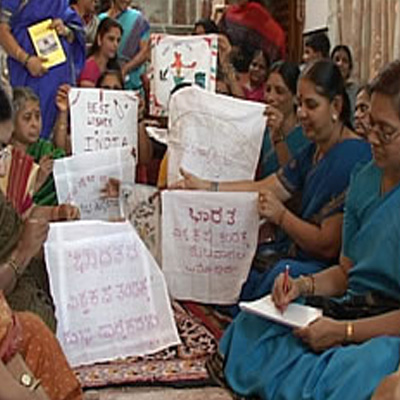
    MUMBAI: The handkerchief signature campaign on Zee Kannada is said to have drawn a good response from people across the country.

    The campaign was kicked off by Essel Group and Zee Network chairman Subhash Chandra signing the first handkerchief followed by Chief Minister H D Kumarswamy, Deputy Chief Minister B S Yediyurappa, other personalities in the state such as Home Minister M P Prakash, Infosys Member of the Board & Director HR Mohandas Pai, Jain Group of Institutions chairman, Chenraj Jain state artiste Umashree and swimmer Nisha Millet amongst others who wanted to express their solidarity with the Indian cricket team by signing wishes on their handkerchiefs.

    Zee Kannada’s ‘Handkerchief Signature Campaign’ team has been traveling across Karnataka collecting wishes to be passed on to the Indian players.

    The channel has already received good response from several schools, colleges, NGOs, institutes for the physically challenged, malls, theatres and Government offices.

  • Zee to kick off Zee Carnival on 16 February in London

    Zee to kick off Zee Carnival on 16 February in London

    MUMBAI: Zee Network is set to host its annual event Zee Carnival 2007 at the Grand Hall, Olympia in London on 16, 17 and 18 of February.

    Zee Carnival’s main attraction is its catalogue of Bollywood star appearances. Expected to attract about 30,000 people across the three days, the line up consists of Priyanka Chopra and Esha Doel, along with Big Brother winner Shilpa Shetty who will provide a Live interview.

    In addition, Pakistani cricket sensation Shahid Afridi will be present and Himesh Reshmiya will be performing live. Zee’s soap stars including Jay Walia, Bani, Vidhya, Chandini and Nahar Singh and celebrity chef Sanjeev Kapoor will also be present. The carnival will also have about 125 stalls in various zones, inform an official release.

    The network states that the carnival will be highly publicised with “mammoth advertising campaigns including underground advertising all over the UK.”

    Zee Entertainment Enterprises Ltd. senior vice president Ashish Kaul said, “Zee Carnival 2006 was a huge success. This year’s main attraction is the catalogue of Bollywood, television, cricket and musical stars appearance in the event.”
     

  • Indian Telly Awards Technical Nite hits new high

    Indian Telly Awards Technical Nite hits new high

    MUMBAI: They were the real stars at the Sixth Indian Telly Awards Technical Nite. The production teams that sweat it out to set new standards of technical quality, the marketing whizkids and ad sales teams that work quietly behind the scenes to build up the channel and the brands around it, the programmers who brainstorm over endless cups of coffee to hit upon that one single bright idea that will get the audience to sit up and take notice.

    Indiantelevision.com, along with its partners Zee Network, Aaj Tak, CNN IBN, IBN 7, Times Now, Zee Cinema, Radio City, Bright Advertising, Rajasthan Patrika and Mid Day, Fun Cinema, CMCG India, Tellychakkar.com and AnimationXpress.com, dedicated the event to recognize and laud the efforts of all those individuals, teams and channels who made television a viewing pleasure in the past year.

    The awards event was a sparkling affair held at the St Andrew’s Auditorium in Bandra.

    In Indiantelevision founder and CEO Anil Wanvari’s words, “This is really what television is all about and it gives me great pride and satisfaction that we at Indian television have had the opportunity, for the sixth year running, to acknowledge and reward all the great work that this vibrant industry is delivering. Happy Viewing!”

    As for the winners, here’s how the story unfolded:

    BEST CHANNELS

    The kid’s entertainment space is getting more competitive by the day but Hungama TV managed to keep the little one’s hooked and bagged the Best Kid’s channel. Channel [V] won the best music channel award, while HBO was awarded the best English movie channel. CNBC TV18 maintained its numero uno position in the business news channel segment once again.

    The Big Idea award went to CNN IBN’s ‘Citizen Journalist’, an initiative that has allowed viewers to be part of breaking news. The best interactive show award was bagged by Cellcast’s Bid2Win while the Cable operator/ MSO (Multi Systems Operator of the year went to Hathway Cable and Datacom Pvt Ltd.

    PROGRAMMING AWARDS

    Current Affairs Programme
    Jessica’s Fight For Justice NDTV 24 X 7

    Business Programme
    Business Baazigar
    25 FPS
    Zee TV

    Music Programme
    Sa Re Ga Ma Pa Zee TV

    Non-fiction Programme on Entertainment Channel
    The Great Indian Laughter Challenge Dwitiya
    Endemol India / Star One

    Non Fiction Programme On News Channel
    Red Corridor
    CNN IBN

    TV Documentary
    Missing In Action
    CNN IBN

    Edutainment / Science / Knowledge Based Show
    India Innovates
    NDTV Profit

    News Show
    Witness – Vidarbha Farmers : Suicide Tourism?
    NDTV 24 X 7

    Entertainment News Show
    Gustakhi Maaf
    NDTV India

    Lifestyle & Fashion Show
    Maximum Style
    Multimedia Communications / Zoom

    Talk Show on a News Channel
    State Of The Nation
    CNN IBN

    Talk Show on an Entertainment Channel
    Lola T[V]
    Channel [V]

    Cookery Show
    The Foodie
    TIMES NOW

    Sports News Show
    Love Of Cricket
    CNN IBN

    TECHNICAL AWARDS

    Special/Visual Effects for Television
    Tilak Shetty
    J Bole To Jadoo
    Graphiti Multimedia

    Art Direction (Set Designing)
    Omung Kumar Bhandula
    Dharti Ka Veer Yodha Prithviraj Chauhan
    Sagar Films Pvt Ltd

    Art Direction (Game show / Talk Show/ Reality Show/ Events)
    Omung Kumar Bhandula
    Kenstar Max
    Stardust Awards

    Videography (Best TV Cameraman)
    Alok Upadhyay
    Detective Omkar Nath
    DON Sphere Origins

    Videography (Best TV Cameraman) – News & Documentary
    Manvendra Gautam
    Special Report -Saving the Congo
    New Delhi Television Ltd

    Costumes for a TV Programme
    Nisha Sagar, Tara Desai, Neerushaa
    Dharti Ka Veer Yodha Prithviraj Chauhan
    Sagar Films Pvt Ltd

    TV Show Packaging (Fiction)
    Kohinoor
    Sahara One
    Cinevistaas Ltd

    TV Show Packaging (Non Fiction)
    Klub Zee Cinema
    Zee Cinema

    TV Channel Packaging (Including Channel Ids & Generic Promos)
    Bhoot Rap
    Toon Disney/Jetix The Walt Disney Co.(India) Pvt Ltd

    Editor (Fiction)
    Manish Mistry
    Bombay Talking
    UTV

    Editor (Non Fiction)
    Jatin Gupta India Matters
    The Last Run
    New Delhi Television Ltd

    Background Music for a TV Programme
    Prem Joshua
    The Maharaja Of Jodhpur – The Legacy Lives on..
    Aim Television Pvt Ltd

    TV Lyricist
    Javed Akhtar
    Haath Se Haath Milaa
    BBC World Service Trust

    Music Director
    Shankar, Ehsaan & Loy
    Haath Se Haath Milaa
    BBC World Service Trust

    Title Singer for a TV Show
    Sonu Nigam & Shreya Ghoshal
    Haath Se Haath Milaa
    BBC World Service Trust

    Director (Soap & Drama)
    Ajai Sinha
    Astitva – Ek Prem Kahani
    Ananda Films & Tele Comm Pvt Ltd

    Director (Sitcom)
    Deven Bhojani
    Sarabhai Vs Sarabhai
    Hats Off Productions

    Director (Thriller)
    B P Singh
    C.I.D
    Fireworks Productions

    Screenplay Writer (Drama Series & Soap)
    Fatema Rangila
    Kaisa Yeh Pyaar Hai
    Balaji Telefilms Ltd

    Dialogue Writer (Drama Series & Soap)
    Preeti Mamgain
    Jab Love Hua
    Dj’s A Creative Unit

    Sitcom/Comedy Writer
    Aatish Kapadia
    Sarabhai Vs Sarabhai
    Hats Off Productions

    Story Writer
    Arshad Syed
    Detective Omkar Nath
    DON Sphere Origins

    Creative Director (Production House) – Joint
    Naved Jaffri R & N Productions
    Deven Bhojani Hats Off Production Pvt Ltd

    Yes, the event was about competition and winners and the ‘oh nearly missed that’ awards. But keeping the mood light were the amazing dance and music performances peppered through the awards event.

    The entertainment quotient was provided by fusion dancers Vrajesh and Kalyani who presented a unique Jazz meets Kathak performance while Pandit Ravindra Chary on sitar and Merlin rounded up the nite with some jazz, rock and blues.
  • Zee forays into Marathi feature film production

    Zee forays into Marathi feature film production

    MUMBAI: Zee Network’s chairman Subhash Chandra has announced its foray into Marathi feature films, by which the network will provide the financial backing to produce, market and distribute the movies in India and Internationally.

    “After the making of the film, the responsibility of its marketing, distribution, telecast etc (for Indian and overseas territories) shall be the responsibility of the Zee Group,” added Chandra.
    Zee executive vice president regional channels Nitin Vaidya told Indiantelevision.com that the network will attempt to raise the bar for financial investments in Marathi movies, by about 50 per cent depending upon the content requirements and production elements. The normal monies pumped in towards Marathi films varies between Rs 50,000,000 – 60,000,000.

    As a start up, the network has commissioned five production houses, namely Mahesh Manjrekar’s Ashvami Films, Gautam Joglekar’s SOC, Shrirang Godbole’s Indian Magic Eye, Smita Talwalkar’s Asmita Chitra and Rakesh Sarang’s Cams Club. In the next two years, these producers are to present the network with 15 Marathi films, three films each. Zee is also looking to tie-up with other production houses for the same.

    “With almost 60 -70 Marathi films produced this fiscal, we saw the strength of this market and decided to develop a business process to boost Marathi cinema,” added Vaidya.

    Chandra announced the latest Marathi film venture at the 8th Annual Parachute Jasmine Zee Gaurav Awards, where he also announced the launch of Zee 24 Hours, the first dedicated Marathi news channel.

    The Zee Gaurav Awards recognizes excellence in the Marathi film and theatre industry across 18 categories in films, 12 categories in commercial plays and five categories in experimental plays.

    This year in the films category Mission Champion bagged six awards for the best film, direction, story, screenplay, dialogue and child artist. In drama, Makdachya Hati Shampaign won five awards for music, script, actor, director and best drama, informs an official release.

    Zee Marathi also felicitated legendary actor Dr Shreeram Lagu and veteran music director Datta Davjekar for the lifetime achievement award – Zee Jeevan Gaurav Puraskar. While the Mee Marathi Award was given to Lage Raho Munnabhai lyrist Swanand Kirkire by Bollywood’s director Vidhu Vinod Chopra.

    The Zee Gaurav Awards will be telecast on Zee Marathi on 10 February at 7.30 pm.

  • Cricket reality show ‘Cricket Star’ to kick off on DD & Zee on 14 January

    Cricket reality show ‘Cricket Star’ to kick off on DD & Zee on 14 January

    MUMBAI: Cricket based reality talent hunt show called Cricket Star will hit television on DD National and the Zee Network on 14 January.

    The show will run for eleven weeks, with three weekly simulcast episodes on DD National and Zee Sports, on Sundays at 11:30 am, Mondays and Tuesdays at 8:30 pm and a weekly episode on Zee TV on Saturdays from 6.30 pm to 7.30 pm.
    Investors In Cricket, a company specializing in the creation and management of sports rights that have relevance to the Asian Sub continent has conceptualized the show Cricket Star. The company then signed on cricket gurus Kapil Dev and Saurav Ganguly to be the selectors while Ajay Jadeja has been appointed as a cricket analyst and co-anchor. The show will be hosted by TV personality Shweta Salve.

    After weeks of mini and regional auditions conducted across the nation in 11 cities including Jaipur, Jamshedpur, Rajkot, Lucknow, Mysore, Chennai, Hyderabad, Delhi, Mumbai, Kolkata and Bangalore, 23 participants were shortlisted. These 23 will now be competing with each other to be the Cricket Star of India.

    The winner of the first series, Cricket Star India, will win a one-year all-expenses-paid contract with Leicestershire County Cricket Club and attractive cash prizes and will also achieve international celebrity status. The final 11 contestants will also have the opportunity to participate in the global rollout of Cricket Star, which is slated for a UK launch in summer 2007 and a subsequent launch in Pakistan, where there is significant interest in the format, informs an official release.

    With Sourav being away in South Africa, the selection was conducted under cricket gurus Kapil Dev (Selector) and Robin Singh (Director of Academy). Ajay Jadeja (Cricket Analyst) was present throughout the regional rounds providing support and tips to the young cricket participants. Cricket Star aspirants will play a series of 20:20 cricket matches as part of the programme, which will be telecast on Zee Sports on Sundays at 3 pm – 6 pm.

    Each week at the Cricket Star Academy contestants will be subjected to specialized cricket tests, personal challenges and master class inputs from legends of the game, along with cricket coaching and fitness training. Based on their performances each week, the judges will nominate the bottom four performers, out of whom the other contestants will evict two. Following which, the final eleven contestants, will be voted by television by phone or SMS. The contestant receiving the maximum votes cumulatively will be declared the Cricket Star. The show will culminate in the final episode in the end of March.

    The IIC has signed on Miditech Pvt. Ltd as the production house for the show.