Tag: ZEE Network

  • Differential pricing can throttle India’s fledgling digital space: Zee

    Differential pricing can throttle India’s fledgling digital space: Zee

    MUMBAI: The fight for net neutrality in India continues with major players submitting their comments to the Telecom Regulatory Authority of India (TRAI). After broadcasters like Star India and Sony Pictures Networks India sent in their comments to TRAI, now putting forth its views in favour of net neutrality, the Subhash Chandra led Zee Entertainment Enterprises Ltd (Zeel) has voiced that differential pricing is completely contrary to the concept of net neutrality and competition, and can have the impact of throttling the fledgling digital space in the country. 

    The broadcaster said that differential pricing cannot be on the basis of type of services consumed, rather the basis of pricing ought to be only on the amount of data consumed. “It is akin to electricity consumption – consumers are charged the same per unit consumed. The more you consume the more you pay – you either pay for time used (as in cyber cafes) or data consumed (as in our personal plans),” Zee said.

    Further presenting its case, the broadcaster said that differential pricing was already built in by pricing the bandwidth by volume slabs. For example, if a streaming Content Delivery Network (CDN) uses 1000 GB of data usage a day, it can have a different pricing slab vis-a-vis another customer who uses 1GB per day. The end customers, when they access such websites (say Youtube or Facebook) however pay the same price per GB of usage as per their own data plan without discriminating which website they are accessing/visiting. 

    “However, the current question is whether for the same volume, customers can be offered differential tariffs, and the difference be bartered from the content provider or application provider website,” Zee said.

    This would in turn lead to violation of net-neutrality as bigger content or application providers can make their access free, and thereby causing severe disadvantage to the newer startups, which may not necessarily have the muscle to pay charges to TSPs on behalf of customers.

    Major telecom providers have proposed a new ‘Zero Rating’ scheme also known as toll-free data or sponsored data, wherein TSPs don’t charge end customers for a well defined volume of data by specific applications or internet services via the TSP’s mobile network in limited or metered data plans and tariffs. The most prevalent zero-rated programmes involve giants like Facebook, Google and Twitter, which makes the issue more contentious as it also poses a threat to local content development.

    Zee Network said that in countries like India, net neutrality is more about cost of access than speed of access as Internet speeds in India have not yet caught up with the developed world. 

    “Zero-rated mobile traffic is blatantly anti-competitive price discrimination designed to favour TSPs own or their partners’ apps while placing competing apps at a disadvantage,” the broadcaster said.

    Citing that TSPs like Airtel, Idea, Reliance and Vodafone may offer Zero Rated plans as was done by T-Mobile in the US as a major strategy to win over customers by providing Zero priced access to all streaming websites such as Hulu, Netflix, YouTube etc. The customers of all these websites did not have to make any additional payment over and above their regular data plan for unlimited access to streaming, and such data usage was not debited from their internet pack and was free.

    “As TRAI is aware, Zero Rated plans are in fact permitted by some regulators specifically in developed countries, these are in fact not favoured in developing countries. However selective Zero Rating is not permitted,” Zee opined.

    Opposing any selective Zero rating or differential rating plan, Zee pointed out that the network cannot differentiate between different types of data (the fundamental principle of net neutrality).

    Putting forth the reasons for opposing the same, Zee said:

    (i) Internet is dominated by some large international players in all fields (Search: Google, Apps: Facebook, WhatsApp, Social sites, Streaming: Netflix, Hulu etc). Because of their scale and valuations they can completely dominate and smother any small startups if zero rated plans are permitted.

    (ii) Non-discriminatory internet access Internet is key to India’s startups and innovative service providers. We need them to grow to global levels, rather than allow the Indian landscape to be dominated by selective international players who are able to pay for content.

    “Differential pricing is undesirable at this stage, and in no case there should be differential pricing, which is not equally applicable to all sites that provide the same application or service,” the company said.

    In response to TRAI’s questions as to if there were alternative methods, technologies or business models, other than differentiated tariff plans, available to achieve the objective of providing free internet access to the consumers, Zee said that if differential pricing is offered, it would nominally follow one of the following models:

    1) TSPs providers cover the costs to users of accessing certain hand-picked sites and apps, which are their own. (This is a TSP and Content Owner combination) and should under no circumstances be permitted.

    2) A company pays to provide access to a suite of different services; – Zee Network’s view is that this should not be permitted as the data charges are very high in India and only very large well established International players can afford the same killing competition.

    Hence, coining the term ‘Equal rating’ for similar services and products, Zee said that the “principle of Cross ownership between TSPs and their own sites for Application or content needs specific attention and should be specifically prohibited. In some cases, TRAI may need to lift the “Corporate Veil” and ensure that the rules are not being violated by restructuring entities.”

    Voicing its opinion on other issues to be considered in the present consultation on differential pricing for data services, Zee said, “We need to understand that while India is still developing its technologies and has a vibrant start up market, there are well established companies, which would easily pay for user access for access to their own websites or content. Hence: (i) Net Neutrality should in no case be violated; (ii) Creation of network owning companies where they own their network and also create content repositories should be entirely prohibited; and (iii) Zee Network would also like to strongly advise against device specific discriminated tariffs.”
  • Differential pricing can throttle India’s fledgling digital space: Zee

    Differential pricing can throttle India’s fledgling digital space: Zee

    MUMBAI: The fight for net neutrality in India continues with major players submitting their comments to the Telecom Regulatory Authority of India (TRAI). After broadcasters like Star India and Sony Pictures Networks India sent in their comments to TRAI, now putting forth its views in favour of net neutrality, the Subhash Chandra led Zee Entertainment Enterprises Ltd (Zeel) has voiced that differential pricing is completely contrary to the concept of net neutrality and competition, and can have the impact of throttling the fledgling digital space in the country. 

    The broadcaster said that differential pricing cannot be on the basis of type of services consumed, rather the basis of pricing ought to be only on the amount of data consumed. “It is akin to electricity consumption – consumers are charged the same per unit consumed. The more you consume the more you pay – you either pay for time used (as in cyber cafes) or data consumed (as in our personal plans),” Zee said.

    Further presenting its case, the broadcaster said that differential pricing was already built in by pricing the bandwidth by volume slabs. For example, if a streaming Content Delivery Network (CDN) uses 1000 GB of data usage a day, it can have a different pricing slab vis-a-vis another customer who uses 1GB per day. The end customers, when they access such websites (say Youtube or Facebook) however pay the same price per GB of usage as per their own data plan without discriminating which website they are accessing/visiting. 

    “However, the current question is whether for the same volume, customers can be offered differential tariffs, and the difference be bartered from the content provider or application provider website,” Zee said.

    This would in turn lead to violation of net-neutrality as bigger content or application providers can make their access free, and thereby causing severe disadvantage to the newer startups, which may not necessarily have the muscle to pay charges to TSPs on behalf of customers.

    Major telecom providers have proposed a new ‘Zero Rating’ scheme also known as toll-free data or sponsored data, wherein TSPs don’t charge end customers for a well defined volume of data by specific applications or internet services via the TSP’s mobile network in limited or metered data plans and tariffs. The most prevalent zero-rated programmes involve giants like Facebook, Google and Twitter, which makes the issue more contentious as it also poses a threat to local content development.

    Zee Network said that in countries like India, net neutrality is more about cost of access than speed of access as Internet speeds in India have not yet caught up with the developed world. 

    “Zero-rated mobile traffic is blatantly anti-competitive price discrimination designed to favour TSPs own or their partners’ apps while placing competing apps at a disadvantage,” the broadcaster said.

    Citing that TSPs like Airtel, Idea, Reliance and Vodafone may offer Zero Rated plans as was done by T-Mobile in the US as a major strategy to win over customers by providing Zero priced access to all streaming websites such as Hulu, Netflix, YouTube etc. The customers of all these websites did not have to make any additional payment over and above their regular data plan for unlimited access to streaming, and such data usage was not debited from their internet pack and was free.

    “As TRAI is aware, Zero Rated plans are in fact permitted by some regulators specifically in developed countries, these are in fact not favoured in developing countries. However selective Zero Rating is not permitted,” Zee opined.

    Opposing any selective Zero rating or differential rating plan, Zee pointed out that the network cannot differentiate between different types of data (the fundamental principle of net neutrality).

    Putting forth the reasons for opposing the same, Zee said:

    (i) Internet is dominated by some large international players in all fields (Search: Google, Apps: Facebook, WhatsApp, Social sites, Streaming: Netflix, Hulu etc). Because of their scale and valuations they can completely dominate and smother any small startups if zero rated plans are permitted.

    (ii) Non-discriminatory internet access Internet is key to India’s startups and innovative service providers. We need them to grow to global levels, rather than allow the Indian landscape to be dominated by selective international players who are able to pay for content.

    “Differential pricing is undesirable at this stage, and in no case there should be differential pricing, which is not equally applicable to all sites that provide the same application or service,” the company said.

    In response to TRAI’s questions as to if there were alternative methods, technologies or business models, other than differentiated tariff plans, available to achieve the objective of providing free internet access to the consumers, Zee said that if differential pricing is offered, it would nominally follow one of the following models:

    1) TSPs providers cover the costs to users of accessing certain hand-picked sites and apps, which are their own. (This is a TSP and Content Owner combination) and should under no circumstances be permitted.

    2) A company pays to provide access to a suite of different services; – Zee Network’s view is that this should not be permitted as the data charges are very high in India and only very large well established International players can afford the same killing competition.

    Hence, coining the term ‘Equal rating’ for similar services and products, Zee said that the “principle of Cross ownership between TSPs and their own sites for Application or content needs specific attention and should be specifically prohibited. In some cases, TRAI may need to lift the “Corporate Veil” and ensure that the rules are not being violated by restructuring entities.”

    Voicing its opinion on other issues to be considered in the present consultation on differential pricing for data services, Zee said, “We need to understand that while India is still developing its technologies and has a vibrant start up market, there are well established companies, which would easily pay for user access for access to their own websites or content. Hence: (i) Net Neutrality should in no case be violated; (ii) Creation of network owning companies where they own their network and also create content repositories should be entirely prohibited; and (iii) Zee Network would also like to strongly advise against device specific discriminated tariffs.”

  • Balaji Telefilms’ TV show report card for H1 2016

    Balaji Telefilms’ TV show report card for H1 2016

    BENGALURU: How is Balaji Telefilms – India’s leading TV production house  – faring as far its contribution to the ratings of its major clients – Star Plus, Zee TV, Colors, Sony, and DD – is concerned? Indiantelevision.com decided to give you a sneak peek using the company’s presentation filed with the BSE for the last quarter. Bear in mind that in its December 2015 corporate presentation, Balaji Telefilms has mentioned BARC ratings and its contributions while in its September 2015 presentation, the company indicated TAM parameters. And we are comparing the numbers for H1-2016 with FY-2015. 


    Despite the difference in the two rating bodies’ matrices, this article tries to show the variance of Balaji Telefilms’ contribution to the channels’ GRPs between Week 37 and Week 45, while indicating the slot leaders on these channels. That Balaji Telefilms is a major contributor to most, if not all the channels’ GRPs, is a foregone conclusion.


    Channels contribution to Balaji’s revenues


    The Star network replaced the Zee Network as the major contributor to Balaji’s revenues in H1-2016 due to Nach Baliye 7 on Star Plus and the discontinuation of Jodha Akbar on Zee TV. The Star network contributed 35 per cent to the company’s revenues in H1-2016 as compared to the 19 per cent it had contributed in FY-2015.


    In FY-2015, the Zee Network’s contribution to Balaji Telefilms’ revenue was 44 per cent, whereas in H1-2016 it declined to 28 per cent as per the company’s December 2015 corporate presentation.


    Colors’ contribution to Balaji Telefilms’ revenues in H1-2016 increased to 14 per cent as compared to 12 per cent for FY-2015. Sony also increased its contribution in percentage terms to Balaji Telefilms revenues in H1-2016 to 13 per cent from nine per cent in FY-2015, as did Life OK – its contribution to Balaji Telefilms revenues increased to 10 per cent from seven per cent in the previous financial year.


    Sony Pal and Doordarshan (DD) had contributed four and five per cent respectively to the company’s revenues in FY-2015, but have made no contribution to Balaji Telefilms’ revenues in the current half year. The company says that DD’s contribution dropped down to zero per cent due to postponing the revenue realisation to the last quarter of FY-2016. Balaji Telefilms says that the new shows from Q3-2016 onwards will further strengthen the contribution of Colors, Star Plus, &TV and Sony to its revenues.


    Let’s see how the top three channels fared in weeks 37 and 45 across the two ratings systems vis-?-vis some Balaji Telefilms soaps:


    Week 37


    In week 37, as per BARC ratings, Colors led the chart with a considerable rise in ratings and grabbed first place amongst the Hindi GECs with 414841 (000Sums) as against 386518 (000Sums) in week 36. Though Star Plus witnessed a rise in ratings, it stood behind Colors in the second spot with 381365 (000Sums) as compared to 370135 (000Sums) in the previous week. Zee TV and Life OK were perched at the third and fourth slot with 256811 (000Sums) and 221762 (000Sums) respectively. Sab secured the fifth berth in the list with 183879 (000Sums).


    As per TAM, it was Star Plus that held on to its lead position in Hindi general entertainment channels (GECs) category in week 37 for HSM (including LC1) with 237 GRPs. Colors was in the second slot with 219 GRPs, while Zee TV secured third position with 159 GRPs.


    So there is a difference in the top two slots between the two systems – according to BARC, Colors had the highest GRPs, while according to TAM, Star Plus had the highest GRPs in week 37. The third spot according to both the systems belonged to Zee TV.


    Week 45


    According to BARC, Star Plus led the Hindi GEC genre with 748197 (000Sums), while Zee Anmol bagged the second position with 717923 (000Sums). Colors secured third spot with 656542 (000Sums), while Zee TV fell to the fourth position with 638475 (000Sums).


    According to TAM, Colors bagged the first spot with 236 GRPs in week 45 against 221 GRPs in week 44. Star Plus saw a decline in ratings to second slot with 226 GRPs against 239 GRPs in previous week followed by Zee TV in the third spot with 152 GRPs and Life OK at fourth place with 138 GRPs.


    Here again there is a difference – TAM says that Colors had the first place in terms of GRPs, while Star Plus was second, and BARC data says that Star Plus was first and Colors second.


    Balaji Telefilms’ soaps in weeks 37 and 45 on the top three Hindi GECs


    Star Plus


    Along with Nach Baliye, fiction shows Yeh Hai Mohabbatein (BARC rating 3.7) and new show Kuch to Hai Tere Mere Darmiyan (BARC rating 0.8), Balaji Telefilms contributed 24 per cent to Star Plus’ GRPs for BARC week 45 as per the company’s corporate presentation for December 2015. Star Plus led the Hindi GEC genre in week 45 as per BARC data. Yeh Hai Mohabbatein was the leader in the 7.30 to 8 pm slot.


    Earlier, in its September 2015 corporate presentation, Balaji Telefilms said that its shows contributed 19 per cent to Star Plus GRPs for TAM week 37 with Yeh Hai Mohabbatein (TAM rating 3.43).


    Zee TV


    In week 45, Balaji’s contribution to Zee TV’s BARC ratings was 20 per cent. Balaji’s fiction show on Zee TV at that time was Kumkum Bhagya (BARC rating 3.8). While Zee TV fell to fourth position in week 45, Kumkum Bhagya was the leader in the 9 – 9.30 pm slot.


    Earlier, in week 37 as per Balaji Telefilms’ shows contributed 25 per cent to Zee TV’s GRPs with Kumkum Bhagya being a slot leader with a TAM rating of 3.95. Zee TV saw a marginal downfall in ratings, but secured third position in week 37.


    Colors


    In week 45, Balaji Telefilms had Meri Aashiqui Tum Se Hi, which was the leader in the 10 – 10.30 pm slot with BARC rating of 3.4 on Colors, which secured third spot as per BARC. Balaji Telefilms’ contribution to Colors GRPs was 14 per cent in week 45.


    In week 37, Colors was in the second slot with 219 TAM GRPs in comparison to 198 TAM GRPs in week 36. Balaji Telefilms’ contribution to Colors TAM ratings was 15 per cent with Meri Aashiqui Tum Se Hi recording a slot leadership TAM rating of 3.44.

  • Siti Cable revs up DAS phase III preps

    Siti Cable revs up DAS phase III preps

    MUMBAI: SITI Cable, Zee Network enterprise’s cable expertise SITI Cable is greatly committed to the government initiative of mandatory digitization. Digitization of phase 1 & 2 towns is over and 31st  Dec 2015 is deadline for phase 3 towns.


    As part of its commitment to drive the digitization process, SITI Cable is constantly engaging with LCO partners across multiple states in the country and is providing all possible support to them.


    SITI provides its digital cable TV signal over IP based platform which is robust & scalable and ensures continuity of signals. The industry first subscriber management system, Own Your Customer (OYC) specially designed for LCO gives full control of subscribers to LCO.


    A SITI LCO can also choose STB from the multiple options like MPEG 2 / MPEG 4 / HD / PVR. The state of art digital Headend by SITI provides more than 300 SD & HD channels. The technology is future ready and will provide value added services like recording facility, video on demand, games etc.


    In select cities, SITI Cable’s digital network is broadband ready which provides revenue enhancement opportunities to its business partners. The company follows consistent business policy for all its business associates and LCOs can rest be assured of uniformity in the content price. SITI is a professionally managed organization and so the partnering LCO have access to best people, technology and support.


    Today SITI Cable as part of this initiative has shared it vision of digitization with the LCO

    partners in the town of Riwari & Bhiwari


    Speaking about the digitization in phase III & IV areas SITI Cable CEO V.D Wadhwa said, “We at SITI Cable are committed to ensure that customers have an access to quality services. The mandatory digitization is underway and this initiative will ensure a larger participation in the process by all.”

  • Zing to launch sixth season of ‘Pyaar Tune Kya Kiya’

    Zing to launch sixth season of ‘Pyaar Tune Kya Kiya’

    MUMBAI: Zing is all set to launch the sixth season of its show Pyaar Tune Kya Kiya (PTKK) from 2 October at 7 pm.


    The new season PTKK will showcase new fictional love stories that are filled with friendship, drama, love and romance.


    The theme of the sixth season of PTKK will be a notch higher, by showcasing fairy tale love stories that are always going to be etched in our memory. Zing has collected many such moments of romance and weaved them together in a series of 13 special episodes, which will be hosted by Karan Kundra.


    Zing head Vishnu Shankar said, ”It’s been a wonderful journey for us with PTKK from season 1 to 5. We are glad that we have a dedicated audience that connects directly with the youth and their perception. With the upcoming season, we continue to keep up with this commitment and assure that the viewers get the best out of it.”


    To engage with the core audience, besides an all-encompassing marketing plan with on air promotion across Zee Network, Zing will also promote the show on digital and social media.


  • Zee Cinema inks long term ad sponsorship deal with Rubicon in UK

    Zee Cinema inks long term ad sponsorship deal with Rubicon in UK

    MUMBAI: Moving away from the traditional ad spots during programming, Zee Cinema has inked a long-term contract with Rubicon in the UK and will create exclusive properties suiting the client’s requirements.


    The first property under Zee Cinema’s special sponsorship package for the brand will be called ‘Rubicon Amitabh Special’ and will showcase blockbuster movies starring the living legend Amitabh Bachchan once every month.


    The second property named ‘Rubicon Family Movie Nights’ will be a bi-weekly property showcasing yesteryear classics and latest superhits on Wednesdays and Sundays respectively. Rubicon will get exclusive sponsorship for these properties.


    Zee Network head of sales Vasdev Tuli said, “This is the very first time Zee Cinema has created a bespoke partnership like this. We’re really excited about our partnership with Rubicon, a brand with such a great profile with our viewers.”


    AG Barr head of marketing Adrian Troy added, “Rubicon has been a favourite amongst South Asian families for over 30 years. This partnership does more that target family moments, it helps Asian mums create those moments too.”


    OMG Ethnic director Debarshi Pandit said, “We wanted this partnership’s aim to not just associate Rubicon with family moments, but actively bring the family together while watching their favourite films on Zee Cinema.”

  • Apollo’s 3% stake sale in Dish TV earns it a profit of Rs 135 crore

    Apollo’s 3% stake sale in Dish TV earns it a profit of Rs 135 crore

    MUMBAI: US based alternative assets manager Apollo Global Management part sold its three per cent stake in direct to home (DTH) operator Dish TV for Rs 262.5 crore, through an open market transaction on 10 April. 


    The stake comprising 32 million shares of an average price close to Rs 82, as compared to their original purchasing price of approximately Rs 39, was picked up by an investment unit of Citigroup and a mutual fund under Birla Sun Life.


    With the sale purchase, Apollo will see a profit of Rs 135 crore. The Private Equity (PE) firm is now left with eight per cent stake in the company through its outstanding global outstanding depository receipts (GDR). This stake is valued at Rs 721 crore.


    It was in 2009 when the PE firm invested $100 million to gain an 11 per cent stake in the company, which was the firm’s first investment in the country. Dish TV is part of the Subhash Chandra owned Zee Network with approximately 12.5 million net subscribers. With a strong range of 470 television and audio channels, it has 43 High Definition (HD) channels under its kitty. For the quarter ending 31 December, 2014 the company’s net loss stood at Rs 2.9 crore.

    Meanwhile the ESSEL group through its continuation of an earlier intimation dated 26  August last year,  informed the BSE that the Board of Directors of the Company at their meeting held on August had considered and approved to transfer the Company’s non-core business (including set top boxes, dish antenna, and related services) to its Wholly Owned Subsidiary – ‘Xingmedia Distribution Private Limited’ (presently known as ‘Dish Infra Services Private Limited), subject to necessary approvals and as per the applicable provision of the Companies Act, 2013. 


  • Indian pubcaster needs to re-invent in era of digital advancement

    Indian pubcaster needs to re-invent in era of digital advancement

    MUMBAI: While the general consensus on the role of a public service broadcaster (pubcaster) is that it provides not much “newsy” content, the BBC definitely remains a role model, even for private news channels.


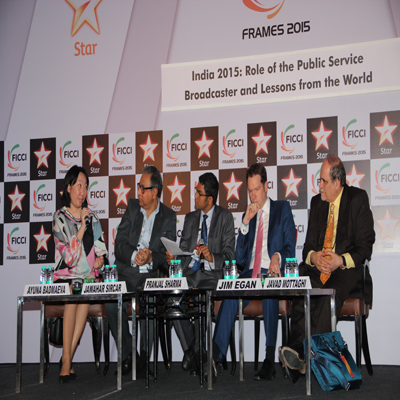
    This was the underlying theme that was discussed on a panel discussion titled ‘India 2015: Role of the Public Service Broadcaster and Lessons from the World’ at FICCI Frames 2015.


    The panel comprised Prasar Bharati CEO Jawhar Sircar, BBC Global News CEO Jim Egan, ABU secretary general Javad Mottaghi and VGTRK Digital Television Russia deputy CEO Ayuna Badmaeva. The session was moderated by Zee Network’s The Appointment host and FICCI advisor Pranjal Sharma.


    The session began with Sircar speaking on the role of Prasar Bharati in the country so far. According to him, the pubcaster had been able to streamline the entire country’s emotional unity together in a multi culture nation. It also played the heritage aspect role as it broadcast mythological shows like the Ramayana. “Show me a single broadcaster, who covers every island of the country across its geographical spectrum. India’s cultural unity was achieved because of a public service broadcaster,” he emphasised.


    Elaborating on how her network functions in Russia and on its role, Badmaeva informed that the network had 18 brands under its umbrella. “We started in 2009 with a factual entertainment channel. We work across Russia and our role is to fill the gap where other networks do not cover its citizens,” she said.


    Egan added, “What is most important for a public service broadcaster is to make the good popular and make the popular good. It is very important that a pubcaster reaches out to every citizen.”


    Posing a question, Sharma asked whether the government should decide what’s good for the public? Mottaghi replied saying that the first word “public” of Public Service Broadcaster referred to all groups of society. Hence its duty was to serve the public. “It has to be public oriented content versus commercial oriented content. We talk about issues such as health, culture, education and what society needs, which is not so much part of commercial news channels,” he opined.


    On being questioned by Sharma as to how Doordarshan ensures that it gets viewers to watch its content, Sircar conceded the fact that DD’s content was definitely not at par as compared to what the BBC was known for world over.


    For Sircar, the issue was related to both creativity and funding. “If the BBC could use 75 per cent of its funding on content, India could use only 10 per cent,” he said.


    Throwing an insightful statistic, which governed the theme of the discussion that followed, Sircar said, “While internationally, double digits dollars were spent per person for creating content. However, in India only 40 cents per person is spent on creating content. If you spend 40 cents, you get content worth 40 cents too.”


    Badmaeva then spoke on how the pubcaster tried remaining relevant in Russia in the ever-evolving digital age. She said, “While linear TV ratings are going down, people consumed content via smartphones and tablets. People also bought their content from cable operators. For us, our network is driven by both profit and reach.” She went on to add the Russian pubcaster has in recent time produced a documentary, which delivered the same rating as the Winter Olympics.


    Egan informed on how the BCC stayed relevant in a dynamic media space. “Every household is driven by a $20 subscription. The idea is about universality. While a part of it to remain relevant is about content, it is also about access, technology and reach. We innovate based on demand. In the digital age, it is how audiences engages with the content,” he said. He then added that around 270 million of the BBC’s audiences was out of the United Kingdom.


    Speaking on the now banned documentary India’s Daughter, which was a joint co-production between various production houses and the BBC, Egan said, “It had the highest values of journalism and the challenge is to avoid being ghettotised as just a pubcaster.”


    Sircar added that DD Sahayadri too had much of its content produced by private production houses. “Own it, don’t stone it,” he said. He also mentioned that when the pubcaster decided to air the Aamir Khan-helmed show Satyamev Jayate, he was questioned by ministers if a show where people washed their dirty linen in public was good for the channel. Sircar was of the opinion that because the show touched public issues, the pubcaster should air it.


    Touching upon the case of Star Sports, which went to court over the pubcaster airing the ICC Cricket World Cup, Sircar said that the pubcaster just followed a court order, which stated that in addition to profit making, the people of India are to be allowed to watch games via cable through terrestrial means. “Because of a very small cartel, which has a few channels, it will lead to monopolising of sports events,” he highlighted.


    Sircar informed that his goal was now focussed on two things. Firstly, increasing the number of channels on Free Dish from the current 50 to 112 and secondly, to use DD’s 1400 transmitters to create FM bands. “If FM has to reach mobiles, smaller circles of 50 kilometers will be created,” he said.


    He went on to add that a process was underway where 15 out of 20 channels could be auctioned. However, he refused to share details.


    Touching upon Sircar’s “40 cent” remark, Egan concluded the session saying, “In a country like India with a large population, 40 cents could add up to $500 million a year. It is a question about a national strategic choice. In some countries a pubcaster would weep tears of joy with this amount of money.”

  • Marketing, promotion the &TV way

    Marketing, promotion the &TV way

    And in 2015 a new benchmark has been set on how to launch a new channel in the hyper competitive and challenging Indian TV ecosystem. We are referring to the effort that is being put behind the unveiling of Zee Network’s &TV on 2 March.


    In what could be labelled as an extremely well coordinated exercise, the brand has been in your face everywhere you go… in the streets, on television, in print, on radio, online and in social conversation. Estimates are that the network has laid out an advertising and marketing war chest of more than Rs 100 crore. All that is left is for Prime Minister Narendra Modi to come out and endorse it! Or the once again emerging common man’s political and social poster boy – Delhi’s chief minister Arvind Kejriwal to mention it.


    India’s oldest and most successful television and media industry monitor Indiantelevision.com has also been roped in as a partner by India’s oldest television network for the &TV launch. Hence, you will see a coordinated activity on the site. The ‘Indian’ in our masthead has been merged with one of the key messages it is trying to convey: television in our country will now be referred to as &ndiantelevision. Every ‘and’ reference in our stories has been replaced by the channel’s logo. We were more than willing to partake of this marketing and social experiment, as it is only for a day.


    It is a messaging and marketing innovation, which we believe has not been done before, and will definitely merit a case study going forward. We believe the more discerning and progressive will see it as such. It is an era of partnerships, and who else but Indiantelevision.com (which has been serving at least two generations of leadership and several more generations of low – and mid-management in the privately run television industry since it started in the early nineties) would dare to venture to take this pioneering step.


    Clearly, what was once perceived as a conservative and ‘Lala’ media group has engineered a campaign that would do any of the more experienced marketing mavens in Unilever India or Procter & Gamble or Coke or Pepsi proud.


    There is ample reason for the Subhash Chandra promoted and now run by his son Punit Goenka, Zee Network to go into a marketing overdrive for &TV. The channel is launching in the thick of cricket season: the exciting World Cup is on and Dhoni’s team has once again found its form. This is exciting India’s cricket mad TV viewers to start visualizing and wanting another India victory in the prestigious once in four years prize. Ratings for Star Sports have been like never before and around half of the Indian TV viewing audience stayed glued to their TV set to watch our men in blue thrash the boys in green from Pakistan in India’s opening match. Even repeat telecasts were tuned in to later in the evening, as were the analysis and magazine shows on Star Sports.


    While the World Cup will culminate end-March, it will soon to be followed by the slam bam version of the gentleman’s game the money spinning Indian Premier League (IPL) on the Sony Entertainment network in April. Even though riddled with controversy, the cricket league has been attracting eyeballs over the years. And should continue to do so in the 2015 season too.

    If one were to be a critic and point out a single flaw in the &TV campaign, it could be the over dependence of the channel on projecting one programme – the Shah Rukh Khan-hosted India Poochega Sabse Shaana Kaun. While it is a good strategy to use arguably India’s best known Bollywood face and the second richest actor in the world, it also means the show will have to measure up and meet the expectations it has raised in the minds of viewers. Yes, two other shows Razia Sultan and Begusarai are also being promoted but the decibel levels are lower than that for the Shah Rukh show. And Shah Rukh has not really set the small screen on fire in his earlier sojourns as the host of shows like Zor Ka Jhatka, Kaun Banega Crorepati or Kya Aap Paanchvi Pass Se Tez Hain, though the telecast of his films on TV has been good reason for viewers to stay put at home in the past.


    However, Goenka like his father is emerging as a business executive who is willing to take risks – some may say an expensive one. But the fact is that if the show catches on, he could well end up getting loads of praises and advertising dollars. If it doesn’t it could well prove a driver for other shows on the channel.


    Colors used this strategy at the time of its launch: Akshay Kumar became its  face, and though his Khatron Ke Khiladi did not get very high numbers as one would have expected, it worked like a magnet and drew audiences into the channel’s other shows and positioned Colors in the minds of viewers as an edgy and differentiated channel.


    If that is the strategy that Goenka and the &TV team lead by Rajesh Iyer are following (Iyer was associated with the Colors launch as well), then the other shows will have to really deliver. Prima facie the Zee Network seems to have raised the bar on production values if one looks at the shows on its new offering. The effort has been to keep the story telling and narrative for its fiction shows differentiated. Hopefully, India’s general entertainment viewers perceive the effort as such with &TV too.


    The new GEC is also launching at the time when a new TV viewership measurement system BARC is about to start rolling out its services. Who knows what surprises it may throw up as it has used newer metrics for placing its viewership meters in its 20,000 strong universe. The surprises could well end up working in the Zee Network’s and &TV’s favour.


    However, recent efforts to innovate in India’s Hindi general entertainment genre with linear channels have met with a rather tepid response. Star’s Life OK shone briefly, Zee TV’s Zindagi got critical acclaim but limited audiences and Sony Entertainment’s Pal was not well received by viewers.


    We will know soon enough whether &TV has what it takes. For that, it’s over to the audience.

  • Arun Aggarwal joins ITV Network, as group CFO

    Arun Aggarwal joins ITV Network, as group CFO

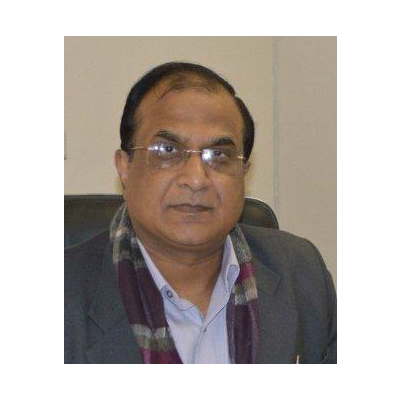
    MUMBAI: Continuing its growth plans, ITV Network, has got on board Arun Aggrawal as the group CFO. This is Aggarwal’s second stint with the Network, after a brief stint overseas for the launch of a 24×7 English news channel. Prior to his overseas assignment, he was holding the same portfolio at ITV Network, for almost two years and was actively involved during the takeover of ‘NewsX’.


    As part of his mandate, he will be overseeing all aspects of financial operations for the network.


    A Chartered Accountant, Company Secretary and Graduate in Law, Aggrawal comes with professional experience spanning over 25 years with 15 years of exhaustive experience in the media sector. He was also associated with Zee Network for nearly 10 years holding various positions including CFO, senior vice president and vice president. At Zee he was responsible for the crucial functions of credit control, finance and commercial.


    ITV Network managing director Kartikeya Sharma said, “The decades of experience that Arun brings with him is invaluable for ITV Network.  We are positive that Arun’s strong financial leadership in the media and entertainment sector, and his skills and relationships will surely help the network reach the next level.”


    On re-joining the network, Aggarwal said, “It gives me immense pleasure to be back with ITV Network. I am looking forward to an enriching experience again and I am confident to contribute to the growth of the network.”