Tag: ZEE Network

  • Zee enters China; in deal with CCTV

    Zee enters China; in deal with CCTV

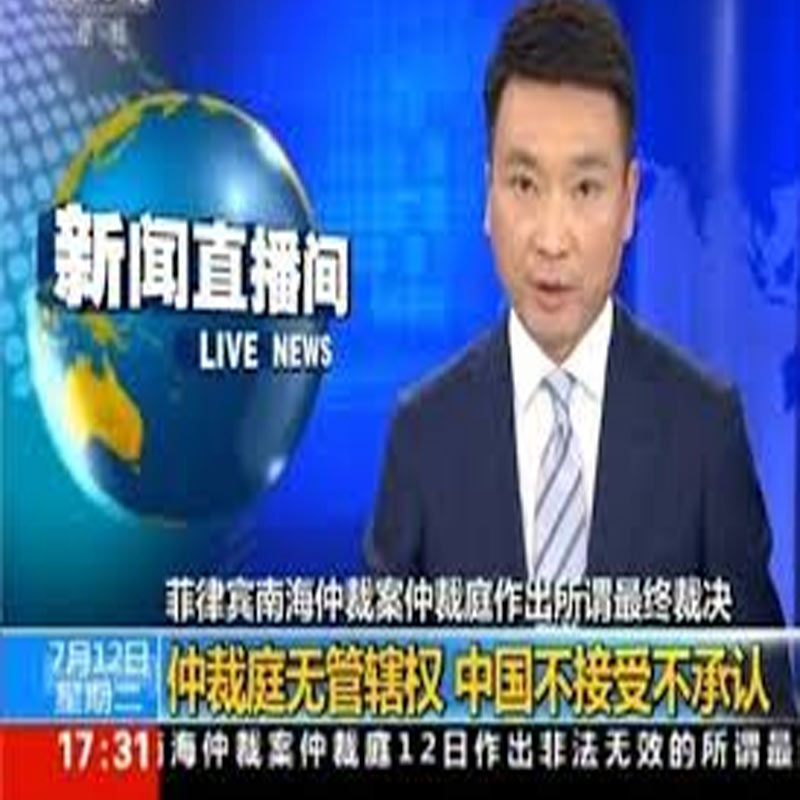
    MUMBAI: The Zee Network today announced an agreement with Beijing based China Central Television, China’s largest national TV network.

    China Central Television has licensed to Zee Network, the use of news and other programs from CCTV International (CCTV-9). They have also authorised Zee to pick up their signals and transmit it over the Zee Network. Zee Network in turn will license to China Central Television the use of its news and programs. Both the networks will exchange news programmes, documentaries and feature programs introducing each other’s culture, history, geography, economy, etc. for telecast.
    It was in July that Indiantelevision.com first reported that Zee was planning to enter China.

    Zee Network and CCTV will enhance cooperation in program production including television dramas, films and feature programs. The exchange of television dramas and programs will be mainly based on purchase. Both sides shall take care of all copyright obligations for all programs to be provided to the other party.

    Speaking on the signing of this agreement, Mukund Cairae, Head – Asia Pacific, International Business, said, “We are very pleased to announce this agreement with China Central Television. China is an important market and we are optimistic about audience response there. This initiative is a step towards promoting mutual understanding and friendship between the people of India and China. Jointly the populations of India and China total a third of the world population. With interactions such as these, we will responsibly make our populations aware of the rich cultural heritage that exists in Asia.”

    Adding further he said, “We will not be charging licensing fees from each other for news programs. This contract is valid for two years and is extendable on mutual agreement.”

    CCTV president Huayong Zhao said, “Interactions such as these will facilitate better understanding between the people of China and India and will pave the way for future cooperation between our two countries.”

    In addition to this content sharing agreement, China TV week will be held in India and India TV week in China with television hosts from both sides appearing on TV together in the same TV week. As part of the TV week, both sides agree to broadcast each other’s programs half hour per day, seven days in series.

  • Zee enters China; in deal with CCTV

    Zee enters China; in deal with CCTV

    MUMBAI: The Zee Network today announced an agreement with Beijing based China Central Television, China’s largest national TV network.

    China Central Television has licensed to Zee Network, the use of news and other programs from CCTV International (CCTV-9). They have also authorised Zee to pick up their signals and transmit it over the Zee Network. Zee Network in turn will license to China Central Television the use of its news and programs. Both the networks will exchange news programmes, documentaries and feature programs introducing each other’s culture, history, geography, economy, etc. for telecast.
    It was in July that Indiantelevision.com first reported that Zee was planning to enter China.

    Zee Network and CCTV will enhance cooperation in program production including television dramas, films and feature programs. The exchange of television dramas and programs will be mainly based on purchase. Both sides shall take care of all copyright obligations for all programs to be provided to the other party.

    Speaking on the signing of this agreement, Mukund Cairae, Head – Asia Pacific, International Business, said, “We are very pleased to announce this agreement with China Central Television. China is an important market and we are optimistic about audience response there. This initiative is a step towards promoting mutual understanding and friendship between the people of India and China. Jointly the populations of India and China total a third of the world population. With interactions such as these, we will responsibly make our populations aware of the rich cultural heritage that exists in Asia.”

    Adding further he said, “We will not be charging licensing fees from each other for news programs. This contract is valid for two years and is extendable on mutual agreement.”

    CCTV president Huayong Zhao said, “Interactions such as these will facilitate better understanding between the people of China and India and will pave the way for future cooperation between our two countries.”

    In addition to this content sharing agreement, China TV week will be held in India and India TV week in China with television hosts from both sides appearing on TV together in the same TV week. As part of the TV week, both sides agree to broadcast each other’s programs half hour per day, seven days in series.

  • Zee Network wins awards for technological superiority

    Zee Network wins awards for technological superiority

    MUMBAI: Zee Network has won two awards for technology supremacy. The CIO 100 Award for 2006 is in recognition of Zee’s innovative use of technology in its Digital Asset Management system. The ‘EMC Storage Giant of Year 2006’ has been awarded as Zee Network has a massive data archive of digitized video AND other media content of well over 1000 terabytes. This award is given to FIVE companies in India by EMC for integrating and having large data storage, states an official release.

    Zee Network VP Business Technology Ishwar Jha said, “Our technology initiatives have been focused on making our Network future ready, employing the best technology across operations. With our digitized content archive, we will be able to easily offer viewers our innovative programmes through multiple channels of distribution. Our innovations have helped us demonstrate technological excellence in deploying solutions to deliver optimum value to our consumers.”

    The CIO 100 event has been running in the US for 17 years now. The CIO Awards are a global phenomenon, with events in Canada, Sweden, Singapore, Vietnam, Hungary and now India, the release adds.

  • Zee Telugu promotes Rasool Ali as business head

    Zee Telugu promotes Rasool Ali as business head

    MUMBAI: Zee South Initiative VP Analytics Rasool Ali has been promoted the business head of Zee Telugu. Ali will be taking three sixty degree control of the first vernacular TV channel of Zee Network in South India, which is fifteen months old.

    An MBA Gold Medallist from AMU and an IIFT post graduate, Ali has vast experience in retail and International marketing, He crossed over to media industry in 2002 as head of analytics at ETV and then moved over to Zee South Initiative, states an official release.

    Ali will report to Zee Network South Initiatives head R. Ajay Kumar.

  • Trai meets broadcasters on CAS, firm on channel MRPs

    Trai meets broadcasters on CAS, firm on channel MRPs

    NEW DELHI: Broadcast regulator Telecom Regulatory Authority of India (Trai) Thursday held discussions with industry stakeholders, but was firm that a la carte pricing of channels is inevitability.

    Still, the regulator seemed sympathetic to a revenue share formula in favour of MSOs and broadcasters over and above a certain price.

    Thursday’s meeting that Trai held with some broadcasters was more of a formality as the regulator made it clear to broadcasters present that maximum retail price (MRP) of TV channels under CAS regime is coming whether some like it or not.

    According to information available with Indiantelevision.com, most participants were against a la carte pricing of channels and pitched for wholesale prices, which would give the cable operators a chance to fix some margins for themselves.

    However, Trai was categorical that as per a government mandate MRP of a TV channel under a CAS regime has to be decided and would be finalised by 31 August 2006; industry feedback notwithstanding.

    Those who attended Thursday’s meeting included representatives from Star India, Sony Discovery One Alliance, Global Broadcast Network, Zee Network and Indian Broadcasting Foundation.

    Trai has been mandated by the government to fix the norms, including pricing of individual channels, under a CAS regime, which is slated to be rolled out in the south zones of Delhi, Kolkata and Mumbai from 1 January 2007.

    The government on 31 July issued a notification setting 31 December, 2006 as the deadline for the three metros of Delhi, Mumbai and Kolkata to be fully “CAS delivered” as a Delhi court had desired.

  • Dish TV set to create niche channels to beat the competition

    Dish TV set to create niche channels to beat the competition

    NEW DELHI: With a second player in the DTH arena round the corner in the form of Tata Sky, Dish TV is finalizing creation of new channels for its subscribers.

    According to Dish TV CEO Sunil Khanna, work has started on new niche channels to be introduced on the DTH platform over the next 12-24 months.

    Pointing out that the target is to have a between 190-200 channels on Dish TV, Khanna said, “Some of the new channels would be created within the Zee group, while few may be brought in as part of third party distribution.”

    The reason behind creating niche channels instead of importing products from outside India is that not all niche channels available are suited for Indian viewers.

    For example, Khanna said, if Dish wants to introduce a premium gardening channel, there was no use getting one from outside as the weather conditions and local environment is different in India.

    “To give an instance, if we have a gardening channel, then it’s best to create it in India and in-house. This way we would also be able to study the feasibility of such niche channels, which may have limited, but loyal viewership that would be ready to pay even a premium,” Khanna said.

    Dish TV, country’s first pay TV platform, is managed by the Subhash Chandra-controlled ASC Enterprises that is the DTH licence holder. Another Chandra company, Zee Network, has a programme supply agreement with ASC.

    Dish TV, which is pumping up the noise around the usefulness of subscribing to a DTH service, is also increasing its investment in the project.

    “We have spent around Rs 3.5 billion in the DTH project till now, out of which a major part has been spent on customer acquisition,” Khanna said.

    He added that investment would be upped “as needed from time to time to expand operations and offerings.”

  • Indian television advertising is very much underpriced’ : Joy Chakraborthy – Zee Network executive VP Network Sales

    Indian television advertising is very much underpriced’ : Joy Chakraborthy – Zee Network executive VP Network Sales

    Joy Chakraborthy took charge of Zee Network as ad sales head in early 2005, at a time when Zee TV was going through a crucial phase. Chairman Subhash Chandra was strategising a turnaround for the flagship channel and a number of big ticket shows were being readied, with the expectations of re-writing Zee TV's fortunes in the Hindi GEC arena.

    As Network sales head, Chakraborthy's first challenge was to project Zee in a new light. "Zee had a perception problem in the market and a section of the trade had written it off. We wanted to create a new impression and build on that," Chakraborthy says."There couldn't have been a better time for me to head the network's sales team," he gushes.

    Speaking to indiantelevision.com's Bijoy A K, Chakraborthy elaborates on the strategies that worked for Zee, future plans and on the industry scenario.
    Excerpts:

    You have completed a year as the sales head of Zee network. Please elaborate on the key industry learnings you could gather during this period?
    A crucial lesson we have learnt is on the significance of soaps in the GEC prime time game. We have learnt that GEC is all about soaps, but different from Saas-Bahu sagas. People buy a channel for consistency and not for spikes only. In the industry, on an average, 70 per cent revenue is tied up on a long-term basis and only soaps can fulfill that promise. Innovative programming is fine, but they should be scheduled and timed very effectively. When you innovate, it should not be just a programming decision but a collective decision including sales, marketing and programming.

    Everybody had written Zee off. But we could pull off a turnaround — what seemed impossible until some time back – through team work, discipline, passion, accurate timing and by keeping the faith intact. As expected, the trade has responded to this change very positively, and now we enjoy the backing of the entire market. This is because of the strong relationships we had built during this period. What I am driving at is the fact that, relationships play a key role in this industry. This period also showed us who are our real friends and who are opportunists. Also, it has been a learning for me that both, people and organizations are important, and one cannot exist without the other.

    How is the industry evolving? Give us a low down in the recent developments and the trends?
    Indian television advertising is very much underpriced and we have decided to bring this issue into focus, under the banner of the Indian Broadcast Foundation (IBF). In a couple of months, we are planning to come out with certain guidelines on pricing, which would hold a lot of significance for the industry. Our main concern is the underpricing of television. It is a powerful medium and it should get its due, especially at a time when the costs of programming and marketing have skyrocketed. All network sales heads are now represented in IBF and we are united on this cause.

    The present scenario is very confusing. Television is booming, but clients are very tentative to take a call on TV as compared to the print as television research is more confusing and dynamic and changes everyday. I think an increase of 15 per cent to 20 per cent in rate is due immediately. It should also be noted that cricket of late has not affected GEC/Hindi movies viewership, which are the primary revenue drivers in C&S. The Hindi movie genre is still very much underpriced and same is the case with regional channels.

    I keep hearing that the English entertainment space is shrinking, but I don't agree with this as this is the genre with least wastage and where even an advertiser is a viewer.

    Does GEC still hold an edge over other genres when it comes to delivery and demand? Or has there been a change in the pattern?
    GEC will always hold the edge as maximum revenue comes to this genre. For any client, the reach build up and in some cases, frequency by smart scheduling comes from GEC. According to me, the genre pecking order would remain as: GEC, Hindi Movies, Regional, News, Sports – in that order.

    In the last two years, unique content channels have seen so much of a price cut that the FCT has increased drastically and revenue in the genre has hardly moved. I sometimes wonder how they are still surviving in business.

    Regional television space holds a lot of potential though it faces tough competition from print. The key segments driving growth in regional are: Retail, education and real estate, in addition to general categories like FMCG, telecom services, consumer durables etc.

    Zee has already started working on all these segments. We have started roping in retail clients and our next focus is on the real estate and education. Though there is a slow transition of main print category advertisers to television, the good news is that these clients have realised the power of television.

    Did the recent stock exchange fluctuations impact sales?
    The fluctuations haven't affected us at all. Actually, Zee recorded better sales during this period of May-June. June-July usually has a lean period tag attached to it, but this year, it was different. This is one change in the normal pattern. These days, there is nothing called lean or peak period. This is due to the boom in categories such as telecom, services, finance and the perennial FMCG.

    Today, advertisers are not limiting themselves to a particular genre due to media fragmentation. Most clients are there in almost all the channels/genres. Earlier, there used to be a particular set of advertisers for particular genres, such as premium products for English entertainment channels. These days, even FMCG brands are keen on English channels. It is a trend of aspirational marketing.

    'With the good performance, our viewer base has also expanded and this, in turn, helps us to better our performance on a consistent basis'

    The last one year saw Zee TV pulling off a turnaround in Hindi GEC, by reaching the second position. Could you briefly outline what happened during this eventful phase?
    During this period, the sales team was able to initiate a lot of changes successfully. To start with, we decided to remove the paid bonus system and agreed to reduction of ad sales inventory. This helped to change the general perception that, Zee has unlimited inventory. Then, we made it a point to keep away from attempting any innovation in terms of sales. This is because, the delivery of innovations take too much of time for the value we generate. Also, I have observed that in spite of doing innovations, the clients/agencies are always unhappy with the implementations, however good you might do. So why do innovations?

    We also focused on doing more client/agency meetings and met people at all levels. The Zee Network had a perception problem in the market, and the sales team has positively addressed this. I felt a lot of our positives were not known to the market. We had been very firm in our decisions and we always made it a point to abide by our well-defined sales policy. I have ensured all commitments/deliverables are in writing and not verbal, as this avoids conflict when people change at channel/agency side. When it comes to deals, the attempt has been to create win-win situations. We reduced our FCT to an effective level to create demand and initiated a very transparent sales policy.

    We also introduced the Matrix system, which played a key role in bettering the network performance. We appointed individual sales heads, responsible for strategy, revenues and targets of their channels. We have senior people as branch heads in the business deployed in key markets such as Delhi, Kolkata and the South whose roles are more tactical and they ensure revenue spread across all channels and have their branch targets. Both sales heads and branch heads work very closely with themselves and with me.

    For me, Zee has turned out to be a great place to work. It is a place with total freedom and great empowerment. I would say internal stability in Zee is very high. All decisions are discussed and not pushed down your throat. We have the best bunch of professionals, both at senior and junior level.

    Please comment on your face-off with Star. Star recently initiated its counter strategy to block your surge in the 9-10 pm time band. What impact has it made on your game plan?
    You feel happy when the leader reacts. Zee has pioneered the strategy of launching soaps with innovative media breaks. Seeing Star also doing the same for their show has been an ego booster for us. Coming to the second part of your question, it felt even better when the leader's tactics didn't affect our numbers and the market demand.

    With the good performance, our viewer base has also expanded and this, in turn, now helps us to better our performance on a consistent basis. Earlier, when we launched a show, rating in the range of 1 TVR to 2 TVR was considered as satisfactory or good. Now, our new launches pick up very fast and the shows even record an opening rating of 2+ TVR on an average basis. This has inspired us to fight Star in its own bastion – the 10 – 11 pm band – with non-soaps such as Johny Aala Re and Sabash India.

    So what is the next big idea? What will be Zee's next focus?
    We have now settled ourself comfortably in the 6 pm – 8 pm and the 9 – 10 time bands. You will be seeing some more launches in the months to come which will strengthen our FPC even further. The programming, marketing and sales wings are now working on the strategies to strengthen the 8-9 pm band.

    What is the strategy you follow to sell Day Parts?
    We have made lot of efforts to increase the demand for the Non Prime Time (NPT) band. Each sales package has got a mix of PT and NPT. We ideally would love to sell at 30:70 for PT/NPT. We have also been selling early NPT and late night slots for religious/tele shopping properties. As a result of focusing on NPT, our inventory FCT consumption has doubled in NPT.

    Which are the client segments that top your delivery list these days?
    Still FMCG is number one, though there has been a major upswing in Telecom/Services/Auto/ to name a few. The concern has been the consumer durable category with a few big players not clear about their plans. Additionally, SMS has emerged as a key revenue driver for us for our interactive shows.

    Speaking about the network performance, what is the scorecard?
    Zee TV is on top followed by Zee Cinema. Zee TV was underpriced when I took over, and now we are steadily moving in the right direction of rate. We activated rate corrections twice for the network during the six months and now, as the festival season is coming, you can expect another correction soon. For some channels, it will be across all day parts and for some it will be programme based.

    Revenue wise, maximum share comes from Zee TV followed by Zee Cinema, Zee Marathi, Zee Bangla, Zee English cluster, Zee Music and Zee Smile. The beginning of the year has been very good and I am sure we will touch a new high this fiscal.

    Now let us take it one at a time. To start with, please comment on the performance of Zee Cinema. What is the plan for this year?
    As a sales person, I can't ask for a better channel than Zee cinema which has been consistently delivering for years in the face of stiff competition. My colleagues in programming and marketing have given us a product which is a must have in all media plans, specially if it is targeting the "cow" belt (Hindi heartland). Since the last two years, the Amitabh movie band Shaniwaar ki Raat Amitabh Ke Saath has been our key driver. This year, we have introduced a youth block – Klub. We have our own share of blockbusters for the year also.

    Zee Smile has been keeping a low profile these days. Is the channel in an orphaned state, or is there a plan on the anvil?
    You will soon know our plan for Smile. But for sales, Smile has been a great help to get incremental revenues. The channel is very well distributed in non traditional markets and hence, you will find lots of brands advertising on Smile.

    Speaking about regional channels, you are in charge of sales of two key players Zee Bangla and Zee Marathi. How did these two channels fare in the last one year period?
    This year, we have practically re-launched Zee Bangla with a slew of new programmes and this will boost its sales potential. We are again going to do sales initiated programmes like Durga Pooja and Jatra.

    Zee Marathi has now become the clear number one. We are there in almost all plans. We have also set up a separate sales team to develop retail and non traditional advertisers like educational institutes, real estate, local jewelers, classified etc and the results are showing.

    Comment on the delivery of your event properties.
    During the last one year, there has been an extra thrust on good events, and the efforts have paid off very well, I would say. We have converted the Saregama finals as an on-ground event and the attempt has met with great success. This had inspired us to take the Saregama Ek Mein Aur Ek Tum finals to Dubai. Apart from winning a global appeal, going to international venues helps sales also. Zee Cine Awards, Mauritius and even the Zee F- Awards, have done very well for us.

    We have Zee Astitva Award, Zee Marathi Awards, Zee Gaurav Puraskaar, Zee Amader Gaurav, Zee Songeet Puroshkaar to name a few, lined up in the next few months across various channels.

    Have you retained Amap's service as an alternative rating agency to Tam?
    Yes. We need to have two meters because the industry needs competition in this realm also. It is always good for the trade. It brings out the best of everyone. According to me, each of them can coexist, triggering healthy competition. I am not making a judgment here, but for the betterment of industry, we need two parallel rating systems. The earlier we acknowledge this, the better it would be for all of us.
  • B’cast, telecom industry divided on IPTV norms

    B’cast, telecom industry divided on IPTV norms

    NEW DELHI: A majority of broadcast industry stakeholders are against IPTV separated from cable service and have said this is likely to create more problems in an already vexed industry.

    A consultation paper issued by the broadcast regulator on IPTV and amendment in the Cable TV Act has drawn varied comments from stakeholders, including that IPTV should not be separated from cable TV and laws regulating it.

    “IPTV is similar to cable services in terms of content and mode of delivery. It would be appropriate to categorize it as a cable service rather than a telecom service under (the) Telegraph Act,” DTH licence holder ASC Enterprises has said.

    Agreeing with ASC is MSO Alliance, an apex body of multi-system operators in the country, which has sated that IPTV should not be dubbed a different service from cable TV.

    “Given the nature of IPTV services, which is akin to cable services, the effort on the part of regulator should be to propose amendments which would serve the purpose of keeping IPTV within cable services domain, rather than to suggest the ones which would take them away from the Cable Network Regulation Act,” MSO Alliance has said in reply to a consultation paper issued by the Telecom Regulatory Authority of India (Trai).

    On the other hand, Star has said that treating IPTV differently from cable services, as had been suggested by Trai in its consultation paper, would give undue advantage to telecom companies that have been proposing to start IPTV services.

    “In the absence of parity in FDI norms, telecom operators would continue to enjoy better access to the capital required for digital broadband services. This would be to the detriment of other service providers like cable and DTH,” Star has informed Trai.

    Presently in India, foreign investment in cable TV is capped at 49 per cent, while the government has okayed a proposal to raise the limit in telecom services to 74 per cent.

    Trai had invited comments from industry stakeholders on proposed amendments in the Cable Television Networks (Regulation) Act, 1995 and existing telecom licenses for facilitation of growth of IPTV services.

    The basic intention behind the proposed amendments in the Cable Television (Regulation) Act, 1995 was to keep the IPTV service outside the definition of `cable services’.

    This means that IPTV service providers would not be covered in the definition of `cable operator’ and the Unified Access Service network used for provision of IPTV services will not get covered by the definition of `cable television network’ under the Cable Act.

    The 13 stakeholders that had got back to Trai with their comments on the issue include the following: NDS, ASC Enterprises Ltd, MSO Alliance, Cable Operators Federation of India, Hathway Cable & Datacom Private Limited, Reliance Infocomm Ltd, Ortel Communications Ltd, Zee Network, Star India, Tata Teleservices Ltd and the Internet Service Providers’ Association of India

  • UK’s Eastern Eye associates with Zee to host Asian Business Awards

    UK’s Eastern Eye associates with Zee to host Asian Business Awards

    MUMBAI: The UK-based Asian newspaper and main voice of the country’s Asian community, Eastern Eye and Zee Network have joined hands to host the 10th Eastern Eye Asian Business Awards. The awards, which honour the successes of British Asian entrepreneurs, will be taking place on Wednesday 19 April at The Grosvenor House Hotel, London.

    Organised by Ethnic Media Group, the UK’s leading publisher of weekly newspapers, magazines, websites and digital newspapers for Britain’s African, Caribbean, Black British and Asian communities, the event celebrates its 10th successful annual ceremony. Now recognised internationally, the event has evolved from an annual business awards ceremony to establishing itself as an affluent institution.

    Six awards will be announced covering, Young Achiever of the Year, Newcomer of the Year, Entrepreneur of the Year, ACAS Award, Community Award and the most coveted award, Business of the Year. Each year the ceremony is presented by leading public figures and this momentous year is no exception with main anchor for Sky News, Lisa Aziz and Channel Four news journalist, Krishnan Guru-Murthry, informs an official release.

    Eastern Eye, which targets readers from the Indian, Pakistani, Sri Lankan and Bangladeshi communities, carries UK and foreign news, politics and sport, as well as a large section on the UK Asian music scene with Bollywood interviews and cheeky exclusives on the rich and famous, the release adds.

    Gurmeet Khangura, chairman of Ethnic Media Group, which publishes Eastern Eye, comments: “We are delighted to partner with Zee Network to celebrate 10 years of honouring the Asian men and women in the UK business market. These individuals have not only established themselves as important contributors to the nation’s economy, but their innovation and hard work have further inspired younger entrepreneurs striving to achieve the same levels of success for themselves.”

    Subroto Bhattacharya, head of Business – UK & Europe for Zee Network adds, “Zee Network is proud to be associated with such a prestigious event as the Eastern Eye Asian Business Awards 2006 and we are honoured to be able to support the success of the Asian community in the UK.”

  • Zee Network to telecast Lakme, Wills fashion events

    Zee Network to telecast Lakme, Wills fashion events

    MUMBAI: Zee Network will telecast two of the prestigious fashion events in the country, Lakme Fashion Week and the Wills Lifestyle India Fashion Week (Autumn – Winter) 2006 on its channels Zee TV, Zee Café & Zee Trendz.

    Speaking on the initiative Zee Café & Zee Trendz business head Neil Chakravarti said the programme packaging on each channel would differ as the channels target individual audiences.

    “We are showcasing collections & happenings from the recently concluded event on three of our channels, as we want to cater to individual audiences of each channel. Therefore, the content on Zee TV will have a different look-feel than the one on Zee Café or Zee Trendz,” he said.

    The telecast schedules are as mentioned below:

    Lakme Fashion Week:

    Zee TV on Sunday, 16 April from 6:30 pm to 8:30pm
    Zee Café from 10 April to 15 April, at 9:30pm
    Zee Trendz from 7 April to 9 April at 9:30pm

    Wills Lifestyle India Fashion Week:

    Zee TV on Sunday, 9 April from 9:00 pm to 11:00 pm
    Zee Café on 22 April, at 9:00 pm
    Zee Trendz from 15 April to 20 April at 9:30 pm