Tag: Zee MGM

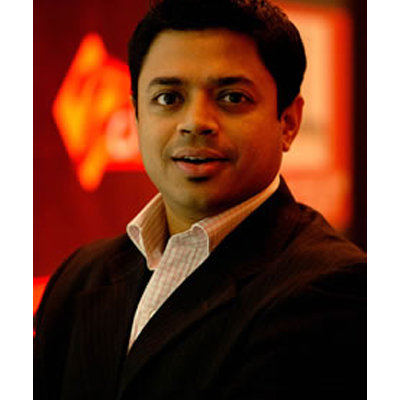
  • ‘Zee’s three English channels in the black in FY ’06’ : Neil Chakravarti – Zee Telefilms senior VP and business head of English channels

    ‘Zee’s three English channels in the black in FY ’06’ : Neil Chakravarti – Zee Telefilms senior VP and business head of English channels

    Zee Telefilms has been undertaking a restructuring for its English channels over the last six to seven months. One of the results of this is that Zee Café is doing local initiatives. Two such products have launched already — After Hours, which looks at the latest happenings in the Mumbai social circuit, and Simply Style that is about fashion. Now it is going to launch its first soap, Bombay Talking. Starting on 19 November, the show will look at the glamour of Bombay from the point of view of an aspiring actress who looks to make it big in the film world after having done some sizzling songs in films and music videos.

    But that’s not all with the English language channels from the Zee stable. Zee Studio, formerly known as Zee MGM, too is undergoing a programming change with the aim being to showcase blockbusters like the recently-aired The Aviator, which was based on the life and times of the flamboyant American entrepreneur Howard Hughes. If Zee Telefilms senior VP and business head of English channels (Zee Café, Zee Studio and Zee Trendz) Neil Chakravarti is to be believed, then in the near future the movie channel is all set to take on competition head on from HBO and Star Movies by airing one new movie daily. For movie acquisition, negotiations are said to be on with all major studios, including News Corp’s 20th Century Fox and Sony-controlled Columbia Tri-Star.

    Apart from the English channels on which he’s upbeat, Chakravarti is also responsible for the convergence-related activities of the Zee Network. He has over a decade of experience across investment banking, operations and strategy in the US, Canada, and Europe. He is a certified public accountant (CPA) and has worked as an investment banker for JPMorgan, covering the Technology, Media and Telecom (TMT) sectors as well as a financial controller for the Jindal group.

    In this interview with Indiantelevision.com’s Ashwin Pinto, Chakravarti speaks on the state of Zee’s English channels and some initiatives that he has up his sleeves.
    Excerpts:

    How do you see the English channels from the Zee stable vis-?-vis competition?
    Let me be forthright and say that though competition is tough, the three English channels from Zee are doing well. But that does not mean we will stop taking initiatives relating to them. We are in the process of unveiling quite a few of them even as we learn along the way. The idea is to try connecting with the target audience with the right products. I cannot speak for the past, but I can assure you that the future is bright.

    Let’s start with Zee Café. Why this localization drive on an English channel?
    We want to make Indian programming one of the hallmarks of Zee Cafe. We believe that there is a finite need in the market for original Indian programming in English. A lot of non-fiction has been attempted in the past. We are boldly going into the fiction space. The very fact that news channels are trying to get into lifestyle and social events and other forms of non-fiction content gives an indication that there is a mass of people who want to watch such programming.

    The one advantage that we enjoy is that unlike a Star World or an AXN, both are great channels, the think thank of Zee is in Mumbai. Everybody gets together and we brainstorm on what makes sense and what does not. We decide what challenges need to be taken. The aim is to have enough Indian content coming out of Zee Café that viewers can see on a regular basis.

    Made in India English programming has been tried out by TV channels to target Indian audiences unsuccessfully in the past. Why do you think Zee café will succeed this time round?
    I am sure English programming must have been experimented with by channels in the past, but I am not here to talk about the past. We think that the time has come for Indians audiences to enjoy locally made shows in English. But these shows have to be mounted well.
    Take Bombay Talking, for example. It is the first show of its kind on Indian television where viewers get up close and intimate with the sometimes unconventional high octane lifestyles led by Bombay’s swish set. There is tremendous curiosity about high society, the elite and their lives and it is this curiosity that the show is looking to tap into. Fresh direction, new faces and an intriguing and bold storyline will also capture the viewers’ imagination.
    Zee Café already has a loyal viewer base, thanks to its unique programming. We are currently revamping our content by introducing several and exciting shows. Now, for the first time ever, a channel has taken the initiative to bring an exclusive English drama with Indian content to connect with the Indian audiences, whose preferred language may be English but ethos is still uniquely Indian.
    I personally hope that it will drive viewership for the channel. I would hope that viewers come in at least once to watch the show and then decide whether or not it appeals to their sensibilities. I would also hope that the show launches a trend towards original Indian programming in English.

    What is the type of audience that Zee Café is trying to target through such programming?
    While the page three crowd and those interested in lifestyle happenings would watch the show, I think that the target audience goes beyond that. There are enough elements of the show that do not have page three dimensions factored in. There are elements that make the show worth watching from an emotional and from an audience connect standpoint.
    It will appeal to people in the Metro cities because it has an urban ethos. At the same time I am sure that even those in small towns would be interested. In short, we are looking for male and female skewed audiences in the age group of 18-45 years.
    However, I must reiterate that such programming cannot be shoddy productions. We have made sizeable investments in programmes like Bombay Talking, which we hope will have all of India talking about the channel. I will say that it takes a lot of investment for a niche English entertainment channel to try something like this.

    ‘We have made sizeable investments in programmes like Bombay Talking, which we hope will have all of India talking about the channel’

    Since you talked about investments in programming, would you tell us how much has Bombay Talking cost Zee Café?
    I am not at liberty to talk figures. But let me assure you, the costs are significant.

    How about a ball park figure to make us understand the type of effort that you guys are putting in?
    Well, I’d say for a show like Bombay Talking, the cost is almost two and a half times more than a prime time show on our flagship channel, Zee TV. That would give you a hint as to how serious we are with local English programming. And, for a channel like Zee Café such investments can be termed big.

    Are programmes like Bombay Talking being launched as the channel had got some feedback?
    Feedback is a continuous process. Still, at the moment, we are undertaking a brand exercise for Zee Café (being done by FCB Ulka) that will tell us more about the channel and the type of programming that should be put out on the channel. There are certain perceptions about the channel and we want to pinpoint the reasons for them. This feedback will also go a long way in helping us to position Zee Café in its genre.

    Isn’t the common perception about Zee Cafe that it’s a `repeat of itself’ channel?
    That perception does not exist anymore. Certainly, our localisation is a major step towards innovating. The reason that older shows like ER, The Sopranos and The West Wing go on is because they have loyal viewers. We do not want to disappoint them. I am aware about the importance of being true to the audience who has been loyal to the channel for the past three to four years. These shows are all multiple Emmy winning shows that are also
    headline shows in the US.

    However, we have also seen that to attract fresh viewers, we need new programming line-up that is relevant to them. And, that’s why you are seeing programmes like Bombay Talking. However, at the end of the day almost every TV channel, except probably the news channels, depend on repeats up to an extent.
    Though for the moment, we have three shows on the table covering fiction, fashion, lifestyle and social events, we will look at anything that we feel makes sense to the target audience. We have on our plate several ideas. We haven’t decided which is going to be next. It could well turn out to be a sitcom or even a chat show. We are very open to concepts at the moment. We
    are talking to global format owners in this regard.

    Another thing that I’d like to add is when we get India-made English programming on our channels, we are also targeting our international subscribers round the globe. Zee Network by far has the maximum number of subscribers overseas (over one million) and such English programming also caters to their needs.

    But Zee Café, for that matter the other English channels from Zee too, has failed to create a buzz about its programming innovations. How do you feel new viewers will come on board?
    I agree that we have to make sure that the audience comes and watches our channels. We have planned a series of marketing activities for Bombay Talking. We are coming out with hoardings in the metros as well as radio spots. There will also be print activity. Online we are creating a site www.bombaytalking.com. Besides giving information on the show and the star cast we are looking at doing several other unique things. One of them is creating a blog section where people can write on why Bombay should talk about them. The site will also give news on what is happening on the social circuit. There will also be a chat corner. Probably, the best three one liners can be taken to promote the show also.

    And, such activities are not restricted to Zee Café only. The other two English channels also have similar activities lined up for them that you’ll see over a period of time.

    What is the game plan for Zee Studio and is the parent company looking at getting a strategic investor for the movie channel as was the case earlier?
    The game plan for Zee Studio is simple: show blockbusters and se whether they drive in the audience or not. On a more serious note, I must say that we have decided to take the competition head on. Zee MGM mostly aired old movies, while with Zee Studio the aim is to have fresh line up of films. We are in active negotiations with several US and British studios. Apart from talking to independents studios, we are talking to Warner Brothers, Universal, CBS/Paramount, Grenada, Buena Vista, etc. An example of the type of fare that viewers can expect from Zee Studio is The Aviator — new, critically acclaimed and a box-office success. We expect to conclude major deals with studios for newer films between four to six weeks times.

    Is Zee also talking to News Corp (Star’s parent company)-owned 20th Century Fox and Sony’s Columbia Tri-Star too for acquiring movies?
    Why not? In the West it’s a tradition that companies from a big group carry out their own business deals. That holds goes for the Hollywood studios too. I cannot give details, but we are in talk with both the studios that you mentioned and whenever deals would be cut, they would be exclusive and country-specific.

    Why don’t you detail the plan to differentiate Zee Studio from the competition?
    Every Thursday, Saturday and in weekend afternoons Zee Studio has four new properties. The weekend afternoon showcase is called Absolute Studio. This is family showcase that has been created. Besides that we are coming out with 15 new films. Some of them have aired before but they are new to our channel. We are looking to create a library of independent films. These are films that are high in quality. They received critical acclaim though they may not have blown the box office away. But I’ll certainly not acquire a new movie for airing before six to nine months of the fare being aired on some other movie channel in India.

    If you see our new properties, then it almost works out several new films every week. Now this activity is going to be scaled up at least one and half times very soon, which would make it almost a new film a day. This, I’d say,is really taking on the competition with big properties. Something like Zee Cinema does with big properties and it’s a leader in its genre.

    What if such innovations don’t pay off for the English channels?
    At Zee, we are not looking at overnight returns on investments in the English channels. It’s a long haul game and we are willing to wait. I can say quite safely that the return on investments, as you said, will start showing on Zee’s balance sheet much later. We are ready to wait anywhere between 20-30 months time for experiments and innovations on English channels to succeed.

    What’s happening with Trendz?
    Lots. Apart from on-air programming, we are also looking at exploiting the Trendz brand for on-ground shows and events, which can also include an award show. By early next year, the Trendz-related events would crystallize. But we definitely want to further exploit the brand.

    Lastly, how’s the financial health of Zee’s English channels under you?
    We are a public company and the figures are there for you. All I can say is that the three English channels are in the black during this financial year.

    Photos by SANJAY SHARMA/Indiapix Network

  • Star Movies aims to ride high on Blockbuster power

    Star Movies aims to ride high on Blockbuster power

    MUMBAI: What better way to attract traffic to a movie channel than to get more movies on board! 
    Star Movie’s master plan for the year 2004 is to boggle the audience with more movies, and not just the commercial blockbusters but the offbeat cinema as well.

    The channel issued a release captioned ‘it’s raining blockbusters in 2004 on Star Movies’. Quoting the AC Neilson TAM data, the channel claims that it has been, in fact, the number one channel in the last two years, that is, 2002 and 2003.

    The channel has, in a bid to bolster its position, lined up of big blockbusters in the next few months. The titles that Star’s movie arm plans to air include Minority Report, Signs, Road to Perdition, Catch me if you can, Monster’s Ball, Ice Age, Original Sin, Tuxedo, Bulletproof Monk, The Pianist, and Pearl Harbour.

    Touted as India’s No 1 English movie channel, Star’s movie arm claims to be leading both primetime and all-day shares over HBO.

    According to the official release, Star Movies had nine out of 10 top movies in 2002, while it had seven out of top 10 in 2003. Quite contrary to the claims made by HBO South Asia country manager Shruti Bajpai that December saw 11 of the top 15 movies coming from the HBO stable, when it ran the Best of 2003 block

    Bajpai had, in a tete-e-tete with indiantelevision.com, offered that HBO’s share for the prime time 9-11 pm slot 42 per cent, while AXN, Zee MGM, Hallmark and Star Movies shared the rest.

    But the data provided by Star Movies seems to offer a different picture.

    Surprisingly, the rating list provided does not even figure HBO’s 2002 blockbuster Mission Impossible II in the top 10 movies, while the archival 1973 Bruce Lee movie Enter the dragon ranks third.

    For the year, 2004 Star Movies has already has a good start with it’s Made in India festival, a series of the best of Indian-English films. While HBO just aired its big ticket for the quarter Spiderman a fortnight ago.

    While both the channels have lined up a bunch of Oscar- winning and nominated movies, Star Movies does have an upper hand with the Oscar Fever culminating to the 76 Academy Awards, shown live and exclusive on 1 March, 6:30 am.

  • ZMZ to revamp in January

    ZMZ to revamp in January

    MUMBAI: Don’t peek now, its changing. Zee Network’s English movie arm, Zee Movie Zone (ZMZ), has earmarked January 2005 as the month to make a powerful come back.

    Barely a month after ending a four-year-old relationship with Metro-Goldwyn-Mayer in India and rechristening itself as ZMZ, the channel is mulling a complete change in its look and perception.

    While the channel has already embarked on a dipstick study to zero down on a suitable logo and content for the channel, a new team has been set up to spruce up the packaging and the graphics.

    Taking a leaf from rivals HBO and Star Movies, ZMZ plans to acquire exclusive titles for the channel and weave innovative promotional campaigns.

    Says Zee MGM business head Ajay Trigunayat, “Although you might be able to create better perception about your channel with help of promotional push, what actually helps you tide through is superiority of content.”

    “We are currently toying with the idea of introducing the mini-series on ZMZ. We are currently looking at Bourne Identity series. But we are awaiting market feedback. Additionally we will be airing some great titles like Laws of attraction and the latest Oscar winner Monster. In fact, we are looking at kick starting the change with two volumes of Kill Bill movies,” adds Trigunayat.

    The next move will be to create festivals and movie bands to encourage appointment viewing.

    “During the airing of the Bond movies festival, we saw that our viewer base jumped from 14 per cent to 19 per cent. We are hoping to garner a similar growth from the Indian Jones festival this month,” says Trigunayat.

    When quizzed about the functioning of the channel following the buy-out of MGM by a consortium led by Sony Corp, Trgunayat offers: “We had merely 6-7 titles from the MGM group. So in essence, parting ways with MGM didn’t really affect us. In fact, many of the production houses that were initially hesitant to give us the telecast rights for their title are quite forthcoming now.”

    The move now is acquire as many unique titles to give the channel a contemporary image. The channel is currently talking to several big production houses and an independent body of American producers. In addition to that, the channel is looking at cross over movies to provide a wide content mix.

  • Zee MGM to be re-christened Zee Movie Zone

    Zee MGM to be re-christened Zee Movie Zone

    MUMBAI: And that is the official line….

    Whether Zee group is contemplating the launch of a new English movie channel, following the buy-out of its current partner Metro-Goldwyn-Mayer by a group headed by Sony Corp, is not forthcoming. But the latest is that starting 1 October, Zee MGM is being renamed as Zee Movie Zone (ZMZ). The network has also unveiled a sparkling new golden logo.

    When contacted, a company spokesperson refused comment on the current status of Zee and MGM’s content sourcing contract in India. What was offered instead is that the channel – touted as a complete Hollywood movie channel – will now be making extra efforts to air new titles, which had not been the case earlier. The perception Zee-MGM has in the market is that of a movie channel that is not strong on big blockbusters, though it does air some interesting movies.

    In addition to sporting new titles, ZMZ will have weekly bands like Family Zone, Comedy Zone, Action Zone, Oscar Zone etc. First up is a ‘James Bond’ series that will air Sunday nights at 8 pm.

    Earlier, the business head for Zee’s English channels Ajay Trigunayat had been quoted in media reports as saying that the group is contemplating starting its own English movie channel, either on its own or in partnership with some other media company.

    “Even as we had the partnership with MGM, many of the movies on the channel were being sourced from other players like Paramount and Miramax. Thus we can go solo, taking the content from various partners,” he was quoted as saying in the report.

  • Ajay Trigunayat made business head of Zee’s English channels

    Ajay Trigunayat made business head of Zee’s English channels

    MUMBAI: Ajay Trigunayat, presently Zee TV vice-president corporate affairs, has been appointed as business head of the network’s English channels Zee English, Zee MGM, Trendz and MX.

    Confirming his appointment, Trigunayat told indiantelevision.com that he was currently in the process of being briefed about his new responsibilities.

    For Trigunayat, this is a return to old hunting grounds in a way, because earlier he was the business head of Zee MGM and Zee English. The difference of course is that he has two more channels to look after now — MX and Trendz TV.

    Trigunayat joined Zee TV in March 2002 as VP marketing. Following Zee’s restructuring as various strategic business units (SBU), he was designated as business head of Zee MGM and Zee English in September 2002. Then in March 2003 he was named as VP corporate affiars for the entire network.

  • ‘CAS may have been put off now, but addressability is something that is definitely coming’ : Abhijit Saxena – Zee TV business head

    ‘CAS may have been put off now, but addressability is something that is definitely coming’ : Abhijit Saxena – Zee TV business head

    Abhijit Saxena began his career with the State Trading Corporation of India, away from the media and away from the private sector. His first foray into the media came with a stint at the Times of India. He then moved to Zee in 1996. During his eight-and-half-year-long stay at Zee, Saxena has managed portfolios that ranged from marketing research to advertising sales to subscription sales to programming and to managing channels.

    For Saxena, it has been a steady climb up the corporate ladder at Zee. Saxena had been handling international business (Asia Pacific) and syndication of programming, when he was asked to head the business operations of Zee English, Zee MGM, Trendz, Smile TV and MX Channel in 2003. Now the biggest of them all has landed in his lap – the position of Zee TV business head.


    This interview by Indiantelevision.com’s Bijoy AK was conducted just before he took charge of Zee TV.

    Excerpts:

    There has been a surge in niche channels in India. What according to you is the potential of the niche channel market? Do the RoIs justify the investments, especially since addressability as in CAS is still a pipedream?
    As we see the Indian market is maturing – both in terms of content as well as viewer choices. The more you offer in terms of variety of content, the more he keeps demanding. Obviously, there is a limit to which a general entertainment channel can really provide in terms of the content. There are a lot of niche channels coming in to cater to the requirements of every niche audience. Ultimately, you will see the market getting divided into people who love watching specific programmes on specific channels.

    As far as the RoI is concerned, yes and at the moment you would find it questionable. But as and when the market matures, it has to change. Though CAS may have been put off for now, addressability is something that is definitely coming. Obviously, with addressability comes people’s choice that actually drives the niche channels. Yes, it may be very difficult for niche channels to survive for now but in the long run, as I see it, most of these niche channels will pick up. Because, apart from advertising and subscription revenues, there would be many other revenue sources emerging for niche channels. Ultimately all these will drive the RoI of niche channels.

    Which of Zee channels is available abroad and how are they positioned?
    The availability of Zee channels abroad depends on the markets. US has Zee TV, Zee Cinema, UK has Zee TV, Zee Cinema, Zee Music, Alpha Punjabi, Africa has Zee TV and the Middle East markets have Zee TV, Zee Cinema, Zee News, Zee Music, Alpha Gujarati. Different markets have different sets of channels depending on the tariffs and the demand for the channel.

    Which is the best oversees market in terms of revenues and what is the revenue model for each market?
    I would say that US and UK are the big markets. The revenue model as of now is primarily subscriptions. We have started getting very significant advertising revenues as well. And as we see it, the ad revenue alone should be able to not only sustain those ventures, but should give us a reasonable bottom line. Then the subscription revenues would purely add to the bottom line.

    Zee Network launched a dedicated beam of Zee TV for Singapore on 1 June. You have been negotiating with the local cable service provider in Singapore to carry more Zee family channels, including Zee Cinema. What is the latest on this?
    Singapore is a very very controlled market. Introducing any new channel becomes very difficult, because, there, StarHub has the monopoly and very limited capacity, and also given the fact that in spite of Indian audiences being quite significant, StarHub are under certain restrictions in terms of providing number of Indian channels. Hence, at the moment it is only Zee TV and we will keep pushing Zee Cinema and as and when it is possible we will put the channel on. Negotiations are still going on.

    How is Zee doing in the UK, US, Middle East and the Far East?
    Let me just say this that as far as international markets in general are concerned, Zee was the first mover in all these markets. It is not only because of the first mover advantage but because of us being fairly proactive that Zee is still the number one and it maintains its position with a good margin as well.

    Speaking of free channels, FTA channel Sahara is popular in Hong Kong and Singapore purely because it is free. What is your take on this?
    Sahara may be an FTA channel, but as I said earlier, Singapore is a highly controlled market and in those markets it is not possible for people to simply put dishes and start accessing channels. There you can provide channels only through StarHub. In fact, there would be very few households who would have put up their own dishes and must be watching these channels. Hence I would really be surprised if Sahara was very popular in Singapore or Hong Kong – both in terms of market reality and in terms of technical feasibility.

    ‘I am quite confident of Smile TV doing phenomenally well’

    How much does your international business contribute to the overall revenue of the network?
    Approximately 25 to 30 per cent.

    How is Smile TV doing?
    As far as Smile is concerned, the intention is to introduce original programming. We will be simultaneously introducing the channel on cable as well, so the moment Smile goes on cable, people can see a lot of original programming. We really see that quite a few people have actually used the Dish TV boxes to access the channel on the cable network and we have got a fantastic response on that, despite the fact that we haven’t done any marketing.

    Here, it is garnering GRPs which, from a general entertainment channel’s point of view, may not be very significant, but it has started featuring on the rating charts. That is the case with library programmes – without any marketing, without any distribution. This way you can yourself imagine what the situation would be once we start our marketing plan, once we go into distribution seriously and of course, when we introduce original programmes as well. So I am quite confident of Smile doing phenomenally well.

    What is the reach of the channel in terms of subscriptions?
    We haven’t started distributing on cable as yet. It is purely on DTH. So, at the moment it could be slightly premature to talk about the reach of Smile TV.

    Indians tend to perceive comedy in different ways depending on the region. How well is Smile equipped to meet this challenge?
    We understand that different regions have different viewpoints on fun and entertainment. We are taking care of that. Though it is a Hindi language channel, what we are working on is lots of concepts that take regional elements and regional flavour into those programming. Also, we intend to target different age groups with different kinds of programming.

    Can the blame for the poor level of comedy thus far also be placed on the doorstep of the channels’ programming departments who have displayed a lethargic attitude towards this genre?
    I really won’t say that there has been a very poor attempt at comedy or whatever but till the time you really give opportunity to individuals to really come up with ideas, produce stuff, how can you make a judgment on whether there is enough capability or not? Now when I launch this and give the opportunity to many producers, which I am doing currently, only then can someone really come up with new ideas and concepts. If I keep telling them that I want a sitcom after a sitcom, obviously it is only sitcom after sitcom which will actually come. And obviously, how many such sitcoms will really work?

    As we have been encouraging both established as well as new producers to come up with new concepts, we have found that there has been no dearth of ideas, talent or capable people to execute those ideas. I am quite confident that this as a genre can really come up.

    The saas-bahu element was responsible for one of the most successful comedies on Indian television Tu Tu Main Main. Do we need to look beyond that and innovate more?
    As I said earlier, we will be experimenting with and exploring many new concepts for the comedy genre. I am quite sure there would be certain concepts which would do phenomenally well, and there might be certain concepts which are obviously not as great as what we had expected them to be.

    Do you think that a localised version of any of the Western comedies like HBO’s Sex And the City could be done for India or are we far too conservative for tongue ‘n’ cheek humour?
    One could look at adaptations as well. Today we have adapted quite a few game shows from the international markets. Only one or two game show adaptations have worked. So, definitely I won’t be saying that all adaptations would work. But yes, one can keep one’s ears and eyes open to see how well they work in the Indian markets. The Indian market is completely different from the international one.

    In terms of revenue, how was last year for Zee MGM and Zee English and have any targets been set for this year for the two channels?
    In terms of revenue, I am not saying that I am fantastically excited about what they earned but what Zee English and Zee MGM really achieved last year was that they really came out as strong contenders in the movie and English general entertainment channels.

    The good work we did last year with these channels has posed fantastic revenue opportunities in this year. So it might possibly be wrong to really benchmark it to last year. This year, we have pumped in lot of money to acquire many more films and much more programming as you must have also seen in the last few months.

    A lot of programming has been changed and old programmes which have been repeated have been removed while introducing at the same time new programmes. The target this year is far higher as compared to last year.

    Is the look, logo, channel ID of Zee English and Zee MGM going to change in any manner?
    It is a continuous development process. I really would not say that it is not going to change. It depends on the market feedback. We will take a call on that some time in the next couple of months.

    Could you dwell on how Zee MGM is being revamped?
    We are continuously introducing new movies and that is what we intend to do. There are quite a few big title movies which are saleable even in the market.

    So we have a three-pronged strategy: 1) We will obviously keep showcasing new blockbusters on the channel. 2) We will showcase big movies of the past as well, movies which have very high repeat value. 3) We will be doing lot of festivals around specific topics.

    As far as the image is concerned, like I mentioned earlier, we will decide on it in the next couple of months.

    Have any marketing campaigns been planned for these two channels? Why are you so low key on this front?
    They are done property-specific. So as and when there are big properties, we define the marketing and promotion plan accordingly.
    How are the ratings and share of Zee English and Zee MGM compared to the competition?
    At the moment, both the channels obviously reach out to a huge mass of people. But what we are very confident is that the share of viewership which we have and the loyalty which we have with a certain set of viewers will be maintained very strongly. There are people who are die-hard loyalists of specific properties of Zee English. There are die-hard loyalists of movies on Zee MGM. Apart from the big commercial movies, the best of the movies actually come on Zee MGM. So you will find a very loyal viewership. We will be expanding the viewer base in any case.

    Zee MGM has decided to switch from old films to new films. Earlier the channel appealed to people who liked older films like Westerns. What makes you go for this new line up? Does it mean that Zee MGM hasn’t been doing well because it aired old films?
    It is the strength which we built over time as far as these channels are concerned and we are not giving up that strength. We maintain that strength in any case. But apart from that, the viewer base which is not coming onto the channel, that segment is what we will target with other programming and movies. It is all about retention and growth.

    It was reported that Zee English has plans to change its programming schedule to include a fair bit of visual and variety shows. Could you please elaborate on this? Which are the new shows planned for Zee English?
    Since we are targeting a larger audience base while retaining the loyal viewership that we have, so programmes like Friends, Will and Grace comedies that people really like to watch will be retained in a certain time band, may be for the 7-9 time band.

    Then we intend targeting the larger audience who like watching international programming, but maybe is unable to understand the dialogues if it is a very dialogue-driven programming. Hence we intend to introduce a lot of visual-based programmes. There will be game shows, reality shows, action, adventure and many more. We will be disclosing the names once contracts are signed.

    Could you give me an overview of the MX channel? What kind of movies? Who is watching? Are you repeating what is shown on MGM? What are the future plans for pushing the channel?
    The MX channel is actually a channel for all international action films. There is this set of audiences who are interested in action. Hence we have launched the MX channel and that is its basic profile. There would be some films which are repeated from MGM, but the channel’s profile is completely action. MX is on Dish TV and is catering to the niche requirement which is action – old and new.

    How do you plan to overcome the huge disparity in viewership numbers between Hindi and English programming?
    There is a language barrier, a profile barrier and a perception barrier. Taking all that into consideration, one would really expect and it is not absolutely unnatural that the Hindi channels get far bigger viewership as compared to English channels.

    But if I look at English audience in isolation, there is a huge population in itself. I mean to say that the smaller size of English audience doesn’t mean that I cannot have programming specifically for that language.

    In the past few months has there been a shift in the programming approach of Trendz?
    Trendz is about trends in life. We have expanded the gamut on the channel where we now not only focus on fashion but on trends in other lifestyle products as well. There is so much of style in India and, therefore, we are introducing a lot of Indian programmes. We will have a good mix of international fashion content, good mix of Indian fashion content and we will not only concentrate on ramp shows but we will do a lot of style-based shows.

    How did the market respond to this shift in programming?
    The excitement Diabolical created in the market has lured the advertisers to the channel now. Earlier we used to go to the advertisers for ad sales. Now, after seeing shows like Diabolical, the advertisers are taking the initiative to get associated with us. In fact, Trendz is the first Indian fashion and lifestyle channel which has got Indian advertising on the channel.

    By the end of the year how many localised shows will Trends have? Which are the shows coming up?
    The channel will be launching four to five shows, based on the local content, by the end of this year. The first one from this lineup will be launched within a couple of months.

    Which are the production houses that you are talking with for producing original content?
    There are quite a few. It is not necessary that I will always go to production houses. We are talking to independent producers as well.

    Could you talk about the new international shows that Trendz has recently launched?
    We keep doing a lot of ramp shows internationally; in fact, ramp shows are our primary focus.

    What are the major events here and abroad that Trendz is looking at being involved with this year?
    We will be doing a lot of other events as well. We are working on certain concepts. We will be associated with lot of events as we did with Lakme India Fashion Week (LIFW) this year. We did a very special feature on LIFW. We gave a completely different perspective of LIFW. Hence, whenever we do an event or cover an event, we give a different perspective of the whole thing.

  • MGM reports decline in second quarter revenues

    MUMBAI: Media conglomerate MGM has announced that second quarter revenues for the period ending 30 June 2004 totalled $406.1 million. This represents a decline from the $487.7-million figure in the corresponding quarter last year

    In India, MGM has joint venture with Zee for the English movie channel Zee MGM. On a more positive note, the company reported a reduced net loss of $19.7 million compared to last year’s figure of $133.6 million.

    MGM chairman and CEO Alex Yemenidjian said,”Our ability to consistently generate cash flow afforded us the opportunity to reward our shareholders, yet again, with a tax-free, extraordinary dividend of $8.00 per share during the second quarter.”

    Operating highlights:

    – MGM Networks launched a branded channel in Spain in an alliance with Media Park, one of Spain’s leading cable television distributors.

    – In its Pan-Asian alliance with CNBC, MGM Networks expanded to Singapore and Macau.

    – MGM’s movie Walking Tall and United Artists’ Saved which were released in the second quarter will be profitable.

    – Worldwide DVD unit shipments in the quarter increased 11 per cent to approximately 34 million.

    – On the television front, Stargate SG-1 began its eighth season with the programme’s highest ratings ever on the Sci-Fi Channel in the US. The premiere episode was the highest-rated series telecast in the history of the Sci-Fi Channel

  • Zee Turner says mera gaon, mera market share

    NEW DELHI: With a view to consolidate its market share in rural India, and provide family entertainment to TV households, Zee Turner, the distribution arm of Zee Telefilms and Turner International India Pvt. Ltd., has launched special initiatives targeting the rural markets across India, including increasing the dealer network to over 400.

    These initiatives, targeted at reaching out to viewers in remote areas and small towns and cities across the country, will offer cable operators the option of providing viewers with popular channels at a very competitive pricing.

    Commenting on the company’s latest initiative, an official release quotes Zee Turner COO Siddharth Jain as saying, “Of the 43 million cable and satellite universe in India, 15 million lie in the rural sector. This offers a huge potential and an opportunity to tap the rural market. Our rural drive will not only provide better options of entertainment to the viewers and better business opportunities to the cable operators, but also help us in consolidating our market share in this largely untapped market.”

    Road shows are also being planned for the rural markets, wherein the channels will be taken to small villages with the objective of reaching out to people and giving them a first hand viewing experience.

    “We endeavor to take our content offering to the grassroots level and be available in every C&S household, whether in urban, semi-urban or rural India. To this effect, we have also expanded our dealer network to over 400,” added Jain.

    The new packages have been created keeping in mind the economic profile, demographics and viewers’ choice. The operator can therefore choose any channel from the Zee basket (Zee TV, Zee MGM, Zee English, Zee Cinema, Zee Music, Alpha channels, etc), the release added.

    Andhra Pradesh (AP) has been given a special focus in this initiative. According to Jain, “Andhra Pradesh, with a total of 7.3 million C&S households, is the single largest contributor to the Indian C&S households figure. While the urban contribution to such households is 46 per cent, rural contributes 56 per cent, which clearly indicates a huge potential in the AP rural market.”

    As a part of the AP rural initiative, Pogo, the kids channel after Cartoon Network, has been introduced with a two-hour Telugu feed to it. This makes it very lucrative for the cable operator both in urban and rural markets because of its regional content. Along with this channel, the cable operator can choose freely from any two channels from the Zee basket (Zee MGM, Zee English, Zee Cinema, etc).

    Tamil is another option that the channel is exploring. As a kick-off to Pogo’s localization strategy, viewers will be introduced to the new faces of Pogo on a new, hip zone, called Prime Pogo, from 6 August.

    Prime Pogo will engage viewers with the channel through online contests, phone-in competitions, viewer letters, celebrity guests and special reports on amazing kids from across India. It will also feature a selection of the best shows ranging from Round the Twist and the Sleepover Club to Mr. Bean and Walking With Beasts.

  • Sony Corp seeks two-week extension on MGM deal

    Sony Corp seeks two-week extension on MGM deal

    MUMBAI: US Electronics goods manufacturer giant Sony Corporation has asked for a two-week extension on their exclusive acquisition talks with Metro-Goldwyn-Mayer Inc. (MGM).

    The parties have been negotiating for around three weeks on a deal, on Sony Corp’s film studio acquiring MGM, valued at $5 billion. The talks were set to expire on Thursday 27 May.

    Sony’s ambitious bid is backed by investment companies including Texas Pacific Group and Providence Equity Partners. The joint bid is to acquire the famed studio with its 4,000-title strong film library. Time Warner Inc. and NBC Universal have also been ogling MGM though they are yet to come out in the open to confirm this. Sony’s bid values MGM at just over $12 per share. But media reports have quoted industry sources as saying the quoted sum was not a major roadblock.

    As analysed by Indiantelevision.com earlier, if Sony succeeds acquiring MGM, that would put ZEE TV and their collaboration with MGM, the ZEE MGM channel, in a tough spot. What would complicate the matter for ZEE is, Sony Corp’s Indian network Sony Entertainment Television is their competitor in India.

  • Zee MGM to reinvent itself with more contemporary fare

    Zee MGM to reinvent itself with more contemporary fare

    MUMBAI: Star Movies and HBO could finally see some serious competition from the lion. Zee MGM is in the midst of a revamp in order to appeal to a younger audience.

    The channel will switch from old films to new films which have been released after 1998. Earlier the channel appealed to people who liked older films like westerns. Zee MGM’s business head Abhijit Saxena said that with the new line up he was confident that the channel would be taken more seriously by the competition.

    As was the case with Zee English, Zee MGM too will see its action quotient. Speaking on this Zee MGM’s programming head Lena Joshi said that the channel would be young, fast paced and with a lot of known stars. Therefore the channel will focus a lot less on the older titles that it is known for.

    Each month it will release around seven titles out of which one would be major. This film would air in the middle of the month from June. It will air Waking Up In Reno with Patrick Swayze and Oscar winner Charlize Theron. Earlier it used to air at the end of the month. One of the major titles that Zee MGM has is Quentin Tarantino’s Kill Bill Volumes one and two. The first volume will air sometime in August. Then there’s The Hours on 30 May, which gave Nicole Kidman an Oscar. Kidman plays author Virginia Woolf who battles depression while writing Mrs Dalloway. That book will later on affect the life of a housewife played by Julianne Moore. Meryl Streep is in the third segment, which is a modern day version of Mrs Dalloway. Suicide, thoughts of death, repressed sexuality all make for portent cinema.

    Joshi said that the channels fare looking ahead would be a mixed bag of Oscar winners and action films with known stars. Another movie lined up is Frida with Oscar nominee Salma Hayek. There is a lot of buzz around these titles. “As far as MGM is concerned the channel will be acquiring a lot of Bond titles. The MGM titles would be divided in to classic and new
    releases. The ratio of MGM films to the other studios will be 30:70. We are in the process of acquiring a lot of titles from Sony Pictures Entertainment.

    “We are working out a big deal with them. However the films won’t be premieres as most of them have an output deal with HBO. Miramax and Paramount are the other studios that we have deals with.”

    The acquisition cost for Zee MGM will go up by 80-90 per cent by the end of the year. The channel is also going in for a new look, which will happen over three to four months. There will be more festivals. Family Festival is happening this month and next month there’s the Mobster festival with movies like Gangs of New York.

    Then you will films around a genre like war or films dealing with America or films with the same star. “We will have a slot for the older titles like Old is Gold. We will show classics. For a western festival you will have The Good The Bad And the Ugly. Films like this will never go out of fashion.” Saxena added that there were around 50 advertisers for both the
    channels.

    As far as dubbing is concerned the channel is looking into the possibility of dubbing some of the action titles. As far as the uncensored titles in the night were concerned Joshi said that the activity had stopped after the broadcaster received a letter from the I&B Ministry. She conceeded that each day requests would be coming in on email. English channels see growth post 10:30 pm as earlier people watch soaps.

    Joshi added that the reason for the lull in promotional activity on Zee English and Zee MGM was due to the internal managerial shifts that had been taking place. Now though there will be more activity. Zee MGM will take the theatrical route to showcase its wares. In fact Zee TV’s ad for The Big Break can already be seen. The multiplexes like Fun Republic
    will be used extensively.

    Online, the channel is looking to get more interactive with contests. Previously these were done with contests2win.com and Indiatimes.com. For SMS based contests there is the network number.