Tag: Zee MELT

  • BARC India on role of big data in ad effectiveness: Zee MELT 2016

    BARC India on role of big data in ad effectiveness: Zee MELT 2016

    MUMBAI: BARC India’s Think session on ‘Role of Big Data in Driving Ad Effectiveness’, at the just concluded Zee MELT, delved into the need for Big Data and its use in ad campaigns. The session featured Romil Ramgarhia, Chief Business Officer, BARC India, Bjoern Kroog, Global Head POS Analytics and Integrated Market Intelligence, GfK and Sukanyya Misra, Senior Vice President, Mastercard Advisors Shared Services, India.The session was moderated by Senior Journalist Gurbir Singh.

    Romil opened the session by centering the conversation on the aim of ad campaigns: which is to increase sales, uplift brand KPI, stay ahead of competition and help sales forecasting.

    Romil underlined the need to drive ad effectiveness, especially in the highly fragmented Indian market, with 8000+ advertisers, 12000+ brands, and 90000+ new campaigns every year. He said that a combination of data engines, machine learning algorithms and advanced analytics are key to ensuring ad effectiveness, which would in turn lead to incremental uplift in sales for each rupee spent, understanding of cross channel synergies, less uncertainty with effective prediction, optimum utilisation of media budgets, real time analysis and sharper targeting.

    Sukanyya, spoke about transforming big data into actionable insights. She said, “We should focus on not just big data but the right data.” According to her Big data can yield benefits with right testing and learning.Speaking from the perspective of MasterCard, she elaborated on how purchase patterns can help infer motivations, priorities and preferences of consumers.

    Bjoern took the position that it is smart data and not just big data that drives ad effectiveness. He said that big data can be combined with reference data to yield smart data. He offered insights into how big data can be transformed into smart data. While globally Digital has already taken over print and is forecasted to become more important in TV in 2018 in terms of spending, in India he showed that based on surveys the majority of respondents watch TV and read newspapers on a daily basis. Therefore, instead of taking an either-or position, smart integration of big data and traditional approaches will guarantee valid and deep insights.

  • Introducing digital measurement is more a political hurdle, than technical

    Introducing digital measurement is more a political hurdle, than technical

    NEW DELHI: Who is afraid of the yardstick, and an authentic one? The digital media has been a victim of many a misnomers. “Easily measurable” media, for example. The assumption stems from advertisers taking their campaigns’ ‘views’ or social media numbers at face value, and not questioning agencies on the effectiveness of paid or inorganic reach gained through proxies or hoax accounts.

    This fundamental lack of understanding or ignorance of duping digital figures comes in the way of measuring effective digital media consumption — an issue that the four-person panel gathered at Broadcast Audience Research Council (BARC) India’s session at Zee MELT were keen to address.

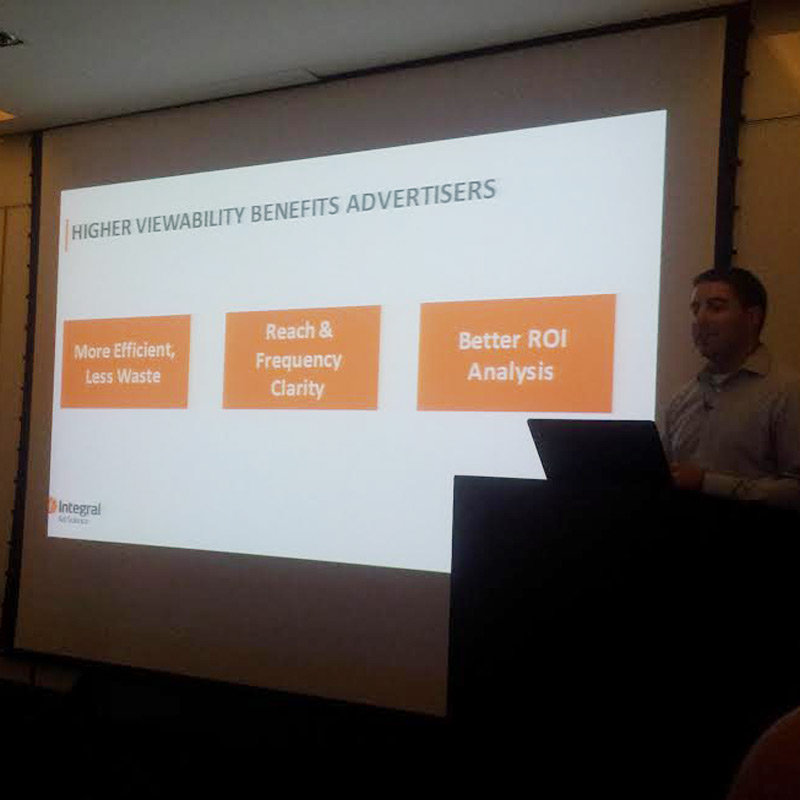
    The panelists were — Integral Ad Science product management VP Brian Murphy, comScore strategic partnerships SVP Paul Goode, Moat APAC director Guy Barbier, and BARC India CEO Partho Dasgupta.

    To put the panel discussion in context, BARC India is on an ambitious mission to roll out digital ratings in the country based on viewability in a few months. The aim is to measure unduplicated audiences across all devices and platforms together through a neutral third-party monitor. If that were achieved, BARC India will become the first rating agency to provide a TV+ digital viewership measurement service across the globe.

    Introducing a standard digital measurability in India was a high mountain hall, thankfully, the country could fast-forward the progress by learning from other mature markets such as the US, and Europe, Murphy suggested.

    “The first lesson learned is to accept that third-party javascript is not commonplace with publishers. There are both, policy and technological limitations,” he said. Secondly, Murphy observed, the stakeholders needed to be open about what could and could not be measured.

    The measurability standards need to be based on a realistic picture, after all.

    The panel also raised concerns that are perhaps unique to emerging markets such as India. From an advertiser’s perspective, a lot of the current digital traffic can be dismissed as invalid (due to duplication or its irrelevance to the brand). Given the fact that India is still at a nascent stage when it comes to digital marketing, will it deter advertisers from investing into the medium? Or else, advertisers can continue to rely on their existing media options that have been fruitful, and avoid the digital medium.

    While India has a relatively cleaner slate, it has already set out on the digital transformation path, however smaller it may be. Thus, there was no turning back for brands, Murphy noted. The real challenge would be to bring brands and publishers to come to terms if the standard measurement data, when rolled out, was below their expectations. “Coming to terms with the fact that you weren’t really getting the numbers you thought you were, is the real challenge,” Goode pointed out.

    The uneven brands-platforms power ratio was discussed as well, keeping in mind the growing digital ecosystem in India. “Those with the advertisement dollars will always have an upper hand. Its true for any market,” said Barbier, adding a global perspective. Traditional TV advertisers in India too are known to flex their muscle when it comes to getting their money’s worth. Advertisers buying spots during cricket matches sometimes refuse to pay the full worth of a spot if a part of the advertisement was cut out due to live coverage limitations, the panel cited.

    When it comes to programmatic media management, the assumption that the digital inventory is endless has been a hindrance to bringing in the advertisement dollars for premium inventory.

    Advertisement blocking was the elephant in the room that the panel dared to address. The panel established the fact that irresponsibly placing advertisement that causes the viewer inconvenience doesn’t serve anyone, be it the publisher or the advertiser. A huge advertisement that dominates the entire screen may not be able to provide an advertiser the desired viewability. On the contrary, it may put off the viewer from the publisher’s content. Success metrics can be driven by content and context, instead of blindly maximizing visibility of a campaign.

    Queuing back to introduction of digital measurement in a new market, the moderator raises the question: on which factors does the success of a digital measurement system depend? Threatened by the disruption that digital measurement may bring into their businesses, several publishers are bound to resist the introduction of a new digital currency, afraid that it will devalue their inventories.

    Broadcasters too are concerned that their metrics may not be able to keep up with that of digital, if both the mediums were to be judged on the basis of viewability numbers.

    Therefore, even after establishing the technological backbone for the measurement system, it cannot take off. This was seen in the case of Spain. Thus, establishing a digital measurement standard is a bigger political challenge than technological.

    When it comes to India, Dasgupta is optimistic that the level of resistance will not hinder the progress of the initiative in the market. “When it comes to videos, our confidence in the system comes from the number of major broadcasting partners that have signed up for this system. Moreover, the biggest push is coming from big brands and the Levers of the world who want an apple to apple comparison between television and digital videos,” Dasgupta concluded on an optimistic note.

  • Introducing digital measurement is more a political hurdle, than technical

    Introducing digital measurement is more a political hurdle, than technical

    NEW DELHI: Who is afraid of the yardstick, and an authentic one? The digital media has been a victim of many a misnomers. “Easily measurable” media, for example. The assumption stems from advertisers taking their campaigns’ ‘views’ or social media numbers at face value, and not questioning agencies on the effectiveness of paid or inorganic reach gained through proxies or hoax accounts.

    This fundamental lack of understanding or ignorance of duping digital figures comes in the way of measuring effective digital media consumption — an issue that the four-person panel gathered at Broadcast Audience Research Council (BARC) India’s session at Zee MELT were keen to address.

    The panelists were — Integral Ad Science product management VP Brian Murphy, comScore strategic partnerships SVP Paul Goode, Moat APAC director Guy Barbier, and BARC India CEO Partho Dasgupta.

    To put the panel discussion in context, BARC India is on an ambitious mission to roll out digital ratings in the country based on viewability in a few months. The aim is to measure unduplicated audiences across all devices and platforms together through a neutral third-party monitor. If that were achieved, BARC India will become the first rating agency to provide a TV+ digital viewership measurement service across the globe.

    Introducing a standard digital measurability in India was a high mountain hall, thankfully, the country could fast-forward the progress by learning from other mature markets such as the US, and Europe, Murphy suggested.

    “The first lesson learned is to accept that third-party javascript is not commonplace with publishers. There are both, policy and technological limitations,” he said. Secondly, Murphy observed, the stakeholders needed to be open about what could and could not be measured.

    The measurability standards need to be based on a realistic picture, after all.

    The panel also raised concerns that are perhaps unique to emerging markets such as India. From an advertiser’s perspective, a lot of the current digital traffic can be dismissed as invalid (due to duplication or its irrelevance to the brand). Given the fact that India is still at a nascent stage when it comes to digital marketing, will it deter advertisers from investing into the medium? Or else, advertisers can continue to rely on their existing media options that have been fruitful, and avoid the digital medium.

    While India has a relatively cleaner slate, it has already set out on the digital transformation path, however smaller it may be. Thus, there was no turning back for brands, Murphy noted. The real challenge would be to bring brands and publishers to come to terms if the standard measurement data, when rolled out, was below their expectations. “Coming to terms with the fact that you weren’t really getting the numbers you thought you were, is the real challenge,” Goode pointed out.

    The uneven brands-platforms power ratio was discussed as well, keeping in mind the growing digital ecosystem in India. “Those with the advertisement dollars will always have an upper hand. Its true for any market,” said Barbier, adding a global perspective. Traditional TV advertisers in India too are known to flex their muscle when it comes to getting their money’s worth. Advertisers buying spots during cricket matches sometimes refuse to pay the full worth of a spot if a part of the advertisement was cut out due to live coverage limitations, the panel cited.

    When it comes to programmatic media management, the assumption that the digital inventory is endless has been a hindrance to bringing in the advertisement dollars for premium inventory.

    Advertisement blocking was the elephant in the room that the panel dared to address. The panel established the fact that irresponsibly placing advertisement that causes the viewer inconvenience doesn’t serve anyone, be it the publisher or the advertiser. A huge advertisement that dominates the entire screen may not be able to provide an advertiser the desired viewability. On the contrary, it may put off the viewer from the publisher’s content. Success metrics can be driven by content and context, instead of blindly maximizing visibility of a campaign.

    Queuing back to introduction of digital measurement in a new market, the moderator raises the question: on which factors does the success of a digital measurement system depend? Threatened by the disruption that digital measurement may bring into their businesses, several publishers are bound to resist the introduction of a new digital currency, afraid that it will devalue their inventories.

    Broadcasters too are concerned that their metrics may not be able to keep up with that of digital, if both the mediums were to be judged on the basis of viewability numbers.

    Therefore, even after establishing the technological backbone for the measurement system, it cannot take off. This was seen in the case of Spain. Thus, establishing a digital measurement standard is a bigger political challenge than technological.

    When it comes to India, Dasgupta is optimistic that the level of resistance will not hinder the progress of the initiative in the market. “When it comes to videos, our confidence in the system comes from the number of major broadcasting partners that have signed up for this system. Moreover, the biggest push is coming from big brands and the Levers of the world who want an apple to apple comparison between television and digital videos,” Dasgupta concluded on an optimistic note.
  • Six principles vital for acceptance of branded content: Vanessa Clifford

    Six principles vital for acceptance of branded content: Vanessa Clifford

    NEW DELHI: It’s the business of consumer connect, realistically. Noting that there was a dearth of good branded content and the British media invested 350,000 pounds sterling towards that every year, Newsworks deputy chief executive Vanessa Clifford said the aim should be to provide value to the consumer.

    Talking about opportunities for branded content at the session “All News is Good News” at ZEE Melt here, she listed six guiding principles for branded content.

    She said that the first was clearly the audience interest. One needed to attract the right kind of audience for a particular brand that one planned to sell through a specific advertisement, she said.

    There was need to plan the communication idea keeping the target audience and the platform – online or print – in mind. Secondly, the print medium was important as its expertise and heritage were built on reputation, she said.

    Trust and transparency was the third on Vanessa’s list of principles. She demonstrated examples of how a reader and viewer’s trust had been won in different advertisement campaigns.

    It was necessary for the advertiser and the media, she said, to set the right goals so that the objective of the campaign was fulfilled.

    Collaboration between the advertiser and the medium was of prime significance so that the message was conveyed perfectly well, Vanessa felt.

    Finally, Vanessa said, there was need to ‘create stories’ that kept the interest of the audience alive.

    Earlier, speaking in the same session on “The Role of Print”, Vanessa said that her experience in the United Kingdom had shown that the impact of the print medium was higher in the long-term and national newspapers drove news brands.

    She quoted Arthur Miller to say that a good newspaper was like a nation talking to itself.

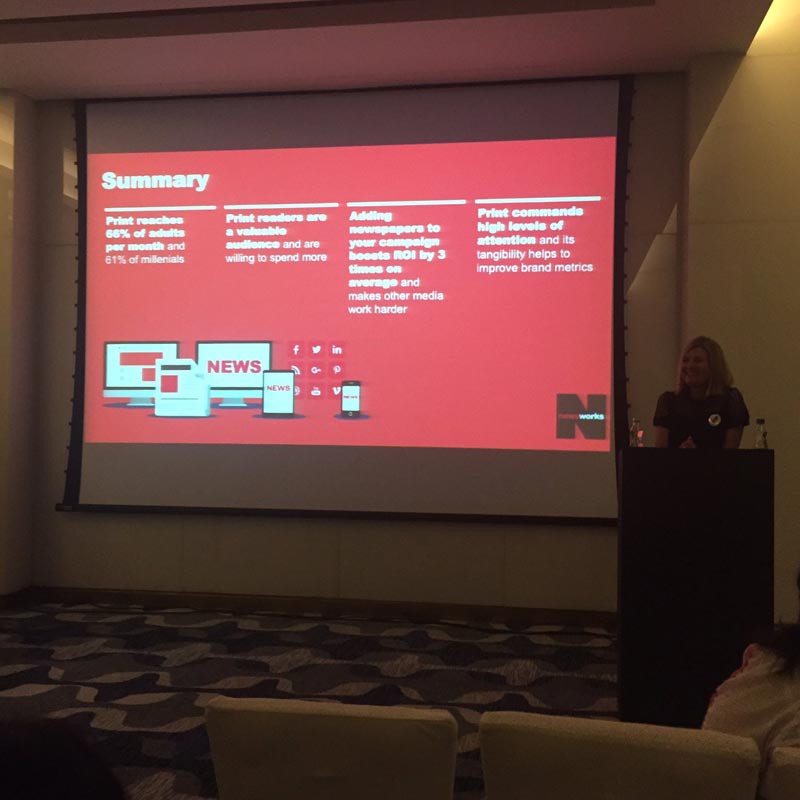
    The print medium delivers results better than any other medium, and campaigners using the print news delivered stronger effects on businesses. News brands command a higher level of attention and 60% of that was focused on newspapers as against 57% on television.

    Referring to branding content, she said that there was greater engagement, trust and personal identification. She observed that advertisements worked on ‘sight and sound’ but often forgot the ‘touch’ aspect which actually drove brands, and this was achieved through the print medium.

    Furthermore, she said that physical interaction in researches had shown that 66% of the consumers considered buying or subscribing to a product if they saw it in print. The return on investments (ROI) by advertisers through the print medium was three times better than any other medium. The print also commanded a higher level of attention.

    Answering a question, she said credibility was higher in the print medium despite the influx of newer online media. Age of the consumer was not a consideration as far as the print medium was concerned, she noted.

    Speaking on “Brands and Marketers” in the age of democratized story-telling, News Corp Senior Vice President-Strategy Raju Narisetti said user-generated content (UGC) used by advertisers had greater effect than a commercial where it was clear that it was being enacted.

    “Everyone is creating content these days, and around 400 hours of content is produced on YouTube every minute,” he said. Democratized story-telling showed that anyone could tell a story through the mobile.

    Raju referred to studies that had shown that 92% consumers were more likely to trust their peers than an advertisement. But, he said, the challenges before UGC was volume, accuracy, acceptance and acquisition.

    There was need to align, identify, verify and license, and deploy before using technology for UGC, Raju concluded.

  • Six principles vital for acceptance of branded content: Vanessa Clifford

    Six principles vital for acceptance of branded content: Vanessa Clifford

    NEW DELHI: It’s the business of consumer connect, realistically. Noting that there was a dearth of good branded content and the British media invested 350,000 pounds sterling towards that every year, Newsworks deputy chief executive Vanessa Clifford said the aim should be to provide value to the consumer.

    Talking about opportunities for branded content at the session “All News is Good News” at ZEE Melt here, she listed six guiding principles for branded content.

    She said that the first was clearly the audience interest. One needed to attract the right kind of audience for a particular brand that one planned to sell through a specific advertisement, she said.

    There was need to plan the communication idea keeping the target audience and the platform – online or print – in mind. Secondly, the print medium was important as its expertise and heritage were built on reputation, she said.

    Trust and transparency was the third on Vanessa’s list of principles. She demonstrated examples of how a reader and viewer’s trust had been won in different advertisement campaigns.

    It was necessary for the advertiser and the media, she said, to set the right goals so that the objective of the campaign was fulfilled.

    Collaboration between the advertiser and the medium was of prime significance so that the message was conveyed perfectly well, Vanessa felt.

    Finally, Vanessa said, there was need to ‘create stories’ that kept the interest of the audience alive.

    Earlier, speaking in the same session on “The Role of Print”, Vanessa said that her experience in the United Kingdom had shown that the impact of the print medium was higher in the long-term and national newspapers drove news brands.

    She quoted Arthur Miller to say that a good newspaper was like a nation talking to itself.

    The print medium delivers results better than any other medium, and campaigners using the print news delivered stronger effects on businesses. News brands command a higher level of attention and 60% of that was focused on newspapers as against 57% on television.

    Referring to branding content, she said that there was greater engagement, trust and personal identification. She observed that advertisements worked on ‘sight and sound’ but often forgot the ‘touch’ aspect which actually drove brands, and this was achieved through the print medium.

    Furthermore, she said that physical interaction in researches had shown that 66% of the consumers considered buying or subscribing to a product if they saw it in print. The return on investments (ROI) by advertisers through the print medium was three times better than any other medium. The print also commanded a higher level of attention.

    Answering a question, she said credibility was higher in the print medium despite the influx of newer online media. Age of the consumer was not a consideration as far as the print medium was concerned, she noted.

    Speaking on “Brands and Marketers” in the age of democratized story-telling, News Corp Senior Vice President-Strategy Raju Narisetti said user-generated content (UGC) used by advertisers had greater effect than a commercial where it was clear that it was being enacted.

    “Everyone is creating content these days, and around 400 hours of content is produced on YouTube every minute,” he said. Democratized story-telling showed that anyone could tell a story through the mobile.

    Raju referred to studies that had shown that 92% consumers were more likely to trust their peers than an advertisement. But, he said, the challenges before UGC was volume, accuracy, acceptance and acquisition.

    There was need to align, identify, verify and license, and deploy before using technology for UGC, Raju concluded.

  • Ten commandments for agencies to stay in business: GroupM’s CVL Srinivas

    Ten commandments for agencies to stay in business: GroupM’s CVL Srinivas

    MUMBAI: It was hard hitting, the way CVL Srinivas began his address at Zee MELT 2016. With a satirical audio-visual titled ‘The Last Agency On Earth’ (2010), the GroupM south Asia CEO laid down the fundamentals of the ‘change or perish’ ecosystem today’s agencies exist in; bringing down the media behemoths from their high horses and urging them to face the reality.

    If an agency needs a reality check on where it stands in this era of disruption it needs a clear understanding of where its client stands. It needs to ask itself ‘What keeps my clients up at night?’ Srinivas insisted.

    “Clients are being witness to this disruption all across – be it the value chain, the consumer chain, supply chain. This introduces a lot more cost pressure on the advertisers, and pressure on procurement as well. Not to mention the planning cycle is getting shorter as well. From an annual plan, the clients are moving to quarterly evaluations,” Srinivas shared, adding that managing multiple partners could be the most challenging issue for these clients.

    While the agency has to deal with newer business for clients, the same disruption within the clients adds more pressure on it. Positioned between the client and the consumer the agency has to stay updated with every new development that might translate into an insight.

    “Therefore the contents of the ‘agency survival kit’ consist of the will to contemporising traditional or existing models, building speed and adaptability and staying relevant and farsighted,” Srinivas said.

    In spite of all this talk of data, digital insight, tools and technical support, the clients still judge an agency on an excel spread sheet and ask ‘at what rate can you buy media for me?’ : Srinivas painted the sad picture.

    So what are agencies to do to be relevant to its clients and ensure a revenue generating future? Follow these ten rules, of course.

    1. Turning one’s weakness to strength is a first step in overcoming any major challenge and the media management world is no exception. Touting ‘tech’ to be the industry’s Achilles’ heel, Srinivas advised all to brainstorm into aggressively adapting new technology. No going forward until this is achieved.

    2. Tracing media agencies back to the roots, the business was mostly trade centric. “Those days are gone, now you have to be data centric, in whatever form you acquire it,” Srinivas simply put.

    3. Agencies must constantly question themselves on their relevance to client and the market, as a lot of the grunt work that was part of the daily chore has been automated. So how else can an agency add value to stay relevant?

    4. Adaptive marketing: There is no room for settlement and creating routines if you ask Srinivas. Giving an example of PepsiCo’s ‘Pressure is good’ campaign using real-time data, he showcased what wonders a truly nimble and adaptive agency can create.

    And let’s not forget the holy trinity of timing, content and authenticity.

    5. Srinivas encouraged agencies to keep an ‘open source’ mindset that lends itself to various partnerships and collaborations. The Cannes Lions 2016 Grand Prix winner ‘Six Pack band’ initiative by Brooke Bond Red Label was the result of that.

    6. Keeping a fluid structure within the organisation can help internal processes from becoming bottle necks sometimes.

    7. Talent diversity is the key, Srinivas said. “Earlier you either had math men or mad men in the organisation. Now the skills sets are more diversified.”

    8. Breaking hierarchies within the organisation can help an agency from becoming rusty as fresh ideas are encouraged. “We must ensure contribution from the junior level as they may be better placed to take calls in certain issues in this digital world.”

    9. All the above points would fall flat if not for an’ Integrated system,’ which keeps an agency tied to its data center while connecting it to several other touch points like pricing platform etc.

    10. All that jazz about data still can’t displace ‘creativity’ from being the key focus of any agency. “Ultimately we are in the creative business,” Srinivas concluded.

  • Ten commandments for agencies to stay in business: GroupM’s CVL Srinivas

    Ten commandments for agencies to stay in business: GroupM’s CVL Srinivas

    MUMBAI: It was hard hitting, the way CVL Srinivas began his address at Zee MELT 2016. With a satirical audio-visual titled ‘The Last Agency On Earth’ (2010), the GroupM south Asia CEO laid down the fundamentals of the ‘change or perish’ ecosystem today’s agencies exist in; bringing down the media behemoths from their high horses and urging them to face the reality.

    If an agency needs a reality check on where it stands in this era of disruption it needs a clear understanding of where its client stands. It needs to ask itself ‘What keeps my clients up at night?’ Srinivas insisted.

    “Clients are being witness to this disruption all across – be it the value chain, the consumer chain, supply chain. This introduces a lot more cost pressure on the advertisers, and pressure on procurement as well. Not to mention the planning cycle is getting shorter as well. From an annual plan, the clients are moving to quarterly evaluations,” Srinivas shared, adding that managing multiple partners could be the most challenging issue for these clients.

    While the agency has to deal with newer business for clients, the same disruption within the clients adds more pressure on it. Positioned between the client and the consumer the agency has to stay updated with every new development that might translate into an insight.

    “Therefore the contents of the ‘agency survival kit’ consist of the will to contemporising traditional or existing models, building speed and adaptability and staying relevant and farsighted,” Srinivas said.

    In spite of all this talk of data, digital insight, tools and technical support, the clients still judge an agency on an excel spread sheet and ask ‘at what rate can you buy media for me?’ : Srinivas painted the sad picture.

    So what are agencies to do to be relevant to its clients and ensure a revenue generating future? Follow these ten rules, of course.

    1. Turning one’s weakness to strength is a first step in overcoming any major challenge and the media management world is no exception. Touting ‘tech’ to be the industry’s Achilles’ heel, Srinivas advised all to brainstorm into aggressively adapting new technology. No going forward until this is achieved.

    2. Tracing media agencies back to the roots, the business was mostly trade centric. “Those days are gone, now you have to be data centric, in whatever form you acquire it,” Srinivas simply put.

    3. Agencies must constantly question themselves on their relevance to client and the market, as a lot of the grunt work that was part of the daily chore has been automated. So how else can an agency add value to stay relevant?

    4. Adaptive marketing: There is no room for settlement and creating routines if you ask Srinivas. Giving an example of PepsiCo’s ‘Pressure is good’ campaign using real-time data, he showcased what wonders a truly nimble and adaptive agency can create.

    And let’s not forget the holy trinity of timing, content and authenticity.

    5. Srinivas encouraged agencies to keep an ‘open source’ mindset that lends itself to various partnerships and collaborations. The Cannes Lions 2016 Grand Prix winner ‘Six Pack band’ initiative by Brooke Bond Red Label was the result of that.

    6. Keeping a fluid structure within the organisation can help internal processes from becoming bottle necks sometimes.

    7. Talent diversity is the key, Srinivas said. “Earlier you either had math men or mad men in the organisation. Now the skills sets are more diversified.”

    8. Breaking hierarchies within the organisation can help an agency from becoming rusty as fresh ideas are encouraged. “We must ensure contribution from the junior level as they may be better placed to take calls in certain issues in this digital world.”

    9. All the above points would fall flat if not for an’ Integrated system,’ which keeps an agency tied to its data center while connecting it to several other touch points like pricing platform etc.

    10. All that jazz about data still can’t displace ‘creativity’ from being the key focus of any agency. “Ultimately we are in the creative business,” Srinivas concluded.

  • Kyoorius’ 2nd edition of Zee MELT is scheduled for August 2016

    Kyoorius’ 2nd edition of Zee MELT is scheduled for August 2016

    MUMBAI: Kyoorius is all set to host Zee MELT 2016 on 26 and 27 August with a brilliant line-up of speakers and panel discussions. Its first time in Delhi, the unique festival aims to bring together advertising, digital, marketing, emerging technologies, media and PR industry to celebrate creativity. MELT is a 2-day rollercoaster event conceptualized in partnership with Zee Entertainment, Hindustan Times, GroupM, and D&AD.

    This year MELT 2016 will feature some of the most influential names in the business of creativity and marketing communications. It will have sessions curated for different interests, skill sets and audiences. From advertisers, industry experts such as Ted Mellström (Art Director, Forsman & Bodenfors, Sweden) to leading marketers like Per Nilsson (Corporate Communication & Marketing Director at Semcon, Sweden) and Mark van Iterson (Global Head of Design & Concept at Heineken, Amsterdam), the top professionals, will be presenting and engaging at the anchor events of melt. Some other speakers to watch out for are Tom Betts (Chief Data Officer, Financial Times), Andrew O’Dell (CEO & Co-Founder, Pereira & O’Dell), Karrelle Dixon (Director of Emerging markets, Wieden+Kennedy ) to name a few.

    MELT 2016 will consist of a range of conferences, seminars, exhibitions, showcases, workshops and networking sessions for delegates from across marketing and communication genres by industry experts, catering to all experience levels. The organizers are expecting more than 2000 creative, marketing people will convene to discuss, inspire and learn through sharing and interaction.

    The stimulating line-up of speakers and the agenda for the second edition of ZEE MELT 2016, is ready to be browsed through at Readytomelt.com, a dedicated website for the festival. This website boasts of a full line up of speakers from all over the world, spanning a variety of events throughout the 2 days.

    The content for MELT 2016 is divided across four key pillars i.e. Learning, Showcase and Gallery, Networking and Celebration. Each of these pillars will be driven by content partners and participating brands at MELT 2016.

    Commenting on the line up, Kyoorius CEO and founder Rajesh Kejriwal said, “The aim of MELT 2016 is to spoil its attendees with choice of multiple sessions that not only excites and informs but also engages them. What sets this edition apart are the best speakers and presenters from the industry with the addition of experience zones and workshops. We want our partners and all attendees to get the most out of their time at MELT 2016.”

    All delegates can sign up for individual events which can be bookmarked. Zee MELT 2016 welcomes everyone to create their own itinerary for each day in accordance to their predilection.

  • Kyoorius’ 2nd edition of Zee MELT is scheduled for August 2016

    Kyoorius’ 2nd edition of Zee MELT is scheduled for August 2016

    MUMBAI: Kyoorius is all set to host Zee MELT 2016 on 26 and 27 August with a brilliant line-up of speakers and panel discussions. Its first time in Delhi, the unique festival aims to bring together advertising, digital, marketing, emerging technologies, media and PR industry to celebrate creativity. MELT is a 2-day rollercoaster event conceptualized in partnership with Zee Entertainment, Hindustan Times, GroupM, and D&AD.

    This year MELT 2016 will feature some of the most influential names in the business of creativity and marketing communications. It will have sessions curated for different interests, skill sets and audiences. From advertisers, industry experts such as Ted Mellström (Art Director, Forsman & Bodenfors, Sweden) to leading marketers like Per Nilsson (Corporate Communication & Marketing Director at Semcon, Sweden) and Mark van Iterson (Global Head of Design & Concept at Heineken, Amsterdam), the top professionals, will be presenting and engaging at the anchor events of melt. Some other speakers to watch out for are Tom Betts (Chief Data Officer, Financial Times), Andrew O’Dell (CEO & Co-Founder, Pereira & O’Dell), Karrelle Dixon (Director of Emerging markets, Wieden+Kennedy ) to name a few.

    MELT 2016 will consist of a range of conferences, seminars, exhibitions, showcases, workshops and networking sessions for delegates from across marketing and communication genres by industry experts, catering to all experience levels. The organizers are expecting more than 2000 creative, marketing people will convene to discuss, inspire and learn through sharing and interaction.

    The stimulating line-up of speakers and the agenda for the second edition of ZEE MELT 2016, is ready to be browsed through at Readytomelt.com, a dedicated website for the festival. This website boasts of a full line up of speakers from all over the world, spanning a variety of events throughout the 2 days.

    The content for MELT 2016 is divided across four key pillars i.e. Learning, Showcase and Gallery, Networking and Celebration. Each of these pillars will be driven by content partners and participating brands at MELT 2016.

    Commenting on the line up, Kyoorius CEO and founder Rajesh Kejriwal said, “The aim of MELT 2016 is to spoil its attendees with choice of multiple sessions that not only excites and informs but also engages them. What sets this edition apart are the best speakers and presenters from the industry with the addition of experience zones and workshops. We want our partners and all attendees to get the most out of their time at MELT 2016.”

    All delegates can sign up for individual events which can be bookmarked. Zee MELT 2016 welcomes everyone to create their own itinerary for each day in accordance to their predilection.