Tag: Zee MELT

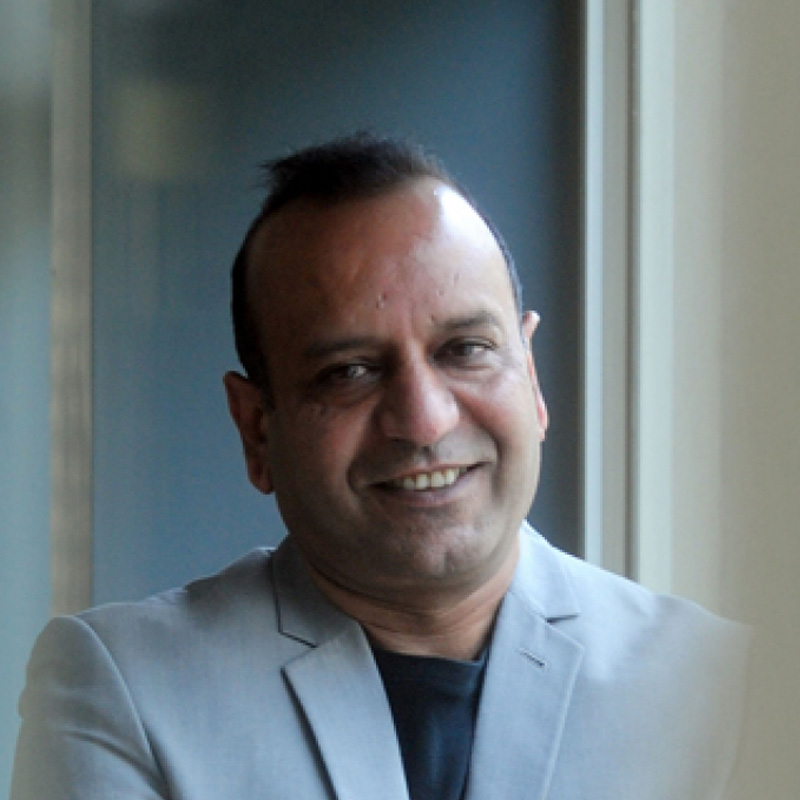
  • Journalist, author and A&M industry thought leader Anant Rangaswami no more

    Journalist, author and A&M industry thought leader Anant Rangaswami no more

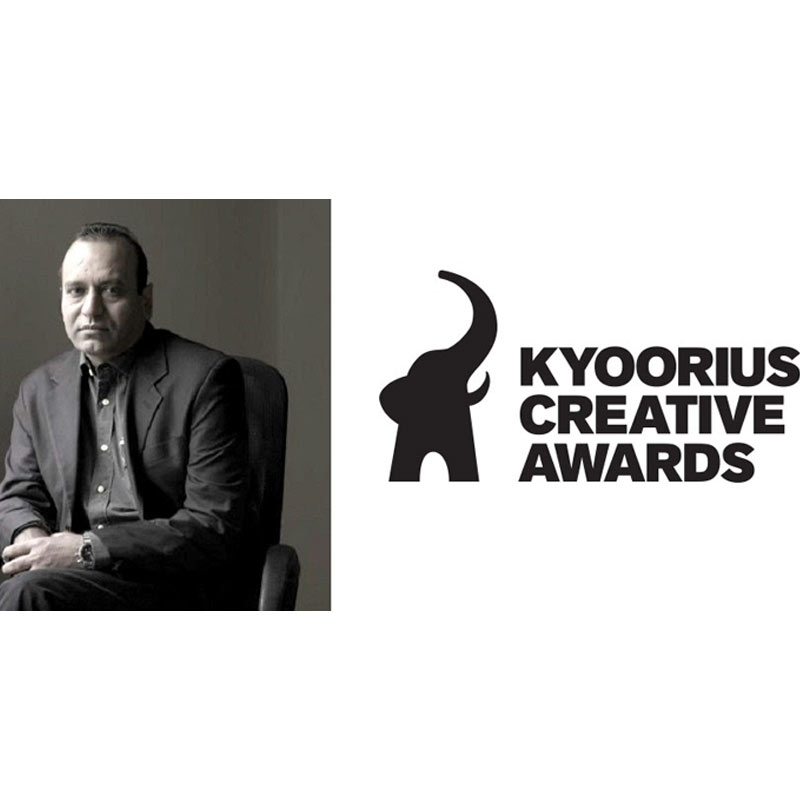
    Mumbai: Journalist, author and keen observer of the media and advertising industry Anant Rangaswami has passed away on Tuesday morning in Bengaluru.

    Rangaswami wore many hats during his career. He was editor of Storyboard, the advertising, media and marketing show on CNBC-TV18. Previously, he was the founding editor of Campaign India and senior editor at Firstpost.com. A lifetime spent in the industry Rangaswami was associated with leading media companies including Star TV, Sony, and BCCL’s Times Television and Times FM. He also served as vice president at TBWA India.

    Rangaswami has authored two books ‘Watching from the Sidelines’ and ‘The Elephants in the Room: The Future of Advertising in India’.

    Most recently, Rangaswami was working with close friend Rajesh Kejriwal as editor and curator of the flagship industry event Zee Melt organised by the Kyoorius Group.

    Those who followed Rangaswami on his social media handles know him for his incisive and witty takes on the latest advertisements shaping our culture. He was also a vocal advocate for the issues that shaped the moral and social fabric of the times we live in. Rangaswami had changed his Twitter name to Don’tLetHateWin@AnantRangaswami in recent times, which says a lot about how strongly he felt about the state of affairs in the country.

    Rangaswami was a dear friend to many in the media and advertising industry. This publication does not mourn his passing but rather celebrates the legacy he left behind.


  • The secret sauce to Royal Enfield’s success in India

    The secret sauce to Royal Enfield’s success in India

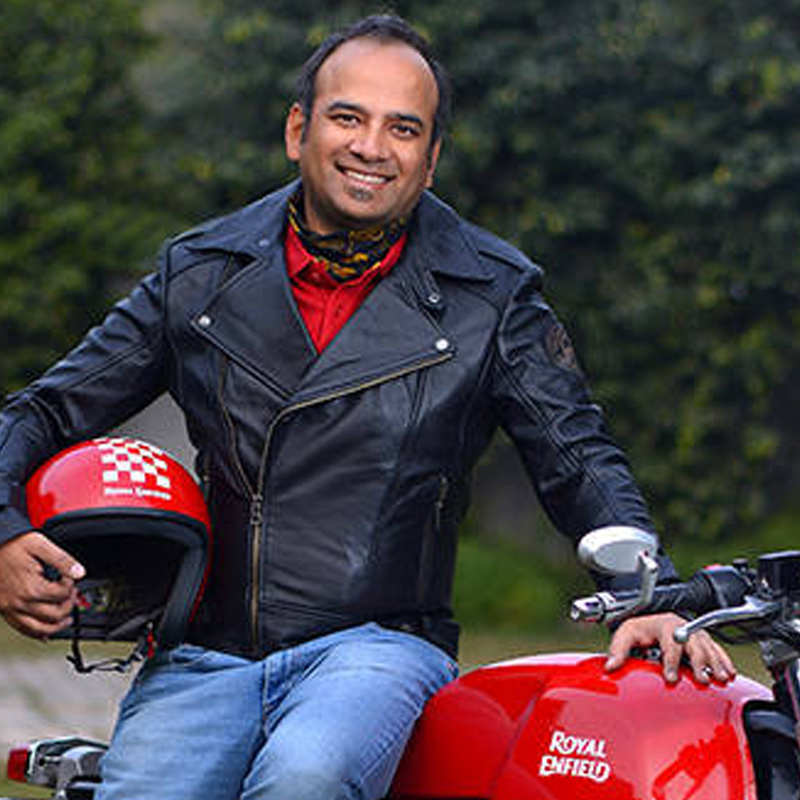
    MUMBAI: Royal Enfield or RE as it is popularly known has been one of the secretive brands that have forever been tight-lipped; never wanting to talk about its advertising, structure or business model. But it was a rare sight at Zee Melt 2018 where Royal Enfield president Rudratej Singh engaged with the audience for the first time to talk about why the brand stays away from advertising and its brand philosophy.

    First produced in 1901, Royal Enfield is the oldest motorcycle brand in the world still in production, with the Bullet model enjoying the longest motorcycle production run of all time.

    Singh kicked off his session with a short film that showcased how its consumers are not just consumers but rather a community who believe in the true spirit of riding. “We are a bunch of riders, for riders. We do not sell motorcycles but what your motorcycle can do in terms of experience,” he said.

    Singh thinks that the entire team at Royal Enfield is a bunch of storytellers trapped in an automative company and they like to express themselves via its motorcycles. Although RE is the world’s fastest growing automative company today, Singh modestly calls it a small organism that is trying to become an organisation.

    While other brands spend millions on advertisement and production, RE likes to keep it in-house and authentic. “Most of the communication and films for Royal Enfield are produced and directed in-house which saves us a lot of money rather than having an agency do it for us which would charge us nothing less than a few lakhs,” he says.

    While everyone’s guessing the secret sauce of RE’s success, it is simply a balance between keeping it aspirational and accessible. The former in being authentic for what the brand stands for and the latter in terms of cost, cost of ownership, availability and usability.

    Although the company sells motorcycles, it believes that it can motivate people to undertake travelling, something that RE owners definitely love to do, and self discover.

    RE doesn’t believe in being omnipresent. For it, context matters. Singh said, “We would rather be visible on contextual events and gathering which are relevant to us rather than being present everywhere.” Royal Enfield spends a major chunk of its time and money on creating events, experiences and products. Singh said that the company has rejected several associations where it could have had front page coverage but did not do that since it was not relevant to them and it doesn’t believe in “that kind of marketing”.

    The core of RE is to build meaningful relationships with its customers. This is done by sending frequent messages about joining its rides, attending events, being a part of the community and so on. This, in turn, has helped the brand in gaining consumer trust which is a huge asset for the motorcycle company.

    Although the company has always refrained from television commercials and major advertisements on any platform, it has always been dragged into controversy, if not by its own will then by its competitor’s statements and ads. On this, Singh said, “We always knew that we are here to expand our own market and not snatch somebody else’s market. We analyse ourselves rather than nitpicking on other companies in the segment.”

    Automation industry is all about product-led innovation and coming up with new products and launches but RE thinks of itself as a brand-led company which can do various things without being product led since brands tend to have a larger impact. Calling the company a zero GRP brand, Singh stated the reason for it being this way was because it has no money or time left and it becomes inauthentic the minute it tries to reach a large number of audience with similar communication. He said that a lot of focus for advertisers and marketers today is perennially on marketing and advertising. What you see now is only the lag of what has been happening in the industry for 15 years and the industry needs to buck up and do something about it. Marketers are trained to go for reach and frequency but the result of this approach is that people stop caring about the brand after a point of time because every communication they see around them is the same.

    “We believe in getting across our message with minimum content and minimum cost. We don’t want to blast the internet and television spots with visibility. We always struggle with having little communication with a large group of audience at RE but we are okay with that,” he concluded.

  • How brands can skip being ‘ad blocked’

    How brands can skip being ‘ad blocked’

    MUMBAI: Imagine a future without advertising! Not a pretty sight, is it? If that ever happens it would lead to major agencies and brands shutting down because they won’t be able to create awareness about their products and market themselves correctly. But with increasing usage of “ad-blocker” and rising consumer irritation with ads before content, it wouldn’t hurt to imagine the worst.

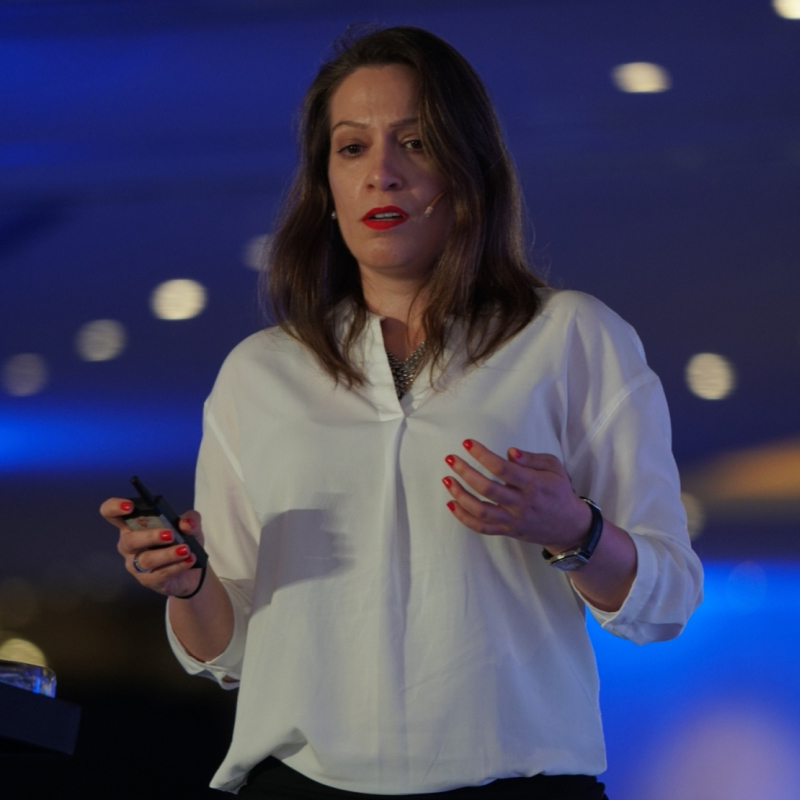
    Sparrow Digital Holdings principal Ana Milicevic spoke at Zee Melt about what the future of advertising would look like if we didn’t rectify our communication now. Her company is a digital advisor with extensive operational experience specialising in advertising and marketing technology, programmatic advertising, data management, analytics, strategy, product development and go-to-market positioning.

    Although the ad industry today is worth over $600 billion, Milicevic thinks that we are in deep trouble because most people today don’t consider ads useful and informative but find it rather annoying. Even ad blockers now have ads and that’s funny and ironical. 30 per cent of all digital consumers use ad blockers in North America which is the highest rate globally.

    Milicevic mentioned that the consumer behaviour has changed over the years where today’s consumer lives on his mobile phone which wasn’t the case 20 years ago. The expectations of consumers have changed and they expect a lot from the brand and hence need communication which is true and honest and not something that is too glossy and comes across as artificial.

    Traditionally, brands create a campaign or communication and push it to a large set of audience at once (mass marketing). But that has changed and now brands are actively investing in creating personal and semi-personal communication with each consumer depending on their likes and mood.

    A key problem with the industry today is that since it is cheaper to run a blanket campaign, most brands just go with it rather than creating customised content for the audience. She pointed out that the industry has so many channels and opportunities to talk to people but it doesn’t.

    Brands need to look into what is important to consumers and create content accordingly. They need to create personalised content or the consumer would just lose his interest in the brand. Brands also need to show immediacy while dealing with customers, be it fast delivery or quick response on call or a social message page.

    In future, every interaction will become advertising as every conversation with consumers will become advertising.  She concluded by saying that the industry needs to re-evaluate itself and the way it is communicating with the audience today “or we will risk getting skipped”.

  • Heineken’s challenge of advertising a product like beer

    Heineken’s challenge of advertising a product like beer

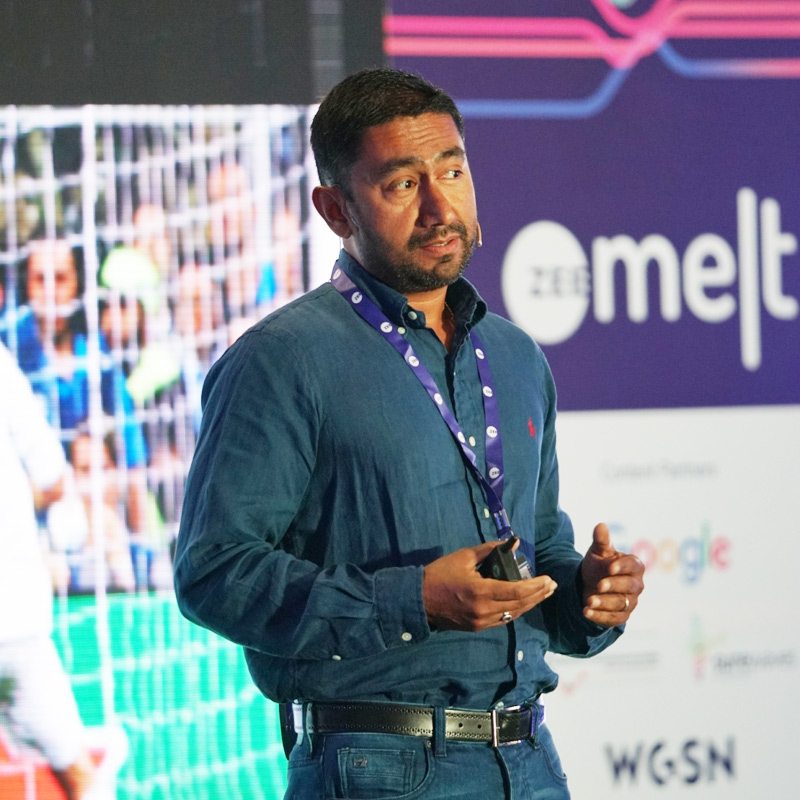
    MUMBAI: Most brands can easily take up any form of promotion when it comes to advertising themselves. But some brands have the hard task of not being allowed to advertise at all. What does one do then? That is exactly what Heineken global director of integrated marketing communication Anuraag Trikha spoke about on day one of Zee Melt – ‘Beer marketing in the digital world’.

    Trisha kicked off the session by pointing out the dilemma that global beer brands face, which is, to make sense of digital in selling something that you can buy at every corner of the country – beer. He noted that it is an interesting dilemma as the world is not 100 per cent digital or 100 per cent traditional and is rather a mix of both and that’s why it is complicated.

    He defined his dilemma in terms of scale and relevance. “Digital is nothing but relevance because relevance is in your hands, it’s the phone you carry. What’s digital to me is how relevant are you on digital. And then comes the middle ground which is a mix of scale and relevance,” he said.

    He also went on to say that he really admires music company Spotify and would quit his job at Heineken for Spotify if they offer him a job. That is solely because the music company really understands how to take big data (scale) and make it super relevant for consumers in their playlist, and that is the future of marketing where you can do relevance with scale.

    He also mentioned that brands should not dismiss the power of idea, emotion and knowing their consumer while they do all their “cool” stuff and should instead balance both sides. No matter what they do, consumers should be at the heart of everything. He then went on to showcase Heineken’s case study for UEFA champions league where its major challenge was to connect with consumers who were not watching football at all or watch football at home.

    Heineken’s mission for 2017 UEFA league was to inspire consumers to watch the league with friends and a few Heinekens. The problem is that 72 per cent consumers usually watch the match at home alone which is a big disadvantage for the brand as it dwells on being a social drink. Also, 64 per cent of Champions League matches is usually watched outside Europe which means people are watching the match in different time zones and they may not be in a mood to have a glass of beer at 4 am in the morning or at 3 pm in the afternoon.

    Marketers around the world across all genres have to consider these variables to become the most distinctive brand, according to Trikha.

    To change the scenario of drinking beer culture in Europe, Heineken got on board football coach Jose Mourinho, this time not to prep talk the footballers but rather the fans of the game.

    Although 50 per cent of Heineken’s ad spend is on television, digital is extremely important for the company as it allows to connect with the audience on a one-to-one basis. It looks at every social asset and wants to leverage social, digital and all available mediums to talk to the consumer and will increase the adverting spends considerably. He also mentioned that the brand will never report to surrogate advertising and would rather prefer not adverting at all in media dark areas than going surrogate.

  • Brands need to move away from femvertising: Sakshi Choudhary, Ogilvy India

    Brands need to move away from femvertising: Sakshi Choudhary, Ogilvy India

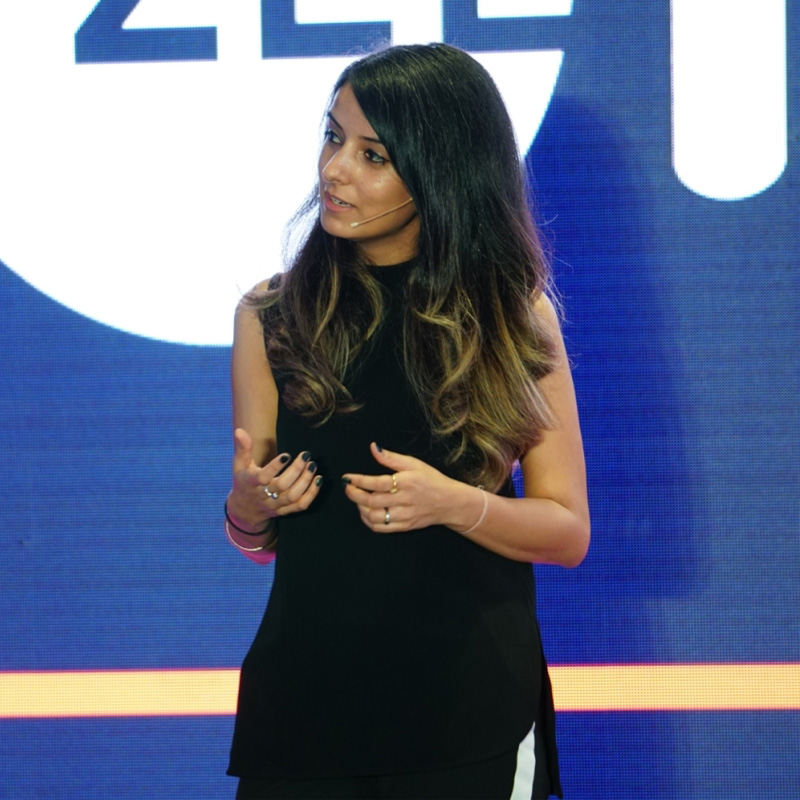
    MUMBAI: The 28-year-old lady, who rose to fame pretty early in her career, proudly sits as the creative controller at Ogilvy India’s office. An avid feminist that she herself is, Sakshi Choudhary spoke eloquently on day one of Zee Melt, on how brands must make a better portrayal of women in ads.

    The young creative head began her session with a rant on the patriarchal ad industry. “Dear ad industry, you don’t talk to me. At 21, I finally fell in love with my body, I rigged myself of the low self-esteem and I roared like a lioness. But you compare me to the kitten and chicken that will lick and bite when the oh-so masculine half-naked man sprays his oh-so masculine deodorant. Dear ad industry you don’t talk to me. At 24, I got my first big promotion and a pay-check which was a result of years of passion, handwork and persistence that has finally paid off. But you think it’s the perfect time to tell my male colleagues that it’s time for me to be picked up and carried home. Dear ad industry, why do you not talk to me? Why does the dreamer in you not connect to the dreamer in me?”

    After the intense rant, Sakshi Choudhary remarked, “If you think that as an industry we have come a long way, well think again.” She spoke about how women in India are increasingly getting into the purchasing power in categories that were predominantly considered a male dominant segment. Women today spend 2X times more time on mobile devices and 74 per cent of purchasing decision today is being made by women which includes decisions about automobile (60 per cent), vacation (90 per cent) and consumer electronics (50 per cent).

    Brands including Honda motorcycles, Bacardi Weekender, Nykaa, UrbanClap and Hotstar have recognised these opportunities to connect with women.

    Choudhary said that brands need to change the portrayal of women as an object, a homemaker or an instantly empowered woman. While creating a campaign, brands and agencies need to follow Badger & Winters test that calls out for sexism in advertising. Badger & Winters is a New Your based agency that leads with a female perspective that helps brands grow loyal and lasting relationships with women. Brands should ask themselves these four questions before they crack an advertisement or final creative:

    – No Prop: Agencies need to ask themselves whether the woman in the ad is a prop? Does she have a voice or a choice?

    – No Plastic: Is she air brushed to a point where she looks like a plastic doll?

    – No Part: Is any part of her being shown? Is it a sexually provocative ad?

    – No Stranger: would you see your mother, daughter or sister in the ad where the women is right now. If the answer to all the above points is no, do not proceed with the campaign idea.

    She then pointed out about how brands stereotype women in ads and they are given less airtime, fewer dialogues and are expected to look young and enthusiastic homemakers whereas men are always shown to have an occupation and get four times as much screen time as women.

    She also touched upon the recent trend in adverting, which is femvertising and suggested that brands should not come up with a piece of work which only speaks to women on women’s day or mother’s day. “Clients need to have an equal and empowered portrayal through the year. Brands should have realistic beauty standards and actively work for social change,” she challenges.

    She ended her session by quoting Tain Wei, “Any society that fails to harness the energy and creativity of its women is at a huge disadvantage in the modern world.”

    Indiantelevision.com got talking to Sakshi Choudhary about her views on the female economy, what the ad industry needs to do to address the issue and more. Excerpts:

    How do you ensure your agency Ogilvy does not create ads that stereotype women?

    At an individual level, I ensure that every piece of work that’s proposed or released from my team is free of stereotypes, and portrays women to be equal as men. As an agency, Ogilvy has constantly strived to create work that doesn’t just beat stereotypes (Komfort, Tata Salt), but also empowers women through effective campaigns like #MakeLoveNotScars, #NotMusicTomyEars, Vodafone Sakhi or #LforLove.

    Which platform woks the best for promoting and advertising women centric  products that promote women empowerment or women safety? Is it digital since you mentioned that women today spend 2X more time on mobile devices. Will digital change the wave?

    It doesn’t really matter which platform you place your work on as long as you reach women effectively, and the right way.

    Does creating campaign and products designed specifically for women safety or empowerment) lead to a jump in sales? Does it help in improving the brand perception?

    Yes, if done right, gender equality campaigns not only lead to increased brand love and loyalty but also sales. However, as mentioned in my talk, lately, Femvertising has become a fad. The problem arises when brands want to hop on the empowerment bandwagon just for the sake of it, or to enjoy a share of voice without any concrete on-ground results in mind.

    This happens more often on digital as brands are often in a rush to jump on a trend or an occasion. Women’s Day campaigns are a classic example.

    Gender pay is still a pressing issue in the industry. What do we need to do as an industry to address the issue?

    Gender pay gap is an issue that exists in every industry.

    While paying equally seems to be the first solution that comes to everyone’s minds, the issue is far deeper than that. Women don’t ask for their worth as often or as assertively as they should. They constantly undermine themselves and feel that they aren’t good enough. This self-doubt keeps them in a weaker position throughout their careers.

    As an industry, for starters, we women need to come together through a forum. And then address our needs through formal training workshops or mentorship by senior women leaders.

    How challenging is it to create a campaign that impacts culture?

    Extremely. Anything to do with culture, and it runs the risk of offending sensibilities. The consumers are now online, and analyzing and scrutinizing every inch of your creative online. The intent of the brand may be right, but if the execution isn’t done well and is misinterpreted, it can lead to massive brand fails.

    The risk is huge. But it’s an interesting challenge. These are also the pieces of work that come with the most fulfilment and make you feel good about being in the industry.

    Is it a major responsibility on agencies and brands to create the societal change?

    Nope, we are in the business of selling products.

    Having said that, we need to be more mindful of the undercurrents shaping our country right now.

    Whether it’s recognizing the societal advancement of women in the last 10 years, or embracing our younger population that’s judging marketing efforts and only trusting brands with a purpose.

    One piece of advice to creative heads that are at the helm of ad industry that create/want to create ads about women empowerment while not demeaning them?

    Nurture and celebrate your women.

    Retain the ones you have, and hire more to make every team in your agency gender equal.

    And nope, don’t do this to produce work only on ‘ women empowerment’.

    Do this because the current Indian woman wants to see campaigns that she can relate to. Connect with the dreamer in her.

  • Sorrell pats Mukesh Ambani’s back for telecom explosion

    Sorrell pats Mukesh Ambani’s back for telecom explosion

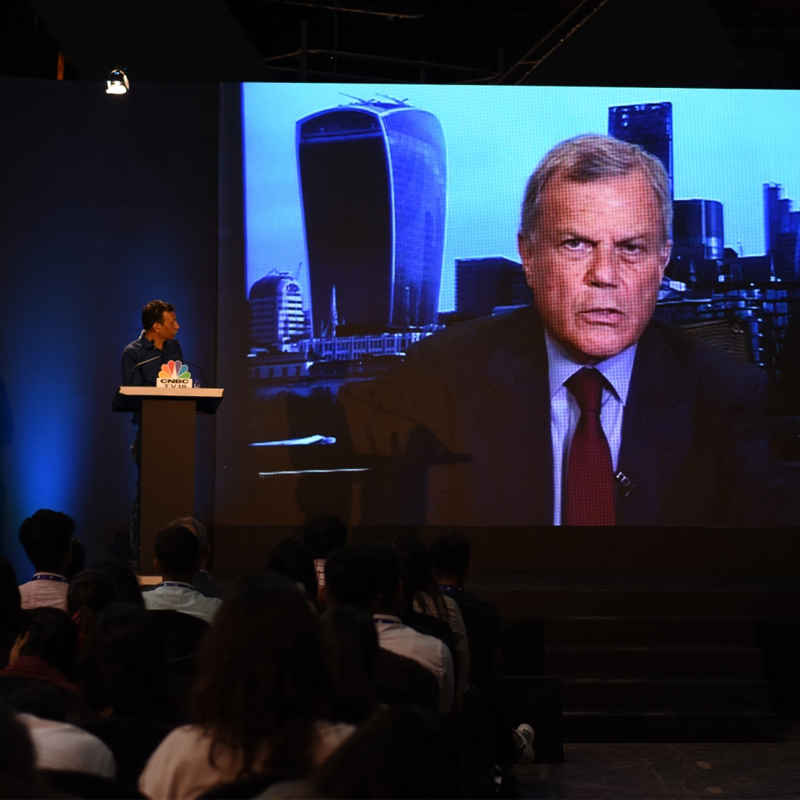
    MUMBAI: Though the announcement of ad guru and former WPP CEO Sir Martin Sorrell’s comeback strategy was announced yesterday in faraway London — a London Stock Exchange notification on Derriston Capital said so — the excitement was running equally high here at the venue where Zee Melt event was being held. And, why not? Sorrell was scheduled for a live video interaction with delegates at the event in the evening.

    But true to his style, Sorrell did not give out any juice to the media and refrained from answering anything particular about his new venture, S4. However, he did have a lot to say about the industry, in general, and India. 

    Sorrell thinks that advertising and marketing industry is in a state of flux today and will only bring opportunities for agencies and brands alike. “The discussion is whether the flux is strategic or structural. But, it is clearly a mixture of both. The A&M [advertising and marketing] industry is worth a trillion dollars with $500 billion in traditional media and traditional communication services, and $500 billion in new media,” Sorrell said speaking to the Zee Melt delegates live via CNBC’s London studio.

    “There is a clear significant change, whether it is because of Google, Facebook, Accenture, IBM or Deloitte. And this flux will bring opportunities. If you look at the $20 billion in WPP, there are parts of it that are growing and there are parts of it that are flat and parts of it that are declining. It is all about identifying those growth opportunities,” he emphasised, giving a hint at what people may expect from him in future with his new venture, which experts say could be a repeat of the WPP story with a modern-day twist.

    For the records, Sorrell is investing $53 million from his own pocket into London Stock Exchange-listed Derriston Capital, a company which will now be remade into S4 Capital, a reference to four generations of Sorrell’s family. While he will become executive chairman in the business that could explore opportunities in technology, data and content, media reports stated institutional investors have pledged 150 million pounds to buy marketing companies — a way Sorrell-founded WPP grew into a global behemoth with presence in 112 countries.

    Coming back to Sorrell-speak for the Mumbai event, the former WPP CEO, ousted on allegations of misconducts about six weeks back, hailed India as being pivotal to WPP growth with 14,000 “talented people”. He noted that India is growing fast in terms of GDP, population and potential.

    Pointing out that India, in the near future, will become the most populous country in the world with the youngest profiles, Sir Martin felt that, from a technological point of view, India has leapfrogged a lot of technologies —such as migrating directly from desktop and normal phones to smartphones. The country has seen huge distribution changes too with and Alibaba entering the market.

    On the distribution side, according to him, Mukesh Ambani’s significant investment in telecommunications and technology in Jio mobiles and SIM card has put India on the global map. In short, India represents opportunities and growth in terms of economy and technology. 

    Year 2017 saw a lot of shakeup and disruption in the industry. Of these, two iconic events that signaled disruption and structural changes for Sorrell and the industry were Unilever’s hostile takeover bid by Kraft Heinz, proving no company is safe today, and when Rupert Murdoch signaled he would negotiate 21st Century Fox business with The Walt Disney Company. What made this 21CF-Disney deal “more complicated” was the involvement of Comcast.

    Holding forth on large agencies and groups owning them, Sorrell felt that that such corporate houses have a “legacy associated with them” and come with a lot of backlog and challenges. When you have a legacy company, the business becomes more of a challenge with time as compared to when you start with a clean sheet, he said. Probably, his new venture S4 will give him and the company an opportunity to build afresh taking into account the changes taking place at client’s end and new structures and approaches that clients want.

    According to Sorrell, a major shakeup in the media industry today has been the General Data Protection Regulation (GDPR), an EU-mandated law on data protection and privacy for all individuals within the European Union (EU) and the European Economic Area (EEA). It also addressed the export of personal data outside the EU and EEA.

    The GDPR primarily aims at giving control to citizens and residents over their personal data and simplify the regulatory environment for international business by unifying the norms within the EU. Sorrell thinks these were early days to assess the impact of GDPR, but from what he’s heard Facebook’s ad sales revenue has remained un-impacted even after the news of Cambridge Analytica. He is also of the opinion that GDPR in early stages seems to favour technology giants as “we have seen smaller or media tech companies withdraw from European market rather than compete”. 

    He ended the session by applauding the Indian government and Prime Minister Narendra Modi for making a significant impact on the Indian economy, although the momentum has slowed down due to GST rollout and after-effects of demonetisation along with other factors. Pointing out that India’s economy will continue to grow and will continue to attract big brands and agencies to put their money in the country, Sorrell concluded, “I continue to be an unashamed, raging India bull and confident that the Indian economy will regain momentum soon.”

    Meanwhile, reporting on Sorrell’s new venture in detail Reuters said Derriston Capital is a little-known two-year-old listed shell company set up to invest in medical technology.

    Over 30 years ago Sorrell built WPP into a company with 200,000 staff in 112 countries by adding market research groups, media buyers, and public relations firms such as Finsbury. Worth 16 billion pounds, WPP returned millions to shareholders, including its CEO, and dominated the industry for decades. According to Thomson Reuters data, Sorrell is still the eighth biggest investor in WPP, with a 1.4 percent stake.

    The Reuters story further stated that Sorrell had vowed to break down the barriers at WPP to make it easier for clients to get all the services they needed from a small team, rather than from a range of people among the more than 400 agencies it owned. WPP competes with US groups Omnicom and IPG, France’s Publicis and Japan’s Dentsu, while thousands of small independent companies provide everything from ads for mobile phones to creative work and data analytics.

    Also Read :

    WPP board begins investigation of its CEO Sir Martin Sorrel, says WSJ

    Sir Martin Sorrell says ta-ta to WPP, Roberto Quarta becomes exec chairman

    Martin Sorrell bullish on India

    TAM or BARC, the market has to decide: Sir Martin Sorrell

  • Creating an IP in events is tough: Kyoorius’ Rajesh Kejriwal

    Creating an IP in events is tough: Kyoorius’ Rajesh Kejriwal

    MUMBAI: At a time when content, technology and disruption are mentioned in the same breath in every marketing and digital summit, design often takes a backseat. It’s an open secret that several marketers, traditional or digital, neglect design, so much so that a couple of years ago the art of creating the right design and its role in aiding brands was practically non-existent. Feeble efforts were undertaken to boost the conversation around design and innovation.

    Things would have remained the same were it not for Rajesh Kejriwal who came up with the concept of Kyoorius, a common ground for designers, brands, creatives and every stakeholder in between.

    Now, the Kyoorius Creative Awards is in its fifth edition and has the likes of Arun Iyer, Nandini Dias, Tarun Katial and Kainaz Karmakar on board as jury members. The awards this year are scheduled on 1 June 2018 at Mumbai following a two-day disruptive marketing conclave Zee MELT on 30 and 31 May.

    In a candid chat with Indiantelevision.com, Kyoorius founder and CEO Rajesh Kejriwal spoke about a range of topics, including his journey, the paper business, the struggle, Kyoorius awards and design in India. Excerpts:

    You started off with a fine paper business but eventually moved into events. How has that journey been for you and how did that happen?

    The core of our Kyoorius business is paper merchandising and the creative community and design community are a large influencer on the choice of paper. Instead of targeting print guys who are always bothered about price, we thought of targeting designers because if they specify our paper, we are good to go. Then I thought that if I have to change my relationship with the creative and design community from being a vendor to a friend, I have to do something that helps them in their professional life and that is when we started Kyoorius as a not-for-profit organisation.

    But a lot has changed since you started off…

    The paper business grew by around 75 per cent year-on-year till 2010. Then China entered the market and the industry went downhill and the way paper was used changed completely. Back in 2004, 80 per cent of our business came from papers used for stationary sale but today stationary only contributes to two per cent of our business and everything has gone to brochures and catalogues. From being a premium fine paper business, it has now become a paper commodity business. My paper business continues to run but the influence of design on papers has come down drastically. But, because Kyoorius is running, we continue with the business and that’s why it is a non-profit non-loss organisation. We hadn’t evangelised this scenario when we started with the paper business but it has come to this. Had Kyoorius been a CSR activity, we would have stopped doing it in 2011.

    But why non-profit?

    I actually prefer referring to the organisation as ‘not for loss’ because the idea was that initially everyone starts awards thinking of it as a marketing exercise and then at some point in time when business goes up and down, the marketing budget also goes up and down. When it goes down, you stop doing marketing activities and I didn’t want Kyoorius to stop doing what it was doing. That is when the idea of not-for-loss organisation came about, thinking that whatever we do, we should at least sustain and be able to carry on even if the paper business goes in any direction.

    How have the entries been this year since there is a global decline in agency participation in awards due to budget cuts?

    We have just finished with our entries and we received 20 per cent more entries as compared with last year while most others are seeing a decline. The number of entries received this year is 2100 whereas we received 1800 entries last year, which is quite an encouraging number.

    Any new sponsor on board? Do you think sponsors are now more cautious about which events they associate with?

    All our sponsors that came on board have stayed with us, including Colors, Lokmat, Surewaves, Times Group and Kinetic. This year, Honda and Nestle have also come on board as sponsors for three years. All our sponsors have associated with us not only for Kyoorius awards but also for Zee Melt and Design Yatra. Our sponsors show faith in us and keep coming back to us because we don’t allow two sponsors from the same category. Today, sponsors look at events and awards with a business objective and whether they need to support industry events. It is no longer about just advertising your brand at any irrelevant event.

    Do you have to micromanage things for the awards?

    No, I don’t and I can’t because if you want to grow you have to let other people take charge and if they make mistakes, you correct them. If every year you make the same mistake, people will stop coming to your event. We are very clear that sponsors can’t have speaker slots. This year, we let go of Rs 30 lakh because someone wanted to sponsor us only if we gave them a speaker slot.

    Do you think events have become a harder business to be in over the years?

    Events are anyway not easy to do but if you want to create an IP, that is hard. Everyone keeps saying, ‘I have an IP’ and that is just silly. An IP happens when your sponsors stay with you, your participation increases year-on-year, people feel proud to be associated with you and other event guys want to copy you. Anyone can do an event today and every publishing house or broadcaster keeps doing an event every now and then with a budget of Rs 10-20 lakh. Those are events and not IPs. While they may say they are IPs but they are just events and that is not hard to do. If people are talking about your event a month before and after the event, then that is an IP.

    Is there anything new that you are bringing to Kyoorius this year?

    We have a team flying down from Amsterdam to design the stage and creative for the awards. Kyoorius has the largest LED screen for an award show in India. Moreover, we are the only award show globally to be carbon positive for three consecutive years. This year, we have created 503 tonnes of carbon emission for Kyoorius awards and to offset this carbon emission, we had to plant 11,000 trees. National Geographic is our green partner for Kyoorius and Zee Melt. Also, since we want to limit our plastic waste, we are bringing in a shredder to the venue that will turn the plastic into granules, which will later be shipped to Pune and converted into biofuel. I think people need to think about the sanctity of their act whether it’s right or wrong. 80 per cent of the ads today talk about social messages and water conversation and there you have people wasting water at the award venue!

    What is your view on creativity and design in India? Do you think we are doing a better job than the West or do we have our own challenges?

    I think people keep talking about how great international creativity is but they keep forgetting that their ad budgets are two to three times higher than ours. They spend a million dollar on a campaign whereas, in India, the best agencies get Rs 2 crore to make a film. Most of the times, the CEO or the CMO wants five films but the budget is of only Rs 1.5 crore, which results in silly films and then they wonder why their work didn’t win. Clients need to understand that less is more but I don’t think the scenario will change anytime soon.

    Do you see digital budgets increasing in the next few years? Have we truly understood the essence of digital and how much money is to be put in the medium?

    The digital budgets may or may not increase but they will become more rationalised with time as five years ago nobody understood digital in India but everybody said ‘I want to be on digital’ and they spent money on the medium without even understanding it or what it is doing for them. Brands have now learnt digital and are spending wisely. It is an effective medium and brands cannot avoid it but they just need to be wise about their investment.

    Which has been the most creative campaign that you’ve come across in recent times?

    The Sindoor Khela campaign has been the most creative campaign for me as it was not only about a social cause but was brought out effectively and with a great message. It was executed beautifully. Also, some of the Tanishq ads are beautifully executed as they do not hammer on the social cause and the company is not doing it to win awards. This year, the Aditya Birla Capital campaign stood out for me which is predominantly outdoor along with the classic Amul campaigns, which have been the most tactile. They are short and creative. Why can’t creative people think of that? I think outdoor in general is becoming too cluttered and brands and agencies continue to make the mistake of putting too much in too little space.

    So, what’s next for Rajesh Kejriwal?

    Doing more well by doing more better! We will kickstart a few training programmes for the industry from July, which will focus on personal development, body language and negotiation skills. We are also looking at starting a portal for jobs where you just upload all your work and anybody can browse through them and hire you. There is a huge gap between designers/creative people and agencies and this portal will help in that regard.

    Also Read :

    KYOORIUS CREATIVE AWARDS 2018 ANNOUNCES ITS MEDIA JURY

    KYOORIUS CREATIVE AWARDS ANNOUNCES ITS JURIES FOR ADVERTISING, DIGITAL AND MEDIA

    Shashi Sinha named Kyoorius media jury foreman

    Zee melt, largest convention forming synergies between mar-comm-tech is back with its 4th edition

  • Zee melt, largest convention forming synergies between mar-comm-tech is back with its 4th edition

    Zee melt, largest convention forming synergies between mar-comm-tech is back with its 4th edition

    ZEE MELT, a pioneering convention forming the cross-pollination of creativity, marketing, communication, technology and digital space since its inception has announced the 4th edition to take place on 30th and 31st May, 2018. The two-day festival will be held at NSCI, Mumbai and features an impressive line-up of keynote speakers, who have established themselves as disruptors and creative thinkers in the global marketing arena.

    The speakers include:

    · Chuck Porter: Co-Founder & Chairman, CP&B. An American advertising executive, marketer and author

    · Fernando Machado: Head of Brand Marketing, Burger King. A global marketer with a passion for growing brands and businesses. Burger King became ‘Client of the Year’ at the D&AD in 2016 and Creative Marketer of the Year in Cannes 2017 under his leadership

    · Tom Fishburne: Chief Marketoonist. A veteran marketer and cartoonist.The brainchild behind combining content marketing with a sense of humour

    · Tom Goodwin: Executive Vice President and head of innovation, Zenith Media. A self-established marketing provocateur and commentator on the future of marketing and business

    · AnindyaGhose: Prof. of Information, Operations & Mgmt. Sciences, Leonard N. Stern School of Business. The youngest ever recipient of the prestigious INFORMS ISS Distinguished Fellow Award

    · Mark Shayler: Autho. A public speaker, trainer, a founding partner of the Do Lectures and runs Do Workshops. He also helps run Good for Nothing – a collaborative group that deliver design and strategy work for good causes, for nothing.

    · Matthew Quint – Director, Center on Global Brand Leadership – Columbia Business School. Co-producer of the acclaimed BRITE Conference which brings together big thinkers from industry and academia to discuss how innovation and technology help build strong brands.

    Speaking about Zee Melt 2018, Kyoorius, Founder and CEO, Rajesh Kejriwal said, “Zee Melt continues to march forward with its focus on bringing the biggest and the creative minds together on one platform and change the way marketing is perceived. Year after year, we look forward to unfold a highly-energized and knowledge driven convention. Having such notable speakers on-board for the sessions fortifies this objective and we are certain this edition will add immense value to all the attendees.”

    Over the years Zee Melt has been an all-encompassing arena of 150+ speakers, 280+ sessions, 6000+ delegates and 100+ partners. The convention this year too will be an insightful hub that reverberates with powerful, resourceful ideas, striking content and creativity across keynote sessions, speaker presentations, panel discussions, seminars, workshops and an exhibition.

  • COO Chauhan to lead Republic TV’s digital venture, formal announcement on 6 July (updated)

    MUMBAI: Senior journalist-turned entrepreneur Arnab Goswami’s Republic TV has announced the forthcoming launch of what it called “the largest conglomerate on digital news’ — republicworld.com.

    Speaking to indiantelevision.com, Republic TV CEO Vikas Khanchandani said that the incumbent COO Jay Chauhan would lead the digital venture. “We are planning to make a formal announcement on 6 July — the logistics are being worked out,” the CEO said.

    Republic TV has uploaded on its Facebook page a video it has shot with actress Kangana Ranaut. “It’s a vertical video optimised for mobile,” Khanchandani said in a call from Delhi.

    Earlier, at Zee Melt in Mumbai., Republic TV had announced the launch of VR television for what it called ‘for the first-ever time in India’. Republic TV editor Goswami had  then said that VR would have a separate and original feed on Republic World digital platform.

    Republic World was said to have tied up with American and Canadian companies on the technology front. Virtual Reality (VR) is the computer-generated simulation of a three-dimensional image or environment that can be interacted with in a seemingly real or physical way by a person using special electronic equipment, such as a helmet with a screen inside or gloves fitted with sensors.

    Chauhan had then said that Virtual Reality was the first of Republic TV’s initiatives to bring new content experiences to the audience.

    Also Read :

    Arnab to start ‘original VR journalism’ on Republic World

  • BARC India on role of big data in ad effectiveness: Zee MELT 2016

    BARC India on role of big data in ad effectiveness: Zee MELT 2016

    MUMBAI: BARC India’s Think session on ‘Role of Big Data in Driving Ad Effectiveness’, at the just concluded Zee MELT, delved into the need for Big Data and its use in ad campaigns. The session featured Romil Ramgarhia, Chief Business Officer, BARC India, Bjoern Kroog, Global Head POS Analytics and Integrated Market Intelligence, GfK and Sukanyya Misra, Senior Vice President, Mastercard Advisors Shared Services, India.The session was moderated by Senior Journalist Gurbir Singh.

    Romil opened the session by centering the conversation on the aim of ad campaigns: which is to increase sales, uplift brand KPI, stay ahead of competition and help sales forecasting.

    Romil underlined the need to drive ad effectiveness, especially in the highly fragmented Indian market, with 8000+ advertisers, 12000+ brands, and 90000+ new campaigns every year. He said that a combination of data engines, machine learning algorithms and advanced analytics are key to ensuring ad effectiveness, which would in turn lead to incremental uplift in sales for each rupee spent, understanding of cross channel synergies, less uncertainty with effective prediction, optimum utilisation of media budgets, real time analysis and sharper targeting.

    Sukanyya, spoke about transforming big data into actionable insights. She said, “We should focus on not just big data but the right data.” According to her Big data can yield benefits with right testing and learning.Speaking from the perspective of MasterCard, she elaborated on how purchase patterns can help infer motivations, priorities and preferences of consumers.

    Bjoern took the position that it is smart data and not just big data that drives ad effectiveness. He said that big data can be combined with reference data to yield smart data. He offered insights into how big data can be transformed into smart data. While globally Digital has already taken over print and is forecasted to become more important in TV in 2018 in terms of spending, in India he showed that based on surveys the majority of respondents watch TV and read newspapers on a daily basis. Therefore, instead of taking an either-or position, smart integration of big data and traditional approaches will guarantee valid and deep insights.