Tag: Zee Entertainment.

  • Bombay HC clears Zeel acquisition of DMCL’s media business undertaking

    Bombay HC clears Zeel acquisition of DMCL’s media business undertaking

    MUMBAI: Finally passing all the hurdles, Subhash Chandra-promoted Zee Entertainment Enterprises Limited (Zeel) announced to the BSE that the company has finally got the Bombay High Court nod for the ‘Scheme of Arrangement between Diligent Media Corporation Limited (DMCL) and the Company and their respective shareholders and creditors, for demerger of Media Business Undertaking (MBU) of DMCL’.


    The undertaking comprises media and entertainment business, event management activities, TV channel license and TV reality show formats for game based shows. Through this business, Zeel is planning to give an impetus to its event management capabilities. Planned are events and game shows.


    The scheme looks at the demerger of the MBU from DMCL and then vesting it with Zeel. Equity shareholders of DMCL will be given preference shares by Zeel in the ratio of one preference share of Re 1 of Zeel for every four equity shares of Rs 10 each held in DMCL. The company says that 2.23 crore preference shares shall be issued in all.


    DMCL was formed in 2005 with a 50:50 JV between Essel Group and Dainik Bhaskar Corp (DB). In 2012, Essel Group bought out DB’s 50 per cent.


    The entire DMCL is now under the two arms of Essel – Zee Media with DNA and Zee Entertainment with the MBU.


    Zeel was also recently included in the 50-share CNX Nifty index replacing Diageo-controlled United Spirits. The network has been included in the recently launched CNX Media Index on the NSE and carried the maximum weight of 45.45 per cent in the index that comprises 15 media and entertainment stocks.


    Reacting to the news, the share price of Zeel rose to 285.25 during trading on 12 September and closed on 283.75

  • Pay for content and not channel say broadcaster legal counsels

    Pay for content and not channel say broadcaster legal counsels

    MUMBAI: Regulation in India, unlike the US, is very static. Not only this, any regulation that comes out, does not address the future, but the past. New technology is proving to be a remarkable challenge, not only for the industry, but for the regulators as well.


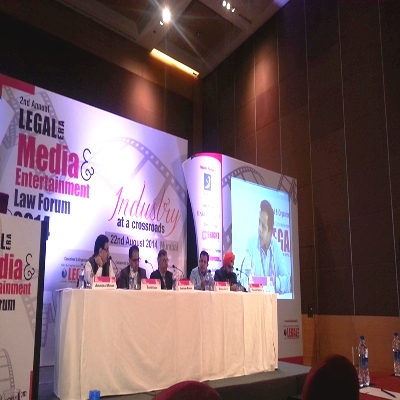
    These were the major points of discussion at the 2nd Legal Era Media & Entertainment Law Forum, where legal counsels for various broadcasters, emphasised on how the regulatory regime in India is very backward. A normal broadcaster today has to go through the tedious task of applying to the Ministry of Information and Technology (MIB), Department of Space (DoS) and WPC approvals. As per statistics, at present approximately 800 files for channel licence is pending with the MIB and some 600 with the DoS.


    Stressing on the rise of technology, Zee Entertainment Enterprises Limited (Zeel) director corporate Amitabh Kumar said that by the year 2020 linear transmission of channels will be replaced by video on demand (VoD). Kumar also stressed on the need for change in the way licences are given to broadcasters. “The broadcasters’ licence should have provision for VoD, VOIP etc. There should also be a provision, as per which the licence services should be allowed to expand, with no entry fee. The regulatory body must have scope for widening the ambit of services for lifetime,” opined Kumar.


    For Kumar, the regulators need to be pro-active rather than reactive to the new technology advancements.


    Content consumption is undergoing change. “Content cannot be controlled, it can be self regulated, which is working beautifully,” informed Viacom 18 Media group general counsel Sujeet Jain. He also brought to the fore how the functioning of Broadcast Content Complaints Council (BCCC) had forced even the I&B to retract from interfering in the content. “Government should completely take its hands off content,” he added.


    Agreeing with Jain was Singh and Singh Law Firm LLP partner Tejveer Bhatia who said that tariff of the VoD content should not be regulated. “If consumer is demanding a particular kind of content, the media industry should have the freedom to decide the tariff. There cannot be a benchmark on the demanded content,” informed Bhatia.


    According to Star India president and general counsel, legal and regulatory affairs Deepak Jacob the quality of content is directly proportional to the money spent on it. “If we want to produce high quality content for linear TV, there is cost that is attached to it. While in the past 15 years, the ARPUs have remained flat at Rs 150 to Rs 200 and the broadcasters’ fair share of this has also remained the same, the content cost has increased 20 times. So Rs 1 lakh per episode expense, 15 years ago, has today gone up to Rs 15 lakh to Rs 20 lakh per episode,” informed Jacob.


    Jacob also questioned the whole ‘must provide’ clause that was introduced by the Telecom Regulatory Authority of India (TRAI). “All this will kill broadcasters. What is the incentive that a broadcaster is getting for creating content for mobile devices or other platforms?” questions Jacob.


    Another important point raised during the panel discussion was that unlike in the US and UK, where channels are sold as events, in India, this arrangement doesn’t exist. “We should be moving towards a regime, where consumers can subscribe to events and not channels. And the subscription should allow one to view the content not only on TV but mobile, tablet or computer also. Content, not channel should be highlighted and consumers should be able to pay for content,” said Kumar.


    According to Jain, while with change in technology, the format and consumption pattern of the content will change, but the content will remain the same.  “The regulation has to incorporate this aspect and there should be a level playing field,” he opined.


    The panelists also suggested that a lot of licencing should go away and what the government should really look at, while moving towards convergence is providing ease of access. “The Prime Minister is talking about making broadband available across the country, but for this access will be needed,” said Jain.  He also highlighted the need for strict laws against piracy. “Taxation needs to be rationalised in order to give fillip to the sector. That apart, ministries will have to merge so that entire ecosystem can merge,” opined Jain.


    The session also touched upon the issue of carriage fees and if there was any end to it. According to Jacob, while carriage fee, which is an artificially created monster needs to vanish, placement fee is something which will not cease to exist. “Placement is an individual choice that broadcasters make. It will be unfair of broadcasters to expect a certain number of LCN, without incentivising the MSO,” he concluded. 

  • “With Taj Television, we bring the best of channels to our customers”

    “With Taj Television, we bring the best of channels to our customers”

    MUMBAI: Zee Entertainment has got on board a subsidiary company that will handle the distribution of the entire Zee Network in the form of Taj Television India. It will distribute channels of both Zee Entertainment as well as Zee Media.


    This apart, it will act as an agent for Turner International India channels as well. The latest addition and the start for Taj Television is the new general entertainment channel Zindagi.


    Commenting on the development, Zee MD and CEO Punit Goenka said, “I am very pleased to announce that Taj Television, which earlier was distributing Ten Sports channels, will now distribute all the channels of Zee Entertainment and Zee Media Corporation, while also representing Turner channels as its authorized agent. I would like to thank all our DTH and Cable partners who have been part of our growth journey and look forward to their continued support to Taj Television.”


    Arun Kumar Kapoor who was earlier CEO of MediaPro, Zee’s distribution JV with Star India, will be the CEO at Taj Television too. Rajesh Sethi will continue to be CEO for the sports broadcasting network of Zee which includes the Ten brand of channels.


    Said Kapoor, “Zee has been the pioneer in Indian television and has the experience and leadership capability to shape the future of pay revenues in India. With Taj Television being created as the distribution entity for the network, we bring together the best of television channels to our customers. We are confident that the new channel Zindagi will really connect with the viewers and help grow Taj Television offering even stronger. We are committed to quality and achieving leadership through fair and transparent business practices.”


    Taj Television president Atul Das commented, “With digitization having been completed in Phase I and Phase II cities in India, we now look forward to its implementation in rest of the country. Taj Television would aim to create a harmonious relationship within the ecosystem and create value for all stakeholders. With a leading portfolio of television channels, both in the national and regional space and with a powerful portfolio of sports programming, we are excited about the future of pay revenues in the country.”


    Taj Television has a list of 47 channels. Taj Television distributes Zee’s well-known brands like Zee TV, Zee Cinema, &pictures, Ten Sports, Zee Cafe, Zee Studio, Zing and a powerful repertoire of regional language channels including Zee Marathi, Zee Bangla, Zee Telugu, Zee Kannada and Zee Tamizh, besides the HD channels like Zee TV HD, Zee Cinema HD, Zee Studio HD and Ten HD. Taj Television also distributes channels of Zee Media Corporation with two national and eight regional channels. Taj is also distributing channels in the kid’s space and English movie segment, including HBO, Cartoon Network, Pogo, CNN and Warner Brothers as an authorised agent of Turner International.  

  • Taj Television to distribute Zee and Ten Sports channels; agent for Turner

    Taj Television to distribute Zee and Ten Sports channels; agent for Turner

    MUMBAI: Two months after the distribution joint venture (JV) between Star India and Zee Turner called MediaPro dissolved; Zee has decided to hand over its distribution to Taj Television India, a wholly owned subsidiary of Zee Entertainment.


    While initially Taj Television was the sole distributor of Ten Sports channels, it will now act as agent for Zee Entertainment, Zee Media and Turner along with Ten Sports. Zee’s sports broadcasting business will continue to be headed by Rajesh Sethi.

    According to sources the move is to integrate all the Zee channels in one bouquet and give an additional push to the whole network.


    After the news of MediaPro split broke, Zee Turner had announced that it will set up its independent distribution arm. In the latest, the Network has announced that the new distribution agreements with the various operators will be done under the name of Taj Television. Arun K Kapoor will be the CEO of Taj Television, who was the CEO at MediaPro, earlier.


    Taj Television has a suite of 47 television channels. This includes: Zee TV, Zee Cinema, &pictures, Ten Sports, Zee Cafe, Zee Studio, Zing, Zee Marathi, Zee Bangla, Zee Telugu, Zee Kannada, Zee Tamizh, Zee TV HD, Zee Cinema HD, Zee Studio HD, Ten HD, Zee News, Zee Business, HBO, Cartoon Network, Pogo, CNN, Warner Brothers and Zeel’s new channel Zindagi.

  • Zeel seeks shareholder approval to acquire media business of DMCL

    Zeel seeks shareholder approval to acquire media business of DMCL

    MUMBAI: A few months post Zee Media’s amalgamation with Essel Publishers that brought the English newspaper DNA under Zee Media, its sister company Zee Entertainment (ZEEL) has called for a meeting of its shareholders to approve the scheme of arrangement with Diligent Media Corporation’s (DMCL) media business undertaking (MBU).


    The notice to shareholders says that the MBU conducts various events on women empowerment, education, automobiles and real estate.  It also consists of a non-news TV channel licence and certain registered intellectual properties for TV formats of various gaming-based shows.


    The court convened meeting shall be held on 4 June. The scheme looks at the demerger of the MBU from DMCL and then vesting it with ZEEL. Equity shareholders of DMCL will be given preference shares by ZEEL in the ratio of one preference share of Re 1 of ZEEL for every four equity shares of Rs 10 each held in DMCL. The company says that  2,22,73,886 preference shares shall be issued in all.


    Through this business, ZEEL is planning to give an impetus to its event management capabilities. Planned are events and game shows.


    The scheme, post approval by shareholders, is subject to the approvals of the central government and the Bombay High Court. All statutory licences, permissions, approvals or consents relating to, vested with and/or held by DMCL will be with ZEEL. All DMCL employees will then be considered as ZEEL employees.


    DMCL was formed in 2005 with a 50:50 JV between Essel Group and Dainik Bhaskar Corp (DB). In 2012, Essel Group bought out DB’s 50 per cent stake.


    The entire DMCL is now under the two arms of Essel – Zee Media with DNA and Zee Entertainment with the MBU.

  • Media Pro: The unwinding of a joint venture

    Media Pro: The unwinding of a joint venture

    MUMBAI: When the Telecom Regulatory Authority of India (TRAI) came out with its regulation on the role of aggregators, everyone in the industry was sure that this would herald the death of content aggregators, at least in their current form. Industry insiders revealed that the leading and strongest content aggregator Media Pro would be among the first to break up, but it would take time, probably by mid-2014 or probably a little later.


    So when the announcement came last week that the Zee Turner and Star Den joint venture had decided to go their separate ways, it sent shock waves through the industry.  Some said it was premature and that the joint venture could have run a little longer. But sources indicate that the decision was taken at the very top between Subhash Chandra, Punit Goenka and Star India head Uday Shankar directly with only a handful of executives being informed. Industry insiders say that the joint venture had hired a consulting firm to give guidance on what should be done and when.


    The breakup will see the two partners setting up independent cable TV affiliate distribution teams. Exactly as it was like almost three years ago when both decided to get together to extract more revenues out of India’s reluctant cable TV operators and multi system operators (MSOs).


    Questions are being raised as to where will Media Pro India CEO Arun Kapoor – an old Essel group hand – be placed?  Will he head the Zee Entertainment distribution initiative or will he go the Star way? He was earlier group CEO distribution businesses at Essel Group (he also headed the joint venture which had been set up to distribute the Zee TV and Turner channels in India).


    Sources indicate that the Turner channels will continue to be distributed by Zee Entertainment at least for now without any cross network bundling. So does that mean that the Zee and Turner joint venture arrangement will in effect not be revived?


    Most observers expect COO Gurjeev Singh Kapoor to move onto the Star distribution team. Gurjeev began his media career with Zee and then went to Discovery before moving on to The OneAlliance as its business head. He was finally lured to lead Star Den Media services when it was set up as a joint venture between Sameer Manchanda’s DEN and Star India.


    The bets are out whether the Star Sports bouquet will be distributed by the Star India team or whether an independent team will be given that responsibility.  Most expect the former proposition to be realised.


    Industry observers state the Media Pro office in north Mumbai is a hub of activity with senior management working on splitting up the teams and also drawing up plans for recruitment wherever needed.


    “There is a lot of movement which is taking place currently, with some of the executives already going the Star India way,” says a source from the industry.


    MSOs and cable TV operators expect the two new teams to start approaching them soon with new packages and offerings. Others however indicate that this could be a month or two away, until Star and Zee draw up their individual teams. Gurjeev had told indiantelevision.com around a month ago that most of the MediaPro contracts with both cable TV and DTH operators are slated to come up for renewal by sometime in April.


    If that is true then Zee Entertainment and Star India don’t have much time on their hands. And the teams have their task cut out for them.   

  • Digital media eats into traditional media spend

    Digital media eats into traditional media spend

    MUMBAI: India’s low ad-spend-to-GDP ratio makes it one of the most promising ad markets globally, says IIFL’s Institutional Equities. In  a Media sector report titled “India: Ad-vert > Ad-word – Digital yet to come of age,” IIFL states that digital media is eating ad space with the other traditional forms of media like the print and television media and has been the fastest growing advertising media. This trend is likely to continue as the Internet user base expands at a brisk pace.


    India’s digital ad market grew at 43% CAGR over the past decade to ~Rs25bn, far in excess of the overall ad-spend growth of 13% during this period. Digital now accounts for 7% of the total ad spend, compared with 1% in CY03. A multi-fold rise in the Internet user base over CY03-13 (from 5m to 169m) and increasing acceptance of the digital platform among advertisers drove this growth. The supernormal growth in Internet penetration is likely to continue, driven by the Internet on mobile, the report states.


    However, India still is behind developed markets in terms of mobile technology and internet connectivity, hence there is no immediate threat to Print and Television advertising from the digital media ad spends, the report adds.


    Emergence of digital would materially harm the print industry in the medium to long term. English print is at a higher risk compared with regional print. Moreover, given the limited reach of the Internet, certain India-specific factors would help print to face competition from digital media. Ad spend on Indian print is expected to continue to increase in the medium term.


    “However, a larger audience base and diversified viewer profile make television advertising indispensable. Additionally television is a better-suited medium for certain types of ads such as new product launches or brand building. Hence, the impact of the Internet on television would be lower as compared with print. An analysis of ad spends for the past ten years reveals that print ad spend is more sensitive to economic growth. These factors make television ad spend more resilient,” says Bijal Shah and Jaykumar Doshi of IIFL Institutional Equities, authors of the report.


    Print media ad spends growth decelerated sharply from 16% CAGR during CY03-07 to a meagre 4.5% CAGR in the past three years. The slowdown in English was more pronounced than in vernacular languages. Vernacular papers benefited from continued strength in smaller towns and villages. A drop in ad spend from large national categories such as BFSI, telecom, and consumer durables, partly explains the weaker growth for print. Additionally, education and real estate, the two big categories, witnessed a sharp deceleration. Local advertisers maintained their higher spends, riding on the buoyancy in consumption.


    FMCG, Consumer durables and Auto constitutes to 65% of overall ad spends on television. Both FMCG and Auto ad spends have shown signs of slowing down, where as the Consumer durable companies are witnessing sluggishness in sales volumes, impacting the Television ad spend going forward and we can witness marginal growth in this segment. However Mobile handsets and e-commerce ad spends have supplemented in the overall as spends on television and have emerged as new categories. The television ad spend growth is expected to soften to high single digits.


    A sustained 6%+ GDP growth could accelerate ad-spend growth to 15%+, compared with 9% CAGR over CY10-13, as per IIFL’s Institutional Equities research report on media industry. The report further states that in medium term, TV and print should dominate ad budgets whereas digital would play a complementary role. Digital advertising is gaining traction, but limited reach and minimal fresh and vernacular content are limitations.


    Following the general elections, government ad spend, a key tailwind for print media in FY14, would taper. Thus, print media ad-spend growth could remain lacklustre in FY15 unless GDP growth picks up.


    Some key highlights from the report are:

    · India’s low ad-spend-to-GDP ratio and rising consumerism make it one of the most promising ad markets

    · A sustained 6%+ GDP growth could accelerate ad-spend growth to 15%+ compared with 9% Cagr over CY10-13.

    · Given its miniscule reach and slow Internet speed in India, digital is unlikely to emerge as a key advertising vehicle in the short-to-medium term

    · However driven by rising Internet penetration digital ad spends will continue to grow by 2-3 times the total ad spends  

    · TV would continue to be the mainstay for advertisers, given limited fresh content and absence of certain key target audience group such adult females on digital

    · Television ad spend is double that of digital in the US


    Few stocks recommended in the media industry:


    Zee Entertainment

    Zee Entertainment (Zee) is the best play on structural improvement in India’s pay television market and resilient consumption. Zee’s distribution joint venture with Star network, coupled with digitisation, would help secure its rightful share of subscription revenue. Furthermore, a diversified bouquet of channels and improving network market share would translate into above-industry ad-revenue growth. Meanwhile, Zee is investing in new channels and markets, which we believe lays the foundation for long-term growth.

    Call: ADD


    SUN TV Network

    Sun TV Network (Sun) is a strong player in the Rs36bn southern ad market with a leadership position in three of the four markets. Its diversified revenue stream and bouquet of channels, large movie library, and low-cost operations are advantages that are difficult to replicate. Subscription revenue is growing at a brisk pace and the momentum is likely to sustain. We expect ad revenue growth to resume following a drop for two consecutive quarters. At PER of 16x FY16ii, Sun is trading at ~15% its median multiple and at 33% discount to Zee. We believe the risk-reward is favourable.

    Call: ADD


    DB Corp

    DB Corp, through its flagship brands Dainik Bhaskar, Divya Bhaskar, and Divya Marathi, enjoys a well-entrenched franchise in several print media markets. Over the past two decades, it has evolved from a single-city newspaper to a strong player in several regional markets. DB Corp delivered double-digit ad-revenue growth even during periods of subdued ad spend. It has built a strong readership base and it is poised for gains in revenue market share. Healthy ad-revenue growth along with margin expansion would drive 20% EPS CAGR over FY14-16ii. At 16.4x FY15ii, scope for re-rating is limited; we expect returns in line with earnings growth.

    Call: BUY


    Jagran Prakashan

    Jagran Prakashan (Jagran), publisher of Dainik Jagran, India’s most read Hindi daily, enjoys a strong brand franchise in the key Hindi markets of Uttar Pradesh (UP), and Bihar and Jharkhand (BJH). Competitive intensity is on the rise in UP and BJH, which together contribute ~75% to Jagran’s ad revenue. DB Corp’s entry in Bihar and Hindustan’s readership gains in UP as per IRS 2013 are medium-term risks. In the interim, lower losses at subsidiaries would help margins. At 12.3x FY15ii P/E, Jagran is valued attractively and it is trading at ~35% discount to its three-year median multiple despite 17% EPS CAGR FY14ii-16ii.

    Call: ADD


    HT Media

    HT Media is one of the largest print media players in India with a well-entrenched franchise in the English and Hindi markets. We believe the long investment phase in new businesses is nearing an end. Two key properties, HT Mumbai and Hindustan UP, are at inflection points and should boost ad-revenue growth in a weak environment. Losses in digital would continue but will likely remain stable. At PER of 9.8x/7.9X FY15ii/FY16ii, valuations are compelling, given upside risks to our forecast of 20% EPS CAGR.

    Call: BUY

    Disclaimer: The views expressed in the research report accurately reflect such research analyst’s personal views about the subject securities and companies; and that no part of his or her compensation was, is, or will be directly or indirectly related to the specific recommendation or views contained in the research report.`
  • Zing sings a new tune

    Zing sings a new tune

    MUMBAI: Zing, the music channel from Zee Entertainment, has undergone a complete change in look and strategy for the fourth time starting 1 April, since its inception in 1997.

     
    With the new rebranding, the channel aims to strengthen its position in the 15-24 year olds by adding fresh music and new fiction content to the current programming. The new positioning is targeted at strengthening Zing’s position in the minds of the youth.


    The channel was revamped earlier as Zee Muzic and Music Asia. However, explaining the rationale behind the new positioning, ZEE Niche Channels EVP & business head Anurag Bedi said, “Today’s youth believe in living out loud. They believe in carving their own niche and learning from their own experiences instead of relying on others. They would rather make their own mistake and learn from that than not follow their heart. This is exactly what we would like to reiterate through our positioning. We want them to live with a zing, to live ‘ekdum’ awesome!”


    In terms on content, Zing now plans to venture into the space of fiction shows. According to the statement released earlier, these shows are set to epitomise the spirit and lifestyle of the youth across the country. The first show will be launched in the month of May and will be in line with the channel’s new positioning. An hourly block of content will be created, which will be increased as the year progresses. Apart from that, a refreshed library of Bollywood music will be interspersed with the existing programming.

     
    The channel has also tied up with the film 2 States and has roped in the lead pair Alia Bhatt & Arjun Kapoor for a promotional video.  The channel, with its all new avatar and promising new fiction shows will keep the youth hooked and wanting more.

  • Ajay Bhalwankar to join MSM’s Sony Entertainment Television from 7 April

    Ajay Bhalwankar to join MSM’s Sony Entertainment Television from 7 April

    MUMBAI: Almost a month-and-a-half ago, Indiatelevision.com reported that one of Zee Entertainment’s most cherished employs, Ajay Bhalwankar, has put in his papers as the content head-Hindi GECs. Now, it is learnt that he is joining Sony Entertainment Television as the chief creative director, effective from 7 April, 2014.


    Bhalwankar will report to Sony Entertainment Television (SET) Sr. Executive Vice President and Business Head, Nachiket Pantvaidya. He will provide creative leadership and direction for the channel and will lead the Programming and OAP teams.


    He said, “I’m delighted to join SET again and hope to provide valuable programming inputs across content on the channel. It is an extremely challenging role and I am looking forward to this exciting journey.”


    Bhalwankar is an industry veteran with over 20 years of experience and has worked with MSM in the past as the programming head for SET from November 2009 to June 2011.


    Interestingly, earlier we even reported that Sony is trying to strengthen its team by bringing in the best people from the industry. This seems to be a step ahead towards that.


    Nachiket Pantvaidya said, “Ajay is an extremely experienced individual with a rich experience of over 20 years in Journalism and Television, spanning various roles of creating, writing, programming, producing and directing entertainment content. Under Ajay’s leadership I am confident that we will make the right strides towards our vision of best in class content for SET.”


    According to inside sources, Bhalwankar’s last date at Zee entertainment is 21 March, 2014.


    Bhalwankar joined Zee Entertainment in 1994 as the assistant director of Dream Merchants – the company’s advertising and marketing magazine. As one of the oldest employees of Zee, Bhalwankar has been instrumental in creating path-breaking content for the network. He also spearheaded the launch of Zee Anmol. He was also instrumental in launching Music Asia that later became Zee Muzic and is now called Zing. He even worked on the launch of Zee Marathi in 1999. He later became Zee Marathi’s business head and then vice president of Zee Marathi and Zee Talkies. He took charge as the programming head of Zee in 2008. Bhalwankar had then quit from Zee in October 2009 to join Sony Entertainment at the same position. However, after a brief stint, he left Sony to join back Zee.


    Now, Bhalwankar is again moving back to Sony. We hope he will be instrumental in bringing back the channel that has been struggling in the ratings chart to the top position.


  • Viacom18’s Rajesh Iyer joins Zee Entertainment as business head

    Viacom18’s Rajesh Iyer joins Zee Entertainment as business head

    MUMBAI: Zee Entertainment today announced the appointment of Rajesh Iyer as business head – new initiatives in Hindi Broadcast. Iyer will report to Zee Entertainment chief content and creative officer Bharat Ranga.


    Speaking on his appointment Ranga said, “Rajesh is a superior talent with marketeering approach and consumer focus. We are delighted to have him on board to create some thrilling benchmarks in our industry. Zee family welcomes Rajesh and wishes him all the success.”


    Iyer said: “I have always admired the Zee group, who have been pioneers in the Satellite and Broadcast space. To be a part of this ever-growing dynamic industry is going to be challenging and I further, look forward to developing and strengthening the brand.”


    Iyer brings with him over 13 years of experience in the areas of marketing and business. His last assignment was as vice president marketing for Colors, Viacom18 where he set up the marketing operations including teams and processes, planned and implemented the marketing strategy for the launch of the brand. Prior to joining Colors, he worked with Star India on Star Plus, interactive services and content and communication for Star Movies and Star World. He has also worked with Ambience Publicis and Ogilvy & Mather.


    Iyer’s appointment is with effect from 19 March 2014.