Tag: Zee Entertainment.

  • Channel V vice president – programming Lavanya Anand resigns

    Channel V vice president – programming Lavanya Anand resigns

    MUMBAI: Channel V vice president – programming Lavanya Anand has put in her papers at the company.


    Anand served as the content head of Star India’s music channel Channel V from December 2012. In this role, her primary responsibility was to create and manage content on the channel – both fiction and non-fiction – across genres. She was also involved in the strategic running of the channel.


    With more than 15 years of experience in the Indian broadcast entertainment industry, Anand has been a part of over 75 shows in different media companies like UTV, Yash Raj Films and Zee Entertainment amongst others with a particular focus on content creation.


    Sources confirmed to Indiantelevision.com that the new hire for the designation is currently under process by the channel.

  • NXT Digital signs RIO deal with Taj Television

    NXT Digital signs RIO deal with Taj Television

    MUMBAI: The Hinduja Group’s Headend In The Sky (HITS) service under the brand name NXT Digital has finally struck a reference interconnect offer (RIO) deal with Zee Entertainment’s distribution subsidiary Taj Television India, by virtue of which it will be able to include Zee Entertainment Enterprises Ltd (Zeel) and Turner International India’s channels in its bouquet of offerings.

    As was reported earlier by Indiantelevision.com, the matter was with the Telecom Disputes Settlement and Appellate Tribunal (TDSAT) and the two companies informed the Tribunal that Taj Television will provide its signals to Hinduja Group’s Grant Investrade as soon as an inter-connect agreement was signed.

    Zeel and Turner International were the only major broadcasting networks that were missing from the service’s bouquet. This deal will see NXT Digital, the rapidly growing platform in phase III areas, having a wholesome catalogue to offer to the operators, as well as reach a larger audience.

    Speaking on the signing of the new deal, a source from close to development told Indiantelevision.com, “The channels will be available on an ? la carte basis. And we are certain that this deal will help NXT Digital garner an enhanced reach.”

    This gives a definite edge to NXT Digital, which is the second HITS player in the country, the first being Jain HITS NXT Digital was launched earlier this year with state of art technology. On the other hand, Jain HITS is currently in the process of upgrading its technology.


    Also read:


    Taj TV to supply signals to Grant Investrade after signing ICA

  • Ashish Golwalkar to join Sony as Head of Non Fiction

    Ashish Golwalkar to join Sony as Head of Non Fiction

    MUMBAI: Ashish Golwalkar who recently resigned from the post of Senior VP – Programming Star Plus is set to join rival broadcaster Sony as head of non-fiction.


    A source close to the development said, “It was one of the last holes that needed to be filled and Ashish is the best fit. He is likely to join from December 1.”


    Before Star he was associated with Zee Entertainment Enterprise Limited for over 11 and half years. The last post that he had in Zee was as Head of Non-fiction Programming.


    The company had earlier appointed Danish Khan as EVP & business head for Sony Entertainment Television.


    Additionally, as a part of Khan’s core team, the company roped in Anup Vishwanathan as SVP and head marketing, Anshuman Sinha has come on board as SVP and senior creative director, whereas Ritesh Modi as VP and creative director. The trio alongside Khan will be working with a battery of seasoned professionals at MSM. 

  • Zee Entertainment forays into theatre; plans 100+ productions

    Zee Entertainment forays into theatre; plans 100+ productions

    MUMBAI: In an attempt to be present across all verticals of entertainment content, Zee Entertainment Enterprises Ltd (Zeel) has now forayed into theatre under the Zee Theatre brand name.


    Zeel has taken this initiative so as to make theatre content available through various viewing platforms like online, on-air, on-ground, in-transit for global audiences to consume at their convenience as well as archiving the productions for future generations.


    Zee Theatre will partner with renowned playwrights and theatre stalwarts to produce over 100 plays over the next three years.


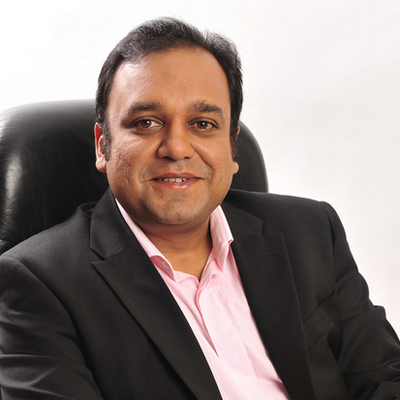
    Zeel MD and CEO Punit Goenka said, “Theatre has been a part of our DNA for centuries. With Zee Theatre our vision is to preserve this heritage and take these timeless stories to audiences across the country and the rest of the world. It is a very proud moment for us to be able to bring theatre to mainstream entertainment and give the industry its due.”   


    “After television and cinema, theatre will be the next content vertical for us at Zee. With Zee Theatre, we are opening up a new genre for multiple screen consumption. This is in line with our strategy of offering differentiated content to our discerning audience base,” he added.


    Zee Theatre will bring together works of some of the most acknowledged and renowned playwrights like Mohan Rakesh, Jaywant Dalvi, Vijay Tendulkar, Surendra Verma, Mahesh Dattani, Ranjit Kapoor, Shafaat Khan and many others from Hindi, Marathi, Gujarati, Bengali and English theatre.


    Stalwarts such as Ranjit Kapoor, Mahesh Dattani, Usha Ganguli, Vijay Kenkre, Dr. Vijaya Mehta, Atul Kumar, Ishan Trivedi, Suman Mukhopadhyay, Chandrakant Kulkarni, Rajan Tamhane and many more will be bringing alive some of their best stories on this platform with plays such as RudaliSandhya ChhayaPiya BehrupiyaJanpath KissWhite Lilly Night Rider30 Days in SeptemberDoll’s House and Ma Retire Hoti Hai amongst others.


    Zeel chief creative – special projects Shailja Kejriwal added, “The beauty of theatre is that it takes you into a fascinating world of stories across genres from drama and suspense to social issues, musicals, classics and satire in a manner not dealt with on any other medium. With Zee Theatre we aim at nurturing this rich content for present and future generations to continue the legacy, which has been cherished by veterans for decades. I would like to thank the entire theatre industry for extending their support for this initiative.”


    Zee will leverage its ability to make theatre available across multiple platforms such as the internet, mobile, DTH, television, in-flight, screenings at multiplexes and educational institutes in addition to existing on-ground performances making theatrical content available to the widest possible audience at their convenience.

  • TRAI open house: Broadcasters root for tariff distinction between subscribers

    TRAI open house: Broadcasters root for tariff distinction between subscribers

    MUMBAI: With an aim to get the broadcasters’ viewpoint on tariff issues related to commercial subscribers, the Telecom Regulatory Authority of India (TRAI) held an open house discussion in Delhi on 18 August.


    While welcoming the open house initiative held under TRAI chairman Ram Sewak Sharma, the Indian Broadcasting Foundation (IBF) member channels discussed issues including differentiation between domestic and commercial subscribers for provision of TV signals, the criteria for drawing distinction between ordinary subscribers and commercial subscribers, tariff framework both at wholesale and retail levels, transparency and accountability in value chain to effectively minimise disputes and conflicts among stakeholders and engagement of broadcasters in the determination of retail tariffs for commercial subscribers.


    IBF president and Star India CEO Uday Shankar said, “It is inconceivable that any sector regulator would actually equate five star hotels and commercial establishments with domestic consumers as far as tariffs are concerned. But that’s exactly what TRAI has done with rates for pay TV channels. I am not sure what exactly the regulator is trying to achieve with the present dispensation, i.e. five star hotels availing TV content at subsidised rates especially when they charge a leg and arm for a room, a meal or even a bottle of water? It appears to be a case of misguided regulatory zeal. I hope better sense prevails and the regulator does what is in the interest of its primary stakeholders, i.e. broadcasters and distribution platforms and not five star and four star hotels.”


    IBF secretary general Girish Srivastava added, “In keeping with the priorities of the current government of improving ease of doing business in India, such fixation is not warranted and forbearance should be the way forward. We believe that the regulator will factor that putting a ceiling on tariff will not help in promoting and protecting the interests of the ordinary consumers but will serve as an aberration to the growth story of the sector. Broadcasters have been unvarying and undeviating on this front and the regulator will hopefully keep this in mind before deciding on a regulation.”


    According to Multiscreen Media Limited general counsel Ashok Nambissan, commercial and residential subscribers are two completely different categories. “The residential subscriber consumes television content for his or her own use whereas the commercial subscriber provides television content for his customers to propagate the business of his establishment. Tariff regulation in today’s age is an anomaly: in any event it should not exist for commercial subscribers as a category whether at the wholesale or retail level and should be left to the market,” he said.


    Zee Entertainment president – legal & regulatory A. Mohan opined, “All along it has been TRAI’s consistent stand that there is a distinction between ordinary and commercial subscribers and the same has been recognised by various judicial forums such as the Hon’ble TDSAT and the Hon’ble Supreme Court of India.  This stand of TRAI is also reflected in various tariff orders of TRAI, except the last one, that the tariff applicable to commercial subscribers is under forbearance. Since the commercial establishments will use the television services for commercial exploitation, whether directly or indirectly, the tariff applicable for ordinary subscriber, which is frozen since the year 2004 (which is a subsidised tariff) cannot be applied to commercial subscribers.”


    Star India president – legal & regulatory Deepak Jacob said, “The Supreme Court has time and again in sectors such as oil and gas and power, clearly upheld the principles of differential tariffs for commercial and domestic subscribers. The rationale of differentiation is based on an understanding of motive and purpose i.e. commercial establishments have a clear profit motive and that the end usage is for a valuable benefit that accrues to and is built in to the charges paid by the consumer. It is also important that the regulator respects the mandate of Parliament and acts in accordance with laws laid down by the legislature by ensuring that the TRAI regulations/tariff orders are not in derogation of or repugnant to the provisions of Copyright Act, which is the principle legislation that governs content owners including broadcasters. The Copyright Act unequivocally provides for a separate dispensation in so far as commercial establishments are concerned and hence we hope that the regulator keeps the same in mind while formulating the new tariff regime.”


    BBC India COO Naveen Jhunjhunwala added, “We strongly advocate a distinction between ordinary and commercial subscribers as far as tariff is concerned since the place of viewing the TV signal and type of usage of TV signals is inherently different in both these categories. Having a global presence, we have seen that the regulators have left determination of tariffs to forbearance thereby ensuring dynamic competition.  With Government focus on making India an easier place to do business, leaving things to market forces will ensure growth and be in line with international scenario.” 

  • Dish TV, Hathway move to ‘overweight’: Morgan Stanley

    Dish TV, Hathway move to ‘overweight’: Morgan Stanley

    MUMBAI: Brokerage firm Morgan Stanley has some good news in store for direct to home (DTH) player Dish TV and multi system operator (MSO) Hathway Cable & Datacom. The firm has upgraded both Hathway and Dish TV to ‘overweight’, while also raising their target price, that represents an upside of 37 per cent and 20 per cent respectively, over the next 12 months.


    As per an Economic Times report, Morgan Stanley has downgraded Zee Entertainment to ‘equal weight’ with downside of 10 per cent. “Zee outperformed Hathway and Dish by 12 per cent and 24 per cent, respectively, in 2014 as they believe that a large part of the potential improvement in subscriptions for Zee is in the price,” said the report. 


    While upgrading Dish TV from ‘underweight’ to ‘overweight’, the target price of the DTH platform has been raised from Rs 49 to Rs 82. Not only this, Hathway has been upgraded from ‘equalweight’ to ‘overweight’, with a current target price of Rs 91 from Rs 59.   


    According to the brokerage firm, there is a sense of urgency on monetisation by the MSOs, which can push up realisations for both Hathway and Dish TV.


    “MSOs were unable to effect any sizeable improvements in realisations in 2014. However, the push from broadcasters to improve their subscription share has forced MSOs’ hands,” added the media report.


    As per Morgan Stanley channel checks, MSOs are responding by introducing higher value packs, raising prices and moving to a prepaid model.


    The firm expects these efforts to boost realisations for MSOs and create headroom for Average Revenue Per User (ARPU) expansion for DTH. 


    While an improving macro-economic outlook can help lift TV ad spending, margins could remain muted in F2016 for Zee due to new launches. Hence, Morgan Stanley prefers Hathway Cable followed by Dish TV and then Zee Entertainment Ltd.


  • Zee Entertainment presents ‘Zee Bangla Cinema Originals’

    Zee Entertainment presents ‘Zee Bangla Cinema Originals’

    MUMBAI: Zee Entertainment Enterprises Ltd (Zeel) has been entertaining people of West Bengal with its GEC, Zee Bangla for the past 15 years. Further, with a vision of celebrating Bengali films and taking them to Bengali speaking people across the country, Zeel launched West Bengal’s first 24 hour movie channel, Zee Bangla Cinema (ZBC) in 2012. This year, the network has taken a new step by creating great films for television through its initiative – ‘Zee Bangla Cinema Originals.’


    Speaking on this initiative, Zeel MD & CEO Punit Goenka said, “At Zeel, we are constantly looking at creating new avenues of entertainment for our audiences and this innovative step is poised to help showcase more of the great works of the immensely talented directors of West Bengal. We are confident that Zee Bangla Cinema will fuel the growth of the West Bengal film industry.”


    This latest endeavour of ‘Zee Bangla Cinema Originals’ is an industry first for West Bengal. It is envisioned to contribute and continue the proud legacy of Bengali films by creating engaging original film content, which will be showcased exclusively on Zee Bangla Cinema. With a platform that reaches out to almost 7 million people on a weekly basis, ‘Zee Bangla Cinema Originals’ will enthrall the Bengali audience with a brand new film every month.


    ‘Zee Bangla Cinema Originals’ announces its first film titled ‘Ekla Cholo’, which will premiere on Zee Bangla Cinema on Sunday, 18 January 2015.


    Bengal has a rich legacy of creating cinema which is timeless. Film makers like Satyajit Ray, Ritwick Ghatak, Mrinal Sen, Rituparna Ghosh and many more have cultivated a global audience by creating engaging films. As a first mover in the market, Zee Bangla Cinema has always looked at providing high quality film entertainment to its viewers. With the largest Bengali film library, ZBC has been at the forefront of Bangla film entertainment.

  • “Media will be different in 10 years from now”: Dr. Subhash Chandra

    “Media will be different in 10 years from now”: Dr. Subhash Chandra

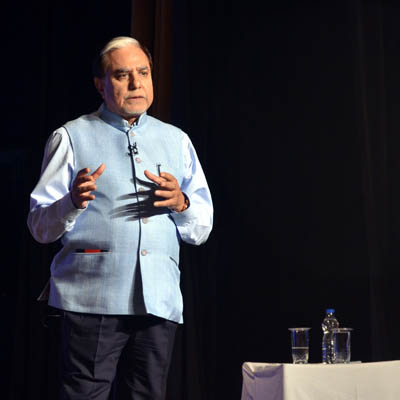
    MUMBAI: “Failure is only when you accept it,” said Essel Group and Zee chairman Dr. Subhash Chandra, right before he stepped on to the stage to address more than 200 entrepreneurs and management students in the Mumbai based Welingkar Institute.


    Dr. Chandra, who hosts Dr. Subhash Chandra (DSC) Show, believes that even if 5 per cent of the audience benefits and becomes successful entrepreneurs, his job is done. “You may call it a CSR activity or my desire to give back something to the society. Through the show, I share my experiences with the youth,” he said on why he decided to mentor through the show aired on Zee News every Saturday.


    According to Dr. Chandra, learning is a two way process. “While people are learning from me, I am learning from them,” he added. 


    The show doesn’t end with him interacting with the audience during the shoot, but also sees many writing to him for suggestions. The man behind one of the most successful media ventures, Zeel, feels that things have changed now. “45 years ago, businessman was considered to be a thief,” he said and added that today Angel Investors are willing to invest in young and budding ideas in the country.


    However,he believes that more sectors should be opened for people and corruption needs to be tackled in order to ensure that small and medium level businessmen do not leave the country, as they feel operating in India is unviable. 


    Dr. Chandra is of the view that digital will grow in media. “We haven’t even reached the surface. Media will become very different 10 years from now,” he said adding that the monopoly of publishers will be gone in the future. 


    Through the show, Dr Chandra has already picked up close to 10 budding entrepreneurs, impressed by their talent, and absorbed them in his own empire.


    Ask him the key ingredient of becoming a successful entrepreneur and Dr. Chandra is quick to respond, “Have the conviction and go for it.”


    The Dr. Subhash Chandra (DSC) Show while began its initial shoot in an auditorium in Noida, Delhi, but soon saw tremendous response from several colleges and started travelling to different B Schools in the country, the first one being IIM Ahmedabad.  


    The 20th episode of the show which was canned in Mumbai on 3 January was shot in two parts: one with the entrepreneurs and the other with a mix of management students and entrepreneurs. “We had to divide it in two parts looking at the tremendous response from the people here in Mumbai,” said a crew member from the show who always travels with the man along with the core members behind putting it all together.


    According to Dr. Chandra, the attrition of the company should be at least five per cent. “This helps one remove the mediocrity from the bottom. Only if the attrition is 10-15 per cent, then it is the experience that is getting drained,” Dr. Chandra said during the course of the show. 


    The man is not only a great businessman, but a great showman as well.  With no retakes or script, Dr. Chandra after sharing his own experience with the audience talks and answers audiences’ queries patiently and at ease. 
     

    He is a firm believer that while experience can be acquired and knowledge transferred, talent can neither be acquired nor transferred. “You either have it or you don’t. There are no boundaries for an entrepreneur,” he said.


    According to Dr. Chandra, employees are of four types: Detractive (those who do not want to work), passive (those who have mastered the art of survival and they do not contribute to the work), participative (People who work as directed), contributor (they take responsibility and are ready to work) and generative (they are the ones who generate ideas and execute it).


    “Break the rules,” Dr. Chandra announced adding that anyone can become an entrepreneur. 


    During the show, he also delved into how the Human Resource (HR) should function in an organisation. “Spend more time with the best performers. Understand what they are thinking and working and transfer the same to other employees,” he said. 
    “People are demotivated by the managers, not the company,” Dr. Chandra further added. 


    He emphasised the need for risk assessment. “It is only if one doesn’t measure all the risks that an idea fails,” he said adding, “Failure teaches faster and better than success.”


    The man who has created one of the biggest media firms concluded, “If I knew that media will become such a big monster, I wouldn’t have started it.”  


  • “More than skill and knowledge, Zee focuses on talent of an individual”: Rajendra Mehta

    “More than skill and knowledge, Zee focuses on talent of an individual”: Rajendra Mehta

    The performance of a company depends largely on how happy its employees are. And this precisely is the reason why one of India’s top most General Entertainment Channel (GEC) Zee Entertainment, has been able to climb the ladder of success at the quickest pace. The Network tests how happy its employees are… It conducts an annual Employee Survey, which measures employee opinions and perceptions, based on the level of trust between management and the employees. Called the Trust Index, Zee has seen an increase in it from a mere 65 per cent in the previous year to 74 per cent this year. The Network is now also listed as ‘The Best Company to work for in the Indian M&E (Media & Entertainment) Industry’ (as per a study conducted by Great Places To Work).


    Zee engages with its employees globally through its ‘Samvad’ philosophy, which ensures prosperity both at a micro and macro level and of the individual and the Company.


    The one connect between the employees and management is Zee & Essel Group Human Resource Head Rajendra Mehta. With a rich experience of over 17 years, Mehta has worked with various companies representing diverse sectors, ranging from engineering, lighting, mining, retail, commodity trading and media, giving him profound insight into implementing human resource plans.   


    In a t?te-?-t?te with Indiantelevision.com’s Seema Singh, Mehta talks about the reason behind the increase in the Trust Index, why one should join Zee, the best employee policies and much more…


    Excerpts:


    What according to you has helped Zee become the ‘Best Company to work for in the Indian M&E Industry’?


    Building an environment, which is a great working place, to my mind is a journey. And I believe that we are trying to build upon different pillars of strength, which help the company become a great place to work. Zee is one organisation which gives you an opportunity to do what you enjoy doing. It has all the ingredients of entrepreneurship, has the cheek of innovative culture and provides the opportunity to experiment with ideas. Hence, as a professional, if I have ten ideas, I will have people who support them and do not act as roadblocks.


    Even the shareholders are very open to new ideas as they want to experiment with them. The biggest advantage with promoter shareholders is that they don’t want a stagnant status quo and the need to keep evolving is the biggest strength of this workplace.


    How does the Trust Index work?


    In 2012, we came up with a long-term mission objective exercise. It was called the ‘2015 Commitment’. So, we worked on it in 2012 and at that point of time, we were assessing the strengths and weaknesses of the organisation and in our kind of industry, it is the people who make or break it. And therefore, we decided to work around a people-oriented strategy because they are critical to the success of our business. Then, we identified the fact that if we want to know exactly where we are, the only way to find out is to test our Trust Index based on some recognised framework.


    We chose the ‘Great Place to Work’ format because it actually does peer comparison; thus, comparing us with others in the media industry and also the top 50 organisations in India. In the first year of our Trust Index, we were at about 63, which is a low from a media perspective. We have worked hard on this since then and now, the scores have jumped to 74 and we are on par with the top media companies.


    The plan is to surge ahead and feature amongst the top 50 companies, which include the FMCGs and telecom companies. We want to be right on top because the entry and exit of people doesn’t only happen from the media sector. So, we should be as interesting an organisation for people from other domains to join as well.


    We are doing a lot of promos on the social media to vigorously promote Zee as a brand and as a result, there is a decent following that we have created. We have embarked upon a fulfilling journey.


    What is the strength of the workforce in Zee? What measures have you adopted to retain employees?


    Zee Entertainment has about 2,600 employees globally. Our presence is in 169 countries with full-fledged offices in Johannesburg, South Africa; New York, USA; Singapore, Dubai, UAE; China, Mauritius among others.


    Zee has one of the least attrition rates. The environment is conducive to people freely experimenting with ideas. We also ensure that the issues that employees face are resolved immediately so that it doesn’t keep them from working efficiently.


    Do you think enough people are looking to enter the media industry? What kind of promotional activities does Zee use to inform people about the industry and the company?


    I think people don’t have much awareness about the media and entertainment (M&E) industry. That’s why we do a number of campus sessions, activities online as well as engage on social media to create visibility about Zee. We are trying to attract people from other domains as well. I feel people don’t really understand the subsets of media.


    The domain is far more forward-thinking than meets the eye and is looking good and glamorous to boot. We therefore, try to talk about the positives as this domain has tremendous growth potential and is here to stay.


    What we also do is create case studies about Zee, which is then studied across premier institutions in India and abroad. We take campus sessions, where we talk about media, because more often than not, we are on the lookout for fresh blood, who we can then groom and they later become long-term assets to the company.


    How often do you hire? What do you look for in a person while hiring?


    It is an ongoing process. Say our attrition is 10 per cent, then there is still a churn of 200 people and hence, we need those many employees. On top of that, business is growing, new segments are getting added as well as new channels are coming in place; digital is taking shape and so we keep adding on people in these departments. There is a significant hiring spree. We hire about 50 – 55 people from good reputed B Schools every year and fortunately, we find people who end up being long-term resources for us. Generally, the professional lifespan of a management trainee extends over 10 years here. This implies good retention.


    More than skill and knowledge, we focus on the talent of an individual. We spend maximum time in identifying the talent suitable for a respective post.


    How different are your HR policies in comparison to other organisations?


    My belief is that Zee is far more forward looking in terms of its HR practices. I can safely say that from an HR person’s perspective, we are far ahead of others.


    What are the incentives and perks given to employees? Do they help to retain people in the organisation?


    I think the people-oriented practices that we have such as learning skills and development, capability building and so on. We want to build our learning skills as an organisation. Talent acquisition is focused upon while hiring personnel on the basis of strengths. We have a ‘Samvad’ philosophy, which we follow in this regard.


    For Performance Management System, I think we have the best tools. We believe in nine-blocker Performance Management System, and we have turned our organisational structure in such a way that it would be doing far more justice to people and their performances post this method.


    We have moved away from grade to band structure, which is far more forward looking and we believe that will bring some cultural changes.  Earlier, we had 10 grades and now we have moved to five band structure. The spirit behind this is far deeper and so, it is not a simple shift from a grade to band structure, but it is with the intent of real change in attitude, in the thought processes of people and what growth means for them and the organisation. The spirit behind it is what counts the most while implementing it.


    How do you keep your employees suitably engaged?


    We look at not only engaging employees conducive with the environment of the organisation, but also keeping in mind his or her role. Both are critical to us and we keep assessing the happiness quotient around these two broad objectives. If there is a conflict of interest, we resolve it faster. If there is a mismatch of talent and the respective role, then we try and change the role as soon as possible. We keep changing the scenario to make this place a happier one.


    We have trainings which we run through a practice called ‘Zenith’, which is our capability development initiative. Last year, we trained more than 1,700 employees through this programme. Our focus is not only on skills, but also behavioural transformation areas.


    What is Samvad?


    It is a people-oriented philosophy and it is all about the effectiveness of leaders. Talent is the basic foundation of Samvad.


    Zee is an organisation, where it is said that people can become business heads after spending 7 – 8 years in the company. Is that so?


    We believe that taking up a post is not about having a wealth of experience, but it is a matter of talent that people possess. And if people have the necessary talent, we don’t hesitate in pushing them up the ladder. This also helps them gain in maturity and confidence.


    How are people motivated to experiment? Don’t they face flak for their failures? 


    This organisation is supportive of failures after experimenting. Even if certain ideas fail, we do not take punitive action. On the contrary, we keep pushing people to experiment with ideas, because we believe that of the 10 experiments, even if two or three are implemented well, it will give you a humongous impetus in business performance. Failure is an integral part of growth and the organisation is supportive of that.


    What are the highlights of Zee’s employment policies?


    You can aspire to be the business head in the quickest possible time frame. It is an entrepreneur-friendly organisation, where you can experiment with novel ideas, and this place keeps you happy. The HR here supports people in both their personal and professional aspirations. We as HR have a far more inclusive approach in the business and are not sitting at arm’s length.


    What are the policies with regard to women employees?


    We have a forum on the internet called the ‘Zee Connect’. People can come up and if they have any grievance or feedback they can write to the forum. We also have a formal structure of addressing various concerns of women and are very sensitive to them. Also, we have a lawyer onboard to ensure there is an impartial investigation with regard to complaints. There are senior women from the organisation in the Committee, who are free to take decisions. We have even sacked employees and have also found that at times, complaints have been malicious in nature. There is absolute impartiality.


    What are the trends in the media and entertainment (M&E) industry, which would attract fresh blood?


    I think digital is a changing trend, which will attract. Secondly, digitisation will create multiple space for a very niche genre, and that will give individual geeks that opportunity to do what they enjoy doing in their characteristic manner. From content consumption, that will continue to grow. It will have its own niche and people can experiment and do well in the segment.  This whole space is growing rapidly in terms of size and volume. That will give rise to opportunities of employment and being associated with this domain.


    What keeps you busy?


    I think complete focus on growth areas and therefore, thinking about new opportunities and how we can deploy our people. What keeps me busy is also learning and development. If we have to be focused on the future, then we will have to keep building skills. Engagement is a big domain. My foremost aspiration will be that we don’t lose productivity of a single employee, just because he is now disengaged. It is our grave concern and so we keep addressing that issue. We keep building a conducive environment, which is positive so that people feel part of this business, and this helps us to hire with ease. Creating a bigger pool of talent that aspires to be here, is the biggest challenge.


  • Zee will launch a new GEC towards the end of FY15, says Punit Goenka

    Zee will launch a new GEC towards the end of FY15, says Punit Goenka

    MUMBAI: The delay in digitisation of phase III and IV markets has got even the industry giants to speak up. And adding to the list is ZEEL MD and CEO Punit Goenka who feels that the delay in digitisation will invariably have negative impacts on the overall industry.

    In an interview with CNBC-TV18’s moneycontrol.com as part of the IDFC Annual India Conference, Goenka spoke about the delay in digitisation, a new GEC launch and his expectations from the advertising revenue in FY15.

     “The growth levels have slowed down for the industry and therefore for us, as well. The consumer billing has not started to happen the way it was envisaged. All this is having a negative impact on the overall industry,” he said.

    When asked if the delay caused a drop in subscription revenues, Goenka explained that the dip in subscription revenues was mostly due to some accounting changes.

    He elaborated, “The dip is largely on account of some accounting changes that we have had since the aggregate of paper that came out of TRAI. Like-for-like, these are flat or just low single digit kind of growth but as I said, it is attributable to the ongoing delay in the digitisation process. But I do expect that this will pick up hopefully in the next fiscal itself.”

    Goenka also revealed that Zee Entertainment plans to launch a new Hindi general entertainment channel (GEC) towards the end of FY15.

    “It will be in line with the cost structures of any other GEC because it is a mainstream GEC launch competing with the current incumbent players in the market. So, it will not be very different from those,” he said.

    Speaking about the sports business, Goenka explained that the losses seen in the sports business were envisaged by the company and they had guided that the losses would be similar to that seen last year.

    Goenka added that he expects advertising revenues to see 11-12 per cent growth in FY15 as from 8-9 per cent seen in earlier two fiscals. He said, “We have seen some improvement in the ad spends especially during the first half of the year. I do expect that the advertising revenues will be seeing healthy numbers from 8-9 per cent that we have been seeing over the past few years to 11-12 per cent.”