Tag: ZDF

  • One Life Studios acquires 3 crime thriller shows from ZDF

    One Life Studios acquires 3 crime thriller shows from ZDF

    MUMBAI: One Life Studios (OLS), a subsidiary of Swastik Productions, has been on a roll, racking up big series one after the other.  The premium content creation and distribution company has acquired 3 crime thrillers shows from Germany based ZDF Enterprises these include ‘London Kills’(2 Seasons, 5 Episodes), ‘The Team’(1 Season, 8 Episodes), and ‘Team Reloaded’(1 Season, 8 episodes). OLS has acquired all TV rights and digital rights along with subtitling and dubbing for English, Hindi and all Indian languages across the SAARC territories including India.

    What’s more, One Life Studios is also the exclusive distributor of the award-winning American series “Breakers – Saving Harper Ross”, a Deo TV original. This is a 10-episode nail-biting thriller about Jack who is reliving the same day over and over again. A crime series wrapped around mystery and mind-boggling events, Breakers has won numerous awards, including “” Platinum Remi Winner for Best TV Series at the 51st Annual WorldFest-Houston International Film Festival 2018”.

    Speaking on these exciting developments, One Life Studios Producer/Managing Director Rahul Kumar Tewary stated “It has always been our endeavour on enthralling audiences across geographies with engaging content. We will continue to connect people across borders by bringing these stories on their screens. These acquisitions are a testament to this very focus of our organization.”

  • ZDF, CTC, Amazon & Huace to receive MIPTV Medailles d’Honneur

    MUMBAI: MIPTV, the world’s leading international TV industry event, has announced that its 2017 Médailles d’Honneur will be awarded to:

    ZDF Enterprises, Germany, president and CEO Alexander Coridass,
    CTC Media, Russia, CEO Viacheslav Murugov,
    Amazon Studios, USA, VP Roy Price, and
    Huace Group, China, president and founder Zhao Yifang.

    The four will be awarded the MIPTV Médailles d’Honneur in a ceremony taking place in Cannes, France on Wednesday 5 April 2017. The prestigious MIPTV Médailles d’Honneur are awarded to senior executives who have, through their talent, leadership and passion, made a significant contribution to the world of television and the development of the international TV community.

    After studying Law and Journalism in Mainz (Germany) and Dijon (France) and working in different roles inside and outside the ZDF network, Alexander Coridass took over as ZDF’s Head of Programme Sales in 1991. He was appointed VP Programme Distribution at ZDF Enterprises in 1992, and in 1998 became President and CEO. Under his leadership, ZDF Enterprises has evolved into a highly profitable and renowned production and distribution group focusing on drama, factual, children/youth and entertainment programming. At the same time, ZDF Enterprises handles all programme acquisitions for the ZDF network including its affiliates and digital channels, making it one of the biggest buyers in the market.

    Viacheslav Murugov is CEO of CTC Media (Russia), where he oversees the strategic development and business operations of four TV channels belonging to the company and broadcasting in several countries. His 20-year career in Russian television has led him from amateur script writer to reputable media manager and content producer. In addition to creating highly successful programming, his vision and business attributes have significantly contributed to the development of CTC Media into one of the largest and most productive entertainment television businesses in Russia.

    Roy Price is the Vice President of Amazon Studios, where he oversees Prime Video including content licensing and acquisition, as well as all development, production and acquisition of Amazon Original Series and Movies, such as the Golden Globe and Oscar-winning film “Manchester by the Sea”, and Golden Globe and Emmy-winning series “Transparent”. Since joining Amazon in 2004, he has worked with the Amazon Video team, where he oversaw the launch of Amazon’s digital video store, integrations with TV-connected devices, and video streaming with cloud storage.

    Zhao Yifang is the Founder and President of Huace Group. She established the company in 2005, and over the past decade has built it into one of the biggest producers of drama series and variety programming in China. In terms of ratings, Huace-produced content accounts for more than 30% of China’s top programmes, and in 2016 its shows accumulated more than 100 billion views across China’s various online broadcasting platforms. In recent years, Zhao’s “Cultural Stepping Out” programme has pushed Huace into partnerships with a number of international production houses and broadcasters, and seen more than 10,000 hours of Huace programming land on numerous platforms around the world.

    “It is a great honour to recognise these four exceptional industry figures, who have each, in their own way, made major contributions to the international entertainment content sector, and whose vision and leadership have set the standards in their respective fields,” said MIPTV organiser Reed MIDEM director, TV Division, Laurine Garaude.

  • The Same Sky secures international deals

    The Same Sky secures international deals

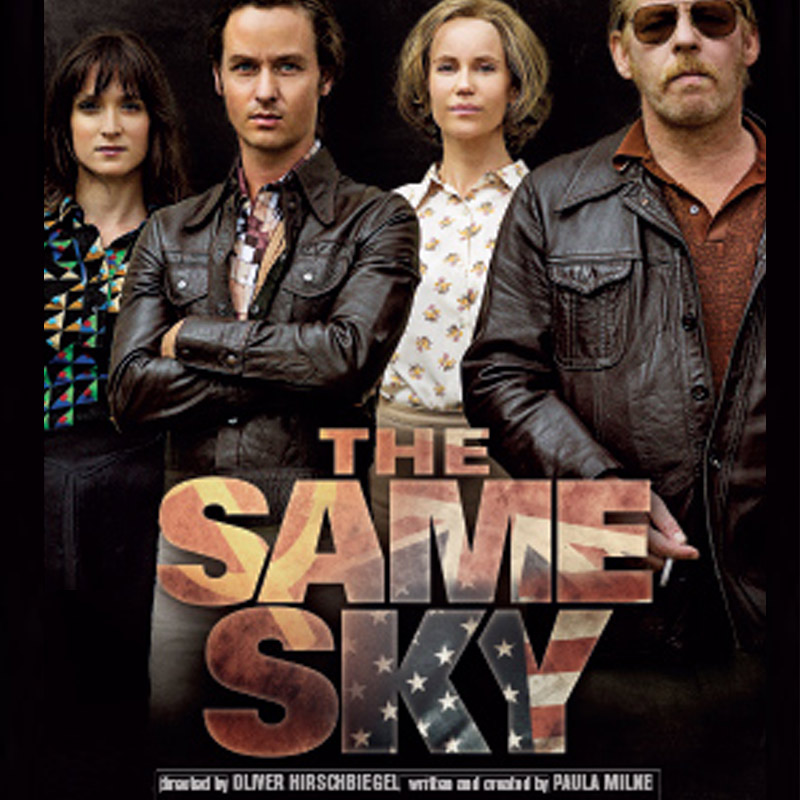
    CANNES: Ahead of its world premiere in Cannes this MIPCOM night, Beta Film has secured a row of international deals for its prestigious series The Same Sky (ZDF/UFA Fiction/Beta Film). The multi layered family drama set in Cold War-Berlin heads to European broadcaster Rai, France 3, Belgium’s VRT and RUV (Iceland). Netflix is premiering it in certain territories, among them the English speaking world. Contracts with the major Scandinavian broadcasters SVT (Sweden), DR (Denmark), NRK (Norway) and YLE (Finland) had been closed earlier this year.

    The six hour series by Academy Award nominated director Oliver Hirschbiegel will celebrate its world premiere at the famous Cannes Film Festival Palace on Monday night, October 17th, 6.30 pm in the presence of multiple awarded creator/writer Paula Milne and the international cast Sofia Helin (“The Bridge”), Tom Schilling (“Generation War”) and Friederike Becht (“The Reader”).

    Beta CEO-Jan Mojto: “The Same Sky combines European talent: Paula Milne as an exceptional British creator/writer, German born director Oliver Hirschbiegel and a German/international cast. It’s wonderful to see this program conquering the world.”

    Oliver Hirschbiegel (“Downfall”, “Billions”): “If you want to reach the world, you’ve got to stand by your own identity rather than denying it. The Same Sky tells a universal story, which can be understood everywhere in the world without losing the specific German perspective. And then there are sometimes small miracles, like the chemistry between Friederike Becht, Tom Schilling, and the truly wonderful Sofia Helin. It’s simply a pleasure watching them bringing these characters to life”.

    Paula Milne (“The Politician’s Wife”, “The Virgin Queen”): “The Same Sky is about divided families in a divided city. It is the timeless story of ordinary people caught up in an extraordinary time – and the choices they are forced to make”.

    The Same Sky centers around the relationship between an East German agent (Tom Schilling) and his target (Sofia Helin) in the West, the woman he has to seduce for the sake of his country – a relationship driven by passion but built on deceit. The series recreates the uniquely charged atmosphere in the Cold War city by portraying the fates of two families, one on each side of the wall, in a tale interweaving East German dissidents and informers and West German hustlers and agents, as well as American and British diplomats. Divided by ideology, the only thing the people of Berlin all share is the sky above.

    The Same Sky is an UFA FICTION / Beta Film production for ZDF in co-production with Mia film in association with Rainmark Films.

  • The Same Sky secures international deals

    The Same Sky secures international deals

    CANNES: Ahead of its world premiere in Cannes this MIPCOM night, Beta Film has secured a row of international deals for its prestigious series The Same Sky (ZDF/UFA Fiction/Beta Film). The multi layered family drama set in Cold War-Berlin heads to European broadcaster Rai, France 3, Belgium’s VRT and RUV (Iceland). Netflix is premiering it in certain territories, among them the English speaking world. Contracts with the major Scandinavian broadcasters SVT (Sweden), DR (Denmark), NRK (Norway) and YLE (Finland) had been closed earlier this year.

    The six hour series by Academy Award nominated director Oliver Hirschbiegel will celebrate its world premiere at the famous Cannes Film Festival Palace on Monday night, October 17th, 6.30 pm in the presence of multiple awarded creator/writer Paula Milne and the international cast Sofia Helin (“The Bridge”), Tom Schilling (“Generation War”) and Friederike Becht (“The Reader”).

    Beta CEO-Jan Mojto: “The Same Sky combines European talent: Paula Milne as an exceptional British creator/writer, German born director Oliver Hirschbiegel and a German/international cast. It’s wonderful to see this program conquering the world.”

    Oliver Hirschbiegel (“Downfall”, “Billions”): “If you want to reach the world, you’ve got to stand by your own identity rather than denying it. The Same Sky tells a universal story, which can be understood everywhere in the world without losing the specific German perspective. And then there are sometimes small miracles, like the chemistry between Friederike Becht, Tom Schilling, and the truly wonderful Sofia Helin. It’s simply a pleasure watching them bringing these characters to life”.

    Paula Milne (“The Politician’s Wife”, “The Virgin Queen”): “The Same Sky is about divided families in a divided city. It is the timeless story of ordinary people caught up in an extraordinary time – and the choices they are forced to make”.

    The Same Sky centers around the relationship between an East German agent (Tom Schilling) and his target (Sofia Helin) in the West, the woman he has to seduce for the sake of his country – a relationship driven by passion but built on deceit. The series recreates the uniquely charged atmosphere in the Cold War city by portraying the fates of two families, one on each side of the wall, in a tale interweaving East German dissidents and informers and West German hustlers and agents, as well as American and British diplomats. Divided by ideology, the only thing the people of Berlin all share is the sky above.

    The Same Sky is an UFA FICTION / Beta Film production for ZDF in co-production with Mia film in association with Rainmark Films.

  • Marketing rights for 2010 Fifa World Cup to reach €3 bn

    Marketing rights for 2010 Fifa World Cup to reach €3 bn

    MUMBAI: The value of the marketing rights for the 2010 soccer World Cup in South Africa is set to take a further leap to reach close to €3 billion.

    This compares with about €1.9 billion for this year’s World Cup in Germany.

    The figures are contained in Sportcal.com’s recently-published World Cup 2006: The Commercial Report. Fifa estimates that media rights, including new media, would be worth about €1.8 billion in 2010, while sponsorship would be worth €1.1 billion. Many of the main television rights deals for the 2010 event have already been concluded, together with a reduced number of six, more lucrative, deals with top-tier Fifa partners.

    The figures represent a massive increase on even a World Cup as recent as that of 1998, when the media rights were worth only about €100 million and the sponsorship rights about €70 million.

    Overall commercial revenues for the 2010 World Cup look certain to be pushed above €3 billion once ticket revenue is taken into account. For this year’s event, ticket revenues were worth about €200 million.

    The largest single contributor to 2010 World Cup revenues is once again set to be ARD and ZDF, the Germany public-service broadcasters, which are paying €200 million to acquire the television rights for the tournament in Germany. This compares with the €170 million they paid for the rights for this summer’s event.

    This year’s soccer World Cup generated €1.9 billion in marketing revenue, with the sale of television and new media rights raising €1.2 billion and the remaining €700 million deriving from other sources such as sponsorship and hospitality.

  • Fifa finals get a record audience in Europe

    Fifa finals get a record audience in Europe

    MUMBAI: Football’s governing body Fifa’s marketing agency Infront has announced that the viewing audiences in Europe for the key final matches of the 2006 Fifa World Cup in Germany exceeded predictions and broke records.

    Infront says that the high in-home audience figures are even more impressive in comparison to past viewing, given today’s fragmented television market. There was also a lot of out-of-home viewing.

    Italy – The Italian team’s penalty shoot out triumph over France in the final attracted a new tournament – and recent history – record audience for Italian television. An average audience of 23.9 million in Italy watched the Azzurri win the golden trophy for the 4th time in history. The figure represented 84 per cent of Italians that were watching television at that time. Italy’s top rated match during the 1998 event was 23.5 million. During the 2002 event, it was 23.7 million.

    The record figure of 23.9 million does not include the large number of Italians who watched the games out of home at public viewing events, bars and restaurants. For example, at the capital city’s ancient Circus Maximus, a reported 200,000 fans watched the final on three giant screens. In Milan, a further 150,000 fans watched the victory on large screens in the Piazza del Duomo.

    France – In France, national broadcaster TF1, attracted 22.1 million French viewers to its coverage of the Final between Italy and France. This figure represented over 80% of the available TV audience at that
    time, the highest audience share of any French coverage of this year’s tournament.

    France’s defeat on a penalty shoot out was endured by 800,000 more French viewers compared to the 1998 final when France triumphed over Brazil.

    Germany – The German national side’s impressive progress through the event drew a consistently high television audience at home in the host nation and ended with a new record for the tournament – past and
    present – despite millions watching out-of-home at public sites.

    Germany’s 2-0 loss to Italy in the semi-finals was watched live by 29.7 million viewers at home in the host nation, scoring a market share of 84.1 per cent. Germany’s previous highest audience at this tournament was the 24.8 million who watched the side defeat Argentina in the quarterfinals.

    The figure also beats the German audience in the final in 2002, when 26.5 million witnessed Germany lose to against Brazil. It also surpasses the hitherto unbeaten record in German football viewing of 28.66 million registered for the Germany v Argentina final back in 1990. However that figure does not include the new German states in the east of the country.

    The 29.7 million audience also beats the highest German audience (24.4 million for USA v Germany) attained in 1998. As that eevnt was in France, was aired at comparable times to this year’s competition in Germany.

    Germany’s six matches this year have scored a combined TV audience on German public service broadcasters ZDF and ARD of 142.1 million, which gives an average of 23.7 million per match. This represents a 45 per cent increase in viewing over 2002.

    Neutral viewing – Data from Spain and France shows that the Germany vs Italy match was one of the most popular with ‘neutral’ viewers – those who watch a match that does not feature their own national side.

    In Spain, the match had a combined audience on Cuatro and La Sexta of 5.9 million and a market share of 41.7 per cent. This Spanish audience was also higher than both the “neutral” semi-finals in 2002 but not as high as the 2002 final.

    In France, the Germany vs Italy match was shown live on both C+ and TF1 and had a combined audience of 13.3 million and a market share of 57.2 per cent. This figure is higher than any audience during the 2002 edition when France made an early exit.

  • Sports super show kicks-off in Germany

    Sports super show kicks-off in Germany

    MUMBAI: The biggest global sporting event on the planet kicked off in Germany with the hosts playing Costa Rica. Around 1.5 billion viewers around the globe are expected to tune in to the opening fixture of the World Cup alone.

    A record number of deals: What is helping television viewership in this regard is the sheer number of deals that have been done by football’s governing body Fifa’s marketing agency Infront. Besides getting deals which will ensure the event gets viewed in over 200 countries, InFront has also signed deals with more than one broadcaster in key territories like Germany.

    The World Cup is projected to get a cumulative viewing global audience of 32.5 billion. This marks a 10 per cent increase compared to 2002. For 2006, there will be more than 500 broadcast partners including 240 television licensees, a record number of 220 radio stations and more than 50 New Media Licensees (Mobile Telephony and Internet). By comparison, the 2002 event was transmitted by 300 broadcast partners.

    Distribution has been handled on an open-market basis. This offers viewers variety and choice in how they watch the event and an exciting array of production advances to add to their enjoyment. Infront achieved these record results through ‘layering’ different television offerings for the various markets worldwide. The event will be shared between a broad range of distribution platforms, offering viewers a variety of options. Infront has contracted with two or more broadcasters in 120 territories.

    Strong deals in the key markets: In the top television markets Infront’s marketing strategy has led to impressive results. For instance in host country Germany Infront signed deals with three Free-TV stations – ARD, ZDF, RTL. It also signed a pay TV deal with Premiere. Another important market is France. There it has signed two Free-TV (TF1, M6) and two Pay-TV (Canal+, Eurosport France) agreements.

    In soccer mad Brazil, it has signed four Pay-TV
    (Bandsports, DirecTV, ESPN do Brazil, Globosat) deals and one free TV (TV Globo) agreement. 77 per cent of Brazilians are eagerly counting down the hours to kick off, a figure exceeded only by the 79 per cent recorded in Mexico and Japan.

    Radio coverage of the event is also becoming increasingly important as a category of the overall broadcast. The 2002 World Cup was the first time that radio rights were offered independently and separately from television. The 2006 event continues with this expansion, further acknowledging the growth in radio and its importance as a communication medium.

    Around 80 regional and local radio stations will ensure record radio coverage in Germany. In France five stations have done deals while in Brazil the number is 24.

    Fifa taps into new media: New media coverage of the event is set to reach new standards. In 2002, new media coverage of the event was limited to the official Fifa website and trial transmissions to mobile phones in Japan. This year fans will be able to receive near-live coverage of the most dramatic and decisive moments of all the 64 matches on their mobile telephony devices or their home computer. More than 100 territories are covered by a New Media license.

    Technological inovations: The event will showcase HD technology. Following 2002, this is the second World Cup host broadcast in private hands – a break from the past when this function was handled by the world’s television unions. Infront’s wholly-owned subsidiary, Host Broadcast Services (HBS), is charged with the task of delivery.

    2006 will be the first Fifa World Cup produced exclusively in the high definition (HD) 16/9 widescreen format and will be the first major international sport event to commit fully to the format of the future and to showcase it on a significant scale.

    All 64 matches will be produced in HDTV and made available in both high and standard definition (SD). While the majority of broadcasters will still broadcast in SD 4/3 the demand for widescreen format and HDTV gains momentum.

    Several broadcast partners will pick up the state-of-the-art HD feed produced by HBS and HDTV will be featured in more than 70 territories worldwide, including host country Germany (Premiere), France (TF1, M6), United Kingdom (BBC, ITV), Italy (RAI, Sky Italia), USA (ABC, ESPN), Canada (Rogers Sportsnet), Brazil (TV Globo, Bandsports), Mexico (Televisa, TV Azteca), Japan (Japan Consortium, Sky Perfect), South Korea (KBS, MBC, SBS), and China (CCTV).

    HBS produces 2,200 hours of host broadcast coverage, as opposed to 1,200 hours for Korea / Japan 2002, filmed by a total of 170 cameras. Super feeds will include specific team and player coverage to help broadcasters tailor their offering to a national audience at home. 25 HD cameras will capture every moment and nuance of every match.

    A serious money spinner: All the marketing and promotional activity is expected to pay off big time. A report from Sportcal.com indicates that the event is on course for profits of €1.1 billion. The estimated €1billion cost of staging the event is far outweighed by revenues from the sale of media rights, sponsorship, merchandise and tickets.

    Fifa’s anticipated media rights revenues of €1.2 billion for the 2006 World Cup represent a 34-per-cent increase on the media rights revenues it realised at the 2002 World Cup, held in Japan and South Korea, a less favourable time zone than Germany’s for most of soccer’s top television markets.

    The UK’s BBC and ITV are among the largest contributors to overall 2006 World Cup revenues, jointly paying £105 million for the rights for the event. The largest single contribution to 2006 World Cup revenues is coming from ARD and ZDF, the German public-service broadcasters, which jointly agreed to pay €170 million for the television rights to screen the event.

    All not hunky dory: There has been criticism in some corners over the aggressiveness of Fifa in terms of merchandising and also regarding ticket sales. A report in Deutsche Wells indicates that this is the first World Cup where Fifa got aggressively into the business side of things. Cracks are said to be forming in its relationship with the German Organising Committee as Fifa allegedly pockets millions from the sales of tickets at the expense of fans.

    Fifa has also been strict in the use of branded phrases. Such is the power of Fifa that Hamburg’s AOL Arena has had to remove its name for the duration of the World Cup, since it is not an official partner, as has Munich’s Allianz Arena. The logo on sportswear giant Nike’s headquarters in Frankfurt has also been covered after Fifa took objections to it. German businesses and politicians are furious over Fifa imposed zones around stadiums where only official sponsors can advertise. For example, milk cannot be used on match days in the Coca Cola area.

    A recent survey by SID sports news agency showed that a third of Germans are annoyed at the level of commercialisation that Fifa is doing around the World Cup. To offer an example Budweiser is the sponsor of the event and Germans are upset that at the stadium popular German brands will not be allowed. The head of Fifa Sepp Blatter has had to defend the organisation from accusations over the past few weeks that big business concerns are spoiling the spirit of football.

    Fifa, not surprisingly, justifies its aggressiveness as each partner pays a lot of money to be associated with it. On an average each partner has forked out around $ 60 million for the 2006 WC. However the fact that there are as many as 15 partners means that there is the danger of clutter. That in fact is a major reason why Phillips had earlier chosen not to renew its deal with Fifa.

    ‘Sport selling its soul to big business’: That Fifa’s aggressive marketing tactics have not gone down well in some quarters can be gauged from what former German football great Franz Beckenbauer, who is the head of the World Cup organizing committee, had to say. He recently expressed concern that the sport is selling its soul to big business. Therefore he feels that there is need for discussion on the limits of money-making. Blatter countered that by talking about the importance of a mutually beneficial partnerships between Fifa, television and the global economy.

    A small but significant example of economic benefit can be seen in England’s pubs. The Independent did an investigation on the phenomenon of the rise in the number of people looking for jobs in pubs up and down the UK. In terms of atmosphere Britain’s pubs are considered to be even better than watching the game live according a job applicant.

    On the ground level a report in VOA News indicates that the German government has spent around $7.7 trillion on improving stadiums and transportation infrastructure. The country expects a 1.6 percent increase in its gross domestic product this year, with analysts saying a half per cent of that will be because of the World Cup. Germany is expected to get around four million visitors on account of the event. Each visitor is expected to spend around $400 a day. The World Cup is expected to have generated 60,000 jobs in Germany alone. 20,000 are expected to remain once the event concludes.

    A report in The BBC says that “A Time to Make Friends” has been the slogan in Germany and over the past two years the country has striven to spread its message far and wide. Other official messages have included “We Want to Roll out the Red Carpet For You” – the tag for the 6 billion euros invested from both public and private funds in stadiums, hotels, roads and train stations.

    It is a chance to portray Germany as a dynamic place to visit or do business

    However, there are mixed feelings in Germany about what the economic outcome will be. Germany is looking to show itself as not just a place that is passionate about soccer but also a country that is an excellent tourist destination.

    A study, from Postbank claims the additional sales of TV sets, beer, soft drinks, VIP hospitality, sports goods and other WM-themed products will come to between two and three billion euros.

    However another report from Germany’s influential DIW economic research institute seeks to puncture this growing optimism, forecasting that the World Cup will not significantly aid the country’s economic situation.

    The World Cup, it says, will have a negligible impact on the domestic economy, which for years has been beset by weak demand at home.

  • Fifa World Cup to kick in €1.1 billion in profits

    Fifa World Cup to kick in €1.1 billion in profits

    MUMBAI: The Fifa World Cup, which kicks off in Germany next week, is on course for profits of €1.1 billion. The estimated €1billion cost of staging the event is far outweighed by revenues from the sale of media rights, sponsorship, merchandise and tickets.

    This information is contained in Sportcal.com’s newly-published World Cup 2006: The Commercial Report. Fifa, soccer’s world governing body, told the authors of the report that the World Cup would generate €1.9 billion in marketing revenue, with the sale of television and new media rights raising €1.2 billion and the remaining €700 million deriving from other sources such as sponsorship and hospitality.

    The sponsorship figure includes €60 million raised by the local organising committee. The ticketing operation, which is also being handled by the organising committee, should bring in a further €200 million.

    The figures are a feather in the cap of Fifa Marketing, the governing body’s commercial arm responsible for marketing sponsorship of Fifa and the World Cup, and of Infront Sports and Media, the Switzerland-based sports agency that marketed the media rights for the competition. Infront stands to benefit directly from its success, with profits over and above a guaranteed figure to be shared equally with Fifa. The report estimates that the guarantee was exceeded by between €200 million and €300 million for the 2002 and 2006 competitions combined.

    Fifa’s anticipated media rights revenues of €1.2 billion for the 2006 World Cup represent a 34-per-cent increase on the media rights revenues it realised at the 2002 World Cup, held in Japan and South Korea, a less favourable time zone than Germany’s for most of soccer’s top television markets.

    The UK’s BBC and ITV are among the largest contributors to overall 2006 World Cup revenues, jointly paying £105 million for the rights for the event. The largest single contribution to 2006 World Cup revenues is coming from ARD and ZDF, the German public-service broadcasters, which jointly agreed to pay €170 million for the television rights to screen the event.

    This figure Sportcal.com states was formerly eclipsed by a fee estimated at €360 million that TV Globo, the Brazilian broadcaster, undertook to pay for the rights for both the 2002 and 2006 tournaments. However, the deal was renegotiated in 2004, after a heavy recession in Latin America, with the result that TV Globo is estimated to be paying just €65 million for the rights for this year’s tournament. Fifa expects that television sales from the European market alone for the 2010 tournament would be worth €1 billion, more than double the fees paid by European broadcasters for this year’s World Cup.

    For the first time, sales of new media rights this year are set to make a significant contribution to overall revenues for this year’s World Cup. Fifa estimates, new media to bring in revenues of €120 million for the 2006 World Cup.

    Meanwhile, sponsorship revenues for this year’s competition include payments of between €25 million and €40 million each from 15 ‘official partners,’ 11 of which had also sponsored the 2002 tournament.

    From the next World Cup onwards, Fifa is restructuring its sponsorship programme, reducing the number of official partners to just six (which will, however, each pay a considerably higher fee) in response to concerns over sponsorship ‘clutter.’

    In Sportcal.com’s report Phillips, the Dutch electronics giant, cites sponsorship ‘clutter’ as one of its reasons for ending its sponsorship after this summer’s competition after a 20-year relationship with the World Cup.

    In a conference address last month, Philips’ head of sponsorship Andy Knee had issued a warning to Fifa and soccer generally not to take sponsors for granted. He said, “Partnership is a word used regularly but we are looking for a two-way partnership and there remains a mentality in football just to take the money. I expect someone to understand my business and my products, and that would make me spend more money.”

    Six local ‘suppliers,’ signed up by the organising committee, which are paying an average of €10 million each to be associated with the event.

    Fifa points out that its profits from the World Cup go towards funding its many other activities over the four-year cycle between World Cups, including less lucrative competitions such as junior and women’s World Cups and the quadrennial Confederations Cup between continental national teams champions. Between 2007 and 2010, Fifa will stage 22 such competitions, including the 2010 World Cup in South Africa.