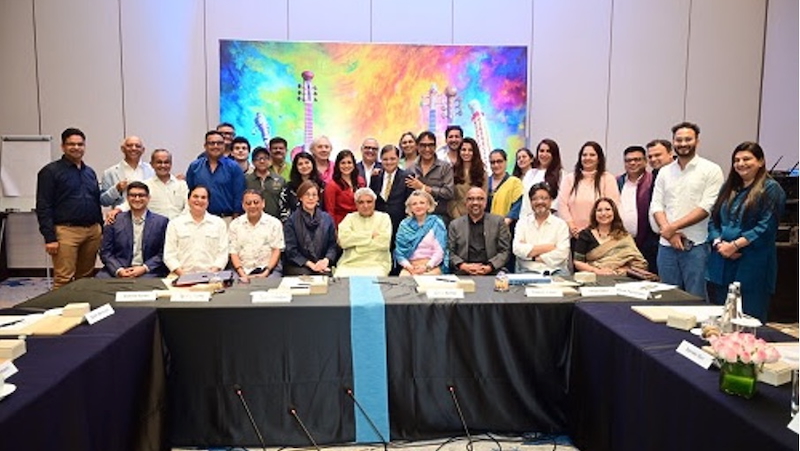
MUMBAI: Mumbai’s glitterati of lyricists, composers, and legal eagles gathered for a confabulation with World Intellectual Property Organization (WIPO), deputy director general Sylvie Forbin, courtesy of the Indian Performing Right Society Ltd. (IPRS).
The topic?
Intellectual property rights (IPR), the rise of AI, and how to keep the creative juices flowing in a digital age.
Held under the watchful eye of legendary lyricist and IPRS chairman Javed Akhtar, the closed-door roundtable was a veritable who’s who of India’s music and entertainment scene. From Vishal Dadlani’s vocal chords to Kausar Munir’s poetic prose, all were present to discuss the future of creativity.
“The music community has always shown resilience to overcome the challenges brought as well by technological advances,” Forbin declared, clearly impressed by India’s grasp of the AI conundrum. “They have adapted in the best way by showing a strong alliance between them. I am impressed by India’s knowledge and assessment of what would be needed when it comes to the AI revolution and happy to go along with Indian creators to foster regulatory, business, and technological solutions to engage in this new era with the necessary tools and safeguards. Long life to Indian music!”
Akhtar, never one to mince words, stressed: “The music industry has always been at the forefront of technological breakthrough. The music community has always shown resilience to overcome the challenges brought as well by technological advances. They have adapted in the best way by showing a strong alliance between them. I am impressed by India’s knowledge and assessment of what would be needed when it comes to the AI revolution and happy to go along with Indian creators to foster regulatory, business, and technological solutions to engage in this new era with the necessary tools and safeguards. Long life to Indian music!,”
The session, a proper meeting of minds, covered everything from strengthening IP frameworks to navigating the AI revolution. Key takeaways included the need for robust metadata, empowered collective management organisations (CMOs), and a stronger voice for creators in policy-making.
“Having WIPO at the table added immense value, bringing international expertise and highlighting collaborative efforts to strengthen IP frameworks across nations. SWA and SRAI as representatives of screenwriters and lyricists strive for the rights of the creators and it is good to see all the stakeholders coming together to discuss the betterment of creators and protection of Intellectual Property,” said Screenwriters Association general secretary Zaman Habib.
The event, a veritable feast of ideas, saw participants calling for a unified voice to drive India’s cultural and economic growth. They also emphasised the importance of copyright education, data integrity, and international cooperation.
“It was a great opportunity to listen to Sylvie and express our thoughts.We truly appreciate the initiative by the one and only IPRS in supporting India’s rapidly evolving entertainment and music landscape,” said Simca secretary general Sridhar J Swaminathan.
With AI looming large, the roundtable was a timely reminder that creativity needs protection, and that India’s creative community is ready to fight its corner. It’s clear that when it comes to safeguarding artistic rights, they’re not about to play second fiddle.
Key Takeaways from the Roundtable:
* IP as a Growth Enabler: Strengthening IP frameworks is essential for fostering innovation and supporting India’s growing creative industries.
* Global-Local Synergy: Engagement with WIPO highlighted the importance of international collaboration and knowledge exchange.
* Preparing for the AI Era: A strong focus on evolving digital rights, metadata management, and ethical guidelines to navigate emerging technologies.
* Institutional Strengthening: The need for proactive government support, legal clarity, and empowered CMOs (collective management organisations) to enforce rights.
* Building a Unified Voice: The event marked a milestone in uniting diverse voices to drive long-term impact on India’s cultural and economic growth.
* Elevating the Role of Creators in Policy-Making: Formal inclusion of creators in national IP and digital policy formulation was strongly advocated.
* Copyright Education & Awareness: Emphasis on educating both creators and consumers on IP rights to reduce misuse and promote informed practices.
* Strengthening collective management organisations (CMOs): Modernisation and transparency of CMOs were recognized as pivotal for trust and efficiency.
* Data and Metadata Integrity: The need for robust crediting systems through better metadata was highlighted to ensure fair attribution and royalties.
* Cultural Exchange and International Cooperation: The role of WIPO in encouraging global partnerships was applauded, with a call for more international dialogue.
* Youth and Innovation: Recognising the contribution of young creators and startups in redefining the future of creative economies.
