Tag: Yupp TV

  • Yupp TV helps crack down on global IPTV piracy racket

    Yupp TV helps crack down on global IPTV piracy racket

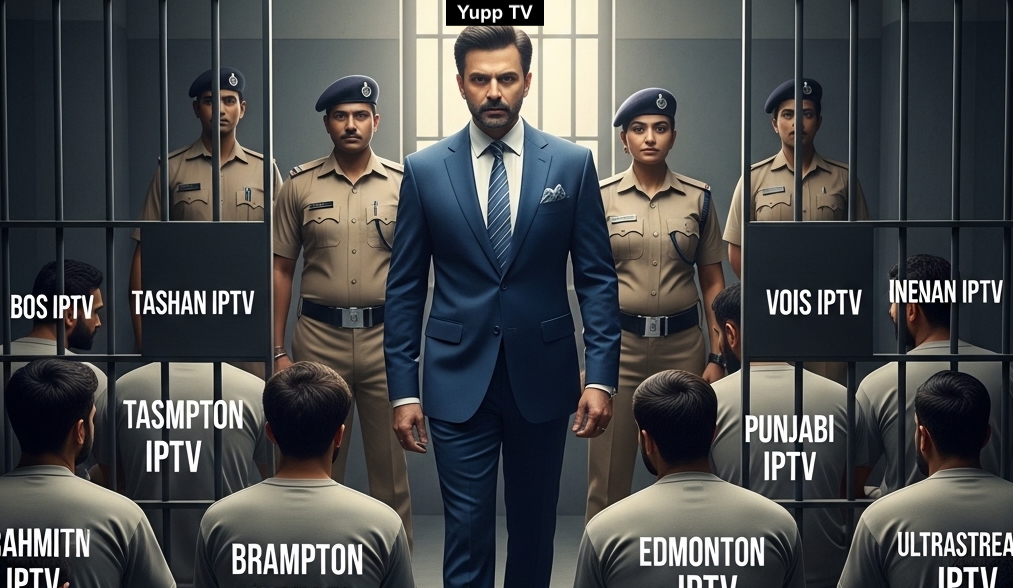
    MUMBAI: A global piracy party just got shut down—with a solid rap on the knuckles, thanks to global OTT aggregation platform the Uday Reddy-run Yupp TV. The streamer has over the past two years been working with authorities in India and the US, which has now resulted in the bust-up  of a sprawling illegal IPTV empire that’s been streaming premium Indian and international content without paying a paisa in licence fees.

    The syndicate, operating under slick brand names like Boss IPTV, Guru IPTV, Tashan IPTV, Brampton IPTV, Punjabi IPTV, Vois IPTV, and UltrastreamTV, has been caught red-handed pushing pirated streams from the likes of Star, Sony, Zee, Sun Network, Aha, and even global OTT giants like Netflix, Amazon Prime Video, Hulu, and major international sports leagues.

    All this was being served to unsuspecting users via Android and Linux-based set-top boxes and apps on smart devices, aggressively marketed through websites, blogs, and social media—at throwaway rates far below legitimate subscriptions.

    But it wasn’t just the broadcasters who were getting robbed. Authorities say user data—credit cards, passwords, even identities—was likely being harvested and possibly linked to more sinister operations including phishing, tax fraud, and even terrorism financing.

    YuppTV, one of the legal players worst hit by the piracy plague, estimates South Asian broadcasters lose $200–$300 million every year to illegal IPTV operations. The platform triggered a previous crackdown in 2021, when a complaint led to the Faridabad Cyber Crime Branch arresting six people involved with Boss IPTV.

    The matter has now gone international. YuppTV has filed a civil suit in the United States, represented by Goldstein Law Group, LLC, citing criminal copyright violations under 18 U.S.C. § 2319. According to GLP:
    “Using pirate IPTV services may result in felony charges under U.S. law. Non-citizens could face deportation.” That is, criminal activities like watching pirated content  has been brought under the immigration customs enforcement’s (ICE’s) ambit. 

    The latest blow came from Gujarat’s Gandhinagar Cyber Crime Unit, which arrested Mohammed Murtuza Ali, allegedly the kingpin behind Bos IPTV. Based out of Jalandhar, Punjab, his operation reportedly raked in a staggering ?700 crore (roughly $84 million) annually, with over five million subscribers.

    Legal agencies are urging users to quit illegal streaming services immediately and switch to licensed alternatives like YuppTV (www.yupptv.com) to avoid falling foul of the law—or worse.

    This crackdown makes it clear: the era of “chalega yaar, sasta hai” streaming might soon come with handcuffs attached.

  • Prasar Bharati inks deal with Yupp TV to expand DD India’s global reach

    Prasar Bharati inks deal with Yupp TV to expand DD India’s global reach

    Mumbai: Prasar Bharati has signed a memorandum of understanding with OTT platform Yupp TV to distribute DD India in USA, UK, Europe, Middle East, Singapore, Australia and New Zealand.  

    The content hosting agreement was signed by Prasar Bharati CEO Shashi Shekhar Vempati and Yupp TV founder and CEO Uday Reddy.

    The deal was signed “to expand the global reach of DD India channel, to put forth India’s perspective on various international developments on global platforms and to showcase India’s culture and values to the world,” said the ministry of information and broadcasting in a statement.

    DD India is Prasar Bharati’s international channel. The channel through various programmes offers international viewers India’s perspective on all domestic and global developments. “DD India is available in more than 190 countries and acts as a bridge between India and the Indian diaspora spread across the world,” said the statement.

    The programming on the channel is presented in a thought-provoking manner with sharp analysis and commentary and cutting-edge visual presentation. One of the popular shows is “Bio-Quest,” a series that deals with the origin of Covid-19. Some of the other high viewership shows are “India Ideas,” “World Today,” “Indian Diplomacy,” “DD Dialogue,” “News Night” etc.

  • Times Network partners with Yupp TV, expands global presence of Hindi channels

    Times Network partners with Yupp TV, expands global presence of Hindi channels

    Mumbai: Times Network on Tuesday announced its partnership with Yupp TV. 

    As a part of the association, the broadcast network is set to launch its Hindi channels Times Now Navbharat and ET Now Swadesh in the US, Canada and key international markets.

    “We are thrilled to expand our content portfolio by introducing our recently launched Hindi news channels to our global viewers on Yupp TV,” said Times Network chief operating officer and executive president Jagdish Mulchandani. “Our best-in-class entertainment and English news channels are strongly positioned in over 100+ countries and we are now excited to present compelling news content in Hindi language for viewers across international markets.”

    Yupp TV is one of the world’s largest internet-based TV and on-demand service provider. With 25,000 hours of entertainment content catalogued in its library, it brings a diverse range of South Asian content with more than 250 TV channels, over 5000 films and 100+ TV shows in 14 languages.

    “We have seen a huge scope for Indian television with Hindi language in these markets and Times Network channels will be a great value add for our brand,” said Yupp TV founder and chief executive officer Uday Reddy. “Yupp TV users can now watch their favourite Hindi content globally, giving them more entertainment options to choose from.”

  • Yupp TV relaunches Zee in UK and across Europe

    Yupp TV relaunches Zee in UK and across Europe

    Mumbai: OTT platform Yupp TV known for airing South Asian content has relaunched Zee channels in the United Kingdom, and all across Europe. Beginning from 2 June, Zee channels including Zee TV, Zee Cinema, Zee Telugu, Zee Tamil, Zee Kannada, Zee Keralam, Zee Punjabi, Zee Marathi, and Zee Bangla will be available for viewers in Europe. 

    Zee Entertainment is one of India’s leading media conglomerates that offers a bouquet of entertainment channels. With the relaunch of Zee in the European market, viewers will be able to watch a wide range of fiction, non-fiction, and other regional content offered by various Zee channels. 

    Commenting on the relaunch of Zee channels, Yupp TV founder and CEO Uday Reddy said, “We are delighted to once again join hands with one of the leading entertainment networks, Zee Entertainment, to bring back its premium entertainment channels to the UK and the Rest of Europe markets. These markets provide unlimited potential for Indian television with Hindi and regional languages and Zee channels will be a great value addition to our already vast library. YuppTV users can now watch their favourite Zee content, giving them more entertainment options to choose from.” 

    Zee Entertainment Enterprises Limited, chief business officer-international business Ashok Namboodiri, said ZEE reaches out to over 1.3 billion viewers globally and we continue to grow. “YuppTV and ZEE have been working together for the last decade in several markets and give audiences the best in entertainment, globally. With this partnership, audiences in UK & Europe can now enjoy a wide range of entertainment channels from ZEE and stay updated on all the latest news with Zee News and Zee Business from the Zee Media portfolio,” he said.

    Expressing excitement about partnering with Yupp TV, Zee UK business head Parul Goel said, YuppTV viewers will be in for a treat as they will be able to pick channels across six to seven Indian languages and genres from the ZEE stable.

    Viacom18 had also launched its regional channel Colors Gujarati in the United Kingdom. IndiaCast Media Distribution, jointly owned by TV18 and Viacom18, has partnered with Sky and Virgin Media for the channel’s launch in the European nation. 

  • Republic TV expands its footprint in UK with DistroTV

    Republic TV expands its footprint in UK with DistroTV

    Mumbai : English news channel Republic TV is pivoting to digital, OTT and smart TV distribution with the latest addition of DistroTV to cater to the diaspora in the United Kingdom market.

    The channel along with its Hindi news channel R Bharat has now set its sights on the international markets. With a view to address the news consumption pattern across all demographics, the channels are taking a market wise approach and targeting new age distribution platforms including the burgeoning OTT and connected TV sets ecosystem.  It’s also looking to syndicate its content library across various new age platforms.  

    After content partnerships with all major OTT platforms Like Hotstar, Yupp TV, it has now added DistroTV in the UK and APAC markets.

    Commenting on the strategy, Republic Media Network, group CEO, Vikas Khanchandani  said, “Republic TV is a news media technology company and has been the front runner to make its streaming services available across smart phones and connected TVs with its partnerships with OTT, OEMs and Telco platforms both within India and globally. The pandemic has accelerated streaming TV consumption driven by news & sports.  It’s an opportune moment for us to pivot our strategy in the UK market as streaming is outpacing pay TV in UK.” 

    COO – India distribution head and international markets, Priya Mukherjee, COO said, the channel has reached a peak of 421K and maintains an average reach of around 200K in the last quarter during the pandemic. “Many platforms have approached us given the leadership position and the loyal audiences we built in the UK, in such a short time.  Our distribution capabilities, give us an opportunity, to approach each market differently and we are looking at all possible models that are best suited to our expansion plans, including a more, Direct to Consumer approach,” she added.

  • Is it all gloomy for independent OTT players?

    Is it all gloomy for independent OTT players?

    MUMBAI: Though everyone is ravenous to take a bite out of India's rich streaming phenomenon, it's not all hunky dory for independent players. Consumer acquisition, retention and chalking out a sustainable monetisation plan are tougher than they seem. While deep-pocketed giants may survive, the road is rocky for independent platforms. 

    The downfall of two ambitious players

    Towards the end of 2019, Hong Kong-based over-the-top (OTT) platform Viu shut down its India business. The company cited highly competitive nature and the requirement of heavy investment without a path to sustained monetisation. Viu’s downfall was followed by Singapore-based telecom company, Singtel-backed, Singapore-based HOOQ. The service, available across Singapore, the Philippines, Thailand, Indonesia and India, which was also backed by Warner and Sony, filed for liquidation last month in Singapore. HOOQ said in a statement that it had been unable to grow fast enough to keep up with global and regional rivals and also noted “significant structural changes” in the OTT video market in the five years since its launch.

    The statements of both Viu and HOOQ show the inability to grow a viable business model amid stiff competition. While the wave of online content started with small independent creators in the country, it's time for them to either join hands with bigger players or exit. Especially, when players like Netflix and Disney+Hotstar are earmarking billions for this market. Homegrown players are also investing highly. The sheer amount of content library, production quality along with smart UIs speak in their favour. 

    What lies ahead for independent players?

    “There is a global recession right now and these OTTs are vouching on a lot of these global fundings, private equity fundings. COVID-19 has a big impact and there will be a recession in many countries and lot of the funding activities will slow down. Because of the current crisis, if their mtrics like success rate, viewership, time spent etc., are not good, many OTTs will also shut down in near to medium term despite being well-funded. India is an extremely fragmented market. We have 35 plus OTTs causing all the more chances of many more shutting down,” Elara Capital VP – research analyst (Media) Karan Taurani says.

    SBICap Securities institutional equity research head Rajiv Sharma brings up three aspects. He talks about customer acquisition which is becoming an expensive exercise for independent OTT platforms with more serious players coming into the picture. He also adds that Netflix can amortise content produced in India in 130 markets. Broadcasters have catch-up TV content, the movies which they had acquired for the broadcasting business as a source of basic traffic for engagement.

    “Independent platforms have a small library, no access to other content or market and moreover, they are working on a small budget. Their mortality rate is high because users will watch something and delete it. So low stickiness means higher customer acquisition cost and whatever they are producing, they are not able to amortise it over a higher set of users. So per unit content cost or production cost is higher. These are the reasons we are seeing independent platforms struggling,” Sharma explains.

    Is it all gloomy for smaller and independent players?

    Platforms like ALTBalaji, Hoichoi are thriving without funding from any big network, broadcaster or tech giant. These two platforms have witnessed good uptake in users with an attractive content slate. Moreover, they have collaborated with existing rivals also to increase their reach and find an alternative source of revenue. While we tried to find what are the factors that help them to survive, both of the platforms cited the parent company’s long-term experience of producing content, hence understanding of consumer preference.

    “I think understanding of the customers is very important and having control over content is very important. Twenty five years of understanding consumers is very important because as we make a show or acquire a  movie, we exactly know what a consumer might want. We have been in the business long. It's not a question of money only. Another thing what works well for SVF is that we  have made 150 plus movies till now. We have relationships with all the producers of the business. So, when we wanted to license a movie, we could do it from every person in the industry. We had production experience, key understanding of content, relation with the industry and talents,” Hoichoi co-founder Vishnu Mohta says.

    “Being from the house of Balaji Telefilms, who have been catering to the audiences ever-changing preferences for over 25 years now, ALTBalaji has an advantage unlike no other of having a deep understanding and familiarity with the viewer’s consumption preferences. With content being our biggest differentiator, we have been catering to all kinds of audiences through our diverse content offerings spanning multiple languages. Moreover, Indian originals have picked up pace in the past few days as audiences are on the lookout for local relatable content and are spending more time online. With content being king, there is a growing acceptance amongst consumers to pay for unique narratives and good story telling which keeps them hooked to their screens,” Balaji Telefilms group COO and ALTBalaji CEO Nachiket Pantvaidya states.

    Yupp TV, another OTT platform which is tuning its business towards ed-tech direction in India, thinks that being an early mover, consolidation has helped it.YuppTV and YuppMaster founder and CEO Uday Reddy acknowledges, “ All the players who are in space are big broadcasters. They are already in the content space. They are just evolving from linear to digital. I don’t think many independent players are left now. If they don’t invest in capital, they won’t be able to sustain.”

    With the COVID-19 crisis, things are bound to change once the situation normalise.

  • Guest Column: Innovation in the business news channel space in terms of coverage

    Guest Column: Innovation in the business news channel space in terms of coverage

    Business news genre has come a long way in the last 20 years of its existence in India and so has the business news coverage. It all started with covering stock markets and related news. However, I believe, there is business interest involved at the heart of almost every major event around the world. Be it a country deciding to invade another country or why the center of world cricket has shifted to England to Asia. In fact, most of these events impact stock markets, businesses and economies in some or the other way.

    I see business news covering the business aspect of all of these in a more holistic way and not restricting itself to coverage of stock markets only. I also think that since many of us need to know about personal finance management, business news channels can educate masses about personal finance management as well and make us understand the basics of investing in stock markets. BTVI has a show called Financial Planner to address this concern. We also have a feature show called Aspire that covers business aspects of luxury, lifestyle and entertainment.

    With important state elections coming and upcoming national election in India, we have upped the ante of our political coverage. In a vibrant and buoyant economy like ours, journalistic activism is critical and important. Knowing so, we have firmed up our investigative journalism over the last one year.

    This holistic approach has yielded positive results for us as we lead the English business news genre post market hours and on weekends with viewership share of 41 per cent each.

    Scope of a comparatively new news channel in the business genre.

    At present, the entire business news genre depends heavily on stock market related content which remains largely the same on all channels. Though the content post market hours (4 pm onwards on Monday to Friday) and on weekends can differ, from the viewership, revenue and brand perception perspective, the market hours programming (8 am to 4 pm on Monday to Friday) is the key to success in this genre in its current format.

    Besides, in the last couple of years, English business news genre has shrunk at all India level with average weekly viewership going down from 1009 GVTs in 2017 to 956 GVTs in 2018.  Even in terms of ad volumes, the FCT consumption has dropped by 15 per cent from 2017 to this year.

    Considering all the factors mentioned above, I don’t see a scope of a new news TV channel in the English business genre space. However, regional is a completely different and interesting proposition to evaluate.

     How can a business news channel increase its reach & viewership

    Well, there are traditional ways of ensuring OTS levels through distribution and marketing activities. But that’s not a sustainable way to function. The idea is for content and brands to reach out to the right TG. Why should that outreach be focussed on or limited to television platform? Why not on emerging digital platforms? In my opinion, expansion of digital footprints by existing brands is a way forward to increase the brand’s reach and awareness and translate part of that increased reach into television viewership.

    For example: BTVI is now available on with its LIVE streaming Not only on Hotstar, Jio TV, Yupp TV  but also on trading apps like that of Axis Direct, Kotak Securities, IIFL Markets and HDFC Securities. This is the relevant audience and we have seen a huge upside on impressions by reaching to our audience through these platforms.

    Source for all viewership data points: BARC India, TG:22+MalesAB, Market:6MegaCities+Guj1mn+, Period: Wk30-33 2018

    (The author is the COO of BTVI. The views expressed are personal and Indiantelevision.com may not subscribe to them)

  • Consumption & disruption: The Emerald Media mantra

    Consumption & disruption: The Emerald Media mantra

    MUMBAI: When Rajesh Kamat makes a move, you take notice. His decision to set foot in the private equity world in 2011 with The Chernin Group’s CA Media after a blistering three-year run as Viacom18 COO and Colors CEO left India’s media and entertainment ecosystem intrigued. Cut to 2018, Kamat is staying true to form – making plays that continue to invoke as much curiosity, surprise and awe. Now of course he’s teamed up with global private equity giant KKR to make pan-Asia media tech investments as part of a $300 million fund that was set up in 2016. In a sense, he will have a say in how the existing and future media and entertainment landscape takes shape.

    The fund – Emerald Media – has Kamat and former Star Group CEO Paul Aiello as managing directors based out of Singapore. The original thesis behind setting up Emerald was to help companies scale, take their business global, open up new doors for them and transform them from start-ups to organisations.

    Typically, Emerald invests at an early growth stage in companies with proven business models that generate around $8-10 million in revenues. The objective is to pump in $20-$75 million in each asset, picking up larger stakes if not a controlling stake.

    Since inception, they’ve invested in four businesses in India (Yupp TV, Amagi, Cosmos-Maya, Global Sports Commerce) and one in Thailand (aCommerce). There is a fundamental hypothesis the team follows for all their investments. In a sense, it can be described as the Emerald Media mantra, wherein bets are made based on where the consumption (B2C) and disruption (B2B) is bound to take place.

    “It’s a niche area they are helping to build rather than entering high-end categories like GEC or sports. They are helping turn around companies with high potential. Their current strategy seems to be content driven and they are supporting underdogs in the industry who need the most support,” says an analyst from a top management consultancy firm.

    Team Emerald also manages CA Media’s assets, which include the likes of Endemol Shine India, Graphic India, Fluence among others. However, there is a key distinction in the investment philosophy between the two funds. The investments made by CA Media weren’t restricted to a particular ticket size. Also, the fund collaborated with mostly IP-based content companies. Emerald on the other hand has invested in mostly media tech businesses barring the exception of Cosmos-Maya.

    “Our involvement in all assets is somewhere between day-to-day management and just being board members. We neither restrict ourselves to quarterly updates nor believe in intruding on a daily basis. We are far more involved because there are lots of areas where we can add value, which promoters of rapidly growing companies appreciate,” says Kamat’s man in India Emerlad Media executive director & investment head Vivek Raicha.

    He is responsible for deal scouring – through his proprietary network or bankers – negotiation, execution and overall supervision of the asset, which includes its monitoring but more importantly value creation.

    It is needless to say there is tremendous synergy between Emerald’s integrated basket of assets, almost as if by design Kamat & Co have created a network of organisations. Perhaps it is the by-product of seeking comfort under the umbrella of a common shareholder. What makes the nature of Emerald’s investment solid and sensible is the fact that all these platforms are part of a digital content value chain. 

    For instance, Yupp TV is focused on the diaspora audience, while Cosmos-Maya is a kids’ animation company, which services broadcasters and streaming players. So, when Cosmos makes content, it gives exploitation rights to its broadcast partners for the India territory while retaining international rights. In Yupp TV, there is a platform, which caters to an outside of India audience. 

    Emerald got Cosmos to create three linear channels for Wow Kidz, their own brand, and launch it on Yupp TV on a subscription basis, handing them ready access to the latter’s customer base across the world in one fell stroke.

    In return, Yupp TV got content that they'd have paid a lot of money for or may not have had in the first place. Such an arrangement enabled them to offer the likes of Motu Patlu to an audience outside India.

    Another example of such symbiosis is Yupp TV and Amagi. Yupp’s live channels and catch-up content contain ads that are of no use to the diaspora audience. Inserting ads on an OTT platform is tricky business.  The option of doing a pre-roll exists but it is fairly complex to put a mid-roll or replace an ad.

    Amagi has the technology to do this job, a bit like geo-targeting. So Yupp TV uses Amagi's technology to substitute the Indian ads with those that are locally relevant.

    Similarly, Global Sports Commerce (GSC) and YuppTV can jointly acquire sports rights. The possibilities are endless.

    So how does Emerald invest in assets?

    That boils down to the nature of the deal. In some cases it has invested the entire capital in one go, while in others it has resorted to a tranche-based funding. Injection of funds into a company depends on the requirement, with no thumb rule at play.

    However, multiple boxes need to be ticked before a target company is zeroed in on as an investment option. The most important thing is the person who's running that business. “People make businesses, businesses don't make people,” Raicha quips.

    Given that the investor is bound to exit at some stage, it is imperative that there has to be a meeting of minds with the promoters and management with regards to the journey and vision.

    Apart from a company’s year-on-year growth, the Emerald execs also factor in how the company has insulated itself from risk – competition and general ecosystem changes that take place.

    Risk assessment takes both internal and external factors into account. Return and risk go hand in hand, which is why Emerald conducts an exhaustive analysis before putting pen to paper.

    Their objective is to invest as much capital as the company requires to break-even. That's the amount of capital that goes in primary. If that primary capital does not get them the desired stake, and then they approach the existing investors, some of whom are willing to sell. And that’s how a ticket size is arrived at.

     “Content is a good place to be right now. So companies that create, distribute and monetize content are all going important stakeholders in the future of media,” media and entertainment advisory services partner Ernst & Young Ashish Pherwani.

    On an average, Emerald looks at 500 companies a year across Asia, ultimately plonking its cash in couple of them. 

    “You have to add value. Return only comes from value creation,” Raicha adds.

    From devising strategy to unlocking global opportunities, Emerald has walked the talk when it comes to creating value for its investees. Ushering in a consolidation strategy for Yupp TV, creating a winning culture at Cosmo-Maya, introducing GSC to business prospects across the world, and being instrumental in bringing Colors on board for Amagi are some examples.

    Raicha believes mobile-based online gaming will witness the next consumption wave. He rues the dearth of Indian gaming companies of scale at this point in time. While digital content remains an area of focus, Emerald hasn’t yet been being able to pick the right collaborator to go with. Another space that excites them is B2B tech.

    The telco, media and tech convergence has served as a catalyst in private equity funds looking more closely at media and entertainment companies, a departure from the previous years. TPG Growth’s $100 million bet on BookMyShow is a case in point.

    Having invested $200 million, Emerald has more $100 million in the bank.

    A challenge on hand is exiting from his earlier investments through CA Media. Talks are on with Indian and international megacorps. Kamat, Aiello and Raicha are quite sanguine that they will get the right valuations and will post a healthy return on the fund. 

    Even as all this is going on, the team has already got its eyes on another fund, thanks to the stellar rep they have acquired over the past decade. 

    Very few understand the media and entertainment business like Kamat. So, the nature of his next moves could signal a larger industry trend. And when that happens, it is bound to invoke as much curiosity, surprise and awe from his peers as always.

  • BTVI says biz news will continue to stay relevant

    BTVI says biz news will continue to stay relevant

    MUMBAI: It isn’t easy to make a mark in niche genres but two years post launch, Business Television India (BTVI), the English business news channel, has leveraged on editorial strengths to grab the third spot.

    BTVI COO Megha Tata said, “In the last two years of our existence, we have had an incredible journey. Our content has been a huge differentiator and there is always scope for innovation. Of course, there are multiple other reasons as well such as growth in reach through our marketing distribution activities, digital performances.”

    The channel is currently available on several financial apps like, IIFL, Kotak, HDFC Securities, Axis Bank, etc and caters to the audience who are keen to know about this space. BTVI is the only channel which is live streaming on these apps. It is also distributed on all key OTT platforms like Hotstar, Reliance Jio, Yupp TV, Airtel VOD and also on Tata Sky VOD. 

    Tata believes that the conversations that are happening are more relevant than a weekly analysis of data. The average time spent on the channel currently is 25-30 minutes.

    BTVI executive editor Siddharth Zarabi said, “There are other sectors of news globally which are seeing de-growth but financial news will continue to retain relevance and importance because it is a highly specialised offering and the stock markets in India has done phenomenally well and they will continue to do so.”   

    The channel will soon launch a campaign about its digital offering and growth. The channel’s current focus is on six metros because that’s where its core audience is and the channel is 100 per cent distributed here. BTVI says its market share has shot up from 2-4 per cent to 18-20 per cent in these two years.

    However, to retain viewership beyond market hours, which is the prime time of the channel, BTVI is taking certain measures. Tata said, “As market hours is the key focus for the channels in the business genre, we went beyond the market hours as well. We have done an analysis and we don’t see a very large audience out there in the tier II cities for the English business news play.” 

    Tata believes that the English business news genre has space only for three players. Overall, the genre according to her is Rs 400-500 crore in terms of revenue.

    BTVI head marketing, research and branded content Anuj Katiyar said, “Our strategies and our content are completely driven by the ecosystem. So we don’t do high decibel plans by pushing a lot of money but it is far more focused and strategic in terms of our target audience with specific content.”

    The channel had a phenomenal year considering advertising revenue. Ad rates increased by 60 per cent this year compared to the last. 

    “We have got some exclusive clients on board which moved out from their existing channel preferences to us. We have also got great branded content pieces on the automobile front with brands like Mercedes, Hyundai, Nissan and Toyota. The channel also has some new brands on board like Jeep and Indeed,” Tata added.

    According to BARC rating of week 34, BTVI is in the third position in English business news with 123 impressions (000s) sum. The genre is lead by CNBC TV18, with 618 impressions (000s) sum.

  • YuppTV to offer select content in Dolby Audio

    YuppTV to offer select content in Dolby Audio

    MUMBAI: YuppTV, the provider of South Asian OTT content has announced that select movie titles will be available in Dolby Audio. This will enable the company to deliver an advanced surround sound experience to its users across the globe.

    A YuppTV subscriber can enjoy select movies in Dolby Audio across smart TVs, media players through the YuppTV App by connecting their smart TV with a Dolby Audio enabled home theatre or a soundbar.

    YuppTV founder and CEO Uday Reddy said, “At YuppTV, it has been our constant pursuit to provide our users with the best entertainment solutions. We are glad to work with Dolby to provide our users with dynamic, rich, theatre-like sound quality, right at their homes, providing them with high-quality surround sound and enhancing their overall viewing experience.”

    Dolby Laboratories MD Pankaj Kedia said, “We are excited to work with YuppTV to bring our immersive audio technology onto the YuppTV platform and offer an advanced, surround sound experience to their viewers. We are confident that YuppTV users will enjoy their favourite content in Dolby Audio.”