Tag: YouTube

  • The economic crisis of 2009 changed the ad market forever

    The economic crisis of 2009 changed the ad market forever


    MUMBAI: Google President Asia Pacific and Japan Daniel Alegre, while speaking at the Ficci-Frames summit, started the session with a rather sweeping statement: “Online advertising is dead.”

    The days of regular clickable ads are long gone; it is the period of actively engaging the consumers. Alegre spoke about a mobile ad created by Corolla for high-end users that received 3.5 million views; Toyota didn’t use Internet or TV for this. 
     
    Volvo taking a step further in trade of advertising, created an interactive video game to engage users and prospective buyers. “This video game was actually promoting the brand itself”, said Alegre.

    Alegre said the economic crisis of 2009 changed the market forever; marketers realised the importance of social networking sites and creating content that can be engaging enough for the users to distribute it, across all social networking sites.

    In the times of Facebook, Twitter and YouTube, “all one has to do is make engaging content and the users will distribute it for them, among billions.”

    The line dividing online and offline transactions has almost disappeared; numerous offline communications are now done online.

    The executive of the largest search engine clarified his statement by giving examples of various offline conversations including that of marriage, now being diverted to the web through jeevansaathi.com et al. 
     
    Alegre elucidated that advertising on the Internet is effective, but the efficient convergence of various media such as TV, mobile and Internet is the key.

    Omnicom Asia Pacific India Middle East Africa (APIMA) region Chief Executive Officer Tim Love declared that language is the oldest technology we have today; and the future of ads is using languages soundly to communicate with the audience across the world. Understanding the language of a consumer will show the best way to communicate with him. 
     
    Love stated that not just convergence of various media tool, but also successful use of language is the future. He mentioned that numerous neuroscientists from around the world are trying to understand, how language affects the thought process of the consumer. He also augmented the importance of sign language in communicating with the consumers.

    Taking a cue from Love on the importance of language, Alegre recalled an incident he came across during the recent Tsunami. He was able to understand the evacuation instructions written in Japanese by translating it in English using an online tool.

    Alegere said the best advertisement should be able to cater to all languages and to everyone from across the globe.

    Answering a question from the audience about what would be the best way to advertise or the best method to choose a medium for advertising, Alegere said: “One needs to understand what exactly he is trying to do with the brand. Is one trying to build a brand image or simply increase the conversion rate, which will determine the best way to spend on any medium.”

    Love answered by saying that “one has to make sure that the ad is truthful; because in today’s time of social networking sites, one smart man with all the answers and the power to convince everyone will cause serious damages to a brand.”

  • ‘Break even will take five to six years for new franchises’ : GroupM ESP managing partner Hiren Pandit

    ‘Break even will take five to six years for new franchises’ : GroupM ESP managing partner Hiren Pandit

    Bigger, better, richer. That is what the franchises hope the Indian Premier League (IPL) will grow into year after year.


    In an interview with Indiantelevision.com’s Ashwin Pinto, GroupM ESP managing partner Hiren Pandit talks about the vast revenue opportunities that are waiting to be tapped as the IPL grows into a sporting spectacle.


    Excerpts:

    How is GroupM ESP involved with the IPL this time around?
    We do deals with franchises on behalf of our clients. There are logos on T-shirts and also innovations that have not been done before. We create revenue opportunities for the client as well as the franchise. This is in the form of licensing and merchandising.

    Are franchises able to fetch better rates this year with the economic situation somewhat improving?
    Keep in mind that last year local activation could not take place due to the shift to South Africa. This year, some amount of rationalisation has taken place. There is measurement in place. You know whether you should pay Rs100 or Rs 150. Most team sponsorships have been sold.

    In terms of local revenue, how will franchises fare this year as per your calculations?
    It will increase by around 20 per cent for each franchise. Revenues on T-shirts are anywhere from zero for Bangalore (The UB Group uses its own brands) to Rs 400 million for Kolkata. Delhi and Chennai will each earn Rs 330 million. Mumbai, Rajasthan and Punjab will individually earn Rs 300 million. Hyderabad will earn around Rs 200 million. The big difference is the logo on the right chest which will add Rs 30-50 million in revenue. Licensing and merchandising is just starting to happen. So this will take time to grow.


    Kolkata will get hit in terms of gate receipts as the two large stands that seat the most number of people is being reconstructed. Mumbai’s matches will happen in the CCI and DY Patil. Ahmedabad should boost Jaipur’s gate receipts. I, however, do not know the extent to which Dharamshala as a venue will help Punjab. The question that remains is Hyderabad. There needs to be some clarity on where the matches will be played.

    If you include the central pool, how much revenue will franchises earn?
    It will be a 25 per cent growth overall. Each franchise will earn $12-14 million from the central pool. The local pool will contribute around $8-10 million. Revenues from theatres, YouTube and Colors will also kick in. This will add a certain amount but it will not be dramatically different.

    Will Hyderabad’s revenues be hit due to the venue being shifted?
    I am not so sure that Hyderabad sponsorships will get hit as it depends on TV exposure. On the back of that, activation will be done. In-stadia activity, though, will be hit. But licensing and merchandising may stay unharmed. It depends on the kind of deals that they will do. It remains to be seen how much revenues come from ticketing.

    Franchises will see a 25 per cent growth overall. Each franchise will earn $12-14 million from the central pool. The local pool will contribute around $8-10 million. Revenues from theatres, YouTube and Colors will also kick in

    Is there a danger of sponsorship getting cluttered?
    From what we gather, the number of brands on IPL was 40 in the first season and 68 in the second. We expect the number to touch 80 in the third season. It is clutter but since it is at home, clients can do more activation. There needs to be innovation done by companies in terms of their campaigns. You cannot do what was done earlier unless you are sure that it will stay fresh. It needs to be different. Just keeping a logo on the T-shirt is not enough.

    Could you give me a couple of examples where team sponsors have successfully leveraged the IPL?
    Idea Cellular did something different with the Mumbai Indians in the second season. Their users could have conversation with players. Wrigleys did something different by associating with all teams. Vodafone did the Zoozoo campaign which was a wake up call to competition. Sprite did the unique ‘Seedhi Baat, No Bakwaas‘ campaign with Kolkata.

    What is the key to a successful licensing and merchandising campaign?
    Both parties have to make money. The distribution platform has to be solid and give access to all potential buyers. Under licensing and merchandising, the franchisee gets a flat amount and then a share on revenues – depending on sales. It will be a slow burner, though. And it will not kick in from day one. A substantial amount of promotions will be needed.


    Licensing and merchandising is different from having a logo on a T-shirt. People are still struggling to figure out what is the difference between advertising and licensing and merchandising. These two categories are separate but are getting mixed up. That actually helped Wrigleys who did a smart number on franchises. They did a partnership at a low cost and signed up most franchises for three years. From what I understand, Wrigleys can now milk the value of its deals to such an extent that franchises feel that they did not get the value that they were looking for. I don’t think that Wrigleys shares revenues of its products. Franchises now realise that the deal might have been a mistake for them.

    Have the franchises got it right on ticket pricing?
    I assume that they would have learnt from the first season. They will know what works and what does not. You need to analyse in detail what was done in the first season – what was right and what was wrong. If they have not done that the same mistakes will be made again. You also need to do activities to make fans come to the stadiums. The in-stadia experience will be far better this time. Catering is centrally managed. There are now turnstiles and so the number of people entering and leaving can be checked.

    Will the break even period elongate for the new franchises as the IPL has set a fourfold increase in base price?
    The revenue opportunities have grown. The break even position, however, depends on how one manages costs and the revenue generation potential of a city. Some cities will perform better than others. But generally, it will take five to six years for the new franchises to break even. The time taken to break even is also a question of how innovative can the new owners be in generating revenues. Local revenues should rule over the earnings from the central pool. Anybody who can do this will have a model that will set themselves up to making money that would justify the price tag.

    Who has fared the best in this area so far?
    The closest that anybody has come to achieving a great model is Kolkata. The fact that Shah Rukh Khan has lent himself to his sponsors like Nokia and Sprite has worked. He has extracted more revenues as a result. So instead of charging Rs 40 million, this franchise can charge Rs 70 million. Other teams also have values but I am not so sure that they are using it to their maximum potential. No franchise is optimising local sponsorship the way that they should.


    Also, keep in mind that with more teams coming in, costs and revenues will go up. The impact will be felt across the board. Player costs, travel and stadium maintenance costs will rise. Sponsorship revenues will also go up. All this has to be taken into account by whoever is bidding.

    Another issue is that current franchises will be allowed to retain some key players even after the third season. This could limit the pool of payers who are available to the new franchises. How do you see things panning out?
    A middle ground will have to be found. This is a sticky issue. On one hand, you have India Cement saying that since they have invested in Dhoni and have built their team around him, he must be retained. Otherwise the team’s value will be affected. On the other hand, the new franchises need to have a solid pool of players to pick from or else they might decide not to play. A balancing act will have to be performed by the IPL Governing Council.

    Rajasthan Royals has tied up with other cricket clubs globally. Is this the trend for the other franchises as well?
    If you have world class players who can play in different countries and fill a stadia, then it forms another revenue stream. The IPL guidelines state that Rajasthan Royals cannot play against Kolkata in, for instance, England. So by doing this kind of a tie up, they avoid that situation. Events can take place all over and more money flows in. There is an opportunity here.
    Do you see the IPL playing out well in cinema theatres?
    This year it will be a tried and tested concept. The concept looks very impressive. You will have high definition which makes a big difference. The 16:9 screen size will allow you to see more ground. This is the summer and people might want to go to an air conditioned place and enjoy it together. It is about the quality of experience. If it is good, then word of mouth will spread.

    How important is the YouTube deal in spreading the IPL brand globally?
    It is fantastic on two levels. In India, you can sit in the office and watch matches. It is a question of bandwidth. I would expect people to avail of the highlights package for matches that happen between 4-7 pm the next day. Then there is the Indian diaspora who want to watch the IPL but have no access.


    The question is how YouTube is going to monetise the IPL property. Will YouTube become pay for international markets? Today they have said no. They can continue to say no if there is enough ad support.

    The Champions T20 League got off to a slow start. Where do you see it going from here?
    I was surprised that it got off to such a slow start. But if people thought that the Champions Twenty20 League would do as well as the IPL, then they were wrong. The IPL and Champions League are about clubs. The club culture has not yet come in the country. It will take time. The second reason is that the three Indian teams did poorly in the Champions League. The interest among audiences fizzled out.


    The franchises and the IPL need to start developing a club culture. Nobody says that they want to go for an IPL match to see a particular franchise play. They simply go for great cricket. That has to change. You need to create a fan base that is passionate about the team per se, even if it comes last. Franchisees need to invest money in creating a club culture.

  • Al Jazeera English becomes available on YouTube

    MUMBAI: Al Jazeera English announced plans to begin making clips from its news and programmes available to the YouTube community by launching a Channel.
    (http://www.youtube.com/aljazeeraenglish) on the popular video-sharing site.

    YouTube users worldwide will have the ability to comment on Al Jazeera English clips, rate them, recommend them to friends and post their own video responses to communicate with other viewers.
    The new branded Channel will also include links to Al Jazeera English’s official website (www.aljazeera.net/english).

    Content from the new global broadcaster will include segments from top shows such as Frost over the World, Everywoman, inside Iraq, Inside Story, Listening Post, Riz Khan, One-on-One, The Fabulous Picture Show, Witness and 48.

    Speaking on the announcement, Al Jazeera English managing director Nigel Parsons said: “We believe that YouTube is a perfect platform to reach out to our audience and to give wide and easy access to new viewers around the world. We have significantly built on our distribution since launch and now reach well in access of 90 million cable and satellite households worldwide. With YouTube’s community of millions of online users this is set to dramatically increase.”

    Al Jazeera English is also planning to release some exclusive web-only programming, starting with Poltical Bytes, a global conversation hosted by UN correspondent Mark Seddon which will ask the YouTube community to carry on the conversation and add video contributions.

    Over time, Al Jazeera English will continue to provide new content to the site by adding at least 10-15 new clips each week.

    Commenting on the launch, Al Jazeera Web and New Media English editor in chief Russell Merryman said “The new Al Jazeera English branded Channel on YouTube will allow us to approach and interact with our viewers in a new way and will give us a chance to target other potential audiences through this new global platform. It is a perfect way to promote our best content and set the news agenda for Internet users around the world.”

    Al Jazeera English is the world’s first English language news channel to be headquartered in the Middle East. Its head quartered in Doha and broadcasting from within the Middle East

    YouTube is in online video, and a destination to watch and share original videos worldwide through a Web experience.

  • The ‘U’ factor

    “Who has that time and that energy and that passion [to make mashups, do blogs, make YouTube videos, etc.]?”

    “The answer is, you do. And for seizing the reins of the global media, for founding and framing the new digital democracy, for working for nothing and beating the pros at their own game, TIME’s Person of the Year for 2006 is YOU.” 
    Source:-Times Magazine, 13 December 2006


    That statement could well be the start of a whole new wave of media jostling for space with the big daddies of traditional media. It was really the success of YouTube that set the ball rolling for ‘user generated content’. Supported by the millions of video clips put up on the site daily and with mind boggling traffic, YouTube has gained a mythological community-driven status today.

    But skeptics still wonder if the YouTube model can be made into a profitable, viable business model. That Google bought out the site for $ 1.65 billion could put some of those questions to rest. But the litigation around YouTube for streaming copyrighted material may yet prove to be its undoing. Whether YouTube will go the Napster way is everybody’s favourite question but the Web 2.0 revolution almost begs to differ judging by the number of digital and even mainstream media adapting to ‘people generated content’.


    In fact the basic premise around the sustainability of YouTube is also the basic premise around the growth of ‘people generated content itself’. Is this medium limited to the online sphere alone?

    The contribution of user generated content to news, music videos and commercials is fast negating this idea. Is this medium prone to pitfalls given the debate of copyright infringement? Even as we speak Google and Viacom battle it out in the courts and outside. The results could well spell out the future course for UGC.

    The single most important question: is all the content out there purely put out by users for gratification, a shot of fame or to display talent or will we be able to generate revenue out of this content and distribute it equitably between you – the content generator – and the distributor. Monetization of UGC will be an important key in aiding both growth and quality of the content. (Would you pay to watch a cat play piano? Would the cat owner get a share of the money you pay? No! the cat gets nothing.)

    These questions surrounding UGC are as pertinent in the Indian context as they are internationally. Although in India both content providers and platform providers would have to deal with basic issues of broadband connectivity.

    In that sense, one cannot obviously deny the important role played by technology in aiding and abetting UGC. Cell phones with cameras, MMS and digital cameras have captured both moving and still images that have been played alongside traditional content.


    Consider this: Torrential rains and the city stops in its tracks. A bomb blast and a media that couldn’t get close enough. Visual images on television news channel that clearly spell out the story of these tragedies as they happened. Strike one for user generated news content packaged asCitizen Journalist.

    A bunch of bloggers, a Roger Waters concert and a camera. Channel [V] had the perfect recipe for a user generated content show. Strike 2 for user generated content on a music channel.

    Video clips, pictures and everyday emotions played to the tune of a rock song. VH1 incorporated them all into a Pentagram music video which will be played out on the music channels as well as made available for download on the mobile and net platforms. Strike 3 for user generated music video.

    There are UG photographs on Flickr, UG commercials and even UG movies and documentaries. Besides, you have automobile design companies running open design contests, Reuters carries blog postings alongside its regular news feed and television channels are looking at business models to create 24 hour UGC driven channels.

    It’s a genre which is seeping into all the nooks and crannies that mainstream content producers cannot penetrate. But going by industry speak ‘user generated content’ for now is a fancy word that is still a few years away from fruition. Where it has made its biggest impact is in the newspace.

    Crises like bomb blasts, terrorist attacks or accidents have brought to the fore people initiatives with still photographs and moving pictures. CNN IBN’s Citizen Journalist won awards even as other news networks jumped onto the bandwagon. While one may argue that this usually works in fits and spurts and only around big crisis events, CNN IBN is also looking at including stories from everyday walks of life and converting them into feature segments played out as part of their news bulletin.

    Internationally, BBC World relied heavily on user generated images during the 7 July and 21 July London bombings. In fact, the BBC website has a UGC dedicated segment on the site- www.yournews.com. Making a point on the effective use of people generated content on news channels. Cellcast and Sumo.TV CEO Pankaj Thakar says, “During the London bombings the content on news channels was skewed to almost 30 per cent broadcast news and 70 percent people generated content. That’s the kind of impact UGC can have within news. Unfortunately, we feel happy about small scale initiatives likeCitizen Journalism….why cant user generated content be more mainstream?”

    While the public broadcaster did use ‘people generated content’ within mainstream news, it is still early days for UGC to claim the same space as news programming. Would a BBC weekly show like ‘Your News’ be weaved into news programming? 

    UGC in Entertainment

    The Ficci Frames convention held in Mumbai had a very interesting session on User Generated Content. A lady in the audience very passionately debated that ‘once the material or content is out of the hands of the user, he has no more rights on what or how the buyer may use it so long as he has been paid his price’.

    This is exactly the question a lot of users are now asking themselves. Posted online videos are no more secure and how they are used may not necessarily be appreciated by the user. In the current scenario, the freedom to post his thoughts or videos and make it available to people he wants – is the real driver.

    This is the premise that music channels like Channel [V] and VH1 have used to create music programming and a music video respectively. Channel [V] had an enthusiastic bunch of bloggers who got together to shoot the Big [V] concert which was later telecast as a series. Says Channel [V] head Amar K Deb, “‘Made by you’, the blogumentary that spawned a series of music shows was a first of its kind experiment. But it fit in perfectly with Brand ‘V’. People want to participate in our shows, be a part of the process. By definition, television is perceived to be a passive medium but with UGC it takes on a more interactive format. Whether it’s our promos or music programming, our viewers want to contribute.”

    Deb also reveals that with the success of ‘Made by you’, Channel [V] will ‘look at the blogumentary way even with upcoming shows like Channel [V] Launchpad and Get Gorgeous 4 where the model aspirants will be asked to maintain their blogs.

    Close on the heels of Channel [V]’s initiative, VH1 the music and lifestyle channel also announced Shot by You. Pushing ‘user interactivity’ into the mainstream media, viewers were invited to listen to the latest track by Pentagram – ‘Voice’ posted online and use their camera phones or video recording devices to shoot footage that would best suit the feel of the music and send it to VH1.

    While the response to the Nokia and VH1 partnered Shot by Youinitiative was impressive, the quality of video clips or pictures sent weren’t always up to the mark bringing into question the quality of user generated content meant for traditional media.

    Talking about the challenges the team faced during the making of the video VH1 General Manager Keertan Adyanthya said, “Since the use of digital media in our country is still at a nascent stage, many of the entries did not meet television standards. Very often the resolution of the footage sent was not suitable for use. Some of the footage sent was copyrighted material and again could not be used at all.”

    But music channels are all gung ho about introducing UGC as part of their programming. Deb goes so far as to say that UGC based programming allows the channel a “one to one platform. It also gives the viewer a chance to engage with the medium.”

    So why are platforms like Sumo.TV taking so long to establish themselves in India? 

    The channel which was to launch early this year has pushed back its plans by a few months. Thakkar however believes that the ecosystem will evolve by the end of 2007, and there will be some good UGC shows on TV. At the end of the day it is television more than online media that is considered conducive to UGC. “TV is more accountable and requires moderation,” explains Thakkar. That kind of moderation is easier in the already structured television set up.


    So we’ve talked user, distributor, content and platforms. Now let’s talk shop. But this is exactly where the debate deepens. Are the big brands wary of associating themselves with user generated content due to issues of copyright infringement and quality checks?

    Yahoo Groups’ IM Swaminathan is of the opinion that availability of UGC has had a huge impact on advertising and PR with more opportunities for viral marketing. “Bloggers are invited along with traditional media to press conferences and product launches. Marketers are now using them as samplers before launching their product into the market.”

    But all talks of UGC being advertiser friendly are still premature? The biggest hurdle is the revenue model adopted by mainstream medium. In the case of news and music channels, there are no set remunerations for the content provided. While news content is packaged as ‘social responsibility of citizens’, music channels are still conducting contests or purely providing a platform for good talent.

    In this case, Thakkar tries to explain Sumo.TV’s revenue model. “In our case its the broadcaster who pays for content. The revenue received from the broadcaster is then shared by all parties involved. Revenue also comes from the mobile downloads, which is where the operator comes in. 
    What happens in the UK where we have a 24-hour channel is that people send photos and MMS’ to us, and we aggregate content and choose on the basis of relevance. We then process it – restore it to make it broadcast quality. In fact, we’re developing our own restoration tool. People then download this content via the mobile, so we need to have proper license in place and contact the user for his content. This way we make sure their IPR is protected.”

    The company is still looking at television to distribute this user generated content since television in India has a “long tell effect” he says. Thakkar also argues that traditional media like print and television are themselves not very encouraging when it comes to user generated content. “Consumers who have so far had only the option of professionally produced content are neither aware nor proactive about this new genre.”

    The next wave?

    Web 2.0 is a social experiment and like any other experiment it could fail. But it’s an experiment that has allowed scores of anonymous faces, voices and all kinds of talent to crop up and have their moment in the sun. By extension that also means that a lot of content out there is downright nonsensical. The pay per click or pay per download model would perhaps ensure that a lot of this material is either filtered or relegated to the ‘back pages’.

    Industry watchers however are more optimistic that in the long run there would be a shift from amateur content to professionally generated content. And this is when proper monetary systems would also be put into place.

    As this UGC juggernaut rolls on some of the issues that it will have to contend with are – copyright infringement, monetization and multiple platforms. But for now, I am completely immersed in reading up on every blog and site that talks about user generated content. I’ve also made up my mind to shoot my own short film. Any takers?


  • BBC to create 3 channels on YouTube

    BBC to create 3 channels on YouTube

    MUMBAI: Google’s YouTube may be facing the heat from the likes of Viacom on copy protection issues but the popularity of the online video network continues to grow. The British Broadcasting Corp. has struck a multi-year content deal with YouTube that will make programming available via three branded channels on the search giant’s video-sharing site.

    Three YouTube channels — one for news and two for entertainment — will carry content from BBC. BBC Worldwide will air promotional trailers for new programmes and clips from its old hit series on the website.

    The aim is to bring new audiences to the proposed BBC iPlayer service, and to secure commercial revenue via BBC Worldwide, its commercial subsidiary, to supplement the licence fee. 
    While the current deal includes its promotion of its non news programming, the publicly funded broadcaster also said that news clips will be added in the near future.

    From the BBC channel there will be content based on current hits such as Life on Mars and Doctor Who, while from BBC Worldwide there will be clips from old favorites such as Spooks and Top Gear, which are sold globally.

     
    The BBC Worldwide arm also plans to offer around 30 news items a day, though the advertising-funded news clips will not be available to users in Britain who pay the license fee that funds the BBC. The news channel will be launched later this year.

    The output will include specially created video diaries such as actor David Tennant taking viewers around the sets of Doctor Who and reporter Clive Myrie on the streets of the red zone of Baghdad.

    This would mirror the type of deal that YouTube has in place with US sports organisation NHL. Under the original deals the partners have used the platform for promotional purposes. Channel 4, for example, has a branded promotional channel plugging Ugly Betty.

    Several large broadcasters in the US have similar arrangements with YouTube including CBS, which claimed 200,000 extra viewers for The Late Show with David Letterman after clips from the show were posted on the video-sharing website.

     
    BBC Director-General Mark Thompson said: “This ground-breaking partnership between the BBC and YouTube is fantastic news for our audiences. YouTube is a key gateway through which to engage new audiences in the UK and abroad.

    “The partnership provides both a creative outlet for a range of short-form content from BBC programme makers and the opportunity to learn about new forms of audience behaviour. It’s essential that the BBC embraces new ways of reaching wider audiences with non-exclusive partnerships such as these.”

    Google CEO and Chairman Eric Schmidt said,”We’re delighted to be joining forces with the BBC to bring the best TV programming available to the YouTube community. We will continue to invest in our platforms and technologies to help our partners make the most of the enormous opportunities presented by the billion people now online.”

    YouTube CEO and Co-Founder Chad Hurley said, “We’re constantly looking for innovative ways to bring the best content to our community. The BBC is a premier source for quality programming, and we’re excited that they are leading the way in enabling two-way dialogue and real engagement with an entirely new audience. We hope to open up an entirely new audience for their content, while deepening their relationship with their existing viewers.”

  • NBA, YouTube challenge fans to post basketball moves

    NBA, YouTube challenge fans to post basketball moves

    MUMBAI: Video sharing site YouTube, Inc. and the National Basketball Association (NBA) have launched Post Up the NBA on the new NBA Channel on YouTube.

    The new channel will provide fans around the world and the entire YouTube community with the opportunity to submit video clips of their best basketball moves, and access original NBA content throughout the remainder of the 2006-07 NBA season.

    NBA fans are encouraged to upload their “best moves” to the site www.youtube.com/nba) and rate other videos posted by fans. The top Post Up the NBA videos submitted will be selected and compiled into a special weekly highlight reel “NBA Top 10 on YouTube” that will be featured on the “NBA Channel.

    YouTube co-founder Chad Hurley says, “By delivering a wide array of programming to YouTube, the NBA will be able to connect with its existing worldwide fan base and reach a vast new audience that is passionate about basketball”.

    Google CEO Eric Schmidt says, “The NBA consistently delivers some of the most exciting content in all of sports. We are thrilled to partner with the NBA to give them access to an amazing platform to further engage their fans around the world.”

    NBA commissioner David Stern says, “NBA fans will be able to interact and share their passion for the game by posting their ‘best moves,’. YouTube’s popularity and wide-reaching community of users provides the NBA with another unique way to reach our fans.”

    Along with providing fans an opportunity to post their best basketball moves, the NBA will post select plays and behind-the-scenes video highlights from NBA.com on the “NBA Channel” on YouTube.

    YouTube and the NBA have extended their partnership beyond video footage and community building. As part of the agreement, the NBA will join the growing number of content partners taking advantage of YouTube’s “Claim Your Content” program. This features a content identification and reporting system for user uploaded videos, allowing the league to identify its copyrighted content. The NBA will have the option to remove content from YouTube or share in the advertising revenue generated, if any.

    Google and the NBA are also currently conducting a test to syndicate NBA video content across Google’s AdSense network, adding to the growing list of content providers sharing engaging, relevant material with participating publishers. As part of this test publishers small and large, cutting across a variety of categories, will receive syndicated clips of NBA action.
     

  • ‘Mobiles will be the first introduction to the internet for an awful lot of people’ : Vinton G Serf – Google’s vice president and chief internet evangelist

    ‘Mobiles will be the first introduction to the internet for an awful lot of people’ : Vinton G Serf – Google’s vice president and chief internet evangelist

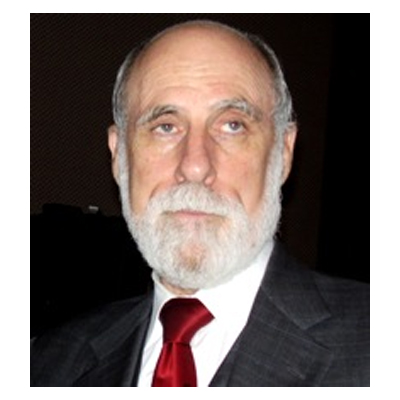
    Google’s Vice President and Chief Internet Evangelist Vinton G Serf is regarded as one of the fathers of the internet. While in Bangalore, he shared his views, Google’s objectives and the future of the internet, with Indiantelevision.com’s Tarachand Wanvari.


    Excerpts:

    IPR issues – You say that Google would like to make information available everywhere globally. Recently a Belgian court passed a ruling against Google over copyright. Google has been accused of dragging its feet in bringing in technology to take care of IP rights and help fight piracy. What does Google propose to do now on this issue?

    First of all, I’d like to point out that Google does not preview the content and we don’t claim any ownership or anything like that. Our intent is to make people aware of content which is already on the network. There are issues arising when someone who pulls copyright material and someone else has put that material improperly on the network. Google is unaware of any of the copyright claims when that information shows up on the net, it was there.


    Our package is very much like the package that was established in the US called the Digital Millennium Copyright Act.

    The US DRM is not as good as the framework in the EU.

    Actually, there is some tension in here between the piracy laws and the copyright laws and there is uncertainty as to how that is going to be resolved. The European Commission is trying to figure out how to adapt their intellectual property and content protection laws to match the US DRM laws.

    Google earth has run into several problems with regards to security. Lot of concerns have been raised about sensitive locations being viewed easily. What do you propose to do about this?

    Our policy is that whenever we have an issue arising with the national authorities, we take it away. We do understand their problems, and in fact there are any number of images that have been adapted. But I do need to point out to you that the data that we are using is not ours, typically it is available for free like the Nasa Landsat. Anyone could have access to it, and so removing it from Google Earth does not necessarily solve the problem, because the imagery is there. It’s also commercially accessible, in other words if you wanted that information, particularly if someone deliberately wanted the security overhead in order to mount an attack, if they have a coherent capability to attack, they probably also may have the ability to purchase this information quite independent from Google. So the problem is more complex than taking things out of Google Earth. The problem is that a lot of the overhead imagery is widely accessible. Period.


    I actually do not know of the specifics of the issues here in India, I can say that for some US installations we have removed or replaced information with less resolution or in some cases actually wiped out – like the White House for example, you can’t see the roof, it’s simply been covered up digitally. So those are things where actions have been taken.


    We face this all the time with regards to content that is indexed in different parts of the world you’ll find governments with different views, usually the Chinese example, the one everyone brings up, but I want to mention that there are other places. For example in France and Germany, it is illegal to profit form Nazi war memorabilia, and so it is considered illegal literally to put up images of these materials. So we have to consciously remove them form the google.de and the google.fr index. We understand that and we try to work with governments.

    The way mobile penetration is going on compared to laptops and desktops, do you see the internet more as a virtual net?

    In some ways yes. I think that we’re going to see expansion in all directions 802.11, Wifi, as opposed to physical networking technology. Lots and lots of mobiles which I think will be the first introduction to the internet for an awful lot of people in the world. Their first opportunity to interact with the internet may be on a mobile device.

    The ability to respond to an individual interaction, and to produce relevant advertising material in these different media is very important for us to consider

    As evangelist at Google, is it right for Google to acquire companies like Youtube, etc. Basically your core competency lies in developing search engines, aren’t you moving away from those core competencies?

    I disagree that we are going away from our core competencies. First of all, we acquire a lot of companies, because their technology we think is helpful. It’s true that our primary business is search and we have never lost track of that. But remember what’s driving the company right now is advertising, because advertising is how we pay for everything. And so you have to remember that the core of the business is revenue generation through target advertising. And we are very interested in all the mediums, not just the online internet, which has turned out to be wonderful for us. But that doesn’t mean that the other advertisement mediums should be ignored. They are still quite valuable.


    Youtube and Google video are media and so is radio. So we have been experimenting with video advertising, with audio advertising and with print advertising. Using similar kinds of techniques, the thing which is probably the most critical is the ability to produce an intervention in real time as opposed to the traditional thing where you produce a video advertisement which is a part of a television show actually prepared months or weeks ahead. The ability to respond to an individual interaction and to produce relevant advertising material in these different media is very important for us to consider.

    Could you speak on Web 2.0 and Web 3.0?

    I actually think those are two marketing terms and I sort of reject them out of hand as being overly simple. I do think however that the web as we know it with xml and html and so on has created an infrastructure layer on top of which you can now do things and so to the extent that there is a Web 2.0, maybe it uses web services and Service Oriented Architecture, it’s still very nascent, still very infantile. Long ways to go before we see it grabbing hold. I even chatted with Infosys this morning abut that and we have a similar view that it is still very much in its infancy.


    But, the concept is very compelling that you could standardize interaction. I hope we do it right this time. We tried once before in 1980, we called it the Webtronic Data Interchange and it didn’t work out because it was too vertical. So I sort of don’t like the terms Web 2.0 and Web 3.0., the thought behind them is standardizing of exchanges creating a layer of infrastructure that everyone can use and build on.

    How much is your India R & D center involved in solving these issues and challenges?

    In very obvious terms, we have a large number of Indian researchers and engineers at Google working very hard on many of these problems. So it’s a direct contribution at least to Google.

  • Adobe Flash Lite to support video for mobile handsets

    Adobe Flash Lite to support video for mobile handsets

    MUMBAI: At the 3GSM World Congress in Spain Adobe Systems has announced that support for video will be integrated in the next generation of Adobe Flash Lite software, Adobe’s award-winning Flash Player runtime specifically designed for mobile phones.

    Flash Lite 3, expected to be available in the first half of this year, will bring the Adobe Flash Player video format from the desktop to mobile phones and devices, enabling operators, handset manufacturers and developers alike to deliver more experiences to mobile users.

    The firm says that the release will be an addition to its family of video technologies that includes Adobe Production Studio for professional video editing, Marcomedia Flash 8 from Adobe for video encoding, and Adobe Flash Media Server for video distribution. Adobe says that itsFlash technology is impacting the way video is distributed over the Internet.

    Today, television shows like Lost, Desperate Housewives, Grey’s Anatomy are being delivered online through FLV, the Adobe Flash Player video format, while the technology also powers the video capabilities of social networking sites such as YouTube and MySpace.

    The firm adds that video support in Flash Lite will change the way the way users engage with mobile content and open up new revenue opportunities for developers worldwide. This release will allow users to view vibrant video content from popular Internet sites like YouTube or MySpace and enable developers to create new applications across a variety of mobile and consumer electronics platforms.”

    Flash Lite will support the same video formats supported by Adobe Flash Player and will directly support video streams delivered by the Adobe Flash Media Server, allowing users to view a broad spectrum of Flash Player compatible content. Videos can be viewed in different forms within the Flash environment, including downloadable video clips, streaming videos, applications with user interfaces based on Flash or personalized content such as wallpapers or screensavers.

    Flash Lite runs on multiple platforms, including Symbian S60 v2/v3, Qualcomm Brew 2.x/3.x and Microsoft Windows Mobile 5, in addition to embedded operating systems on a variety of OEM platforms. This allows consistent content delivery across device types, broader distribution of engaging mobile experiences and simpler publishing, testing and selling of Flash Lite content for developers.

    By leveraging the Flash ecosystem – which includes the Flash authoring tool, Flash Lite player runtime and an established community of more than one million designers and developers – Flash Lite reduces deployment costs up to five times faster than competing solutions. Today, more than 200 million Flash-enabled devices have shipped worldwide

  • Spymac unleashes its web 2.0 community for video chat, movies, music

    Spymac unleashes its web 2.0 community for video chat, movies, music

    MUMBAI: Spymac Network has launched its international web 2.0 community for video chat, movies and music. The Web 2.0 portal lets the world video chat, share movies, pictures and music across the Internet and earn money at the same time.

    The new version of Spymac – which originally started out as a Mac community in 2001 – was launched in January 2007. It is available now in more than 15 international languages and works on both PCs and Macs. A percentage of Spymac’s advertising income is paid to members who upload the most creative and most viewed movies, music or pictures.

    The most active, creative and popular content providers earn the largest amounts of money in this revenue-sharing model based on an exponential curve. The company has since paid out $50 in its first month with a German (Spymac nickname “Jafeth”) earning $5000 for his funny videos/pictures, and a Chinese content provider receiving a cheque for $1300.

    Spymac’s content quality-rating system is based on an algorithm taking into account how creative and popular it is. The criteria include how other users rate the content, if it is linked to other sites, the click-rate etc. Users with the most popular content of the day win the daily payout and the best content providers of the month earn the monthly jackpot. Spymac is also working on a system which allows users to rate content as inappropriate and set an alert so that the content will be taken off the site.

    Spymac Network CEO Holger Ehlis says, ”The service would be of great interest and benefit to members in developing nations, whose culture and surroundings are sure to be a hit with viewers. They are sure to benefit from our service as those who upload something that people want to see or hear make real money.

    “While YouTube announced that it was thinking of a way for members to revenue-share, Spymac is already paying out cheques to its users”.

    Among the most powerful features of Spymac is its’ complimentary face-to-face video chat, which allows people to share everyday life over the Internet. Members can have a heart-warming conversation with family, who is away, see the smile of an online sweetheart, or hold a business meeting in the convenience of a living room. The feature is truly compatible, without any of the traditional need for extra software or setup.

    Spymac Network CTO Kevin April says, “Spymac takes online dating, staying in touch and finding new friends to a whole new level. All you need is a web browser and an inexpensive web cam to share video and enjoy face-to-face meetings with people from another city, country, or even continent”.

    Users can access Spymac for hundreds of thousands of iPod-ready movies, songs and pictures. Spymac’s movies are also fully compatible with Sony’s PlayStation Portable, allowing users to easily find new content for their portable entertainment devices. Share video from Spymac to MySpace and other sites with unlimited storage space on offer.

    Through its embedding feature, Spymac allows users to stream content across the Internet on other websites. For example, users can insert their favorite pictures and videos into their MySpace profiles, blogs or eBay auctions, turning Spymac into a powerful content hub. This allows users to spice up online ads and auctions with video or audio clips; upload multimedia projects for work or school; liven up blogs, websites and emails; share movies with friends and family and enhance personal profiles on dating and social-networking sites.

    By utilising technology, members record live video with a click of a button for immediate release to the Internet. Users can capture pictures, audio and video directly onto Spymac using their own webcams, or easily upload from video cameras or mobile phones. “Spymac simplifies the technology behind different formats, encoders and players, making it easier for people to enjoy online communication” said April.

  • Viacom asks YouTube to remove unauthorized clips

    Viacom asks YouTube to remove unauthorized clips

    MUMBAI: YouTube, the online video sharing site from Google faces yet another controversy as Viacom asks the website to remove more than 100,000 unauthorized clips from its hugely popular video-sharing site.

    Viacom has been through several rounds of talks with YouTube and Google but has not managed a breakthrough as far as ‘filtering’ or ‘revenue sharing’ for clips and video is concerned.

    Viacom said in a statement that after several months of talks with the website “it has become clear that YouTube is unwilling to come to a fair market agreement that would make Viacom content available to YouTube users.”

    Viacom has repeatedly negotiated with YouTube and Google to deliver on several “filtering tools” to control unauthorized video from appearing on the site.

    Although the company is asking YouTube to take the clips down, it has not taken legal action.

    Under federal copyright law, online services such as YouTube are generally immune from liability as long as it responds to takedown requests. But the legal lines blur when another user posts the same video.

    YouTube said in a statement that it would comply with the request from Viacom and said that it cooperates “with all copyright holders to identify and promptly remove infringing content as soon as we are officially notified.”

    In November, YouTube had agreed to delete nearly 30,000 files after the Japan Society for Rights of Authors, Composers and Publishers complained of copyright infringement.

    Some media companies such as CBS Corp. and General Electric Co., NBC Universal have made deals to allow YouTube to use video clips from their programming. But the site is yet to agree over ways to get compensated for the use of their copyrighted material.

    Universal Music Group had threatened legal action for copyright infringement and piracy of music videos. It later reached a licensing deal with them last year.

    Despite Viacom’s problems with YouTube, the company’s MTV Networks division reached a licensing deal last year with Google that allows the search company’s video service to use clips from MTV and its sibling networks under a revenue-sharing agreement.