Tag: YouTube

  • Shraddha Sharma wins case against Culture Machine

    Shraddha Sharma wins case against Culture Machine

    MUMBAI: Shraddha Sharma became an overnight internet sensation through her YouTube channel ‘Shraddharockin’ with close to 160,166 subscribers.

    Recently, the 18-year-old musician was dragged to court by her ex-managers of the multi-channel network, Culture Machine for her refusal to renew the contract.

    The singer countered their complaint by saying that her contract had ended and she had asked for the channel to be handed over to her.

    Creative liberties and ownership of intellectual property have always been a cause of concern for artistes everywhere. Time and again, we have heard stories of musicians who did not get their due.
    However in Sharma’s case, the Bombay High Court has ruled in her favour.


    Sharma, who has now started her own YouTube channel called ‘Shraddha Supagirl’, is amongst the many singers who dream to be recognised for their work.  


  • Is the current generation evolved? #fames find out

    Is the current generation evolved? #fames find out

    MUMBAI: Has the new Indian youth truly come of age? Are they braver and open to accepting the realities of life and speaking the truth? The youth in India has some answers for such questions that have been compiled through a series of vox pop videos by one of India’s talent led digital entertainment network, #fame. These videos are trying to throw light on how a typical Indian youth reacts when they face unconventional questions centered on women.


    The channel went to the streets of Mumbai and other cities to ask the young generation about topics like the following:

    Makeup versus no makeup
    Who do women dress for?
    How do they want their ideal man/ woman to dress?
    Cleavage: to show or not to show?
    Hair or no hair? Nation wants to know.


    Viewers can watch these videos through the channels network on social and digital platforms such as YouTube (https://www.youtube.com/user/LivYourFame), Facebook (https://www.facebook.com/livyourfame), WeChat, DailyMotion. This extends the network’s focus on key strategic genres, which include fashion, food, music and comedy. Catering to mobile millenials through an integrated ‘talent-first’ strategy, #fame strategically focuses on emerging and established talent to build engaged digital content and communities with them. #fame is building a network spanning 5,000 channels and 50,000 content creators across six countries over the next three years.


  • In the online medium, the audience is the king, say digital stars

    In the online medium, the audience is the king, say digital stars

    MUMBAI: Over the past few years, the media landscape has taken a dramatic shift. It is a whole new virtual world and the rise of ‘YouTube generation’ has enabled talents to gain large followings online. From music to comedy, there are compelling opportunities for people to show their skills on the world wide web. The future of story-telling is evolving and the online sphere has proven to be a great platform for talents to find their own voices. So, what is it about crafting content online that attracts numerous talents?

    “It is an opportunity for us to work with the creative freedom and aesthetics that mainstream media doesn’t allow,” say the talents of the popular YouTube channel, Enna Da Rascals.

    Explaining their reasons to take on the virtual world, the group elaborates, “We started off as a theatre company and all of us work in films. It felt like a logical extension to move towards online content.” The channel, which has over 27,000 subscribers and 1,000,000 views on YouTube, includes names such as Pooja Devariya, Venkatesh Harinathan, Rajiv Rajaram and Yohan Chacko.


    The creators of another popular channel, SnG Comedy, boasting over 80,000 YouTube subscribers and 5,000,000 views tell us a comparable story. “With the kind of comedy we do, there were only two ways to get ourselves out there – stage and YouTube. The stage, while truly gratifying, does not have the reach and the ability that YouTube has.”


    More and more people are relying on their smartphones and tablets to watch content online. Whether it is a tip on how to look good or how to cook a dish, chances are that we would go online for instant solutions.  “People like to be spoon fed. They are lazy to answer their own questions,” says make-up artist and hair stylist Elton Fernandez, who has over 8000 subscribers and 300,000 views on his YouTube channel.  According to Fernandez, the audience today wants specific content and answers to their precise requests.  

    This can be deemed true for the current generation which particularly has a short attention span and is constantly looking for diverse entertainment. According to Enna Da Rascals, people are inherently opinionated and content which polarize people and make them think about their perspectives do well.  

    SnG Comedy, comprising Karan Talwar of BollywoodGandu, Varun Thakur, Aadar Malik, Brij Bhakta, Neville Shah and Kautuk Srivastava, believes that the audience today wants real and original content.  “There are no fixed formulas. It all depends on your originality and how the audience can relate with your content,” they say.

    So, how do these talents create good content online?

    “With us, there is no strategy really. We do stuff that we like. We prefer to get our humour and ourselves out there,” answers SnG comedy.

    Make-up artiste and hair stylist Mrinalinee Mukherjee who has recently started a YouTube channel, feels that it is vital to be true to one’s art and share the expertise of a subject to the best of their ability. She says, “Making good videos, teaching new things and reaching out to them are some ways to keep the audience interested.”

    Fernandez tries to keep his content simple and does things that are actually achievable in real life. “The viewers should not feel that what I am doing is rocket science. It should not be intimidating for them to try,” he adds.

    However, according to Enna Da Rascals, there is a downside to having creative freedom online. The content created is up and there for everyone to judge. “With a film or a play, you can market or sell it to a specific audience. Here, the content is for everyone to see. Finally, you realize in this medium, the audience is king. You can’t rig the press, the counts or juries. What you see is what you are,” they say.

    Budget is also a common concern for all these talented online celebrities. There is a cost attached to making videos with no fixed returns. So, do they then compromise on the quality of their content?
    Enna Da Rascals feels that this is where engagement with brands come in handy. “Sometimes brands can help you create videos with a much larger design.  If we’re feeling ambitious and the content is something the audiences may enjoy, we’ll need the support of a brand to make it happen.”

    With the advent of multi-channel networks, talents are also being able to find support financially. SnG comedy which comes under Culture Machine Digital Video Entertainment Company says, “Culture Machine has been pivotal. They’re really the money. They are the ones who selflessly invested actual capital to help us grow as a channel. They believed in our style and brand of comedy. They’ve pulled all stops to help and assist us.”

    Adding to that, Enna Da Rascals states, “It’s nice to know that someone has your back looking at the monetary side of things. Also, they provide insights on which videos have the potential to do well.”

     
    Despite of all these, the perks of being a digital star are endless. A digital footprint contributes in getting live gigs and recognition. For SnG Comedy, it has helped them in the sales of their stage shows. Having a channel online has added to their brand equity when they are pitching for a live act.  “People know us,” they say.

    For Fernandez, he feels it is nice to be recognised by a specific target audience and creating content online is a long term business for him.


    Such is the case with Enna Da Rascals who believes that they have been successful in attracting the attention of various brands. According to them, the online world is definitely preferred amongst the young tech savvy consumers. “Don’t be surprised if you find yourself choosing the online industry over the main industry,” they conclude.


  • Rightster partners with Lehren Networks

    Rightster partners with Lehren Networks

    MUMBAI: Rightster announced its new partnership with Lehren Networks today, an addition to its earlier agreement under which it helps Lehren Networks syndicate video content across Rightster’s global publisher network.  

    A cloud-based global video distribution and monetisation network, Rightster simplifies delivery to TV scale audiences in the complex online video market.  As part of the new alliance, Rightster will now provide complete audience development and monetisation support to the Lehren Networks’ entire set of entertainment Youtube channels. It will manage over 77 YouTube channels under Lehren Network that include celebrity, movie, kids and music verticals.

    Lehren Networks, one of the most popular media and entertainment networks devoted to India’s film industry, boasts of 1 billion views on Youtube till date and adds approximately 3 million video views per day on the platform.

    Commenting on the association, Rightster GM Richard North commented, “YouTube in India is a phenomenal success story, with over 60 million unique users per month and millions of views for Indian content in other countries.  This alliance is a real statement of intent for Rightster as we continue to expand in the APAC region through our offices in Sydney, Singapore, New Delhi and Bangalore. We are delighted to extend our partnership with one of the most popular entertainment networks in India and we are looking forward to working with Lehren to build even deeper engagement with their audiences and to drive increased revenue from their YouTube content.”

     Lehren Networks founder Mritunjay Pandey  commented, “This partnership underlines our ongoing commitment to further grow our already strong Youtube presence. Rightster has deservedly become one of the largest Youtube multi-channel networks (MCN) in the world so we are delighted to be partnering with them to manage our entire network of Youtube channels.”


  • DQE strengthens digital media strategy to monetise content

    DQE strengthens digital media strategy to monetise content

    MUMBAI: As part of its digital media strategy, entertainment production and distribution company DQ Entertainment have launched two YouTube channels- Power Kids and Tiny Toonz in association with leading multi channel network Whacked Out! Media (WOM).

    Power Kids will showcase animated content for children aged five and above while Tiny Toonz will be aimed at younger children. It will also launch its content and games on other platforms such as Google Play store, Amazon and iTunes.

    The reason for the new digital initiative is to make full use of its rich animated library and target all platforms including apps, smartphones, tablets, social media etc. DQ is banking on this to substantially add to grow revenue. WOM will be a strategic digital media partner for YouTube, allowing DQ to monetise its animated properties and mobile games.

    DQ Entertainment chairman and CEO Tapaas Chakravarti said, “The majority of our audience today are constantly online consuming large amounts of animated content through mobiles, tablets and smart TVs from YouTube and other digital media platforms. Having established our footprint globally, DQE is perfectly positioned to leverage our extensive resources and content library for this high growth sector of the entertainment industry. We hope this will help us to reach wider global audiences. We are excited to work with WOM who are a leading MNC with vast experience in the digital ecosystem. We are confident that WOM will help us expand our global digital presence and reach new markets.”

    Whacked Out! Media MD Ramkrishna Veerapaneni said, “We are delighted to be working with DQ Entertainment to create a new online platform for children. We hope that DQE Digital World will become the ultimate destination for catrtoons, games and lots of fun content for kids all over the world.”


    DQE content includes The Jungle Book, Peter Pan, Lassie, Iron Man, Robin Hood, Casper etc. It will also show exclusive online educational entertainment content.


  • BroadcastAsia2015 Unveils New TV Everywhere! Zone

    BroadcastAsia2015 Unveils New TV Everywhere! Zone

    MUMBAI: BroadcastAsia2015, slated for 2 – 5 June 2015 will unveil its new TV Everywhere! Zone as increasing consumer expectations place new challenges on the industry to provide more convenient and reliable access to content. With the  proliferation  of  digital  devices  and  today’s  ever-changing  market  of  always-on connectivity, content broadcasters are starting to look beyond TV to stream and monetise their content.


    This brings the launch of the new zone, which will be a key attraction at BroadcastAsia2015 and will explore the entire value chain of non-linear broadcasting.


    Need for new technologies driven by shift in consumer demands


    Recent years have witnessed a dramatic increase in competition in the broadcast industry as providers continue to develop new technologies in meeting consumer demands, to offer a social,  personalised  and flexible TV and video experience. With the evolution of  linear channel brands already underway in Asia, the region continues to grow at an exponential rate and is witnessing an increasing number of traditional broadcasters entering the IPTV, OTT space. This is also emphasised by the growth and influence of aggregated services, such as Netflix, Hulu, AmazonPrime, YouTube and Apple TV.


    The recent Multiscreen TV & Video Forecasts report published by Digital TV Research reveals that the number of viewers watching TV and video content on multiple screens will climb from 5.60 billion in 2010 to 11.32 billion by 2020, with TV sets’ share of total viewers falling from 73 per cent to 42 per cent during this same period.


    The report also predicts that by 2020, 3.98 billion people will watch content via a PC or laptop over a fixed broadband connection, an increase of 80 per cent on 2013; and smartphones viewers will reach 1.53 billion, triple the number in 2013. Tablet viewers will amount to 1.10 billion by 2020, an impressive five times the 2013 total.


    “There is continuous interest in the broadcast industry especially in the areas of OTT, second screen, non-linear broadcasting and social media – all to meet consumers’ demands and enhance users’ experience. BroadcastAsia is already fuelling this space in Asia and with the introduction of our new TV Everywhere!, we hope to bring together even more case studies on how new entrants are adapting to competition, and how incumbents are maturing their  offerings  to  differentiate  themselves  amongst  competitors,”  says  Mr.  Calvin  Koh, Assistant Project Director of BroadcastAsia, from organiser  Singapore Exhibition Services.

    International collaboration

    Regional broadcasting regulators play a vital role in helping to shape the future of the industry, as highlighted by the support shown from the Asia-Pacific Broadcasting Union (ABU), the International Telecommunication Union (ITU), and the National Broadcasting and Telecommunications Commission of Thailand (NBTC). This symposium initiated and jointly implemented an initiative aimed at studying the trends and market analysis in the broadcasting industry while promoting international cooperation among policy makers, regulators, and Asia’s industry players.

    Healthy industry response to new feature area

    With the opportunity to reach key buyers from the industry, confirmed participants include major players from across the world and region, such as Ali Corp, Aveco, Brightcove, Montage Tech, Quick Play, SPB TV and Vimond among others. TV Everywhere! will place a
    focus on the following technologies:


    • Authentication
    • Archive Management
    • Content Delivery Network
    • Connected / Hybrid TV
     

    • Delivery
    • Integration
    • Ingest
    • Interactive TV Apps
     
    • Monetisation
    • Network & Device Management
    • Playout Automation
    • Storage / Security
    • Workflow Glue Application
     

    “Clearly the media industry is in transformation with consumers being able to access content across multi-screens, fuelling unprecedented demand for online video content. The investments being made in bringing TV Everywhere solutions to market is a strong sign that broadcasters and content owners are moving up the adoption curve,” says  Mr. Dennis Rose, Senior Vice President, Asia-Pacific and Japan, Brightcove.


    “For those who want to launch and capitalise the TV Everywhere business model, Brightcove’s powerful suite of cloud based online video streaming, trans-coding and monetisation solutions deliver compelling consumer experiences that work across every screen,” he adds.


    BroadcastAsia2015, Asia’s definitive exhibition and knowledge platform for the international broadcasting, film and digital multimedia industry, will showcase the newest innovations and cutting edge technologies in 4K / UHD, NextGen Broadcasting – OTT / Hybrid / LTE / IP / Broadband / Cloud, Multi-Platform Streaming, Professional Audio and more.


    The BroadcastAsia2015 International Conference and Creative Content Production Conference 2015 will bring together thought leaders and like-minded professionals from the broadcasting and media arenas to share business strategies for future broadcasting and content production.


    Both   exhibition   and   conferences   will   be   held   alongside   CommunicAsia2015   and EnterpriseIT2015 in Singapore at the Marina Bay Sands.


  • MIPCOM 2014: Best time to invest in India, say Indian media barons

    MIPCOM 2014: Best time to invest in India, say Indian media barons

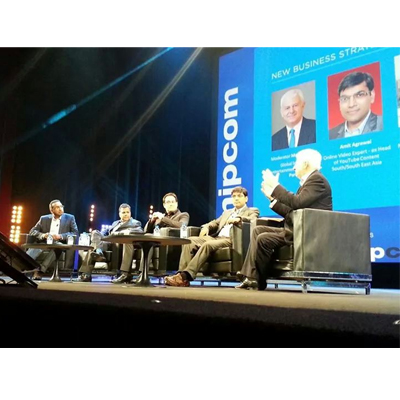
    CANNES: Indian content market is going through an exciting phase, and putting the scenario upfront to the world, through one of the biggest stages at the ongoing MIPCOM 2014 was the India panel which comprised of Colors CEO Raj Nayak, Balaji Telefilms group CEO Sameer Nair, Rajshri Entertainment managing director and CEO Rajjat Barjatya and online video expert and ex-head of YouTube content south/south east Asia Amit Agrawal. The session on ‘New business strategies from India’ was moderated by PwC global leader, entertainment and media Fenez Marcel.


    Setting the stage for some heated discussion was Nayak when he highlighted one of the biggest issues the country faces: lack of broadband. “Lack of connectivity is an issue. If the experience of watching becomes smooth, it will be a game changer,” he said.


    Comparing the online market in India with that of the world, Agrawal said that the Indian market has both traditional medium and online play “and both are very strong,” he informed adding that this meant huge opportunity to tap into.  


    Agrawal went on to say that while India consumes a lot of content online, almost 30-40 per cent of this content is not made in India. “That’s a huge chunk. I am seeing an emergence of micro-communities with technology. This will enable the content producer to tackle the right community. It will happen and very soon, may be in the next 12-18 months,” he stressed.


    There is too much of fragmentation in the country, currently. Mentioning the Telecom Regulatory Authority of India’s regulation about ad-cap for pay TV, Nayak said, “Once this happens, the supply and demand ratio will change. This will also help in the yield going up, because the demand will go up. We have to come at a point where the FTA channels will carry advertising with no limitations, pay channels which will have 10+2 advertising and very premium channels will have no advertising.”


    Barjatya who wears the hat of both traditional movie maker and digital feels that India is at a cusp of digital revolution. “For me the opportunity is to reach the global audience, especially through mobile. Traditional media rules cannot be applied on mobile,” he said.  


    The YouTube journey in India started with traditional media content that was distributed to audience which was moving away from traditional media. “But now, over the last one and a half years, I see so many online channels coming up on comedy, food, music, news, tech bloggers have all come up,” informed Agrawal.  


    With a contradicting viewpoint, Nayak said that YouTube is the biggest competitor to the broadcaster. And that it is due to this, that the broadcaster, since the last month, has taken its hit show Comedy Nights with Kapil off YouTube. “I am a big believer of digital media and I feel it is the future, but I also feel that it will co-exist with television and they will grow parallel.”


    Viacom itself is looking at a lot of short formats. “But the problem is that unless broadband issue is not addressed, monetisation will remain a huge problem. If you look at the money, YouTube does Rs 500-600 crore business from India, where television is a Rs 7000 crore business, so the numbers are small and that will not grow until and unless the bandwidth issues are addressed,” said Nayak.


    Nayak believes that no one in India has so far mastered the art of monetising content on the digital media, social media the way it should be, given its increasing reach and targeting abilities.. 


    “Monetisation will happen with broadband and hopefully this should be resolved with the rollout of 4G,” he added.


    The panel also put forth its wish list for the new government formed under Prime Minister Narendra Modi. According to Nair regulation for content already exists, which is beneficial to the whole industry. Highlighting PM Narendra Modi’s ‘come make in India’ campaign, he said that the government is giving open invitation for people to come to India. “As for Raj’s point that producers in India are not partnering with broadcasters and thus not sharing risks, we are looking at that very seriously and are encouraging everyone else to do it. If there is a risk-reward mechanism, everyone can benefit,” explained Nair.  

    As for Nayak, keeping in mind the dynamic & tech-savvy PM the country currently has, who understands the power of the Digital media, connectivity and broadband will get addressed in a much faster footing.  Given that electricity is still erratic in rural India, people will communicate and consume content through mobile phones. “I would ask him to release spectrum because that’s a big issue that’s coming in the way of growing business. Another thing that I would request  is complete implementation of the digitisation, process which is expected to be over by 2016 . He further added that broadcasters are not getting their fair share of subscription revenue and this can only happen once the digitisation process is complete and all stakeholders start seeing the benefits,” he said.


    Barjatya’s wish list consists of wiring up India and encouraging Indian entrepreneurs to have a global outlook rather than be restricted to Indian audiences alone. “We need to appeal to the audience outside of India,” he said.


    For Agrawal, the government should remove hurdles. “Out of all the YouTube content that we produce, more than 70 per cent of the viewership for programme comes from global audiences. We haven’t done a great job in marketing ourselves and make people aware of the country,” he added.


    Nayak is hoping for a dynamic change in the media industry, with the new PM.   


    The discussion also touched upon the consumer behaviour in the country.  “We see a lot of consumption happening on handheld devices. When we began, 10 per cent of our views were from handheld devices, today it is almost 50-50 and that number is higher in India than in the rest of the world. India’s next billion people will access internet on mobile, and will not know about PCs,” opined Barjatya.


    Agreeing to this, Nayak said that the reason it will happen is because for mobile, one doesn’t need electricity. “We have 160 million homes and 900 million handheld devices right now, which is expected to go up to 1.5 billion handsets. So the explosion is happening. Power will take a lot of time to be addressed, but if you have internet, you can consume content,” he informed.


    Nair classified the audiences and the programmes being made. He said, “The television industry currently is programming for newer audiences who are more into household dramas. Then there are also those who have already lived through all this and are now looking for more. The audience is evolving. There will be more niche channels.”  


    All the panelists felt that this is the best time to invest in India. “In India, people are ready to match dollar to dollar. And we are ready to put the money where our mouth is,” announced Nair.  


    Concluding the session with one advice to entrants in the market, Nair said, “It is important to be patient. We are still at the ground floor, but we can build.”


  • HP partners with Bindass for ‘Bend The Rules’ campaign

    HP partners with Bindass for ‘Bend The Rules’ campaign

    MUMBAI: Bindass, over the years has understood the pulse of India’s youth and has become their friend and companion while entertaining them with content that is both purposive and engaging.


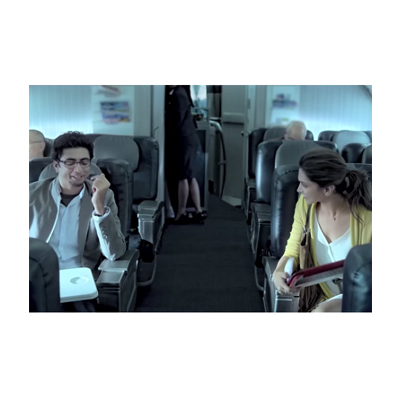
    The channel in association with Hewlett Packard (HP) launched a new campaign – ‘Bend the Rules’ featuring brand ambassador, Deepika Padukone. The campaign celebrates how millennials in India ‘Bend the Rules’ by taking the unconventional road to success.


    Millennials strive for success at an early age using the power of technology. HP is inviting them to share their stories by uploading a video on Facebook, Twitter or YouTube using the hash-tag #BendTheRules, of how they have bent the rules to achieve success.


    A winning entry from India will get a chance to share his/her inspiring story with a larger audience through a short film which will be aired on Bindass and its YouTube channel.


    Talking about this association with HP, Disney India VP revenue, media networks Nikhil Gandhi says that the channel wanted to try a different approach in order to deepen the engagement level with the youth. The campaign connects with the ideas and philosophies of Young India. It celebrates the young generation’s ability to ‘Bend the Rules’ and achieve success by taking the road less travelled.


    Padukone, the brand ambassador for HP India is associated with this campaign. As someone who decided to pursue acting and leave behind a promising badminton career, she is familiar with treading the unconventional path to success.


    Also featuring in the campaign is the HP Pavilion x360, a value-packed convertible PC, which easily converts from notebook, to stand, to tent, to tablet mode. With optimised touch-screen performance and beats audio, the device is ideal for the productivity and entertainment needs of consumers.


    Backed by in depth research, Bindass has executed successful shows and campaigns which not only engage young India but also enable purposive action. “We are using this understanding to create the right approach to strengthen our partnership with HP and deliver Bindass ‘Bend The Rules’ to strengthen their engagement with the youth,” says Gandhi.


    What made HP associate with bindass for the campaign? According to HP India head of marketing, printing and personal systems Lloyd Mathias, HP’s focus was to reach out to the Indian youth. “#BendtheRules is in the DNA of young India and we wanted to amplify the HP brand philosophy with a partner that understands youth. Brand Bindass is positioned as the enabler of purposive action and that holds really well with brand HP. We wanted to leverage Bindass’s reach on TV and digital to speak to the Indian youth and hence the association,” he says.


    Mathias believes that by partnering with Bindass, it will help HP become more relevant to its audience and build a community around shared interests and passions. The bend the rules philosophy of HP will get validation and engagement through this association within its shared TG.


    The initiative is spread across multiple platforms including television, print, digital, out of home, webisodes and Vine videos. Additionally, an extensive social media campaign covering Twitter and Facebook is also in place which rests on both Bindass and HP’s social media platforms.

  • Shankar’s ‘I’ trailer creates record on YouTube

    Shankar’s ‘I’ trailer creates record on YouTube

    NEW DELHI: The trailer of director Shankar’s much-awaited film I has clocked over two million views in 24 hours on Sony Music India’s YouTube channel, the fastest for any Indian film.


    Shankar, known for path breaking movies like Gentleman, Kadhalan, Indian, Enthiran, Anniyan, Nanban and 16 December is casting Vikram and Amy Jackson for his latest flick.


    Talking about the new record, Sony Music India’s south head Ashok Parwani said, This is a first for us too, we have not witnessed such a huge pick up for any trailer. I will set new benchmarks across the film industry and we are proud to be associated with the magnum opus.”


    Weta Workshop, the company behind Peter Jackson’s film trilogy The Lord of the Rings, has worked on the digital make-up and background arts for the film.


    Produced by Aascar Films’ V Ravichandran, the music of the movie is by Grammy Award winner AR Rahman. Set to release in Tamil, Telugu, Hindi, Kannada, Malayalam and in all major Indian languages on 24 October, I will be the first Indian film to be dubbed into Chinese. 


    The movie’s music launch in Chennai was the talk of the nation with Hollywood Star Arnold Schwarzenegger as the chief guest at the spectacle. The evening witnessed a bevy of stars from the film industry with AR Rahman‘s music mesmerizing the stadium of 5000 fans and actor Vikram’s performance leaving everyone spell bound.


  • Content creators see value in social media data

    Content creators see value in social media data

    MUMBAI: Twitter, Facebook and television go hand in hand these days. The relationship between television and social media has been growing over the years. But does it have the potential to turn into a major revenue stream?

    Discussing this was a panel at TV.Nxt 2014 comprising Viacom18 Media VP and Colors commercial and digital head Vivek Srivastava, CNN International New Delhi bureau chief Ravi Agrawal, Nielsen India MD Prashant Singh, GroupM South Asia managing partner Tushar Vyas and Star India VP and digital marketing and CRM head Venke Sharma. The session was headed by Provocateur Advisory principal Paritosh Joshi.

    Firing up the session, Joshi asked Agrawal to share some insights as to how CNN evolved and now functions with the proliferation of social media since it was one of the early entrants into it. Agrawal highlighted that in the early 2000s, CNN had created a website called ireport.com where it invited people to click pictures and post from places where a journalist couldn’t be. “That’s when we saw that regular citizens can get the story before anyone can. We saw this even in the 2008 attack on the Taj Hotel in Mumbai, when the first few images that came were from the common people which were of superb quality. That became a great tool for us to tell stories from places unreachable to us,” he said. He went on to add that the notion of TV and social media being a new marriage is actually an old one in many parts of the world.

    While the possibility of getting a return path was natural for news, how does it work for fiction makers? Sharma started off by saying that there are people for whom entertainment is defined by buzzing topics and a fear of missing out. Talking about Star Plus’ hit show Diya Aur Baati Hum, he said that although it rates high on TAM ratings, it doesn’t garner the same on social media vis-a-vis Iss Pyaar Ko Kya Naam Du which doesn’t get the ratings but gets the buzz.

    Joshi went on to ask Vyas about the translation of social media into a source of revenue. Vyas said that social media works as a surrogate and is also an incremental data point. “We capitalise on the second screen behaviour and try and reach out to all set of audiences on various platforms. Social media is an incremental data over TV data,” he said.

    Nielsen had recently launched its Twitter TV ratings in the US for calculating data on TV shows on the social networking platform. Said Singh, “In this, we don’t count the number of tweets but rather the impressions. It is the GRP equivalent. Whether the market will decide to trade on it or to use it as another dimension against TV ratings is to be seen. But we believe that being able to measure impressions would be more and more important.”

    Talking about how the medium works in sync with the TV, Srivastava said that it is mostly important from a catch-up stand point in the media space. Facebook was to interact while not watching TV while Twitter was an accompaniment while watching TV. This was agreed upon by Sharma who said that Star had used Facebook to sharply target and get viewers to sample its latest Pro Kabaddi League.

    However, Agrawal pointed out that the capability of knowing how people react to your stories also puts the onus on journalists to be more careful and responsible.

    Joshi said that content makers are worried about the fact that the value of a viewer on TV is 100 times more than on digital. To this Vyas said that although it might be true in terms of absolute value, the audience on a platform like YouTube is higher than many other TV monetisation that is happening today. “If you look at advertising money, then digital is slowly reaching the top of the pyramid,” said Vyas.

    Star has set up its own listening hub to understand trends and draw actionable insights, highlighted Sharma. Agrawal ended the session by stating that drawing data from social media is also a danger. “It isn’t always a reflection of reality. The demographics that use social media are of a certain type and especially globally I would be slightly vary about extrapolating data from there,” he concluded.