Tag: YouTube

  • FoxyMoron bags the digital duties of &TV

    FoxyMoron bags the digital duties of &TV

    MUMBAI: FoxyMoron has bagged the digital marketing duties of the yet-to-be-launched Hindi general entertainment channel (GEC) – &TV.


    To be launched from the Zee Entertainment Enterprises Ltd (Zeel) stable, the mandate comprises managing the channel’s presence on social media platforms including Facebook, Twitter, Google+, Instagram and YouTube. The account was won following a multi-agency pitch.


    FoxyMoron co-founder Suveer Bajaj said that this win established its foothold in the television entertainment industry and also brings along the creative opportunity to build an entirely new brand. “As a digital partner, it will be our aim to make the channel scale from the very beginning. With soaring engagement for brands in the entertainment industry, we have great aspirations for this new channel,” he said.


    FoxyMoron will work towards creating and executing content revolving around the central belief of the channel – Jashn Jeene Ka (celebrating the spirit of living). It will also create programme-specific content for their flagship shows in order to utilize the ever growing populace of the digital space.

  • Birla Sun Life campaign gets over three million views on YouTube

    Birla Sun Life campaign gets over three million views on YouTube

    NEW DELHI: ‘Khud ko kar buland’, a short film for Birla Sun Life Insurance’s latest campaign, has garnered over three million views on YouTube within three weeks of being posted.


    The three and a half minute film by Taproot India tells the story of a single father as he deals with unpredictability of life. His journey begins at the doctor’s office where he is informed of his son’s autism, and how he grapples with life’s various setbacks while managing the family’s finances.


    The film ends with a voice-over that says, “Honi ko aap rok nahi sakte. Par honi bhi aap ko kahaan roh sakegi. Apno ko, apne sapno ko karo surakshit.” (You can’t control the inevitable, but the inevitable can’t control you either. Protect yourself and your dreams)


    Aditya Birla Group CMO – financial services Ajay Kakar said, “BSLI through this campaign takes the lead in defining the invaluable role that life insurance can play in all our lives. But going beyond that, we urge mass India to stand tall against adversity. We believe there are two kinds of people in the world – those who succumb to life’s uncertainties, and those who take it in their stride. We must be the only authors of our own life stories -Khud Ko Kar Buland,”


    Kakar added, “Nothing can come in the way of those who stand prepared against all odds. Life insurance helps safeguard your family and you from the uncertainties of life. In keeping with our marketing mission across all businesses at ABFSG to be an agent provocateur in low penetration categories, we have gone a step ahead to reposition the fragmented perception of the life insurance category, in the minds of mass India.”


    Taproot India chief creative officer Agnello Dias said, “Insurance communication usually harps on how vulnerable we are in the face of destiny. Never about how strong the human spirit can be. By emotionally empowering one to stay resilient in the face of whatever is in store is a bold, powerful stance by BSLI.”


    Taproot’s senior creative director Pallavi Chakravarti added, “Look around. See if you can spot a single person who has never faced uncertainty. It’s a given. We don’t know what form it will take – but if one believes that tomorrow will be better, and acts on that belief by safeguarding one’s dreams, then there is little destiny can do. And that is the stand BSLI has taken.”

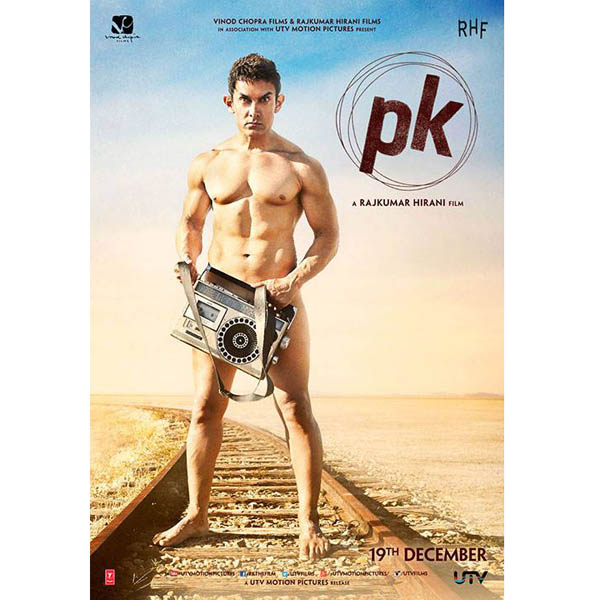
  • ‘PK’ most viewed movie trailer on YouTube

    ‘PK’ most viewed movie trailer on YouTube

    MUMBAI: When it comes to India’s favourite pass time, nothing comes close to Bollywood.


    The growing user base of YouTube in India has driven movie producers/distributors to the platform to test the waters, and get instant reactions on the movie’s potential success at the Box Office.


    With over a billion users worldwide, Indian movie trailers are enjoyed by a global audience, but what matters the most to the producers is the viewership and popularity of trailers in India. In the list of the top 10 movie trailers viewed in India from October to December 2014, the trailer of PK rules the charts.


    Interestingly, horror has also emerged to be one of the most consumed genre when it comes to movie trailers with the trailer of Alone bagging the third position on the chart. Khamoshiyan, MSG, and Dolly ki Doli were also among the others that grabbed a place in the list of most watched trailers.


  • A new ‘Cloudwalker’ in the virtual world

    A new ‘Cloudwalker’ in the virtual world

    MUMBAI: As the digital ecosystem in India is set to expand, the market for Video on Demand (VOD) platforms is only growing. A new kid on the bloc is Half Ticket, which claims to be India’s first curated VOD megastore.


    Launched 45 days ago by CloudWalker Streaming Technologies, the company researched for seven months before giving a go ahead to the beta version of the site. CloudWalker founder Jagdish Rajpurohit says, “We call ourselves as an enabler of one’s content in the digital world. If one has content which has a strong demand, and if people watch this content, then one will earn money.”


    But how different is Half Ticket from its competitors? Rajpurohit says as a matter of strategy they decided to curate content across the internet and bring it to the platform. They see themselves as digital exhibitors at par with brick and mortar multiplexes. “The difference between YouTube and other VOD’s is that one has to search content while in our case we make the content available to the audiences with ease,” says Rajpurohit while adding that they didn’t pay for the content.


    Besides curating, the company is also creating digital content. Explaining the same he says, “We are offering pre-marketing digital services. If one is making a film, one also shoots a lot of the making of the film which is useless. By using this and adapting our own scripts, we make customised content for producers to use for promotions.” It is also making a digital comedy serial in Hinglish of which the IP will rest with CloudWalker.


    The platform is also creating a space for independent cinema which will give them an opportunity to earn revenue for a longer time. “Half Ticket is not a video platform but it’s a digital distribution platform. It works on the strategy to help producers’ monetise better,” he says.


    While low bandwidth is one of the biggest challenges, according to Rajpurohit, the biggest opportunity will come when 4G enters the space. He further goes on to say, “Compared to the last five years, I see better days ahead. But the biggest challenge will be to make people aware that premium content is available digitally and one has to pay for it.”


    A 12 member team looks after curation of the content. “Our crucial point was that the internet today is uploading close to 220 hours of content every minute. In this scenario there is a 99 per cent chance of one missing the content they wish to see until and unless there is curation involved; one will not be able to choose the best,” the executive informs.


    So what is the checklist followed to select the content? Firstly, the content sourced is strictly family oriented. Secondly, the ratings and reviews based on film websites are taken into account before filling the content deck.


    The total team strength of the company is 32 and is based in Mumbai. The first level of funding came from the seven promoters of CloudWalker, who have invested a total of Rs 7 crore. It is in talks with two to three more funding companies who have expressed interest in the platform.


    The portal, which follows an advertisement driven model, is also reaching out to regional cinema makers. “We are telling regional cinema filmmakers that if they want to reach out to audiences worldwide, it will become much cheaper to bring the new content to a digital platform and release it. And as far as revenue is concerned, it is the same. If a film sells two to four lakh tickets across the world, then the production house can easily earn Rs 4 to 5 crore which is not possible theatrically,” he informs.


    The company plans to soon announce a Master Class for film distribution in the independent cinema.


    While content from channels like Colors, MTV, Nick, Viacom18, YouTube, History TV18, Dailymotion among others is already available on the platform, it is also in talks with two GECs. “The platform has 23,000 to 24,000 hours of content currently and is attracting a traction of 75,000 to 80,000 users every day. An app released four days ago has so far received 150 to 200 downloads,” boasts Rajpurohit.


    As part of its promotions, the platform tied up with My French Film Festival India and had a special screening at PVR wherein celebrities like Digamanshu Dhuliya, Ketan Mehta and Anurag Kashyap were present.


    Chalking the road ahead, Rajpurohit concludes, “We are in talks with new film distributors and will continue bringing festivals like ‘My French Film Festival’ to India.”

  • Online presence, a must for TV channels, says PepperMedia’s Radhakrishnan Ramachandran

    Online presence, a must for TV channels, says PepperMedia’s Radhakrishnan Ramachandran

    MUMBAI: Narendra Modi dreams of a ‘Digital India’ as do many others who are working towards achieving the same goal. One of them is PepperMedia founder and CEO Radhakrishnan Ramachandran.


    Ramachandran entered the digital space almost 15 years ago, when it was in its nascent stage. With the launch of India Syndicate, which was later followed by iStream.com, Ramachandran has seen the online video segment grow from scratch in India.


    “With iStream.com, we ventured into the world of online video segment with Youtube and established a good platform. Through this initiative we helped the likes of MTV and Colors launch their channels on Youtube. We also worked on MSN videos and Yahoo for Yahoo Cricket. We had raised $5 million from SAIF for launching istream.com as a VOD play. However, had to shut it down in 2013 since the second round of funding didn’t  happen. ,” recalls Ramachandran, adding he didn’t lose faith in the medium and went on to launch his third venture, an MCN, (PepperMedia) with personal financial backing.


    Talking about the plans ahead, Ramachandaran says, “The next 12-18 months, our focus will be on Youtube because nobody else has been able to crack the model. Of course, we have Netflix and Hulu aboard but in India, it is only Youtube, which has been able to successfully monetise and hence we will focus on that.”


    In the online video segment, where monetisation is the biggest challenge, consumption pattern has changed over the years. Making revenue with plans in place, a startup focused on creating original online video content and building video solutions for brands and media entities, aims to marry content and technology. To achieve the same, PepperMedia recently appointed Milind Naik as its director of technology.


    “If you are looking at building a sustainable business model in the MCN space, technology is one of the core accelerators. It will play a key role in simplifying the model for brand managers, by helping them analyse the impact of their video campaigns on platforms like Youtube,” says Ramachandran. He adds, “Our team is building tools, which will help brands monetise.”


    The startup is looking at enhancing the MCN model by bringing together TV networks, celebrities, content creators and brands.


    “We are powering TV networks on the digital world as we offer them end-to-end solutions and have revenue sharing deal with them. We hope to rope in celebs and create content with them for the virtual world. Content creators are someone, who have the talent to become stars online across languages and platforms,” Ramachandran says.


    He further draws concern over the critical issue of getting brands associated with the entire network. “There are two business models – one, the more views you get on Youtube, the more money you get out of it. Second, can we also have a premium model where you can get brands to marry with the content? So, that will be the primary area of focus,” he informs.


    For instance, in July 2014, the company had partnered with fashion retail major Megamart to launch an online reality show for designers. Titled ‘Megamart Fashion Designer of the Year,’ the show aimed at discovering the top talent in the fashion designing space in the country.


    Being part of the online video ecosystem for a long time now, Ramachandran believes that it is the company’s job to lure brands to open their minds and their purses. “It would mean building tools that would help brands build engaged audiences and monitor their influence metrics. It would also mean creating customised decks for brands that would help them analyse the impact of their video campaigns on platforms like YouTube,” he states.


    Nonetheless, he is happy that things have changed and continue to move towards a better phase. Recalling earlier days, Ramachandaran says, “In 2008-2009, it was very difficult to convince TV channels to put their content online. But today most of them have their own video-on-demand platforms. Its good to know that they have realised if they don’t take this route, there is bound to be trouble in the future.”


    Citing the example of the West, Ramachandaran believes that over the coming years, the number of people watching content on television will also decrease. “As more and more people consume content on mobile, especially regional content, VoD needs to be on everyone’s game plan and need to tweak their strategy to suit the consumer,” he advises.


    Though there is a huge gap between the West and India’s online monetisation system, there is hope as investors are showing interest in the transparent medium. To build sustainable and monetisable concepts, products and global audiences, the year 2015 will play an important role in PepperMedia’s future plans. “If we get brands on board and have the best technology to do so, then MCN will soon go through a purple patch in our country too,” he concludes.




  • Raghav Bahl on why digital is the next big medium for journalists

    Raghav Bahl on why digital is the next big medium for journalists

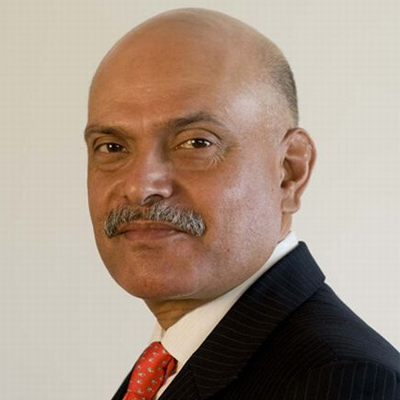
    MUMBAI: Raghav Bahl, who recently launched his venture The Quint, is quite bullish about the booming digital ecosystem in India. In a self written note published on social media, the media mogul lists the various opportunities offered by social media platforms.


    According to Bahl, first and foremost there is immediate threat to the editor but in order to survive, he must adapt to evolving needs in the digital environment. For starters, he will have to ensure that content is not text heavy but crisper and sharper and focused towards the consumption patterns of “millennials”. For the uninitiated the term stands for those individuals reaching young adulthood by the year 2000 or simply known as ‘Generation X’.


    In his second point, Bahl explains how in the current day “journalistic scoops,” which give an exclusive edge and add the “I broke it First” feeling to a journalist, will be over time replaced by scoops that are released first online and distributed to the public. He provides examples of how infamous outfits like the Boko Haram have been releasing detrimental videos online.


    Moving further Bahl is of the opinion that social media and its blue eyed platforms namely Facebook and Google, will be an independent journalist’s best friend instead of a newspaper and TV, which have limited reach. He compares the strength of the digital medium a force that offers ‘viral velocity’ to a newsman’s work.


    In his fourth point, Bahl elaborates about the two way communication model involved in the cyber space, which allows content creators, journalists and opinion leader to receive real time feedback. Thanks to the algorithmic trend sheets and tools a journalist can very well be equipped to know exactly how to spark argumentative conversations that can help fuel fruitful debates.


    In conclusion, Bahl says that the new team at Quint has taught him to learn valuable lessons at daily edit meets as he grasps the new lingo of Generation X.


    The full article can be read here: https://www.linkedin.com/pulse/quint-six-months-flat-raghav-bahl?trk=mp-reader-card


  • World Kabaddi League features in top sporting properties in inaugural year

    World Kabaddi League features in top sporting properties in inaugural year

    MUMBAI: After its initial season, the Wave World Kabaddi League (WKL) attracted an aggregate reach of just over 101 million individuals as per TAM India in its very first edition placing it among the top five sporting properties in India, claim the organisers.


    This is both in terms of viewers as well as visibility to sponsoring brands. The league, which was telecast live on Sony Six, also garnered 1.5 million views on YouTube with 60 per cent of the views coming in from the diaspora in United States, Canada, UK and as far as Italy. Additionally an estimated 50 million reach was acquired through international feed in Pakistan, Middle East, Europe, US and Canada.


    WKL CEO Raman Raheja said, “We are overjoyed with the response to the WKL in its very first year. The idea of keeping the latter and final parts of the WKL in India, where the sport is extremely popular, also paid rich dividends in terms of TV exposure for the sponsors. We are now looking to a bigger event in the second edition.”


    Repucom, a research company that measures ROI for all sports across the world, gave an interesting comparison of WKL’s sponsored property exposure on TV as compared to other sports. Repucom India analyzed that the 86 matches played during the first season garnered as many as 143 hours of screen exposure, which translated into an hour and 40 minutes of exposure per match.


    The event as a whole received media value worth Rs 301,02,60,323 for 86 matches with an average worth of Rs 3,50,03,027 per match.  Wave Infratech’s media value was put at Rs 135,90,62,603 for all the matches at an average Rs 1,58,03,054 per match.


    Title sponsors, Wave Infratech, earned maximum visibility and ROI with 45 per cent of share compared to all the other sponsors exhibited during the event. Among other main properties, the static board earned 37 hours on screen exposure (18 per cent share compared to other sponsors) and the  Jersey front was the second leading property with 22 hours on screen exposure (19 per cent share compared to other sponsors).


    Repucom South Asia/India director and senior vice president- Joseph Eapen said, “We recommend that teams acquire more sponsors on the team apparels like jersey front, jersey back, jersey side, chest logo and trousers to cash the exposures and value from apparels.”


  • MPA report values Asia Pacific online video revenue opportunity at $12 billion by 2020

    MPA report values Asia Pacific online video revenue opportunity at $12 billion by 2020

    MUMBAI: A research report published by Media Partners Asia (MPA) indicates that the total market for online video services across 13 countries in Asia Pacific will grow from $3.5 billion in net revenues in 2014 to reach $12.4 billion by 2020, representing an average annual growth of 23.5 per cent. Advertising will contribute more than 80 per cent to the online video pie by 2020 with the subscription revenue opportunity, largely driven by subscription video-on-demand (SVOD) platforms, growing from less than $700 million in 2014 to more than $2.3 billion by 2020.

    The report, entitled ‘Asia Pacific Online Video Distribution 2015’, evaluates  the commercial distribution of legal over-the-top (OTT) video services in 13 markets with historical data and forecasts plus profiles of key OTT platforms.

    Commenting on the report, MPA executive director Vivek Couto said, “The market for the legal consumption of OTT services in Asia Pacific is at an early stage with monetisation models nascent in most countries. As barriers to entry reduce and broadband penetration increases, more disruptors are emerging and host of new platforms are proliferating, though business models are not always scalable and issues such as piracy; content; and platform operation remain problematic. This is especially true in a number of Asian markets where piracy is significant and the limited scale of OTT video revenues are not commensurate with content costs.”

    “Meanwhile, large scale global digital brands (from YouTube to Netflix) are expanding rapidly in a number of Asian markets or readying to launch in key territories over 2015 and 2016. Major local and regional television companies are also in the early stages of launching a number of large scale advertising and subscription based OTT platforms, anchored to local, Asian and Hollywood content while telecom operators are either moving upstream into content and OTT services or providing a crucial link for the ecosystem,” he added.

    Key takeouts from the report include:

    •    Infrastructure. Fixed broadband subscribers reached 325.3 million in 2014 across Asia Pacific, equivalent to an average household penetration rate of 36 per cent. By 2020, MPA projections indicate that this penetration level will reach 40 per cent as fixed broadband subs grow to 403.5 million mobile broadband will grow rapidly, expanding at CAGR of 15 per cent over 2014 and 2020 to reach almost 2 billion subs by 2020 (58 per cent penetration of population) versus 866 million (26 per cent penetration) in 2014.


    •    OTT Video Consumption. Active Asia Pacific OTT video subscribers reached 594 million in 2014, according to MPA. China accounted for more 85 per cent of the market size in 2014 and will represent 80 per cent by 2020. Ex-China, the largest markets in 2014 were Korea; India; Japan; and Hong Kong. By 2020, MPA projections indicate that active OTT video customers will reach 977 million. By 2020, in Asia ex-China, India will emerge as the second largest market, followed by Korea, Japan and Hong Kong. In Southeast Asia, Malaysia will be joined by Indonesia and the Philippines as market leaders.  

    The market for subscription-based OTT video reached 75.3 million active subscribers in 2014 and is expected to reach 225 million by 2020. China will be the largest contributor, driven by internet-enabled TV and set-top box platforms and online video companies offering premium services. Japan, Korea, India and Australia will emerge as material opportunities, powered by SVOD but India will trend towards more a freemium-oriented model.

    •    Industry economics. MPA divides industry monetization models into distinct segments:

    o    SVOD.  In terms of SVOD revenue across OTT platforms, the largest markets in Asia Pacific by 2020 will be Japan; China; Korea; and Australia. New Zealand and India will lead the next best placed group of geographies. MPA projections indicate that total SVOD-based OTT revenues in Asia Pacific will grow at a CAGR of 16 per cent between 2014 and 2020, growing from $953 million in 2014 to more than $2.3 billion by 2020.

    o    Online video and OTT advertising. Asia Pacific online video advertising exceeded US$3.7 billion in net terms in 2014, up 35 per cent year-on-year. The largest markets for online video advertising in 2014 were, by far, China and Japan, followed by Australia, India and Korea. By 2020, the total Asia Pacific online vide advertising pie is expected to grow to $10 billion, a CAGR of 18 per cent from 2014, with China dominant, followed by Japan and Australia. India will gain increasing scale and overtake Korea while Indonesia will be the clear leader in Southeast Asia.

    OTT video advertising revenue, a subset of the online video advertising pie, reached $2.1 billion in 2014, up 43 per cent year-on-year from a low base, and almost entirely driven by China. This pie, is projected by MPA to expand to $5.5 billion by 2020 at a CAGR of ~18 per cent. China will be the largest contributor with India, Korea and Indonesia starting to become gradually significant over time.

  • YouTube launches buffer-free offline video in India

    YouTube launches buffer-free offline video in India

    MUMBAI: YouTube has launched an offline feature in India as part of a larger initiative to make YouTube easier to enjoy on mobile devices, while lessening the burden of data for its growing base of mobile users. This is part of YouTube’s first release of its ad-supported offline feature on Android and iOS, which was announced earlier this year with the launch of Android One smartphones.


    The new offline feature for the YouTube app lets people take videos offline, using WiFi or their data plans.  Once taken offline, the videos can be viewed without an internet connection for up to 48 hours, allowing people to enjoy YouTube videos without worrying about slow connections. For videos where this feature is available, people can choose to add the video for offline viewing by tapping on the offline icon that sits under the video frame.


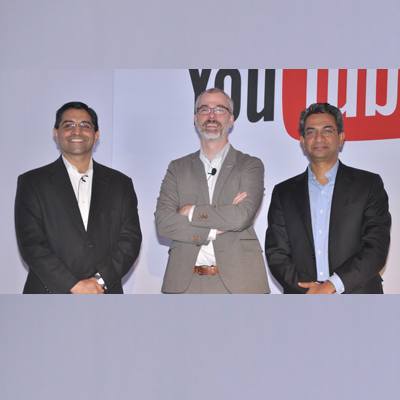
    YouTube vice president of engineering John Harding said, “In a country like India, the future of the internet is mobile. 85 per cent of the internet population will connect to the internet with a mobile phone before any other device. Already, we’re seeing over 40 per cent of our traffic in India come from mobile devices, and we want to make sure we are making YouTube as enjoyable as possible for these mobile-first users. By launching this offline experience on YouTube in India today, we hope to help people move past the challenges of data connection, speed and cost to enjoy a smooth, buffer-free version of YouTube.”


    Much of India’s popular YouTube content is ready for people to view offline from indie comedy to Hindi movies and select Bollywood and pop Bhangra music.

     
    “We are delighted to launch this new offline experience on YouTube with some of India’s household names for entertainment and music, including T-Series, Saregama and Yashraj Films. Making these popular videos available for temporary offline viewing will help fans connect more easily with their favourite content, and we hope to continue helping Indians affordably access YouTube over the next year. This new feature will also help our partners bring more viewers to their content and find even greater success on our platform,” said YouTube Asia-Pacific regional director of YouTube partnerships Ajay Vidyasagar.


    The launch of YouTube’s offline feature is YouTube’s latest effort in a series of initiatives to make video content more affordable and accessible to the large base of mobile internet users in the country. Earlier this year, YouTube worked with Tata DoCoMo to introduce “YouTube Recharge,” a new video data add-on for prepaid users that gave them more affordable access to YouTube on their mobiles devices.


    Saregama India MD Vikram Mehra said, “As a partner of YouTube we welcome this new feature which will allow people from small towns who are surfing from poor bandwidth to enjoy our vast repertoire.”


    Added Shemaroo Entertainment director Jai Maroo, “We are one of the oldest partners of YouTube India and have a very successful partnership putting the best of bollywood content and monetizing it, where today we do between 46 to 60 million views per month.  Given the access and pricing issues to date in this country, we do see that user behavior that somewhere consumption gets restricted and this offline initiative will help increase consumption.   YouTube has created a win win situation where this feature is easy and seamless for the user while still protecting the interest of the content owner and the advertiser.” 

  • YouTube 2014 Rewind: Year of Bollywood stars

    YouTube 2014 Rewind: Year of Bollywood stars

    MUMBAI: 2014 is winding up and YouTube has already given us its top trending videos of the year in India. Videos that people chose to watch repeatedly, shared and made them the most popular ones of the lot.
    This year seemed to be the year of Bollywood celebrities, embracing YouTube as a means to connect with fans, do something madcap and establish their positions as youth icons. Whether it was the ice bucket challenges or film promotional strategies, celebrities have greatly benefited from YouTube in 2014!

    Taking the top spot with over 8.8 million views is the episode of Comedy Nights with Kapil which featured sultry adult movie star Sunny Leone and producer Ekta Kapoor promoting Ragini MMS 2. Not surprisingly, Leone’s music video “Baby Doll” is also graded by YouTube as the top trending Indian music video of 2014 with nearly 40 million views. 

    Alia Bhatt made a stellar debut on YouTube this year when she paired up with All India Bakchod (AIB) and made the hysterical “Genius of the Year” mockumentary which garnered over 6.8 million views. That is not all – Bhatt’s unplugged version of “Samjhawan” highlighted her singing capabilities and increased curiosity for the film, Humpty Sharma Ki Dulhania. The video was watched by more than 16 million people.


    Closely following Bhatt and Leone’s popularity meter on YouTube is Bollywood actor Ranveer Singh. As part of the promotion for his upcoming movie ‘Bang Bang’, actor Hrithik Roshan dared Singh to a challenge on the streets of Mumbai. In his usual feisty spirit, Singh danced to the popular “Main Aisa Kyon Hoon” in the Krissh get up.  His fanatical “Bang Bang Dare” video acquired over 3 million views.  
    2014 also saw innovative and effective content that sought to entertain the audience while at the same time, sending out valuable messages to the viewers. For instance, Nestlé India’s “Good food, Good Life” advertisement, which ranks in the top 10 trending videos of India with over 6 million views, is truly a moving commercial that teaches us the joy of sharing. The public service announcement video entitled “SeatBelt Crew” received close to 4.7 million views.  The unique concept featured a group of transgenders delivering a lesson in safe driving that motorists will carry for the rest of their lives.


    Independent video creators like The Viral Fever and AIB, also took YouTube by storm this year with their spoof parodies and original content.  Their popular videos “Bollywood Aam Aadmi Party – Arnab’s Qtiyapa” and “Nayak2: The Common Man Rises” attracted over 4 million and 3 million views respectively.


    Other trending YouTube videos In India include Aap Ki Adalat’s episode feature Narendra Modi with over 4 million views, “Lion shows tourists why you must stay inside your car”, “Top 50 English Nursery Rhymes” and “Wheels on the Bus”. Amongst the music videos, “Chaar Botal Vodka” featuring Yo Yo Honey Singh takes the second most popular spot with over 28 million views. This is followed by “Tu Meri” from the movie Bang Bang, Rahat Fateh Ali Khan’s “Zaroori Tha”, “Yaar Naa Miley” from Kick, “Tune Maari Entriyaan” from Gunday and “Jumme Ki Raat” from Kick.