Tag: YouTube

  • 44% adults used Internet TV via STBS in the last 12 months: Ofcom

    44% adults used Internet TV via STBS in the last 12 months: Ofcom

    MUMBAI: Close to 44 per cent (over four in ten) adults in the UK had used an internet connected TV – most via set-top boxes such as TiVo or Sky – in the last 12 months. Some 34 per cent had watched catch-up TV services via connected TVs or set-top boxes.


    Moreover, Ofcom’s research into UK audience attitudes to content on TV and radio showed that households surveyed owned two TV sets on average.


    This research covered what people find offensive on TV and radio, their awareness of and attitudes towards regulation and their understanding of advertising and product placement.


    The report also includes research on consumers’ access to and views on internet ‘connected devices’, which are used to watch services like the BBC iPlayer, 4oD, ITV Player, YouTube and Netflix.


    The research further found that nearly half (49 per cent) of adult TV viewers felt the quality of TV programmes had stayed the same in the past year, three in ten (30 per cent) felt they had got worse, and around 16 per cent said TV had improved.


    Among those who thought programmes had got worse, the top reasons were repeats (57 per cent), a lack of variety (43 per cent), a general lack of quality (32 per cent) and too many reality shows (30 per cent). Among those who said programmes had improved, the top reasons were a wider range of shows (50 per cent), improved quality (48 per cent), more entertaining shows (37 per cent) and better dramas (33 per cent).


    Offensive material on TV


    Close to 79 per cent people had not been offended by anything on TV in the past year. However, one in five had found something offensive, rising to a third (33 per cent) for people aged 65 and over. Those aged between 16 and 24 were least likely to be offended (nine per cent compared with 33 per cent of over 65s).


    Of those who had been offended, bad language (44 per cent), violence (41 per cent) and sexual content (41 per cent) were the top concerns. Adults below 45 years old were more likely to say they had been offended by some type of discrimination (29 per cent compared with 19 per cent of over-45s).


    On average, about half of all people thought current levels of sex (57 per cent), violence (47 per cent) and swearing (52 per cent) on TV were acceptable. Four in ten felt there was too much violence (43 per cent) and swearing (40 per cent), while nearly three in ten (28 per cent) said there was too much sex.


    Attitudes differed by age: younger adults were more likely to feel there is an acceptable amount of violence, swearing and sex, while older adults tended to feel there is too much.


    High awareness of regulation


    The vast majority of adult TV viewers (90 per cent) knew about the 9 pm watershed, with over half (57 per cent) saying about 9 pm was the right time while around a quarter (27 per cent) said the watershed should be later.


    The report found a clear understanding about what broadcast content is regulated, with over eight in ten (82 per cent) adults aware that TV is regulated. Most adults felt the current levels of TV and radio regulation were about right (61 per cent), or did not have an opinion (18 per cent for TV and 33 per cent for radio).


    The research showed that 14 per cent of adult TV viewers could identify the ‘P’ symbol, which is designed to let viewers know the channel, or the programme-maker, has been paid to include products in that programme.


    Protecting viewers


    Ofcom has a duty to protect viewers from harmful and offensive material on TV and radio, as well as ‘TV like’ content on internet connected devices. When broadcasters break the rules, Ofcom takes robust enforcement action and has issued guidance to broadcasters on how they should enforce the watershed.


    The majority of viewing today is live on the TV and many of the programmes delivered over the internet to connected devices in the UK were first aired on TV; because of this, they are subject to Ofcom’s rules.


    However, people now watch programmes in a variety of ways, and on different devices, which poses challenges for parents and regulators. Hence, Ofcom is working with government, other regulators and industry to bring about a common framework for media standards.

  • YouTube ads startup FameBit buys Refame; expands brands’ access to digital stars

    YouTube ads startup FameBit buys Refame; expands brands’ access to digital stars

    MUMBAI: With the advent of YouTube stars, gone are the days when brands were only obsessed with having television, film or sports celebrities as brand ambassadors to endorse their products. In today’s all pervasive digital ecosystem, anyone with enough chutzpah can catapult to fame, amass a cult following, become an instant star… and a money churning one at that. And brands nowadays are more than willing to work with these millennial influencers for branded content and endorsements.


    In a scenario like this, digital stars across platforms like YouTube, Vine etc, who offer unique and differentiated content to a host of followers on the world wide web, have caught the fancy of many a specialised companies. And they’ve left no stones unturned in milking these cash cows.


    Armed with a vision to expand its offerings, FameBit, a marketplace which connects brands to YouTubers for branded content and endorsements, has now acquired the video marketing agency Refame.


    Specializing in super-short-form videos, Refame creates branded videos starring Vine, Snapchat and Instagram personalities. Last year, the company pulled together a roster of social influencers who reach 40 million people across their channels and profile pages.


    FameBit, which is on track to reach a billion subscribers by the end of 2015, will now add Reframe’s roster of creators to its platform. The acquisition also means that FameBit now has access to more digital platforms in the social video marketing business apart from YouTube.


    FameBit’s platform boasts of more than 10,000 creators across YouTube, Vine, Snapchat and Instagram, collectively reaching more than 450 million subscribers. According to the company, YouTubers have submitted more than 100,000 proposals to brands for product integrations through FameBit till date. In July last year, the company helped brands create more than 1,000 videos and paid out more than $500,000 to creators by October.


    “This is a defining moment for FameBit. We see Refame as a natural addition to the long-form content our influencers are currently creating and we are excited to incorporate it into our platform. By expanding our reach to content marketers on Snapchat, Vine and Instagram, we’re giving brands the opportunity to speak to audiences across other creative platforms in ways that are most impactful and appropriate for each one of those platforms,” said FameBit co-founder and CEO David Kierzkowski.


    With the kind of fan following digital stars enjoy, brands now know how valuable they can be as content creators and endorsers. FameBit has already connected YouTube creators with brands like L’Oreal, Adidas, JustFab, Hint and Dollar Shave Club. It’s just a matter of time before more and more brands hop on to the digital stars’ bandwagon in order to pull in and connect to its customers.

  • Amit Agrawal joins Click Digital Studios’ advisory board

    Amit Agrawal joins Click Digital Studios’ advisory board

    MUMBAI: Indian short form video company Click Digital Studios India (CDS) is looking to turbocharge its growth trajectory and has roped in former YouTube India head Amit Agrawal on its advisory board


    The company is working towards major expansion in coming months with a plan to launch 10 new channels in a year.


    At CDS, Agrawal will lend his understanding of the business, market and industry of online videos space to CDS’ portfolio of YouTube channels. He will apply his deep domain experience to guide this expansion plan.


    Click Digital Studios chief strategy officer Sudhir Bagul said, “We are extremely excited to have Amit on board. His extensive experience in the field of digital video content will lend able guidance and help us channel the growth of our portfolio in the most desirable way.”


    Agrawal added, “I am completely blown away by the CDS performance in last 12 months. They have really been on a blitzkrieg on mobile platforms and ShudhDesi Endings in one of the best channels to come from India. At India goes global, we are always looking to help turbocharge such startups and CDS’ understanding of what works on short form is really impressive.”


    CDS’ current portfolio comprises channels such as ShudhDesi Endings, ShudhDesi Raps, CDS India and 70 others ranging in the genres of Bollywood and Hollywood gossip, music, animation, food, fitness, technology, kids education anddevotional music.

  • Both TV & digital mediums are here to stay: PromaxBDA

    Both TV & digital mediums are here to stay: PromaxBDA

    MUMBAI: With the advent of social media and new usage platforms, the way people consume media has changed and how.


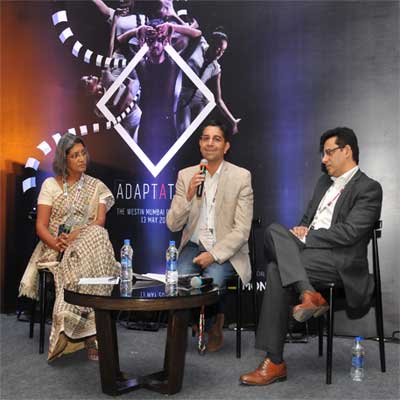
    At the PromaxBDA conference, an interesting session with Google partnership director South Asia Ajay Vidyasagar and Discovery Networks VP marketing Rajiv Bakshi threw light on how media is consumed and is leading the way for television of tomorrow.


    Spatial Access founder Meenakshi Menon moderated the session.


    Vidyasagar said, “The space has moved from creating content to creating a fan base. The consumer uses content to express himself.” Citing an example of when he joined Google in 2010, he said, “In 2010, the Indian audience gave a total of 500 million views, while today it gives about 350 billion views for the content that is available on YouTube.”


    YouTube is a platform for creators to engage and communicate with audiences, which television lacks. Sharing his views on how television will continue to exist, Bakshi said, “We’re no longer a traditional medium. We’re a contemporary medium. In spite of having entered the phase of digitisation, we are growing. So even if digital exists, television will continue to be there for the audiences. It caters to different sets of audiences. Moreover, people like to consume content on all platforms.”


    “We started Discovery in India with two channels. Today we have 11 channels, including one GEC – ‘Investigation Discovery,’ which we launched recently. So there is an audience for all types of content. India is evolving and TV is robust and growing,” Bakshi added.


    Raising a question, Menon asked how TV reconciles with the fact that content cost on TV is very high, whereas on YouTube it is bare minimum and in spite of this, YouTube gets a million views and a billion fans to their content.


    Answering Menon’s question, Bakshi said, “From a short term business point of view, the YouTube model is fine. But from a long-term business point of view, one needs to have a 24-hour content model. Eventually, in India people want maximum entertainment and minimum effort and TV is giving exactly that.”


    Speaking about the evolution of media, Vidyasagar said, “When print came, the word of mouth publicity did not lose its business. Similarly, when radio and television came, print did not die. None of them have impacted the value of existing media. The need for one to consume news is increasing and hence every medium is here to stay. The only important point to keep in mind is that content is an asset and in today’s world it needs to be made relevant to different devices.”


    While we know that a lot of producers are creating content for digital and showing it on digital, Vidyasagar stated an example where Jimmy Fallon actually engages with audiences on digital to bring relevant content back on TV. In the end, it’s a loop of usage. Digital is not taking away from anybody, and neither is television. Both the mediums engage consumers.


    Vidyasagar added, “For instance, in India the highest searched channels on YouTube are that of television networks because their content is available on YouTube. Eventually, the consumer gets the core benefits of the content available on digital and on television.”

  • ‘Doctor Who’ to air on FX from 15 May

    ‘Doctor Who’ to air on FX from 15 May

    MUMBAI: Come 15 May, and FX is all set to invade Indian television screens with one of the greatest science fiction series Doctor Who.


    It may be recalled that Indiantelevision.com has reported last month that the channel was all set to launch the cult show in India.


    Doctor Who will be aired every Monday to Friday at 9 pm on FX.


    Produced by the BBC Wales, Doctor Whois the longest running sci-fi TV show in the world. A significant part of British popular culture, the iconic series follows the adventures of the Doctor, a Time Lord – a time-travelling humanoid alien. He explores the universe in his Tardis, a sentient time-travelling space ship. Along with a succession of companions, the Doctor combats a variety of foes while working to save civilizations and help people in need.


    Doctor Who executive producer Brian Minchin says, “We are delighted that Doctor Who is going to hit the screens of FX. We’re hugely proud of the show and the Doctor’s adventures in time and space. Hold on tight – there are thrills and wonders ahead! 51 years ago, the very first episode of Doctor Who was directed by Waris Hussein, born in Lucknow. I like to think we’ve finally come full circle with the new modern series launching in India on FX.”


    Doctor Who has a phenomenal following millions fans across the globe winning 98 television awards. Until 2015, the series even holds the Guinness World Record for the largest simulcast of a TV drama – 98 countries across six continents. Over the recent years, Doctor Who has won over five million fans on Facebook, 1.2 million followers on Twitter, and in November 2014, the YouTube channel bagged a new subscriber every 41 seconds.


    To give the show an apt promotional platform, FX has created an integrated marketing campaign reiterating the channel’s tagline- The Edge of Entertainment. Reaching out to all the ‘edge seekers’, FX India has also made a music video complete with original composition, zany graphics and footage that has been specially created to announce the show’s launch and the impending arrival of the Doctor.


    Commenting on the cult fan-following and Doctor Who’s travel to India, an official spokesperson from Star India said, “We are very excited to be associating with BBC and bringing a cult show such as Doctor Who to Indian audiences. The show has garnered tremendous popularity internationally, and we believe that the unique concept along with a strong integrated marketing campaign at FX will make it big in India too. We are already receiving a great response from fans post the announcement, and anticipate much more.”

  • Shemaroo to distribute Magna’s magazines on mobile

    Shemaroo to distribute Magna’s magazines on mobile

    MUMBAI: Shemaroo Entertainment has entered into an association with Magna Publishing Company to distribute content from its magazines on mobile and digital platforms including YouTube. 


    The magazines that fall under Magna are StardustSavvySociety and Health & Nutrition.


    Shemaroo will provide videos, snippets, stories, gossip, images and audio from Stardust on mobile WAP and IVR platforms. The company will convert text from Stardust in audio and video format and will distribute it on mobile and YouTube.


    Shemaroo Entertainment director Jai Maroo said, “We are glad to join hands with Magna Publishing Company. The tie up has given Magna Publication a wider distribution platform to meet its end consumers’ needs. Also Bollywood is one of the most popular genre and interests all age groups. Now when the latest update of Bollywood is easily accessible on your handset and is in an interesting format, the feature will surely change the dynamics of entertainment consumption on mobile.”


    Magna Publishing Company head content and digital sales Rajeev Mokashi added, “We see this association as a progressive initiative and have faith in the growing reach of the Indian audience on the digital and mobile platform. Shemaroo’s popularity in the digital space and Magna’s robust content will expand a new content distribution market. This further ‘content on Mobile platform’ tie-up announced today will bring for a collaborative business that will use the content creation and planning skills of Magna and the content production experience, marketing and distribution skills of Shemaroo to offer a rich experience to the audience.”

  • YouTube to launch ad free subscription based model in India

    YouTube to launch ad free subscription based model in India

    MUMBAI: Google’s popular video hosting platform YouTube has been a boon to independent content makers as it enables them to exhibit their talent to a worldwide audience. Now, in order to enhance user experience, YouTube is all set to launch a subscription based ad free model in India. According to sources close to the development, YouTube is planning to launch the innovation around mid June for Indian consumers.


    While viewers are offered a wide range of content on the platform, almost all content on YouTube starts with an advertisement wherein the option of skipping it is sometime available and sometimes not. Ads often pop up in the middle of the content too, which interrupts the flow of the viewers.


    The new subscription based ad free platform will ignite the long sustaining debate of the whether a video on demand (VOD) platform should follow the advertising or subscription based revenue model. Advertising revenue mode is directly proportional to rating and when it comes to YouTube, its views. It is often very difficult to satisfy both consumer and advertiser at the same time and hence the content and root idea behind it gets compromised.


    Subscription based model also has its own drawback, poor online payment infrastructure, lower number of credit or debit card holders are a few of them.


    Times Network CEO and MD MK Anand is of the opinion that though subscription model has a lot of positives, India is not yet ready for it. “Consumer behaviour is the biggest challenge besides payment gateway and card penetration. A huge part of digital savvy young population refrains from using card transactions for various reasons and hence at this moment advertisement revenue model is the only option. Going forward, if the number of card holders increase and the consumers behaviour towards e- transactions becomes friendlier then we may see a new revenue model emerging.”


    YouTube’s new offering will enable a consumer to either choose the ad free platform or stick to the available one. From content creators’ perspective, Ping Network co-founder Rajeshree Naik asserts, “The new innovation from YouTube will cater to the growing need of sophistication of a consumer. We can take example from the newly launched HD channels, the same content is available on the SD platform too but consumers are paying to get quality content. The innovation will help us satisfy more people with the content we are offering.”


    When asked if Ping Network will create fresh content exclusively for the paid platform, Naik adds, “Not at the moment. For now the platform will only provide better and uninterrupted viewing experience to the consumers. But going forward if the platform makes a sustainable impact creating exclusive content can be an option.”


    According to the 2014 KPMG report, 12 per cent of the digital ad spend mix is acquired by videos and the spend on digital video has increased by five per cent compared to 2013. When questioned whether the ad free platform from YouTube will impact advertising, Maxus South Asia head of digital Unny Radhakrishnan says, “There will not be any significant impact on advertising immediately. As per the news reports, YouTube has said that advertising will still be their core revenue. The share of consumers who will go for paid subscription will be very small initially. In the long run, this would perhaps lead to more investments and therefore increase in the quality of content and in turn paid subscription. An India roll-out of this is not expected in the near future.”


    It remains to be seen if the new initiative from YouTube breaks the mould and creates a new sustainable revenue model, which will satisfy both producers and consumers.


  • YouTube readies to conquer India in 2015

    YouTube readies to conquer India in 2015

    roar fills the swanky indoor stadium of the National Sports Club of India (NSCI) in central Mumbai. It is followed by screams, and a scampering across numerous rows as hordes of ‘screenagers’ scramble to get a view of a tiny young woman clad in jeans, a T-shirt and a cap worn the wrong way on stage. She opens her mouth to speak, and the screams get even louder. She shushes the audiences, exalting them to allow her to speak, but the decibel levels refused to go down. The pandemonium goes on for three minutes or more with the screeches and screams getting louder.

    But speak she has to, which she does. The 4,000-odd crowd has been waiting to listen to her, get a glimpse of her and her alone for a good four hours.

    “I am so glad to be in Mumbai,” she gushes, amidst shushes targeted at the crowds. “I could not resist it when I was invited once again. I had promised you that I would be explaining what the hashtag #AT2UI means which I had revealed on my Twitter account over this week. Well, let me make the big announcement: #AT2UI is A Trip to Unicorn Island and I am embarking on a world tour with it, beginning with India next month.”

    Before she even finishes making the statement, the crowd goes berserk once again with ecstasy. The screams rise to a crescendo and refuse to die down. “OMG,” says a young thing, six rows ahead of us. “I can’t believe it. She is coming here for a tour. I can’t believe it.” The tears roll down her cheeks and she raises her hand heavenwards, saying ‘Thank you! Thank you!’

    No. No. It is not Madonna on stage. Nor is it Lady Ga-Ga. Nor is it Selena Gomez or Taylor Swift or One Direction. Nor is it a bible thumping preacher or a spiritual Hindu Guru.

    The young lass is Lily Singh aka IISuperWomanII, a 27 year Indo-Canadian, who appears to have surpassed the fan love showered on even Bollywood’s and Hollywood’s biggest stars. This kind of mania was probably something that was reserved for the Beatles in the sixties and seventies.

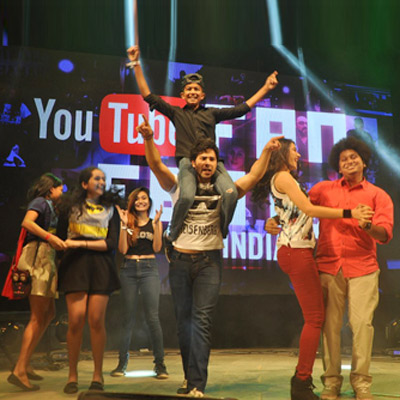
    Excepting IISuperWomanII is a star born of the digital era. Her fan following is totally digital in origin. She is a YouTube star with more than 5.3 million subscribers. Her Twitter handle has around 847,000 followers, whereas 1.7 million track her on Instagram. Her fans mainly are girls between 8-28, but don’t be surprised if you find a young man of 19 there too. Those are the kind of numbers mainstream broadcasters would love to boast of for their channels. But Lily Singh is a young creator, who is the star attraction at the Second YouTubeFanFest (#YTFF) in Mumbai.

    “Never let anyone tell you what to do or not to do. Be yourself,” she tells the screeching fans at the NSCI. “Go out in the sun, have fun. It does not matter if your skin gets tanned. Whether you are dark or fair. You have to live your life. Not just be a housewife.”

    It’s exactly what young girls; women in India have been wanting to hear. And IISuperwomanII has piped into that desire.

    Others have too. And they have built audiences. The Viral Fever – which started as a branded content creator – today has more than a million subscribers. All India Bakchod (AIB), which flew into controversy and some legal wrangles courtesy a roast it did a couple of months ago, too boasts a following of a million. Prior to that, it was mainstream entertainment companies such as Bollywood producers, music labels, broadcasters, who were attracting viewers on the online video streaming site started by Chad Hurley. T-Series, Star India, Sony Entertainment, Eros, Rajshri were all the rage. But the majors such as Star and Sony pulled out a majority of their content to concentrate on their own streaming apps. T-Series, Eros and Rajshri still have followings running into multiple millions and most of the video consumption on their channels is coming courtesy traditional Bollywood content.

    However, over the past couple of years an ecosystem of independent video content creators is being built up – addressing almost every genre. Kids (through Chu Chu TV), cooking (Vah-Chef), Comedy (SNG Comedy, TVF, AIB, East India Company), Education, Travel, and what have you.

    Of course revenues on YouTube are not something you would write to Mom about. Estimates are that the streaming service is on course to do about Rs 160-170 crore in ad revenues this year. That’s probably what would be just one month’s earning for a general entertainment channel. But with smart phones proliferating and bandwidth rates dropping, video consumption – both in terms of time spent viewing and number of viewers – through outlets like YouTube and Dailymotion is only going to rise. Advertisers no doubt will follow in the hope of catching consumers’ eyeballs. Estimates are that YouTube revenues will likely skyrocket to about Rs 1,500 crore by 2018.

    And of course who else will benefit but independent content creators. Estimates are that PewDiePie – the world’s top YouTuber with 35.5 million subscribers to his gaming channel – takes home about $4-5 million a year. Along with it come endorsements, live gigs, and of course superstardom status.

    But most of the YouTube stars started their video journeys with very basic gear, filming with their computer cameras, or digital cameras or even their smart phones. For edits they used Windows movie maker or iMovie, self-learning to use Adobe Premier Pro or Apple final cut pro.

    “My first videos were done with simple video cameras,” says Bethany Mota, who has more than 8.4 million followers on YouTube in just about six years since she uploaded her first video. . “And I kept waiting for views. I remember how excited I was when I touched 100 views for my videos.”

    Mota has a super following in India too. At the YouTubeFanFest, she probably drew the second highest cheers after IISuperWomanII.

    Standup comic Abish Matthew in fact did a sketch during the YTFF about the difficulties that YouTube stars face, especially in terms of getting their video blogs online. “You film, you edit and then you wait for the video to render. Time goes by. Then you wait to upload, you wait and wait and wait. The bandwidth here is limited. And then you wait for the views to come in. You wait and you wait,” he said.

    AIB, on its part, believes in producing videos of high quality. “We love to experiment with cameras and with great equipment,” says Gursimran Khamba.

    “We want our videos to be of a particular standard and even though it is all about the content, we also want it to look good,” adds Tanmay Bhat. He further says that there are ways to get your videos done cheap and cheerful, yet maintaining quality. “We reach out to our friends, acquaintances who then help us reach out to the talent we want to work on our videos,” he says. “And then we request them to work with us at low or almost no budget. We find they are willing to do it. Then there is talent available in media colleges in every city, who will work with you just to get the experience.”

    Most of the YouTubers believe in communicating with almost everyone messaging them on their social media and video posts. “I respond to almost everyone I can online,” says fashion icon Scherzarde Shroff. “I like to connect with them.”

    IISuperWomanII was at her hyperactive best through her handle on Twitter before the YouTubeFanFest giving away free VIP passes to the event and messaging her followers, thanking them for their following her. While initially it was only she who did it, these days it is teams who share that responsibility.

    But some like Rohan Joshi of AIB talk to their followers directly – a couple of the YouTube stars call their followers as friends – even today. “I like to put out what I want to myself. It reflects who I am,” he says. “I have a social strategy: I need two types of followers – those who agree with me and those who don’t. For every two people who agree with me, I need one who does not. That allows for healthy debates and conversations whenever I post something on Twitter.”

    The Viral Fever – run by Arunabh Kumar – began by making branded viral digital video content for clients such as Airtel, Flipkart, Colgate, Head and Shoulders – today boasts more than a million subscribers on YouTube, becoming the first independent original content maker outside of Bollywood to cross that landmark. Its parody of Times Now’s Arnab Goswami’s ‘The Nation Wants to Know’ has attained online cult status. And that was followed by India’s first fictional web series Permanent Roommates, which was funded by commonfloor.com.

    “Working with brands has helped us develop another layer of revenue for the company, which has allowed us to go further,” says Kumar . In fact, the TVF’s viral work has led to the company getting work on television too with a show on Bindass and numerous promos for TV channels.

    Kumar says that he and his team are careful about their creative freedom when working with brands on videos. “We value our independence and our clients trust us,” he says. “We know how to engage with our audiences, and brands rely on us to do that as long as we keep their messaging in mind.”

    In fact cola giant Pepsi has taken to YouTube in a big way. As part of its global Pepsi Challenge campaign, it has launched a ‘Crash The IPL’ initiative wherein it has asked consumers to shoot a 30 second ad film showing their love for the beverage. The entries have to be uploaded on youtube.com and the link submitted to www.crashthepepsiipl.com. These will be judged, and finalists chosen, entitling them a cash award of Rs 100,000, VIP tickets to the IPL matches, and the winning ads will be aired on TV between 8 April and 24 May 2015, replacing the agency created ads.

    Pepsi has also partnered with the Singapore based Music Matters festival for its Music Accelerator Programme. As part of this, a band or an artiste from India will be flown to Singapore to participate in the Music Matters Conference, be mentored at the Music Matters Academy and also perform at Music Matters Live to an audience of about 8,000. Music Matters’ Indian partner for this initiative is Pepsi MTV Indies.

    “Most of the great creative work, which has come on air is when we were having fun,” says PepsiCo India senior director market social beverages Ruchira Jaitly. “We want creators to have fun too and create ads for us. And that’s what’s extremely exciting for us.”

    YouTube, on its part, believes that 2015 is going to be the year of India on the online streaming network. Says YouTube’s David Powell, “We believe that Indian creators are going to break out this year. The time has come.”

    YouTube director global content operations Sara Mormino adds, “We are eager to work with newer Indian creators and who knows… another superstar like PewDiePie might emerge from India. India is a very vibrant young country.”

    Towards this end, it conducted its second Academy in India in mid-March, organsied the YouTubeFanFest in partnership with Branded, which was attended by Indian creators and thousands of fans. And it is also organizing workshops with different communities like ad filmmakers, schools and TV producers. 

    To its advantage is the fact that it has first mover advantage in this space. Star’s hotstar.com is only carrying its own content and it has managed only 10 million or so downloads. Others such as Dailymotion.com are just about getting its feet into India. And Reliance Jio – which is developing its own streaming app – is some time away.

    Keeping that in mind, YouTube.com might well become the Indian consumer’s own content tube.

  • Blogmint launches #BloggersDreamTeam with Harsha Bhogle

    Blogmint launches #BloggersDreamTeam with Harsha Bhogle

    MUMBAI: Blogmint, India’s automated marketplace that connects brands and bloggers, and a part of TO THE NEW Ventures, has launched the #BloggerDreamTeam campaign with Harsha Bhogle.  The campaign aims at discovering and recognizing the emerging blogging, vlogging and micro-blogging talent in India.


    Bhogle, a cricket expert and a sports evangelist, joined hands with Blogmint to acknowledge the budding social influencers in India and hand-pick his #BloggerDreamTeam. With Cricket World Cup 2015 fever gripping India, the campaign provides bloggers a platform to channelize their opinion around all aspects of the game – from fashion statements made by today’s cricketers to the impact of technological enhancements on the game. 


    Bhogle said, “The internet and social media have thrown up opportunities like never before and have allowed skill to meet opportunity. Blogmint is the perfect platform to empower bloggers and showcase these skills.”


    Social media has become ubiquitous with young India and with that we are witnessing a new set of social media stars. Influencer Marketing, which was driven by Bollywood and sports celebrity endorsement, is now being increasingly driven by Social Influencers, which includes celebrity bloggers, YouTubers and Twitteraties. However, there aren’t any platforms in India, which connect these celebrities with brands in an automated and transparent fashion. “This is the gap that Blogmint aims to fill. Dream Team with Harsha Bhogle is an excellent opportunity for Bloggers to express opinions on the on-going cricket World Cup and at the same time showcase the versatility of their writing talent by combining cricket with themes including food, technology, lifestyle amongst others. #BloggerDreamTeam is one of the many initiatives that Blogmint plans to launch in order to engage the social influencers in India,” said Blogmint CEO Irfan Khan.


    Bloggers can participate in the contest by visiting the following page – https://www.blogmint.com/HarshaBhogleDreamTeam.


    “Dream Team with Harsha Bhogle is an excellent opportunity for Bloggers to express opinions on the on-going Cricket World Cup and at the same time showcase the versatility of their writing talent by combining cricket with themes including food, technology, lifestyle amongst others. #BloggerDreamTeam is one of the many initiatives that Blogmint plans to launch in order to engage the social influencers in India” he added.


    “I am delighted to be associated with Blogmint’s Blogger Dream Team initiative. It’s a perfect platform for Bloggers which empowers their writing skills” asserted Harsha Bhogle.


    Bloggers can participate in the contest by visiting the following page – https://www.blogmint.com/HarshaBhogleDreamTeam.

  • Zee Marathi extends its prime time with ‘Dil Dosti Duniyadaari’

    Zee Marathi extends its prime time with ‘Dil Dosti Duniyadaari’

    MUMBAI: Zee Marathi will add muscle to its programming line-up by extending the prime time slot to 10.30 pm with the launch of Dil Dosti Duniyadaari. This new offering targeted at the young generation of Maharashtra, is about six youngsters who discover friendship, family, love and life together under the same roof in Mumbai. The show is produced by Sanjay Jadhav’s production Dreaming Twenty Four Seven.


    This differential offering has been promoted on the channel and through cross channel promotions. The campaign focuses on the ‘fun element’ amongst friends and the off-air and on-air campaign has reiterated this communication thought. The off-air has been largely driven through social media and outdoors. The outdoor campaign has been planned strategically in college areas apart from the Marathi speaking areas. Focused primarily in Mumbai and Pune but with presence in other markets of Maharashtra it includes not just billboards but also heavy use of transit media like bus shelters, bus panels and railway platform boards especially.


    Another key innovation in the campaign has been the association with Café Coffee Day across 34 outlets at college zones and popular shopping zones in Maharashtra. The association would see branding at CCD outlets apart from a specially crafted combo meal for six christened as the Dil Dosti DuniyadaariCombo.


    The social media campaign has been designed to target the 15-30 year old netizen with interesting viral videos shot specifically for the medium introducing the six protagonists of the show in a comic and entertaining way. Promotions pan across the official Zee Marathi Facebook page and on the Zee Marathi YouTube channel. Promotions on Whatsapp are also on the anvil post launch. The viral videos have received a positive response and are trending.


    Zee Marathi business head Deepak Rajadhyaksha said, “The extension of the prime time was a natural progression as we aim to raise the bar in the regional space and look to further consolidate our position in the Maharashtra market. The show at this slot is designed to target the younger generation. The characters in the show are very relatable to the youth as they all portray various facets of this generation like fun-loving, smart, caring, responsible, ambitious youngsters with a streak of craziness in all of them. It portrays how friendship plays a vital role in your transition from being a dependent to an independent person. Where one finds a vital support system in their friends and they become your extended family. Dil Dosti Duniydaari will help us connect better with the youth as they will have an offering to call their own and also help us prepare an audience for the future.”