Tag: YouTube

  • Adele impersonator clip smashes BBC YouTube record

    Adele impersonator clip smashes BBC YouTube record

    MUMBAI: Another day, yet another record broken for Adele… a sketch from BBC One’s Adele at the BBC special has been viewed more than 37 million times in just two weeks, making it the most-watched video ever on the BBC YouTube channel.


    The comedy sketch, ‘When Adele wasn’t Adele… but was Jenny!’ has broken the previous record of 36.9 million views. It became an instant global hit on the BBC YouTube channel after being featured in the programme, a one-off special broadcast on 20 November on BBC One. The television show has now been watched by 5.8 million people and an extended version featuring previously unseen footage will be shown on BBC One on 1 January.


    The five-and-a-half minute clip, which was released straight after the programme aired – features the singer going undercover, complete with prosthetic nose and chin and long gloves to cover her tattoos, to participate in a fake audition to find the best Adele impersonator. Telling the others taking part that her name is Jenny, she says she is a full-time nanny and part-time impersonator and quips it’s been ‘a bit slow recently’ due to ‘not much demand’. Due on last, the other singers comfort ‘Jenny’ backstage when she tells them she feels sick ahead of her performance – but when she breaks into her hit Make You Feel My Love, we see the heart-warming reactions of the impersonators as they realise one by one that ‘Jenny’ is actually the real Adele.


    One of the lookalikes who took part in the sketch, Talullah Windmill, says, “I am amazed the sketch has been so popular. Even though the day was one I’ll never forget, I never thought it would be watched by so many and be this well received. All the comments left are so lovely, it is truly overwhelming.”


    The previous Number 1 clip features Will Smith on The Graham Norton Show performing a song medley, including the theme to 90s sitcom Fresh Prince of Bel Air, with his son Jaden Smith, Alfonso Ribero, who played Carlton in the series, and DJ Jazzy Jeff. It has been on the BBC YouTube Channel for over two years and has now been knocked down to second place.


    BBC Music director Bob Shennan says, “I’m delighted to see such a phenomenal response to the show in the UK, and to see the magical sketch gain a huge global audience who are enjoying and sharing the BBC’s content.”


    Guy Freeman, executive producer of Adele at the BBC adds, “Adele was very keen to do the sketch and worked closely with my team to make this comedy-gold moment such a roaring success. She shows not only what a great sport she is, but also what a great comedy actor she is too.”


    Marking her return to the music scene with this world exclusive one hour special – her first television performance since she performed Skyfall at the Oscars in 2013 – this sketch featured alongside performances of her much-loved classics and new material from her recently released album, plus an interview with Graham Norton about her life and career.

  • ‘The next billion YouTube users are going to come from India:’ Ajay Vidyasagar

    ‘The next billion YouTube users are going to come from India:’ Ajay Vidyasagar

    MUMBAI: Even as Google CEO Sundar Pichai prepares for his India trip with a mandate to outline the company’s vision for the new smartphone users in the country later this month, YouTube has trained its eyes on India in a big way. With a global community of over one billion people that gives anyone the power to create something that everyone can watch, YouTube APAC director of partnerships Ajay Vidyasagar is of the opinion that the next billion users of a platform like YouTube are going to come from a market like India.

    Citing Pichai’s example, Vidyasagar adds, “Senior leaders at Google are very excited about India. India is one of our most valuable opportunities in the world. YouTube is already a mainstream platform in the country. The next billion users of a platform like YouTube are going to come from a market like India.”

    As a definitive step towards its vision for YouTube’s growth in India for churning out original local content, the company has launched YouTube Space Mumbai – the destination for web content creators and aspiring YouTube stars. YouTube Space Mumbai is India’s first and the world’s 8th YouTube Space.

    When asked what influenced the company’s decision to set up YouTube Space in India, Vidyasagar points out a few important stats. “While the year on year growth for YouTube globally is 60 per cent, in India the growth in watch-time has been a whopping 80 per cent. Needless to say India is a very important growing market for us. YouTube Space Mumbai is just one of the many initiatives the company has in store for the country.”

    Not just as a country of viewers, but as content creators too India has seen a steep rise. “There has been a growth of 90 per cent year on year, when it comes to uploading videos to YouTube in India. So getting Spaces to further empower the creators in the country was the obvious next step,” Vidyasagar informs.

    Moreover, YouTube users in India have also made an exponential shift on mobile devices to watch videos. “This year we saw 55 per cent of the total viewership on YouTube in India coming from mobile devices alone. It’s the first quarter when mobile device viewership eclipsed desktops.”

    When asked what this means in a country where mobile marketing is just setting up a roadmap unlike a developed market like China, and how it can impact a YouTube content creator’s revenue, Vidyasagar says, “Our way of looking at mobile or desktop viewership is fundamentally ‘bought and sold’ on a promise of a video view, which is pretty much the same thing on any device. Therefore monetisation isn’t a challenge, even if the device changes. We actually have figures to show now that monetisation is pretty much the same in all devices.”

    Further explaining the monetisation process in YouTube and how the platform gives advertisers a plethora of choices, Vidyasagar shares, “Our advertising team sells reserve advertisements and auction advertisement inventory. The skippable ads that you see are part of a suite that we offer in auction advertising. What ad will be placed on the channel is not decided by the creator but by the buyer of the advertising space. As an advertiser you can choose to buy from the reserve, which means to buy an ad in a specific channel at certain time in a certain volume. And you pay for specific price. But in an auction, you actually bid for an ad to be placed on the platform. So it is not creator led but advertiser led; we give the advertisers a lot of choice in the process.”

    A veteran in broadcast media from his earlier stints at Star TV and Sun TV, Vidyasagar shares how differently a VOD platform such as YouTube functions.

    “When I came to Google, I really thought YouTube is going to be a lot similar to television and very quickly I realised how wrong I was. In a lot of ways, television is a one way communication. You expect the audience to come at a certain hour to a certain television station and then go away. Everything about television is very different in terms of consumption and engagement from a platform like YouTube. Interactivity amongst creators is what drives YouTube and its community at heart. The single biggest difference for me has been realising the power of how creating, sharing and commenting plays such a big role in what was originally a one way communication,” he offers.

    Comparing the television medium to online, Vidyasagar says that in his stint with television, it was mainly the opinion of a handful of decision making people that was more often than not reflected in shows. “On television, we got a very filtered version of what people thought about the content. But when content goes out on YouTube, I have a pretty strong idea of what people actually think about it. This makes you very responsible over what you put out there as a content,” he says.

    That said, both YouTube Spaces global head Lance Podell and Vidyasagar stress the need to get more and more Indians be active on YouTube. While infrastructure and lack of uniform access of internet through the country, specially in Tier II and III cities remains a challenge, the duo is happy to inform that their previous marketing initiative YouTube Offline, which was first introduced to India, has borne fruit and shown a 500 per cent growth in usage across the country. Additionally, a slew of services are being thought of to pull in more users to the platform, Vidyasagar informs.

    With an aim to attract tens of thousands of fully functional content creators who can add to the YouTube community and also inspire others, the 4G wave in the country will only add an impetus to facilitate the video network’s plans in India.

  • Sky invests in US online TV company TV4 Entertainment

    Sky invests in US online TV company TV4 Entertainment

    MUMBAI: Sky has invested $0.3 million, via convertible debt security, in LA-based TV4 Entertainment, which owns a growing portfolio of special-interest television channels aimed at audiences which are typically underserved by traditional TV companies.


    The channels are distributed across multiple online platforms in the US including Hulu, Amazon, Sony, Vimeo, YouTube and Roku. 


    TV4’s portfolio includes a dozen channels, reaching millions of unique users every month. It has more than 30 new channels in development. The current portfolio includes: DocComTV aimed at documentary devotees; All Warrior Network for fans of the warrior genre; Motorland, a video network for automotive enthusiasts; the Ultimate Champion Network which has programming for combat sports fans; and The Clarity Project, a channel exploring child illness. 


    TV4’s strategy has been to acquire and aggregate high-quality video content into recognisable channel brands. Through more than 200 content partners, TV4 has licensed over 5,000 feature length and short form titles as well as many TV and web series. 


    The investment in TV4 builds on Sky’s ongoing programme of investing in innovative startups that help Sky bring new ideas, insight and services into its business. This follows recent investments in leading online sports network Whistle Sports, Pluto TV, the online video aggregator and the US ad tech firm Sharethrough. Sky has previously invested in a number of other pioneering US technology companies, including the IP streaming service provider Roku, the immersive 360 video specialists Jaunt and the OTT video delivery firm 1 Mainstream.


    Sky director – corporate business development Emma Lloyd said, “This exciting investment will help us develop our understanding of niche content genres and what audiences are most passionate about. We are committed to developing partnerships right across our business that support and extend our leadership position in content and innovation. We look forward to working with the team at TV4 Entertainment as they continue to grow.”


    TV4 Entertainment founder and CEO Jon Cody added, “Our goal in this round of investment was to bring on strategic global investors that could unlock business opportunities as we expand internationally over the next year. Bringing Europe’s top entertainment company in Sky into the TV4 Entertainment family is the perfect fit for this mandate. We look forward to growing the value of the Company for our shareholders while bringing tomorrow’s television to viewers across the globe today.” 

  • ‘Kolaveri Di’ becomes 1st Indian video to touch 100 m views on YouTube

    ‘Kolaveri Di’ becomes 1st Indian video to touch 100 m views on YouTube

    MUMBAI: Kolaveri Di, the song from the movie 3 has become the first Indian video to cross 100 million views on YouTube on 2 December, 2015.


    The song was released by Sony Music India on 16 November, 2011 and has been sung by Dhanush.


    The song went viral with over a million YouTube views on its release and has attracted many people because of its simplicity, originality and colloquial lyrics, which the viewers could easily relate to.


    The video is made in an unplugged recording by the Sony Music team and was also promoted on social media channels. The song has attracted all categories of people and has reached into all corners of the globe.


    The movie 3 stars Dhanush and Shruti Haasan in the lead.

  • Dentsu Mama Lab partners with ActionAid India to deliver a social message

    Dentsu Mama Lab partners with ActionAid India to deliver a social message

    MUMBAI Action Aid, one of the world’s leading NGOs working towards many facets of social justice, has partnered with Dentsu Mama Lab to create awareness and start conversations around inequality in India. There are many social behaviours that scream out inequality but in reality have their roots in economic causes.  

    Inequality abounds in many ways. And sometimes, the first step is just in getting a conversation started.

    The Water Wives is a short film created mainly for the digital medium that Dentsu Mama Lab has created for Action Aid India to highlight this. Because Action Aid is an NGO, Dentsu Mama Lab has devised this campaign on a pro bono basis, with no media budget. In essence, viewers on digital are the media plan.

    In less than two days, the film has already clocked over 150,000 views on YouTube and has got over 10,000 shares on ScoopWhoop, besides hundreds of shares on Facebook and Twitter. In addition, it has been covered by India Today, The Logical Indian, Sheroes, StoryPick and many others.

  • Gamification, localization and monetisation way forward for #fame

    Gamification, localization and monetisation way forward for #fame

    MUMBAI:  Fame Digital Private Limited (FDPF) is fundamentally focusing on three objectives for its online entertainment app, #fame – gamification, localisation and monetisation.


    When it comes to gamification, #fame talent league (FTL) is the first step in that direction. FTL is a path breaking initiative that will encourage and enable content creators to test their popularity with audiences in real time. FTL will start on December 5, 2015. As may be recalled, #fame launched the country’s live video app in May this year and in a short span of time this has emerged as the largest live video platform. 


    Localisation -#fame is also planning to launch more of regional and local versions on the app to differentiate the sections over the next couple of quarters. The company is also looking at launching south Indian version of the app, as well as planning to launch in Indonesia and Thailand


    Speaking with Indiantelevision.com about the three fundamental plans, #fame CEO Saket Saurabh said, “There are three plans for #fame, one is that we have launched #fame talent league, also over the next couple of quarters we are planning to launch more of a regional and local versions to differentiate the sections of our app. Apart from this, we will be looking for monetisation also. Therefore gamification, localization and monetisation are the core components in building the name of #fame.”


    Commenting monetisation potential of video, Saurabh said, “Within digital, video is the fastest growing section. We believe that access with 4G is coming and the hardware is becoming cheaper; video is becoming the new language of the consumer internet. Revenue will follow consumption. In two years we have brought on board 20 to 25 top brands in India across categories like FMCG, automobile, durables and telecom. We are planning to bring more traction now. In the next six months, we are planning to reach out to 60 to 65 brands. Therefore, we feel that video has tremendous monetisation potential and great monetisation flexibility. Video monetisation is moving beyond pure play inventory.”


    Saurabh added, “We had launched the first live video app in the country in May. We have seen more than 30,000 people going live using our ap. That gave us the confidence that there is clearly an opportunity to discover the digital talent and that is why we started building a tech feature in our app, which in a sense is an innovation, because it has the kind of real time global audience looking at the live app.”


    Since May, #fame has seen 20 lakh downloads, with more than 30,000 performers going live and over 30,000 watch hours of content. 


    Earlier, #fame had launched its first digital singing competition Web Singer with Pritam in November, 2014. “The experience with Web Singer has been great. This is why we call ourselves as #fame, because there is an opportunity for a talent to really emerge and connect directly with the audiences. All our initiatives are designed to allow talent to come forward whether it’s our live video app or the launch of #fame talent league which is on the top of the app,” he added.


    India has 35 crore internet users and in couple of years India will have half of its people using internet and we are already a one of the largest market in the world. 


    India’s inherent advantage is that it is already a mobile ready country.  “There are three fundamental trends that are making it big; one is that hardware access is getting cheaper as you get mobile phones now in Rs 6000-7000 price range, which makes video access easier. Another factor is the Indian population and the demographics which play an important role as we have a whole generation of youngsters who have grown up not with television as their first screen, but with mobile phones. The third factor is that digital will be seen as the support medium by content creators and networks over time. The rise of OTT in couple of years is a great reflection that brands have realized that digital requires original content.  In the next couple of years we will see a tremendous growth in digital medium,” Saurabh predicted.


    #fame is spending about 30 to 40 per cent of its investments in user acquisition and user engagement. Speaking about the competition Saurabh informed, “I think there is space for everybody, in the case of live video, we are the pioneers in India and we are trying to build that category. In digital, there are all kinds of players. We have OTT, content creators, YouTube and Facebook, hence it’s a fairly a vibrant place. Also, live video space and digital space are all in their early stages. I don’t see competition is really an issue right now.  Here we need to have more innovations.”


    4G is creating a lot of buzz in the country. Saurabh said, “I think 4G will take another 6-8 months as it is not in the mainstream in India and is only available in some major cities.  The entry of more players and alliances will make an impact and there will be more, in combination with cheaper hardware manufacture. There will be a lot of cooperative marketing which will help mainstream 4G.”

  • 9XM introduces non-stop music band ‘Highway’

    9XM introduces non-stop music band ‘Highway’

    MUMBAI: Bollywood music channel 9XM has launched a non-interrupted music band called Highway. Dedicated to the superstars of Bollywood, Highway will be aired every day without any breaks, at 8 pm on 9XM.


    This 35-minute non-stop hits music band Highway, features superstars like Shahrukh Khan, Salman Khan, Ranbir Kapoor, Katrina Kaif, Ranveer Singh and others. Along with the actors, Highway will also feature the best singers and music composers on the show .


    Speaking about the show, 9XM & 9X Tashan cluster head-programming Baljinder Mahant said “We at 9XM are popular for playing the latest Bollywood hits and innovations around music content. Our ardent viewers have appreciated our past innovations and with Highway we provide them with 45 days of best and latest hits of a new Bollywood star every day. We are confident that this Bollywood musical journey on Highway will get the viewers grooving for more.”


    Highway will be promoted across digital and social media platforms like Facebook, Twitter and Youtube.

  • RightNow Digital launches Rohit Sharma Cricket News App

    RightNow Digital launches Rohit Sharma Cricket News App

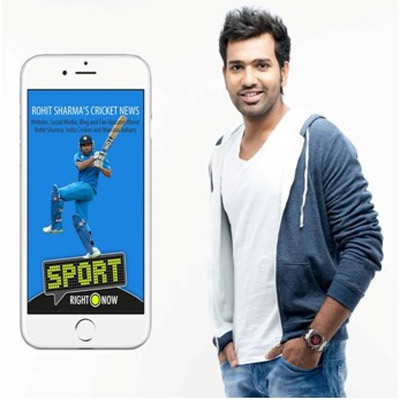
    MUMBAI :  One of UK’s leading sports app providers, Sport Right Now Digital has forayed into India with the launch of its first cricket news and  social media updates app called Rohit Sharma Cricket News. 

    The Rohit Sharma Cricket News app curates all the relevant, authoritative and trustworthy news and social media resources including articles from e-papers, social media posts, blogs, videos and vblogs from platforms such as YouTube, Facebook and Twitter. By including every social media account of every Indian cricket player, it also enables end users to interact with Indian players directly through the app. The user-friendly application thus enables fans to keep themselves up-to-date with all sorts of cricket related news and social media updates, just at the click of a button. It features an impressive list of media sources which consumers can customize and a comprehensive set of social media updates which do not require a separate log-in for viewing updates. The brand has a revenue sharing partnership with cricketer Rohit Sharma.


    Speaking about the launch, Right Now Digital CEO Simon Ryley explained, “ In India, cricket is big and in Rohit Sharma we found the right person to partner with: he is dynamic, and has an impressive track record with proven dependability on the field. These attributes also exemplify the functionality of this cricket app and we are delighted to have found a perfect match in Rohit Sharma.”

    “We are thrilled to launch our first app in India, through a first-of-its-kind partnership that we have with Rohit Sharma. Our focus is to make cricket news and social media content easily available to all Indian cricket fans who make up 40% of the world’s cricket fans. Rohit Sharma has a fantastic track record and an impressive number of followers on social media. We believe that this association will help us reach the right set of end consumers who will appreciate the seamless functionality and simple design of the application.” said, Right Now Digital, COO Seetha Chinnappa-Sarwal.

    A very enthusiastic Rohit Sharma exclaimed, “I am excited to be associated with such an innovative product which is at the cutting-edge of technology and promises to delight the Indian cricket fan like never before. I am happy to be an active contributor in bringing this app to India and look forward to its grand success.”

  • What Indian OTT players can learn from the US market

    What Indian OTT players can learn from the US market

    India’s consumers are just about beginning to experiment with video on demand content delivered over the internet. And a flood of OTT platforms and content creators has suddenly flowed onto the digital highway. Whether it is YouTube or Hotstar or DittoTV or Zenga TV or Hooq or Voot or Arre or nexGTv they have taken their first few steps to understand what consumers want, how they want to consume their content, and how much are they are willing to transact to view that content. 


    More evolved OTT markets like the US have already got a headstart and have got immense learning thanks to the availability of fat pipes of bandwidth making OTT almost ubiquitous. Can Indian OTT players learn from those experiences? Some tend to disagree, because the Indian consumer is unique and as different from the American subscriber as chalk is rom cheese. 


    But nonetheless for those who want to still find out how the US OTT market is performing and have not managed to get their hands on this study we are encapsulating it for you. Clearleap is a company that works with the likes of HBO, Scripps, and A+E Networks to deliver viewing experiences across screens. It has conducted a survey to learn more about which streaming services US consumers use, what their viewing habits are, and what they value most in an OTT offering. The results offer a look at how average users perceive streaming services, and how they engage with them.


    The Key Takeaways from the report are:


    Going OTT isn’t an option anymore – it’s a mandate. To stay relevant, reach audiences and grow revenue, content providers need to not only provide a streaming option to consumers, but also address the unique behaviours of today’s younger television viewers. In order to be successful in today’s television market, prospective OTT providers should follow the best practices below:


    (a) Ensure a good value. Consumers are willing to pay slightly more (up to $25 per month) if the service has the content they want. Balancing great content and a fair price is the key to attracting viewers and minimising churn.


    (b) Make it easy to browse, discover new content, and channel surf. While younger viewers may be more knowledgeable about what they want to watch after they log in, older viewers may not be as familiar with the content available on each service. Improve your user experience by including simple features that encourage discoverability and surface relevant content proactively.


    (c) Optimise for screens of all sizes, as tablet and smartphone viewing is significant. Mobile video will only grow in popularity. Get ahead of your viewers’ evolving habits by optimising your service for all screens at launch, and offering apps on key devices such as streaming boxes, mobile phones, and gaming consoles.


    (d) Offer tiered pricing solutions to match login-sharing habits. Especially since younger streaming service users are prone to sharing, new services should offer tiered subscription packages that prompt users to pay slightly more to watch content on multiple devices at the same time.


    (e) Consider the gaps in the market. While movies and TV series are widely available on Netflix, Amazon, and Hulu, live television is missing from the streaming market. Many current streaming service users wanted broadcast channels (41.26 per cent) in their ideal offering, with sports (28.15 per cent), local (20.28 per cent), and news (15.91 per cent) also highly rated by respondents. Content owners should capitalise on the white space by investing in live content that isn’t already easily accessible online.


    To Read the full report, click here

  • YouTube adds two new virtual reality features on Android

    YouTube adds two new virtual reality features on Android

    MUMBAI: YouTube has trained its eyes on the next big thing in the digital video space – Virtual Reality (VR). The video network has added two new VR features to YouTube’s Android app.


    “If we’ve learned anything in the past 10+ years at YouTube it’s that capturing and sharing videos is a great way to bring people there with you—whether “there” is an Icelandic glacier, a special performance by violinist Tim Fain, or just a friend’s birthday party,” YouTube VR senior product manager Kurt Wilms, YouTube product manager Sanjeev Verma and Jump product manager Husain Bengali collectively said in a post. 


    “Virtual reality makes the experience of being there even more awesome and immersive, so today we’re bringing two new VR features to YouTube’s Android app. All you need is your current phone, and a Google Cardboard viewer,” they added.


    YouTube now supports VR video – a brand new kind of video that makes you feel like you’re actually there. Using the same tricks that we humans use to see the world, VR video gives you a sense of depth as you look around in every direction. Near things look near, far things look far. “So if you were excited about 360° videos, this is pretty freakin’ cool,” they added.


    To give it a try, find a VR video on YouTube – like the Hunger Games Experience or TOMS Shoes Giving Trip – tap the new Cardboard icon, drop your phone into your Cardboard viewer, and you’re off! 


    Creators can also check out technologies like Jump to capture and share their own VR videos.


    “Our second bit of news is for the universe of existing YouTube content. And that’s the fact that you can now watch any video using Google Cardboard, and experience a kind of virtual movie theater. Just select the new “Cardboard” option from the watch page menu, drop your phone into your viewer, and you’re done. You’ll now have the largest VR content library right at your fingertips,” they said.