Tag: YouTube

  • Piracy at YouTube under check, claims Raghavan

    Piracy at YouTube under check, claims Raghavan

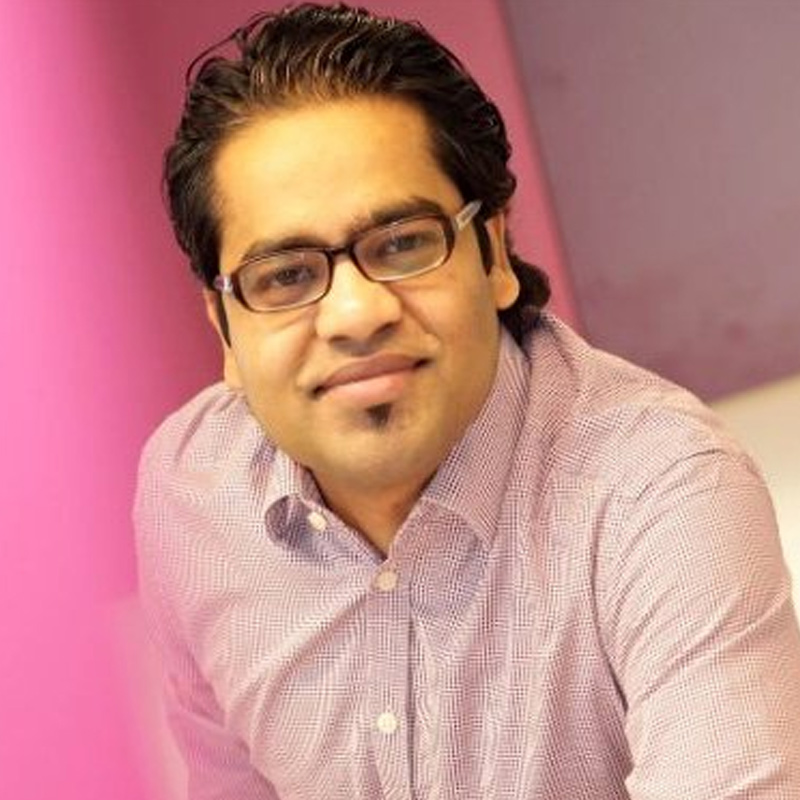
    NEW DELHI: YouTube India head of content operations Satya Raghavan has claimed that it has succeeded in curbing piracy on its platform to a large extent. Veteran actress Shabana Azmi along with the young actor Tannishtha Chatterjee was the cynosure of all eyes as they conducted a session in Producers’ Lab at the ongoing Film Bazaar at IFFI Goa on ‘How to Pitch an Actor’.

    Speaking in the Building Communities and Icons section at the Bazaar, Raghavan said “When you upload a film on YouTube, a fingerprint of that film is created. If somebody else is uploading that film, there are a certain proofs by which you come to know about this. YouTube is perhaps the only platform where you can actually know that someone has put up your content but you need to put your content up first, because about 500 hours of content is being uploaded every minute. This is a great system that allows the content owner to understand if their content is being pirated.” He was conducting an engrossing session about the burgeoning digital space and the platform that Youtube has provided filmmakers.

    On monetisation of a Youtube channel, he said, “Once you turn on the section called monetisation in your backend control centre, only then will it serve you ads. You also have to think about whether you’re sending the right signals through your content, which is by giving good descriptions, that help to identify the content and helps us match it with viewers on the other side.”

    The Bazaar organized by the National Film Development Corporation concludes tomorrow. It is held to coincide with the International Film Festival of India which will conclude on 27 November.

    Azmi, who attended the Film Bazaar for the first time since it commenced a decade earlier, was also there to promote her upcoming film Idgah which is a part of the ‘Film Bazaar Recommends’ section. She said, “I learnt there is a formal way in which film business can be conducted. I think it’s important because I’m very interested in the work of first-time filmmakers.”

    “I think these tags of a film being ‘women-oriented’ and ‘heroine-oriented’ have to slowly go out at some point, to feel that we are reaching a point of gender equality, and recognising that cinema is essentially a medium of storytelling,” said Chatterjee.

    “It’s important to highlight the truths about women today, no matter how ugly they are,” said theatre artist/filmmaker/screenwriter Vani Tripathi Tikoo. “Once we address this, the change is cumulative, and only then will it be accepted widely as a part of our culture and society.”

    Producer Kiran Rao, who spent most of her time catching diverse south Asian films in the Viewing Room, said Aamir Khan Productions will attend the next edition of the NFDC Film Bazaar.

    “The Film Bazaar has changed the landscape of how films are made and distributed, and really brought the film community together. It’s a fantastic and much-needed annual event. Aamir Khan Productions will hope to look for projects, meet people and find talent here. The Viewing Room is a great resource that Deepti DCunha, programmer of WIP, has created,” Rao said.

    The Knowledge Series started with the Investor Pitch of Film Bazaar Recommends (Part I) which screened documentary and film trailers followed by a short presentation by the filmmakers, highlighting the support that they needed to complete their process.
    Baradwaj Rangan moderated a discussion with filmmaker Prakash Jha, Chatterjee and Tikoo on “Women Protagonists in Indian Filmscape – Changing Dynamics.”

    In the discussion on Unique Distribution Models – Reaching Out With Independent Films moderator by filmmaker Rohan Sippy, panelists included filmmakers Sandeep Mohan, director of Love, Wrinkle-Free and Hola Venky!, and Sanal Kumar Sasidharan, who started ‘Cinema Cab’, a movement to screen films across the length and breadth of Kerala, and co-founder and CEO of Reelmonk Vivek Paul.

    Rohan Sippy explored the intricacies of the two filmmakers’ approaches, which both thrived on a non-monetary promotional approach and remarked, “It’s very interesting how you have managed to create unique models that work for you and your specific films and audiences. It takes a lot of conviction to follow through on such a vision of involving the audience, and taking the film to them.”

    In Storytelling & Narratives in 360 degrees section, Amsterdam Creative Industries Network Coordinator of Interaction and Games Lab Mirjam Vosmeer presented an illuminating presentation on Virtual Reality, and spoke at length about the various aspects of the uncharted territory that are being researched upon.

    Filmmaker and animator Gitanjali Rao who moderated the discussion and posed questions from the point of view of a filmmaker.“It is such a different way of telling stories. Besides, the fantasy and pleasure aspect of Virtual Reality, it is the empathy that it can induce in the viewer that really fascinates me,” she confessed. “To be able to involve an audience in such an immersive way has a lot of potential, especially for documentary filmmakers.”

    The panel discussion on Queen’s Journey & Filming In the Netherlands moderated by the media specialist and author Vanita Kohli-Khandekar included film commissioner, Nederlands Filmfonds, Bas Van der Reem, the producer Thomas Drijver and the producer of Queen Vivek Bajrang Agrawal. The panel discussion on VOD as the key distribution platforms for independent films included founder of The Film Collaborative, Orly Ravid, and Vista India CEO Suri Gopalan.

    ​Before the film bazaar commenced, the Film Facilitation Office had organised a one-day Workshop with Nodal Officers appointed by various State Governments and Central Government Ministries / Departments / Agencies to act as the one-point contact for easing the process of filming in their respective jurisdiction.

    The workshop included a case study presentation by Gujarat, which won the National Award for the Most Film Friendly State in 2016. It is envisaged that these discussions would motivate and mobilize the Nodal officers from State and Central Governments towards not only easier and timely facilitation of permissions for shooting films in their State, but also undertaking initiatives for a favorable filming environment.​

  • Piracy at YouTube under check, claims Raghavan

    Piracy at YouTube under check, claims Raghavan

    NEW DELHI: YouTube India head of content operations Satya Raghavan has claimed that it has succeeded in curbing piracy on its platform to a large extent. Veteran actress Shabana Azmi along with the young actor Tannishtha Chatterjee was the cynosure of all eyes as they conducted a session in Producers’ Lab at the ongoing Film Bazaar at IFFI Goa on ‘How to Pitch an Actor’.

    Speaking in the Building Communities and Icons section at the Bazaar, Raghavan said “When you upload a film on YouTube, a fingerprint of that film is created. If somebody else is uploading that film, there are a certain proofs by which you come to know about this. YouTube is perhaps the only platform where you can actually know that someone has put up your content but you need to put your content up first, because about 500 hours of content is being uploaded every minute. This is a great system that allows the content owner to understand if their content is being pirated.” He was conducting an engrossing session about the burgeoning digital space and the platform that Youtube has provided filmmakers.

    On monetisation of a Youtube channel, he said, “Once you turn on the section called monetisation in your backend control centre, only then will it serve you ads. You also have to think about whether you’re sending the right signals through your content, which is by giving good descriptions, that help to identify the content and helps us match it with viewers on the other side.”

    The Bazaar organized by the National Film Development Corporation concludes tomorrow. It is held to coincide with the International Film Festival of India which will conclude on 27 November.

    Azmi, who attended the Film Bazaar for the first time since it commenced a decade earlier, was also there to promote her upcoming film Idgah which is a part of the ‘Film Bazaar Recommends’ section. She said, “I learnt there is a formal way in which film business can be conducted. I think it’s important because I’m very interested in the work of first-time filmmakers.”

    “I think these tags of a film being ‘women-oriented’ and ‘heroine-oriented’ have to slowly go out at some point, to feel that we are reaching a point of gender equality, and recognising that cinema is essentially a medium of storytelling,” said Chatterjee.

    “It’s important to highlight the truths about women today, no matter how ugly they are,” said theatre artist/filmmaker/screenwriter Vani Tripathi Tikoo. “Once we address this, the change is cumulative, and only then will it be accepted widely as a part of our culture and society.”

    Producer Kiran Rao, who spent most of her time catching diverse south Asian films in the Viewing Room, said Aamir Khan Productions will attend the next edition of the NFDC Film Bazaar.

    “The Film Bazaar has changed the landscape of how films are made and distributed, and really brought the film community together. It’s a fantastic and much-needed annual event. Aamir Khan Productions will hope to look for projects, meet people and find talent here. The Viewing Room is a great resource that Deepti DCunha, programmer of WIP, has created,” Rao said.

    The Knowledge Series started with the Investor Pitch of Film Bazaar Recommends (Part I) which screened documentary and film trailers followed by a short presentation by the filmmakers, highlighting the support that they needed to complete their process.
    Baradwaj Rangan moderated a discussion with filmmaker Prakash Jha, Chatterjee and Tikoo on “Women Protagonists in Indian Filmscape – Changing Dynamics.”

    In the discussion on Unique Distribution Models – Reaching Out With Independent Films moderator by filmmaker Rohan Sippy, panelists included filmmakers Sandeep Mohan, director of Love, Wrinkle-Free and Hola Venky!, and Sanal Kumar Sasidharan, who started ‘Cinema Cab’, a movement to screen films across the length and breadth of Kerala, and co-founder and CEO of Reelmonk Vivek Paul.

    Rohan Sippy explored the intricacies of the two filmmakers’ approaches, which both thrived on a non-monetary promotional approach and remarked, “It’s very interesting how you have managed to create unique models that work for you and your specific films and audiences. It takes a lot of conviction to follow through on such a vision of involving the audience, and taking the film to them.”

    In Storytelling & Narratives in 360 degrees section, Amsterdam Creative Industries Network Coordinator of Interaction and Games Lab Mirjam Vosmeer presented an illuminating presentation on Virtual Reality, and spoke at length about the various aspects of the uncharted territory that are being researched upon.

    Filmmaker and animator Gitanjali Rao who moderated the discussion and posed questions from the point of view of a filmmaker.“It is such a different way of telling stories. Besides, the fantasy and pleasure aspect of Virtual Reality, it is the empathy that it can induce in the viewer that really fascinates me,” she confessed. “To be able to involve an audience in such an immersive way has a lot of potential, especially for documentary filmmakers.”

    The panel discussion on Queen’s Journey & Filming In the Netherlands moderated by the media specialist and author Vanita Kohli-Khandekar included film commissioner, Nederlands Filmfonds, Bas Van der Reem, the producer Thomas Drijver and the producer of Queen Vivek Bajrang Agrawal. The panel discussion on VOD as the key distribution platforms for independent films included founder of The Film Collaborative, Orly Ravid, and Vista India CEO Suri Gopalan.

    ​Before the film bazaar commenced, the Film Facilitation Office had organised a one-day Workshop with Nodal Officers appointed by various State Governments and Central Government Ministries / Departments / Agencies to act as the one-point contact for easing the process of filming in their respective jurisdiction.

    The workshop included a case study presentation by Gujarat, which won the National Award for the Most Film Friendly State in 2016. It is envisaged that these discussions would motivate and mobilize the Nodal officers from State and Central Governments towards not only easier and timely facilitation of permissions for shooting films in their State, but also undertaking initiatives for a favorable filming environment.​

  • ’85 per cent Indians consume video content online every week’

    ’85 per cent Indians consume video content online every week’

    MUMBAI: Kantar TNS’ recently-conducted Connected Life study has concluded that 85 per cent of Indian consumers consume video content online every week. The study shows that this consumption is spread across various platforms such as video content that appears in social feeds, free video on platforms such as YouTube along with some paid online TV subscription services as well.

    What differentiates the Indian video consumer from its global counterparts is, while the weekly trend translates strongly into daily online video consumption as well (global average = 65 per cent), in India, only less than half of these weekly users watch online videos daily (39 per cent).

    The barriers that stop online video from becoming a mainstream daily habit are mainly around high data costs and patchy connectivity.

    Kantar TNS India executive director Anusheel Shrivastava said on a positive note, “With Jio’s launch the data rates are already seeing a drop; this along with improved availability of public WiFi will help in lowering the barriers. It may not be long before the online video landscape in India will change”.

    Connected Life data showed that free online video, such as YouTube, is watched by a large proportion of connected consumers daily, with Cambodian internet users watching the most at 94 per cent, followed by Hong Kong (84 per cent) and China (78 per cent); whereas in India it is at 39 per cent. Two thirds (62 per cent) of people online are also watching videos that appear on their social feed, either from brands, news sources or their friends. Connected consumers in mobile-first markets are consuming a lot of video in this way, with 93 per cent of internet consumers in Cambodia watching social video daily, 80 per cent in Malaysia and 69 per cent in Vietnam. Digital channels are allowing one in three (32 per cent) connected consumers to access on-demand channels, allowing them to catch up on broadcast TV content online. Some are also using paid-for subscription services such as Netflix, viewed by 11 per cent daily across the region.

    Kantar TNS digital director APAC Zoë Lawrence said: “There’s been an explosion in the consumption of online ‘on-demand’ viewing across Asia Pacific, creating new media moments that didn’t exist in a traditional marketing world.Online video provides brands with an opportunity to tell their story in a different way; we’re seeing a lot of brands succeed with long-format video and also great creative work that overcomes some of the challenges of video in a social feed. If the content is good enough, people will watch it. Brands now know that simply putting their TVC online will not work; they need to develop content that works well within the context of the online channel they are using.”

  • ’85 per cent Indians consume video content online every week’

    ’85 per cent Indians consume video content online every week’

    MUMBAI: Kantar TNS’ recently-conducted Connected Life study has concluded that 85 per cent of Indian consumers consume video content online every week. The study shows that this consumption is spread across various platforms such as video content that appears in social feeds, free video on platforms such as YouTube along with some paid online TV subscription services as well.

    What differentiates the Indian video consumer from its global counterparts is, while the weekly trend translates strongly into daily online video consumption as well (global average = 65 per cent), in India, only less than half of these weekly users watch online videos daily (39 per cent).

    The barriers that stop online video from becoming a mainstream daily habit are mainly around high data costs and patchy connectivity.

    Kantar TNS India executive director Anusheel Shrivastava said on a positive note, “With Jio’s launch the data rates are already seeing a drop; this along with improved availability of public WiFi will help in lowering the barriers. It may not be long before the online video landscape in India will change”.

    Connected Life data showed that free online video, such as YouTube, is watched by a large proportion of connected consumers daily, with Cambodian internet users watching the most at 94 per cent, followed by Hong Kong (84 per cent) and China (78 per cent); whereas in India it is at 39 per cent. Two thirds (62 per cent) of people online are also watching videos that appear on their social feed, either from brands, news sources or their friends. Connected consumers in mobile-first markets are consuming a lot of video in this way, with 93 per cent of internet consumers in Cambodia watching social video daily, 80 per cent in Malaysia and 69 per cent in Vietnam. Digital channels are allowing one in three (32 per cent) connected consumers to access on-demand channels, allowing them to catch up on broadcast TV content online. Some are also using paid-for subscription services such as Netflix, viewed by 11 per cent daily across the region.

    Kantar TNS digital director APAC Zoë Lawrence said: “There’s been an explosion in the consumption of online ‘on-demand’ viewing across Asia Pacific, creating new media moments that didn’t exist in a traditional marketing world.Online video provides brands with an opportunity to tell their story in a different way; we’re seeing a lot of brands succeed with long-format video and also great creative work that overcomes some of the challenges of video in a social feed. If the content is good enough, people will watch it. Brands now know that simply putting their TVC online will not work; they need to develop content that works well within the context of the online channel they are using.”

  • Dice Media unveils Little Things’ third episode

    Dice Media unveils Little Things’ third episode

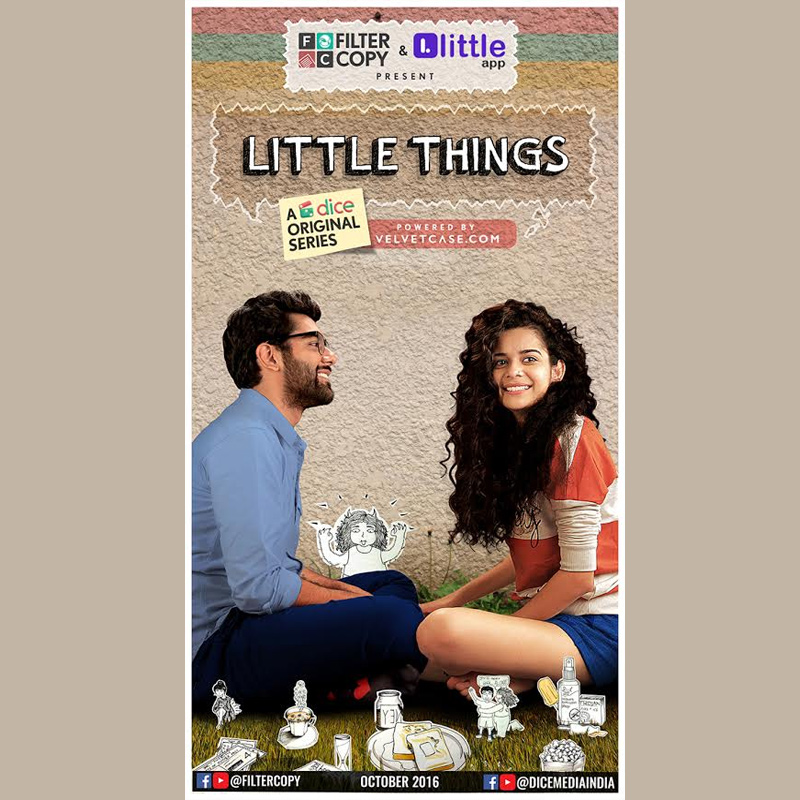
    MUMBAI: Dice Media has released its third episode titled ‘Good Night’ of its new original web series, Little Things. The 5-episode romantic comedy web series beautifully portrays the little things in the life of an everyday couple starring Mithila Palkar, one of the most popular digital stars in India today, and the talented writer-actor Dhruv Sehgal. 

    Good Night unfolds the incident of a sleepless night of the duo. Thanks to the mosquitoes, this night turns into a discovery of Kavya’s ex-boyfriend getting married and a long conversation about exes follows. Every relationship has some sort of power struggle in it, and Dhruv and Kavya’s is no different.  Will Dhruv realize the importance of Kavya in his life? Watch the episode to find out how Dhruv and Kavya value each other’s existence in their lives.

    The 5-part series is directed by Ajay Bhuyan, written by Dhruv Sehgal, with music by Neel Adhikari. Little Things will release every Wednesday on Dice Media’s Facebook and YouTube pages. All the episodes can be watched at 

    Released on Oct 26, following is the stunning response received for the series so far: 

    · Episode 1 has already crossed 2.2 million views (>1.2 million on YT, >1 million on FB) with over 19k shares and 4,700 comments.

    · Episode 2, which released five days back, has already received 2 million views (~1 million on YT, >1 million on FB) with over 13k shares and 3,500 comments.

    Pocket Aces conceptualizes, creates, and distributes engaging original content for millennial audiences through its channels Dice Media (sketches and web-series), FilterCopy (sharable and snackable short-form content), and Gobble (everything food). 

    Dice has created several experimental and edgy pieces of content such as the satirical sketch, Ban Ban, India’s first mockumentary series Not Fit, and most recently, an absurd-humour sketch titled Offline.

  • Dice Media unveils Little Things’ third episode

    Dice Media unveils Little Things’ third episode

    MUMBAI: Dice Media has released its third episode titled ‘Good Night’ of its new original web series, Little Things. The 5-episode romantic comedy web series beautifully portrays the little things in the life of an everyday couple starring Mithila Palkar, one of the most popular digital stars in India today, and the talented writer-actor Dhruv Sehgal. 

    Good Night unfolds the incident of a sleepless night of the duo. Thanks to the mosquitoes, this night turns into a discovery of Kavya’s ex-boyfriend getting married and a long conversation about exes follows. Every relationship has some sort of power struggle in it, and Dhruv and Kavya’s is no different.  Will Dhruv realize the importance of Kavya in his life? Watch the episode to find out how Dhruv and Kavya value each other’s existence in their lives.

    The 5-part series is directed by Ajay Bhuyan, written by Dhruv Sehgal, with music by Neel Adhikari. Little Things will release every Wednesday on Dice Media’s Facebook and YouTube pages. All the episodes can be watched at 

    Released on Oct 26, following is the stunning response received for the series so far: 

    · Episode 1 has already crossed 2.2 million views (>1.2 million on YT, >1 million on FB) with over 19k shares and 4,700 comments.

    · Episode 2, which released five days back, has already received 2 million views (~1 million on YT, >1 million on FB) with over 13k shares and 3,500 comments.

    Pocket Aces conceptualizes, creates, and distributes engaging original content for millennial audiences through its channels Dice Media (sketches and web-series), FilterCopy (sharable and snackable short-form content), and Gobble (everything food). 

    Dice has created several experimental and edgy pieces of content such as the satirical sketch, Ban Ban, India’s first mockumentary series Not Fit, and most recently, an absurd-humour sketch titled Offline.

  • Assamese news channel Pratidin Time banned for one day once again

    Assamese news channel Pratidin Time banned for one day once again

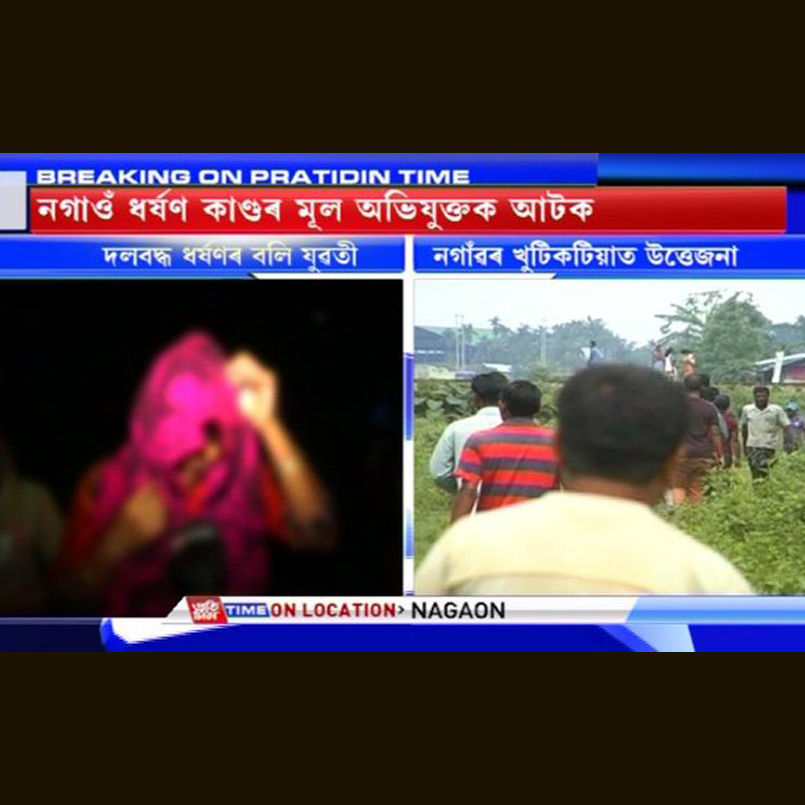
    MUMBAI: The Indian government continues with its caning of TV news channels. After NDTV India, it is now the turn of Pratidin Time or News Time Assam to be told to go off air on the powers-that-be’s favourite date 9 November for gross and multiple programming code violations. Pratidin Time has been accused of revealing the identity of a minor victim, showing images of mutilated bodies, and making derogatory statements about women in shows.

    The violation that has been gravely objected to is the one relating to a minor boy for which the day-long ban is being issued. The ministry of information and broadcasting (MIB) issued an order dated 2 November saying that the channel revealed the identity of a minor who was brutally tortured while working as a domestic servant, thus compromising his privacy and dignity and  exposing him to harm and stigma.

    A high level inter-ministerial committee (IMC) took the decision to compel the channel to turn off its signals for a day after hearing its defence.

    The MIB says that Pratidin Time has time and again being showing images of bodies of dead victims. It has also not being complying with earlier MIB orders which asked it to  apologize for airing a show which appeared to be derogatory towards women.

    The MIB in its current order has stated that Pratidin Time that all the three cases will be covered under the one day ban. It has further explained that under the Cable TV Networks (Regulation) Act, it “orders to prohibit the transmission or retransmission of News Time Assam TV channel for one day on any platform throughout India with effect from 00:01 hours on 9th November, 2016 till 00:01 hours on 10th November, 2016.”

    This is not the first time that Pratidin Time (News Time Assam) has been asked to pull the plug. It, along with another channel DY 365, was asked to go off air on 30 July 2014 in another case.

    http://www.indiantelevision.com/television/tv-channels/news-broadcasting/dy-365-news-time-assam-tv-transmission-banned-for-one-day-for-showing-programmes-denigrating-women-140725

    Then in August 2015 it was slammed on social media as well when it carried a clip on its YouTube channel, criticizing “scantily clad women” calling them a summer time nuisance that went against local culture in Assam. The uproar that followed forced it to pull down its video, but petitions have been filed against it, asking it to to report responsibly.

    Launched on 25 December 2010 as News Time Assam by the Kolkata based Brand Value Communications under the Rose Valley Grop, it was acquired by the Pratidim group in 2015 and rebranded as Pratidin Time.

  • Assamese news channel Pratidin Time banned for one day once again

    Assamese news channel Pratidin Time banned for one day once again

    MUMBAI: The Indian government continues with its caning of TV news channels. After NDTV India, it is now the turn of Pratidin Time or News Time Assam to be told to go off air on the powers-that-be’s favourite date 9 November for gross and multiple programming code violations. Pratidin Time has been accused of revealing the identity of a minor victim, showing images of mutilated bodies, and making derogatory statements about women in shows.

    The violation that has been gravely objected to is the one relating to a minor boy for which the day-long ban is being issued. The ministry of information and broadcasting (MIB) issued an order dated 2 November saying that the channel revealed the identity of a minor who was brutally tortured while working as a domestic servant, thus compromising his privacy and dignity and  exposing him to harm and stigma.

    A high level inter-ministerial committee (IMC) took the decision to compel the channel to turn off its signals for a day after hearing its defence.

    The MIB says that Pratidin Time has time and again being showing images of bodies of dead victims. It has also not being complying with earlier MIB orders which asked it to  apologize for airing a show which appeared to be derogatory towards women.

    The MIB in its current order has stated that Pratidin Time that all the three cases will be covered under the one day ban. It has further explained that under the Cable TV Networks (Regulation) Act, it “orders to prohibit the transmission or retransmission of News Time Assam TV channel for one day on any platform throughout India with effect from 00:01 hours on 9th November, 2016 till 00:01 hours on 10th November, 2016.”

    This is not the first time that Pratidin Time (News Time Assam) has been asked to pull the plug. It, along with another channel DY 365, was asked to go off air on 30 July 2014 in another case.

    http://www.indiantelevision.com/television/tv-channels/news-broadcasting/dy-365-news-time-assam-tv-transmission-banned-for-one-day-for-showing-programmes-denigrating-women-140725

    Then in August 2015 it was slammed on social media as well when it carried a clip on its YouTube channel, criticizing “scantily clad women” calling them a summer time nuisance that went against local culture in Assam. The uproar that followed forced it to pull down its video, but petitions have been filed against it, asking it to to report responsibly.

    Launched on 25 December 2010 as News Time Assam by the Kolkata based Brand Value Communications under the Rose Valley Grop, it was acquired by the Pratidim group in 2015 and rebranded as Pratidin Time.

  • Gema – YouTube conflict resolved

    Gema – YouTube conflict resolved

    MUMBAI: The long running legal tussle between YouTube and the German IP right body Gema that represents artists and publishers has finally resolved, according to international media.

    Since 2009, several affected clips and videos, including those carrying conflicted background music, returned an error message on the video on demand platform, when users tried to access it.

    Now that the payments will be made, these videos will be accessible to users although neither side has disclosed the terms.red banners that had prevented thousands of YouTube’s clips from playing in Germany have now been removed as a consequence.

    And, as per Google’s Content ID system, clips containing Gema-protected tracks can now have adverts automatically added to them to recompense the songs’ creators.

    YouTube’s head of international music partnerships Christophe Muller shared in a blog that it was a win for music artistes around the world, enabling them to reach new and existing fans in Germany… and for YouTube users in Germany, who will no longer see a blocking message on music content.

    However, Gema officials remain skeptical on whether YouTube or the person uploading a clip was ultimately responsible for licensing the music it contained but termed the new agreement with the VOD giant as a”milestone”.

    Gema chief executive Harald Heker told media that they remained true to their position that authors should also get a fair remuneration in the digital age, despite the resistance that they met.

    (source: BBC news)

  • Gema – YouTube conflict resolved

    Gema – YouTube conflict resolved

    MUMBAI: The long running legal tussle between YouTube and the German IP right body Gema that represents artists and publishers has finally resolved, according to international media.

    Since 2009, several affected clips and videos, including those carrying conflicted background music, returned an error message on the video on demand platform, when users tried to access it.

    Now that the payments will be made, these videos will be accessible to users although neither side has disclosed the terms.red banners that had prevented thousands of YouTube’s clips from playing in Germany have now been removed as a consequence.

    And, as per Google’s Content ID system, clips containing Gema-protected tracks can now have adverts automatically added to them to recompense the songs’ creators.

    YouTube’s head of international music partnerships Christophe Muller shared in a blog that it was a win for music artistes around the world, enabling them to reach new and existing fans in Germany… and for YouTube users in Germany, who will no longer see a blocking message on music content.

    However, Gema officials remain skeptical on whether YouTube or the person uploading a clip was ultimately responsible for licensing the music it contained but termed the new agreement with the VOD giant as a”milestone”.

    Gema chief executive Harald Heker told media that they remained true to their position that authors should also get a fair remuneration in the digital age, despite the resistance that they met.

    (source: BBC news)