Tag: YouTube

  • Netflix has no plans to introduce cheaper offerings in India

    Netflix has no plans to introduce cheaper offerings in India

    MUMBAI: Denying market buzz about Netflix’s plan to introduce cheaper subscription plans in India, the streaming video giant’s CEO Reed Hastings said that an executive’s comments suggesting otherwise had been “misunderstood.”

    Hastings in an interview with Reuters noted that the OTT platform had three price tiers in India: Rs 500 ($6.90) for a basic plan, Rs 650 ($9.00) for a standard plan and Rs 800 ($11) for premium. Compared to the amount Netflix charges in the US, these prices are only modestly lower.

    “We see the typical mix across these three plans (in India) that we see in many other countries like the US, which would indicate that we don’t have a pricing issue. Because if it was, everyone would be on the lower price plan,” he said.

    After posting Q3 result in October, chief product officer Greg Peters said in an earnings call, “We’ll experiment with other pricing models, not only for India, but around the world that will allow us to broaden access by providing a pricing tier that sits below our current lowest tier.” This comment was widely perceived as an indication of the company’s plan to introduce lower pricing.

    “It got misunderstood as a decision that we are going to have lower prices in India, which is not something we are particularly contemplating,” Hastings said against this backdrop.

    However, Netflix boss did not deny that it’s not easy to penetrate a billion household with this subscription rate in Indian economy. Rather focusing on English-language, English-entertainment households will help to have a higher income. According to him, the high-end focus is “a practical, realistic” place to start and eventually targeting a broader audience.

    Hastings said Netflix could still thrive although Netflix has competitors in India including YouTube, Hotstar, Amazon who offer cheaper options for the audience. As YouTube is free, and Amazon is cheaper and cable is extremely inexpensive, that creates a consumer expectation. But Netflix boss added that the cost of Netflix in India was “like going to the movie theatre 2-3 tickets a month, but you get to watch a lot more.”

    While Netflix currently has more than 130 million subscribers worldwide, Hastings has said the India market could deliver the next 100 million subscribers.

  • BrandVid 2018: Emerging importance of content creators in branded videos

    BrandVid 2018: Emerging importance of content creators in branded videos

    MUMBAI: With the rapid change in the online ecosystem, marketers are gradually increasing their investment for branded content. Subtle product placement and proper storytelling in branded videos are becoming two key elements of video marketing. Facebook and YouTube have emerged as the most important platforms while they are working closely with brands as well as creators.

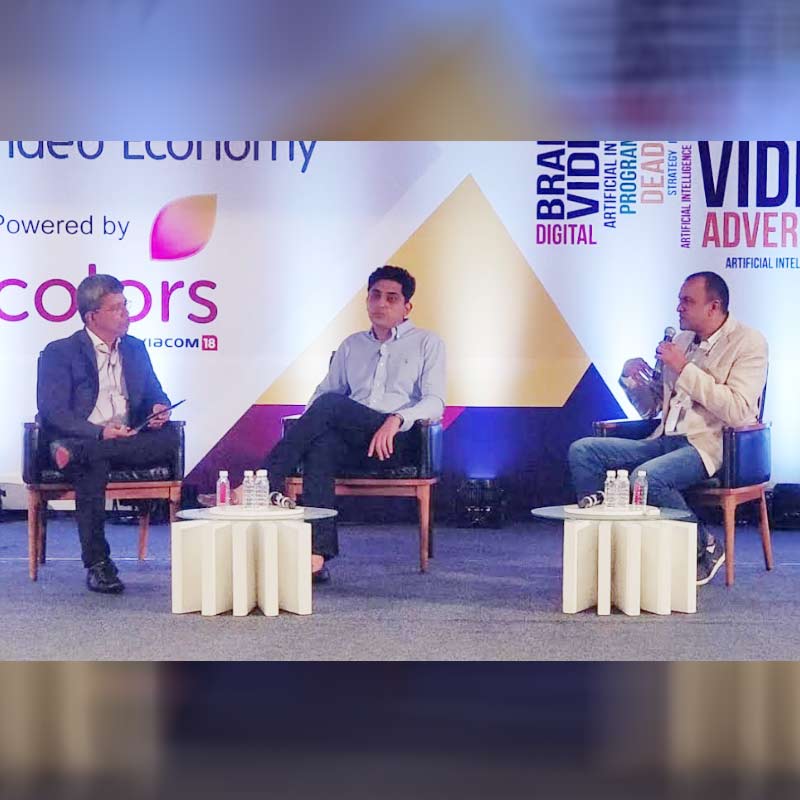
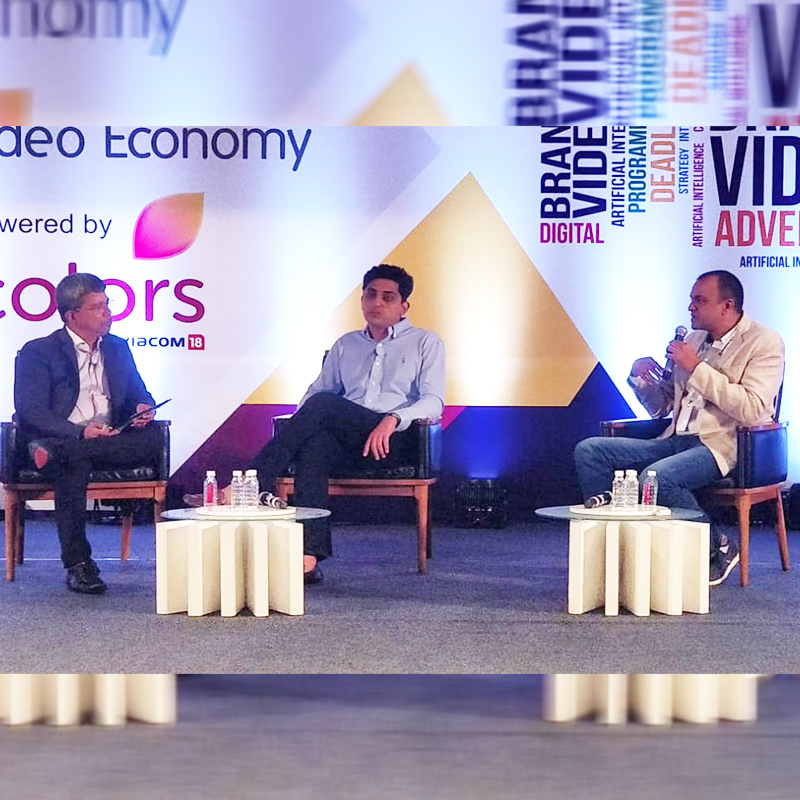
    In the first edition of Indiantelevision.com’s BrandVid powered by Colors, spokespersons from the two tech giants spoke about their experience in new video economy. YouTube India entertainment head Satya Raghavan and Facebook India entertainment partnerships head Saket Jha Saurabh discussed what each of them is offering to brands, how brands are operating in the respective ecosystems and what could be the best practices for them to follow.

    Talking about branded videos and digital films, Raghavan said YouTube always thinks about three primary stakeholders which are the consumers, creators and advertisers. Whether it is about integrating a brand within the existing content or a brand wanting to create content with creators, these three elements of the ecosystem always create amazing opportunities together. Going back in time, he mentioned #CrashThePepsiIpl campaign when they discovered all of these three stakeholders actually ended up coming together to make this program a huge success.

    “Last year we started new format called speed dating where we had brands give briefs to our upcoming creators and creators then got 10 minutes to pitch the solutions to brands and out of that also emerged pieces of content. I think we are just at the beginning of the interplay of content integration and branded content,” Raghavan said.

    Facebook has also started out building communities which can be monetised. As a platform, Facebook sees video as a form, not substance. “We feel that from Facebook and Facebook family of apps’ perspective, the idea is how you solve or customise solutions for brands. I think that’s really what we focus on,” Saurabh commented.

    While Facebook has definitely been the dominant one in video marketing ecosystem, he also mentioned how other apps from the group are also growing relevance. As an example, he spoke about Make My Trip’s association with WhatsApp, where the entire booking process was moved to the messaging app, and the company saw a huge fall in call centre complaints. In this case, Make My Trip leveraged the intimacy and inter-connectivity on Whatsapp to engage consumers.

    Fashion and beauty brands have been optimising Instagram on a great scale. “These people understand that visual storytelling is really the thing to do, especially when you are trying to reach a younger audience. Instagram is really a choice when it’s visual storytelling,” Saurabh added. According to him, brands are increasingly realising they have to do platform-first, mobile first content as well as creating customised videos.

    Speaking about what brands can achieve on YouTube, Raghavan said a consumer comes to YouTube to either entertain himself or inform or educate. According to him, it’s important for brands to understand this behaviour and even YouTube spent a lot of time trying to explain brands how to fit themselves into this continuum of things. 

    His advice for brands is that they should think about how they can be a part of all of these three types of storytelling whether its entertainment, education or information. “We are seeing a lot of that happening in financial services space now because brands are starting to penetrate deeper. Earlier, very few of us dabbled on things like the stock market or even mutual funds. But, that category is seeing amazing penetration at this point in time. So, a lot of brands from that area come to us and talk about what they can do about all of these three things.  This game is still to be played and in a couple of years we will see some amazing things happening in that space,” he added.

    Both of the experts were asked if a brand can become media destination for customers where they build a direct engagement with storytelling. Saurabh gave a few niche examples such as Craftsvilla’s birth and growth was aided by Facebook. Royal Enfield is also doing a great job in community building. In the case of Instagram, he gave the example of fashion designer Sabyasachi Mukherji’s page which depicts good storytelling.

    “Brands need to build the community ahead of the transaction, not when they will transact. It may lead to a transaction or different levels of engagement. The fact is that our goal is to make brand managers understand that whether it’s brand marketing or performance marketing, Facebook has solutions for both but building a community and having a certain thematic play in the market is very important,” he said.

    However, while all the gaga is over traditional brands who are investing in branded content, Facebook has noticed that creators are becoming brands as well. Hence, this is about content brands also who are finding their voice on the platform and being able to monetise what they do best.

    Agreeing with him, YouTube’s Raghavan put it in a little different angle. According to him, best practice a brand can follow is actually to think like a creator. “We encourage brands to think like a creator. Create consistent output of content and appreciate the fact that content has always been there. Think like a creator and work with our creators. They understand consumers and that’s how they continue to create content day in and day out. It’s really about the message,” he commented.

  • BrandVid 2018 sees industry stalwarts discussing video marketing in depth

    BrandVid 2018 sees industry stalwarts discussing video marketing in depth

    MUMBAI: Video is the new glue fusing brands with their consumers thanks to the massive explosion in consumption on digital and handheld devices. Marketers are working overtime to understand the nuances of video storytelling, platforms ‐ social or web destinations and distribution in order to build stronger bonds between brands and their fans. 

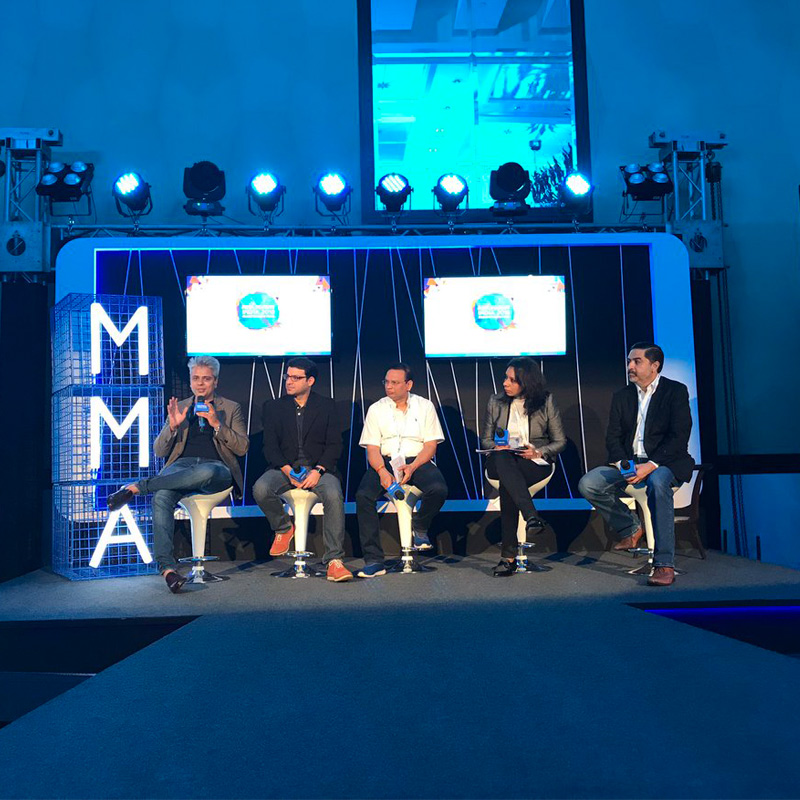
    Brands are increasingly realising the importance of branded content and video marketing as a whole. It is no longer a one size fits all formula but rather customised content that is often native and geo-targeted. To learn and delve deeper into understanding video marketing as a crucial marketing tool, Indiantelevision.com hosted industry stalwarts at Sahara Star, Mumbai for BrandVid 2018, powered by Colors. The annual event is the ideal place for the industry to converge, discuss and ideate on the way forward for brand marketing.

    The day-long summit was held with a vision to optimise the use of video as a brand communication tool and get a better bang for the buck for all those operating in the ecosystem. BrandVid brought together publishers, broadcasters, digital platforms, agencies, technology, brands and social media outlets to share notes and best practices, exchange ideas, understand and forecast video trends and build relationships.

    The glittery event saw industry leaders from Facebook, Twitter, YouTube, Myntra, Marico, Fastrack, GroupM, VICE India, Bosch Home Appliances, Syska Group, Prajakta Koli, Miss Malini, Times Network, TVF, Onida, White Rivers Media, L'Oréal and more. 

    The conference began with a keynote from Havas Media CEO India and South Asia Anita Nayyar where she discussed at length about how digital videos have grown significantly over the past two years from mere 60 million in 2015 to an astounding 200+ million digital video reach in 2017. She also highlighted that India stands second in the global mobile traffic share and the impact of Jio saw 48 per cent drop in data prices amongst other players. She also mentioned that today, 39 per cent of the content coming out of brands is meaningless and also 55 per cent of the youth is still watching television.

    This was followed by a panel discussion on how important are branded videos to print publications and broadcasters and how are print and television media companies taking advantage of the large reach that they have through content in video format. On this, Group M business head of entertainment sports and live events Vinit Karnik said that if content is the king, distribution is god, then data is new oil that will pump up the mechanism. In the same discussion, Lokmat Media senior EVP and head of digital business Hemant Jain also noted that there is an over emphasis on data, due to which creativity is getting lost in the hype.

    Facebook, Twitter and Youtube are the social giants today but what is the play for branded videos with these giants?  What is each of them offering to brands and how do brands operate in this universe were some of the key questions that were highlighted in the next panel where YouTube India entertainment head Satya Raghavan pointed out that the best practice a brand can follow is to think like a creator rather than a brand itself.

    Speaking on the top 5 things to keep in mind for branded videos for both television and digital, Byju’s marketing head Atit Mehta highlighted that the hero of Byju’s business is the content that they create in house. An important insight that was highlighted at the session was that 75 per cent of videos played on Facebook were without sound which goes to prove that the audience is ‘looking’ at the content more rather than ‘watching' and listening to it. Hence, it is important for marketers to create more visually engaging videos. UltraTechCement brand building head Sanchita Ganguly concluded by stating that insights, respecting medium, conversation and being dynamic is important for branded video.

    In a fireside chat with Indiantelevision.com editor in chief Anil Wanvari, Vice India CEO Chanpreet Arora spoke about how brands can be at the forefront in videos and there is no need to hide brands as consumers love to be entertained.

    The event was also the appropriate venue for Vidooly to unveil a report on the rise of branded content in India that forecast that the branded content ecosystem in India is going to be worth Rs 745 crore in 2022.

    We all agree that influencers have become celebrities in themselves and they carry a brand value. The products they use, the car they drive or the mobile phone they use have at some point or the other influenced our buying decisions. Hence, investing in influencers is key to a brand. But how can broadcasters, publishers use the influencers they have to build their communities and marry them with brands to have that multiplier factor? On this panel, White Rivers Media CEO and co-founder Shrenik Gandhi said that the fundamental of influential marketing is trust whereas Loose Cannons Studio COO Gaurav Lulla added that influential marketing may not necessarily mean brand endorsement and it goes way beyond that. 

    The last session of the evening was an analysis of measuring the efficacy of videos where Legrand India head of marketing communications Laxman Tari stated that brand integration is reassuringly possible for entertainment industry and it does not work with news or current affairs. For L’Oreal India 60-70 per cent of its advertising money goes into videos. On a concluding note, the brand’s media and digital head Neel Pandya pointed out that unified measurement of TV and digital is the biggest challenge today for companies.

    For marketers there never has been a better time to create and distribute videos. But it has also never been so complicated to reach audiences. They need to remember that whatever is the format of the content, it needs to be meaningful!

  • Netflix makes up 15% of total downstream traffic on global internet

    Netflix makes up 15% of total downstream traffic on global internet

    MUMBAI: The world’s largest over-the-top (OTT) player, Netflix, makes up 15 per cent of the total downstream volume of traffic across the entire internet, according to The Global Internet Phenomena reports by Sandvine released in October 2018. The reports customer base represents over 150 T1 and T2 global network operators and the solutions touch over 2.1 billion internet subscribers worldwide which does not include significant data from either China or India.

    This edition combines fixed and mobile data into a single comprehensive view of internet traffic across all network types.

    Video is still dominant with almost 58 per cent of overall downstream traffic, despite operators more aggressively managing video traffic. The reports from previous years highlighted that Netflix, YouTube, Facebook and BitTorrent were the biggest historical traffic sources. All of the applications are still big players, but the internet landscape has significantly diversified; regional variations are showing up throughout this report. A conservative estimate of the data shows that over 50 per cent of the traffic on the internet is encrypted and the adoption of Transport Layer Security (TLS) 1.3 has grown (showing a shift to a more secure protocol than Secure Sockets Layer (SSL).

    The global application category traffic share have video streaming, web and gaming on top application type on the internet. As web and video traffic dominate, Netflix is the top video site in the world.

    Sandvine CEO Lyn Cantor said, “The foundation of our business model is being ‘the best’ telco network data analytics company with use cases that help our customers understand, optimise and manage subscriber quality of experience (QoE).”

    Amazon Prime service has been a huge market success according to the report, and Prime Video has been increasing its footprint not only in the US, but is now available in 200 countries worldwide and is increasing its share of global traffic.

    YouTube is at the third position when it comes to global application traffic share and still the dominant video streaming application consumed on mobile. Netflix takes the lead due to sheer volume in fixed networks as well as higher resolution videos being the norm. YouTube benefits from being the most commonly “embedded video on other sites, including Facebook.

    Sandvine VP marketing Cam Cullen said, “With the attention of both consumers and network operators focused on network quality, it is more important than ever for operators to understand how their bandwidth is being consumed.”

  • IKEA gives ‘voice’ to products in latest campaign

    IKEA gives ‘voice’ to products in latest campaign

    MUMBAI: The IKEA store launch in Hitec City, Hyderabad, has been one of the most talked about launches in recent times. A much-anticipated event, the store launch was preceded by the brand’s first ever communication for the Indian market, created by Dentsu Impact – the creative agency from the Dentsu Aegis Network. The launch also saw some interesting on-ground activations that got people talking.

    One may think that such a high impact launch would be followed by a period of quiet from the brand. But not so in the case of IKEA. The brand has now released a series of new films on TV and digital to bring to life some hero products from the brand. Quite literally! Every film has one main hero – an IKEA product itself, and well it is this hero that does all the talking. The treatment is a completely fresh one and the films are nothing like a typical product centric ad you may imagine. The films are all a part of a series and the team promises we will see something fresh in every film, with a different product playing a different character.

    IKEA India country marketing manager Ulf Smedberg says, “We at IKEA saw the need early on to find an emotional connection with consumers and their future relationship with our range. In order to de-dramatise and make parts of our range more attractive, inspiring yet even human, we created our new communication campaign which we internally call “Talking products”. In this series of short films, we let some iconic products speak and express their personality, in a fun and engaging way. The reaction so far been very positive, with people finding them to be surprising yet distinctively IKEA.”

    Dentsu Impact senior vice president Megha Jain Sadhwani adds, “The reason why IKEA is the world’s most loved Swedish home furnishing brand is its products, they are the heroes that make this brand what it is. The intent behind this series of films is to introduce these heroes to the Indian audience in a typical IKEA style – simple and playful, and what better way to do this than to let the products do the talking themselves, literally!”

    Dentsu Impact Bangalore creative head Amish Sabharwal spoke about the creative concept behind these films and said, “IKEA is known for great creative formats across the globe. This is our India attempt to add to that stellar reservoir. The products of IKEA are so intuitive, practical and magical that they deserve to be stars of every commercial, who needs celebrities?! That’s what we did. Each object has their own character, their own quirk, their own voice and they are unlike any other object you get in the market. The idea is to get audience to enjoy the storytelling and the magic of each product.”

    The films have been released on TV in Hyderabad and are available on the IKEA Facebook page and Youtube.

  • Facebook planning smart STB for TVs with video calling support

    Facebook planning smart STB for TVs with video calling support

    MUMBAI: According to a United States news website, Cheddar, social networking company Facebook is working on smart set-top boxes for TV.

    And according to the sources, the set-top box will be camera equipped. It will also allow video calling along with entertainment services like Facebook’s YouTube competitor.

    Internally codenamed ‘Ripley’, the device uses Artificial Intelligence (AI) to automatically detect and follow people as they move around during a video call.

    Apart from opening the door for video chat feature, the new hardware would help Facebook compete in the TV market averse to Apple and Amazon.

    With concepts like Ripley, Facebook is attempting to build consumer hardware business outside of its virtual reality brand ‘Oculus’. Oculus VR is an American technology company acquired by Facebook in March 2014 for around $2 million.

  • Brands, agencies to rewire approaches using data: CVL Srinivas, WPP

    Brands, agencies to rewire approaches using data: CVL Srinivas, WPP

    MUMBAI: Data. A four letter word that has even the senior most executives sweating and scratching their heads. While it is a small little word, understanding how to use it, is actually very complicated. That’s why  all we’ve been hearing about in the last year is how can brands and agencies leverage the most of data and more importantly, understanding the basics of data. 

    Data is not restricted to using it only in advertising (for data-driven advertising), it can essentially be a very function of every brand. With all the buzz around data and using it to reach the consumer effectively and efficiently, marketers and agencies must know how to make the most of data for better ROI and consumer engagement.

    Google Maps, Instagram, Facebook, Twitter, Snapchat, Google, YouTube, Netflix have all changed our world, and for good! Technology has changed the way we connect with brands and things around us. You like something, you hit a ‘heart’, something makes you furious, you reply via an angry emoji on Facebook. All this consumer behaviour is Data for marketers. And with a consumer’s likes, dislikes, hearts, tweets and browsing history available readily, a brand maps the consumer behaviour and reaches to them with targeted advertising and content. That’s why you only get a message or pop up to shop or buy your favourite pair of clothes, lipstick, car or mobile that you’ve been eyeing for long.

    However, with brands being able to map your behaviour by scrutinising you and using your data, it also violates a consumer right to privacy. To address this, the Government of India is currently considering sweeping a data privacy law –  Personal Data Protection Bill of 2018 , which states that privacy is a "fundamental right" under the Indian Constitution. 

    The bill is closely modelled after the European Union's General Data Protection Regulation (GDPR). It broadly applies to all personal data defined as any data of a person which allows direct or indirect identifiability; and envisions a regime where individual consent is the cornerstone of data-sharing. If the bill is passed, it may change the way on when, where and how much data can brands actually use. 

    Maybe eventually brands will have to pay their users in some form to be able to use their data in the new framework of guidelines. It could be in the form of money, virtual money, coupons or discounts.

    To understand the current scenario and future of data driven marketing, in a quick chat with Indiantelevision.com, WPP country manager CVL Srinivas gave us insights about creating the balance between using data and human insights, future of advertising with data, WPP’s plan for 2019 and more. Excerpts: 

    The importance of data in advertising today is more than ever. How do you see the future of advertising along with data?

    Data is a critical part of every business today. We have a lot more data available to us than we ever had before. Today, every business is looking at transforming itself – by smartly leveraging data, businesses can fast track their growth in numerous ways. Advertising is becoming a lot more data-led. Not just in targeting the right audience or deciding the best 

    medium, data is inspiring creative thinking on brands. We saw numerous examples of data-inspired creativity at our summit today. Going forward, we will see brands and agencies adapting to this new data world by rewiring their approaches. This is not to say that all the

    traditional methods will go out of the window. We need as much of the marketing gut as we need data.

    Having too much data can often become complex. What’s the way out?

    A data strategy needs to start with a purpose. The end uses of data need to be defined. Else there is a tendency to try and boil the ocean. Like we heard from a lot of our panellists that day, that the best approach is to start small, test a few hypotheses and then scale up. 

    Somewhere along the way one learns what kind of data is most valuable for a particular business/brand.

    While brands and agencies have a lot of rich data available today, we don’t know what to do with it. Do we still need time to get there where we understand the data and can leverage it to the best?

    Most businesses are on the journey to get better at harnessing the power of data. There is no one defined method. Some of them have made more progress while others are starting off from scratch. While there is an abundance of data, what we really need is a more 

    balanced approach to putting it to good use. By ‘balanced’, I mean combining data points across different sources to paint a broader picture. That’s where we need to see more progress generally speaking. 

    Focus point for agencies and brands in 2019?

    Data-centricity will be a key priority going forward, but it must go hand in hand with creativity. 

    Do you think brands and agencies need to take a step back, pause and say, “I think we are pushing it too much!” How can we as an industry skip being ad-blocked?

    I think we will soon get to a point where most, if not all advertisers will realise the need to move from a completely push-based advertising approach to a more balanced way of engaging with their consumers. Data and technology are making it easier to identify consumer tastes and preferences more sharply. This will reduce the bombardment. On top of that, if one knows what kind of content engages the consumer, it can result in more relevant messaging being served.
  • Facebook to provide more video ad options for advertisers

    Facebook to provide more video ad options for advertisers

    For advertisers, social media giant Facebook has decided to come up with some more advertising options.
    Through a blog post, Facebook stated how they will now allow companies to advertise on premium video content through the In-Stream Reserve program.
    As per Facebook, the selected-content includes “the most engaging, highest quality publishers and creators”. This content will be shown to specific target groups verified by global information and measurement company Nielsen.

    Facebook explained how the In-Stream Reserve is a great option for premium online video and TV buyers, particularly those targeting younger, compact demographics and irregular TV viewers.
    As per Facebook, the in-stream video ads are fully watched 70 per cent of the time. The In-stream reserve categories allow an advertiser to select which topics they want their ads to run on, including sports, fashion/beauty and entertainment.
    The social media company will also let the advertisers to advertise on specific shows or for an exclusive advertiser for a single show. “These types of ads are being tested on,” said Facebook.
    “The ThruPlay program will only charge advertisers if their ad is watched to the end, or viewed for at least 15 seconds,” Facebook added.

  • Advertisers shifting focus to OTT for brand safe environmentAdvertisers shifting focus to OTT for brand safe environment

    Advertisers shifting focus to OTT for brand safe environmentAdvertisers shifting focus to OTT for brand safe environment

    MUMBAI: Over-the-top (OTT) platforms in India have reached a tipping point with growth in internet users. The change in viewing habit is also altering the way brands want to communicate with consumers. Despite the shift towards OTT platforms, social media giant YouTube remains the dominant player in digital advertising space. Experts from the ecosystem discussed how these players can attract more money focusing on some shortcomings in a session ‘Video 2.0- Time to Pay?’.
    The event was organised by Mobile Marketing Associations India. Hotstar EVP & chief marketing officer Sidharth Shakdher, Sony Pictures Networks India digital business head Uday Sodhi, Isobar South Asia, India group MD Shamsuddin Jasani, Patanjali Ayurved Ltd CGM, and marketing head Avinash Kumar took part in the session that was moderated by Neena Dasgupta, CEO and director Zirca Digital Solutions.

    Dasgupta started the session asking what have been the major shifts in recent time. Jasani mentioned two new trends- one is the high focus on collecting data in the right manner, especially after the rollout of GDPR and the second is the surged demand for a brand safe environment. Brands(http://www.indiantelevision.com/iworld/social-media/facebook-watch-has-its-work-cut-out-in-video-content-creation-180912), as well as agencies, now want their advertisements to appear in the proper content. He cited examples of content owners and creators like SonyLIV and Hotstar which are extremely brand safe.
    The moderator raised a question as to why 70 per cent of revenue still goes to YouTube(http://www.indiantelevision.com/iworld/over-the-top-services/local-ott-players-not-distressed-by-youtubes-originals-plan-180918), the walled garden, while OTT platforms have a good hold over content. Hotstar’s Shakdher said a large number of brands now want to place their ad where content is safe. “Just reach for the sake of reach does not mean anything,” he commented. He also cited the example of Patanjali.

    Avinash Kumar, the exec from the largest domestic FMCG brand also acknowledged the importance of the safe environment. For a brand like Patanjali which reflects “high world value” being deep rooted in Indian culture, putting its ads in the proper place is very important. According to him, a clear shift is visible. Though it started with YouTube, realising the lack of curated content and facility to interact in a safe environment, it moved out. It now only interacts through OTT platforms and considerably works with both Hotstar and SonyLIV whose representatives were present on the stage.
    Kumar, on the other hand, pointed out YouTube’s advantages along with the difficulties of OTT platforms on which they can work. Google’s video streaming service is not only free but also leaves the highest choice for content. He said OTT platforms need to have more content options as well as democratise the payment for content in a way that Jio has achieved in data consumption.
    “There is need of OTT platform, as well as YouTube. It is not an us versus them. So for example when we are doing something for a brand, we have in the mix both as there are different KPIs for different segments,” Jasani said.
    Moreover, Dasgupta added a counterpoint to the fact that Indians don’t want to pay for content. OTT platforms garner 20-22 per cent of the revenue from subscription, which is expected to reach 40 per cent in the next five years.

    Jasani at the start of the session only highlighted that the underlying strength of digital has always been data. While OTT platforms have a huge amount of data as well, the question is if consumers are ready to pay for that data.
    Uday Sodhi said the first steps are definitely being taken already. The movement of money from all other mediums is shifting towards OTT platforms which indicates these platforms definitely carry some value. According to him, these added values help to OTT players get higher rates for ads than others. “Now we are able to sell the inventories on most popular events or shows through which a brand can easily target its defined TG, which for me is the subtle way of targeting, and they are ready to pay for it,” he added. He also mentioned for events like FIFA, IPL, KBC, brands don’t mind to buy premium inventory.
    However, the events merely don’t attract brands. The affordability, right moment, target audience also play a key role. “We should make every ad dollar count. When you are buying a sporting event, you are buying demographic of the event. You don’t buy cricket for sake of cricket. You know demographic composition, product proposition. It’s never a black and white decision,” Shakdher commented.
    Interestingly, before Patanjali buys inventory on OTT, it first goes to the traditional TV to compare rates. If it sees an OTT platform ranking at the top, then it goes ahead. Getting a brief from the OTT platform it goes back to TV to compare the affordability it is getting on the digital platform.
    However while OTT platforms provide better facilities than TV, Patanjali’s Kumar thinks in terms of getting consumer data back the two mediums don’t have much difference.

    “Let’s say I am buying a spot at whatever price, what I am getting out of spending on it is as simple as TV data. You have an image and video fingerprint, you have lots of AI which can put actually the kind of geography and customers I am trying to reach. Do I get that data back from Hotstar or SonyLIV? In fact, we are operating in the same environment as TV. You give us few cookies we cannot decipher,” he pointed out stating the “biggest challenge” for OTT players. In addition to that, there is no accurate data available for digital like TV ratings or BARC data.
    The session ended on a note that it is not about competition between TV and OTT, it is more about whether brands are willing to invest and support in data. Such willingness from brands can enable freemium or AVoD OTT platforms to create better content and engagement, ultimately leading to higher engagement for brands.

  • Local OTT players not distressed by YouTube’s Originals plan

    Local OTT players not distressed by YouTube’s Originals plan

     MUMBAI: YouTube is battling OTT giants neck-to-neck with its introduction of Originals. YouTube’s  wide reach in India is well-known to everyone. For a decade almost, it has been go-to place for any type of video. According to the KPMG 2018 report, the typical time spent by an average user on YouTube is around 8-12 minutes per session, time spent by subscribers on various OTT platforms ranges from 30-50 minutes per session. This statistics also indicates YouTube’s need to turn things around.

    “Originals are the next big bait for all players and the entry of YouTube in this category is going to fire up the competition further. With our original content slate lined-up for the coming months, we are certain that it will stand out. We are confident of our understanding of the audience preference and believe that YouTube’s entry will be a healthy competition,” SPNI digital business head Uday Sodhi says.

    The platform’s norm in other countries is to put original content behind a paywall but for now, it will focus on the ad-supported model in India. “There is no doubt that YouTube has a good internet / digital reach but it is not necessary that it will translate into great paid subscriber reach as well. The business of YouTube was built on the discovery of videos via search catering to predominantly shorter form viewership on the platform. Running a paid subscription service is a starkly different ball game,” Eros Now COO Ali Hussein comments.

    Netflix and Amazon, two international rivals of YouTube, have been also upping their investment in local originals to woo the audience, with different business models though.  These two platforms are known for loosening their purse strings when it comes to production cost. YouTube is also likely to invest heavily.

    Viu content head India Bimal Unnikrishnan cites the example of the FMCG market where the existence of multinational companies could not desist the growth of local players. He thinks international OTT players coming in and commissioning original content would be good for the overall industry. Moreover, for local players, producing local content is easier while international players’ ability to create such content is limited.

    “I think it will have an overall positive impact on OTT industry because YouTube is the biggest content aggregator in the market. Its entry in the space of creative originals will, of course, boost the overall dynamic of the market,” he adds.

    Indian OTT players aren’t worried about YouTube’s entry into originals because their focus is on regional content library and multilingual originals and movies. “However, when we talk about YouTube’s foray into original content space, they are still in an initial stage and it is too early to say anything at this point in time,” says Hussein.

    Sodhi mentions another important point. The expert says broadcaster-backed OTT platforms will always have a differentiated content strategy than independent players or production house-backed platforms. Notably, the KPMG report highlights that consumers spend more than half of their time watching TV content on OTT platforms.

    In the Indian market, AVOD and freemium models dominate the business while SVOD is at a nascent stage. While YouTube, the undeniable king of digital ad has started with celebrity-led content, it is obvious more advertisers will show interest in their content if it increases the quantity.

    Unnikrishnan thinks YouTube’s entry will boost the overall digital ad spend from advertisers. As all OTTs have a different target audience to reach, advertisers will not stick to one big player only.  Sodhi on a similar note says that the rise in the number of players will enhance content quality, thus giving a thrust to revenues in digital advertising. Hussein also says that brands would tend to associate with the platforms wherein their OTT brand and content resonate with their objectives to deliver the brand story.

    Marketing will be a big game for players to follow. “When it comes to marketing outlay, I don’t think marketing cost will be that critical. Each one will spend as much money as needed to reach out to the target audience. In digital, we are extremely focused in terms of target. I think the strategy will play a bigger role than cost itself,” says Unnikrishnan.

    Though the tech giant’s Indian originals are going to be a game changer, at least for now they will not affect local OTT players. YouTube India entertainment head Satya Raghavan himself insisted that the move is about growing the video pie not just for their own creators but for the entire online video industry.