Tag: YouTube

  • Slapstick is back in India with Eena Meena Deeka

    Slapstick is back in India with Eena Meena Deeka

    Mumbai: Cosmos-Maya’s non-dialogue slapstick comedy show Eena Meena Deeka was recently launched on the Disney Channel. The ratings coming in have been very encouraging. For the show to do well in a genre which is exciting, inventive, and witty and requires great skill to produce, the creators have a lot to cheer about.  

    According to recent BARC data, average impressions for the show are significantly higher than those for category toppers like Motu Patlu and Chhota Bheem for the month of December, 2018. There is no other non-dialogue show in the Top 10 in the kids’ animation category for this period.

    The show, having been syndicated to more than 100 countries worldwide, is also doing exceedingly well digitally on Cosmos-Maya’s YouTube channels, WowKidz and Wow Toons and has garnered around 300 million views cumulatively owing to the internationally recognized genre it falls into. It is also available for viewing on Netflix.

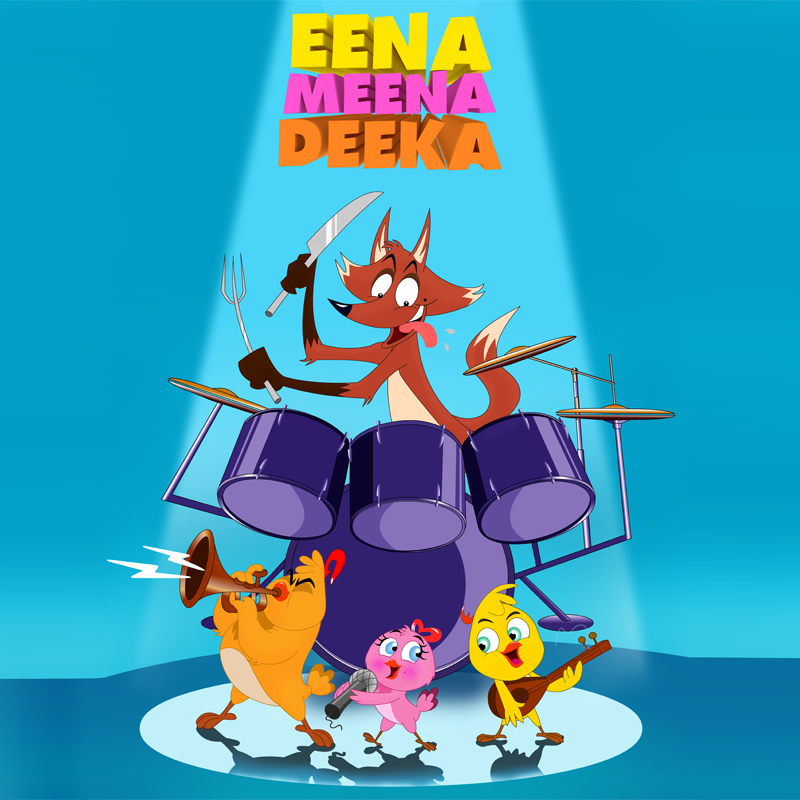
    Eena Meena Deeka essentially tells the story of the constant chase between a cunning hungry fox and three chicks, Eena, Meena and Deeka. The show borrows from the archetypal battle between malevolence and innocence, which was immortalized by the likes of Tom & Jerry and Oggy and the Cockroaches.

    Dheeraj Berry, the show’s creator and SVP- Development & Current Projects, Cosmos Maya, himself a Walt Disney fan, feels there may be another reason for the success of Eena Meena Deeka. “The relationship between the characters in Eena Meena Deeka is such that they can’t live without each other. Young viewers vicariously experience sibling bonding in the show”  

    Anish Mehta, CEO, Cosmos-Maya adds, “People love to laugh. Slapstick comedy has the ability to engage audiences of all age groups. That perhaps is the reason why Eena Meena Deeka airs in more than 100 countries today. In the Indian sphere, we are in an era where kids can access content on their mobile phones without having to care about high data charges. The time is right for the short format, non-dialogue slapstick comedy to make a comeback.”
  • Hotstar adds offline watching feature for premium content

    Hotstar adds offline watching feature for premium content

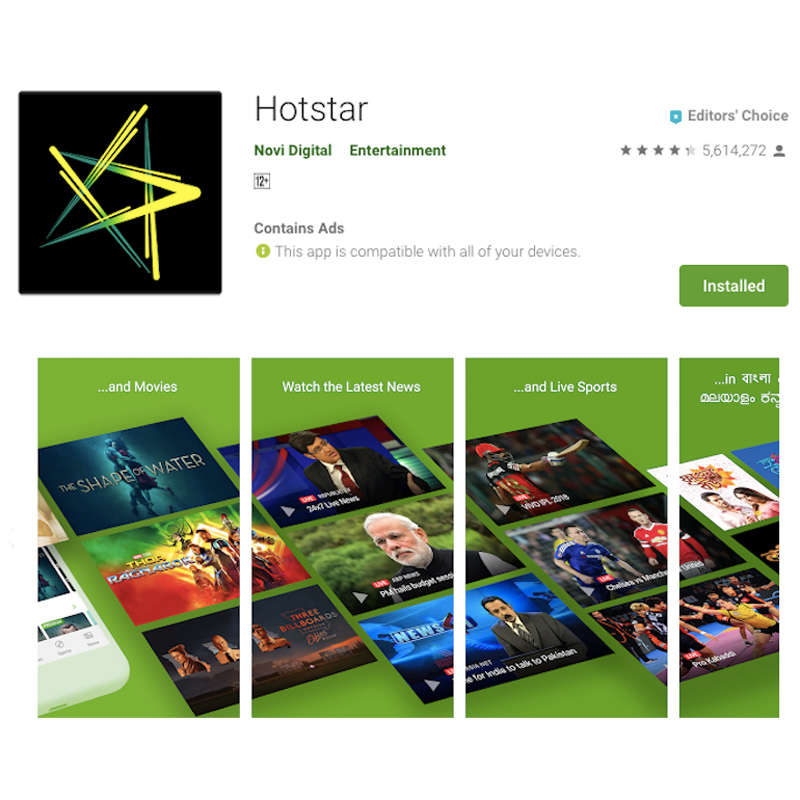
    MUMBAI: Hotstar, the leading streaming platform of India has now made the option of offline viewing available for its premium content. While the in-app download feature on rival platforms like Amazon, Netflix has been well received, Star India’s digital arm restricted the download feature to only non-premium and old content.

    The facility is available now for both Android and iOS users. It has also enabled support for watching videos in 18:9 aspect ratio, which most of the modern full-screen phones offer. However, it is not clear if the support is also available for premium users.

    “Now you can download and watch offline most of your favourite premium shows like Game of Thrones, Friends, Big Bang Theory and many more,” Hotstar Android app changelog noted on Google Play.

    Hotstar users will have the option to choose between low, medium, high and full-HD quality to download. However, downloaded premium content on the app will expire within 7 days of the download or 48 hours since the user starts watching it.

    Among the number of OTT platforms in India, Hotstar is way ahead in the race. Even streaming giant Netflix admitted that YouTube and Hotstar are till now leaders in the Indian market.

  • How engagement works in the kids’ space

    How engagement works in the kids’ space

    MUMBAI: Kids make our world go around! Quite literally, for channels focused on children as audience, observing their growing influence on choices, preferences and consumption habits of families in India, is a revelation! In this season of holidays when families gather around a TV set, it’s the children who call the shots.

    In 2018, we have witnessed an upward spurt in viewership in the kid’s category, with numbers rising by 10 per cent (from average GRP 499 to 550 GRP)*. The newer entrants in a competitive space of children’ TV programming has actually helped in growing the audience which indicates that more children are opting to watch new programming. Keeping this insight in mind, Sony YAY! is committed to adapting and developing kids’ programming suited to their preferences and such trends help further validate our approach. The consumption patterns that have significantly grown this year further ensures our focus on homegrown toon characters. 

    The 2018 emerging trends clearly reflect that flagship shows and localising content in regional languages pay dividends. Kids’ entertainment channels prosper on the dominance of marquee/flagship shows. 70 per cent of airtime and 80 per cent of GRP for leading channels in India comes from one leading show. Thus reiterating the fact that building a long-term relationship with toon characters, around whom shows, merchandise, and digital engagement are built, being the most effective manner to engage with kiddie audiences.

    While kids treat their favourite characters as their best friends, they prefer watching them on multiple platforms – digital platforms help us fulfil every kid's demand, where we focus on curating content especially for our YouTube channel. Kids are engaged on all the digital platforms through games, shows, contests on social media, etc. thus creating a strong affinity towards their favourite toons. Building upon toon characters and developing them as digital properties have had our audience respond enthusiastically. Using social media also helps in strengthening this relationship. Kids have the world at their feet; we’ve got to keep them engrossed by offering them the best of everything.

    We always sensed that regional language programming for children has potential and outreach. Hence, Sony YAY! produced content in Hindi, Bengali, Tamil, Telugu and Malayalam languages, of which we are leading in Kerala and West Bengal since we have the first mover advantage in these two markets. We have adapted to regionalisation effectively and swiftly. 

    Another trend is telefilms and programming with longer duration, keeps kids engaged for a longer time. We’ve produced over 12 films this year at Sony YAY! with each film was well received by the kids. It’s a space that’s waiting to explode and is evolving quickly. 

    The author is business head Sony Pictures Network India, Kids Genre (Sony YAY!). The views expressed here are  her own and Indiantelevision.com may not subscribe to them.

  • Nyoooz among 10 Indian digital media cos. to get Google funding

    Nyoooz among 10 Indian digital media cos. to get Google funding

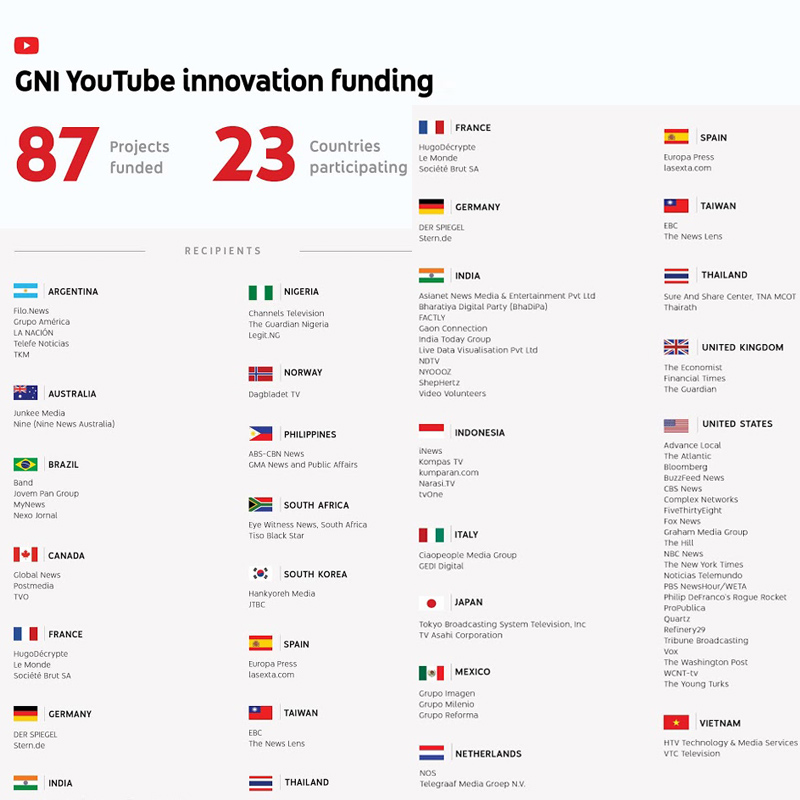
    NEW DELHI: Noida-based digital news startup Nyoooz is among 10 media outlets from India that have been selected for receiving YouTube innovation funding as part of the Google News Initiative (GNI) to help digital newsrooms and publishers strengthen online video capabilities and experiment with new formats for video journalism.

    Apart from Nyoooz, founded and headed by former TV journalist-turned-entrepreneur Alok Verma, the other Indian news organisations are Asianet News Media and Entertainment Pvt Ltd, Bharatiya Digital Party (BhaDiPa), FACTLY, Gaon Connection, India Today Group, Live Data Visualisation Pvt Ltd, NDTV, NYOOOZ, ShepHertz and Video Volunteers.

    These companies form a group of 87 media outlets selected from 23 countries, wire news agency IANS reported.

    According to a blog spot on Tuesday by Timothy Katz, director of news partnerships, YouTube, the announcement “reinforces our commitment to supporting a strong future for news video”.

    As part of the launch of Google News Initiative in March, YouTube committed $25 million funding to support globally the future of news.

    “Hailing from 23 countries around the world, they represent a diverse array of broadcasters, traditional and digital publishers, local media, agencies and creators, but all share a commitment to quality journalism and a spirit of innovation,” Katz added.

    Many of the projects selected for the innovation funding are focused on expanding newsroom video operations and trying out new ways of reporting news through video — from reaching younger audiences online to exploring live and fact-checking formats.

    Other projects look at the sustainability of news organisations, including work on new business models and programmes to support a healthy news ecosystem.

    “Over the coming months, we’ll be sharing insights gained from the projects and giving newsrooms the opportunity to benefit from the learnings,” Katz explained.

    Nyoooz is a digital news media outlet started by a former journalist in the same way as former NDTV anchor Pankaj Pachauri ventured into GoNews, India’s first mobile app-based news channel. Serial entrepreneur and investor Srikant Sastri too had invested in Nyoooz realizing the potential.

  • YouTube removed 7.85 mn videos last quarter

    YouTube removed 7.85 mn videos last quarter

    MUMBAI: According to Google’s YouTube community guidelines enforcement report, YouTube removed 7.85 million videos and 1.67 million channels in its last quarter.

    The report wrote, “At YouTube, we work hard to maintain a safe and vibrant community. We have community guidelines that set the rules of the road for what we don’t allow on YouTube. For example, we do not allow pornography, incitement to violence, harassment, or hate speech.”

    In the past year, YouTube faced increased criticism for pushing users towards content which would be misleading and would violate its policies on spam. In order to deal with that, the video sharing website removed videos and channels which violated the policies of the company.

    YouTube explained that it will delete a channel if it receives three strikes in 90 days or if it has a single case of severe abuse like “pornography, incitement to violence, harassment, or hate speech, or violating guidelines (as is often the case with spam accounts).” When a channel is terminated, all of its videos are removed, the report added.

    79.6 per cent of the channels removed were spam, misleading and scams, 12.6 per cent channels because of adult sexual content. “The majority of channel terminations are a result of accounts being dedicated to spam or adult sexual content in violation of our guidelines,” said the report.

    Overall, 74.5 per cent of the videos were removed before any views and the other 25.5 per cent of the videos on the platform were removed after views. In this the majority 72.2 per cent of the videos were removed because they were spam, misleading and scams.

  • Guest Column: To win and how to win – The always good question in advertising

    Guest Column: To win and how to win – The always good question in advertising

    Advertising – the shiny shop front of marketing, is famously not a fixed entity.

    It moves, morphs, adapts, transfigures, gets deformed and always rests with a new face every few months.

    Cycle. Repeat.

    Whenever one tries to make an educated guess about a fundamental characteristic of something that is defined by constant variability, it's like randomly pointing a camera at a crowd and expecting to find a familiar face in the photograph.

    The more people you know, better your chances of finding a familiar face. ‘How much you know’ then becomes a coveted skill.

    The fundamental hypothetical to ponder today is
    'what will win an award?'

    Before daring to design a blueprint for this conceptual palace called ‘award-winning campaign’, I find it’s always better to first walk around the house that advertising already lives in –the house called ‘culture’.

    Every cornerstone of cultural taste-making has undergone an upheaval in the recent past. From the glamour-stricken winners of the Oscars and the Grammys to the casually serious rules of who gets to be a YouTube/Instagram celebrity and even the matter-of-fact question of which type of scientific research gets awarded the big grants and which branch of science and scientist gets more air time; we will find a thread running across and even, remotely, connecting each and every sphere – a craving for gravitas.

    Gravitas, that can lift one above the din that’s created by rote abuse of the pithy mantra 'content is king' to the extent that we are all serfs to shallow engagement.

    There's a growing awareness and an exponentially increasing proof that the mirror has finally become the subject – that society has started reflecting advertising as much as an ad poaches from society.

    With great power is supposed to come great responsibility only after one realises that responsible wielding of power is actually an option.

    The ad-world at large seems to have acknowledged and accepted its role in the cultural spotlight.

    Here are three simple thumb rules that I've found to be effective not just in creative award-thinking but also in putting every creative in a state of existential paralysis on the way to a breakthrough campaign idea.

    Strive for genuine NOT just new

    There’s no shortage of novelty ideas and innovations. If an idea is not based on ‘genuine’ insight aiming for ‘genuine’ impact, it’s just ‘new’ for ‘new’s sake

    Be transformative NOT participative

    It’s increasingly easy for everyone to participate. Not just in ones and twos but en-masse. One more participant will not make a difference and only ads that make a difference are worth their wins. The aim should be to change the way something is perceived or re-write the rules of normal

    Memorable, yes, but memorable for what?

    What is the ‘one’ thing about the ad that will stay long after the ad is over? Is that ‘one’ thing deserving of accolades?

    All of this is written with the knowledge that data will show the way, but planning, media and copy will have to walk the way together.

    Big Data has given way to Big Culture.

    Just as an algorithm can find the most important piece of information in seeming junk data, well-intuited advertising can point to hidden sense in the most obscure and absurd piece of culture by elevating it to the heights of artistic merit and genuine impact.

    So, to all the media planners, copywriters and data scientists working unsurely on the next campaign; if you hold in your hands a thread that no one but you could have found, just give it a bold and confident tug.

    Awards will come.

    (The author is the AVP, Creative Strategy – WATConsult. The views expressed are personal and Indiantelevision.com may not subscribe to them)

  • Hoichoi to launch ‘Hello’ S2

    Hoichoi to launch ‘Hello’ S2

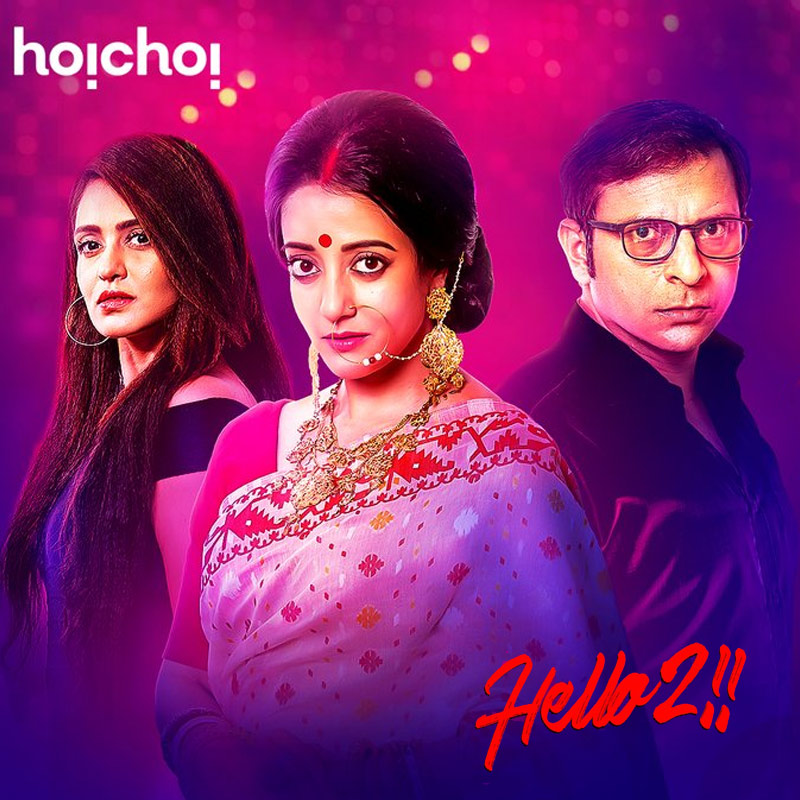
    MUMBAI: Hoichoi began its journey with its first original web series titled – Hello and became an instant hit with audience giving raving reviews. Thus, began the string of numerous requests flowing in for season 2 which will start from December, directed by Soumik Chattopadhyay.

    Hoichoi on its first anniversary this year announced 30 original shows and 12 original films for 2018-2019 which included the most-anticipated season 2 of all shows – Hello.

    The official trailer starts off from where the first season ended, Anonyo (Joy Sengupta) is at the doorstep of his girlfriend Nina (Priyanka Sarkar), ramming hard on the door and demanding her to let his wife Nandita (Raima Sen) out. Once the door opens, the drama begins with judgements flooding round and about as he accuses both of having a lesbian relationship behind his back.

    The official teaser of Hello, which was released a week earlier, was trending No. 1 on YouTube for 72 hours straight.

  • YouTube carrying out trials for more pre-video ads

    YouTube carrying out trials for more pre-video ads

    MUMBAI: Video streaming service site YouTube has been carrying out trials to add more ads into videos.

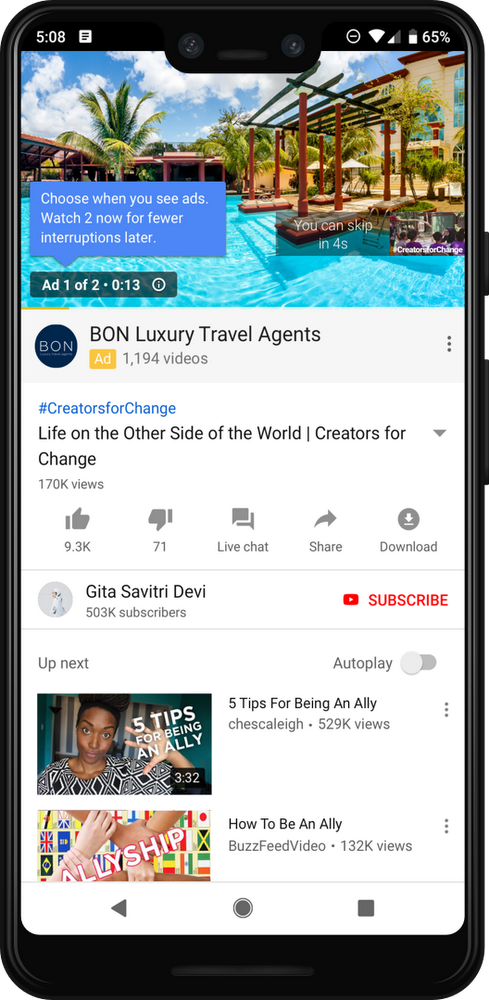
    In Google’s new blog post, it explained that interrupting viewers less often with ads correlates to better user metrics. And that is why; it has been carrying out tests which will show viewers two skippable ads back-to-back at the beginning of a video.

    Google wrote, “Because when users see two ads in a break, they’re less likely to be interrupted by ads later. In fact, those users will experience up to 40 percent fewer interruptions by ads in the session. Early experiment results also show an 8-11 percent increase in unique reach and a 5-10 percent increase in frequency for advertisers, with no impact to brand lift metrics.”

    This new change will first come to YouTube’s desktop experience. Mobile and TV screens will be followed with the new feature in the coming days.

    The update on YouTube will look something like this with a message explaining that you can watch two ads now for fewer interruptions later.

    Concluding the blog post, it wrote, “In the face of these burgeoning user trends — as well as the next wave, and the next — we’ll continue working to build the ideal video viewing experience, and keep thinking up ways to deliver value for our advertiser partners.”

  • Vidnet2018: Regionalisation, localisation the way forward for the OTT industry

    Vidnet2018: Regionalisation, localisation the way forward for the OTT industry

    MUMBAI: Over the top (OTT) is no more a baby. The ecosystem has been eating and growing slowly, taking centre stage in several media and entertainment related scenarios.

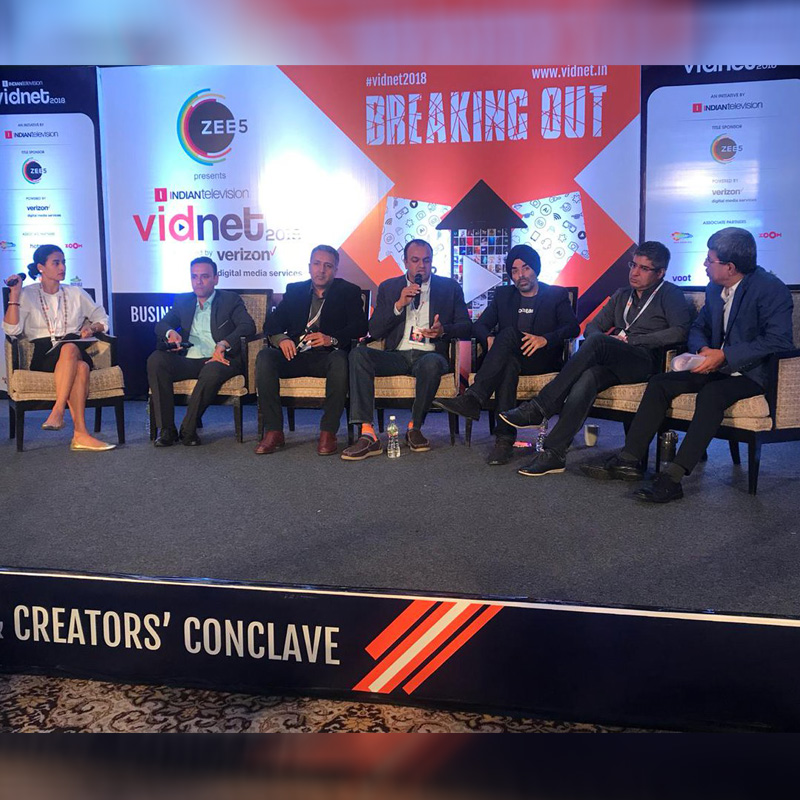
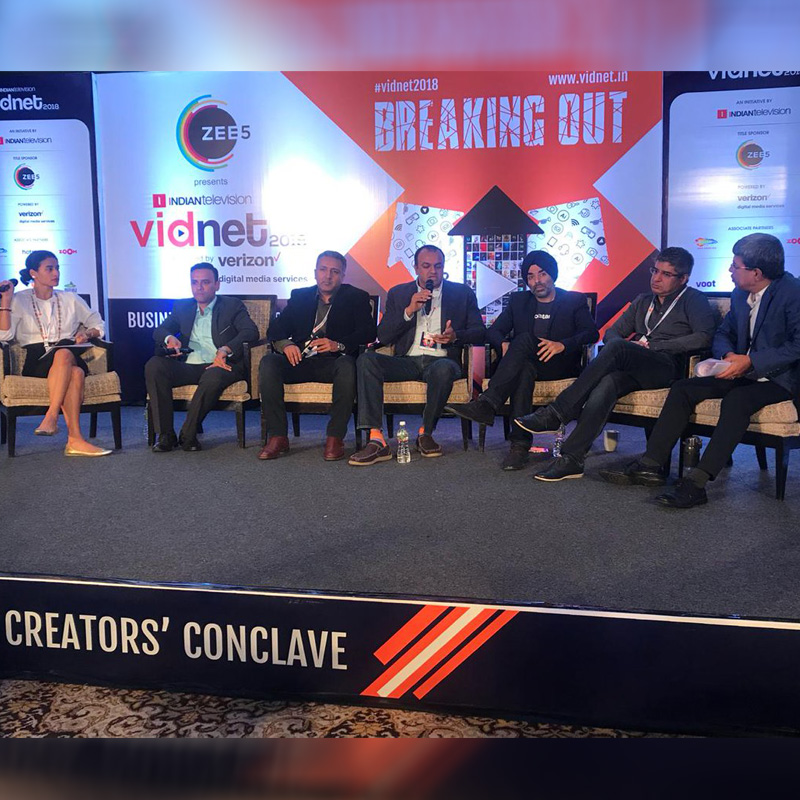
    On the stage of Vidnet 2018, hosted by Indiantelevision.com, experts from India’s leading OTT platforms were present. ZEE5 India CEO Tarun Katial, Amazon Prime Video India business director and head Gaurav Gandhi, YouTube India entertainment head Satya Raghavan, Voot head marketing and partnerships Akash Banerji and Hotstar consumer and revenue lead Prabh Simran Singh shared their key learning in a session named ‘Lessons from Battlefronts’.

    Moderator of the session, Indiantelevision.com founder, CEO and editor in chief Anil Wanvari made the prelude of the session saying that it has been few years since the OTT ecosystem started in India and how it has been challenging since then. He also mentioned YouTube has been a pioneer much before any other platform. Another leading platform Hotstar came in later. He started the discussion asking market leader YouTube's Raghavan what have been the lessons over the years in terms of consumers, consumption and the way the market is playing out.

    While asked what the industry has learnt, Raghavan mentioned a very important point that is obviously putting consumer the “queen” before anything. He shared how consumer taste and presence dictate the core of content.

    “Second is that it takes a whole village to build this entire ecosystem. It was only when accessibility opened up and all of us saw that it’s not just that 100 or 150 million people who are out there to consume a content. The depth is just amazing that this country has as evident by television. So when we saw access open up, when we saw consumers coming up from every part of the country, creation started to follow. Today, there are creators on YouTube who are uploading content from over 400 locations in the country,” he added.

    Gandhi, now with Amazon Prime Video India, saw the OTT industry very closely since a nascent stage. According to him, people are hungry for good stories and Prime Video goes bigger with every original show. Added to that, he thinks going regional is essential for streaming services given the diversity of the Indian market. He also highlighted the fact that adding value to service makes customers want to pay.

    “I think given how diverse we are for streaming, regional is essential. The more you go regional, the bigger counts you get. We have now six languages of content. We have seen tremendous growth there. We have introduced Hindi UI, we will be following up it with Tamil and Telugu very soon. So, regionalisation and localisation is the second big thing,” Gandhi commented.

    Agreeing with Gandhi, Katial also highlighted the importance of going more regional and adding more languages to the library. While tech giant Google has been promoting voice search lately, Katial also believed that both in the top and bottom end of the market, searching by ‘type’ is not the way to go. Considerably, ZEE5 has voice search available in 12 languages.

    Voot’s Banerji added to these insights that delivering a good viewing experience for consumers is essential along with good content. Banerji also added that as a platform Voot believes that the depth of content in the library is important along with the width.

    For Hotstar, live sports has been very critical in building its business. Breaking the myth that sports is a large screen experience, Prabh Simran Singh commented that consumers also love to watch it on the small screen. Rather than screen, moment matters. He also added that uni-dimensional focus on business model helps as Hotstar built both SVOD and AVOD category side by side.

    All the experts also agreed on the polarised nature of the Indian market. While there are consumers wanting low bandwidth video, there are plenty of them wanting HD quality video. One segment may fit into AVOD business model, another one for high-end subscription. Smart TVs are emerging as an important device for consumption at the same time with feature phones priced at Rs 1500. While young audience still dominates digital space, consumption of spiritual content in older age group, educational content among kids are likewise prevalent.

    “There is no one type of customer, there are so many kinds of customers and it is how we fulfill their desire. The biggest challenge we have is how our storytelling can keep pace with people’s desire and provide the kind of content they want,” Gandhi commented.

    However, a comment from Raghavan sums up the most unique nature of OTT industry here. According to him rather than a battlefront, the Indian market is an amazing place to partner and collaborate with multiple players in the entire value chain.

  • Vidnet2018: OTT industry says innovation the need of the hour

    Vidnet2018: OTT industry says innovation the need of the hour

    MUMBAI: In the last couple of years, over-the-top platforms have emerged as mainstream entertainment source going beyond “mail-metro-millennial” phenomenon for a sizeable population in India despite television still holding its dominance.

    The beauty of the Indian market is its diversity enabling opportunities for various business models and content in several regional languages along with Hindi and English. However, with the growth of the industry, new challenges in different areas including technology and regulations are cropping up. To delve deeper into the issues, experts across the entire ecosystem came together at Vidnet 2018 hosted by Indiantelevision.com powered by Verizon which had ZEE5 as title partner. The long day summit became a perfect stage to discuss relevant issues concerning the industry as well as to gain new insights.

    At the beginning of the event, a very interesting session with Hulu Japan CCO Kazufumi Nagasawa moderated by Indiantelevision.com founder and CEO Anil Wanvari set the tone for the day. The spokesperson shared the state of Japanese OTT market which is super crowded as well. But in contrast to the Indian market, most players are focused on SVoD service in Japan. However, Hulu Japan stands with 1.8 million paying subscribers with more than 50,000 hours of content. The session was followed by Verizon Digital Media Services EMEA and India managing director Taylor Riese who also said they are listing the challenges in the market with infrastructure in India.

    The attraction of the day was definitely the power packed session with speakers from the most popular OTT services and digital video platforms in India. ZEE5 India CEO Tarun Katial, Amazon Prime Video India business director and head Gaurav Gandhi, YouTube India entertainment head Satya Raghavan, Voot head marketing and partnerships Akash Banerji, Hotstar consumer and revenue lead Prabh Simran Singh shared their key learnings.

    Gandhi debunking the myth that Indians don’t want to pay for digital content saying that if customers see value in product they won’t mind paying and Katial mentioned an important fact that content cost in OTT is not going to be same as TV. While the session was named as “lessons from battlefront”, all the experts more or less agreed that the Indian market gives best opportunities for partnerships and collaborations.


    In another impacting session, Green Gold Animation founder and MD Rajiv Chilaka, Pocket Aces founder Ashwin Suresh, Contiloe founder Abhimanyu Singh from, SVF Entertinment president Ravi Sharma and Goldi Behel discussed the power of local storytelling. While five of them have been a part of the experience in creating versatile content targeting a particular audience, they highlighted how the time is perfect for content creators to be in the space owing to the new digital mediums. Applause Entertainment CEO Sameer Nair, another veteran in the production business, mentioned another important fact that content is not a commodity that someone can win with a price war, rather it has to be won with a good story.

    Other than content, topics like the need for unified video measurement for better data was discussed in presence of IPG Mediabrands India CEO Shashi Sinha, MX Player CEO Karan Bedi, BARC India COO Romil Ramgarhia and Eros Now COO Ali Hussein.  Sinha said industry stakeholders need to arrive at a consensus for unified measurement to be a reality in India. Interestingly BARC India COO commented their technology is fully equipped to measure digital video.

    Content is king but it cannot conquer customers alone if distribution is not well enough. Nowadays people watch OTT content via various devices including basics like smart TVs, smartphones. Telcos also bundle OTT apps with their services to acquire more consumers as well as make it easy for those platforms to spread out. Questions related to making better innovations in distributions were discussed by ALT Balaji COO Sunil Nair and Viu head monetisation and distribution Sameer Gogate.

    Even the confab delved deep into the creator’s brains, tech strategies as various production houses, cloud servicing companies were also present in the conference to discuss their play. Ongoing issues like how to regulate OTT platforms were also discussed by two eminent lawyers, Abhishek Malhotra and Nidhish Mehrotra. Other industry stalwarts including Eros Now COO Ridhima Lulla, Hotstar EVP and chief marketing officer Sidharth Shakdher, Facebook entertainment partnerships head Saket Jha Saurabh, Arre co-founder and CEO Ajay Chacko, ZEE5 business head Manish Aggarwal, Vertice Entertainment founder and CEO Varun Mathur also shared key insights through different sessions.

    Though the ecosystem is evolving, it will take more time to say what’s going to work or what not.