Tag: YouTube

  • GEMS: Psyche of Indian gamer

    GEMS: Psyche of Indian gamer

    KOLKATA: With a spurt in consumption during the lockdown, gaming is projected to only grow further. Although the gamers are majorly young and male till now, the users are gradually emerging across demographics.

    While a story of the rapid surge in online gaming is playing out, there are certain areas which need to be looked at more carefully. Google Play India business development manager Sharan Tulsiani shared insights on the ecosystem to fill the gaps in understanding.

    Who are the gamers? How they discover content?

    It is a cliché but the rapid expansion in smartphone adaptation, mobile broadband has definitely led the industry to maturation. At the same time, 70 per cent of users with devices with more than two gb ram, sharp fall in data cost, higher usage of UPI payment methods have also played a major role, Tulsani elaborated.

    Citing a survey conducted by Google, he added that 62 per cent of Indian gamers are of 18-25 years age group, 64 per cent are male, 65 per cent are single and 45 per cent are students. The demographic ratio is almost similar for the game buyers. 18-24 years age group accounts for 67 per cent and males account for 72 per cent of buyers.

    Read more about Gaming industry

    For the discovery of new games, Tulsiani stated that the play store has emerged as the most important source for users, YouTube social media networks being other important channels. The users go to the play store for ratings, reviews and access videos on YouTube to understand graphics. However, Indians prefer to watch local influencer videos rather than global ones.  Word of mouth is also a very strong source as Indian games are far younger compared to other parts of the world and hence more impressionable.

    “Consumers are hungry for quality content. They also look at gaming as aspirational recreation. Thus when it comes to the functional reason behind gaming, the storyline, game design, graphics are super important for selection,” he added.

    Moreover, building social experiences and community management is critical to retaining users as well. He said that social experience needs to be part of core UX. Along with plain multiplayer experience, leaderboards and asynchronous multiplayer allow interaction too. He also added that audio and video chat while playing are very popular in India.

    Developers also need to take note of the barriers to payments. 63 per cent payment related issues are caused by lack of awareness, concerns over personal information sharing. As a solution to this, Tulsiani suggested that simple measures like a visual guide for users on how to make payments. He further added that simple in-game or social media banners go help in closing the awareness gap.

    However, the awareness gap is not the only reason to prevent gamers from paying for games. 57 per cent of users lack value perception, which stood out as another reason. Some of them are worried about spending more money than the planned budget, many others want to want for a discount or sale. More significantly few gamers feel it is not worthy to spend money on.  

    According to Tulsiani, lowering the price point is not sufficient enough to convert them as paid users. As Indian consumers are value-sensitive, creating clear value for in-game items and the economy is a necessity. In addition to that, the primary aim should be converting “never spenders”.
  • Amazon Prime Video makes Mirzapur Season 1 available for free

    Amazon Prime Video makes Mirzapur Season 1 available for free

    KOLKATA: As the release date for the most-anticipated season two of Mirzapur fast approaches, the excitement for the show is increasing every single day. So much so that the team of Amazon Prime Video is all set to give die-hard fans like us the full first season at no cost! With Season 1 of the show streaming on the platform, Amazon Prime Video has now uploaded the entire first season on their official YouTube channel to gear up the audience up ahead of the second season hitting the platform.

    In a nutshell, Mirzapur is the story of Kaleen Bhaiyya, the King Of Mirzapur vs the Pandit Brothers, Guddu and Bablu.  What initially begins as a battle for power, leading to the throne of Mirzapur, eventually shapes the destiny of the city, influencing its business and its politics. While season 2 of Mirzapur is all set to premiere on 23 October, fans can binge-watch Season 1 and enjoy the world of Mirzapur while they wait for the second season to drop!  

    Fascinating viewers in a terrific first season, the show featured Pankaj Tripathi, Ali Fazal, Vikrant Massey, Shriya Pilgaonkar, Shweta Tripathi, Rasika Duggal and Kulbhushan Kharbandha in the lead. While Tripathi stole the show essaying the role of Kaleen Bhaiyya, the King Of Mirzapur, Ali Fazal and Vikrant Massey packed a punch as Guddu and Bablu Pandit – the wannabe gangsters. Shriya played the love interest of Ali and Shweta, as Golu, was seen as a studious girl entering into college politics. Rasika Duggal played the role of Beena – Kaleen Bhaiyya’s wife and Kulbhushan Kharbanda played Kaleen Bhaiyya’s father, a don of his era. Joining them in Season 2 are Vijay Varma, Priyanshu Painyuli, Isha Talwar, Amit Sial, Anjum Sharma.

    With all eyes firmly fixed on what happens next on the show, the makers have kept everyone’s curiosity high by not revealing much about the story. Produced by Farhan Akhtar and Ritesh Sidhwani under their banner Excel Media and Entertainment, the second season of Mirzapur will premiere on 23 October on Amazon Prime Video.

  • YouTube starts rolling out YouTube Shorts, a TikTok like platform, in India

    YouTube starts rolling out YouTube Shorts, a TikTok like platform, in India

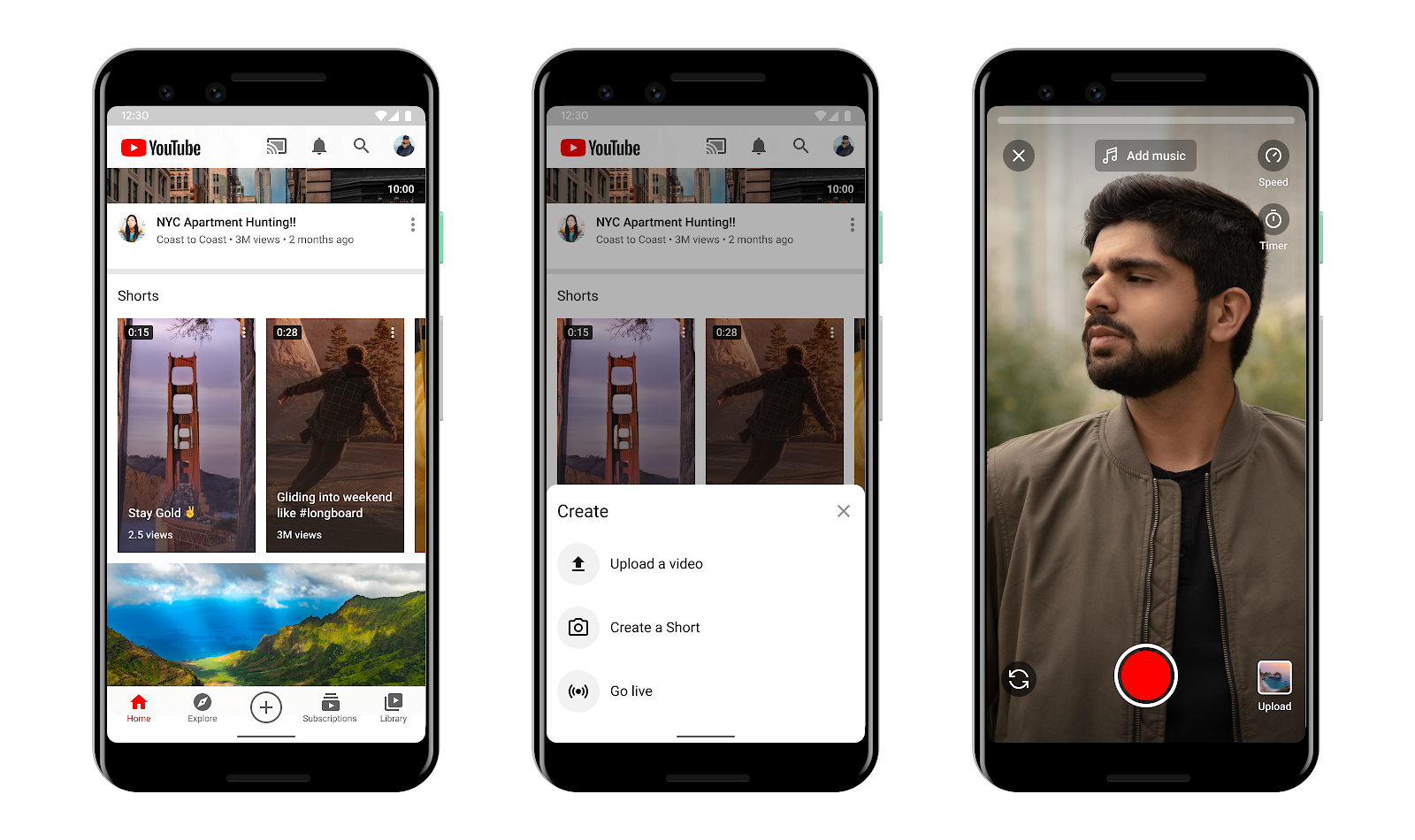
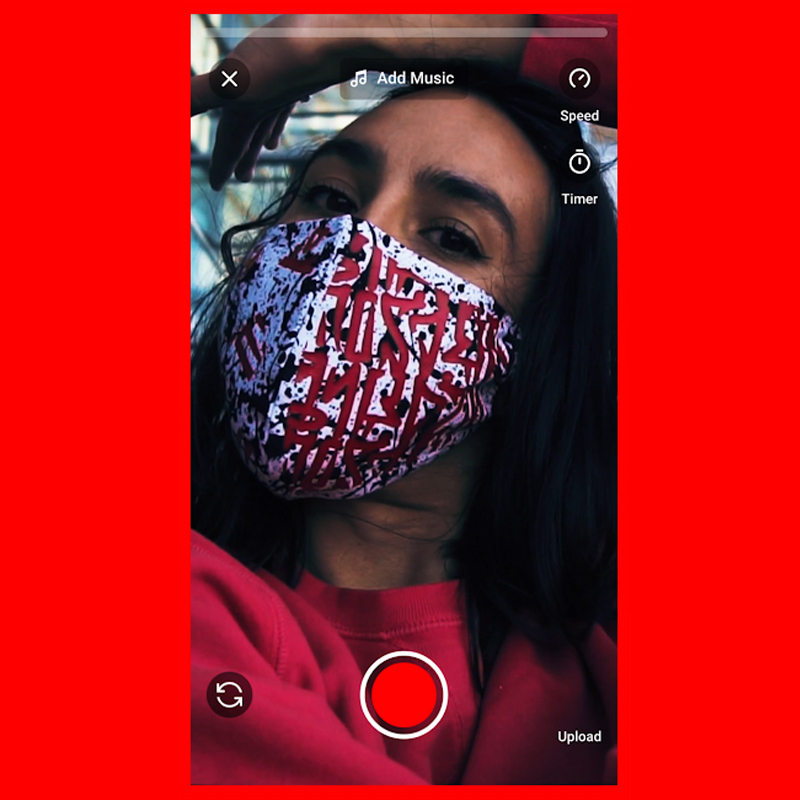
    KOLKATA: After TikTok was banned in India, the short format video app category has seen a rapid explosion of small and big players attempting to fill the void. While the first wave of these players were the homegrown apps, the second wave is seeing interest from the tech giants. YouTube is rolling out a new short-form video creator called YouTube Shorts in India.

    It is launching a beta version of the new feature in India which includes a new camera and a handful of editing tools that will be rolling out over the course of the next few weeks. YouTube will continue to add more features over the coming months. The new platform will let people make 15-second videos.

    “This is an early version of the product, but we're releasing it now to bring you — our global community of users, creators and artists — on our journey with us as we build and improve Shorts. We’ll continue to add more features and expand to more countries in the coming months as we learn from you and listen to your feedback. Here are more details on what to expect,” YouTube said in a blog post.

    For android users in India, users will see the “Create” icon has moved to the middle of the bottom navigation bar to make it easier for them to create videos right from the YouTube app. 

    Read more coverage on India’s short video ecosystem 

    Recently, Instagram has launched the short video platform Reel to fill the vacay created by TikTok. It has been able to divert the media spends but has not created an impact like TikTok yet. Now, time will say how it pans out for YouTube which has created cultural phenomenon across the years. 

  • Former TV9 senior execs to launch News First; a Kannada news channel for the quality-conscious viewer.

    Former TV9 senior execs to launch News First; a Kannada news channel for the quality-conscious viewer.

    Catering to the changing demands of quality-conscious viewers, two former executives of TV9 Kannada, who were responsible for its immense success, are launching a new 24×7 Kannada language news channel called News First. 

    The new-age news channel will be different in its approach and offering, in comparison to the existing players in the market, aiming to curb the audience fatigue that has set in the market.

    News First will have an exciting lineup of programmes dominated by strong content created with the blend of technology and creativity. Backed by a strong team, the channel will introduce sophisticated graphics and exclusive content that will be new to the Kannada market. 

    The brand already has a strong digital presence, with 620K+ subscribers on YouTube and a similar number of followers on Facebook.

    The brand is making all the right noises online and has accumulated close to 220 million video views on YouTube and attains around 24 million reach on Facebook monthly.

    Elaborating on his vision for the new channel, News First editor-in-chief SH Maruthi said,

    “We at News First look at quality as something beyond the visible. It’s in every aspect of news delivery. Most of all it is in contextualizing content as per TV and digital requirements.”

    News First CEO S Ravikumar shared, “When we helped set up TV9 Kannada in 2006, live news was still an unknown quantity. Our energies were all into bringing live news to an audience fed on recorded news. Today the market is so much more dynamic, audiences are so much more fleeting and eager for freshness in news. At News First, we are acutely aware of content being the mainstay of today’s news culture. That’s why we have an exciting line up of innovative programs to make audiences savour our programming menu.”

    News First business head S Divaakar added, “The Kannada TV news market is a competition between channels living on the edge and between No. 2 and No. 3. There is no one thinking of having a go at the market leader, which currently seems undisputed. With a solid product, innovative program line up and a competent team, we are keen to go for gold. The pluses are keeping us in high spirits. It is a highly challenging situation for sure, still, we’ve been getting very positive vibes from the market. We believe if there is anyone who can quickly move up to No. 2, it’s us.”

  • Brands doing moment marketing the Binod way

    Brands doing moment marketing the Binod way

    NEW DELHI: Internet is a weird place; from woke discussions on politics, society, and economy to reviews of movies, shows, and books, to national and international news, to good and bad memes, anything can be found on the web. The place has often provided brands great moment marketing ideas , like the costly bananas that Rahul Bose once ate and the recent Netflix release, Indian Matchmaking . 

    While most of these moment marketing themes had a context or content to spur the reactions and brand participation, the most recent bait to catch brands’ attention — Binod — left many scratching their heads. The faceless man is viral with no great feat achieved.

    The trend originated from a YouTube parody video covering weird comments that the creators, Abhyudaya and Gautami were getting on their channel Slayy Point and one fine gentleman named Binod Tharu had innocently commented, well, his own first name. After several days of the video going online, some bright minds of the web noticed the comment and started a hilarious meme fest over the weekend, which was soon joined by some of the brands.

    One of the first few to join the league was Paytm, which upon getting prompted by its followers, changed its name on Twitter to Binod.

    Here are some more brands that joined the moment marketing fest that Binod sparked.

    Amazon Prime India

    Call 112 Uttar Pradesh

    Disney + Hotstar

    Mumbai Police

    State Bank of India

    Surat City Traffic Police

    Tinder India

  • YouTube’s ad revenue growth slows down in Q2, subscription revenue sees good growth

    YouTube’s ad revenue growth slows down in Q2, subscription revenue sees good growth

    KOLKATA: In the pandemic-hit period, Google-owned YouTube’s advertising revenue declined in the Q2 of 2020 compared to the previous quarter. It has raked $3.81 billion for the quarter up from $3.60 billion in the year-ago period but lower than $4.04 billion in Q1. 

    “For YouTube, we ended March with a year-on-year growth rate in the high single digits, and that's reflecting a substantial headwind from brand. The headwind from brand moderated modestly at the end of the second quarter, and then we saw a further improvement in July. Direct response has been consistently strong,” Google and Alphabet CFO Ruth Porat said.

    Google and Alphabet CEO Sundar Pichai also mentioned strong growth in non-ads revenues particularly from Cloud, Google Play and YouTube subscriptions. Nevertheless, content acquisition costs of the company were primarily driven by content costs for YouTube TV and paid YouTube Music and premium subscription services. 

    He also added that YouTube Premium Music and TV subscriptions performed well during the quarter. “This, in turn, is helping our partners, developers and creators earn revenue and deliver valuable services to people. We are focused on the steps to build long-term value with these opportunities,” Pichai said.

    However, while the ad market saw a bump since March, the headwind from brand moderated modestly at the end of the second quarter seeing further improvement in July. Moreover, the company added features in the quarter to make video ads more easily shoppable and browsable on YouTube as more businesses are shifting to online to offset physical store closures. 

  • #MediaMinds2 | IGL founder-CEO Yash Pariani talks about evolving e-sports ecosphere in India

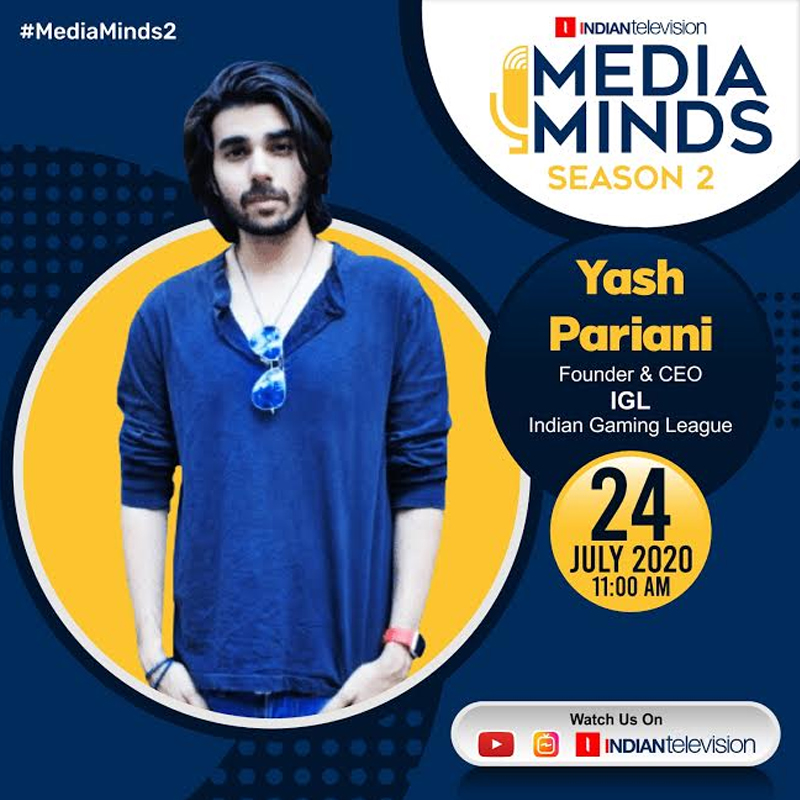
    #MediaMinds2 | IGL founder-CEO Yash Pariani talks about evolving e-sports ecosphere in India

    NEW DELHI: Covid2019 turned out to be a rather interesting and better time for the e-sports ecosystem, leading to large jumps in user numbers as well as tournament viewership and Yash Pariani’s Indian Gaming League was one of the beneficiaries there. 

    In the third episode of Media Minds 2, Pariani sits down to talk about how the lockdown led to a rise in the popularity of e-sports and catalysed the way for its further growth, going ahead. 

    Speaking about the same, Pariani shares, “Casual games will definitely see higher traction compared to your expert first-person shootouts or your strategy games; that has got the highest number of traction during the lockdown. Ludo will be number one, second will probably be PubG and followed by Call of Duty. I would say these three games, based on our platforms and statistics have seen the largest growth as well.”

    On his future plans for IGL, Pariani quips, “Eventually, our goal is to have multiple best teams with our roster but for that, we wanted to first identify all the players. So, within the nearby future, we want to ensure that we have multiple tournaments occurring where we are able to give casual gamers a chance to actually prove their worth and climb our leaderboards. Based on that, we will be able to help identify who are the consistent players that are performing better than others and then establish and help those players and curate an international future for them as well, as a career option so that they can take part and represent India in future tournaments.” 

    Watch the complete episode here:

  • Ad fraud: The aftermath of digital advertising

    Ad fraud: The aftermath of digital advertising

    NEW DELHI: In the past four months due to the Covid2019 crisis, customers have been compelled to embrace technology in their daily lives whether it's ordering grocery, food, rapid adoption of OTT, VoD, or games. Hence, leading to an influx in the digital economy. As the adoption of digitisation happens at a large scale, the chances of ad frauds increase and programmatic advertising is no exception. Ad fraud is probably one of the most poignant points of fraud in any industry. Programmatic digital advertising fraud is a deliberate, malicious activity that manipulates with the delivery of ad content and prevents its serving to the targeted audience.

    Xaxis India country lead Bharat Khatri, in a web meet, discussed how ad fraud is denting programmatic advertising in the digital landscape. 

    The general conception about digital advertising is that display ads on digital have a benchmark of viewability around 60-65 per cent in India which means if you’re serving 100 impressions on display ads, only 60 per cent of the ads are being seen.

    Digital has stronger power because digital brands can actually measure which half of the advertising is viewable and which half is not working. Every impression served on digital can be measured on all three aspects – viewability, engagement or the impression served with the audience.

    In today’s context, BAV serves as a key benchmark for buying quality inventory because it gives, ‘human viewable impression’, ‘decreased invalid traffic’, and contextually relevant ad placements.

    Brand safety 

    Brand safety refers to considerations, practices, and tools to ensure that advertising does not appear in a context that is inappropriate for a brand. Digital brings power in terms of brand suitability and brand safety.

    YouTube is one of the channels that come under scrutiny because YouTube as a publisher has a lot of user-generated content. YouTube has a brand safety channel YouTube has partnered with 3rd party tech & data companies to help with brand suitability aspect on YT Videos, Channel factory is one of the partners called the channel factory, it is focused on measuring the role of content, its quality level, safety level, and relevance. Contextual targeting is available on ad-supported by YouTube channels using proprietary guard and graph technology.

    Custom targeting slates can be applied to YouTube ad buys.

    Ad fraud

    Ad frauds mean invalid traffic, which either comes from non-human activity or there are devices that are accessed by humans but controlled by machines.

    Impressions generating from a deliberate activity to stop the proper delivery of ads to the relevant audience at the right time. There are different ways ad frauds are taking place be it human or non- human. Hackers use code to create bots able to take orders from botnet centers. Users unknowingly download and install bot engines on their computers. Bots are instructed to visit premium sites, picking up desirable cookies, and then visit fraudulent sites.

    The highly trafficked fraudulent sites use exchanges and networks to attract advertisers, ads are continuously served to bots, and botnet operators get paid.

    People have also started doing domain spoofing on digital for quite a long time

    Viewability

    MRC or Media Rating Council is a body that tells about the viewability aspects of the digital. As per MRC if you are running a digital ad, display viewable impressions are counted if at least 50 percent of pixels on screen for one continuous second. Video viewable impressions are counted if at least 50 percent of pixels are on screen for a continuous second.

    However, as per Group M viewability standards, Display viewable impressions are counted if at least 100% of pixels are on screen for 1 continuous second. Video viewable impressions are counted if at least 100% of pixels are on screen for 50% of the video duration (capped at 15 secs) with sound on.

    An ad that is not viewable has no value. Viewable ad impressions are a measurement of true reach. Optimising towards viewable inventory allows us to sieve out low-quality sellers and buy more efficiently.

    Viewability is all about the type of place you buy, and the pricing you pay to the publisher.

    Follow Tellychakkar for the consumer facing news & entertainment

  • Chinese app ban leads to higher uptake of Facebook, Instagram: Kantar

    Chinese app ban leads to higher uptake of Facebook, Instagram: Kantar

    KOLKATA: In the wake of the government of India banning 59 popular Chinese Apps, Kantar, has released insights on the impact of this ban on consumers’ digital behaviour. The ban came into effect from 29 June 2020. 

    The app-ban impacted platforms with a sizeable following. Given that users were spending hours every week across these platforms, one would have expected to see a dip in the overall time spent online once these platforms were no longer accessible. However, the average time-spent dropped only marginally (-6 per cent), indicating that consumers were switching over to rival platforms much faster than anticipated. 

    Instagram and Facebook saw an immediate increase in engagement. Avg. Time/Day on Instagram more than doubled (2.3X), and Facebook too saw a significant 35 per cent jump in time-spent on the platform with the bulk of this additional engagement being driven by smaller town consumers. Among the youth audience aged below 24 yrs, average time/day on Instagram grew by 35 per cent.

    Sharechat, India’s very own video sharing platform which focuses content around regional languages also witnessed a 2.5X increase in time spent. This has primarily been driven by the younger faction of internet audience (aged below 24 yrs). It has more than tripled (3.4X) its average time/day on Sharechat since the ban came into effect.

    The most impressive gain was seen on YouTube. Already the most popular digital video platform in the country, it saw a further 25 per cent increase in time-spent. Other players also enjoyed their fair share of the rise in engagement levels. Hotstar, India’s leading video OTT player saw its daily time spent grow by over 25 per cent. Time spent in the video OTT space grew by 40 per cent overall once the ban was imposed.

    Summarising the learnings, Kantar vice president (Insights) Akhil Almeida said, “Although consumers lost access to some of their favourite short-form video sharing apps, the bulk of consumers switched over to alternate platforms in an almost seamless manner. We saw that overall time-spent online was not as strongly impacted as one might have expected, given the size and scale of the affected platforms.” 

  • TikTok ban to see influencer spillover onto YouTube & social spaces

    TikTok ban to see influencer spillover onto YouTube & social spaces

    KOLKATA: The recent ban on Chinese social media platform TikTok in India sent shockwaves across the country's TikTok community. The platform, which leverages viral, user-generated content, has more than 120 million users as recorded in June 2020.

    TikTok has emerged as a viral phenomenon in India, providing the power of digital content creation and virtual stardom to many in India. The country is also the largest market for the app outside China. Currently, TikTok influencers command a sizeable following, benefitting from lip dub, stunts and quickie content on the short video format platform.

    "The TikTok ban will lead to a boom in influencers and viewers onto other video-based platforms and homegrown competitors. We at Bisbo India, expect a surge in influencers and viewers to hit YouTube, Instagram and Sharechat," explained Bisbo India founder and creator Shakir Ebrahim.

    "TikTok works because of its short content length. Recently, TikTok users had begun working with informative and educative content (including explainers). I look forward to how they'd synergise their short video sensibilities to YouTube," he added.

    Ebrahim also talked about how the ban on TikTok would fuel similar, homegrown startups. "TikTok had hooked its specific junta. Platforms like Mitron, Chingari or Roposo would be an easier adjustment for them."

    This is not the first time the app has faced public ire and legislative action. India had banned the platform in April 2019, when an Indian court ruled that the app could expose children to sexual predators, pornography and inappropriate content. TikTok had successfully appealed against the move, convincing the court it had taken steps to safeguard against such dangers. However, recently it has clarified that it is not going to take any legal route.