Tag: YouTube

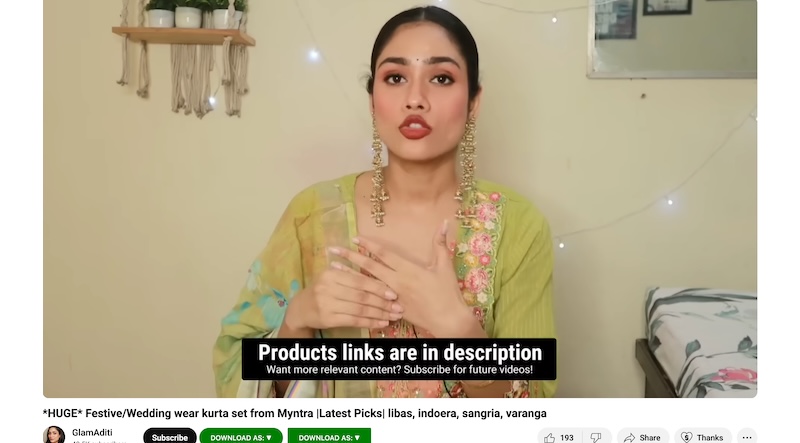
  • YouTube adds Nykaa and Purplle to shopping affiliate programme as beauty commerce booms

    YouTube adds Nykaa and Purplle to shopping affiliate programme as beauty commerce booms

    MU7MBAI: YouTube is turning beauty tutorials into storefronts. The video platform has added Nykaa and Purplle to its shopping affiliate programme, expanding creators’ ability to monetise content as shopping-related watch time in India jumps 250 per cent year-on-year.

    The move doubles down on beauty and lifestyle, a category where 89 per cent of Indian shoppers say YouTube helps them make confident purchase decisions. Creators enrolled in the programme can now tag products from Nykaa and Purplle alongside existing partners Flipkart and Myntra, earning commissions when viewers buy.

    More than 40 per cent of eligible creators in India have signed up since the programme launched a year ago, tagging products in over three million videos. Over 200 million logged-in users in India have made shopping-related searches on YouTube, creating what the platform calls a “complete monetisation ecosystem”.

    “The next era of video commerce is already being defined by India’s vibrant creator economy on YouTube,” says YouTube India managing director Gunjan Soni. “We are scaling content-driven shopping from a successful programme to a complete monetisation ecosystem.”

    YouTube is sweetening the deal with artificial intelligence tools that automatically tag products the moment they’re mentioned in videos, capturing viewer interest at its peak. The platform will also test automatic product identification later this year.

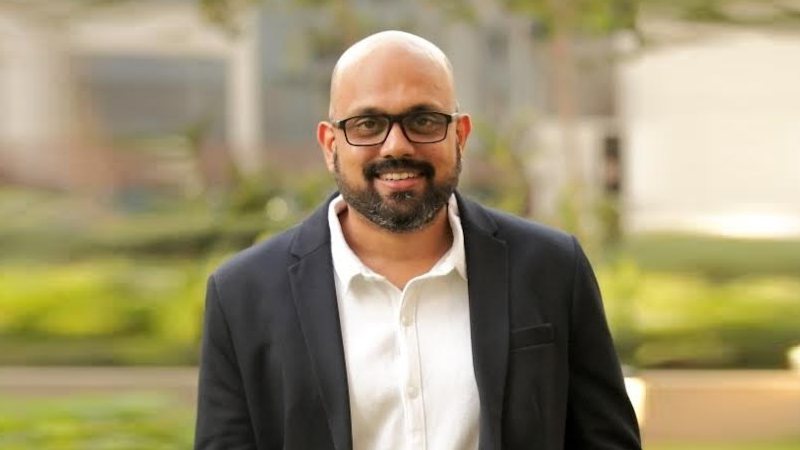
    Flipkart vice president of growth and marketing Pratik Arun Shetty, frames the partnership as commerce meeting creativity. “India’s creator economy is transforming how people engage with brands,” he says. Myntra reports creator collaborations have grown threefold in the past year, whilst Nykaa positions itself as a pioneer in content-led commerce.

    YouTube is also rolling out tools to make brand deals more lucrative: a flexible format for inserting and replacing sponsored segments, links to brand sites in Shorts, and a Creator Partnerships Hub inside Google Ads to connect advertisers with influencers.

    It’s a bet that authenticity converts. Whether creators cash in or merely chase clicks will depend on whether viewers trust recommendations—or just skip to the comments.

  • Applause’s Sameer Nair spills the secret sauce for hit storytelling

    Applause’s Sameer Nair spills the secret sauce for hit storytelling

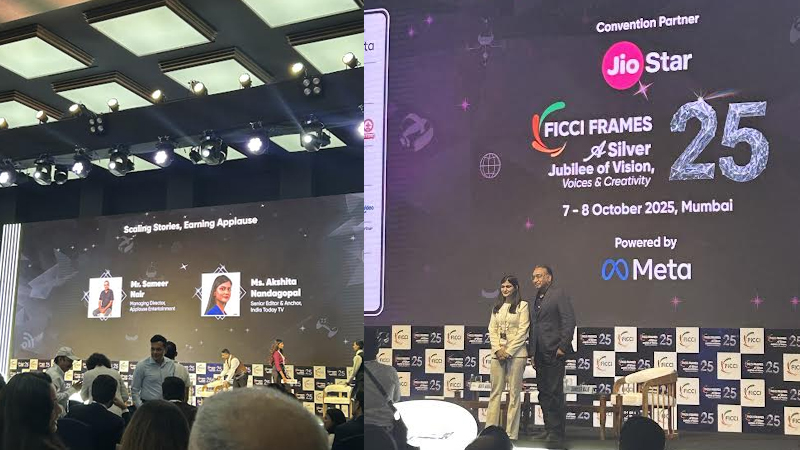
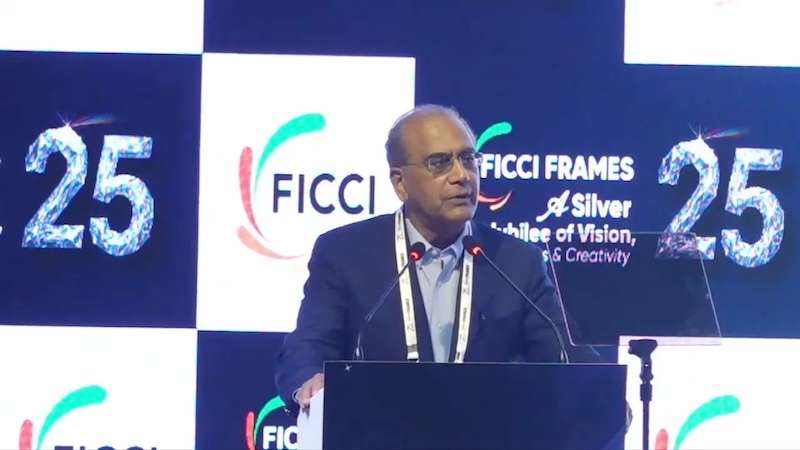
    MUMBAI: At Ficci Frames’ silver jubilee edition, a candid panel discussion between Applause Entertainment managing director Sameer Nair and India Today senior editor and anchor Akshita Nandagopal, brought the house down with humour, insight and a healthy dose of industry nostalgia.

    Moderating the fireside chat ‘Scaling stories, earning applause,’ Nandagopal kicked off by asking if Applause Entertainment had cracked the “OTT code,” given its slate of acclaimed shows like Criminal Justice (2019-present), The Hunt (2025) and Black Warrant (2025).

    Nair brushed off the idea of any secret formula. “Storytelling is a difficult enterprise,” he said. “You put in all the hard work and finally show it to an audience, sometimes they love it, sometimes they don’t. What we try to do is tell stories that feel real, even if they entertain first.”

    Citing his fondness for contemporary history, Nair explained how Applause often draws inspiration from real people and events, and banks on the entertainment factor. Black Warrant, he pointed out, isn’t about the dark underbelly of the Tihar Jail and the inmates as much as it is about “three young people on their first day at work; only, their workplace happens to be the Tihar Jail.” The company’s celebrated Criminal Justice series, meanwhile, has gone far beyond its British and American counterparts. “By the fourth season, we weren’t adapting anymore. We were living in the world of Madhav Mishra,” he said with a grin.

    Continuing the conversation on creativity in Indian storytelling, Nandagopal asked Nair, “Creativity is always a buzzword, but sometimes it feels boxed in a certain way. You can’t talk about uncomfortable topics; you have to be mindful of controversy and what entertains an Indian audience. Do you think creativity is constrained like that?”

    Amusedly, Nair interjected, noting that this isn’t unique to India. “In the eight years we’ve been doing this, we haven’t really got into much trouble, so we must be doing something right. We don’t have an agenda; we’re telling stories that make you think, but not what to think. We find compelling characters, research their worlds, and present their stories as balanced and entertaining as possible. They are people like you and me.”

    He brought up The Hunt as an example, which begins with the assassination of Rajiv Gandhi but quickly transitions into a police procedural. “It’s not about politics; it’s about crime and justice… In the process, you get to know the characters. There’s one scene where Sivarasan, the one-eyed LTTE mastermind, sits in a theater watching a Rajnikanth film. We loved putting that in, it humanises him without glorifying anything.”

    When Nandagopal brought up the theme of change, both broadly and through the lens of content, Nair noted how some formats have stood the test of time. “KBC is a classic because it has a great format and Mr. Bachchan,” he said, crediting both star power and familiarity for its relic appeal. “Audiences talk about change all the time, but they also love familiarity. Sometimes you don’t want a murder mystery; you just want to relax.” To which, Nandagopal nodded and said, ‘It’s a comfort watch. A lot of us do that. We’ve been watching a lot of the classics that we’ve seen before. Knowing that that’s something that’s predictable. We know what we’re expecting there. And yet we love to watch it.

    Looking back at the first Ficci Frames two decades ago, Nair painted a vivid picture of how dramatically the industry had evolved. “In 2005, television ruled everything. There was no Facebook, Twitter or Youtube, even the iphone didn’t exist. By 2015, digital platforms had become the barbarians at the gate. Now, in 2025, we’re minor players compared to Netflix, Youtube and social media. And just as we adjusted to that, AI arrived.”

    The conversation soon turned to the elephant in every creator’s room: will AI replace creativity or enhance it? Nair’s reply was measured. “AI will be a great tool if it can create that suspension of disbelief,” he said. “When you see a dinosaur chasing you in Jurassic Park, you believe it. If AI can make you believe without breaking the illusion, it’s magic. But if it looks fake, we might as well be watching animation.”

    He added that AI, much like earlier leaps in filmmaking, from special effects to computer graphics, would revolutionise the process but not erase human creativity. “Even an AI actor needs direction, a script and a story,” he said. “If machines create everything end to end, without human emotion, we’ll just be watching something intelligent but soulless. We must use it wisely.”

    As the conversation veered back to Applause’s future, Nair revealed that the company has recently acquired the rights to Jeffrey Archer’s books and has a robust slate of upcoming projects. Upcoming projects include new seasons of Criminal Justice and Black Warrant, the next installment of the Scam franchise, and a Tamil feature Bison directed by Tamil director and screenwriter Mari Selvaraj. He also teased Gandhi, a three-season epic inspired by Indian historian and author Ramachandra Guha’s books. “It’s not about Gandhi,” Nair chuckled and said, “it’s about Mohandas before he became the Mahatma: an 18-year-old who goes to college in London, and does all the standard things that rebellious teenagers do.”

    For Nair, storytelling remains deeply human: an approach that has shaped Applause Entertainment’s diverse slate, from thrillers rooted in true events to expansive biographical dramas.

    In a world where algorithms and art are learning to coexist, it’s a fitting reminder that great storytelling, no matter the medium, will always find its audience.

  • AI transforms storytelling as FICCI FRAMES sparks a creative dialogue

    AI transforms storytelling as FICCI FRAMES sparks a creative dialogue

    MUMBAI: Artificial intelligence didn’t just enter the chat, it rewrote the entire script. At FicciFrames 2025, the session The AI-Powered Media Revolution brought together some of the sharpest minds shaping India’s digital future. What unfolded was not just a tech talk, but a lively, layered dialogue on how AI is blurring the lines between human creativity and machine intelligence.

    Moderated by NDTV’s Abira Dhar, the panel featured Kamolika Gupta Peres, vice president at Autodesk; Shweta Bajpai, director of global business group at Meta India; Bharath Ram, CEO of JioStar; and Siddharth Shekhar, director of Youtube and partnerships at Google India. Together, they painted a compelling portrait of an industry in flux, one that’s shifting from “lights, camera, action” to “data, algorithm, imagination.”

    Bharath Ram opened with a distinctly Indian optimism. “India doesn’t just adopt technology, it adapts it,” he said, highlighting how JioStar’s AI innovation is home-grown and hyperlocal. “Our teams think in Hinglish, dream in code, and build for Bharat.” With AI now powering recommendation engines, dubbing tools, and predictive analytics, he said the focus is on making tech intuitive for every kind of viewer from rural smartphone users to urban binge-watchers.

    Meta’s Shweta Bajpai brought the creator’s perspective, describing AI as “the invisible hand that now guides discovery.” Over 50 per cent of what users see on Instagram today is AI-recommended, she shared, adding that engagement time is up by 7 per cent on Instagram and 6 per cent on Facebook. “It’s not just about clicks anymore,” Bajpai said. “It’s about chemistry between people and the content they didn’t even know they wanted.” She noted that thanks to AI, small-town entrepreneurs and regional creators are finding audiences that once felt unreachable. “Creators from Surat, Kochi, and Indore are building national fandoms powered by algorithms that understand local flavour.”

    Google India’s Siddharth Shekhar widened the lens, calling AI “the great equaliser” for India’s next billion users. “Technology can’t just be smart, it must be inclusive,” he said. Google’s partnership with the Maharashtra government, using AI to improve agriculture, education, and healthcare outcomes, exemplifies that mission. He also revealed that YouTube has paid Indian creators over Rs 21,000 crore in the past three years, a staggering indicator of how the creator economy has matured. “Every vlogger, musician and stand-up comic is now a micro-entrepreneur,” he said.

    Autodesk’s Kamolika Gupta Peres brought an artist’s insight into the mix, describing how AI is democratising design. “Today, a student in Nashik with a laptop can create visuals that once needed an entire studio,” she said. AI tools, she explained, are not replacing artists but accelerating their ideas. “It’s like having an assistant who never sleeps and never runs out of coffee.”

    But amid all the tech euphoria, the panel didn’t ignore the elephant in the algorithm ethics. Deepfakes, misinformation and bias in machine learning models were hot topics. Shekhar noted that Google’s SynthID watermark system helps label synthetic or AI-generated content, a key step towards building public trust. Bajpai added that Meta now tags AI-generated posts and allows users to flag potential fakes, a move designed to balance creativity with accountability.

    As the discussion veered towards the emotional limits of AI, Bajpai dropped a memorable line: “AI understands patterns; humans understand irony.” The audience chuckled, but the point stuck creativity still needs a pulse. Peres echoed that sentiment, reminding the room that technology is a tool, not the tale. “AI can help tell stories faster, but the human imagination still gives those stories heart,” she said.

    The conversation turned lively again when Dhar jokingly asked whether AI might someday win a Filmfare Award. Ram was quick to reply, “Only if it learns how to deal with Indian censorship!” Laughter rippled through the room, but behind the humour lay a serious undertone the growing need to rethink content regulation in the AI era.

    As Ficci Frames marked its 25th year, the panel felt symbolic, a moment where India’s creative and tech powerhouses came together to imagine the next quarter-century. From scriptwriting bots to personalised ad targeting and real-time dubbing, AI is already changing how entertainment is produced and consumed.

    Still, as Shekhar concluded, “The future of storytelling will be co-written part human, part machine.” Or as Dhar signed off wryly, “If my phone starts recommending my next question, I’ll know AI has truly taken over.”

    From boardrooms to bedrooms, algorithms are now the new auteurs. And if FICCI Frames 2025 proved anything, it’s that the story of Indian media’s future just like AI itself has only begun to write its first draft.

  • India’s news industry is eating itself, warns veteran publisher

    India’s news industry is eating itself, warns veteran publisher

    MUMBAI: Fifty years in the media business buys you the right to speak bluntly. Aroon Purie exercised that right at Ficci Frames 2025 in Mumbai, delivering a blistering critique of India’s news industry—an ecosystem he says is simultaneously massive, unprofitable and increasingly compromised.

    The numbers are staggering. India has over 140,000 registered publications, 375 twenty-four-hour news channels (with more in the pipeline), and a broadcasting industry employing 1.7 million people. Delhi alone wakes up to dozens of English and regional newspapers daily. No other country comes close to this scale. Yet 99 per cent of news channels lose money.

    The problem, Purie argues, is structural. India’s news industry runs on what he calls “raddi economics”—newspapers priced so low that readers profit from selling them as scrap. Broadcasters pay cable operators carriage fees just to reach viewers, a practice that persisted even after digitisation. The Telecom Regulatory Authority of India’s price controls strangle market forces, treating cable television like wheat or rice. “The government has made a mess of the broadcasting industry due to lack of foresight and regressive policies,” Purie said.

    Worse still is the funding model. With consumers paying next to nothing, advertisers bankroll nearly the entire industry. “When journalism’s survival depends almost entirely on advertising from corporations and governments, its independence is under a constant threat of compromise,” Purie warned. The hand that gives can also take away.

    Enter what Purie calls “billionaire news channels”—industrial houses launching news operations not as businesses but as tools for influence and access. They have deep pockets and no profit motive, destroying economic models for legitimate players. “Their entrance makes the public believe that every channel is a mouthpiece for a vested interest,” he said. It’s the only business, Purie noted drily, where the industry loses money yet people queue to enter it.

    Digital promised salvation but delivered more of the same. Publishers chased scale and eyeballs, giving content away for free. Google, Facebook, YouTube and Twitter became the world’s “new editors-in-chief”, controlling distribution and monetisation whilst producing no journalism. They hoover up over 70 per cent of total media revenue—digital advertising now claims 55 per cent of all ad spending—leaving crumbs for actual newsrooms. The algorithm rewards outrage and virality, not depth or accuracy. “Newsrooms that once invested in reporters now have to invest in SEO specialists,” Purie said.

    Artificial intelligence poses the next existential threat. AI can scrape, synthesise and regurgitate news without credit or revenue, summarising five articles into one paragraph. “What happens to the original news organisations—the ones who pay reporters and fight court cases—when our content is scraped?” Purie asked. It’s a question the industry is only beginning to grapple with.

    Purie, whose India Today Group reaches 750 million viewers, readers and subscribers, doesn’t claim to have all the answers. But he’s clear about the solution’s shape: stop apologising for journalism’s value, innovate business models, and persuade audiences that credible news is a public good with a price. “A subscription is not just a transaction; it’s a vote for the kind of media you want to exist,” he said.

    After five decades navigating disruption—from print to television to digital to AI—Purie’s diagnosis is stark. The old models are broken, the new gatekeepers ruthless, and professionally generated content under siege. Yet he remains defiant. “Disruption is not the enemy, it’s the new normal,” he said. “The real question is, do we have the courage, imagination, innovation, resilience and integrity to seize it?”

    Whether India’s news industry can answer that question may determine the health of its democracy. No pressure, then.

  • Spykar and Vidyut Jammwal stitch together stories in new podcast drop

    Spykar and Vidyut Jammwal stitch together stories in new podcast drop

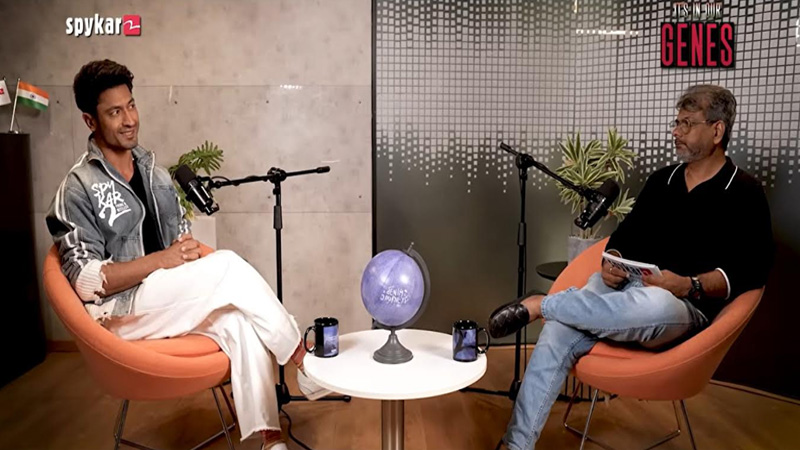
    MUMBAI: Looks like Spykar is weaving more than denim, it’s stitching together stories worth listening to. The homegrown fashion brand has dropped the second episode of its podcast series, It’s in our jeans, featuring actor and martial artist Vidyut Jammwal in an unfiltered, heart-to-heart chat with Spykar co-founder and CEO Sanjay Vakharia.

    Following the success of its debut episode, the series continues to celebrate Indian grit, creativity, and ambition through candid conversations. In this latest instalment, Vidyut takes listeners on a journey through his modelling days, film career, and Hollywood debut: all while reflecting on failure, discipline, and the art of staying grounded.

    “It’s always a pleasure speaking with Vidyut, and sharing our camaraderie with the world through this podcast was truly special,” said Vakharia. “His discipline and energy are infectious. This episode offers a deep dive into his life and mindset that’s sure to inspire many.”

    Fittingly recorded at Spykar’s stylish corporate headquarters, the episode captures the brand’s authenticity and the actor’s raw honesty. Jammwal fondly recalls his first big modelling campaign for Spykar itself calling it a full-circle moment. “Imagine going from modelling for a brand to acting, and then endorsing it again. That’s an achievement,” he said.

    On failure, he offered a striking perspective: “The difference between a student and a master is that the student fails a few times, but a master fails a zillion times. I don’t see failures as failures. Nothing in my life has gone my way and thank god for that.”

    With new episodes dropping every fortnight, ‘It’s in our jeans’ continues to bring India’s finest voices to the forefront. The podcast is streaming on Spotify, Youtube, and Apple podcasts, making it easy to tune in wherever you are.

  • Philips hits the right note with Sanya Malhotra in festive light-up campaign

    Philips hits the right note with Sanya Malhotra in festive light-up campaign

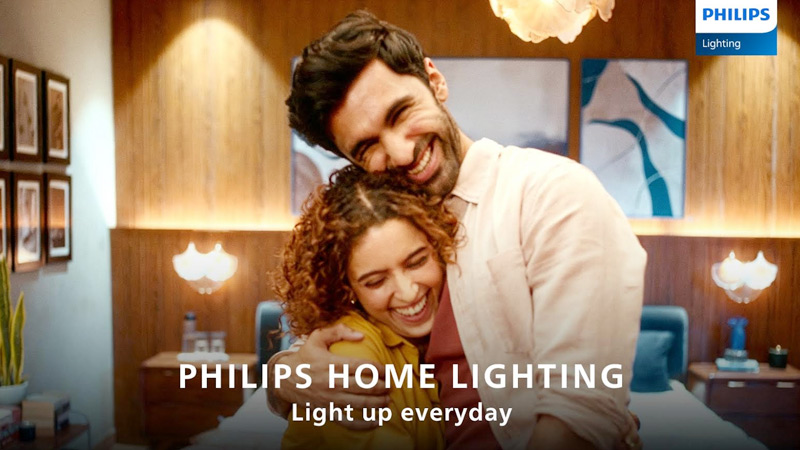
    MUMBAI: When the beat drops and the lights glow, the vibe is pure celebration. This festive season, Signify (Euronext: Light), the world’s leading lighting company, has rolled out its new campaign starring actor and brand ambassador Sanya Malhotra, putting the spotlight on Philips Smart and Deco lighting.

    Titled Light Up Every Day, the campaign taps into the way Gen Z is remixing festive traditions pairing classic tunes with ambient lighting, and turning their homes into mood boards of music, light and joy. The film follows a young couple vibing through the day, where lighting doesn’t just brighten spaces but becomes an extension of self-expression.

    “With Gen Z fast becoming significant buyers of premium products, the campaign reflects their demand for personalisation, mood-setting and experiences,” said Signify head of marketing for strategy govt. affairs and CSR Nikhil Gupta. “Through lighting, we’re not just enhancing spaces, we’re shaping moods and memories.”

    Sanya Malhotra echoed the sentiment: “Festivals have always held a special place in my heart. Light sets the mood, expresses style, and creates lifetime memories. That’s why I’m so excited to be part of this campaign with Signify.”

    The campaign goes beyond screens too. With 500 plus lighting designs spread across 300 plus Philips Smart Light Hubs in India, consumers can step into experiential spaces to explore setups, get expert recommendations and discover how smart lighting transforms their homes.

    Shot with actor Rohan Gurbaxani, choreographed by Karishma Chavan and set to music by Aman Pant, the film pulses with energy, curated by creative agency FCB Kinnect. It will shine across Youtube, Instagram, Facebook, OTT platforms and social media throughout the season.

    By fusing sound, style and smart design, Signify makes a simple promise: when light matches your vibe, every day is a festival


  • Animeta’s star power turns influence into real business currency

    Animeta’s star power turns influence into real business currency

    MUMBAI: When influence meets intelligence, the result is Animeta Brandstar’s latest winning streak. The tech-data enabled influencer marketing firm has been scripting campaigns that don’t just trend, they translate into measurable brand outcomes.

    Take Uber India’s campaign with cricket stalwarts Gautam Gambhir and Ravichandran Ashwin. Known for their stern on-field personas, the duo were reimagined in playful avatars, highlighting how Uber flips daily commutes from frustrating to delightful. Animeta managed the marquee talents and execution, sparking chatter across social feeds and proving its knack for stitching stars into relatable, mass-consumption narratives.

    And that’s just one play. Since July 2025, Animeta has rolled out 30 influencer campaigns, activating 1000 plus creators across Instagram, Youtube and Snapchat. In the same period, it has partnered with 20 new brands, while also retaining repeat mandates from stalwarts, a testament to its consistency.

    The roster spans global giants like Amazon Fashion, Starbucks, Warner Music and Uber, alongside homegrown champions such as GCPL and Jyothy Labs, whose everyday staples Cinthol, Maxo, Margo, Exo and Pril have been re-energised through creator-driven storytelling.

    Animeta also helmed influencer rollouts for fresh launches: Shotgun, Fratelli’s carbonated wine label; Ninja, GCPL’s pet food brand debuting in Chennai; and Reposenergy, a doorstep fuel delivery entrant making waves in a nascent category.

    At its core is the Animeta Brandstar platform, which powers creator discovery from a verified pool of 85,000 plus profiles, minimises spillovers, and tracks campaigns in real time. Performance isn’t just judged on reach but also advanced metrics shares, saves, click-throughs and trials linking influencer buzz directly to consideration, leads and even sales. The result: a 30 per cent ROI uplift compared to industry benchmarks.

    “Influencer marketing today is no longer just about amplification, it’s about authenticity, storytelling, and business outcomes. At Animeta, we take pride in servicing diverse categories and partnering with brands at every stage whether they are global leaders, homegrown stalwarts, or ambitious challengers. What sets us apart is our ability to consistently deliver across objectives, from awareness to trials, leads and even creator-led commerce,” said Animeta Brandstar SVP for branded content & creator strategy Biswamitra Ray (Vishu Ray).

    From scaling pop culture with Arijit Singh, Ed Sheeran and Guru Randhawa, to onboarding micro- and nano-creators for hyperlocal impact, Animeta has shown it can flex seamlessly across the spectrum.

    Looking ahead, the company is doubling down on its promise to unlock full-funnel influencer marketing. As advertisers increasingly demand conversion-driven storytelling over vanity metrics, Animeta is positioning itself as the partner that blends data, cultural relevance and creator firepower into campaigns that both trend and transact.

  • Mipcom 2025: Glance to crack the code on what audiences actually want

    Mipcom 2025: Glance to crack the code on what audiences actually want

    PARIS: In a media landscape where Netflix and YouTube hoover up nearly half of all US streaming hours, knowing what audiences want isn’t just useful—it’s survival.

    Glance, the TV and video market intelligence outfit, will lay bare the winning formulas at Mipcom Cannes 2025 next month, drawing on audience data from more than 120 territories to answer the industry’s most vexing question: who’s watching what, how and why?

    Frédéric Vaulpré, senior vice-president, and Maryam Ramassamy, international research director, will lead the session on 13  October, tackling how content creators can stand out as linear TV withers and streaming platforms multiply like rabbits.

    The presentation will dissect BVoD strategies including TF1+’s digital ad revenue surge, and explore the curious phenomenon of “co-petition”—traditional broadcasters cosying up to the very streaming giants eating their lunch. With advertisers fixated on the golden 25-49 demographic and revenues under pressure, the old rules no longer apply.

    Glance will showcase how hyper distribution—flinging content across AVoD, Fast, SVoD and linear channels simultaneously—often trumps exclusivity. The session will also examine how content is tapping into geopolitical anxiety, evolving gender norms and early-2000s nostalgia, whilst high-concept formats embrace AI and other shiny new tech.

    “The media landscape is more fragmented than ever, yet the need for precise audience intelligence has never been greater,” said Vaulpré.

    Ramassamy added: “Our industry is trying to cope with a fundamental change in how audiences consume TV, in both substance and form. The storytelling needs to be closer to audiences’ current state of mind.”

    Glance, part of Médiamétrie, delivers official ratings for more than 7,000 channels and works with over 100 data providers and 230 major broadcasters, streaming services and production studios worldwide. The Paris-based firm employs over 700 people and notched  a turnover of €103.5m in 2024.

    The session takes place at 9 am on 13 October in the Grand Auditorium at the Palais des Festivals.

  • Oneplus launches ‘light a light, plant a plant’ with Jackie Shroff this Diwali

    Oneplus launches ‘light a light, plant a plant’ with Jackie Shroff this Diwali

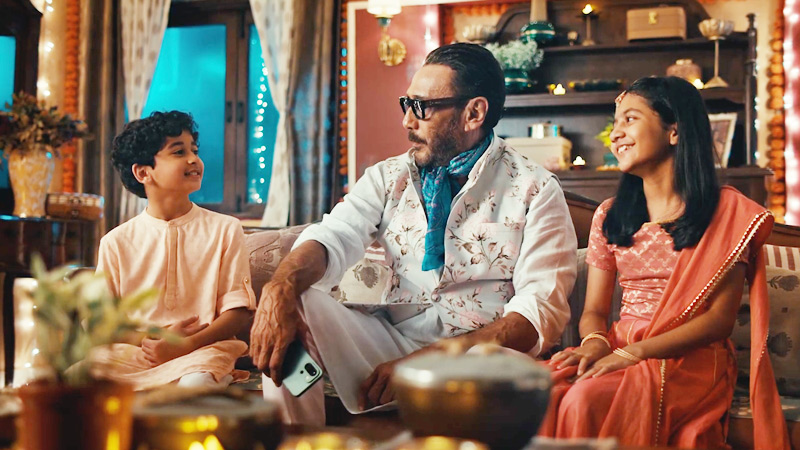
    MUMBAI: This Diwali, Oneplus is lighting up homes and green spaces alike. The brand has unveiled a heartfelt campaign titled “light a light, plant a plant”, collaborating with actor Jackie Shroff and his NGO, JK Foundation, with a commitment to plant 1 lakh trees across India.

    The campaign encourages communities to celebrate the festival of lights while contributing to a greener future. The hero film delivers a simple yet powerful message: as we illuminate our homes, we can also plant a plant. It reflects Oneplus’s belief that technology and sustainability can go hand in hand: mirroring the clean and fast experience of Oxygenos with the brand’s commitment to cleaner air and healthier cities.

    This initiative continues Oneplus’s eco-conscious journey, building on its 2019 campaign that saw 20,000 trees planted. Plantations under this campaign will prioritise native species and ongoing care, with periodic updates shared with the Oneplus community.

    Commenting on the campaign, Oneplus India director of marketing Ishita Grover said, “Our campaign is a heartfelt celebration of joy and a brighter, hopeful future. By sharing the spirit of giving and togetherness, we hope to spark a movement where celebration and a greener future go hand in hand.”

    Conceptualised in-house and directed by OML (Only Much Louder), the ad film is live across Youtube, Instagram, Twitter, and Facebook, bringing the festive spirit and a message of sustainability directly to audiences nationwide.

  • Dexter decodes Youtube moments as VDO.AI replays the adtech playbook

    Dexter decodes Youtube moments as VDO.AI replays the adtech playbook

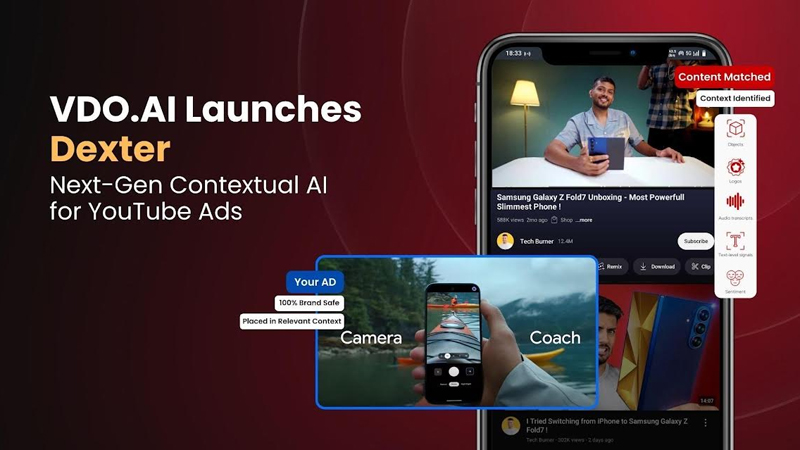
    MUMBAI: Ads are finally getting smarter than the “skip” button. VDO.AI has unveiled Dexter, a cutting-edge contextual intelligence solution that promises to transform Youtube advertising by reading video content the way a human would only faster. Billed as the future of contextual advertising, Dexter can scan scenes, audio, transcripts, objects and even sentiment to ensure ads appear at precisely the right moment. That means your luxury resort spot could play after a cinematic drone shot of a Ferrari, never before a violent fight sequence.

    VDO.AI co-founder and CTO Arjit Sachdeva explained, “Dexter is built to read video content the way a human would, understanding visuals, audio, sentiment, and context at scale. It is this human-like intelligence, applied with machine speed, that sets a new benchmark for contextual advertising on YouTube. Early partners using Dexter have already seen 40–60 per cent higher performance across view-through rates, recall, and conversions. These results demonstrate that contextual intelligence, when applied at scale, is not just the future of advertising, but a growth driver for businesses today.”

    The promise is not just precision, it’s protection. By keeping brand ads clear of unsafe or unsuitable content, Dexter tackles one of the industry’s biggest headaches: maintaining brand safety while delivering engagement at scale.

    VDO.AI chief business officer Akshay Chaturvedi elaborated, “Dexter’s advanced AI engine analyses video content with unmatched precision, reading every contextual signal to create perfect advertising moments. When a viewer is engaging with luxury car content, Dexter will intelligently serve an ad for an exclusive resort getaway or a luxury handbag while ensuring your brand ad never appears alongside inappropriate content like violent footage. This powerful combination of contextual intelligence and brand safety allows brands to reach audiences when they’re most engaged and receptive, driving meaningful connections that translate into measurable business impact.”

    Now rolled out globally, Dexter marks a significant expansion of VDO.AI into Youtube’s ad ecosystem. It’s the culmination of years of AI research and development, placing the company firmly at the forefront of contextual advertising innovation.

    With brands increasingly demanding precision targeting and brand safety, VDO.AI is betting that Dexter can become the industry’s new secret weapon turning what was once guesswork into smart, context-driven placements that boost both trust and conversions.

    For Youtube viewers, it might mean the ads finally make sense. For brands, it could be the difference between being tuned out or remembered.