Tag: YOGESH RADHAKRISHNAN

  • “Ad cap should have been restricted to only pay channels”: Yogesh Radhakrishnan

    “Ad cap should have been restricted to only pay channels”: Yogesh Radhakrishnan

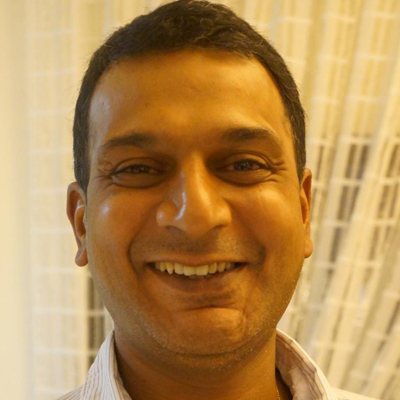
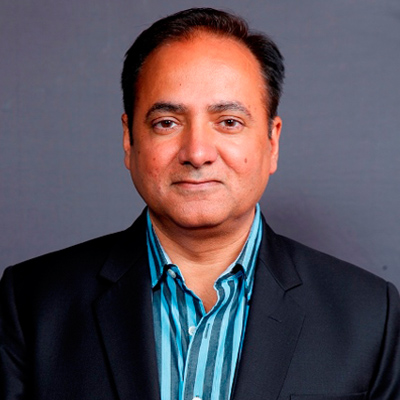
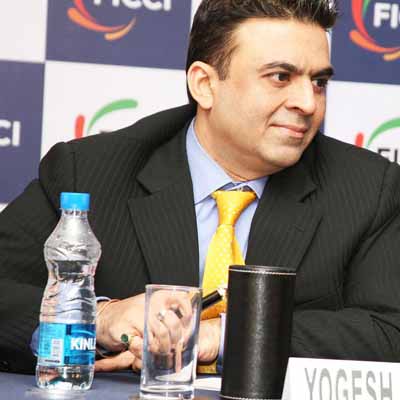
    A veteran in the cable TV industry, someone who dabbled in the sector almost three decades back, Yogesh Radhakrishnan, now the MD and CEO of Pioneer Channel Factory, has seen the sector grow from the scratch.


    Known for setting up businesses, Radhakrishnan has been the man behind building IndusInd Media and Communication Limited, ETC and ETC Punjabi, rejuvenating Zee Cinema, setting up Zee Middle East, launching the first HD movies channel with Times Television Network – Movies Now and the first HD music channel – MTunes.


    Radhakrishnan, who has seen the sector emerge from a mere video-tape business to entering the digital era, talks to Indiantelevision.com’s Seema Singh about the emergence of cable TV in India, the first satellite channel, the emerging music sector and more…


    Excerpts:


    How did you get into the cable industry? How was the sector then? Why did you move out of it?


    In an era when the only form of entertainment was Doordarshan, I was fascinated how it could capture loyal viewership despite old, dusted black and white movies they telecast. I sensed that if people were given the option of better quality of movies on their own TV sets without the hassle of VCR or cassette which was prohibitively expensive there would be a huge demand for it. Thus was born the idea of launching cable TV in India. However re distribution of home video cassettes was illegal so in the year 1988, I pioneered the launch of India’s first copyrighted cable content with my three other partners under the brand name Cable Master. This gave the entire cable TV trade a flip and a legal straw to hold on to as the Government was yet to announce licensing policy for cable TV operators.

    In the next stage of evolution from cable to satellite TV, in the year 1992, we were all geared to launch a channel but lost out the lone transponder on Asiasat 1 to Zee. Those were the days  of quotas and licence raj and we had to partner with an established business house to do business in India.


    At that time the Hinduja group was on the verge of launching IndusInd, and so we partnered with them to create a media division and that is how the IndusInd Media Communications was created as a joint venture.

    Incable emerged to be the largest consolidator at that time to bring in the economies of scale in a city like Mumbai which had more than 8000 cable operators. We were the biggest players across most of the states in the country.

    Under IndusInd, we launched India’s first cable channel In Mumbai and a 24 hour movie channel CVO.

    Recognising the strength of ground distribution that our company had, we got many offers for joint ventures from the likes of HBO, Time Warner Cable, TCI etc. A huge multi million dollars offer from Rupert Murdoch didn’t go through due to valuation differences between the Hinduja’s and News Corp.


    In 1997, the cable industry got into a turmoil and that was the day I decided to move out of cable.


    You went on to launching ETC which you later sold to Zee? What’s the story behind that? How did Movies Now and the distribution venture with BCCL happen?

    In the year 1998, the concept of a 24 hour music channel was a need I saw and that is when I launched ETC, a channel focusing on new releases, as has been established nowadays the exposure of songs on TV plays a big role in the box office success of a film. ETC became the number one Hindi music channel followed by MTV, which was then a Hinglish channel.


    ETC was the second listed company after Zee and after the successful launch of the channel, we also pioneered the daily live telecast by securing the rights to the telecast of Gurbani from the Golden temple and thus ETC Punjabi was born which went on to become the No.1 Punjabi channel and continues to be in that position till date in its other avatar PTC Punjabi.


    After music and Punjabi channels, we saw the gap for 24 hour Hindi news channel, and that is how ETC News was conceived even before Aaj Tak was launched. But Technology wasn’t in place at that time a camera cost Rs 20 lakh, which today is close to Rs 50,000. Editing equipment, bandwidth for news feeds had to be sourced from DD, all in all, it was an expensive proposition. Hence, a 24 hour news channel had to be put on hold.


    Subsequently in 2002 when we got a good offer from Subhash Chandra, we sold ETC Networks to Zee.


    And then my association with Zee began, which was also an exciting time. I was a partner with Zee Middle East. Subsequently, I went on to build a strong company in Zee Middle East, which till date is one of the strongest markets for ZEEL.


    In 2008, I sold back my equity to Zee and wanted to return back to India where the action really was. Former Times Television Network CEO English channels Ajay Trigunayat, was in Dubai then. We got together with our project to launch India’s first ever English Movie channel in HD.


    I had discussions with BCCL MD Vineet Jain and a JV was formed in 2010 to launch four channels and then we further got into launching a distribution venture together called Prime Connect.


    Movies Now was one of most successful TV channel launch. It went on to becoming the No. 1 channel in the first week of its launch. Finally, in 2012, I exited the company by selling my equity back to BCCL.


    Then you moved on to setting up Pioneer Channel Factory? How is MTunes doing?
     

    Following the trend of people wanting to go to multiplexes for the pleasure of enjoying quality production of Hindi cinema and their desire to watch songs in its full glory, I set out to launch MTunes, india’s first Bollywood music channel in HD on the premise of Bollywood music like never seen before. Our songs were carefully selected to ensure they lived up to the channel premise.
     

    Acknowledgement from advertisers came as we got many campaigns exclusively on our channel due to its HD premise. Today, MTunes delivers far greater HD audiences than English movie, entertainment or even sports for that matter.


    Our second music channel Music Express resonates well with the industry, we package music with Glamour and Gupshup. Bhakti Sagar is our foray into the spiritual space.


    How will digitisation help the music channel industry?

    In analogue what was important was opportunity to see (OTS). In digital, all the channels are blocked in one category. The advantage for us is that we are in HD and so we got the advantage of the four million eyeballs. Our reach is good in HD and we are also available on SD. So for our advertisers it is a win win situation.


    How big is the music channel industry currently?


    If you take 14 music channels on an average, advertising and promo put together, we would be around Rs 700-Rs 900 crore.


    Unless and until you can differentiate yourself, you will not be able to grow majorly. If you see the broadcast business, be it GEC, sports or music, it’s very unfortunate that you are operating in the world’s cheapest advertising market (CPT) and cheapest pay TV market and this growth is slow.


    What is your take on music channels turning into youth general entertainment channel? Are you looking at foraying in the youth space?
     

    No way. It is a lovely genre to be in and is growing. Youth programming will drive this market to a large extent.


    But I don’t look at great economics that really works in any GEC space, unless and until there is good subscription that one is getting. If you strip off the subscription from all these channels and make them play pure advertising driven GECs I think each of them will lose money.


    Where do you see the music channel industry heading, considering music is easily available, you think there is still a market for music channels?

    Linear television will always have its market. Music will continue to be in a market where there is a television population which is very huge. There are a lot of people who watch content online and for them we are present online. There is still a large market and it will continue to be that way.


    Television is larger than life, especially music channels like MTunes which is very current and new and which plays new music and promos and that is what people look forward to rather than online where you need to make searches for content, while here content just keeps flowing.


    Why did music and news channels not follow 10+2 ad cap?


    US is such a free market and FCC is very strict in terms of regulation, but they do not have an advertising cap. Why should the government intervene on how much of advertising air time one should carry. For a moment Pay channels could be directed but definitely not the FTA channels. And that’s what we argued in the court. In short people will not watch your channel, if you put too much of advertising. So why is it that the government wants to intervene with channels and that too for free to air channels. We are not charging customers any money, its free.


    If we put in excess advertising, anyways our ratings will fall as no one would watch the channel, and that would affect our business.


    Ad cap should have been restricted to only pay channels, as India is the only country, where the pay channels are getting paid from both subscription and advertising.

    Government needs to create level playing field. Currently as independent networks, it is a difficult situation.


    How do you think music channels can start generating more revenue?
     

    Carriage is the biggest drainer. Network channels have the advantage of either not paying carriage or less carriage. Advertising is stuck in the low rate game. Cartelization is a good experiment that we all can get into in order to get decent rates. But, with the plethora of channels available, advertisers have a lot of options.

    It’s not just the music channels, but with new GEC launches, competition is getting tough even in the GEC space.


  • Naresh Ramnath joins Pioneer Channel Factory as COO

    Naresh Ramnath joins Pioneer Channel Factory as COO

    MUMBAI: There was an itch to do more, something bigger. That’s what got Naresh Ramnath to quit his position as vice president of programming at Astro Malaysia and join Yogesh Radhakrishnan’s Pioneer Channel Factory as COO in mid April.


    With two music channels in the pipeline, the company is looking at increasing its portfolio with the first in the line up being a live concert channel that will show recorded versions of live concerts by international rock, pop and jazz bands and later on will also include Indian bands. However, it won’t be restricted to just being a channel but will also be spread as a service.


    “Our main aim will be to create brands that can increase the willingness to pay from viewers, advertisers and operators. Apart from this focus will also be on the digital and OTT platform,” says Ramnath speaking to indiantelevision.com. He added that the company will also be keenly looking at launching other HD channels.


    Ramnath has over a decade of experience in the media industry starting off with the Zee Network and then moving on to UTV. His earlier stint was with Astro in Malaysia where he was vice president of programming for its channels for over seven years. As far as his new leaf with Pioneer Channel Factory is concerned Ramnath says, “I’ve always wanted to do something like this and it excites me!”

  • Can digitisation heal TV news industry?

    Can digitisation heal TV news industry?

    NEW DELHI: Crippled by high carriage payouts to cable networks, low subscription revenues, muted ad growth and rise in personnel costs, television news broadcasters are looking at digitisation to play the rescue act as they struggle to stay profitable.

    “The success of digitisation is critical for all of us. We will have fatter revenues, better content and investments will go up,” said NDTV Group executive vice chairman KVL Narayan Rao.

    Calling it the “new dawn for the TV news industry,” Rao said digitisation would throw open a huge opportunity for growth as carriage fees reduce and subscription revenues go up. India will have 100 million new viewers in the next five years and with digitisation consumers will have better access to content.

    “Digitisation is the gamechanger. But there needs to be close co-operation among the stakeholders for making it a success,” said Rao, while speaking at the 5th News Television Summit here Wednesday.

    News broadcasters have themselves to blame for the terrible financial mess they are in. Fierce competition, an oversupply of channels, lack of unity and audience fragmentation within the genre have kept advertising prices low.

    “News as a genre is terribly under-priced. There is a lot of scope for us to take it forward if we stand united. We also need to develop new selling techniques and go beyond TAM (the currency for measuring TV audiences) ratings if we are to get the right value for a genre that is so impactful,” said TV Today Network chief executive officer Joy Chakravorthy.

    The international market is also getting spoilt by the new entrants as they launch price wars to grab market share.

    “The industry has suffered because we have not worked together. Considering the current revenue position, the news industry also can’t afford to be lavish,” averred Chakravorthy.

    News broadcasters had committed several mistakes in the past and there is a pressing need to take a U-turn now. “We have converted a potential revenue earner to a huge cost head. The monster called ‘carriage’ is created by us. While it will be too naïve to believe that digitisation is not going to be a panacea to the industry, we must also realise that there is a huge opportunity to grow under a DAS (digital addressable systems) regime,” said Zee News Ltd chief executive officer Barun Das.

    Media Network Distribution (India) Ltd MD & CEO Yogesh Radhakrishnan agrees that DAS could prove to be the turning point. “The news business needs to turn a new leaf. We can’t blame the multi-sytem operators (MSOs) for looking at news channels as a cash cow. News channels, after all, started the carriage system in the TV business.”

    With digitisation set to kick off in the four metros of Delhi, Mumbai, Kolkata and Chennai, broadcasters believe there will be a substantial reduction in carriage costs. “Some of that money that we manage to save will go to the shareholders, some will be used to pay debt and most of it will go towards content. When people have choice, news channels that have build brands will stand at an advantage,” said Rao.

    Den Networks chief executive officer SN Sharma does not believe that carriage costs will evaporate. “The distribution cost has to be attached to the business model in a digital environment. The problem with the news genre is that there is no clear leader and there is no big differentiated content. There is so much of competition in the genre that the last entrant drives up the carriage prices and derails everybody’s business.”

    MCCS chief executive officer Ashok Venkatramani does not share the bullish sentiments echoed by the other speakers. “News channels spend one-third of their costs on carriage. Even if that drops by half, what do we do with the savings? The big question that we need to ask ourselves is whether we are in the right industry.”

    Venkatramani does not think that the time is ripe for launching more regional news channels. “What is the value that we are going to create by launching more channels? Going regional is not the answer. Is there any business in TV news? There is no light at the end of the tunnel. We are all fishing in troubled waters.”

    Das does not agree that there is no room for expansion. “News has a tremendous advantage over general entertainment channels when it comes to regional markets. GECs can’t expand due to language constraints. News channels on the other hand can come up with local content. News proliferation will happen in regional markets.”

    Alternate sources of revenue like mobile TV and 4G have tremendous potential. However, they are too thin to make any significant impact in the near future and TV will stay as the main revenue stream for long.

  • Zee unveils state-of-the-art digital studio in UAE

    Zee unveils state-of-the-art digital studio in UAE

    MUMBAI: Zee Telefilms International has opened a state-of-the-art digital studio in Sharjah, UAE. The studio been launched with the purpose of telecasting locally-produced programmes in the region.

    UNI has quoted Zee Telefilms International regional MD Yogesh Radhakrishnan as saying that, the system would complement the network’s increasing emphasis on Arab viewership and indigenous content as exemplified by its Arab-oriented channel Zee Arabiya.

    The six million dollar high-end studio and post-production facilities located at the ISO certified Airport Free Zone will serve several purposes, including support to the new, Arabic based and youth-focused channel Zee Arabiya, as per the report.

  • Zee to buy out broadband services provider Pacenet

    Zee to buy out broadband services provider Pacenet

    MUMBAI: Zee Telefilms Ltd (ZTL) is buying out broadband services provider Broadband Pacenet, which is promoted by Jagjit Singh Kohli, Yogesh Shah and Yogesh Radhakrishnan.

    Kohli, who is the CEO of Siti cable, is an immediate beneficiary of the proposed demerger of India’s largest multi systems operator (in terms of size) and the cable related business of Zee Telefilms Ltd. He is being given a 2 per cent stake in the new company, Wire and Wireless (India) Ltd, which he will be heading.

    A detailed business plan is being prepared for Wire and Wireless which will venture into triple play services as well, Zee Telefilms chairman Subhash Chandra said, while addressing analysts here today.

    Pacenet will be merged with Wire and Wireless and Kohli’s partners will also be given shares in the new entity. “We have agreed to buy out Pacenet. The valuation is under progress. The existing shareholders of Pacenet will be given shares in Wire and Wireless,” Chandra said.

    Broadband Pacenet offers broadband services using the cable network infrastructure of its franchisees and claims to be servicing over 25,000 home subscribers apart from many corporates.