Tag: YJHZ

  • ‘A writer needs powers of observation and sensitivity’ : Vinta Nanda

    ‘A writer needs powers of observation and sensitivity’ : Vinta Nanda

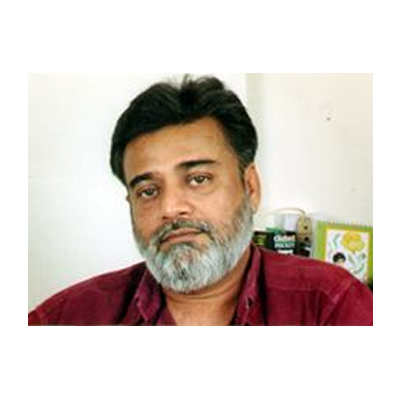
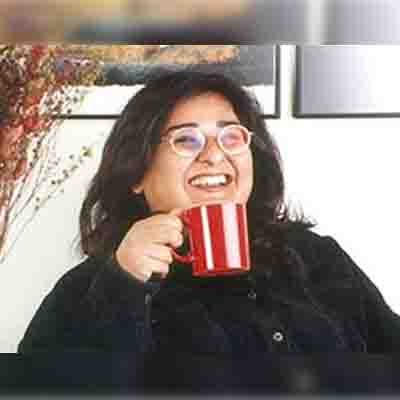
    Vinta Nanda started out as an assistant to Raman Kumar on the unforgettable Yeh Jo Hai Zindagi. As assistant director, she was actively involved on the screenplay of the serial. For several years thereafter, Nanda directed documentaries highlighting social concerns until Tara happened.

    Tara, which was bold and path-breaking, has left an indelible mark on Indian television. But its huge success also incurred the wrath of critics who accused her of writing degenerative stuff- allegations that Nanda strongly refutes.

    Zee’s re-launch last month also saw Nanda bounce back with two new serials – Sansaar and Deewane to Deewane Hai, both of which are trendsetters again if one takes into account the scale on which these serials have been planned and shot. Sansaar will rank as the first serial that has a story spread across five continents and which is actually shot in all the five continents. Spurred by the success of these two serials, Nanda is writing two more serials that will take off shortly.

    Nanda took time off from her hectic schedule to speak to www.indiantelevision.com’s correspondent, Amar. Excerpts:

    What brought you into TV writing?
    Well, creativity, imaginativeness and a flair for writing were there in me from the very start. I wrote my first play in school when I was all of 8 years old. After graduation from Chandigarh, I came to Mumbai to become a journalist. But while I was training to be a journalist, I joined Frank Simone Advertising in their production department and took an instant liking for the medium. Thereafter I started assisting Raman Kumar on Yeh JO Hai Zindagi. As Raman Kumar’s whole approach is writer-driven, I first started writing for YJHZ. My first independent project as writer was Tara.

    What are the natural instincts required to be a successful writer?
    Power of observation and sensitivity. The rest is the application of these two instincts into any given idea.

    Where do you draw your inspiration from?
    It would be difficult to pinpoint any particular source. I would say I draw my inspiration from my experiences in life. For instance, the idea of Tara came from my own initial days of struggle in Mumbai. The motivation of course comes from the faith that people of the caliber of Mahesh Bhatt (for the Plus Channel produced Kabhi Kabhi) and Raman Kumar have bestowed upon me.


    Aditya Hitkari as ‘Vicky’ with co-actor in Deewane To Deewane Hai aired on Zee
    ‘I don’t feel totally alienated from any of the characters that I’ve created. Most of these characters have some traces of me in them.’

    Outline the whole process from the stage you conceive a project to the stage when the final script is complete.
    It all begins as a one-line thought or concept. Thereafter it is drafted as a one-page story and submitted to the channel. Once the channel gives its nod, I start developing the characters in depth. Then all characters are woven into the story I had in mind. I the
    develop the story for 250 episodes before we start shooting. The dialogues for a given number of episodes are written from time to time.

    What do you do as a series writer?
    See, when I’m developing four or five concepts or stories simultaneously, it is not possible for me to be personally involved with the dialogues and other intricacies of every scene. I do decide from where to where the story is going to move in each episode and work on the screenplay. But beyond that, the dialogue writers do the needful.

    Do you identify with any of the characters that you’ve created?
    Yeah. Let me put it this way. I don’t feel totally alienated from any of the characters that I’ve created. Most of these characters have some traces of me in them. I’ve identified in a way with “Tara”. I identify with the “Rahul” of Deewane To Deewane Hai. Like me when I was his age, he aspires, has dreams, knows his goals and knows how to achieve them. The fact that we are of the opposite sex hardly makes any difference.

    Do real life incidents play a role in your writing?
    Oh yes, they do. A couple of years back, on one of my visits to New York, I met an Indian victim of a hit and run case who was in hospital with all of 49 broken bones. When I met him ten months later, when he had almost recovered, the doctor told me he was surprised a patient in such bad shape and having to undergo such a prolonged course of treatment did not need a psychiatrist. But do you know why he didn’t require a psychiatrist? It was because his family could do what the psychiatrist could not. His mother who was in India and both his brothers’ wives who were in the U.K. were selfless enough to leave their work to be with him. This bond which is so peculiar among Indians even when they are physically existing in entirely different parts of the world is what forms the theme and driving force behind the story of Sansaar.

    ‘It is the traditional regression that is shown today, the make-believe joint family dramas. What you see
    is the convolution of creativity.’

    Even though Tara was a huge hit, it drew some flak for the degenerative portrayal of women? Comment on your responsibilities as a writer towards people’s sensibilities.
    How can you possibly accuse me of offending people’s sensibilities with Tara? If anything offends their sensibilities, it is the traditional regression that is shown today, the make-believe joint family dramas. What you see today is the convolution of creativity. Tara, on the contrary was the story of an ambitious, progressive and courageous woman, who was independent, wanted to break free from the dregs of hypocritical society and who did not need a man for her dependence. Has Tara, or for that matter any of my serials, harped on extramarital affairs? I fail to see any reason why I should be accused of writing something degenerative.

    A scene from Sansaar aired on Zee
    ‘Writing just requires an urge and the right frame of mindly.

    Is being writer-director of the same project beneficial or harmful?
    Personally, I don’t write the projects I direct and vice-versa. It is a policy decision that Raman and I have taken. He directs the projects written by me and I direct the projects written by him. This is because we feel that having a second person’s opinion minimises the scope for error.

    What kind of a writing schedule do you normally follow?
    I am quite indisciplined as far as my schedule goes. I write once in the day – that could be in the morning, afternoon or evening for a few hours.

    Does writing require isolation from people in order to concentrate?
    Not really. It just requires an urge and the right frame of mind. I have even written on the sets.

    Do you write in English or Hindi?
    Mostly in English, sometimes it’s a mix of English and Hindi. The language is just the dressing on the cake. As long as the ideas come across in a powerful manner, the language does not matter so much.

    Doesn’t TV writing tend to get clichéd and monotonous? Vipul D. Shah has said in his interview that TV writing is hardly inspiring because what is shown in the 20th episode can be repeated in the 25th episode with some minor changes.
    I have never approached TV writing so dispassionately. That would amount to taking the audience for a ride. My documentaries have required me to travel extensively across the country and I’ve been struck by the amazing levels of intelligence and creativity possessed by our people living in the smaller towns of the country. We need to respect this intelligence of our audience. All the projects I have written have been written with utmost passion and commitment.

    Are you hassled by the executive producers in channels to change your storyline from time to time?
    No, not at all. We have an excellent working relationship with Zee TV. Right at the time the serial gets approved, we are given a team of executive producers for our show. Every decision that we take, be it on the storyline or any other aspect, is worked in tandem with them. Sometimes, I even accept their ideas and reject what I myself had originally thought because after all they know better what sells for the channel and what doesn’t.

    The subjects that I would like to dwell on are the status of women in our society, what role religion plays in their exploitation, status of law and human rights, the tragedy resulting out of the criminalisation of society.

    But what is the secret of this beautiful relationship you have with Zee when most producers have fallen out with the channel at some point of time or the other?
    If you ask me, I feel the producers have not been able to deliver on Zee’s quality demands. See, Zee is totally content driven as against other channels which depend heavily on their packaging or dressing. If we enjoy such a good relationship with Zee, it is due to the fact that our content as far as the story goes has been very strong.

    Are enough story lines/ concepts being tackled today or have we reached a dead end?
    No, we can never reach a dead end as far as TV goes. Yes, there are trends which tend to dominate and overshadow everything else. That I guess was the case till about a month back but Zee’s new programmes have brought about a refreshing change.

    Which are the subjects closest to you at the moment?
    See, all these years, I have continued to make documentaries on issues of social concern and it is these concerns that are closest to me at the moment. The subjects that I would like to dwell on are the status of women in our society, what role religion plays in their exploitation, status of law and human rights, the tragedy resulting out of the criminalisation of society. In fact, Sazaa, a movie I am directing, has a similar offbeat theme. It revolves around the plight of a 30-year-old virgin widow who was married at the age of six and became a widow at the age of eight.

    Which has the happiest moment of your career?
    Mahesh Bhatt calling me up to tell me that I was directing a movie which is being produced jointly by Vishesh Films and PNC (Pritish Nandy Communications). It was like my most cherished dream coming true.

  • ‘A slight slip in control can make comedy appear inane’ : Manjul Sinha

    ‘A slight slip in control can make comedy appear inane’ : Manjul Sinha

    Manjul Sinha saw his first movie when he was all of two days old. Films have since been an obsession for him. Born into a “filmi family”,- they owned a cinema hall in Patna – Sinha always wanted to be a director. So after graduation in English Literature from the prestigious Hindu College, the first thing he did was take a train to Mumbai and start assisting his uncle, filmmaker Shivendra Sinha. He however soon came to the conclusion that training under someone could be no substitute to a specialised course. Hence, after “wasting a year” as he puts it, he joined the Film and Television Institute of India in Pune. He passed out with a first in 1977 and returned to Mumbai to pursue his career.

    For the next few years, there was not much heard from Sinha until Yeh Jo Hai Zindagi happened. The dawn of colour TV in India is synonymous with this serial. Such was its popularity that cinema halls would run empty on Friday nights. Seventeen years after YJHZ, Sinha is back with another comedy – Yeh Hai Mumbai Meri Jaan – on Zee TV, which is in its first weeks on air. In between YJHZ and YHMMJ, Sinha has to his credit several ad-films and a series of one-hour stories on Zee – Rishtey.

    What drew you to direction?
    Well, I was born into a film family. We were into exhibition of films and later ventured into distribution and even production of some Bhojpuri films. So, the interest in the medium was there right from the start. Then, in my formative years at Sainik School, Tilayia, we used to have regular screenings of movies and thankfully the principal there was a person who had a fair knowledge of the medium. He would brief us about the film before each screening and this facilitated an easy understanding and led to greater interest in movies. I think all these factors contributed towards my decision later to become a director.

    But did you always want to be a director? After all, children are normally fascinated by the idea of being actors.
    Always. This is because I realised that whenever I had to perform on stage, I was uncomfortable. But I was a good visualiser and would manage things quite well without actually coming into the picture. In fact I’ve recently found an old diary of mine from when I was in Std. 8 where I’ve written I wanted to be a director.

    What are the natural instincts that a director needs to have?
    Basically, a director needs to be a good observer, a thinker. He needs to be a leader of men without making it obvious to people working with him. He needs to be a people’s man because filmmaking is all about teamwork.

    How do you look back to Yeh Jo Hai Zindagi?
    When YJHZ happened, TV was just about taking off in India and most people were apprehensive about entering the medium. In fact we ourselves weren’t sure about how different the technicalities would be in shooting a serial as opposed to a film. I remember a lot of jokes about Kundan Shah and me were doing the rounds in those days. But yes, there was a freshness involved in the task. The entire crew – actors, writers and cameramen – were extremely committed and determined. They all worked with a lot of passion and the end result is there for everyone to see. In fact later – my assistants, the writer – all have tried to create something similar but the success of YJHZ remains unmatched.

    How different is it making a serial now compared to back then with respect to work schedules, the actors, their availability and performances?
    Those days can never come back. Then, we used to shoot one episode in approximately three and a half days. I still take two days to shoot one episode though there are directors who even try and complete two episodes a day. Sincerity and dedication is lacking now. Then actors would work on a single project, now they do half a dozen of them simultaneously. They fit in two to three shifts a day and are always in a hurry. When this happens, performances are bound to decline.

    You’ve always been very selective about your work. Don’t you feel you got left behind in the rat race?
    No, I don’t. Money has never been my top priority. In any case, do you think those directors who are supposedly directing three to four serials simultaneously are actually present during the shoot? I don’t want to be a ‘series’ director. I am proud of all my work and am involved with it in every possible way. In fact the only reason I became a producer was because I realised that the product which was the result of my hard labour was not being handled well at the last stage. It was not being marketed the right way or given to the right channel. As a producer I have complete control over my product.

    Any specific reason why you’ve specialised in comedy?
    No. I would love to direct a soap. But not everybody can handle comedy well. The channels know it very well and hence after YJHZ everybody wanted me do a comedy. It wasn’t a conscious choice.

    How difficult or easy is it do direct a comedy compared to a soap?
    Comedy is the toughest. The control required is immense and it has to be handled intelligently. A slight slip in control can make comedy appear inane.

    Comedy is also tough simply because our culture is not steeped in humour except maybe to an extent Marathi culture. The psyche of Indian viewers is such that they enjoy watching emotional upheavels more than watching comedy. As a result, over here a comedy possibly cannot be a TRP chartbuster. Even the effort required in sustaining the interest of the audience is far more compared to a soap where the makers can get away with occasional low phases.

    Do you need minute scripting for a comedy or do you normally improvise on the sets?
    We do improvise but no improvisation will work unless there has been minute detailing with regard to the script. Minute scripting is quintessential and without it the director is not able to take the viewers into the zone of “willing suspension in disbelief”.

    What do you feel of the present trend of the dominance of slapstick?
    Well, slapstick is the easier form vis-a vis situational comedy in the same way as overacting is easier compared to method acting. But over the years their success shows that there is definitely an audience for it and so long as there is an audience the channels are more than happy to provide it.

    Given a choice between slapstick, situational and satire, which appeals to you the most?
    I would always opt for satire. But in India, political satire always runs the risk of running into problems, especially on the national channels. A satire on human conditions is an interesting proposition but again needs to be handled in a very sensitive manner.

    Where do you draw your inspiration from? Do the comedians of yesteryears play a part?
    The comedians of yesteryears – Charlie Chaplin, Marx brothers – are the biggest heroes cinema has ever seen. Even though I don’t necessarily keep them in mind all the time, the fact is that in the subconscious mind their images and actions do exist and play a part when I conceive a scene. Otherwise the inspiration can come from so many sources. I used to keep a diary to note down the funny things that happened during the course of my daily schedule and still refer to it at times.

    What distinguishes your genre of comedy from that of others?
    My comedy is woven around our lives. It is an extension of life’s pathos, an attempt to laugh at ourselves. Even my slapstick has smart punchlines that are laced with pathos and the aim is to make a telling statement in a subtle manner. See, even when Chaplin chewed his shoes in one of his movies, it reflected a grim reality of the times. I seek to create a similar effect through my comedy.

    What are the things you would never compromise on as a director?
    The script and performances. They are the backbone of any successful project

    It is seen that many actors who are good in intense scenes falter doing comedy. How do you extract performances from them?
    Well, I believe I am a good teacher. I use a lot of metaphors and similes to get the actor into the right emotions and to feel situations better. My background in English Literature helps me in doing this. Besides, I ‘m very patient and always believe that the first shot or the first expression can never be the best or the conclusive one. I don’t act out a scene though.

    Some actors actually prefer not to have a script for comedy. How do you cope with this?
    I would never allow this. An actor who insists on this is not serious about his job.

    Do you write all your projects?
    I used to. Now I don’t get into the technicalities of writing, though I still monitor the writing very closely. I think that is imperative for a project to evolve the way it is conceived.

    Any project which you would be averse to directing?
    A quiz show. I would rather participate in it.

    Who are your favourite actors on Television?
    I haven’t seen a better actor than Shefali Chayya on TV. I would love to have her on all my Rishtey stories. Shekhar Suman is versatile and I believe much of his potential remains untapped. I would love to work with him.

    Shefali Chayya

    Which of your works are closest to you?
    YJHZ, my ad-films and my stories on Rishtey. In fact I can safely say that my stories on Rishtey is the real me.

    Anything you would like to take up in future?
    I have a rough idea. I would love to work on a series that will loosely be a sitcom with a soapish theme. I will have satire and at times it will also be very grim and emotional. It is still at the conception stage and I’m yet to work out the minute details.

    Satyajit Ray

    Who is you favourite director?
    Satyajit Ray. All his work was from the heart and he never compromised on his creativity and what he actually wanted to say.

    As a filmmaker what does Manjul Sinha stand for? For instance, if Yash Chopra’s work can be characterised as passionate depiction of utopian love, what is your style of film-making all about?
    It would be difficult for me to classify my work into a particular genre because I’ve directed diverse plots. But yes, my work is an attempt at reality. Let me put it this way. That even in creating fantasy, I present it as close to reality as I can. So that it may evoke the same emotional response from the audience.