Tag: Yeh Jo Hai Zindagi

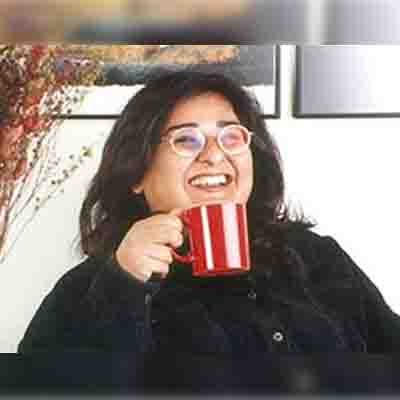
  • ‘A writer needs powers of observation and sensitivity’ : Vinta Nanda

    ‘A writer needs powers of observation and sensitivity’ : Vinta Nanda

    Vinta Nanda started out as an assistant to Raman Kumar on the unforgettable Yeh Jo Hai Zindagi. As assistant director, she was actively involved on the screenplay of the serial. For several years thereafter, Nanda directed documentaries highlighting social concerns until Tara happened.

    Tara, which was bold and path-breaking, has left an indelible mark on Indian television. But its huge success also incurred the wrath of critics who accused her of writing degenerative stuff- allegations that Nanda strongly refutes.

    Zee’s re-launch last month also saw Nanda bounce back with two new serials – Sansaar and Deewane to Deewane Hai, both of which are trendsetters again if one takes into account the scale on which these serials have been planned and shot. Sansaar will rank as the first serial that has a story spread across five continents and which is actually shot in all the five continents. Spurred by the success of these two serials, Nanda is writing two more serials that will take off shortly.

    Nanda took time off from her hectic schedule to speak to www.indiantelevision.com’s correspondent, Amar. Excerpts:

    What brought you into TV writing?
    Well, creativity, imaginativeness and a flair for writing were there in me from the very start. I wrote my first play in school when I was all of 8 years old. After graduation from Chandigarh, I came to Mumbai to become a journalist. But while I was training to be a journalist, I joined Frank Simone Advertising in their production department and took an instant liking for the medium. Thereafter I started assisting Raman Kumar on Yeh JO Hai Zindagi. As Raman Kumar’s whole approach is writer-driven, I first started writing for YJHZ. My first independent project as writer was Tara.

    What are the natural instincts required to be a successful writer?
    Power of observation and sensitivity. The rest is the application of these two instincts into any given idea.

    Where do you draw your inspiration from?
    It would be difficult to pinpoint any particular source. I would say I draw my inspiration from my experiences in life. For instance, the idea of Tara came from my own initial days of struggle in Mumbai. The motivation of course comes from the faith that people of the caliber of Mahesh Bhatt (for the Plus Channel produced Kabhi Kabhi) and Raman Kumar have bestowed upon me.


    Aditya Hitkari as ‘Vicky’ with co-actor in Deewane To Deewane Hai aired on Zee
    ‘I don’t feel totally alienated from any of the characters that I’ve created. Most of these characters have some traces of me in them.’

    Outline the whole process from the stage you conceive a project to the stage when the final script is complete.
    It all begins as a one-line thought or concept. Thereafter it is drafted as a one-page story and submitted to the channel. Once the channel gives its nod, I start developing the characters in depth. Then all characters are woven into the story I had in mind. I the
    develop the story for 250 episodes before we start shooting. The dialogues for a given number of episodes are written from time to time.

    What do you do as a series writer?
    See, when I’m developing four or five concepts or stories simultaneously, it is not possible for me to be personally involved with the dialogues and other intricacies of every scene. I do decide from where to where the story is going to move in each episode and work on the screenplay. But beyond that, the dialogue writers do the needful.

    Do you identify with any of the characters that you’ve created?
    Yeah. Let me put it this way. I don’t feel totally alienated from any of the characters that I’ve created. Most of these characters have some traces of me in them. I’ve identified in a way with “Tara”. I identify with the “Rahul” of Deewane To Deewane Hai. Like me when I was his age, he aspires, has dreams, knows his goals and knows how to achieve them. The fact that we are of the opposite sex hardly makes any difference.

    Do real life incidents play a role in your writing?
    Oh yes, they do. A couple of years back, on one of my visits to New York, I met an Indian victim of a hit and run case who was in hospital with all of 49 broken bones. When I met him ten months later, when he had almost recovered, the doctor told me he was surprised a patient in such bad shape and having to undergo such a prolonged course of treatment did not need a psychiatrist. But do you know why he didn’t require a psychiatrist? It was because his family could do what the psychiatrist could not. His mother who was in India and both his brothers’ wives who were in the U.K. were selfless enough to leave their work to be with him. This bond which is so peculiar among Indians even when they are physically existing in entirely different parts of the world is what forms the theme and driving force behind the story of Sansaar.

    ‘It is the traditional regression that is shown today, the make-believe joint family dramas. What you see
    is the convolution of creativity.’

    Even though Tara was a huge hit, it drew some flak for the degenerative portrayal of women? Comment on your responsibilities as a writer towards people’s sensibilities.
    How can you possibly accuse me of offending people’s sensibilities with Tara? If anything offends their sensibilities, it is the traditional regression that is shown today, the make-believe joint family dramas. What you see today is the convolution of creativity. Tara, on the contrary was the story of an ambitious, progressive and courageous woman, who was independent, wanted to break free from the dregs of hypocritical society and who did not need a man for her dependence. Has Tara, or for that matter any of my serials, harped on extramarital affairs? I fail to see any reason why I should be accused of writing something degenerative.

    A scene from Sansaar aired on Zee
    ‘Writing just requires an urge and the right frame of mindly.

    Is being writer-director of the same project beneficial or harmful?
    Personally, I don’t write the projects I direct and vice-versa. It is a policy decision that Raman and I have taken. He directs the projects written by me and I direct the projects written by him. This is because we feel that having a second person’s opinion minimises the scope for error.

    What kind of a writing schedule do you normally follow?
    I am quite indisciplined as far as my schedule goes. I write once in the day – that could be in the morning, afternoon or evening for a few hours.

    Does writing require isolation from people in order to concentrate?
    Not really. It just requires an urge and the right frame of mind. I have even written on the sets.

    Do you write in English or Hindi?
    Mostly in English, sometimes it’s a mix of English and Hindi. The language is just the dressing on the cake. As long as the ideas come across in a powerful manner, the language does not matter so much.

    Doesn’t TV writing tend to get clichéd and monotonous? Vipul D. Shah has said in his interview that TV writing is hardly inspiring because what is shown in the 20th episode can be repeated in the 25th episode with some minor changes.
    I have never approached TV writing so dispassionately. That would amount to taking the audience for a ride. My documentaries have required me to travel extensively across the country and I’ve been struck by the amazing levels of intelligence and creativity possessed by our people living in the smaller towns of the country. We need to respect this intelligence of our audience. All the projects I have written have been written with utmost passion and commitment.

    Are you hassled by the executive producers in channels to change your storyline from time to time?
    No, not at all. We have an excellent working relationship with Zee TV. Right at the time the serial gets approved, we are given a team of executive producers for our show. Every decision that we take, be it on the storyline or any other aspect, is worked in tandem with them. Sometimes, I even accept their ideas and reject what I myself had originally thought because after all they know better what sells for the channel and what doesn’t.

    The subjects that I would like to dwell on are the status of women in our society, what role religion plays in their exploitation, status of law and human rights, the tragedy resulting out of the criminalisation of society.

    But what is the secret of this beautiful relationship you have with Zee when most producers have fallen out with the channel at some point of time or the other?
    If you ask me, I feel the producers have not been able to deliver on Zee’s quality demands. See, Zee is totally content driven as against other channels which depend heavily on their packaging or dressing. If we enjoy such a good relationship with Zee, it is due to the fact that our content as far as the story goes has been very strong.

    Are enough story lines/ concepts being tackled today or have we reached a dead end?
    No, we can never reach a dead end as far as TV goes. Yes, there are trends which tend to dominate and overshadow everything else. That I guess was the case till about a month back but Zee’s new programmes have brought about a refreshing change.

    Which are the subjects closest to you at the moment?
    See, all these years, I have continued to make documentaries on issues of social concern and it is these concerns that are closest to me at the moment. The subjects that I would like to dwell on are the status of women in our society, what role religion plays in their exploitation, status of law and human rights, the tragedy resulting out of the criminalisation of society. In fact, Sazaa, a movie I am directing, has a similar offbeat theme. It revolves around the plight of a 30-year-old virgin widow who was married at the age of six and became a widow at the age of eight.

    Which has the happiest moment of your career?
    Mahesh Bhatt calling me up to tell me that I was directing a movie which is being produced jointly by Vishesh Films and PNC (Pritish Nandy Communications). It was like my most cherished dream coming true.
  • ‘Saas-bahu sagas are in today but very soon they will have to go’ : Raman Kumar

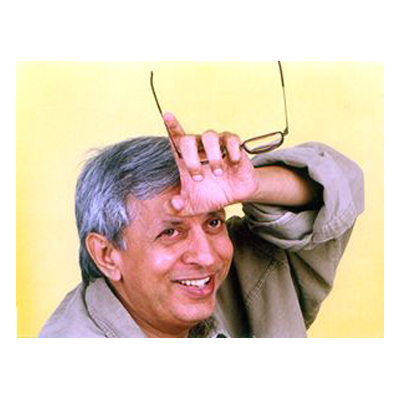
    ‘Saas-bahu sagas are in today but very soon they will have to go’ : Raman Kumar

    Raman Kumar needs no introduction. He is one of the most successful personalities on the tube today. Indeed personality would be the right way to describe him because it would be difficult to label him as a producer, a director or a writer. He has done it all.

    Kumar’s interest in the medium can be traced to his college days – at Khalsa College in Mumbai where he was actively into theatre – both as actor and director. However, direction was what really fascinated him. In those days, Ramesh Talwar was a source of inspiration. In fact, it was on Talwar’s suggestion that Kumar went to the Film and Television Institute of India (FTII).

    Kumar started his innings on TV as a co-director of Yeh Jo Hai Zindagi (Raman had also directed a movie called Saath Saath in 1983). He went on to produce and direct serials encompassing every possible genre. A quiz show on Doordarshan in the mid-eighties, Tara in 1994, Agnichakra in 2000 and now his forthcoming serial Sansaar – the story of four brothers and a sister spread across five continents, proves the point.

    Indiantelevision.com’s correspondent Amar met Raman to try and understand what makes the man tick.

    Excerpts:

    In your long tenure in the film and TV industry, you’ve been a director, producer and writer? Which of these roles have you been most comfortable with?
    Writing is basically my strength. Even as a director, I am more of a storyteller. But I also follow a policy – I like to write for TV and direct movies. This is because TV is a writer’s medium and the storytelling has to be very strong for any serial to succeed.

    But on the other hand in the case of movies, direction is what matters most. As a producer, my strength is my partner, Vinita Nanda, who is also a competent writer and director.

    Have you ever been the producer / director / writer of the same project? And if so how have you gone about managing all these responsibilities?
    No. In fact I don’t write the projects I direct. This is because I believe that even if the director is a competent writer himself, he needs to have a second point of view. Why do you think a successful writer-director makes a bad film? It’s because there is nobody to tell him where the story is faltering. Yaadein (a movie recently released) is a case in point.

    “A ready storyboard is very important. In fact, we never proceed on anything unless we have a basic skeleton ready.”

    What are the creative factors you keep in mind before producing a project?
    I go by my gut feel. I take up anything that interests me at a given time. In fact, anything which is new and unexplored appeals to me very fast. I also like to do as many different things as possible. In fact as a director, I am a great fan of (Stanley) Kubrick who never repeated a project.

    What are the practical considerations you take into account before producing a project?
    Basically, the economics and the plausibility of the script. See, sometime back one of the channels had offered us a major assignment but we could not take it up because after a careful survey, we realised that with our existing infrastructure and expertise, it would be very difficult for us to meet the programme’s requirements.

    As a writer, from where do you draw your inspiration?
    I see and read a lot of plays. I am fond of short stories. All playwrights inspire me. Among writers, one of my favourites is Sharad Joshi, all of whose books I have read. In my writing I have been inspired by Sagar Sarhadi who inspired me to be a writer.

    How do you proceed writing a project? Do you go with a ready storyboard? What of changes in script based on viewer response and do you write in Hindi or English?
    To begin with I just need an idea – a one line idea. From the idea emerges the characters, from characters the location, from location the drama and from the drama the whole serial in totality.

    Yes, a ready storyboard is very important. In fact, we never proceed on anything unless we have a basic skeleton ready for two years.

    I write in Hindi and dialogues are my forte.

    Changes in script do take place as the story progresses but mostly the basic framework remains the same, its just that certain bylanes are re-worked.

    How much of a constraint do the marketing requirements of channels impose on you?
    In the first place, I will not call it a constraint. It is a requirement. Managing TV programming is a commercial art. So the commercial needs have to be taken into consideration. I feel these requirements are totally justified.

    Are you continually hassled by the demands and expectations of executive producers in channels?
    No, no. In fact I find them to be with me.

    “Managing TV programming is a commercial art. So the commercial needs have to be taken into consideration.”

    Have you ever had to re-shoot an episode? Who has borne the additional cost?
    Yes. On a lot of occasions the channel has borne the cost, specially if the cost had been incurred on something they specifically wanted. Moreover, I have worked mainly with Zee and such is the level of mutual faith between us that if I have informed them of an additional cost, they have believed me.

    Why is it that most of your projects have been on Zee?
    It just happened. It was not planned.

    What factors do you normally take into account in selecting a channel?
    See, I’ve gone with Zee as a matter of habit. As far as other channels are concerned, I’ve done programmes for Star and B4U only when they have approached me with a proposal.

    Do you have to run around to get your projects approved or does your name find easy takers?
    Nothing in life comes on a platter. Some amount of persuasion is definitely required.

    Most of your ex-assistants – Ashok Pandit, Anuraag Basu, Anil Vishwakarma are doing very well today. What are the factors you consider before taking someone under your wing?
    I’m not interested in people who come to me saying they want to be my assistant. I take as my assistants those people who come to me saying they want to be directors (laughs).

    The only two factors I see in a person who comes under my wing are zeal and commitment.

    “Five years ago, we were talking about the woman of today, now we are talking about the woman of yesterday but very soon, we are going to start talking about the woman of tomorrow.”

    What according to you has been your contribution in the growth of these directors?
    My faith has been the biggest contribution. I encourage them to work very hard. I handed over the direction of Tara to Anuraag Basu very early in his career. The vast responsibility bestowed on him encouraged him to give his very best but I always knew that he was capable of shouldering the responsibility.

    Do you maintain the same production unit for all projects? What is your production set-up like?
    Generally, we do. We are a team of 80 people in total but they are involved with us on a project basis. The maximum that we have produced is four and a half hours of software a week but at any given point of time we produce two hours of software. At any given time, we have 6-7 production heads and their assistants manning different projects.

    What are the sources of funding of your projects?
    The channel. We incur the cost initially and then get the money back from the channel. At this point, private financiers and institutional finance is also available, but we have so far not explored these options.

    Your teaming up with Vinita Nanda produced some of the most successful soaps on satellite TV in the mid- nineties. How well do you complement each other?
    We are the best complement to one another. Vinita joined me as my assistant way back in 1985 when I was co-directing Yeh Jo Hai Zindagi. Her hard work, enthusiasm and vision have always impressed
    me. We formed our production company (Tracinema) in 1989 and the first project was a documentary for LIC (Life Insurance Corporation), directed by Vinita. We have since worked together.

    Anuraag Basu has said that you dissuaded him from joining FTII. How relevant or irrelevant has FTII been in shaping your career?
    See, in my career, FTII has been very relevant and I owe everything to it. But today things have changed. Though FTII has a great archive of films, it is a little outdated in technique. They are teaching the very basics and today everybody knows the basics.

    If you were to start afresh today, would you select a specialised course or would you train yourself under somebody?
    No. I wouldn’t go for a specialised course because I don’t think a perfect course exists. What is taught is theory. For practical knowledge, one has to train under somebody.

    If I were to start afresh today, I would still like to be trained by Ramesh Talwar.

    How has programming on TV evolved in the last 15 years?
    It would be difficult to make a sweeping statement on how programming has evolved in the last 15 years. TV changes every year. In fact, everyday is a new day in the world of TV, with a new concept, a new set of issues, etc.

    Do you really believe enough issues are being tackled today or is there a surfeit of saas-bahu sagas? Where does programming go from here?
    The “saas-bahu” (mother-in-law vs. daughter-in-law) sagas are the in thing today but very soon they will have to go. But yes, programming on TV will remain women-centric, because the primary audience for TV constitutes women. Five years ago, we were talking about the woman of today, now we are talking about the woman of yesterday but very soon, we are going to start talking about the woman of tomorrow. That will be the change in programming in the coming years.

    Why has Tracinema not grown into an empire like Balaji or UTV? Why is it still synonymous with one man?
    Because we have always been more concerned about the creative aspects of TV and have never really cared for the marketing part of it. If you see Balaji, UTV and Cinevista – all went to Doordarshan for their marketing and Doordarshan was their cash cow. But Vinita and I were not cut out for that. Our aim was to evolve Tracinema as a creative production house. In our approach to work, we were never really bothered about making Tracinema into a business empire.


    With Actor Bharat Kapoor on a Shoot in London for his new serial Sansar
    “TV programming follows a cycle and the same kind of programmes re-surface after a point in time.”

    How have the TV watching audience and viewer preferences changed over the years?
    The audience watches TV, the content changes just like changes in fashion – for instance bell bottoms may get replaced by jeans and jeans by baggies over time. Similar is the change in the nature of TV programmes. But TV programming follows a cycle and the same kind of programmes re-surface after a point in time.

    What is the satellite TV industry going to be like in the next few years? Fewer players enjoying greater domination?
    There’ll be a boom, no doubt but yes the scene will be dominated by fewer and more resourceful players. In fact TV is not a medium for the smaller units to survive. It’s a medium for collective responsibility. Its like running a newspaper. Greater the scale of operations, more the economies on production.

    What makes dailies click?
    Continuity and habit. You may be habituated to having food at a given time. Similarly, you would want to watch a given TV programme at a given time. The trick lies in forcing this habit upon viewers.

    As producer, what are the advantages of producing dailies?
    As a producer, one does not have to hire out everything. Instead everything is there with you 24 hours of the day. This results in a smoother and more enjoyable production experience. Revenue wise, dailies are not as paying as weeklies because budgets are low, but yes, at the end of the day, it does tend to be more economically viable compared to weeklies.