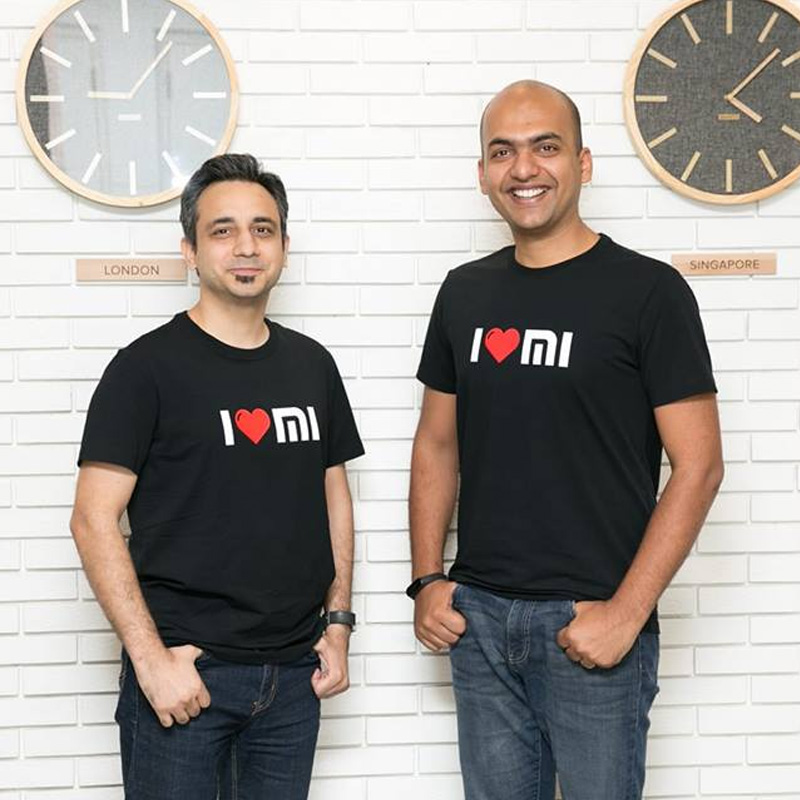
MUMBAI: Chinese mobile giant, Xiaomi, has appointed Anuj Sharma as the new head of marketing for India business.
Sharma’s appointment comes at an interesting time when the company is looking to accelerate market growth ahead of the festive season.
Welcoming Anuj Sharma on board, Xiaomi India head Manu Jain said in a Facebook post and a tweet: “Anuj will be heading end-to-end marketing at Xiaomi India, including all functions and product lines. At Xiaomi, we believe in ‘marketing without advertising’. We’ve always innovatively used social media, Mi Community and various Mi Fan forums to do our marketing, rather than spending crores in traditional advertising!”
Excited that Anuj Sharma @s_anuj has joined us to head Marketing at @XiaomiIndia.
We believe in ‘marketing without advertising’ – using social media, Mi Community & MiFan forums rather than spending Cr.s in advertising!
With an experience of over 15 years in the technology domain, Sharma worked at Lenovo and Motorola where he headed online sales, product management and product marketing.
Sharma has over 15 years of experience in the technology domain, having had a long stint at Lenovo & Motorola, where he played various roles, including heading online sales, product marketing & product management.
Known as the ‘Apple’ of China, Xiaomi mobiles entered the Indian market in 2014 with an exclusive sales tie-up with Flipkart for smartphone Mi 3. The company spent zero marketing dollars for the first three years.
MUMBAI: Since its inception in 2014, Xiaomi has grown exponentially in the Indian smartphone industry.
The brand earned its number one position in India for three consecutive quarters, and currently dominates the smartphone market with a substantial 30.3 per cent share as per the latest IDC research (Q1 2018), wherein one out of three smartphones sold in India is a Xiaomi phone.
Xiaomi’s philosophy of bringing innovation for everyone combined with its robust India infrastructure of after-sales, well-established set of manufacturing units, innovative sales model and its 400+ strong workforce has significantly boosted the brand’s outreach. However, the growing popularity of the brand is mainly because of its passionate Mi fans who are not only increasing in numbers but also share great mutual love and admiration for the brand.
The campaign offers a common fundamental feature that every Xiaomi user deeply connects with – its trademark ringtone. The campaign showcases that while people in India would be busy going about with their everyday lives, they may often hear and resonate with the sound of Xiaomi’s ringtone in the midst of their daily bustle. The campaign proves how this simple ringtone works as a subtle, yet powerful reminder of the brand’s widespread presence among the people of India. And the sound of this tone may often brim excitement in any given social space, leading several people to wonder if it’s their call to take.
The brand has now launched a new campaign that aims to connect with all individuals and Mi fans across diverse customer segments. Although Xiaomi India’s traditional audience was mostly technology enthusiasts of age group 18-40 years, who endorse the geeky spirit and can discern value irrespective of price bands; the brand has moved well beyond this, and now enjoys a widespread presence across different customer categories.
The ‘Kiska Baja’ campaign will run across different channels which include television, radio, out of home, digital media and print media.
The TVC campaign videos are launching across first three weeks of July, where the first launched during the India tour of England T20 cricket match. The overall campaign including other media will roll out within two months from July to August.
Kiska Baja campaign is a collaborative effort of the Xiaomi brand marketing team led by Karan Shroff, and Lowe Lintas, and is directed by Ayappa.
Xiaomi India VP and MD Manu Jain says, “Kiska Baja is a sincere effort from our team to portray where our brand stands today, and how our major success resulted because of all the massive love and attention we received from the people of India. As we continue providing innovative products of high quality with best specs at honest pricing, we hope our customers will also enjoy our technology and deeply connect to our widely growing Mi community across India.”
Lowe Lintas chairman and CCO Arun Iyer mentions, “The idea was inspired by real life events. Wherever we went, airports, offices, supermarkets we heard a familiar tone. Realising this, we decided to have fun with the idea of what happens when there is a Xiaomi in every pocket.”
MUMBAI: Xiaomi India continued to lead the Indian smartphone market as per IDC’s quarterly mobile phone tracker in Q1 2018. Xiaomi retained its top smartphone brand position with a substantial 30.3 per cent market share, widening the gap between itself and the number 2 smartphone brand. Xiaomi also continued its dominance in the online smartphone market with 59.6 per cent market share. The popularity of Redmi Note 5 and Redmi 5A and Xiaomi’s efforts in expanding its offline presence are key contributors for Xiaomi’s growth in the smartphone market.
Xiaomi India vice president and managing director Manu Jain says, “All the success which Xiaomi enjoys today is proof of the love we have received from millions of our Mi fans. We are thankful to each and every one of them for putting their faith in us and we promise to work hard to retain it. Xiaomi will strive to deliver on its philosophy towards providing high quality innovative technology at an honest price and bring the best of technology to everyone.”
True to its unconventional spirit, Xiaomi India released a unique video. With Xiaomi’s sales continuing to gain momentum, the video gives viewers a series of quirky insights on the vast scale of its smartphone sales in India over the last 3.5 years. The video aptly summarises the incredible scale of Xiaomi’s impact of smartphone sales, making quality and innovation available to everyone.
The video was conceptualised by the brand marketing team of Xiaomi India led by Karan Shroff, brand marketing lead, Xiaomi India and created by Schbang Digital Solutions. For example, if all Xiaomi phones sold were stacked together, it would run 25 times deeper than the depth of Mariana trench, world’s deepest oceanic trench at 10,994 meters and 35 times the height of Mount Everest at 8848 meters. The total weight of all Xiaomi phones sold measure 25 times more than the recorded weight of a blue whale. The video shares a similar fun fact on how the charge from batteries of all Xiaomi phones sold could easily light up the Burj Khalifa for as long as five days, which would stand as a distant dream to many other phone brands. This also highlights the powerful battery life that most Xiaomi smartphones are known for. With its highly engaging content, this video certainly leaves viewers with some great food for thought. Interesting facts like these indicate Xiaomi’s rapid success and growing positive outreach across the country.
Xiaomi was founded in 2010 by serial entrepreneur Lei Jun. With presence in over 70 countries and regions, Xiaomi is expanding its footprint across the world to become a global brand.
MUMBAI: Xiaomi is leaving no stone unturned to capture the Indian imagination. After wowing the country with its spectacular moderately priced phones, the company is looking at giving value addition to its customers here.
Considering India as its core market after its home-ground China, Xiaomi became India’s number one smartphone brand in India in Q4 2017 beating Vivo, Samsung and Apple, according to International Data Corporation. Hardly four years since launch, the company today has a whopping 31 per cent market share in the country and has over nine million units shipped in Q1 of 2018.
Xiaomi India vice president and managing director Manu Jain believes that the company’s core philosophy is to deliver innovation for everyone by making high-quality, well-designed products accessible to everyone at “honest pricing” and the company is able to do this because of its unique business model, which Xiaomi will monetise from internet services in the long run.
The mobile handset maker has now announced the launch of Mi Music and Mi Video, marking Xiaomi’s move into offering value-added internet services for local users. Mi Music is Xiaomi’s pre-installed music app which offers an integrated music streaming service along with the ability to store offline music while Mi Video is Xiaomi’s pre-installed video app which provides integrated video streaming across platforms.
The music app by Xiaomi is quite similar to other music apps available in the Indian market such as Saavn, Gaana, iTunes, Jio Music. Xiaomi has partnered with digital entertainment organisation Hungama Music wherein Xiaomi mobile consumers will have access to Hungama’s music library. The app will offer over 10 million freemium tracks across 13 Indic language choices. Users can also download music offline from Mi Music app at Rs 899 per annum.
Hungama Digital Media Entertainment managing director and CEO Neeraj Roy says, “We are delighted to launch Hungama Music on Mi Music. We are committed to delivering the best of content with unlimited playlists to the highly engaged Mi Fan community and with this launch we take our partnership with Xiaomi to the next level.”
Mi Video functions similar to YouTube. The apps are the first internet services that Xiaomi has brought to India. Mi Music in India has nearly seven million daily active users. Mi Video is designed to be a platform for video content aggregation and a powerful local video player. Mi Video content is powered by Hungama Play, SonyLiv and Voot currently, with more partners coming onboard soon.
Currently, Mi Video offers more than 500,000 hours of content with nearly 80 per cent free content. The service currently offers more than 12 video formats such as AVI, MP4, MOV, MKV, and MKA, MPEG, M2TS amongst others. It also supports multilingual subtitles, private folders, and multiple audio tracks. Mi Video also offers one tap cast to any Smart TV with DLNA and Miracast support.
Roy also announced that in the coming months, Hungama will bring more exciting features including gamification and continue to build on the rich user experience.
The apps were announced at the Mi Pop Play event, which is created by Xiaomi to bring Mi Fans from across the country for a day to celebrate with Xiaomi executives.
The company believes in giving back to its consumers. “We at Xiaomi never make over five per cent of profit on all our hardware devices whether it is a smartphone, a television or any other accessory and if we ever make more than that, we make sure we return it back to our consumers. The philosophy has worked well for our brand in China, India and other parts of the world,” says Jain.
Xiaomi currently has three manufacturing facilities in India in Andhra Pradesh and Tamil Nadu. The move came after the Indian government imposed a 10 per cent duty on key smartphone components.
With a presence in over 70 countries and regions, Xiaomi is expanding its footprint across the world and wants to become a global brand.
MUMBAI: Xiaomi and The Viral Fever (TVF) have announced a strategic partnership for the recently launched Mi LED TV 4, Mi LED TV 4A 3 inches and Mi LED TV 4A 32 inches from the brand Xiaomi.
Under that, TVF’s library of videos and web-series will be available across all Mi TVs, bringing TVF’s unique proposition of short, medium and long-form original content to the brand new smart TV.
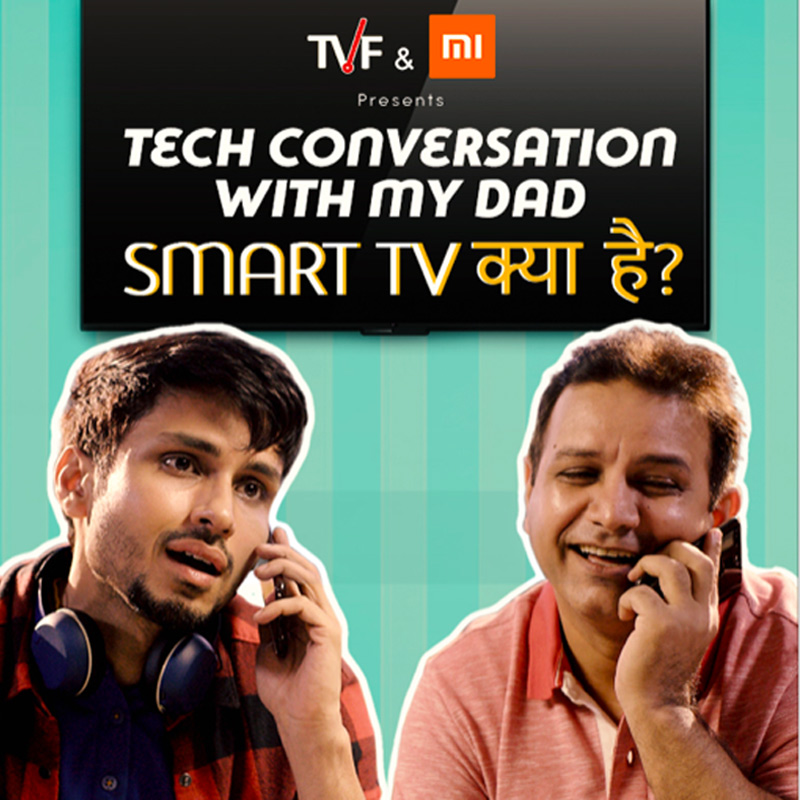
As part of the offering, to promote the Mi LED TV 4, TVF has released the latest episode of its widely-loved and longest running title, Tech Conversations with Dad – a show about exasperated youngsters explaining the nuances of technology to their clueless and curious fathers. Internet favourites, Amol Parashar and veteran thespian, Kumud Mishra, who were last seen as father and son in TVF’s superhit web series – Tripling in 2016, will be seen in the first video of 2018, with more in the pipeline. Amol’s character – Chitvan – was brought in, on popular demand, in the series that usually features Jitendra Kumar and Gajraj Rao.
TVF COO Karan Chaudhry believes that digital content is making new inroads into the audiences’ lives, and Xiaomi’s new offering is truly disruptive for the Indian market. “We are excited to be among the first partners for MiTV4 and look forward to our audience enjoying TVF shows on MiTV4. To deepen our partnership, we have created a special episode of our popular series Tech Conversations with Dad in association with Xiaomi. We are sure our audience will love it. We wish Xiaomi great success in this new endeavour,” he says.
Xiaomi India product manager of MiTV Sudeep Sahu adds, “TVF has been synonymous with groundbreaking content for the digital medium and we are extremely proud to have brought them on-board with their high quality immersive content offerings for all our Mi Fans. We hope to build great properties together. Mi LED TV offers over 500,000 hours of content and TVF is a very important partner, sharing brand philosophies similar to Xiaomi in terms of disrupting industries.”
In a game-changing move recently, Xiaomi launched the new Mi LED TV 4, armed with native apps powering the world’s thinnest LED TV. The Viral Fever’s TVFPlay is among the select few that will feature on the TV, making Xiaomi the largest content aggregator library in India. The content offerings now pan out to all three Mi TV’s.
MUMBAI: Chinese mobile manufacturer Xiaomi India has appointed Lowe Lintas Bangalore to handle its creative mandate. The brand entered India in 2014 and in just three years, it has become the fastest brand to cross the 25 million mark in sales. Lowe Lintas has bagged the account on the back of informal evaluations Xiaomi has done of multiple agencies to identify its communications partner.
India is one of the company’s largest markets outside China and the fastest growing amongst international markets. As per International Data Corporation’s (IDC) Quarterly Smartphone Tracker for Q3-2017, Xiaomi has 23.5 per cent of the Indian smartphone market at par with Samsung as the top smartphone brand in the country. The Redmi Note 4, has propelled Xiaomi to become India’s top smartphone vendor and has contributed to more than 40 per cent of the brand’s total sales.
The online-only brand started building its offline business aggressively in 2017 through direct distribution and its own stores Mi Homes, Mi preferred partners and partnership with large retail chains. With presence in over 30 countries and regions, Xiaomi is expanding its footprint across the world to become a global brand.
Lowe Lintas CEO Raj Gupta says, “It is a proud privilege for us at Lowe Lintas to be chosen by Xiaomi, a brand that has such a huge fan following. We will strive to reinforce this love and get more consumers to fall in love with Xiaomi.”
Lowe Lintas South president Hari Krishnan adds, “Xiaomi is a part of our case study to prospective partners as a perfect example of a challenger brand. A brand that has become the leader by not just talking innovation, but by living it. We are, like millions around the world, fans of Xiaomi. And it is truly a pleasure and privilege when you get to chart the course of a brand that you really look up to.”
A Xiaomi Spokesperson mentions, “Xiaomi is the No 1 smartphone brand in India. And what has helped us reach there is the constant innovation that is at the core of the brand. In just under three years, Xiaomi has won immense love and innumerable fans in this country. We now aim to establish our vision of ‘Innovation for everyone’ firmly and bring relevance through our products to every Indian. In Lowe Lintas, with its irrefutable experience and expertise in building lasting brands, we have found a perfect partner for the task at hand.”
MUMBAI: Nothing beats the feeling of being served at your doorstep and this convenience is what has thrust e-commerce to pole position among shoppers worldwide. Add to it the ease of picking, cross-checking prices across sites and the frequent discounts are the cherries on the cake.
The growth of e-commerce became evident since 1994, with the first sales of Sting album in the United States. Soon, products like wine, chocolates and flowers became the pioneering retail categories which further fuelled the growth of online shopping. Before long, researchers dug out that some products are more appropriate for e-commerce buying than others – most of them turned out to be generic items which didn’t need physical touch validity. Nothing isn’t online today, you name a product and it’s up for purchase.
India officially went online publicly in 1995; before that, it was only for research and educational institutes. It was in the early 2000s when India was introduced to a novel way of purchasing – teleshopping. With the advent of the internet age here, this hopped onto the web with Flipkart being one of the earliest entrants. Starting with books, the Softbank-backed company is now giving a tough fight to America’s Amazon.
Old teleshopping TVC:
Today, India has an internet user base of over 450 million, which accounts for 40 per cent of the country’s population. NASSCOM has projected the country’s e-commerce market to be worth Rs 2 lakh crore this year. As per Google, there were 100 million online shoppers in India in 2016. Online apparel is one of the most popular verticals, which along with computers and consumer electronics, makes up 42 per cent of the total retail e-commerce sales. According to various media reports, India’s online retail market grew at about 25 per cent in 2017 and is projected to touch $20 billion by the year 2020. It won’t be incorrect to say that it has been a joyride for online websites and e-commerce platforms in India.
But things seem to be changing now. Following a successful run in the online world, e-commerce companies are now venturing into a space they once thought would soon see the same fate as dinosaurs— brick and mortar stores.
Globally, this phenomenon has taken the industry by a storm. Large organisations that were leaders in online have taken the route of opening physical stores or pop up shops. E-commerce marketplace Amazon is one such example. The global giant has teamed up with Calvin Klein to open holiday-themed pop-up stores in New York City and Los Angeles. Chinese e-commerce titan Alibaba is all set to steal a page from Amazon’s playbook by opening its first store in Shanghai.
In India, lifestyle and fashion company Myntra, beauty and cosmetics website Nykaa, eyewear company Lenskart, housing and furniture websites Pepperfry and Urban Ladder and lingerie website Zivame are a few of those who have taken the online-to-offline route.
Lenskart has established its strong presence in the offline space and is targeting to take its total brick and mortar count to over 900 in the next two years. Its current 400 offline stores contribute 50-60 per cent of its business. Online furniture website Pepperfry currently has over 23 physical stores which contribute 20 per cent to its overall sales.
Flipkart owned online fashion marketplace, Myntra is considering launching its own multi-brand offline stores where customers can walk in and shop for all the collection that is also available on its online platform. Earlier in March 2017, Myntra launched its first offline store in Bengaluru for its homegrown brand – Roadster. The decision is in line with the company’s effort to aid profitability.
Pepperfry, Lenskart and Urban Ladder are aiming to come up with their Initial Public Offering (IPO) in the next two to three years.
Chinese mobile handset manufacturer Xiaomi, which was only available in India via Flipkart and Amazon in 2016, decided to open up stores here to boost sales and boy, did that work for the company!
Xiaomi, which currently has 13 Mi Homes in top six metro cities, plans to increase the count to 100 by the end of next year. The Chinese manufacturer clocked revenue of about Rs 7000 crore in 2016 but doubled it in 2017 posting Rs 14,000 crore.
Online leaders are investing heavily in setting up physical stores to fuel their next phase of growth. The move aids them in getting more customers and the hybrid strategy helps in gaining double-digit growth figure while expanding the business.
Setting up offline stores also helps brands in balancing the high cost of acquisition that the online store demands. Although this is an emerging trend which will play an important role for online retailers in the days to come, brands have begun to embrace this omnichannel approach.
Having said that, it is also a gamble that not every brand might have an appetite for. Setting up physical stores means investing heavy money into infrastructure and land acquisition while also running the risk of the store being an utter dud! It is a win-win situation for brands that are willing to embrace the step back.
MUMBAI: YouTube has released the Q3 ’17 India Ads Leaderboard, a list of the top ads that Indian audiences consumed the most during the third quarter of the year. These ten ads clocked an astounding 3.5 million hours of watch time, with mobile devices accounting for 69 per cent of total watch time. As per App Annie*, every month, 180 million Indians watch YouTube on the mobile.
Long format ads have emerged as the winning formula for Indian viewers this quarter. Five out of the 10 most watched ads in the quarter were over one-minute long. This clearly points to audiences’ willingness to invest their time and attention on ads that are narrative-driven – Xiaomi, Oppo, Panasonic, Droom and MuscleBlaze all capitalised on this. Anticipating consumer demand for electronic gadgets during this festive season, Oppo’s new six-and-a half minute ad, for F3 device garnered close to 30 lakh views in around 20 days.
MUMBAI: Indian media agency Madison Media has bagged the media mandate for Chinese smartphone brand Xiaomi.
Madison Media will handle the account from its Bangalore office. It is believed that the account is worth Rs 100 crore. It wasn’t until last evening that the brand and agency confirmed the news of their deal.
Xiaomi launched its first smartphone, Mi 3, in India in 2014 and now claims nearly 17 per cent of India’s smartphone market as of 2017. Xiaomi aims to capture the largest market share of the country within three to five years.
MUMBAI: A unique business model that is driven by innovation and technology is the trademark key to success among the emerging businesses in the world. Under tough competition, it is no longer enough to have hard working product or service. Smart brand building is the need of the hour. Keeping that in mind, Interbrand in partnership with Facebook, Ready Set Rocket and New York Stock Exchange (NYSE), has released its ‘Breakthrough Brands’ report that examines strong emerging brands.
Of the 200 brands nominated, 60 ended up being featured in the Interbrand Breakthrough Brands report, although the list does not rank the brands.
India- founded Zomato has been featured in the Food and Beverage category along with Deliveroo from UK, Blue Apron from US and do dem from Brazil. Zomato’s mission is to facilitate better dining experiences for food seekers all over the world. Founded in 2008, this brand’s food discovery platform is now a part of India’s biggest personal assistant app, HelpChat, which will be able to anticipate users’ food-related desires. Zomato also offers online ordering and table reservations, as well as tools that allow restaurants to manage demands, thus creating better food experiences for both its users and one million restaurants partners worldwide.
Also, PayTM has been featured in the prestigious ‘Growing global’ category. This category celebrates the brands that have created a unique, differentiated approach which is global from day one. Breaking ground fast and too big to ignore, these brands are poised, or already on the path, to creating a significant global footprint. PayTM’s growing mission to create a one-stop, mobile shop has caused it to flourish in the population-dense country of India, where online platforms serve a growing need to get things done, quicker and more conveniently. Launched in 2010, PayTM began as mobile charging and bill payment service and has since become a full mobile commerce platform, with 20 million registered users and growing. It’s poised to break through in other Asian markets, where the one-stop-shop proposition is becoming increasingly popular. The brand has featured in the category along with Xiaomi from China, WeChat from China and DJI Global from Hong Kong.
“In this ‘Age of You’ brands are being used by people to design better experiences in their day to day lives. That is what necessitates the conventional brands themselves to move at the Speed of Life. The Breakthrough Brands are born into the new cognitive era and are unencumbered. They can therefore create bespoke experiences per people’s needs and desire with a clear purpose to provide solutions through a sustainable business model. The task thus is not so much technology-out as much as it is solution focused. Then on, all the regular tools of running a good business need to be put in place – a scalable resource plan with internal clarity, responsiveness and governance models; external differentiation to ward –off imitability and consistency while the scale up. The stronger the solution and its focus, the better would be the earned media and buzz that are the decisive promotional vehicles for today’s breakthrough brands,” said Interbrand India MD Ashish Mishra in parting.