Tag: Wunderman Thompson

  • Faasos promises respite from boring food in a new campaign #BoreNoMore

    Faasos promises respite from boring food in a new campaign #BoreNoMore

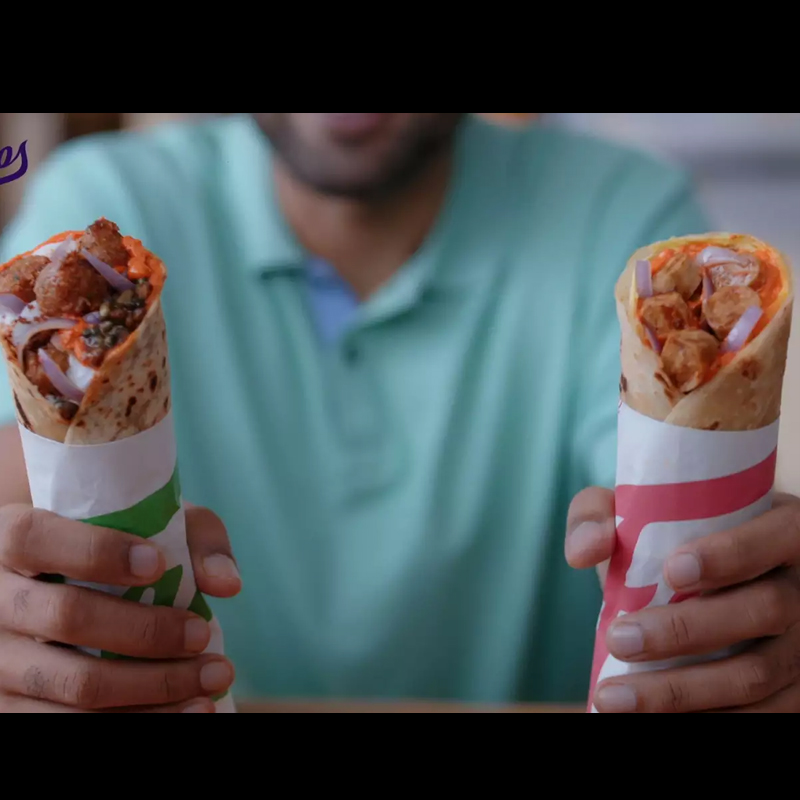
    NEW DELHI- Rebel Foods has launched a new campaign for Faasos. As part of #BoreNoMore, the company focused on its signature wraps which are a meal by itself and essentially exotic in-between meals option, bursting with the unexpected and flavourful combinations.

    The campaign conceptualised by Wunderman Thompson centers around a young couple stuck in the lockdown bored of eating the same food. The film starts with the wife looking at a Faasos ad that pops up on her laptop and getting enticed to eat something out of the ordinary. She steps in the hall to ask her partner, ‘aaj khaane me wahi?’ (The same food to eat?)?”. He replies, yes! After a couple of times, the husband excitedly replies, No! And pops his arms out from behind his back to reveal two Faasos signature wraps. The girl gets a huge smile on her face, and her eyes light up with amazement.

    Rebel Foods head of strategic alliances Shoumyan Biswas said, “The idea behind this advertisement was to pull out the consumers from their monotonous lives due to the pandemic and extend our EAT.SURE promise of safety with full flavor, care, and hygiene to them. The Wunderman Thompson team led by Samarth and Ajeeta has done a terrific job at conveying our message to the consumers.”

    Wunderman Thompson senior VP & EBD Samarth Shrivastava said, “Most Indians are foodies and during the lockdown, our food palates are getting affected! With so much more to do at home, cooking is becoming a chore especially for millennials who live on their own and not in joint families. The strategy was to target these couples and indulge them with Faasos signature rolls – a welcome respite to indulge the food palate with a variety of international and Indian flavors. It brings back the variety with 12 great recipes and comes in a wholesome and convenient wrap. Ab bore no more!”

  • Wunderman Thompson South Asia releases ‘Word of Moms’ film for Voltas Beko’s dishwashers

    Wunderman Thompson South Asia releases ‘Word of Moms’ film for Voltas Beko’s dishwashers

    NEW DELHI: Voltas Beko’s primary role is to enable people to do more of what they love, with the people they love. Trusted by all moms in India, the home appliances brand has always been celebrated for triggering conversations and offering products that ease the life of mothers in India. With their new film on dishwashers, the brand has once again struck a chord in a fun way! It highlights Voltas Beko’s state-of-the-art dishwasher designed to fulfil the unstated but important requirements of Indian consumers.

    The digital film ‘Word of Moms’, conceptualized by Wunderman Thompson South Asia, is inspired by a bunch of friends who are doubling up their responsibilities on the personal and professional front. The film highlights how we trust our friends and loved ones when it comes to finding solutions. In this case, these friends, also multi-tasking as mothers at home, discuss how to wash dishes in the easiest possible way. And this is a question that households across the country seem to be asking as people try to strike a balance between work and the home. The film also depicts how, under the current circumstances, technology has stepped up as an important channel to maintain relationships and also interact with the world outside.

    Speaking about the campaign, Voltas Beko marketing head Prasenjit Basu said, “We have witnessed a significant spike in demand for both our table top and full-size Dishwashers in the last two months. It’s interesting to note how consumers are increasingly adopting technology to ease their multitasking lives. Some of the differentiated features like the Dirt Sensor, Aqua Intense and Corner Intense technology which effectively washes heavily soiled utensils, catering to the cooking and food habits of an Indian consumers, has been a huge draw for our consumers.

    Commenting on the creative idea, Wunderman Thompson, Delhi, managing partner Joy Chauhan said, “Interestingly, this piece of content for Voltas Beko is nothing short of we eavesdropping on real time conversations and feelings of millions of Indian families. This communication is so real, because each one of us has been in the same boat due to the lockdown. Getting this right meant understanding the exact emotions of our consumer. Something we take a lot of pride in at Wunderman Thompson. Covid-19 will expedite the inclusion of technology in our kitchens and homes. We expect the demand to rise and the momentum to continue and this is just the beginning.”

    Interestingly enough, it’s this very technology that made it possible to produce this film under lockdown. Shot on the actors’ own phones with the director calling the shots over video call, it has been a one-of-a-kind experience making this film.

    The brand stands for convenience and enabling users to find joy in the everyday, something that was clearly felt as the COVID-19 pandemic forced the world to stay home, especially for our target audience – the urban Indian mom.

    Credentials:

    Creative Agency: Wunderman Thompson, South Asia
    Managing Partner & Sr. VP: Joy Chauhan
    CCO: Senthil Kumar
    Creative Team: Siddharth Prasad, Malini Patnaik
    Servicing Lead: Charu Bhatnagar
    Account Management: Rahul K Singh, Drishti Ganguly
    Planning: Pinaki Bhattacharya, Nikhil Thakkar
    Production House: Small Fry

  • Wunderman Thompson South Asia’s 21 Times Health

    Wunderman Thompson South Asia’s 21 Times Health

    Wunderman Thompson South Asia’s report titled ‘21 Times Health’, is an incisive look at the effects of the coronavirus disease pandemic and the resulting lockdown on the health, pharma and wellness categories.

    As the world slowly inches back to normal, many categories will find themselves being redefined.  Studies show that 21 days is the minimum time required to change a habit. With the extended lockdown, the Indian consumer has got more time than that! And with a strong emotional and economic motive to boot! For many categories, the day the lockdown lifts will be ‘Day 1’ in many ways. 21 Times Health is a look at some trends that can help us get ready for that day.

    The team at Wunderman Thompson South Asia conducted a lockdown study among Indian households in 32 cities in 15 states* to capture their changing mindsets and behaviours around health, pharma and wellness, besides speaking with various brand and field experts to corroborate the findings. Inputs that found their way into this project also included, various COVID-19 reports compiled by different Wunderman Thompson offices around the world, reports by research agencies like Kantar, experts opinions, articles from various publications, studies on global financial crisis in 2008 and so on.

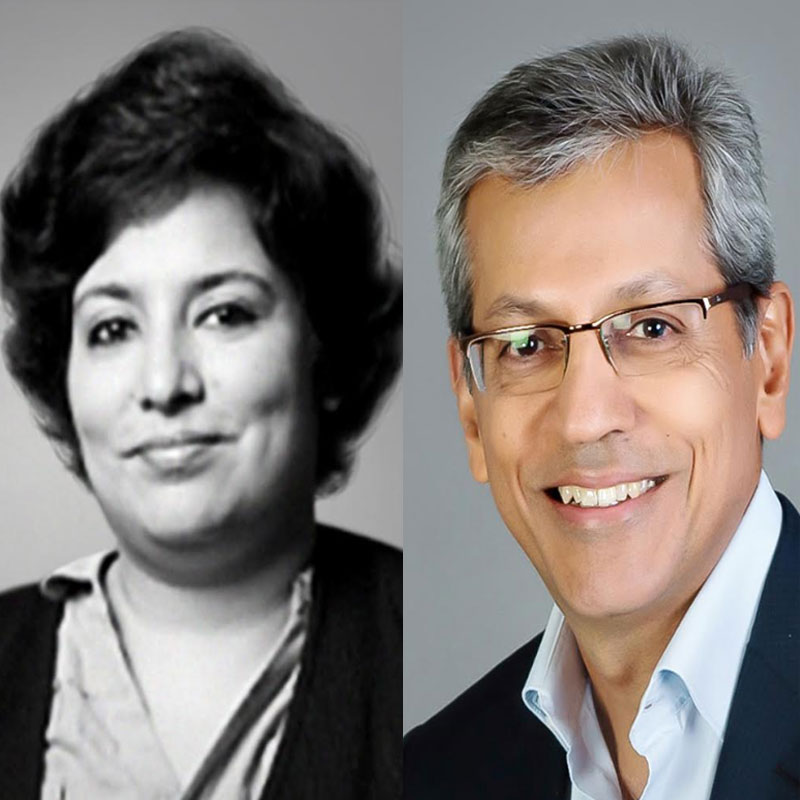
    Tarun Rai, Chairman and Group CEO, Wunderman Thompson, South Asia, said, “There is no doubt that the COVID-19 pandemic is unlike anything we’ve seen before. And unlike some of the crises we have witnessed in the past few decades, this will have a much deeper impact on not just the economy but also on society. There is an urgent need, therefore, to rethink, relook at emerging data, and reload for the future. This health & wellness category report is our attempt to do just that. We hope it helps our partners to navigate through this crisis and come out stronger as they emerge into the post-COVID world.”

    Commenting on the report, Ajeeta Bharadwaj, National Planning Director, Wunderman Thompson India, said, “The COVID-19 pandemic is making structural changes in mindsets and marketplaces, alike. It is changing the hierarchy of benefits and crash-coursing the education of certain categories, it is forcing a rethink on the way things are made, stacked & served and digitizing behaviors at a scale that would have been hard to imagine. 21 Times Health is an attempt to identify these shifts and the opportunities emerging from them, so that brands can reconfigure their relevance and emerge stronger.”

  • Limited workforce in office, copy fatigue: Immediate challenges facing ad industry

    Limited workforce in office, copy fatigue: Immediate challenges facing ad industry

    NEW DELHI: The past two months have been nothing short of a rollercoaster for industries across categories and nationalities. With most of the world under a strict lockdown, production halted, supply-chains blocked, and consumer demand shifting to only essentials, the economy went through a whirlwind of issues. Also greatly impacted was the marketing and advertising industry, as a result of the dwindling cash liquidity and many brands going silent in the time of crisis.

    However, things seem to be moving towards the better now. Lockdown restrictions have been eased greatly, green zones are already attracting consumers, and there is a lot of supposed pent-up demand to address. As brands start moving and earning, a lot of benefits will slowly be transferred to the advertising industry.

    Wunderman Thompson South Asia chairman and group CEO Tarun Rai said, “While the crisis in India is still far from over, the relaxation is a sign of hope. It is also a reflection on the strikingly varied impact the crisis has had on different regions of the country. While there are still issues regarding both production and distribution, the clients I have spoken to are finding innovative ways of getting around them. For many categories, this is the time to dust off their marketing campaigns and start getting ready for the beginnings of positive consumer sentiment. Like the crisis came upon us suddenly the rebound may surprise us too. Marketers and brands should be ready.”

    Dentsu One president Harjot Singh Narang added, “Investments in brand and marketing are sadly the first to go in a downturn but luckily come back really fast as soon as the businesses start seeing growth potential coming back. The relaxations are the first steps to inching back for now and so would be welcome by everyone. The real question would be how long before this inching ahead gathers some speed and opportunity to use brand and marketing as business drivers returns.”

     There, however, are still some impending challenges that await the industry. Havas Group CEO Rana Barua argues that the next few months will be more testing. “There will be numerous challenges going forward; going back to work poses more challenges than working from home. We cannot jump the gun and start behaving as normal. We need to collectively behave and act responsibly which will ensure compliance while we are planning to go back to work, safety for all employees, managing both offices and also working from home, balancing client needs and expectations.”

    Madison Media chief analytics officer Nagraj Krishnamurthy noted, “The industry is continuing to find it difficult to ensure supply chain continuity between the designated red, orange and green zones. Latest relaxation has eased the problem but not eliminated it.  It will be at least a quarter before the last mile link to the consumer becomes operational pan India.”

    Putting emphasis on the issues that the advertising industry will have to cater to, he added, “Usually, new copies are rolled out in the first quarter. However, this year, there are no new copies that are ready. Some clients are in a dilemma as to whether they can invest behind older copies. My suggestion to them is that they should unless the message is no more relevant. Analytics has proved that copy fatigue is a very rare phenomenon.”

    “Secondly, the situation on the ground is not uniform across the country. Marketers are wondering whether they should go on mass media like television. If the campaign is to activate top-funnel metrics, they should advertise on TV. However, brands advertising to activate lower-funnel metrics like retail or auto can look at geo-targeted digital approaches.”

    Rai highlighted that the safety and health of the agency’s employees are going to be of paramount importance. “We want to get back to our physical offices but want to be very sure that all the health protocols are in place. We are working effectively  from home but getting back to work will give everyone a sense of normalcy. We will start slow, in one city first, with around 30 per cent of our staff and move forward from there. The other important aspect is going to be when video production is permitted. We are managing even now but it is difficult.”

    Narang added, “Extended work from home, deeper thinking on brand relationships, strategies to navigate the months/full year of acute slowdown, strategies to tackle the adverse P&L impacts, and so many more immediate challenges face all of us in the industry. If change is the only constant then evolution and adaptation are the only necessities. Going ahead relaxations and new rules and ways will affect even more – how things change for the industry. However, the key will be to see how the industry and individual players in it evolve and adapt. In the next 18 months, leadership and thinking that enables pivoting to adapt to new realities will be the biggest need of this industry.”

  • New language of advertising, more collaboration within brands on rise post-Covid2019

    New language of advertising, more collaboration within brands on rise post-Covid2019

    MUMBAI: Wunderman Thompson Intelligence has pinpointed the trends and behaviours that define the new world, as business and consumers respond to the Covid2019 pandemic. Wunderman Thompson’s new report, ‘The Future 100 2.0.20,’ is a follow-up to its ‘The Future 100’ report released in January and highlights 20 key trends that have been fast-tracked by the outbreak, as well as five new trends that have come to light. 

    The global lockdown has given people time to reflect on their values, highlighting the importance of community, the need for better public health regulations, and the drive to protect future generations. In order to thrive in this new landscape, brands and marketers must address these new consumer attitudes.

    Optimism on the rise: The report finds that despite the rise of anxiety levels, consumers are also seeking hope and positivity in the form of uplifting stories and programs to inspire future generations.

    The new language of advertising: Regulations around flattening the COVID-19 curve have led to a less touch-oriented world. Brands and advertisers are rethinking communication strategies in order to bring people together without the need to congregate physically. 

    The gaming multiverse: The report also highlights the popularity of gaming and its versatility, providing an outlet for companionship, education and stress-relief.

    Brands move from competing to collaborating: Competitive brands are increasingly putting aside old rivalries and working together for the greater good. There has been increased investment in vital services, with Apple and Google collaborating on a contact-tracking app, while GSK and Sanofi join forces in the search for a Covid2019 vaccine.

    Other emerging trends include the rise of gamescape travel as the tourism industry taps into new virtual worlds in search of escapism, and novel dining formats as restaurants rethink the dining experience.

    We will also see the rise of anti-consumerism, with shoppers focusing on essentials and becoming more mindful in their purchasing habits. In addition, new payment gestures will grow with the acceleration of frictionless payments and contactless throughout the entire purchase process, including delivery. 

  • Agencies should allow more flexibility to work remotely

    Agencies should allow more flexibility to work remotely

    NEW DELHI: It will be wiser for advertising agencies not to waste the crisis and plan to adopt the hybrid work cultures where a part of the workforce can work from home once the normal kicks in. The point was raised by BBH India CEO and managing partner Subhash Kamath and Wunderman Thompson South Asia group CEO and chairman Tarun Rai during a webinar discussing the future of advertising workplaces hosted by The Advertising Club Bangalore on Tuesday.

    “I have been passionate about the fact that people should be allowed flexibility at workplaces. We need to be more output-focussed and not input. We can work remotely and deliver the same results,” said Rai as he shared how he has always been open to the idea of certain members of his team working from home in case of emergencies.

    Kamath added: “My wife has been working from home for the past six to seven years now, a decision she took on her own to take care of the kids. I think this flexibility to work remotely should be given to women and also to people with ailing parents any day, irrespective of Covid2019 because family always comes first.”

    Both agreed that making working remotely a norm in advertising agencies will, therefore, also solve the problem of gender bias at offices.

    Rai elaborated, “We have achieved a 50:50 ratio of male-to- female workforce, but there are certain subconscious biases that still exist. People do not want to promote a woman who has recently got married or is planning a family. Working from home ends that issue as a woman who is getting married will be treated the same as a man.”

    They also highlighted that promoting a remote or work-from-home culture will also liberate good talent from geographical boundaries as it will be easier for a good suitable talent positioned in a different city than the client to contribute to a good project.

    Kamath said: “There is a difference between team-building and coalitions. You will find that in agencies people work on pitches in coalitions but then get back to the traditional, hierarchical team mode of linear reporting after that. Going forward, we will have to work together with more coalitions. Geography is history now. (As a good leader), you should be a part of a team that can get people together from across the world to find better solutions for clients.”

    Another benefit highlighted by the duo was the cutting of expenditure on things like travel, entertainment, real estate, etc. They insisted that it will be wiser to put all that extra money into a more valuable resource, i.e., the people.

    “We have moved from a culture of closed offices to open offices. Earlier, people used to sit in these opaque cabins, but with time we have made way to more open spaces where people can work in collaboration. Now we are moving to agile spaces. For example, at our Mumbai office, 20 per cent of the workforce doesn’t come to the office on any given day, that means there are no set cubicles or seats. You come to the office and sit at any place you find vacant,” Rai elaborated.

    He added that soon it could be moved to a no-office module. “No office doesn’t mean that you don’t have a place to go to. It means that instead of going to a cubicle or workstation, you will go to meeting rooms.”

    However, while all of it seems like a utopian dream achieving, this might not be very easy.

    Rai argued that to make all of this function in the real world, people will have to give up the control they are used to exercising on their teams and will have to turn more trusting towards people.

    “In addition to that, we also need to work on our HR policies and appraisal schemes. To this date, we have to punch in our office timings as the system remains input-based. Even with consultants, we are used to asking how many days they will be coming to the office. All this needs to change,” he noted.

    Kamath added that even the compensation structure of clients is heavily reliant on an input-based system, which also needs to change. “Instead of asking how many people you are going to give us for this project, they should be telling us this is what they want to achieve in this amount. Obviously, all of that can be negotiated, but the focus should be on the end result.”

  • Wunderman Thompson, TOI empower Indians to be corona warriors

    Wunderman Thompson, TOI empower Indians to be corona warriors

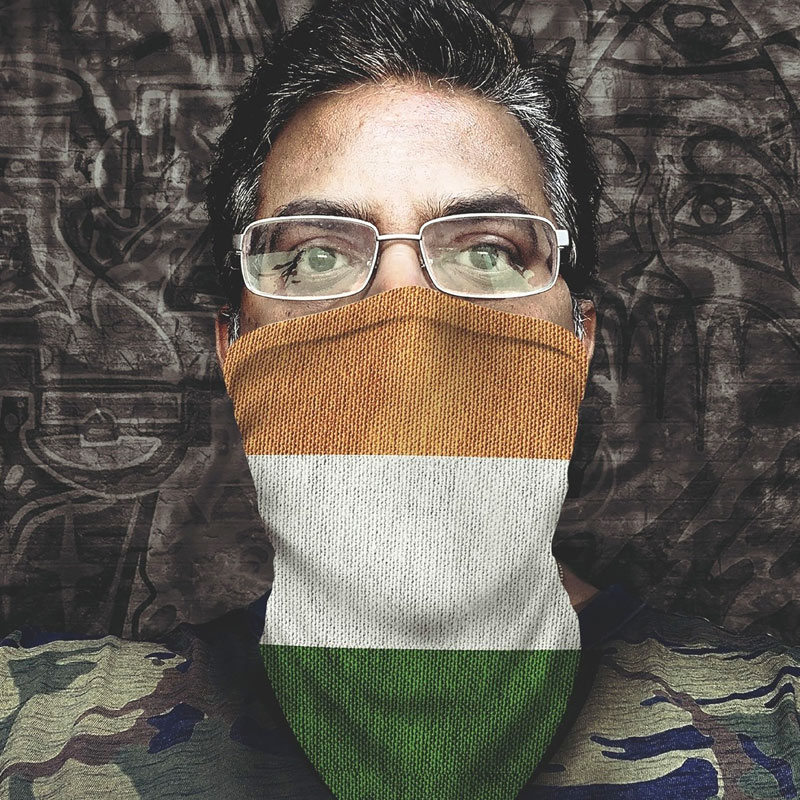
    MUMBAI: In response to Covid2019 pandemic, The Times of India has appealed Indians to make and wear their own masks at home with their #MaskIndia movement. Conceptualised by Wunderman Thompson South Asia, the movement empowered every citizen of the country to take charge of protecting themselves, their families and communities — encouraging individual action and responsibility among Indians, getting them ready to fight the single largest fight our generation has seen, globally. The campaign also focused on proper sanitation and disposal of the masks.

    The ‘Make Your Own Mask’ campaign was launched on the front page of The Times Of India on 6th April involving the power of print, social media and national activation that received a phenomenal response and activated its purpose. 

    The MaskIndia movement has been elevated into a national movement with the Prime Minister Narendra Modi supporting it and himself sporting different homemade ghamcha masks on several occasions during the lockdown. Over a hundred thousand Indians have responded already with their own versions of homemade masks and posted their Mask Selfies and DIY How to Make Your Own Mask Videos with the #maskindia hashtag on social media and many unique, original and cool homemade masks have gone viral across Whatsapp Groups. Check out over 100,000 homemade mask and DIY mask posts on www.maskindia.com

    The Times of India president marketing Sanjeev Bhargava said, “The Times of India has always stood by its motto: “Change Begins Here” and the #maskindia campaign is another link in the long chain of initiatives that we have launched in the recent past. What makes it special is that it has immediate relevance and benefit to everyone in the country. We strongly believe it can play a critical role in our fight against the pandemic. I would like to specially congratulate Wunderman Thompson for not only turning around and developing the campaign from scratch within 2 days but having done so  in the times of a complete lockdown!” 

    Wunderman Thompson Delhi managing partner Joy Chauhan said, “The true character of a country is revealed by how its people and organisations behave in times of crises. With this timely and crucial initiative, The Times of India has proven India’s fortitude, agility and ability to go the distance. All of us at Wunderman Thompson are thankful and proud to be partners.”

    The #MaskIndia movement culminated into a #MaskIndia film featuring a thousand different images of a thousand different homemade masks in a breathe in breathe out the composition of history and culture. The most innovative DIY homemade masks were curated from over 100,000 images posted by Indians during the lockdown with the hashtag #MaskIndia. Editorial photographs of the Masked Statues of National heroes like Mahatma Gandhi, Subash Chandra Bose and the Times Of India’s iconic Common Man feature as special masked characters along with thousands of Indians who have made their own masks and joined the movement.

    Sharing details on the film, Wunderman Thompson India chief creative officer Senthil Kumar said, “The edit has been painstakingly crafted to lock the eyeline in all images so that the transitions from one homemade mask to another are all seamless. The simulation of eye movements is designed to invite a live face-off with audiences who are watching the film on their mobile or television screens. Experience the emotion of a thousand eyes talking to you to deliver a powerful narrative through the masks. All the cultural folk masks and ancient mythological masks have been carefully chosen to share only wearable masks made from jute, coconut husk, bamboo, wood, leaves, paper mache and natural fibre. It’s time to revive our cultural habit of wearing a mask to fight the evil virus, whenever we leave our homes for work and play, for life and family, for our country and for the future of humankind. It’s time to turn the humble ghamcha, dupatta, pallu, turbans, urma, lungi, dhoti, angavastram or any clean cloth into a mask and wear it for India. It’s time to dig deep into our cultural roots and create popular culture, inspiring every Indian to wear a mask like a warrior.”

    www.maskindia.com  features  a unique interactive innovation where every Indian can upload their homemade mask selfie and their image will feature in a custom version of the #MaskIndia video.

    “The idea is to inspire every Indian to Make their Own Mask and share their mask selfie to inspire every other Indian. With over a hundred thousand unique homemade masks already uploaded, the MAKE YOUR OWN #MASKINDIA movement will be amplified further with this interactive innovation”, added Kumar.

    Follow Tellychakkar for the consumer facing news & entertainment

  • The Washout: Wunderman Thompson’s digital film for Tata Steel

    The Washout: Wunderman Thompson’s digital film for Tata Steel

    MUMBAI:  Wash your hands with sanitiser or soap and running water for 20 seconds. Unless you were living under a rock, this is an advisory the entire world is now familiar with. Driven by fear of Covid2019 and thanks to the scarcity of sanitisers, we are now washing hands more than ever. Several videos that have been doing the rounds have taught us how to do it the right way. From wetting hands with water and applying enough soap right down to rinsing hands thoroughly with running water and then drying hands – we have seen it all. We have intimate knowledge of the components of a perfect hand wash – interlaced fingers, palm to palm, rubbing rotationally with clasped fingers and so on and so forth.

    Among the various brands and companies that have been circulating videos on precautions in social media is Tata Steel. It has been actively combating Covid2019 since the lockdown began, issuing several advisories, including one on hand wash. Tata Steel and  Wunderman Thompson South Asia – creators of the advisories – were curious to know whether people are putting their knowledge of best hand wash practices to good use. Are they practising what they have picked up from countless hand wash videos? There was only one way to find out.

    “We conducted a social experiment. We asked people to send in videos of their hand wash regimen. What we discovered was surprising and shocking at the same time! We were pleasantly surprised to see that just about everyone was familiar with the correct way to wash hands. But the relief we felt at this discovery was short-lived as we chanced upon something that was quite alarming, to say the least. We found that everyone without exception kept their taps running while washing their hands. Which meant that for every 20 sec hand wash, each of these individuals was wasting several litres of water,” said the company release.

    Tata Steel has always been committed to a sustainable future. Its sustainability initiatives encompass the areas of biodiversity, renewable energy, water conservation, recycling and reduction of carbon footprint. On the occasion of Earth Week, the message of washing hands while saving water needed to be shared immediately. Who better than Tata Steel – a sustainability champion – to do the needful. And what better way to deliver the message than a film for digital media.

    “But how to get this done at this time? We approached a production house who strung together the videos from our social experiment combining it with footage that they shot, inserted the supers, scored the music and mixed it. And the film was good to go when most of the entire world was shut inside. The film begins with shots of people of different genders and age groups washing their hands. We find that each individual is doing it the right way. The camera then reveals each person had the tap on right through the 20 sec of hand wash. The film ends with the words ‘Don’t let one crisis give rise to another. Don’t keep the water running while you wash your hands,” stated the company.

    Senthil Kumar, chief creative officer, Wunderman Thompson, said: “The idea was to highlight the hidden problem which will only increase with every hand wash. If the tap remains open while we are washing our hands for 20 seconds or more, we end up wasting a lot of water. It is imperative to draw attention to this issue which can be easily overlooked because of the threat of Corona. The creative device of social experiment lends the film a certain candour and authenticity. And since Tata Steel has always stood up for sustainability for a better future, it punctuates this very important message that could otherwise be missed. While we build India’s biggest bridges we also care about the water under the bridge.”

    Arjun Mukherjee, ECD & VP, Wunderman Thompson, Kolkata said, “While we are following the guidelines and washing our hands frequently, we are precipitating another global crisis – water shortage. This can lead to a huge water scarcity in the near future. This timely film drives home the message that when we wash hands we should be careful not to waste water.”

    Vijay Jacob Parakkal, Senior VP & Managing Partner, Wunderman Thompson, said: “Wunderman Thompson, erstwhile JWT, has been associated with Tata Steel for several decades. We had created the iconic ‘We Also Make Steel’ campaign for Tata Steel and, more recently, the ‘We Also Make Tomorrow’ campaign. We are delighted to partner Tata Steel again on this extremely relevant film with an urgent message.”

    Credits:

    Client: Tata Steel

    Agency: Wunderman Thompson

    Project Head:

    Vijay Jacob Parakkal, Sr. VP & Managing Partner

    Creative Team:

    Senthil Kumar, Chief Creative Officer

    Arjun Mukherjee, ECD & VP

    Nuzhath Enayath, Copywriter

    Account Management:

    Nilanjan Sarkar, Client Services Director

    Production house: Little Lamb Films

    Executive Producer: Monalisa Mukherji

    Producer: Avishek Ghosh

    Director & Editor: Nobin Dutta

    Music: Mayukh-Mainak