Tag: Writers

  • 8 Daily Writing Habits of Successful Writers

    8 Daily Writing Habits of Successful Writers

    All great writers have their secrets; there’s a reason they’ve gone through the whole creative process and achieved publishing success and recognition. Although some prefer to keep their information private and never share the details with their readers or potential competitors, many are ready to offer free pieces of advice. After all, writing isn’t an ending resource, and you don’t get poorer just by sharing excellent ideas with others. This short review has gathered information from many authors. It will cover the common writing habits of people who have already achieved something great. Let’s dive right in; the earlier, the better, isn’t it?

    Reading all the time

    The first important aspect is not writing itself but reading. In any academic environment, you’ll learn that the best way to know how to do something is to read about it. For writers, the situation isn’t different either. Just as you can’t become a great painter without seeing any paintings, you can’t write and develop good language skills if you don’t listen to other voices. You can read anything you need for your soul and writing goals: scientific papers about new banana-growing techniques or a recent romantic story of your liking. By reading, you keep in mind how other people work with words. Through reading, we gain inspiration, ideas, and a desire to work further. When people read, they understand how to create a high-quality piece of text.

    Write every day

    That one isn’t surprising either, is it? With every essay, you get better. Although many features are unique to different writers and show their original approach, this habit is pretty regular. All successful writers write every day. For some, there’s a fixed number of words they have to write to complete their plan every day; for others, writing for a certain period of time works better. Very few writers actually write only when struck by inspiration; unfortunately, our minds don’t remain equally fascinated with a story all the time. To become an expert, you have to write. A lot.

    Keep your notebook or sketchbook with you

    The best ideas don’t come to a writer when he or she sits near their desk, patiently waiting for a muse. Reality is much different: you can get new ideas when you want to buy food in a store or when you sit in the park and watch a bird perch on the branch near you. If you don’t have anything to write your idea in, you will have to hope that you won’t forget about the idea until you come home. Life has shown that people do forget and start from scratch. Take a nice notebook and have it with you all the time. If you like using your phone, don’t take anything aside from it. If you draw and feel that it’s necessary to add visuals, do the same. It works with both fiction and nonfiction types of writing.

    Revise old work

    Although this writing habit isn’t particularly enjoyable, a professional writer polishes their text. It shouldn’t be too daunting at first, but even if your work is excellent, you won’t get great reviews if you’ve got many grammatical errors. It is important to note, however, that a good writer waits a little and puts aside their written text before editing it. Let it lay somewhere without reading it, relax, and work on any other assignment. After that, dedicate some time to using editing services of your choice from cheap to expensive, and read your paper, checking how it sounds.

    Sometimes, students, professional writers, and even educators can find themselves at a loss: creating a perfect piece is difficult. If you’re struggling with creating a flawless piece or can’t revise your old work, you may benefit from becoming a customer of a professional essay writing service, for example, AdvancedWriters. Such companies always focus on delivering top service with great care.

    Spend time outside

    Perhaps that would be surprising for you to hear but not all writing habits have to be present at your home. It’s impossible to remain sane and do your job if you don’t have any time for the world outside. Unless you write a monologue, you’ll need to observe others. Writers don’t create in an environment that’s sterile and entirely objective. Regardless of what you’re writing about, you’ll need to observe the people, an event, or even a landscape to gain a better understanding of the surrounding reality. If you’re bored, find yourself some company and spend time with others. However, if you’re doing it for your writing purposes, listen more than talk.

    Create a distraction-free space

    A lot of great ideas come to writers when they are on a run. But there’s a different reality as well: to feel comfortable, you need to have your personalized writing spot. Some writers have entire offices with large wooden tables, while others prefer a small place near their favorite window. Creating a personal space with a nice chair and a clean table will help you work on your paper. Getting into the right mood and having zero distractions would be great for any writer because it’ll help them create a perfect piece for college or a publisher.

    Do your research

    All types of writing require knowledge of the subject in order to create a persuasive argument. If you don’t research the specific historical period you put your characters in or don’t understand the market conditions while writing about the company, you’ll face serious problems. All excellent essays have a large amount of evidence behind them: a story is more trustworthy and interesting if it has specific details. Before even making your main argument, make it a custom for yourself to research and collect information in a separate file or even physical version.

    Fortunately, you can find almost anything online, and there’s always a website for the rarest of topics ever existing.

    Participate in writers’ journals and digests

    Unsurprisingly, all writers need a community where they can share with each other the ideas and tips on improving their skills. Everyone needs assistance and a friendly hand once in a while, and writers’ journals and digests offer just that. Some even provide regular workshops or meetings to exchange one’s experiences. There are definitely many English-speaking writers’ communities in the USA, Canada, and European countries, but you can search for more in any language you like, and there are high chances of finding such places.

    Make your actions regular

    Now that you’ve read the list of things you can (and often should) do to become a better writer, it’s much easier for you to understand the expected scope of work. Realistically speaking, a lot of people have their lives with full-time jobs, and it’s impossible to read and write from start to finish of the day. Do what you can even if writing every day would mean creating one paragraph only. Once you start, you’ll feel more confident in your words and feel more and more inspiration for your future self as a writer.

  • “The idea whose time had come”: Hansal Mehta on making financial thriller ‘Scam 1992’

    “The idea whose time had come”: Hansal Mehta on making financial thriller ‘Scam 1992’

    New Delhi: When the ten-part series Scam 1992 hit SonyLIV platform last October, it captured the imaginations of millions of young Indians in no time. The financial thriller chronicling the life of Gujarat-based stock broker Harshad Mehta, and his involvement in the 1992 Indian Stock Market Scam soon became the most-viewed series on the platform.

    On the last day of fifth edition of the Content Hub 2021 -TV, Film, Digital Video, and Beyond’ – the makers and writers of ‘Scam 1992: The Harshad Mehta Story’ got into a freewheeling conversation with Indiantelevision.com founder and CEO Anil Wanvari and showrunner-writer Alok Sharma to discuss the making of one of the most successful digital series on an Indian platform during the pandemic.

    “Harshal Mehta’s meteoric rise and sudden downfall had captured the imagination of millions, especially Gujaratis in the 90s. I was fascinated by his journey ever since I read Sucheta Dalal’s book in 2003-04, and wanted to tell the story. But that was the era of six-pack abs and shirtless songs, and I couldn’t even consider making it, until years later, when Samir Nair (Applause Entertainment) pitched the story to me and I jumped at it,” recalls director-producer Hansal Mehta, “It was the idea whose time had come.”

    The series went LIVE on the SonyLIV platform in October, 2020 when the first wave of the pandemic had begun to ebb away. The show was lauded for its tight screenplay and sparse writing by a team led by Sumit Purohit, Saurabh Dey, Vaibhav Vishal and Karan Vyas.

    The protagonist played by Pratik Gandhi hit it off with the audience with his one-liners, so whether it was ‘Risk hai to, Ishq hai’ which went on to become the tag-line of the series, or ‘Success kya hai, failure ke baad ka chapter’. These were also some of the lines that Hansal Mehta wanted to scrap out of the script believing them to be too filmy.

    “I found these lines to be too naïve and filmy at first. Par writers ka kamaal hai, wo kaise dikhate hain. Pratik (Gandhi) delivered those dialogues with such conviction and belief, that the audience connected with them. Wo daur filmi bhi tha,” smiles Mehta. Such one-liners were also used by stock brokers then, he adds.

    “It was also a casting feat,” quips co-director Jai Mehta. “Pratik (Gandhi) lent authenticity to the dialogues. Both of us had met several brokers on Dalal Street to get those nuances, and gestures right. It was unreal. Also, most actors in the series, including Gandhi understood finer nuances of the language, as they had done Gujarati theatre or stage plays early in their career.”

    Harshad Mehta’ character in the series represented the angry young man, the writers say, drawing inspiration from Amitabh Bachchan of the 70s. All through the series, he is seen, relying on his family for support.

    Delving into the writing process for a financial thriller, replete with several technical terms, filmmaker-writer Sumit Purohit says, the team made a conscious attempt not to dumb down the script to make it look simple. “We wanted to ensure that it looks authentic- whether it was the way the stock brokers were talking, or bankers discussing the financial transactions. It’s like science fiction. It’s not necessary that people understand the terms, for as long as they are emotionally invested with the characters,” he elaborates.
    Saurav Dey concurs, “That’s exactly the brief we got. We could tell the story as it is, and don’t have to spoon-feed the audience. They can use their judgment and draw inferences.”

    The story also carried a deep political undercurrent, with several scenes raising questions over alleged involvement of political leaders during that time. When asked about treading the fine line, Dey says, “We wanted to be responsible about what we show on screen. So, we retained only those parts, which we could substantiate with evidence. Rest was speculation, and we steered clear of that, or it would have irresponsible filmmaking.”

    The team began with the simple idea of telling a human story. “It was a volatile time, and we showed as much as we could do within the limits of the current time. We focussed on the bigger picture, and did not want that it should get impacted by any kind of outrage,” shares the ace director, who won the National Film Award for directing 2013 movie Shahid.

    However, for this series, Mehta says, he acted more like a motivator, than a writer. “I see my job as that of a motivator, who brings a pool of talent together, and ensures they move in a single direction. The biggest thing in long-form writing is patience and discipline, and the team had that,” he shares.

    Also, like his previous movies – Shahid or Omerta, the series Scam 1992 also did not have a lead actor who shared physical resemblance with the lead character in real-life. “My approach is driven by instincts and trust. That’s how I get writers and actors on-board. The physical likeness is not as important as it is to convey the spirit of the character on screen,” he opines.
    The ace-director also credits his association with Applause Entertainment, CEO Sameer Nair, who he says, ‘gave him the freedom to choose and trusted his choices.”

    Among those choices, were also several famed actors from the 90s, including Mamik Singh aka ‘Rattan’ from the iconic movie – Jo Jeeta Wahi Sikandar who played the Citibank chief Rao in the series. The series also had Anant Mahadevan, playing RBI Governor, S Venkitaramanan and Satish Kaushik as the foul-mouthed stock market kingpin Manu Mundra. “It was a masterstroke,” says Mehta emphatically.

    Another crucial element was planning the locations for the series, set in the 90s – ‘Bombay’ that most members of the team had not seen. “We went through books, pictures and did our research to recreate that era. We even got the original CBI office opened for a few scenes we shot there. It has been lying closed for over two decades,” recalls Jai Mehta.

    After the success of Scam:1992, Hansal Mehta is now back on the sets for his next – a crime thriller based on a true incident.

    The fifth edition of the Content Hub 2021 was co-presented by IN10 Media Network and ZEE5, and co-powered by Applause Entertainment and Tipping Point, the digital content unit of Viacom18 Studios. PTC Network was the supporting partner.

  • #Throwback2020: Scriptwriters on the new normal

    #Throwback2020: Scriptwriters on the new normal

    MUMBAI: The great irony about the year 2020 is that a year that will forever be defined by one of the worst pandemic known to humankind is also one that redefined entertainment and paved the way for many millions. It would not be wrong to say that 2020 was the writer’s year. Over the course of the last 12 months, streaming platforms served us gems like Scam 1992, Mirzapur, Paatal Lok and Panchayat, to name a few. The television industry is also experimenting with content. While film and TV producers are grappling with challenges in production, writers are swamped with creating content to meet the consumption demand.

    Production houses are in need of scripts more than ever – a kind of a blessing in disguise for writers, who are working furiously to wrap up pending episodes and current seasons. From the lows of lockdown to the highs of the post-Covid production boom, writers have one thing in common: they have had to adapt swiftly to a new normal.

    The lull of lockdown

    Screenwriters Association member Satyam Tripathi revealed that with the abrupt imposition of lockdown, work came to a grinding halt, and just like any other industry, writers were also affected. But personally for him, working in the confines of his home and coordinating through online platforms was a welcome change, as otherwise a lot of time is wasted in the physical meetings.

    Zoom also provides a workaround, albeit a rather clumsy one, to the key feature of the writers room – the whiteboard, where character arcs and plot lines are scribbled, erased and obsessively rearranged until final things get into place.

    “For a creative person, perhaps this was a time where a lot of introspection was happening in terms of the content we write, in the manner in which we approach our work. When you face a hard time it is then you realise how much you are really connected with the emotions you write about. In those times there was so much insecurity around us in terms of money, work, and life itself,” Tripathi mused. 

    Author, writer, documentary filmmaker Jaya Mishra, who has written for shows like Kehne Ko Humsafar, Cold Lassi aur Chicken Masala, spent her time dashing off scripts in the first few months of the lockdown. “There was pressure to deliver the scripts because nobody realised how much time it would take to get back to normalcy. People wanted to finish the writing processes of all the shows; basically that was the only work we were doing at that moment,” she shared. “But how does one write about normal life when life was not at all normal? The world was at a standstill. I couldn’t focus because all my shows are romantic comedies and there was no romance, I mean how do two people even meet anywhere without the fear of the virus?”

    She went on to add that shows which were almost ready to go on floors required last-minute changes. So, there was a lot of rewriting that happened during that time. 2020 eventually gave Mishra the chance to take a pause from hurtling between writing and delivering scripts. She devoted this free time to her other love – crocheting.

    At present, her in-tray is overflowing. She has started work on her second book, which has been a long time coming. Mishra’s first book was the fiction novel Kama~the story of Kama Sutra published by Om Books. She has her hands full writing for Alt Balaji’s Toxic, Married woman, United, and is also penning screenplay dialogues for an unnamed original series with One Life Productions.

    Director, lyricist, and Happy New Year writer Mayur Puri defined the first few months of lockdown as tough, with shoots cancelled and no dubbing taking place. Apart from this, Puri’s company which does a lot of translation projects for OTT platforms saw a period of lull.

    Said he: “Before the lockdown, my company produced 30 hours of content and the idea was to make it to 45 hours of content till 2021 but now it looks quite difficult to achieve. In fact, for the first three months, there was no work but from October onwards we have reached our monthly targets. I am hoping by the first quarter we will be back on track as far as bulk business is concerned.”

    On the bright side, more projects have started flowing in from June and July onwards. Puri now has three projects lined up for release this year, including Disney and Marvel Studios’ Black Widow, and Free Guy. All the movies were commissioned in 2020.

    Besides volume, the nature of work has also changed for writers. People who were earlier writing two movies are now working on four projects. The past year has also been a wake-up call for screenplay writers. “For instance, when it comes to OTT, there is more pitching and development before actual writing happens. So, writers are becoming more disciplined, they now understand that style of working. Since the writing activities have increased, hopefully it will harbinger better content for us.”

    Production blues

    The industry breathed a sigh of relief when the government allowed filming to resume, under strict guidelines. Of course, production while being Covid compliant comes with its own share of hassles.

    Writers are now being asked to rethink what could be feasible as there are restrictions in terms of shooting, budget, people and much more. They are asked to lean on fewer characters along with special effects and VFX to provide scale and make the show more relatable.

    To make the scripting process more convenient, multiple staff are splitting into mini-rooms, with senior-level producers doing Zoom sessions while lower-level personnel work offline on script changes or other details. Some showrunners are also scheduling one-on-one Zoom or Google Meet sessions with members of the staff in an effort to ensure that everyone is getting the support they need.

    Despite the occasional technical hiccups, like bad internet connections, sound and the transition to teleconferencing has been a source of comfort to many in this new quarantined world.

    Mirzapur writer and creator Puneet Krishna is currently basking in the success of his original series. But the behind the scenes story is not so sunny. Mirzapur was in the middle of post-production, so it was an ordeal for him to shoot while following Covid protocols. Due to this, the dubbing process became elongated.

    Tripathi, who is busy developing an OTT series with Reliance Big Synergy, did not have any programmes on air so he did not face any immediate challenges. He got an ongoing show – Zee TV’s Ishq Subhanallah – just when the lockdown was lifted. The only problem he encountered was when somebody on set tested Covid positive, forcing him to rewrite certain scenes.

    Regardless of directives, that vary from studio to studio, screenwriters say their anxiety lies largely in the uncertainty looming over them. 

    Puri asserted that it is important for a writer to have the freedom to take his pick of work. “What we look at is we get enough choice of projects and decide what is best suited for me and when the work stops you are not left with any choices,” he noted. “Not having a choice of subject was one big challenge. I am a small entrepreneur who runs a business of writing. For me, it was very difficult because payments stopped coming and I have a team of writers I need to pay. Thankfully, when work started my team picked up the pace and we started working harder and we accommodated Diwali bonuses also. I think the worst has passed and we are in a better position.”

    The silver lining

    The emergence of OTT platforms has been a gamechanger for writers. Puri said that thanks to these streaming services, writers are now getting recognised. In addition, with most theatres shit or running at 50 per cent capacity and no big budget movie releases happening, the race for box-office numbers is virtually non-existent. Now, it is completely a contest of skills, which is why Puri believes the overall quality of writing should go up.

    He quipped, “With OTT there are so many stories which can be now explored which are not conventionally box-office. The only criteria is to make the content right and think of the audience as an intelligent audience. The value of writers is going up, in terms of the value, payment, and respect for their work. I am hoping this continues even when the theatres are open.”

    Acknowledging that there has been a spike in OTT consumption, Krishna noted that people who were releasing films in cinema halls are now opting for OTT release –so it has become a level playing field. At the same time, he is hopeful that once things normalise, people would flock back to movie theatres.

    Forecast for the future

    Digital adoption in various walks of life surged by leaps and bounds in 2020 and writing is no exception. For a while now, more and more people have voiced that TV, movie and OTT scripts shouldn’t be made with paper, as paper scripts being tossed around a set might cause problems. So, writers suggested alternatives such as electronic scripts and electronic sign-in/out should be explored in the post-Covid world.

    But what about the big picture? Mishra was of the view that the entertainment industry is going very strong.

    “Fortunately, the market has been pretty good to writers. A lot of ideation went on, it has helped me to work on new shows. All this work came to me in the last five months. We are still in a better position compared to directors, actors and producers,” he said.

    Tripathi opined that the market is still picking up and will take time to settle. The entertainment industry was already facing issues after TRAI’s intervention, digitisation, and then the BARC incident happened. And while the OTT juggernaut is no blip on the radar, traditional linear TV still has a lot going for it. “The industry was kind of settling in when the pandemic knocked on our doors. I also believe that the OTT spike is just a rumour, it is more of an urban phenomenon. Because during the lockdown we have realised that reruns are doing much better than any form of content,” he added.

    A lot of negativity that has come to be associated with daily soaps will decrease, and audiences will react to it, claimed Tripathi. That is why a lot of older shows are working as they bring a sense of nostalgia and good times.

    Writers also echoed the view that smaller budgets and fewer crew on sets would force directors to tell more intimate and pertinent stories.

    These are exciting times to be a screenwriter, with the industry in transformative stage, new forms being explored and a burgeoning need for content among new and diverse consumers. The page is fresh and the quill is ready, now it remains to be seen what story they write.

  • Screenwriters Association announces nominees for lyrics category of SWA Awards 2020

    Screenwriters Association announces nominees for lyrics category of SWA Awards 2020

    MUMBAI: Screenwriters Association (SWA), the Indian guild of screenwriters and lyricists, announced today the 10 nominees for the Lyrics category of SWA Awards 2020. Winners of the best lyricist for feature film and best lyricist for tv serial/original series will be announced in an online awards ceremony on 27 September 2020.

    Nominees for Best Lyricist for Feature Film are:

    1.            Ankur Tewari and Divine for Apna Time Ayega in Gully Boy

    2.            Amitabh Bhattacharya for Kalank title track in Kalank

    3.            Divine and Naezy for Meri Gully Mein in Gully Boy

    4.            Varun Grover for Ruan Ruan in Sonchiriya

    5.            Manoj Muntashir for Teri Mitti in Kesari

    Nominees for Best Lyricist for TV Serial/Original series are:

    1.            Shekhar Astitva for Title track in Radhakrishn

    2.            Zama Habib for Ek tum chup, ek chup main in Isharo Isharo Mein

    3.            Shashank Kunwar for Pet bechara in Kulfi Kumar Bajewala

    4.            Majaal  for Rooh in Lakhon Mein Ek Season 2

    5.            Majaal  for Nishaniya in Laakhon Mein Ek Season 2

    Congratulating the nominees, SWA general secretary Sunil Salgia said, “Ask anyone abroad about Indian films, the response will be, ‘Oh, Bollywood! Great songs and dances!’ Songs give a unique identity to our movies and surely there are no songs without lyrics. Talent that can say a thousand words in a few, in spite of their struggle to write poetry beyond the hook phrase and which can be heard and remembered in the noisy world, deserves applause.”

    The 10 nominees were selected from 146 entries received by the SWA Awards committee from Hindi language films and TV serials/original series released in 2019. A jury comprising of eminent lyricists such as Amit Khanna, Ila Arun, Kausar Munir, Mayur Puri and Panchhi Jalonvi selected the nominees after a thorough individual and joint evaluation process.

    Lyricist and spokesperson for the SWA lyrics category Shellee said, “It is difficult to imagine films such as Awara, Mera Naam Joker, Guide, Pakeeza, Mughal-e-Azam, Teesri Kasam without their songs. Songs are the ornaments that adorn our cinema. Their fragrance lends beauty to our ordinary lives. I congratulate the nominees of SWA Awards 2020 and wish them the best of luck.”

    The Screenwriters Association (SWA),was formerly known as Film Writers' Association (FWA). It is a Trade Union of screenwriters and lyricists who work for Films, TV and digital media in India. Authors, novelists, playwrights, journalists who aspire for to diversify or join fulltime the mediums of films, TV or digital entertainment, are also members of the SWA. It has been working for the last 60 years to get the Indian film and TV industries to acknowledge the central role of writers through collective bargaining, legal assistance, mediation and settlement of disputes and education.

    SWA is holding the first ever SWA Awards on the occasion of its diamond jubilee year in 2020. The members aspire to continue this award function for many more years. Since they are judged by knowledgeable screenwriters and lyricists, these awards promise to become the most coveted validation for writers in India, much like the awards of other prestigious international writers’ guilds and literary organisations.

    The nominees spoke to SWA, reacting to the announcement:

    Nominees – Best Lyricist for Feature Film

    Song: Apna time ayega | Film: Gully Boy

    Ankur Tewari: It is an honour to be nominated in the Best Lyrics category and I am thrilled to be in such esteemed company with Divine and the other nominees. I would like to thank SWA for this opportunity.

    Song: Meri gully mein | Film: Gully Boy

    Divine: Of all the tracks I have written till date, Apna time aayega and Meri gully mein have arguably had the biggest impact not just for me or Gully Boy, but for the Hip-Hop movement as a whole in India. Meri gully mein is close to my heart as the original release truly put the sound of Mumbai on the map. We have never looked back since.

    Song: Meri gully mein | Film: Gully Boy

    Naezy: I am delighted to have been nominated for "Meri Gully mein" by SWA Awards 2020.  This song is very special to me and I feel honoured that it has been nominated in the Best Lyrics for Films category.  My best wishes to SWA for their first ever Awards and also to all the fellow nominees.

    Song: Kalank title track | Film: Kalank

    Amitabh Bhattacharya: I am honoured and humbled to receive nomination in the Best Lyricist category of the first SWA Awards, the only award of the writers, by the writers and for the writers. My gratitude and best wishes to Screenwriters Association. I am really excited and I look forward to the ceremony.

    Song: Ruan ruan | Film: Sonchiriya

    Varun Grover: It's an award for the community by the peers and that makes it extra special. I had decided not to attend any regular film awards because of the way they treat writers and technicians and it's a great step forward that SWA decided to start awards where writers are in the front and centre. Now the stage is ours. So are the microphone, chairs, victories and defeats and joys and sorrows.

    Nominees – Best Lyricist for TV Serial/Web Series

    Song: Ek tum chup, ek chup main | TV Serial: Isharo Isharo Mein

    Zama Habib: I am thrilled to know that my song has been nominated in the Best Lyrics category by SWA Awards. It feels great and special because the award is from the writing fraternity for the first time. Writers choosing the best of writing is always a great and satisfying idea.

    Song: Pet bechara | TV Serial: Kulfi Kumar Bajewala

    Shashank Kunwar: An artist’s biggest motivation is appreciation, and it is really special when it comes from the people who understand the finer nuances of the art form. I want to congratulate SWA for giving shape to this award. In the times of lockdown and pandemic, it is comforting to feel that one is not working in isolation. Thank you, SWA!

    Song: Title track | TV Serial: Radhakrishn

    Shekhar Astitwa: I am happy to hear that SWA will hold the first ever SWA Awards 2020. I congratulate SWA for organising these prestigious awards and extend my best wishes to my fellow nominees.

    Songs: Rooh and Nishaniya | original series: Lakhon Mein Ek Season 2

    Majaal: Writers are travellers and SWA is the wisdom tree which stands tall and steady. It bears fruit for the hungry and provides shelter when the weather is testing. And now a ‘never-seen-before’ flower has blossomed on this benevolent tree – SWA Awards – to bless the ones destined to travel further. I feel fortunate for being nominated for the first ever SWA Awards. It has inspired me to keep travelling on.

  • Television actors should also get royalties on reruns and repeat telecasts: Taarak Mehta Ka Ooltah Chashmah’s Shailesh Lodha

    Television actors should also get royalties on reruns and repeat telecasts: Taarak Mehta Ka Ooltah Chashmah’s Shailesh Lodha

    MUMBAI: Television industry has been one of the worst-hit sectors due to the pandemic followed by the subsequent lockdown. Now, when the shoots have finally resumed after a hiatus of four long months amid all SOPs and safety measures laid down by the government, many celebs are working with a sense of fear.

    aAmpere Analysis projected that the pandemic had delayed at least 60 per cent of scripted television programming worldwide, including at least half of the programming originally scheduled to air in the second half of 2020. There had been a noticeable increase in non-scripted productions—including smaller-scale series capable of being produced remotely—that can be used to fill schedules until scripted programs resume production (noting that audiences may eventually become tired out by pandemic-themed programming).

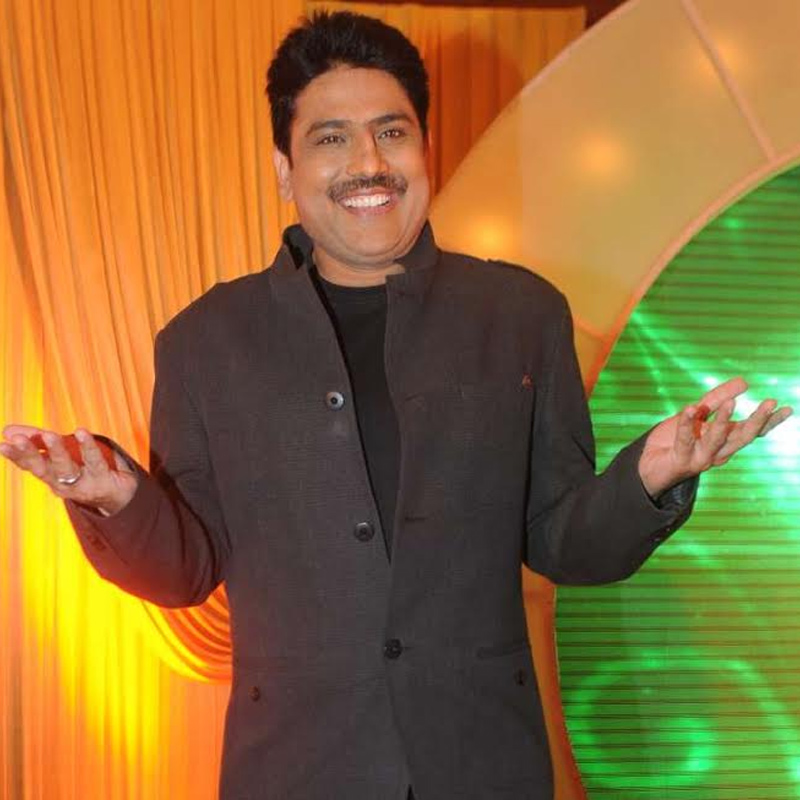
    Shailesh Lodha, an Indian actor, comedian, writer, and best known for playing the role of Taarak Mehta in India's longest-running sitcom serial Taarak Mehta Ka Ooltah Chashmah, in an interaction with Governance Now MD Kailashnath Adhikari talks about challenges faced by the television industry, actors and much more. 

    According to him actors especially who also do brand endorsements, live shows and appearances are facing the brunt of pandemic.

    LodhaShailesh shares, “I belong to show business, which has been severly impacted due to pandemic. There are no events or live shows. Thankfully television shooting started last month. So professionally speaking there were no activities during pandemic. I did quite a few online shows, but they don’t give you satisfaction. You don’t feel like you are performing.”

    He mentions that it is difficult to predict when the normalcy will return but according to him situations are better than before. However, he believes that the turmoil caused by the pandemic has instilled the sense of fear among people. He said that while entering the set when someone sees cast and crew members in masks, PPE kits, and gloves it creates a fearful environment. He also thinks that India is doing considerably better, with recovery rate at 72 percent and death rate at 2 percent.

    Kailash Adhikari raised a question to Lodha if production houses broadcasters are partially responsible for the issues faced by  artists, hair and makeup artists and technicians.

    Lodha quipped that the challenges faced by the entertainment industry is no different from other sectors. It is just that the entertainment world is glamorous, and people are more attracted towards entertainment news, hence the media stays in the limelight. But he believes there are various issues and it is going to be in every section of the society and entertainment world is no different from that. He suggests operating business to create job opportunities and strengthen the economy.

    As far as the industry’s responsibility towards daily wage earners is concerned Lodha said, “I think if we had taken our responsibility towards the lower section of the society more seriously, it would have been a much better situation.”

    As the daily soaps went out of stock, broadcasters resorted to popular reruns of their shows. However, TV reruns might have attracted viewers but not advertisements. Despite viewership no shareholders have been benefited. But during the conversation with Adhikari, Lodha sparks a larger debate about royalties. He said, “Why artists are not benefited when reruns or repeat telecasts are happening. In most of the instances, we look at what is happening in the West, but I think it is high time when artists should also get the royalties of the show. There should be some provision’s under IPRs (Intellectual Property Rights).”

    Actors who are part of endorsements, appearances and live shows are severely impacted with their earnings being hampered by the pandemic and lockdown.

    Lodha who is a renowned poet and worked in SAB TV’s Waah Waah Kya Baat Hai and several other shows notes that for an artist it is important to have a live audience. Looking at the audience’s reaction gives a certain amount of happiness. But to the pandemic there are no live shows, you are not able to see audience reaction. 

    He adds, “As a writer and a performer I can say there is not much earning, and whatever is there it is biased earning. In a biased market there is earning but no satisfaction. People are arguing to reduce rates as things are happening virtually, but the artist remains the same. I think it will take one year to get back to normal.”

    Finally, film and television shootings have started with a lot of restrictions and limitations. Speaking about the same Lodha highlights that it is the new normal. However, he points out that shooting is more about precautions and less about limitations. He thinks that technology will have to play a much bigger role.  Production houses are heavily dependent on chroma, special effects and VFX  to shoot crowd scenes.

    Recently, a blanket ban was introduced in the industry where actors, technicians and crew members above the age of 65 years were not allowed on the film and television set. However, as per Bombay high court’s verdict the ban is now lifted. Lodha thinks at that time it was justified to impose a ban considering elderly citizens were at high risk.

  • Good writers are hard to find, says the television industry

    Good writers are hard to find, says the television industry

    MUMBAI: The heartbeat of any television programme lies in its story and content. Developing good content through various ideas and imagination is a significant priority for television channels and producers. Story-telling, as they say, is an art and the small screen is constantly looking for compelling scripts that tell stories which entertain, engage and enrich the audience. Over the past few years, the Indian television industry has been exploring new formats and series of programmes in order to give the viewers an excellent TV viewing experience.

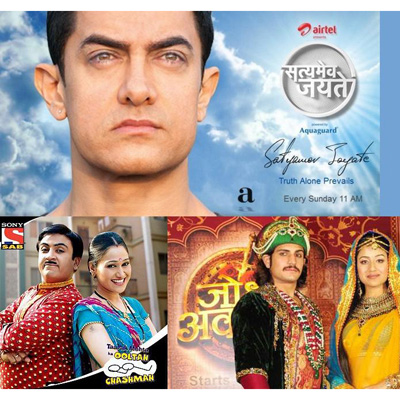
    Television director and creator of the unique chat show Satyamev Jayate, Satyajit Bhatkal says, “To be honest, we did not have any preconceived model for content creation or the kind of show we hoped to do. We made 6-7 documentaries on real life people and we realised that there was so much happening in the country. The common man faces so many problems and we needed to address these serious issues and give a 360 degree look to the matter.”

    However, except for a few who are willing to take up the challenge of creating something new, many are still stuck with the tried and tested.  According to Bhatkal, television, today, is way too cautious.  He elaborates, “It is a challenge that we have to cater to people of various education levels and social backgrounds. However, I feel we are not willing to move to a different level of aesthetics.”

    Director of many popular television series like Amanat, Kyunki Saans bhi kabhi bahu thi, and the current hit show Jodha Akbar, Santram Verma believes that there is a division amongst the audiences today as while some of the viewers want to watch fresh content, the older generation wants to stick to the same stories that were showcased years back. As a result, he feels that it is hard for the industry to evolve.


    He says, “Everybody is sticking to the safe formula of ‘saas-bahu’. Good writers are hard to find these days. Writers lack the fire in them to come up with fresh concepts. TV is not experimenting with novel ideas.”

    Speaking on the quality of writers, producer of the very popular show, Taarak Mehta Ka Ooltah Chashmah, Asit Kumar Modi says, “There is a lack of good writers. Generally speaking, channels go with writers that they have previously worked with. If we want to encourage new content, channels should have better adaptability for new writers and then, we can produce better content.”

    When asked whether broadcasters give the makers enough support and freedom, Modi informs that Sab played a good role in encouraging fresh content and promoting comedy shows like his on the channel.


    Bhatkal expresses that Star has been an extraordinary and participative partner for his show, “Star allowed us to feature the show on a Sunday morning instead of an evening prime time slot as we wanted the whole family to watch. Since it did not have a Telugu channel, the network gave the broadcast rights to its Telugu competitor as we wanted the programme to air in every Indian language. Star even permitted SMJ to be aired simultaneously on Doordarshan on the same day and at the same time, at the expense of its own traffic. What more could I ask for?”

    Talking about the concept of seasonal shows, Verma says, “Seasonal shows are the best. If implemented fully on Indian television, it will have a better emotional connect with the audience.”

    According to Modi, it is a good idea to have seasonal shows as after a point even the audience gets bored. However he is quick to point out that channels should also be convinced of the format.

    Channels need to have more confidence in seasonal formats and help in the distribution of the same. Modi emphasises that irrespective of ratings, losses and profits, one needs to constantly experiment on Indian television.

    To discuss more about the content on television, Indiantelevision.com is organising the ‘Content Hub’ that brings together writers, creators, producers, artistes and broadcast executives, both for TV and digital, all under one roof. This initiative is meant for all professionals, newbies and anyone who is keen to know about writing, producing and creating content for television and the digital space.


  • American, Canadian filmfests call for entries for features, documentaries

    American, Canadian filmfests call for entries for features, documentaries

    NEW DELHI: Several American and Canadian feature and documentary film festivals are calling for entries from across the world to compete their awards.


    The New York International Children’s Film Festival has set its final deadline for Feature Films as 10 November.


    The Festival is North America’s film festival for children and teens. Each year the Festival presents 100 animated, live action and experimental shorts and features from around the world plus retrospectives, filmmaker Q&As, workshops, audience voting and an annual Awards Ceremony.


    It wants creative, original, non-formulaic short and feature films that support the mission to create a more dynamic film culture for children and teens. It also often shows films that were not created with a young audience in mind, but are received passionately and enthusiastically by attendees aged 3 to 18.


    Members of the Festival jury include Susan Sarandon, Geena Davis, Bill Plympton, Christine Vachon, James Schamus, Henry Selick and Gus van Sant, among others.


    Meanwhile, the New York Festivals Awards 2015 ceremony will celebrate the World’s Best TV & Films, as well as present the Lifetime Achievement Award, Broadcaster of the Year, Production Company of the Year, and United Nations Department of Public Information Awards.


    The deadline to enter the 2015 Television & Film Awards competition is 15 October. All Entries in the 2015 competition will be judged online and screened by New York Festivals Television & Film Awards Grand Jury of 200 plus producers, directors, writers, and other creative media professionals from around the globe. Award-winning entries will be showcased on the NYF Television & Film Awards website.


    Meanwhile, the Nashville Film Festival will mark a celebration of the diversity of the human spirit expressed through the art of film. In year-round programs, NaFF helps build a more informed, collaborative and alive community. The call for entries for the 2015 Nashville Film Festival is open and cash and prizes valued at over $54,000 are given. Films that qualify are Live Action, Animated and Documentary Short Films for Academy Award. The deadline is 19 November.


    The Hot Docs, Canada’s largest documentary festival, conference and market, will present its 22nd annual edition from 23 April to 3 May 2015. An outstanding selection of approximately 200 documentaries from Canada and around the world will be presented to Toronto audiences and international delegates.


    Hot Docs will also mount a full roster of conference sessions and market events and services for documentary practitioners, including the renowned Hot Docs Forum, Hot Docs Deal Maker and The Doc Shop. In partnership with Blue Ice Group, Hot Docs operates the Bloor Hot Docs Cinema, a century-old landmark located in Toronto’s Annex neighbourhood.

  • Prestigious “Webby Awards” Honors Grandmother India Design

    Prestigious “Webby Awards” Honors Grandmother India Design

    MUMBAI: Grandmother India Design, Pvt., Ltd (GMI) is pleased to announce the addition of another award for their work with “Magma Fincorp”. The design agency has won the title of “Official Honoree” at the 17th annual Webby Awards in the Financial Services/Banking category for their exceptional work.

    The Webby Awards (www.webbyawards.com), hailed by the New York Times as the Internet's Highest Honour announced this year’s “Webby Winners Gallery & Archive” at an event held May 21st, 2013 in New York City.

    Speaking about the project that won the award, Cyril-Vincent Michaud, Head of New Media says, “our task was to position online, the Magma Fincorp’s brand as ‘the’ benchmark and to promote the company amongst investors and potential employees. The website had to extend the brand’s services to the end consumer, drive in more traffic to the site and create a wider awareness of Magma in the online medium. The task was also to inform and provide detailed up-to-date information for the company’s target audience. The solution that we conceptualized and executed provides not only an excellent first impression to Magma’s audience, it also conveys Magma’s main value proposition, which is to empower internal communication and provide an online marketing tool to establish a dialogue between the company and its audience.”

    The Webby Awards celebrates those developers, designers, coders, writers, marketers, dreamers and boat rockers who make every aspect of the web (no matter how technical) a work of art. Now in their 8th year, they have added new social categories to ensure cutting edge ideas have a place on the table. The awards are meant to honor creative excellence on the internet and recognize the creative and marketing professionals behind award winning sites, videos, marketing programs and mobile sites/apps from all levels of budget and organizational reach.

    Speaking about this milestone for GMI, Mr. Pradeep Datwani, Director, Business Development, Grandmother India Design Pvt. Ltd. says, “It’s an honour to be recognized for our contribution to the industry and we are truly humbled by this accomplishment. At Grandmother, it has always been our endeavour to be the best in the class and bring the latest trends of design and quality execution. We will continue to do so across all our projects with a clear vision to develop excellent designs that make our customers happy.”

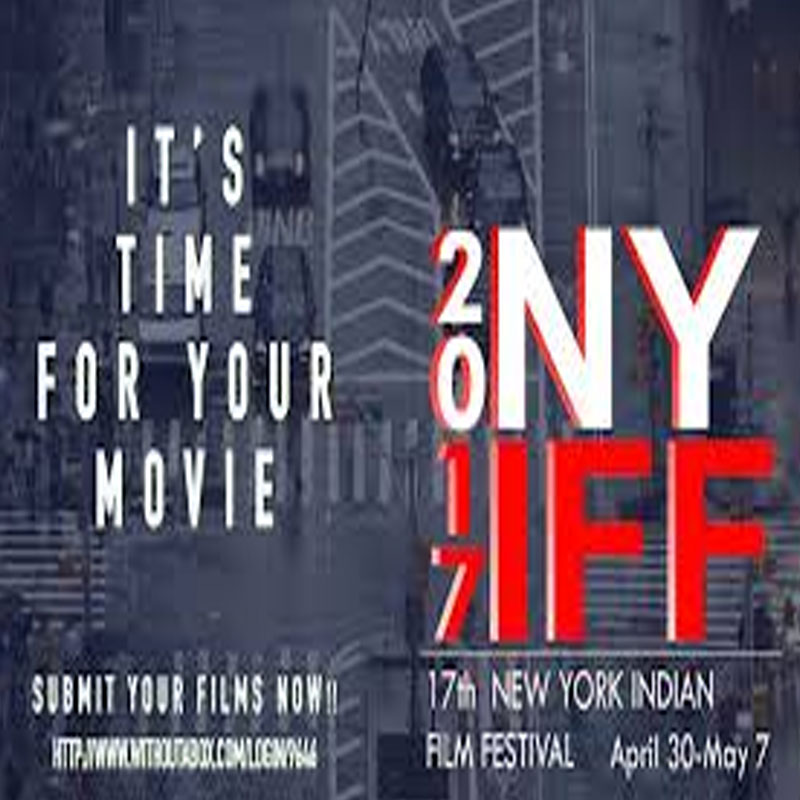
  • Entries invited for IAAC New York Indian film fest

    Entries invited for IAAC New York Indian film fest

    NEW DELHI: The New York Indian Film Festival has invited entries for their next edition to be held in May next year.

    The films will be in four categories: fictional features which are above forty minutes, fictional shorts under forty minutes, documentaries of above 40 minutes and those that are below forty minutes. The Festival will be held from 1 to 5 May.

    The Festival will feature Indian Diaspora Cinema with films that feature the work of Filmmakers, Actors, Writers, Directors of South Asian descent living outside the sub continent. This may include films made by Non-South Asians that feature significant South Asian content, inspiration, subject matter.

    It will also have Indian independent cinema for films from the Indian subcontinent with a unique voice/message that may be labeled alternate, arthouse, reality, noir or independent cinema.

    While the regular deadline is 24 December, films can also be accepted by 8 February.

    A full list of acceptable film formats is available on Withoutabox and those unsure of whether their film is eligible for submission can write to nyindianfilmfest@gmail.com