Tag: WPP

  • Quasar hires Rasika Bamba as head of digital media, north and east

    Quasar hires Rasika Bamba as head of digital media, north and east

    MUMBAI: Part of WPP Group, Quasar, a full service digital agency, has appointed Rasika Bamba as the new regional head, north and east.


    She will be in charge of scaling up new business initiatives and to strengthen existing relationships in the region. She will additionally be responsible for the media practice at Quasar. Bamba will report into the agency’s business head Gaurav Nabh and will be based out of New Delhi.


    With over 10 years of digital experience, Bamba joins the Quasar team from Hungama Digital Services (HDS) where she was heading business development and servicing – defining the digital roadmap for several key clients at the agency. She spearheaded client relationships like Hindustan Unilever, Microsoft, Mahindra, ACC, SBI MF and was also in-charge of the media practice. Prior to Hungama, she has been associated with brands like Yahoo India and Affle.


    Nabh said, “Rasika is a thorough digital professional, with experience across various industries. Over the years she has handled some tough clients and mastered her skills in managing tough situations. With her deep understanding of the medium, she has been instrumental in convincing brands to venture into the digital medium. We look forward to Rasika’s invaluable inputs as she leads our client relationships and grows our specialised media practice.”


    Bamba said, “I am excited to come on board lead the business and build the media practice at Quasar. Given the growth path the company has chalked out for the next 18 to 24 months, this is a great opportunity for us to deliver true value to our existing clients and bring on new ones to our roster.”


    Bamba brings to the table vast domain knowledge, a keen understanding of integrated media requirements and enjoys working with various facets of digital media to ensure thorough execution of the core business strategy to deliver results.

  • AKQA sets shop in India

    AKQA sets shop in India

    MUMBAI: Ideas and innovation company AKQA has expanded its presence within Asia by opening its first office in India. Excellence in engineering and creativity has always been at the heart of AKQA and opening an office in Gurgaon will play a pivotal role in that story. The India engineering team will integrate with AKQA global creative teams to deliver world-class digital experiences for global brands across borders.


    The initial phase will focus on AKQA’s deep relationships with the world’s largest platform vendors, and their already successful relationship with Adobe. Building upon already well-established excellence in delivery and creativity on the Adobe Marketing Cloud (AMC), Gurgaon will extend this capability and become the AMC Technology Centre of Excellence for AKQA. 


    AKQA chief technology officer Ben Jones said, “It’s a proud moment for AKQA to be established in such a vibrant and exciting market. Focusing on Gurgaon as a Technology Centre of Excellence has enabled AKQA to further advance and scale our relationship with Adobe. AKQA brings something different to a highly skilled technologist than our competitors, everyone benefits: our clients, the market and AKQA.”


    “Partnering with global companies like AKQA is strategic for Adobe as we continue to accelerate the adoption of our digital marketing solutions in new and emerging markets. AKQA’s new office in Gurgaon represents exciting opportunities for both companies to provide world-class solutions, upon the Adobe Marketing Cloud, across the globe,” mentioned Adobe vice president of global sales Jay Sampson.


    AKQA director of client services Anurag Bhatnagar added, “Consumer behaviour in India is changing rapidly, and our ability to drive cohesive, ideas-led experiences for brands across multiple touch points will remain the keystone of our DNA in India. I am truly excited and proud to be part of AKQA’s journey.”


    Gurgaon will rope in around 50 specialists by the end of the year. In June 2014the digital agency had announced the opening of its office in Sao Paulo, Brazil. It currently employs 1,600 professionals across the globe.

  • GroupM’s market share increases to 41.2 per cent

    GroupM’s market share increases to 41.2 per cent

    MUMBAI: GroupM, WPP’s integrated media and marketing company, has topped the RECMA overall activity billings 2013 ranking of media agencies again. GroupM India increased its market share as per RECMA in the year 2013 to 41.2 per cent from 40.3 per cent in 2012. Globally, GroupM retained the number one position amongst media agency networks with a market share of 28 per cent. The RECMA report evaluates the overall activity – including buying billings and specialised services.


    Mindshare continues to lead in overall market share as the largest integrated media planning company in India, while the other GroupM agencies registered a healthy growth over the last year. GroupM agencies dominated RECMA’s qualitative evaluation with Maxus being the only media agency in India to be rated ‘dominant’, for the fourth year in a row. Mindshare and Mediacom were rated ‘high’ while MEC was rated ‘good’. Continuing its winning streak from 2013 where the network picked up over 80 new clients, GroupM agencies have so far won over 50 new clients in the first half of 2014.


    GroupM agencies continue to dominate all industry awards. Apart from that, GroupM is the only media agency network to have won the Porter Prize in 2013, ‘The Dream Company to work for’ in the media and entertainment sector and the ‘Best Employer’ at the World HRD Congress.


    Speaking on the year so far, GroupM south Asia CEO CVL Srinivas said, “In recent years, GroupM has taken great measures to become future ready and give our clients an edge in a highly competitive media market. We no longer plan only media for them, but give them end to end integrated marketing solutions that bring digital marketing, content, data and analytics together with traditional media such as TV, radio and print. Our collaborations with global leaders in digital media, data, technology and research, coupled with years of collective experience gives our clients the advantage of working with a true thought leader and help them build highly successful brands. We were the first agency network with whom Facebook signed a partnership agreement in India and have a similar very unique partnership with Google that brings great value to our clients”.


    Over the last year, GroupM took a fresh approach to integrated marketing solutions with a program called New ME. This new approach resulted in several successful campaigns including the highly impactful launch of Honda Mobilio with Kapil Sharma led by digital content and the ‘Power of 49’ campaign for Tata Tea led by TV advertising, content, mobile marketing and social impact. In May 2014, Mindshare launched the Loop Room in Gurgaon and Mumbai to help media planners and marketers pick up insights in real time. Maxus recently launched Moribus, its behavioral lab.


    “GroupM agencies are at the cutting edge of media and we are preparing our teams and clients to not just move with the times but stay ahead,” added Srinivas. The New ME approach also helped expand business with new clients across industries ranging from e-commerce, banking & insurance, sports, retail, healthcare, etc.

  • Maxus wins businesses worth over Rs. 300 crore

    Maxus wins businesses worth over Rs. 300 crore

    MUMBAI: Maxus, yet again retains the title of the most ‘dominant’ agency as per the latest RECMA report, a qualitative assessment for all leading media agencies in India.

    It is the fourth consecutive year that Maxus is on the top of the RECMA ratings. Along with this, the agency also won business across 23 new clients, worth upwards of Rs. 300 crores in the first half of 2014. These new clients include Tata Sons, JK Tyres, Kotak Mahindra Bank, Unitech, Paytm, Askme.com, ICC T20 World Cup 2014, Cigna TTK Health Insurance and BML Educorp.


    Maxus South Asia managing director Kartik Sharma said, “Over the last 12 months, Maxus has made an effort to become future ready in a digitally charged media environment. We approach planning and investments in an integrated manner with emphasis on new media concepts that brings digital media, content and data together with traditional TV, print and radio. We believe this gives us an edge in the market, helping us delight to our existing clients and bring new clients into the fold.”


    “Our ‘Lean into Change’ approach has given us a healthy double digit growth in 2014” Besides their expertise in core traditional media, Maxus today is a full- fledged media solutions agency with expertise across digital, mobile media, data and analytics, branded content and programming. Talent across these verticals are embedded in the network and work closely with core client teams,” added Sharma.


    The new approach at Maxus has resulted in several ingenious campaigns like “Power of 49” for Tata Tea, Kotak Jifi, Vodafone Fan Photo and Tata Sky’s innovation around the IPL. Maxus was the first agency to set up a digital command centre for Nestle, where the marketing and agency team to monitor data from various social feeds and take real time marketing decisions. This ensured judicious use of budgets across media with a low percentage of wastage. The approach also helped expand business with new clients across industries ranging from e-commerce, banking and insurance, sports, retail, healthcare, etc.


    In 2014, Maxus was part of WPP Team Red (head by MEC Global) that won the Vodafone account across several countries, retaining the account in India. The expertise of a long client relationship with Vodafone domestically brought about great insight during the pitch process.


    It can also be noted that this year, Maxus has also brought on board two senior leaders – Navin Khemka in New Delhi to head the North and East region and focus on new business development and Anand Chakravarthy heading Maxus, West and some of their key client relationships. Earlier in the year, Maxus won the digital agency of the year and a number of metals at the Abbys 2014 for their new media capabilities.

  • Mindshare launches global wearable technology unit Life+

    Mindshare launches global wearable technology unit Life+

    MUMBAI: Mindshare, the global media agency network that is part of WPP, has set up a global wearable technology group called Life+ to help brands take advantage of the nascent technology.

    Life+ is headed by Mindshare North America MD- Mobile Jeff Malmad and is designed to help brands understand the opportunity that wearable technology presents, whilst ensuring issues around privacy and consumer utility are considered and prioritized from the start.


    Mindshare clients will be able to work with leading wearable technology companies to learn, discuss and eventually create, brand related applications, integrations and product developments based on wearable tech APIs.

    Life+ has already formed a strategic partnership with MapMyFitness, the leader in the emerging connected fitness category, building on its advanced technology, data, and rapidly growing global fitness community to create unique opportunities for Mindshare clients.  The MapMyFitness platform engages over 26 million members by supporting over 400 cutting-edge fitness and activity tracking devices, along with top ranked fitness tracking apps on iOS and Android. 


    The partnership began at an event in New York on 8 July, where Life+ and MapMyFitness worked with Mindshare clients to research consumer receptivity points within their quantifiable ecosystems, including adaptive messaging opportunities based on physical state and needs. MapMyFitness will be joined by other, undisclosed, wearable technology companies to work with Mindshare client teams on brand integration opportunities as part of Life+.

    Life+ is open to any Mindshare client interested in understanding the opportunities that wearable technology can offer in enabling consumers to meet their goals and lead better lives.


    Mindshare defines ‘wearables’ as any technology worn by a human externally that is ‘beyond the three screens’ and that integrates with a human’s own biometric characteristics, which includes activity trackers (Jawbone), smart watches (Samsung Galaxy Gear), augmented reality devices (Google Glass) fitness watches and sensors (Garmin) and the broader spectrum of health-related devices.
     

    Mindshare chief digital officer Norm Johnston said, “Twenty years after the launch of the first Internet advertisement, and a year after the long-awaited mobile tipping point, digital marketing is now entering a third and radically different chapter. This new, expanded Internet will give smart brands a chance to give consumers valuable brand content and utilities in a myriad of new hyper-connected destinations. Mindshare look forward to helping our clients navigate and accelerate their efforts in this space.”


    The launch of Life+ follows Mindshare’s launch of Audio+ in November 2013, a tie-up with audio recognition service Shazam to audit, map and leverage a brand’s audio assets.

  • Sir Martin Sorrell shares 10 trends shaping the global ad business

    Sir Martin Sorrell shares 10 trends shaping the global ad business

    The world’s biggest media conglomerate, which shapes the advertising and marketing of brands globally, has good news for marketing companies even though some nations are going through economic crises.


    WPP’s founder and CEO Sir Martin Sorrell shared his views on the trends impacting the global marketing service industry on his Linkedin blog.


    “As we plan for the future of our business, looking across the 110 countries in which we operate, we try to identify the trends that we think are shaping the global marketing services industry.


    Here’s our top ten:


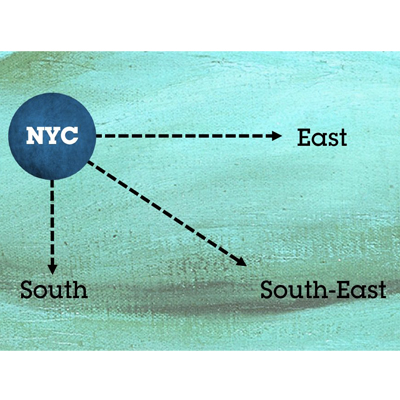
    1. Power is shifting South, East and South East

    New York is still very much the centre of the world, but power (economic, political and social) is becoming more widely distributed, marching South, East and South East: to Latin America, India, China, Russia, Africa and the Middle East, and Central and Eastern Europe.


    Although growth rates in these markets have slowed, the underlying trends persist as economic development lifts countless millions into lives of greater prosperity, aspiration and consumption.


    2. Supply exceeds demand – except in talent

    Despite the events that followed the collapse of Lehman Brothers in 2008, manufacturing production still generally outstrips consumer demand. This is good news for marketing companies, because manufacturers need to invest in branding in order to differentiate their products from the competition.


    Meanwhile, the war for talent, particularly in traditional Western companies, has only just begun. The squeeze is coming from two directions: declining birth rates and smaller family sizes; and the relentless rise of the web and associated digital technologies.


    Simply, there will be fewer entrants to the jobs market and, when they do enter it, young people expect to work for tech-focused, more networked, less bureaucratic companies. It is hard now; it will be harder in 20 years.


    3. Disintermediation (and a post-digital world)

    An ugly word, with even uglier consequences for those who fail to manage it. It’s the name of the game for web giants like Apple, Google and Amazon, which have removed large chunks of the supply chain (think music retailers, business directories and bookshops) in order to deliver goods and services to consumers more simply and at lower cost.


    Take our “frienemy” Google: our biggest trading partner (as the largest recipient of our clients’ media investment) and one of our main rivals, too. It’s a formidable competitor that has grown very big indeed by – some say – eating everyone else’s lunch, but marketing services businesses have a crucial advantage.


    Google (like Facebook, Twitter, LinkedIn and others) is not a neutral intermediary, but a media owner. Google sells Google, Facebook sells Facebook and Twitter sells Twitter.


    We, however, are independent, meaning we can give disinterested, platform-agnostic advice to clients. You wouldn’t hand your media plan to News Corporation or Viacom and let them tell you where to spend your advertising dollars and pounds, so why hand it to Google and co?


    Taking a broader view of our increasingly tech-based world, words like “digital”, “programmatic” and “data” will soon feel out-dated and obsolete as, enmeshed with so many aspects of our daily lives, network-based technologies, automation and the large-scale analysis of information become the norm.


    The internet has been a tremendous net positive for the advertising and communications services business, allowing us to reach consumers more efficiently, more usefully and often more creatively on behalf of clients. But it won’t be long before those clients stop asking our agencies for a “digital” marketing strategy (many already have). It will simply be an inherent part of what we’re expected to offer.


    4. Changing power dynamics in retail

    For the last 20 years or so the big retailers like Walmart, Tesco and Carrefour have had a lot more power than manufacturers because they deal directly with consumers who are accustomed to visiting their stores.


    This won’t change overnight, but manufacturers can now have direct relationships with consumers via the web and e-commerce platforms in particular. Amazon is the example we all think of in the West, but watch out for Alibaba, the Chinese behemoth due to list on the New York Stock Exchange later this summer in what could be the largest IPO in corporate history (and heading a capitalisation of around $200 billion).


    5. The growing reputation of internal communications


    Once an unloved adjunct to the HR department, internal comms has moved up the food chain and enlightened leaders now see it as critical to business success.


    One of the biggest challenges facing any chairman or CEO is how to communicate strategic and structural change within their own organisations. The prestige has traditionally been attached to external communications, but getting internal constituencies on board is at least as important, and arguably more than half of our business.


    6. Global and local on the up, regional down

    The way our clients structure and organise their businesses is changing. Globalisation continues apace, making the need for a strong corporate centre even more important.


    Increasingly, though, what CEOs want is a nimble, much more networked centre, with direct connections to local markets. This hands greater responsibility and accountability to local managers, and puts pressure on regional management layers that act as a buffer, preventing information from flowing and things from happening.


    7. Finance and procurement have too much clout, but this will change

    Some companies seem to think they can cost-cut their way to growth. This misconception is a post-Lehman phenomenon: corporates still bear the mental scars of the crash, and conservatism rules.


    But there’s hope: the accountants will only hold sway over the chief marketing officers in the short-term. There’s a limit to how much you can cut, but top-line growth (driven by investment in marketing) is infinite, at least until you reach 100% market share.


    8. Bigger government


    Governments are becoming ever more important – as regulators, investors and clients. Following the global financial crisis and ensuing recession, governments have had to step in and assert themselves – just as they did during and after the Great Depression in the 1930s and 1940s. And they’re not going to retreat any time soon.


    Administrations need to communicate public policy to citizens, drive health initiatives, recruit people, promote their countries abroad, encourage tourism and foreign investment, and build their digital government capabilities. All of which require the services of our industry.


    9. Sustainability is no longer “soft”

    The days when companies regarded sustainability as a bit of window-dressing (or, worse, a profit-sapping distraction) are, happily, long gone. Today’s business leaders understand that social responsibility goes hand-in-hand with sustained growth and profitability.


    Business needs permission from society to operate, and virtually every CEO recognises that you ignore stakeholders at your peril – if you’re trying to build brands for the long term.


    10. Merger flops won’t put others off

    Despite the failure of one or two recent high-profile mega-mergers, we expect consolidation to continue – among clients, media owners and marketing services agencies. Bigger companies will have the advantages of scale, technology and investment, while those that remain small will have flexibility and a more entrepreneurial spirit on their side.


    FMCG and pharmaceuticals (driven by companies like 3G and Valeant) are where we anticipate the greatest consolidation, while our own industry is likely to see some activity – with IPG and Havas the subject of constant takeover rumours. At WPP we’ll continue to play our part by focusing on small- and medium-sized strategic acquisitions (31 so far this year, and counting).”


     (These are purely personal views of  WPP’s founder and CEO Sir Martin Sorrell and indiantelevision.com does not subscribe to these views.)
  • Sunil Lulla will bring in a new dimension in our offering to clients: Nirvik Singh

    Sunil Lulla will bring in a new dimension in our offering to clients: Nirvik Singh

    When indiantelevision.com wrote about Sunil Lulla taking up a leadership position in Grey India, it did surprise many in the industry. Very few knew or recollected that Lulla’s roots have been in advertising: he was an account director at HTA (now JWT India) and had also taken the role of regional client servicing director on the Colgate Palmolive business with Y&R New York.


    The announcement of his joining saw the departure of president & CEO Jishnu Sen. Lulla is taking over at Grey India at a time when it is in the midst of a grow-grow phase. On the global front, Grey was ranked as the agency of the year by adage.com for its revenue growth, client retention and the fact that it won almost all of the client pitches it made in 2013.


    In India, Grey, the advertising network of the Grey Group, acquired a majority stake in rural and marketing communications services provider RC&M just as the year was drawing to a close.


    It has done well on the awards front too, both in traditional and digital advertising.  It can be noted that Grey India picked up a Gold Lion at the Cannes this year in the Press category for the work done for P&G’s Duracell Batteries.


    Indiantelevision.com’s Priyanka Nair got in touch with Grey Group Asia Pacific CEO Nirvik Singh to chat with him about the leadership change in India, and what he expects going forward.


    Excerpts: 


    With Sunil Lulla coming on board, what are the areas in which Grey India is looking at expanding?


    We have been investing in India continually and with RC&M coming under our fold, I believe we have the right expertise and capabilities currently across the full marketing spectrum. Sunil Lulla would play a critical role in integrating and strengthening our offering.


    In the 30 years of experience that Sunil Lulla has, he has been associated with the broadcast side of the business most. How do you think his expertise will help in the growth of Grey India?


    With his 30 years of working experience, Sunil brings with him a wealth of knowledge from the media side of the business, not just broadcast. From our conversations, he has shown that he knows the heavily fragmented media landscape in South Asia in depth. By having him leading our operations in India, he is able to add a new dimension in our offering to our clients.


    How has the year 2014 been so far for Grey India?


    2014 has been really good for Grey Group, not just in India but across Asia Pacific as well. We are seeing clients in the market increasing their marketing spend with us, both regional and local clients. All in all, I expect India to be a really strong performer at year end. Malvika Mehra (National Creative Director) and team have been performing consistently as well – they have brought home yet another Gold Lion from the Cannes Lions International Festival of Creativity. This is their second year in a row they are doing so.


    What are the plans lined up for the digital side of your business?


    Sudhir Nair (Senior Vice President, Head of Grey Digital India) will be working closely with Sunil on this, but I must say our digital team has been stellar in their creative solutions and output (using Twitter to launch a car and YouTube for a test drive). Digital is definitely a big part of the picture and the continued investment in talent and capabilities is top of our priorities.


    What is at top of your wish list for Grey India?


    Win more Cannes Lions next year!


    Till when will Jishnu Sen be with Grey India? Could you elaborate on the experience of working with him? 


    It has been a truly great journey – I have seen him grow into the CEO’s role and he is a great chap to work with.

  • Kantar acquires majority stake in Guardian Digital Agency

    Kantar acquires majority stake in Guardian Digital Agency

    MUMBAI: Holding companies seem to be speeding up the process of adding specialised digital agencies in their kitty.  


    WPP, the British holding company has announced that Kantar, its wholly-owned data investment management arm, has acquired the Guardian Digital Agency (GDA), a specialised data visualisation, site design and interactive development agency, previously part of Guardian News and Media Group. The company, which employs 13 professionals, will be rebranded under the name Graphic. Many of Kantar’s 12 companies have already worked with GDA to increase the impact and interactivity of their work.

     
    The investment is part of WPP’s strategy of developing its integrated services in fast-growing and important markets and sectors and strengthening its capabilities in digital media.


    WPP’s digital revenues (including associates) were well over US$6 billion in 2013, representing almost 35 per cent of the Group’s total revenues of US$17.3 billion. WPP expects 40-45 per cent of its revenue to be derived from digital in the next five years. 

    Kantar is the data investment management division of WPP and one of the world’s largest insight, information and consultancy groups. By connecting the diverse talents of its 12 specialist companies, the group aims to become the pre-eminent provider of compelling and inspirational insights for the global business community.


    In the UK, WPP companies (including associates) collectively generate revenues of nearly US$3billion and employ over 15,000 professionals. Worldwide, WPP’s data investment management companies (including associates) collectively generate revenues of about US$5 billion and employ over 34,000 professionals.

  • WPP’s XM Asia to buy majority stake in Sofresh

    WPP’s XM Asia to buy majority stake in Sofresh

    MUMBAI: WPP’s wholly owned operating company, XM Asia, a JWT company, has agreed to acquire a majority stake in Sofresh, a digital creative agency in Vietnam.


    Sofresh, co-founded in 2007 by Ly Viet Vu and Justin Cohen, develops digital strategy, digital creative ideas and marketing campaigns across multiple digital channels, including social media, mobile and the web. The company also designs and builds e-commerce platforms, customer relationship management (CRM) systems and in-store digital installations.


    Sofresh works with a range of local and global clients, including Diageo, GSK, Kinh Do, Techcombank and Unilever. Sofresh had revenues of VND 35.7 billion for the year ending 31 December 2013, with gross assets of VND 30.1 billion, as at the same date. The company employs 85 people.


    The acquisition marks a further step towards WPP’s declared goal of developing its networks in fast-growth markets and sectors and continues WPP’s strategy of strengthening the Group’s capabilities in digital media. This was an announcement was made in a statement published on the company’s official website.


    Sofresh marks WPP’s third acquisition in Vietnam in seven months. In Vietnam, WPP companies (including associates) generate revenues of about $80 million and employ approximately 1,000 people.

    In Asia Pacific, the Group (including associates) generates revenues of $ 5 billion and employ over 48,000 people. Globally, WPP’s digital revenues were over $ 6.0 billion in 2013, representing almost 35 per cent of total Group revenues of $ 17.3 billion. WPP is targeting at least 40-45 per cent of revenues to come from each of fast-growth markets and new media over the next five years.

  • Red Fuse Communications wins Best Mobile Media Agency of the year

    Red Fuse Communications wins Best Mobile Media Agency of the year

    MUMBAI: Red Fuse Communications has been awarded the title of ‘Best Mobile Media Agency of the year’ at the Indian Digital Media Awards 2014. The agency was bestowed with a six award win at a platform that recognises, celebrates and encourages work in the digital field of advertising and marketing communications, especially internet, mobile, gaming, social media and the blogosphere.


    Red Fuse, WPP’s global full service agency, conceptualised and executed winning campaigns for Colgate-Palmolive. The win today further strengthened its mark in the industry and reinforced the relevance of horizontality in today’s diverse communication challenges.


    The agency has been awarded for the exemplary projects in the following categories: gold awards for Best Digital Direct Response Campaign designed for ‘The Great Colgate Pilgrimage’ and Best SEM Strategy for the campaign ‘The Next Door Dentist’.  The campaign for ‘The Great Colgate Pilgrimage’ won silver in the category Best Campaign Use of Mobile, while bronze medals for work done in the categories of Best Innovation in Mobile Marketing and Best Use of Social Networks. The awards also recognised Red Fuse’ efforts for ‘The Great Colgate Pilgrimage’ and ‘Smile Camera  Action’ campaigns respectively.


    Colgate-Palmolive VP-marketing Ajith Babu said, “On behalf of the Colgate team, we would like to congratulate the Red Fuse team for this commendable win. As our partners, they have contributed immensely to innovatively communicate with our consumers. We look forward to many such successful campaigns.”


    Red Fuse Communications CEO Shubha George added, “Complex challenges need the most innovative solutions. In India, location-based targeting has been used to primarily target people in the metros and has almost always used text messaging or WAP banner. This was the very first time in India a brand had used location-based voice communication and that too to a roaming rural subscriber. Being recognised and awarded on platforms only encourages us to push the limits and strive for more innovations. Red Fuse and our client Colgate-Palmolive work as true partners and the successful results of the new-age full service agency is here to stay.”


    The innovative location-based voice communication campaign has drawn national as well international recognition, with the agency winning several awards at global, regional and national events.