Tag: WPP

  • Sorrell pats Mukesh Ambani’s back for telecom explosion

    Sorrell pats Mukesh Ambani’s back for telecom explosion

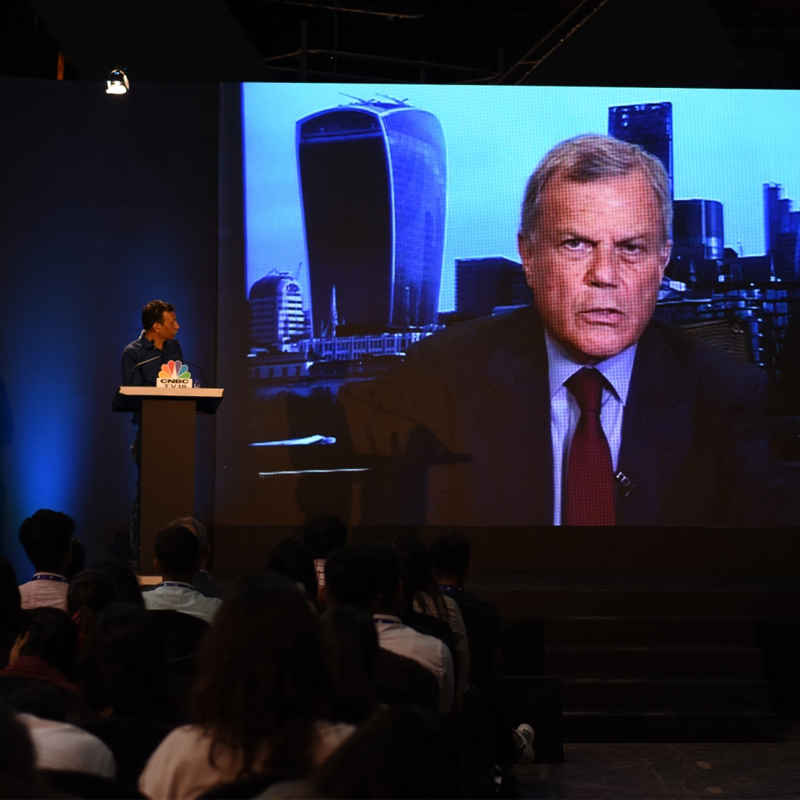
    MUMBAI: Though the announcement of ad guru and former WPP CEO Sir Martin Sorrell’s comeback strategy was announced yesterday in faraway London — a London Stock Exchange notification on Derriston Capital said so — the excitement was running equally high here at the venue where Zee Melt event was being held. And, why not? Sorrell was scheduled for a live video interaction with delegates at the event in the evening.

    But true to his style, Sorrell did not give out any juice to the media and refrained from answering anything particular about his new venture, S4. However, he did have a lot to say about the industry, in general, and India. 

    Sorrell thinks that advertising and marketing industry is in a state of flux today and will only bring opportunities for agencies and brands alike. “The discussion is whether the flux is strategic or structural. But, it is clearly a mixture of both. The A&M [advertising and marketing] industry is worth a trillion dollars with $500 billion in traditional media and traditional communication services, and $500 billion in new media,” Sorrell said speaking to the Zee Melt delegates live via CNBC’s London studio.

    “There is a clear significant change, whether it is because of Google, Facebook, Accenture, IBM or Deloitte. And this flux will bring opportunities. If you look at the $20 billion in WPP, there are parts of it that are growing and there are parts of it that are flat and parts of it that are declining. It is all about identifying those growth opportunities,” he emphasised, giving a hint at what people may expect from him in future with his new venture, which experts say could be a repeat of the WPP story with a modern-day twist.

    For the records, Sorrell is investing $53 million from his own pocket into London Stock Exchange-listed Derriston Capital, a company which will now be remade into S4 Capital, a reference to four generations of Sorrell’s family. While he will become executive chairman in the business that could explore opportunities in technology, data and content, media reports stated institutional investors have pledged 150 million pounds to buy marketing companies — a way Sorrell-founded WPP grew into a global behemoth with presence in 112 countries.

    Coming back to Sorrell-speak for the Mumbai event, the former WPP CEO, ousted on allegations of misconducts about six weeks back, hailed India as being pivotal to WPP growth with 14,000 “talented people”. He noted that India is growing fast in terms of GDP, population and potential.

    Pointing out that India, in the near future, will become the most populous country in the world with the youngest profiles, Sir Martin felt that, from a technological point of view, India has leapfrogged a lot of technologies —such as migrating directly from desktop and normal phones to smartphones. The country has seen huge distribution changes too with and Alibaba entering the market.

    On the distribution side, according to him, Mukesh Ambani’s significant investment in telecommunications and technology in Jio mobiles and SIM card has put India on the global map. In short, India represents opportunities and growth in terms of economy and technology. 

    Year 2017 saw a lot of shakeup and disruption in the industry. Of these, two iconic events that signaled disruption and structural changes for Sorrell and the industry were Unilever’s hostile takeover bid by Kraft Heinz, proving no company is safe today, and when Rupert Murdoch signaled he would negotiate 21st Century Fox business with The Walt Disney Company. What made this 21CF-Disney deal “more complicated” was the involvement of Comcast.

    Holding forth on large agencies and groups owning them, Sorrell felt that that such corporate houses have a “legacy associated with them” and come with a lot of backlog and challenges. When you have a legacy company, the business becomes more of a challenge with time as compared to when you start with a clean sheet, he said. Probably, his new venture S4 will give him and the company an opportunity to build afresh taking into account the changes taking place at client’s end and new structures and approaches that clients want.

    According to Sorrell, a major shakeup in the media industry today has been the General Data Protection Regulation (GDPR), an EU-mandated law on data protection and privacy for all individuals within the European Union (EU) and the European Economic Area (EEA). It also addressed the export of personal data outside the EU and EEA.

    The GDPR primarily aims at giving control to citizens and residents over their personal data and simplify the regulatory environment for international business by unifying the norms within the EU. Sorrell thinks these were early days to assess the impact of GDPR, but from what he’s heard Facebook’s ad sales revenue has remained un-impacted even after the news of Cambridge Analytica. He is also of the opinion that GDPR in early stages seems to favour technology giants as “we have seen smaller or media tech companies withdraw from European market rather than compete”. 

    He ended the session by applauding the Indian government and Prime Minister Narendra Modi for making a significant impact on the Indian economy, although the momentum has slowed down due to GST rollout and after-effects of demonetisation along with other factors. Pointing out that India’s economy will continue to grow and will continue to attract big brands and agencies to put their money in the country, Sorrell concluded, “I continue to be an unashamed, raging India bull and confident that the Indian economy will regain momentum soon.”

    Meanwhile, reporting on Sorrell’s new venture in detail Reuters said Derriston Capital is a little-known two-year-old listed shell company set up to invest in medical technology.

    Over 30 years ago Sorrell built WPP into a company with 200,000 staff in 112 countries by adding market research groups, media buyers, and public relations firms such as Finsbury. Worth 16 billion pounds, WPP returned millions to shareholders, including its CEO, and dominated the industry for decades. According to Thomson Reuters data, Sorrell is still the eighth biggest investor in WPP, with a 1.4 percent stake.

    The Reuters story further stated that Sorrell had vowed to break down the barriers at WPP to make it easier for clients to get all the services they needed from a small team, rather than from a range of people among the more than 400 agencies it owned. WPP competes with US groups Omnicom and IPG, France’s Publicis and Japan’s Dentsu, while thousands of small independent companies provide everything from ads for mobile phones to creative work and data analytics.

    Also Read :

    WPP board begins investigation of its CEO Sir Martin Sorrel, says WSJ

    Sir Martin Sorrell says ta-ta to WPP, Roberto Quarta becomes exec chairman
    Martin Sorrell bullish on India

    TAM or BARC, the market has to decide: Sir Martin Sorrell

  • Sorrell’s exit could lead to a breakup of the large agency structure says John Hegarty

    Sorrell’s exit could lead to a breakup of the large agency structure says John Hegarty

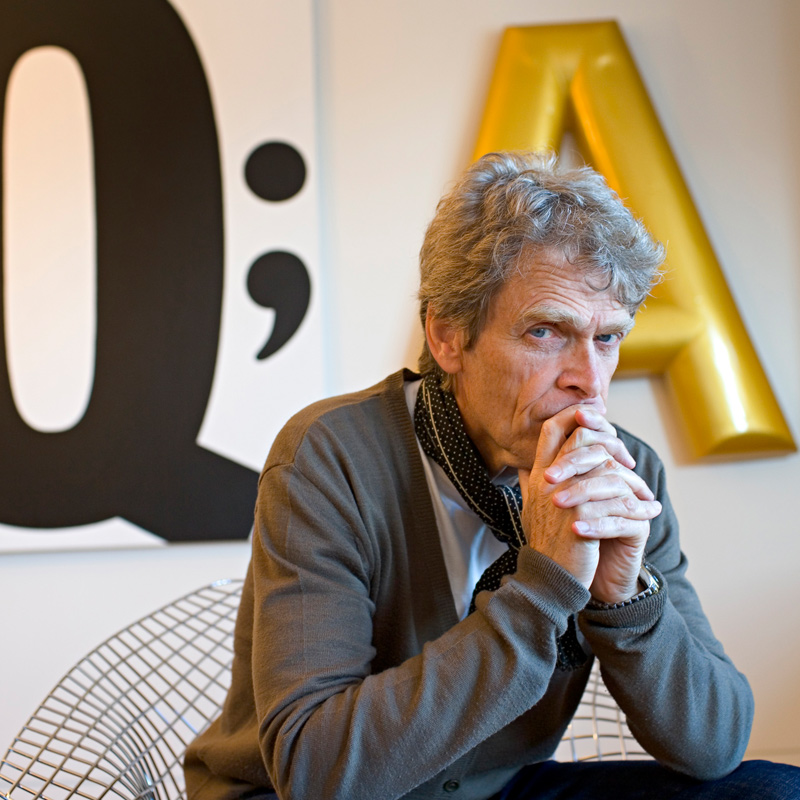
    MUMBAI: He’s seen it all – print, radio, TV and now digital. With over six decades of advertising industry under his belt, John Hegarty has had the privilege of being knighted by the UK for his services. With early days at Saatchi and Saatchi (then called Cramer Saatchi) to co-founding global media agency, Bartle Bogle Hegarty (BBH), the septuagenarian is still as youthful and optimistic as he was in the 1960s.

    After co-founding TBWA, he teamed up with partners John Bartle and Nigel Bogle to launch Bartle Bogle Hegarty in 1982. The agency swiftly became one of the most talked about and awarded advertising agencies in the world.

    The advertising mogul was in Mumbai, India recently where he spoke his heart out about creativity and advertising industry at large. The creator of acclaimed campaigns for brands such as Levi’s, Audi, BA and Johnnie Walker, Hegarty thinks that brainstorming as a concept at the modern workplace can kill creativity. According to him, just 10 per cent of the creativity today is good and advertisers inflict that tiny amount on the audience. For him, the advertising industry has a great responsibility to shoulder.

    He first came to India 25 years ago to meet Piyush Pandey. Admitting that he isn’t a hardcore follower of Indian advertising, he still believes that Indian creativity is far better than other parts of the world. 

    Hegarty warned of the danger of globalisation that has led to a bland advertising world where ad execs and brand managers from one part of the country want to target the entire world with global campaigns rather than creating local campaigns. One reason they resort to this mass targeting is their constant search for cost-effectiveness. But they don’t realise that they lose out on communication efficiency. Instead, all ad work should be more representative or reflective of the local culture. 

    Hegarty’s response to nineteenth century Philadelphia retailer John Wanamaker’s famous oft-stated quip – ‘Half the money I spend on advertising is wasted; the trouble is I don’t know which half’ –  is that those who exclaim this don’t know what they’re doing. “Brands need to go out and converse with people. Advertising is all about conversations,” he said.

    “A brand is made not just by the people who buy it but also for the people who know about it.  Agencies today have forgotten that brands need to persuade the consumer and not promote the product. We have confused persuasion and promotion, persuasion will yield long-term results whereas promotion will only last for a short term,” he said.

    While the world lauds the power of digital, Hegarty thinks that brands and agencies are still in the dark about the best way to approach the medium. Light heartedly cracking a joke at his age, Hegarty said that he won’t be around long to watch machines take over man, referring to artificial intelligence increasingly being used to help take advertising and creative decisions. “Machine-made ideas are easy to recognise and it can’t get the nuances correct all the time.”

    A writer from BBH London recently publicly accused sports television channels group Sky Sports and its agency, Sky Creative, of ripping off a recruitment video. Hegarty was not disturbed by this theft and responded by stating that plagiarism will always happen in the industry where an artist is inspired by another and has happened forever and will continue to take place ad infintum. He added, “Everything gets plagiarised today and I don’t think we need a body to regulate it.”

    He rubbished the concept of the word ‘content’ calling content marketing a boring topic. “What exactly is content? My garbage bin is full of content. I wonder who invents these words! They are completely meaningless. I think content should only be informative and useful,” he said.

    A recent major shakeup in ad world was the departure of ad mogul Sir Martin Sorrell from WPP. Hegarty said that the legend’s eviction could be a harbinger of a fission of WPP and other ad behemoths.

    “With his exit, the talk is that the company will now be broken up and the groups are now also under threat because of the value they are giving clients. It could be a serious problem for them unless they get back to basics and the core of the advertising profession: focus on creativity.”

    Well said John!

  • HSBC’s global media business moves to Omnicom’s PHD from WPP

    HSBC’s global media business moves to Omnicom’s PHD from WPP

    MUMBAI In a major blow to WPP, HSBC Bank has handed over its global media business to Omnicom’s PHD. The agency won the business following a review which began in January along with Mindshare and Dentsu.

    In a press statement, HSBC said, “We have selected PHD as our preferred media planning and buying supplier as they demonstrated strong strategic skills and advanced digital transformation capabilities. In a complex media and communications marketplace, PHD’s overall approach stood out as being forward thinking, yet straightforward and pragmatic.”

    Earlier this year, HSBC appointed Publicis-owned Saatchi & Saatchi to replace WPP’s JWT to lead its global advertising business.

    With this, WPP has lost another major client from its kitty as the HSBC account has billing of around $400 million and was worth over $20 million in annual revenue to WPP. The HSBC account was at WPP’s Mindshare, whose American Express business is also up for review. WPP is trying to hold its relationship with Ford Motor, also in review.

    Mindshare held HSBC’s business for over 13 years. Another account loss comes as a blow to Mindshare, where the network is still reeling from the sudden exit of WPP’s chief executive Sir Martin Sorrell while struggling to retain or win some of the estimated $10 billion worth of media business that went under review at the beginning of the year.

    Global media giant, WPP has recently lost several pitches including Campbell, Marriott, Amgen, AT&T, Volkswagen among others.

    Also Read :

    WPP board begins investigation of its CEO Sir Martin Sorrel, says WSJ

    Sameer Singh joins GroupM as South Asia CEO

    Sir Martin Sorrell says ta-ta to WPP, Roberto Quarta becomes exec chairman

    Has advertising finally begun to embrace AI?

  • Kantar launches Global Analytics Practice to fuel business growth

    Kantar launches Global Analytics Practice to fuel business growth

    MUMBAI: Kantar, WPP’s data investment management division, has launched a new global analytics practice that unlocks deeper insights to fuel business growth. Integrating analytical capabilities from across the company, Kantar Analytics Practice will combine the world’s most in-depth understanding of consumers with a deep analytics toolkit developed over four decades of solving the most difficult sales, brand, media and marketing problems. In India, WPP has combined the analytics teams from Kantar and GroupM to form one combined practice.

    Kantar Analytics Practice unifies a global network of over 1500 data scientists, analytics consultants, technologists and data designers from across Kantar. It will encompass existing highly regarded businesses such as MaPS, Analytics Quotient, GroupM’s analytics team in India and connect them with specialist analysts from Kantar’s operating brands in sales, retail and shopper, media, health and public affairs. The new practice integrates Kantar’s unique consumer insights, based on the world’s largest first party data sets, with clients’ own customer data and a broad range of third party sources. By combining behavioural and attitudinal data, the outcome is actionable customer analysis to inform every brand, marketing and sales decision.

    Kantar Analytics Practice offers capabilities across five areas of expertise. Its brand and media ROI helps in maximising value creation from brand and media investments, by balancing short-term sales performance with long-term brand valuation and profitability.

    The customer analytics helps in making the right operational and strategic investment decisions in customer experience and loyalty marketing, to maximise the value of each and every customer relationship. The segmentation and activation helps in targeting the highest potential customers and prospects with personalised content, to drive profitable growth with maximum efficiency. While Innovation Analytics is used for optimising customer-led innovation lifecycle for long-term growth, from spotting new trends before your competitors, to optimising the profitability of your product launches, Retail and Shopper Analytics can be used for maximising the commercial return from investments in sales, retail and e-commerce via optimising decision-making in channel choice, assortment, promotions and pricing.

    Kantar CEO Eric Salama says, “Less than half of advertisers believe they have the right, actionable data. Clients feel data rich but insights poor and impact short. Kantar is unique in having the most complete view of consumers across the entire demand cycle: the way they live, feel, shop, watch and post. Combining our insights with data from across any client’s organisation can unlock deeper insights that fuel growth. “

    GroupM South Asia CEO and WPP India country manager CVL Srinivas mentions, “The new practice addresses the clients’ ask for data driven transformation for better ROI from marketing investments in the digital era. GroupM and Kantar have been working closely together in India, co-creating services for our clients. The launch of the Kantar Analytics practice is another step in this direction and demonstrates the ability of our group to come together to provide enhanced value for clients.”

    To this, Kantar South Asia CEO Preeti Reddy adds, “The practice formalises the connected journey with GroupM in bringing data driven products to the markets like Campaign Watch (for during campaign ROI management) and consulting services on TV audience measurement data. Proprietary assets like SAAS platform Athena (built in India) will offer marketers a predictive and near real time opportunity to add up to 20 per cent improvement in ROI from marketing investments including those in e-commerce. And, in Sunder Muthuraman, who will take over as CEO APAC and global chief client officer, we have a great leader for the practice.”

  • Sorrell, people and Sorrell speak

    Sorrell, people and Sorrell speak

    MUMBAI: For many advertising and brand executives – especially the senior ones in India – Sir Martin Sorrell was a pretty familiar face. Sorrell probably visited India more than any other international advertising industry executive did.

    He was an indophile, knew many of his senior India professionals by first name. And he believed that the nation had depth of talent – both creative and business – like no other country did. He was so enamoured of the talent that he more often than not welcomed them into the higher executive corridors, giving them postings all over the world.  Several benefited: Ashutosh Shrivastas, Gowthaman Ranganathan, Vikram Sakhuja, Ranjan Kapur, Sonal Dabral, Piyush Panday, CVL Srinivas – the list is unending. Amongst the suitors he had wooed for many years was Sam Balsara of Madison Worldwide. But Balsara simply refused to yield to him. Amongst his good friends in India was Ranjan who passed away a couple of months ago.

    Over the years, Sorrell has spoken at many events and conferences making some radical statements at that time. Here’s some Sorrell speak over the years:

    “Client focus on the short term that is what is keeping me up late at night.…and as a result, they are not investing in innovation and indeed branding for the future. The future is tough…it’s a tough environment..it is a grind. Clients spend more in trade promotion..incentives, slotting allowance and getting visibility in the retail trade rather than on advertising. All this is good for the short term, but not for the long term.”

    –  B2B conference IBC 2016 in Amsterdam

    “To be a good CEO, you have to be totally committed. And that means a 24×7 commitment. You have to be optimistic. Obviously have intelligence. EQ (emotional intelligence) is as important as IQ – a balance between the two. You don’t have to be an Einstein in our business. A deep understanding of all the advertising and marketing and communication services and how they fit together. A global perspective, which means you can’t just have experience of one part of the world, you have to have experience of many parts of the world. Unilingual – we speak one language, need to speak more. Politically aware and also economically aware and how they are having an impact. You have to have a sensible strategy and be able to implement it.”

     – In an interview to The Drum

     “The rise of Amazon, Alibaba, Flipkart and Airtel have also raised questions on who has control over data and who will influence it. This is where we have a strong position in India and globally, and have tremendous opportunities to grow further. If you look forward to the next 15-25 years, the relative role and importance of India will increase. From WPP’s point of view, our Indian business is half the size of our Chinese business. The relative population is almost the same. In the next 15-25 years, India will become the most populous country on the planet…while China has an ageing issue that is likely to continue. So India, from an economic growth point of view over the next 15-25 years, is going to be an even more significant force. If you look at companies such as Reliance Industries, Tata Group, Mahindra and (Bharti) Airtel — these companies will become even more significant on the world stage.”

    – Interaction with the media in October 2017

    “Our biggest problem is the enemy within,” Sorrell concedes. “The challenge is to get people to operate as seamlessly as you can. I’m philosophical about it, but I get very upset when people don’t work together because I think the power of what we’ve got is so great when we put it together. You tear your hair out when people sit in their little box and refuse to co-operate or when they fight with one another. I do tend to focus on the bad bits. I have been described as a serial pessimist.”

    – To Campaign in 2001

    “The dogfight for content rights is going to intensify. You’re talking about some very big players becoming increasingly interested in sports rights. That will drive the price up for everyone and push rights holders to start selling them off piecemeal, fragmenting the market. Packaged goods top-line growth has been under pressure. They are looking much more rigorously at the sponsorship costs and activation costs, and they probably are less willing to invest than five or 10 years ago. The reverse is true of the technology companies. If the pricing of the bigger sports rights is sucked up by competition it means that all the sports with more limited audiences are going to become even more important and significant. There are a number of interesting opportunities for our clients.”

    – Speaking at CES 2018 in Las Vegas

     “For the past 33 years, I have spent every single day thinking about the future of WPP. Over those decades, our family has grown and prospered. As I look ahead, I see that the current disruption we are experiencing is simply putting too much unnecessary pressure on the business, our over 200,000 people and their 500,000 or so dependents, and the clients we serve in 112 countries. We have weathered difficult storms in the past. And our highly talented people have always won through, always. Nobody, either direct competitors or newly-minted ones can beat the WPP team, as long as you work closely together, whether by client and/or country or digitally. As a founder, I can say that WPP is not just a matter of life or death, it was, is and will be more important than that. Good fortune and Godspeed to all of you…now Back to the Future.”

    – His farewell note on quitting WPP

    His departure also raised some amount of angst amongst some senior executives who worked with him.

    “Martin had faults as do we all but he was entrepreneurial, client focused, knew importance of recruiting/retaining great talent, tireless, always there to help. WPP is a lot more resilient than people think but it’s a tragedy that things ended this way.”

    – Kantar CEO Eric Salama

    “Landmark story: after three decades Sorrell leaves WPP, the company he built deal by deal into a £15bn global titan; sad end to the story but plenty of people will be celebrating tonight.”

    – Campaign Global editor in chief Claire Beale

    Also:

    Sir Martin Sorrell says ta-ta to WPP, Roberta Quarta becomes exec chairman

    WPP board begins investigation of its CEO Sir Martin Sorrel, says WSJ

    Martin Sorrell bullish on India


  • Sir Martin Sorrell says ta-ta to WPP, Roberto Quarta becomes exec chairman

    Sir Martin Sorrell says ta-ta to WPP, Roberto Quarta becomes exec chairman
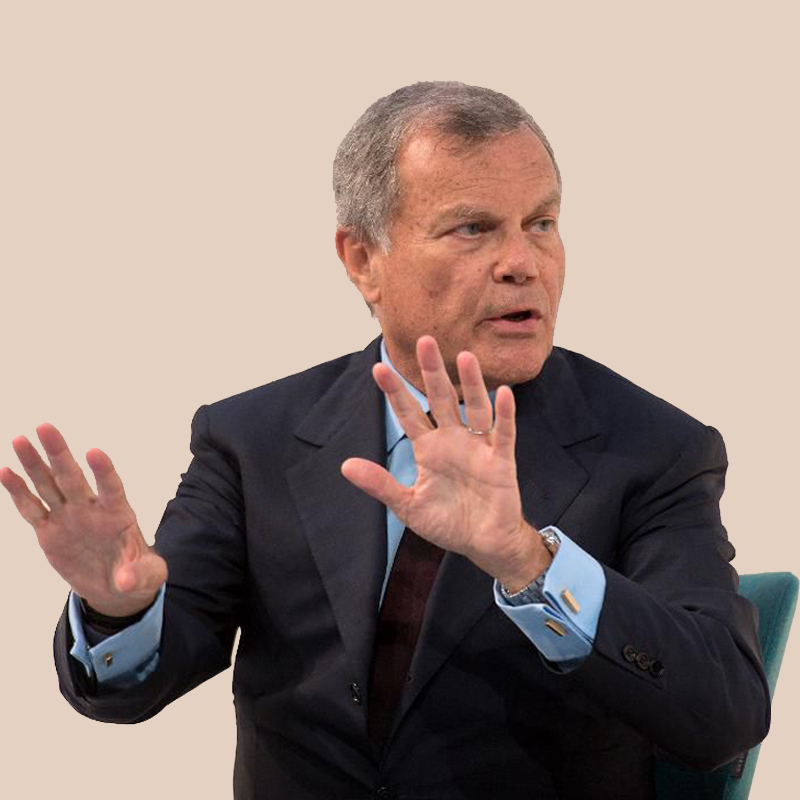
    MUMBAI: A first gen entrepreneur of Ukrainian descent, he rose out of nowhere to build the world’s largest advertising group.  And late last night  – amidst investigations into charges of personal misconduct by the WPP board – Sir Martin Sorrell packed up his things and shockingly announced that he was saying ta-ta to the CEO’s position and moving out of the corner office.

    “Obviously I am sad to leave WPP after 33 years. It has been a passion, focus and source of energy for so long,” stated Sorrell in an emotional note to WPP staff.  “However, I believe it is in the best interests of the business …in your interest, in the interest of our clients, in the interest of all shareowners, both big and small, and in the interest of all our other stakeholders, it is best for me to step aside….the current disruption is putting too much unnecessary pressure on the business.”

    He added: “We have weathered difficult storms in the past. And our highly talented people have always won through, always. I leave the company in very good hands as the board knows… Nobody, either direct competitors or newly-minted ones can beat the WPP team, as long as you work closely together, whether by client and/or country or digitally.”

    WPP released a statement stating that the change would become effective immediately and that the advertising behemoth’s chairman  Roberto Quarta would become executive chairman until the company could appoint a new chief executive. Sir Martin would of course assist with the transition.  It added that the 73 year old  would be “treated as having retired” and that his share awards would be “pro-rated in line with the plan rules and will vest over the next five years, to the extent group performance targets are achieved.”

    WPP’s corporate development director and chief operating officer for Europe Andrew Scott and , Wunderman CEO Mark  Read would don the mantle of co-chief operating officers. Said Sorrell in his note: “We have had a succession plan in place for some time. A new generation of management, led by Mark Read and Andrew Scott , are well qualified and experienced in the board’s opinion, to deal with the geographic and technological opportunities and challenges our industry faces”

    “The previously announced investigation into an allegation of misconduct against Sir Martin has concluded,” the WPP statement read. “The allegation did not involve amounts that are material.”

    Born to Jewish parents who were from Kiev, Sorrell began his career in the renowned and trendy ad agency Saatchi & Saatchi (which fashioned winning electoral campaigns for Britain’s conservative prime minister Margaret Thatcher) in 1975. He worked closely with the brothers Saatchi (Charles and Maurice) and helped fashion its rapid growth, before going solo and acquiring a shopping basket manufacturer Wires & Plastic Products (WPP).

    He used that firm as a vehicle to gobble up various other global ad icons such as Ogilvy & Mather, Young & Rubicam and another 18 other advertising service providers over three years. WPP today has  130,000 employees in 112 countries, and a market valuation of around 22 billion pounds, or about $31 billion.

    Along the way as his legend grew – so did the amounts he took as payments for his hard labour which caused heartburn to investors and shareholders.  In 2016 when he took a pay packet of 70 million pounds and the empire struck back with protests amongst the community about all his financial excesses.

    And last month  amidst slowing down of revenues and income and the growing clout of the FANGS  – the board commenced an investigation charging Sorrell with personal misconduct and misuse of the company’s assets.

    Sorrell’s last few words in his farewell note will not only tug at WPP staff’s heartstrings but almost anyone’s.

    Said he: “I shall miss all of you greatly. You have given me such excitement and energy and I wanted to thank you for everything you have done and will do for WPP and me. As some of you know, my family has expanded recently, WPP will always be my baby too.As a Founder, I can say that WPP is not just a matter of life or death, it was, is and will be more important than that. Good fortune and Godspeed to all of you … now Back to the Future.”

  • WPP board begins investigation of its CEO Sir Martin Sorrel, says WSJ

    WPP board begins investigation of its CEO Sir Martin Sorrel, says WSJ

    MUMBAI: Once the toast of the advertising industry, investors, and shareholders, Sir Martin Sorrell now faces the ignominy of being probed by a law firm, which has been appointed by the WPP board for a potential misuse of assets and personal misconduct, if a report in the Wall Street Journal is to be believed.

    The agency group has been under pressure from clients and hungry for business rivals for a while. Its share price has fallen some 35 per cent as companies such as Alphabet (Google) and Facebook have been doing direct deals with brands, cutting agencies such as WPP out of the picture. Additionally, big spenders such as Unilever, Procter & Gamble have also been cutting back on marketing spends in a rapidly disintermediating digital content marketplace.

    This has led to WPP reportedly putting up a lackluster performance which in turn has affected its share price. Sorrell was also forced to take a cut in his pay, the amount he was forced to back down from 2017’s 48 million pounds sterling, will become clearer in the next few days as it announces its financial performance.

    A Saatchi & Saatchi finance executive in the seventies and eighties, Sorrell went about building what would become a global tour de force under the umbrella of a company called Wire & Plastic Products. He acquired 18 different below the line agencies over three years, before making an audacious $566 million dollar bid for J Walter Thompson and then $825 million for Ogilvy & Mather. He acquired both of them. He snared two other agencies Young & Rubicam and then Grey Worldwide on the follow through. Among the other agencies and communication services providers under WPP today include: Wunderman, Kantar Group, Hill & Knowlton, Burson-Marsteller, GroupM, Cohn & Wolfe, Brand Union, Buchanan UK among others.

    WPP as a group employs close to 200,000 employees worldwide and reported a revenue of 15.265 billion pounds sterling, with an operating income of 1.908 billion pounds sterling with net income standing at 1.912 billion pounds sterling in 2017.

    Investors have been baying for Sorrell’s blood for some time now with the agency not coming with a solid plan to revive growth. Speaking to indiantelevision.com in Amsterdam a couple of years ago Sorrell had said: “I only own two per cent of the company; but I am identified with the company. I will carry on as long they will let me. WPP is not a matter of life or death for me, it is more than that. They will carry me out to the glue factory.”

  • Obit: Ranjan Kapur was a maverick who breathed advertising

    Obit: Ranjan Kapur was a maverick who breathed advertising

    MUMBAI: It was just eight years ago on 8 February 2010 that Mani Ayer, the revered managing director of Ogilvy & Mather, whom Ranjan Kapur succeeded in 1993, passed away. And very close to that date-on 27 January-came the news that Kapur himself had breathed his last.

    To Kapur goes the credit of shaping Ogilvy & Mather into the powerhouse it is today. He had Piyush Pandey on his team. And, mind you, Piyush, who was already gaining a reputation under Ayer, grew under his guidance and freedom into one of the sharpest creative minds in India, dazzling clients with his sheer gift of selling ad concepts and copy for brands. And to check Pandey’s occasional extravagance, Kapur had SN Rane, the finance head who kept an eagle eye on spends.

    Kapur was a feisty corporate chieftain; he had growth ambitions for his agency. He also wanted quality work for his clients. He often called himself a maverick and encouraged entrepreneuralism. He often quipped: “If you can’t say it in the headline, then why bother about the copy.”

    I remember interacting with him a couple of times in the nineties when I was writing for Asian Advertising & Marketing Hong Kong. He was quick to respond to any query I sent out to him about Ogilvy & Mather as he was familiar with the publication’s popularity in the region since he was posted in Singapore prior to being brought to India. He had a sharp, very business oriented mind. He could also throw in his laugh, along with his signature brevity, dressed in double breasted suits as he used to be then.

    And he was only a call away when I reached out to him on launching indiantelevision.com.

    My contributions in terms of analysing and writing on the world of advertising waned. As did my interactions with him. But every time I bumped into him at an Ad Club or AAAI or television industry gathering, he would break into his big grin, with his wife Jimi in proximity, and wish me a polite hello.

    My last conversation with him was when I called on him to be a panellist at our music industry conference Nokia Music Connects in 2010 to talk about the role of music in advertising. I reminded him about our earlier interactions and he agreed to join the panel. And as I interviewed him and another vet Lyn deSouza on stage, he was crystal clear that the ad industry was not paying enough emphasis on the use of sound in advertising. He advised all the players in the music ecosystem to come together and figure out ways to interest brands and agencies to put their money behind music.

    Sadly, I just bumped into him a couple of times after that. And he was always warm.  But my memory is that Kapur was the life of every advertising gathering. He had some anecdote or some experience to share, which would liven up the proceedings. He chose to mentor many a young advertising wannabe, who has today risen up in the ranks in various agencies.

    With Kapur gone, now only Prem Mehta, who was heading Lintas at the time Ranjan came in, is left of the three Punjabi-speaking heavyweights who ruled the ad world in the early nineties. Mike Khanna who led HTA passed away a couple of years ago.

    Speaking to Harvard Business Review (HBR) sometime back, Kapur had shared that as a 23-24 year old, he was bored with being a banker at Citibank despite all the money he made. Hence, he asked to be relieved but was put in charge of advertising for the bank—the first time it was attempting to do so—and dealt with its agency Lintas. He loved it so much, he begged the Lintas guys to get him a job. They said no as they feared losing the Citibank account if they did so. But they helped him get a job with Benson’s (as Ogilvy & Mather was known then). That was more than 52-53 years ago and he stayed with the agency for 37 plus years and the remainder with the WPP group.

    So obsessed was he with advertising, that he confessed he missed out on celebrating his wedding anniversaries on several occasions and even his daughter Tina growing up— something he admitted to regretting in the HBR interview. 

    Over the last few years, he had been occupied with the ISDI WPP School of Communication in order to nurture the next bunch of Mad Men or Math Men (as Martin Sorrel likes to call them) and hopefully plug the huge talent gap that the industry faces.  

    In the beginning for Kapur there was advertising. As it will be for those who graduate from the school and begin their careers in agencies. 

    Indiantelevision.com raises a toast in gratitude to Kapur. RIP Ranjan.

    Kapur’s passing away shocked many in the ad world who posted their grief online:

    Saddened to hear about Ranjan Kapur. An architect of the Advertising industry in India. Cherish the moments spent with him and Jimi

    —  Prasoon Joshi

    Deeply deeply saddened at the passing on of RANJAN KAPUR: a great advertising professional and an even greater human being. The world is much much poorer with his death.

    —  Suhel Sheth

    They say nothing grows under a mighty banyan tree. Ranjan was the rare exception. Many a giant oak flourished in the sunlight of his shadow. My heart breaks for Jimi and Tina. It breaks for all of us who were blessed to have him in our lives.

    —  Bobby Pawar

    A very very sad day for Indian advertising. RIP Ranjan Kapur. I am lucky to have worked with him – he was one of the biggest influences on many of us at that time. They don’t make them like him anymore. The biggest chapter of Indian advertising just got concluded.

    —  Partha Sinha 

    I met Ranjan Kapur as an Ogilvy intern a couple of times. He was always kind. Sad to hear of his passing.

    So sad to hear about the passing of Ranjan Kapur. He was so generous to me with his time and wisdom in setting up the @WPP_Govt in India and @KantarPublic. A lovely man.

    —  Gaurav Jain

    My finest boss ever ! RIP Ranjan Kapur

    Saddened to hear that #Ranjan Kapur is no more. Can’t believe it. The end of an era of statesmanship and grace in advertising. RIP.

    Goodbye #RanjanKapur .. Will never forget your spirit, warmth and constant sense of wonder .. the world will miss you ..

    —  Pratop Bose

  • Talent retention is key, says Mindshare’s Prasanth Kumar

    Talent retention is key, says Mindshare’s Prasanth Kumar

    MUMBAI: Mindshare, a global media and marketing services company that is a part of GroupM, has completed 20 years this November globally and 15 years in India. The company was created by the merger of the media operations of JWT and Ogilvy & Mather, then the two big full-service advertising agencies within the WPP group.

    Mindshare has global billings in excess of $34.5 billion. The network consists of more than 7,000 employees, in 116 offices across 86 countries spread throughout North America, Latin America, Europe, Middle East, Africa and Asia Pacific. Each office is dedicated to forging a competitive marketing advantage for businesses and their brands based on speed and teamwork. Mindshare is a part of GroupM, which oversees the media investment management sector for WPP, the world’s leading communications services group.

    Mindshare helps clients to make collaborative decisions across their paid, owned and earned marketing in real-time with various tools and services such as FAST, Content+, Mindscan, Kyve and Loop rooms offered by the network.

    While FAST is the programmatic and performance marketing engine leveraging audience insights, category dynamics and environmental triggers to deliver a customised solution in real-time, Content+ was launched to focus on producing insight-driven, purposeful content for a specific audience, at a specific time to meet a specific brand need. Kyve is a platform for brands and advertisers to track online video viewership. It also helps to use the data and intelligence gathered to scan, seed, and strategise end-to-end digital video and content strategies for brands. The tool also leverages its platform for precise brand targeting on online video, to eliminate audience spillage, and further measure the success of video campaigns. LOOP Room brings diverse talent together in one place to interpret data, gain insights and optimise campaigns in real time.

    Prasanth Kumar, also known as PK, took over as the CEO of Mindshare India and South Asia in February 2015. Prior to this he was the managing partner, Central Trading Group, South Asia, GroupM.

    Thanking his predecessors for making the organisation what it is today and laying a strong foundation, Kumar says, “We are glad to be celebrating 20 years and it is a big milestone for any agency. In the last 20 years, the Indian media industry has evolved along with our agency. It is a great achievement for any agency to be celebrating 20 years in this ever-evolving media world.”

    Kumar also added that talent retention is a big challenge in today’s time when the younger generation does not want to join the media world. To combat the issue, Mindshare organises workshops and seminars for its employees while also encouraging and appreciating their hard work.

    He also mentioned that the client agency relationship has changed dynamically over the last few years and it is a challenge to retain clients. An agency needs to be attentive and agile to cater to the client’s changing need and Mindshare has been successful in doing that over the last 20 years, resulting in clients being with Mindshare for the long term.

    Terms such as analytics, big data and AI (artificial intelligence) became more prominent this year but Kumar believes that the Indian media landscape is yet to adapt and understand these tools. He has a positive outlook for 2018 and believes it will be a good year for the industry as a whole after a year’s slowdown due to demonetisation and GST.

  • Mindshare appoints Sudipto Roy as managing director, team Unilever for AAR

    Mindshare appoints Sudipto Roy as managing director, team Unilever for AAR

    MUMBAI: Mindshare has appointed Sudipto Roy as its new managing director, Team Unilever for AAR (APAC, Africa, Middle East,Turkey, and Russia). Roy’s mandate is to bring the collective power of WPP to Unilever and help create a horizontal offering for one of the agency’s most important global accounts.

    Roy first started at Mindshare heading strategy for the Mindshare Unilever team in Mumbai back in 2007. He relocated to Singapore in 2011 to lead the Unilever relationship out of the Singaporehub and went on to play a wider role as Chief Client Officer for Mindshare APAC in 2014. He later joined Tenth Avenue (WPP’s connected experiences company) as CEO of developing markets in2015.

    Roy will be based out of Singapore and will wear two hats in his new role. In his first role, he will assume leadership of the Mindshare central and market teams in AAR and ensure they remainahead of the curve on new products and services. His other role will see him proactively work with various WPP agencies to create compelling offerings across digital, data, research, consultingservices, content, shopper, and e-commerce.

    Sudipto Roy says, “I am very excited to be back with WPP at such an interesting point in the development of this industry. We are perfectly poised to build on the advances of the last few years and create the nextiteration of the marketing services model powered by data, technology, content & commerce. What we do now sets the tone for the next decade.”

    WPP global team Unilever head Peter Dart says, “Roy joins us at a time when we are beginning a significant business transformation task as we bring many of our units together to create a more impactful service for one of our largest global clients. His deep knowledge of our markets, our network, and of the Unilever marketing teams willserve as a great enabler to drive this change.”

    Mindshare South East Asia chief executive officer Himanshu Shekhar adds, “It is great to have Roy back into the extended Mindshare & WPP family. He is a unique talent whose product and business orientation helps us create impact at speed. We look forward to exciting innings from him.”

    Sudipto’s role is effective immediately.