Tag: WPP

  • GroupM india’s 2019 ad forecast: strong 14% growth, over Rs 10,000 crore in new investment

    GroupM india’s 2019 ad forecast: strong 14% growth, over Rs 10,000 crore in new investment

    MUMBAI: GroupM, the media investment group of WPP, today announced their advertising expenditure (adex) forecasts for 2019.  As per the GroupM futures report ‘This Year, Next Year’ (TYNY) 2019, India tops the list as the fastest growing major ad market in the world. TYNY forecasts India’s advertising investment to reach an estimated Rs. 80,678 crores this year. This represents strong estimated growth of 14%, for the calendar year 2019 (approx. 2x of the GDP growth).

    India will be the third highest contributor to the incremental ad spends, only behind China and USA and the tenth fastest growing country with respect to ad spends across the globe. 

    The Cricket World Cup and Elections in 2019 are expected to boost ad spends. FMCG, Auto, Retail, e-commerce, Tech/Telecom are expected to contribute to 2/3rd of adex.

    Speaking on the TYNY 2019 report, Sam Singh, CEO – GroupM South Asia said, “While we are estimating the global advertising expenditure to grow at 3.6%, India would be witnessing the fastest growth at 14% and reach an estimated Rs.80,578 crores. This would be approximately 2x of the estimated GDP growth in India. This also makes India the 3rd largest adex growth to the worldwide ad spends. We expect sustained and stable media investment growth across categories in India”

    This year 37% of incremental ad spends will go towards digital advertising including mobile. The scale at which we are witnessing this digital transformation, GroupM estimates the Digital Adex to continue to grow by 30% in 2019 to Rs. 16,038 crores. 

    Prasanth Kumar, Chief Operating Officer – GroupM South Asia said, “Indian ad spends CAGR between 2014-2018 is at 13% and 2019 expected to witness a higher growth. India is unique among key markets and will witness growth in all media segments and not just digital. Offline media is poised to continue to grow and will contribute to being around 80% of ad spends in 2019.”

    Television will continue to grow at a steady pace. This year, the growth rate for TV is estimated to be 15%.

    Print is estimated to grow by 2.2% and the share of print to all media is expected to be at 23%. While it is expected for both English and regional languages to grow, regional will see slightly higher growth. Vernacular will continue to thrive on both TV and print.

    This year Radio is expected to grow at 15% which is higher than the last couple of years. Cinema will grow at 25% in 2019, as 2018 saw more titles winning audience at the box office. In 2019 GroupM expects cinema to shift from title-based advertising to continued advertising through the year. Lower tax on cinema tickets is expected to drive more footfalls to theatres.

    GroupM also presented some of the biggest trends that will shape the media Industry in India in 2019. The trends presented were around emerging technology, data, content creation and distribution put the consumer at the center and underline the theme of digital driving the change across all formats of media. The trends touched upon the TRAI tariff order implementation as well its potential impact of increasing original programming and investments on content across broadcaster networks.

    Tushar Vyas, President Growth and Transformation – GroupM South Asia said, “With the surge of technology, better insights and relevant engagement across different platforms, we are expecting marketers to build superior consumer connections for brands. 2019 will witness a faster growth in digital and we are expecting digital to be at 20% media mix. As we are witnessing one in every three Indians digitally connected, we can expect the convergence of data, digital and content to deliver seamless and powerful solutions to brands as well as constantly adding inventive practices into the market.”

    This Year, Next Year, is part of GroupM's media and marketing forecasting series drawn from data supplied by holding company WPP's worldwide resources in advertising, public relations, market research, and specialist communications. The TYNY report is the most comprehensive understanding of the estimated media spends by advertisers in the current year. It also highlights some of the industry sectors that will have a major effect on advertising spends across media.
  • GroupM consolidates commercial data benchmarking with COMvergence

    GroupM consolidates commercial data benchmarking with COMvergence

    MUMBAI: GroupM, WPP’s global media investment group, has announced that it is consolidating the reporting and analysis of its commercial and business development data with COMvergence. COMvergence is an independent, international research company collecting and analysing data from the global marketing services groups, and the marketplace, to provide quarterly reports and more accurate benchmarks for the scale of media agencies’ client billings.

    GroupM has worked with COMvergence as a data source for more than three years, each year adding additional markets in a progressive push to consolidate its data reporting with the most accurate resource available. Per the terms of the new global agreement, COMvergence will ensure the accuracy of its methodologies and reporting with annual third-party auditing by an accredited auditing firm.

    Global chief growth officer Elizabeth McCune said, “COMvergence has taken an open approach to building its methodology and partnerships for data collection and tabulation, giving us the confidence that when we share data from their benchmark reports to clients and their pitch consultants, it is the most accurate and validated view of the size and scope of our business and competitive set across the globe. Our industry truly needs a focus on accuracy and transparency in this area.

    According to COMvergence’s most recent global billings and market share reports, GroupM is the number one media investment group for 2018, with $45 billion of cumulative billings and 28.8 percent market share (based on the total billings for the big 6 groups). In addition, three of GroupM’s agencies – Mindshare, Wavemaker and MediaCom – are in the top 10 rankings for global media agencies.

    Feeding COMvergence’s analysis and reports are data from independent, third-parties like Kantar and Nielsen, as well as other research firms, agency performance evaluation companies, and financial analysts. COMvergence also tracks and digests information from the most reliable and respected international and local trade press titles, as well as industry associations including the World Federation of Advertisers (WFA) and the American Association of Advertising Agencies (4As). These strategic alliances are critical to deliver unparalleled research products, market analysis and methodologies. COMvergence also conducts face-to-face meetings and proprietary surveys with CMOs and advertising and procurement directors from the top 100 international advertisers.

    COMvergence founder Olivier Gauthier said, “GroupM has been an extraordinary client partner. They, along with the major holding company media groups, have worked with COMvergence since our founding to develop accurate methodologies and a collection of local and global reports that provide true insight into agencies and their performance across the globe. COMvergence stands behind the veracity of our data, and we promise annual audits to provide our clients and the marketplace at-large with utmost confidence in our data and analysis.”

  • Mindshare Fulcrum upgrades skillset for HUL’s integrated mandate

    Mindshare Fulcrum upgrades skillset for HUL’s integrated mandate

    MUMBAI: Handling the complete integrated media mandate for the largest advertiser in the country is surely something that most agencies aspire to achieve. Imagine the glory of WPP’s Mindshare Fulcrum  when it was awarded  the digital media mandate of Hindustan Unilever Ltd in August last year. From 1 January 2019, the agency has also become the integrated media buying partner for the company and has been working closely with HUL to leverage this in a mutually beneficial setup.

    As revealed by Mindshare India president, client leadership Amin Lakhani, the agency has been conducting intensive training programs for its teams at Mindshare Fulcrum for the past three months, equipping them with all the skillsets required to run a successful integrated media campaign. “Every person working at Fulcrum is going to contribute to this entire integrated media mandate. We did a mega talent program; right from acquiring specialists wherever we need one,” he said.

    Mindshare CEO South Asia, Africa, and MENA Prasanth Kumar added, “From the last 90 days, there has been a long, strenuous digital training, as well as, integrated training for our people is being organised. We have been looking at an integrated purpose and thus introduced a number of programs, intensified training, and brought in a perspective from HUL itself, along with best practices across the world. There has been a lot of learning we have taken from HUL. The team keeps a close look at all the activities we are taking up.”

    Mindshare Fulcrum senior vice president Premjeet Sodhi mentioned, “Right from the beginning, it was clear to us that whatever brand we are working with, we have to work in an integrated fashion. It was, in fact, the desire of the team. That was the outlook that we had and the whole training program had been designed according to that. We developed the digital aspect for the current team through rigorous training. That happened in two stages: first instilling a mindset into each employee that one can manage all parts of the media, and second developing the required skillsets, which was rather easier.”

    Highlighting the key aspects around which the training was scheduled, Amin noted the ever so important video, voice, and vernacular. He noted that it is not only digital that is at the core of Fulcrum’s future strategies towards HUL but the team is looking at providing the “best possible media solution” irrespective of the platform it will be put on.

    He added, “We followed bottoms-up approach, keeping the customer at the heart of everything. We decoded the consumer; we decoded the consumer behavior and patterns, and then developed the relevant skillsets. It was a phase of discovery for the whole team.”

    Speaking on HUL's perspective of the integrated planning, Unilever general manager- Media (South Asia) GauravJeet Singh said, “We are constantly looking at the key levers of what will drive our messaging rather than what will drive our business. First of all, we need to increasingly look at the effectiveness of media deployment. Secondly, data is becoming very critical. And with that happening, you need to have people who have deep skills in utilising this data effectively to drive brand growth.”

    Highlighting the changing paradigms of the media industry following events like demonetisation, GST, and the latest being the tariff regime, GauravJeet added, “The biggest learning for us has been that it is a highly evolving industry. You just can’t take things for granted in terms of media deployment. You need to be super agile, fine-tuning your efforts on a yearly and monthly basis. Every single medium is important to grow. Also, the consumer is evolving. We, at HUL, have quarterly been changing our parameters based on readings of what the consumer behaviour is at a particular moment of time and how it is changing.”

  • McCann India appoints Ashish Chakravarty as creative head

    McCann India appoints Ashish Chakravarty as creative head

    MUMBAI: McCann India has a top level change  Ashish Chakravarty has returned to McCann Worldgroup as executive director and head of creative, India. He will report to McCann Asia Pacific chairman, McCann Worldgroup India CEO and CCO Prasoon Joshi.

    In his earlier stint at McCann India as creative chief of McCann Delhi, he helped build agency’s Delhi office as one of the top leading operations in Delhi market.

    He was till recently chief creative officer of WPP’s Contract overseeing creative output of Contract Advertising, iContract, Designsutra, and Core Consulting. He had joined Contract as national creative director in May 2013 from McCann.

    Joshi said, “Ashish is a rare breed of creative talent who is backed by solid strategic thinking. He’s constantly rediscovering himself and genuinely interested in creating work with depth and effervescence at the same time. Moreover, he is a great team builder.”

    Chakravarty said, “There is a certain degree of familiarity, and fondness that I have for McCann, having spent over a decade there. I enjoyed a fabulous run in my last stint, and it always felt good to see it continue from strength to strength.”

    “On a personal note, I have a huge regard for Prasoon, both as a creative leader, and for the person that he is. Our bond runs deep, and we have a quirky chemistry of sorts; one that is maddening, and magical at the same time. And almost always results in some very good work. So, when the opportunity came to get back into the thick of it, and also in a more substantial way than before, I found it hard to resist,” he added.

  • Schmitten wanted people to see Diwali in a new light

    Schmitten wanted people to see Diwali in a new light

    MUMBAI: For Schmitten, Diwali is called the Festival of Lights for a reason. One of the most popular festivals in the country, Diwali marks the spiritual victory of light over darkness. Conventional Diwali commercials showcase this as a time to celebrate with the family. But with #AadhiAadhiDiwali, Schmitten Chocolates wanted people to celebrate the festival with their loved ones – especially the ones who are often not included in the celebrations of your immediate family.

    An initiative by Schmitten Luxury Chocolates, #AadhiAadhiDiwali wanted to build a sense of belonging towards the family of one’s partner. The initiative wanted people to accept themselves as a member of their partner’s family, and create new memories with them, as if they were your own family. Schmitten believes in bringing you closer to every part of your family, which makes every occasion more memorable.

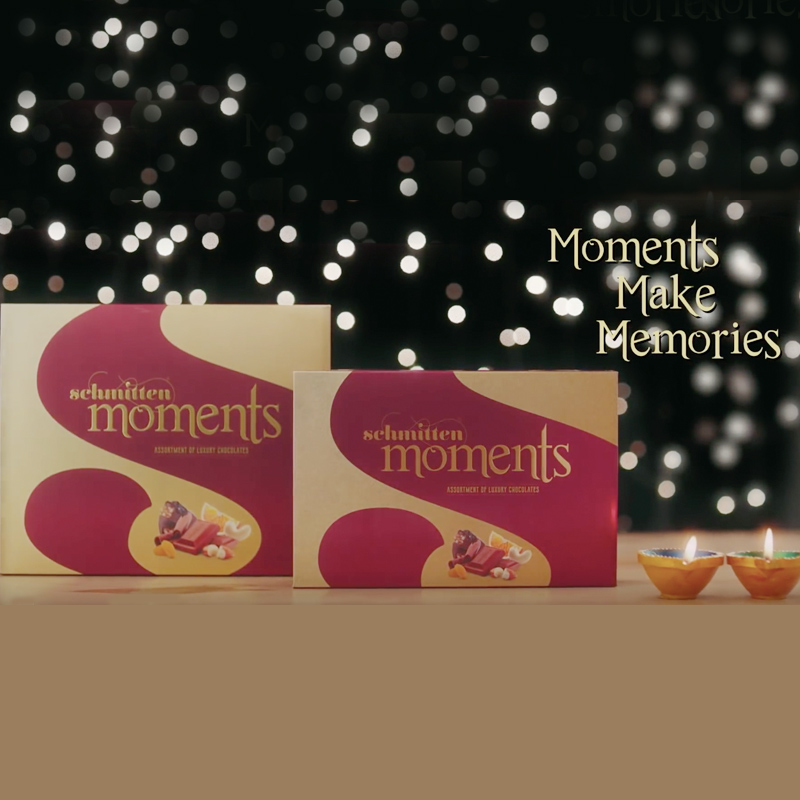
    Schmitten Moments is a gifting pack with an assortment of Schmitten Luxury chocolates and Hoppits Chocolate bars. The brand believes in not only sharing sweetness but also sharing memories, thereby making every moment memorable. Schmitten believes that these wonderful moments last a lifetime – a thought summarized by its brand tagline “Moments Make Memories”.

    According to Jayesh Desai, the founder and chairman of Rajhans (Desai-Jain) Group, the brand is breaking new ground when it comes to festival advertising. “Where every brand is riding on the festival season to deliver the same-old stories, Schmitten is creating new conversations, which will impact positively within the society and give Diwali celebrations a whole new meaning.”

    Schmitten marketing head Rishabh Verma believes this initiative is the beginning of a cultural paradigm shift. “Usually, men do not look beyond their immediate family. We wanted to not only make men accept their responsibility towards their partner’s family, but also foster a sense of belonging. #AadhiAadhiDiwali is the beginning of a very poignant conversation that shall spark a new reason to celebrate Diwali.”

    Envisioned by ADK-Fortune, a WPP group company, the campaign has already struck an emotional chord with its consumer base. Commenting on its success, national creative director Akashneel Dasgupta said, “It reminds you that when you share everything with your loved ones, why should Diwali be an exception? Diwali should bring together the entire family, which extends to your partner’s as well. Understanding this is key to building a healthier relationship. Not to mention, making new memories.”

    ADK-Fortune managing partner Subroto Pradhan added, “Schmitten Moments is not just a premium gift offering. It also stands for creating lasting memories and celebration of togetherness. And what better occasion than Diwali to create moments that are memorable.”

  • WPP creates new brand experience agency VMLY&R

    WPP creates new brand experience agency VMLY&R

    MUMBAI: Advertising giant WPP has launched a new agency, VMLY&R, uniting two leading brands to deliver a contemporary, fully integrated digital and creative offering to clients on a global scale.
    VMLY&R’s proposition will combine brand experience and brand advertising, drawing on the complementary expertise of VML and Y&R to create connected brands that drive value for clients.
    The new agency will be led by global chief executive officer Jon Cook, who is currently global CEO of VML.
    Jon will report to Mark Read, chief executive officer of WPP.
    David Sable, former global CEO of Y&R, will continue to support Jon, VMLY&R and its clients as non-executive chairman as he transitions to a new role in WPP.

    Y&R is known for building many of the Fortune 500’s biggest brands. Its renowned strategic approach, married with innovation and creative talent, has led to some of the most famous and culturally transformative campaigns around the world. Y&R developed the world’s first and largest brand management tool, its proprietary BrandAsset Valuator, which fuels both strategic and creative decisions with data and insights.
    VML has established itself as one of the most forward-looking agencies in today’s marketplace – blending award-winning creativity with deep expertise in digital marketing.
    Mark Read said: “VMLY&R will be a powerful brand experience offering and a core agency brand for WPP. VML and Y&R have distinct and complementary strengths spanning creative, technology and data services that make them a perfect match. This is an important step as we build a new, simpler WPP that provides clients with a fully integrated offering and easy access to our wealth of talent and resources.”
    Jon Cook added, “I’m thrilled for the VMLY&R team as we start this journey together and harness the best of each agency to deliver culturally relevant world-class work. The landscape of our industry is changing rapidly, and we are committed to being an invaluable partner to CMOs around the world. I look forward to leading this unprecedented unification of two exceptional agencies.”
    VMLY&R will be an agency of more than 7,000 people, and one of WPP’s principal brands. It will be fully operational in early 2019.

  • WPP acquires majority stake in mark-tech company Emark

    WPP acquires majority stake in mark-tech company Emark

    MUMBAI: Wunderman, the global digital agency by WPP has acquired majority stake in Emark, the marketing technology performance company.
    Emark delivers salesforce marketing cloud, commerce cloud, service cloud, DMP, and advertising technology such as Facebook Advertising and Google Ads, as a single, integrated solution.
    The acquisition further strengthens WPP’s and Wunderman’s growing global salesforce practice in delivering marketing and advertising technology solutions for data-driven and personalised customer interaction.
    Founded in 2000, Emark is recognised as a preeminent provider of salesforce multi-cloud strategy and solutions in Europe, with a strong marketing cloud pedigree. Headquartered in Haarlem, Netherlands with international offices located in Barcelona, London and Poland, the company employs around 120 people and serves a wide range of clients across sectors including Bugaboo, ECCO Shoes, Marks & Spencer, Randstad, Scotch & Soda, and The Macallan.
    Wunderman is the world-leading digital agency whose mission is to inspire people to take action. It brings together 9,200 creatives, data scientists, strategists and technologists in 200 offices in 70 markets.

  • Coca-Cola India appoints Asha Sekhar as VP & chief digital officer

    Coca-Cola India appoints Asha Sekhar as VP & chief digital officer

    MUMBAI: Coca-Cola India, on Monday, announced the appointment of Asha Sekhar as its vice president and chief digital officer, India and South West Asia.
    Prior to this, she worked for over a decade with WPP, Universal McCann, Madison and Mudra, managing media businesses for leading brands. She has developed multi-level engagement with all key segments of the dynamic media landscape ranging from technology platforms to content distributors.
    Announcing the elevation, Coca-Cola president India and South West Asia T Krishnakumar said, “Digitalisation is disrupting all industries and redefining the ways companies connect, engage, communicate and do business. Asha’s expertise in delivering consumer-focused digital experience will help in our journey towards becoming more relevant and future ready.”
    Sekhar will report to Krishnakumar. In her previous role, as director – media, Coca-Cola India & South West Asia, she was pivotal in setting up a separate media function to efficiently leverage marketing efforts in an increasingly complex media landscape.
    In this newly created leadership role, which focuses on the company’s journey towards digital transformation, Asha will build foundations necessary for business growth, drive opportunities and strengthen Coca-Cola India’s digital ecosystem. In addition to her new responsibilities, Asha will continue to lead the media and allied marketing functions.
    “This new addition to the leadership team of Coca-Cola in India is designed to address developing business needs and reinforces our commitment towards investing in diversity and talent development,” he added.
    As a core part of the marketing function, Asha has been a significant change agent for driving media strategy. Some of her significant achievements include, the inception and later scale-up of Samvaad, an in-house digital experience center for Coca-Cola in India, that delivers consumer centricity for Coca-Cola’s brands, company and customers. She has also delivered some ‘industry-first’ pioneering projects and driven strategic media partnerships.

  • Communication more important than advertising: The Store WPP, David Roth

    Communication more important than advertising: The Store WPP, David Roth

    MUMBAI: Local is the way forward. India is at an interesting cusp right now where we see a lot of homegrown brands stealing the thunder of MNCs. The Indian retail industry is witnessing rapid transformation with new technology driving businesses and changing shopper behaviour.

    Indian brands get local nuances right which is the key to great marketing and brand building exercise. Interestingly, in the recent BrandZ report by WPP and Kantar Millward Brown, the top 10 brands are all Indian homegrown companies. The list saw HDFC Bank, LIC, Tata Consultancy, Airtel, State Bank of India, Maruti Suzuki, Kotak Mahindra Bank, Asian Paints, ICICI Bank, Reliance Jio, Flipkart and Paytm make it in the top 10, the first time ever. 

    It speaks volumes about Indian brands’ credibility, the modern Indian shopper’s behaviour and choices. New technologies are dramatically re-shaping the marketing, entertainment and retail industries. With data-infused in everything, the boundaries between content and commerce continue to blur.

    The Store WPP CEO EMEA and Asia David Roth is known as a man whose love for marketing is evident in every statement he makes. Roth loves India, Indian brands, the local retail sector here and is optimistic about the growth in the country. 

    The Store is WPP’s global retail practice. With offices in London and Chicago, the company shares best practice in retail across WPP’s group companies to facilitate leading-edge thinking and deliver extra value that supports client initiatives.

    As a knowledge hub, The Store draws insights from the group’s unparalleled understanding of consumers, retailing, brands, technology and shopper marketing. The Store interprets learnings and insights to a broad audience inside and outside of WPP in the form of conferences, articles, webinars, guest lectures at universities and digital content.

    Indiantelevision.com caught up with David Roth where he spoke to us about industry challenges, increasing brand loyalty for Indian brands, way forward for e-commerce and more.

    Excerpts:

    What are brands and agencies focusing on right now?

    I think they are spending more time understanding the consumer better and understanding the consumer journey, from awareness to purchase. They are working out where along that consumer journey is the best place to communicate with them and to give them new information. Brands and agencies are working very hard on innovating in a useful way for the customers. 

    If we see the recent BrandZ report, HDFC bank retained its pole position for the fifth consecutive year but we haven’t seen too much advertising activity from the brand. Isn’t advertising equally important along with creating brand loyalty and being innovative?

    Advertising is clearly important but communication is exceptionally important. There are ways in which brands can now communicate with customers and potential customers as well. The combination of communicating with customers on a one-to-one basis along with brand building communication is the best and cost-effective way to build stronger brands.

    What are the things that e-commerce players in India should focus on right now to get more customers on board?

    The market currently is a land grab where it is exceptionally hard to get the customer attention and get them to try your products once or twice. For e-commerce companies, most of the effort needs to go in increasing the level of trials and it is equally important to have a promise of providing a seamless experience and a good physical delivery experience. E-commerce platforms have growth opportunity in India and it will only occur if the actual proposition and what they promise to the customers is delivered in reality. The most important metrics for me are acquisition, the cost of acquisition and the per cent of customers they acquire who become their loyal customers.

    What are the challenges in the retail industry globally and do you see a growth in the business going forward? Will retail continue to flourish or will we see fewer stores?

    Retail is a very challenging business globally at the moment because of the fundamental economic model of retailers that are coming under pressure due to the cost of space. The real estate prices are soaring high around the world and that is not being offset by their ability to raise prices and contain their cost. In addition, they have to invest heavily in new technologies, e-commerce, delivery and that puts a big cost on their structure. However, I believe that physical retail stores are going to stay in the future. I think there will be fewer stores but those stores will be better focused on customer experience.

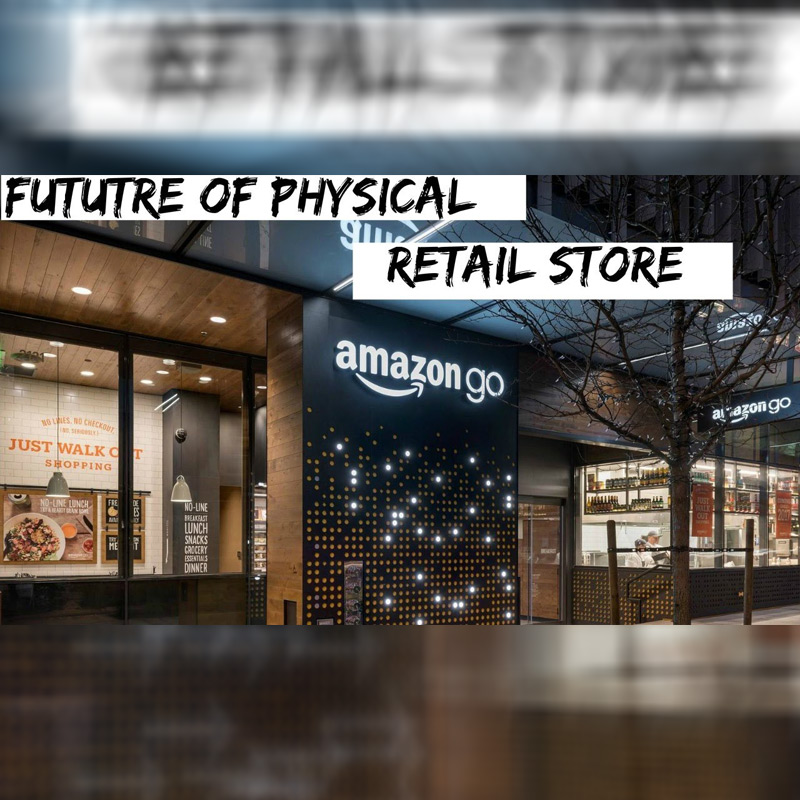
    What’s interesting is that Amazon also has its own store now and other Indian e-commerce players have also started opening brick and mortar outlets…

    Amazon, Alibaba and other major e-commerce platforms are all opening up physical stores. This shows the importance of having a mix of both physical stores and virtual shopping in the future, especially grocery stores. In India, the strength of grocery stores is far too much as compared to other parts of the world. It will take a lot for e-commerce to displace them, especially as they deliver most of the e-commerce benefits such as personalised service, fast delivery and they also have an added advantage of giving customer credit.

    Everyone talks about how the millennial consumer is fickle about their buying options. How can brands woo this new generation of consumers?

    I don’t think the millennial consumers are fickle. I think they know what they want and they are much more prepared to try things. If somebody comes with a new idea, product or innovation in the market, they are much more likely to try it. The millennial consumers are slightly less loyal though because of that, but they value brands and they buy into brands. It is just that they are more difficult to reach but once you reach them, and once they have tried your products, you have every opportunity to make them loyal customers.

    Recently, we are seeing an emergence of homegrown Indian brands. Is the Indian audience finally willing to accept and believe in homegrown companies?

    It all comes down to a strong consumer proposition and really understanding who the customer is and then being very fast and agile. We are seeing that local brands have the ability to do that quickly and swiftly and that is a distinct advantage when consumers are more fickle about what they choose.

    What are some of the key industry problems according to you and how can they overcome them?

    The foremost challenge for the industry is the fast-changing consumer and to anticipate those changes. The second challenge is that all companies need to start acting like startups and be agile, quick moving. The third challenge is that consumers are available across different mediums and you just have to find the right mix while creating tailor-made communication for the consumers.

    While everyone talks about video being the way forward and how ADEX is shifting towards creating more digital ads, the truth remains that it’s annoying after a point of time. Facebook and Youtube now also have pre-rolled ads that you can’t skip and that’s why we are getting “ad-blocked”. How can the industry skip being ad blocked?

    I think brands have to be very good at communication and it all comes down to that. The advertising needs to be timely, appropriate and relevant. We as brand custodians, have a duty to make sure that we are reaching customers in ways that they don’t find it annoying. The more we bombard them with unnecessary ads, the more likely they are to click the skip button and install ad blockers. The ad industry owes it to itself to make sure that we act appropriately and not be ad-blocked by our acts.