Tag: WPP group

  • Mirum India announces strategic partnership with Resulticks

    Mirum India announces strategic partnership with Resulticks

    Mumbai: Mirum, a Wunderman Thompson company and a part of the WPP Group, has announced a strategic partnership with Resulticks, an audience engagement platform.

    “We are happy to partner with Mirum, one of the leading digital and martech solutions agencies,” stated Resulticks CEO and CTO Mani Gopalaratnam. “Resulticks is a comprehensive, data-driven, and omnichannel marketing automation platform that supports all digital marketing requirements and gives users the ability to automate their core marketing activities. With the expertise of Mirum India added to the partner arsenal we are confident of delivering best-in-class managed services along with our platforms.”

    As a part of this collaboration, Mirum will be a solution partner for Resulticks and help the ‘real-time conversation marketing cloud’ platform to implement and integrate their martech stack for customers across industries and geographies, said the statement.

    “At Mirum, we understand the nuances that brands face while implementing and integrating a martech platform,” said Mirum India joint CEO Hareesh Tibrewala. “Resulticks is truly an omnichannel platform that allows marketers to plan, develop, deploy, and manage campaigns across channels like email, mobile, web, and social media while automating real-time & responsive communications. With our experience of over 12 years in ceaselessly delivering implementation projects, we are excited and look forward to our partnership with Resulticks.”

  • VMLY&R India appointed as AOR for Social Media Marketing of Oriflame India

    VMLY&R India appointed as AOR for Social Media Marketing of Oriflame India

    Mumbai: VMLY&R India, a full-service digital marketing agency of WPP group, has won the digital mandate for Oriflame India following a multi-agency pitch. The agency has been entrusted with the task of providing strategic, content and creative inputs across various platforms within the social and digital ecosystem.

    VMLY&R will be in charge of building a strategic approach for Oriflame India through social media channels. It will also look into strategic planning, social media strategy, content creation for digital mediums, ORM, media planning and buying and working with influencers. VMLY&R will also be handling various product launches on digital for the brand in categories including skincare, wellness and more.

    Commenting on the partnership, Naveen Anand, Senior Director, Regional Marketing for South Asia, Oriflame said “Social media is a very important part of Oriflame’s strategy to continuously engage with the consultants as well as end consumers. We are happy to have VMLY&R on board with their understanding of our business, brand and community.”

    Oriflame’s vision is to become the #1 Beauty Company Selling Direct. The most important objective for social media is to build continuous engagement with the online community which consists of Oriflame’s consultants as well as the end consumers.

    Commenting on the association, Mr Amandeep Singh Kochar, Business Head, New Delhi, VMLY&R India, said, “Oriflame is an iconic brand and has established itself in a great way in the Indian market. Digital has a very big role to play in its marketing and communication strategy and we are excited to be associated with the brand.”

  • Wunderman acquires Amazon consulting agency 2Sales

    Wunderman acquires Amazon consulting agency 2Sales

    MUMBAI: Wunderman, the leading global digital agency and a WPP company has acquired 2Sales International, an e-commerce consulting agency that supports global brands in building their business on Amazon and other online marketplaces.

    2Sales will become part of Wunderman’s growing global commerce offering, Wunderman Commerce.

    The acquisition further strengthens Wunderman Commerce’s Amazon expertise across supply chain, operations and assortment planning, content/search optimisation and promotional management, particularly in European markets where Amazon’s market share is growing rapidly, and where their broader consumer influence is becoming increasingly important to clients. 

    2Sales employs 66 people in Luxembourg, and is a one-stop Amazon solution that utilises automated processes to optimise content generation, sales promotions across eight international Amazon platforms. Clients include ACCO, Columbia, Fiskars and SC Johnson.

    Wunderman Commerce global CEO Neil Stewart says, “For brands to win on Amazon requires tools and techniques that come with direct knowledge and expertise, something 2Sales has mastered over the years by working with over 150 brands. We are delighted that they are joining the Wunderman Commerce family, fortifying our Amazon capabilities across EMEA, and supporting our ability to provide multichannel digital commerce services to our brand clients.”

    2Sales CEO Helmut Rieder adds, “This is an exciting time for 2Sales as it will enable us to extend our marketplace services and Amazon capabilities to Wunderman Commerce’s global client base. Wunderman Commerce has established itself as the go-to agency in defining and delivering digital commerce strategies across all online channels, and we are thrilled to now be a part of it.”

  • Why Sir Martin Sorrell is keen on India

    Why Sir Martin Sorrell is keen on India

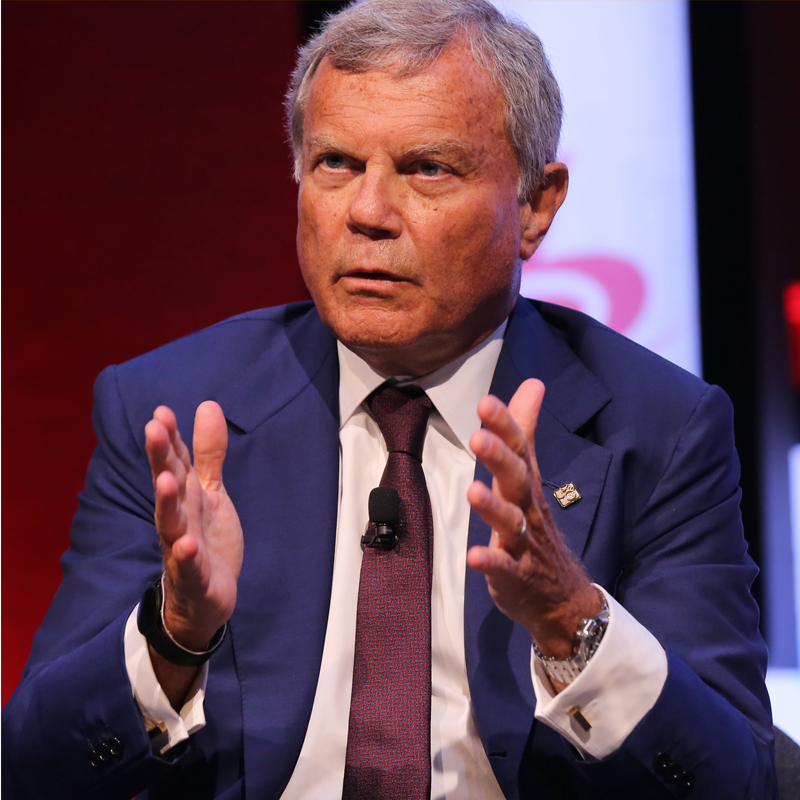
    Amsterdam: When you get a guy like Sir Martin Sorrell to keynote, you can expect to get some statements. That’s exactly what Sir Martin made at IBC 2016, the audiovisual equipment industry’s annual European get together at the RAI Exhibition Centre in Amsterdam, Netherlands.

    Sir Martin Sorrell waxed eloquent about Prime Minister Narendra Modi. Said he: “Modi has made an incredible difference. I don’t know what is with these guys whose second part of their name begins with the M initial. Modi. Argentina’s Macri. They all have done a..Merkel. May (Britain’s new prime minister) maybe.”

    He went on to state that India has supplanted Brazil for the WPP group. “India is very important. We have 50 per cent of the market. We are interested in India because of its population size, GDP growth and also the young population’s growth. Then, the intellectual firepower in India is really strong. If you look at India 25 years hence, and it is going to become even more important. And then there’s the Muslim population. The third biggest Muslim population, probably going to get even bigger.”

    Sorrell also praised the talent he has in India. “Our people are outstanding. People like Srini, Piyush, Ranjan, Tarun, they are absolutely outstanding people. If you could export them from India, or if we had the same quality of people around the world, I could retire,” he said.

    “I only own two per cent of the company; but I am identified with the company,” he responded to a question whether he would retire. “I will carry on as long they will let me. WPP is not a matter of life or death for me, it is more than that. They will carry me out to the glue factory.”

  • Why Sir Martin Sorrell is keen on India

    Why Sir Martin Sorrell is keen on India

    Amsterdam: When you get a guy like Sir Martin Sorrell to keynote, you can expect to get some statements. That’s exactly what Sir Martin made at IBC 2016, the audiovisual equipment industry’s annual European get together at the RAI Exhibition Centre in Amsterdam, Netherlands.

    Sir Martin Sorrell waxed eloquent about Prime Minister Narendra Modi. Said he: “Modi has made an incredible difference. I don’t know what is with these guys whose second part of their name begins with the M initial. Modi. Argentina’s Macri. They all have done a..Merkel. May (Britain’s new prime minister) maybe.”

    He went on to state that India has supplanted Brazil for the WPP group. “India is very important. We have 50 per cent of the market. We are interested in India because of its population size, GDP growth and also the young population’s growth. Then, the intellectual firepower in India is really strong. If you look at India 25 years hence, and it is going to become even more important. And then there’s the Muslim population. The third biggest Muslim population, probably going to get even bigger.”

    Sorrell also praised the talent he has in India. “Our people are outstanding. People like Srini, Piyush, Ranjan, Tarun, they are absolutely outstanding people. If you could export them from India, or if we had the same quality of people around the world, I could retire,” he said.

    “I only own two per cent of the company; but I am identified with the company,” he responded to a question whether he would retire. “I will carry on as long they will let me. WPP is not a matter of life or death for me, it is more than that. They will carry me out to the glue factory.”

  • Viacom Asia ropes in WPP’s Added Value finance director Lee Shin Yng as CFO

    Viacom Asia ropes in WPP’s Added Value finance director Lee Shin Yng as CFO

    MUMBAI: Viacom International Media Networks (VIMN) Asia has appointed Lee Shin Yng as chief financial officer (CFO).


    In this position, Yng will be based in Singapore, and reports directly to VIMN Asia COO Tan Chee Kiat.


    With 16 years of accounting and finance experience, Yng was mostly recently the finance director for Greater China at Added Value Limited, a part of the WPP Group.


    She will drive Asia’s financial strategies and performance and will be responsible for the company’s financial reporting and planning. Yng will also serve as a business partner to VIMN Asia EVP and MD Mark Whitehead and Kiat, providing financial guidance and counsel on the company’s strategic direction.


    “Shin Yng’s extensive regional experience and acute financial acumen provide her with a deep understanding of the Asian markets we operate in, making her well prepared to take up this important leadership of Asia’s financial operations,” said Kiat. “I am confident she will help build upon the strong progress we have made over the past year, to help make many contributions to further VIMN Asia’s success in the future.”


    Prior to Added Value Limited, she spent seven years with the Reed Elsevier Group where she last served as the finance director for Greater China in the LexisNexis division of the Group. Her previous assignments included holding office as the financial controller for China within the same division and as the business controller for Asia Pacific and Japan in the Elsevier division.


    She previously held roles in public listed companies such as Neptune Orient Line Ltd and United Overseas Bank.

  • Publicis-Omnicom’s $35 billion merger terminated

    Publicis-Omnicom’s $35 billion merger terminated

    MUMBAI: Paris based Publicis Groupe and New York based Omnicom Group have decided to part ways. The duo through a press statement has jointly announced that they have terminated their proposed merger of equals by mutual agreement, in view of difficulties in completing the transaction within a reasonable timeframe. With this announcement the proposed $35 billion merger has come to an end.


    A statement released by Publicis Groupe and Omnicom Group states, “The parties have released each other from all obligations with respect to the proposed transaction, and no termination fees will be payable by either party.”


    This decision was unanimously approved by the Management Board and the Supervisory Board of Publicis Groupe and the Board of Directors of Omnicom. In a joint statement, Publicis Groupe chairman and CEO Maurice Lévy and Omnicom Group president and CEO John Wren stated, “The challenges that still remained to be overcome, in addition to the slow pace of progress, created a level of uncertainty detrimental to the interests of both groups and their employees, clients and shareholders. We have thus jointly decided to proceed along our independent paths. We, of course, remain competitors, but maintain a great respect for one another.”


    The announcement comes after the meeting of the Supervisory Board of Publicis Groupe, chaired by Madame Elisabeth Badinter which was held on 8 May in order to decide on the action to be taken regarding the proposed merger of equals with Omnicom Group.


    The Supervisory Board examined the recommendation of the Management Board, which has unanimously voted to terminate the proposed merger of equals between Publicis Groupe and Omnicom Group.


    Lévy in an earlier statement said, “The two groups each have a brilliant track record. This merger was always one of opportunity, not necessity. The teams at Publicis Groupe worked diligently to complete the merger, but, in view of the obstacles encountered, the execution risk continued to increase. The decision to discontinue the process was neither pleasant nor an easy one to make, but it was a necessary one. Prolonging the situation could have led to the diversion of the Group’s management from its principle function: to best serve our clients. Our paths diverge today with mutual respect. Publicis Groupe will continue to pursue and accelerate the implementation of its ambitious strategic plan for 2018. I am very confident in our ability to successfully see this through and to achieve all our goals.”


    The deal which came in the limelight in July, if worked out, would have created the world’s largest advertising holding company, impacting mostly the Chicago advertising market. The planned merger had called for a 50-50 ownership split of the equity in the new company, Publicis Omnicom Group, with Wren and Levy serving as co-CEOs for 30 months from the closing.


    According to an Ad Age report, the proposed Publicis-Omnicom merger would have created a company with a combined market cap of $37 billion and joint 2013 revenues of nearly $24 billion. Combined, the duo could have leapfrogged London-based WPP as the world’s largest advertising holding company.
     

    With the merger being called off, WPP Group CEO Martin Sorrell can have a good laugh. Sorrell while talking to CNBC from China said, “I think this deal was driven by ego issues and emotional issues, I think both CEOs wanted to try and dislodge WPP from its number one perch and so it was emotional and egotistical. It was also a case of eyes being bigger than your tummy.”
     

  • Indian TV B’casters: ‘TAM’ing TV ratings

    Indian TV B’casters: ‘TAM’ing TV ratings

     Does the Indian TV broadcast industry want TAM? In one word, the answer is No. Definitely not in the form and manner it is monitoring TV viewership in India. Definitely not the kind of viewership numbers it has been spewing out for them week by week. The major Indian TV broadcast networks have already shown their utter disgust and disregard for its TV ratings by closing their checkbooks on TAM.

    On almost every front, the Indian TV broadcasters – through the IBF – have been flexing their muscles and showing that they mean business. And they have been sorting out troublesome issues: like striking a wage accord with TV industry technicians; setting set up a self-regulatory mechanism when government wanted to muzzle the media; getting the advertising industry to agree to net billing after the government demanded taxes for the gross advertising agency bills it used to make payments on.

    But one of the most vexatious issues it has been grappling with is the TV rating‘s one. And now that the lights have been put out on TAM, what now for the broadcast industry? What are the options before it? Let us take a look at a couple of them:

    *For one they can continue with TAM Media. However, they can give TV ratings a hiatus for a couple of months. It‘s quite possible the chaos that is happening on account of analogue shutoffs and digital set top box switch-ons, will settle down and the ratings will stabilise in that period. They can also dialogue with TAM and ask it to get back to basics and do an establishment survey once again (if possible), represent the peoplemeters appropriately in power-lit areas in LC1, rather than in power-dark areas. And finally, take a closer look at the entire process of churning out ratings that happens every week, through a committee constituted for the very purpose.

    There is a possibility that we could end up with a period of no TV ratings in India if issues are not sorted out by all concerned. How long that period will be is not clear (some say it could be until BARC comes up), but broadcasters will need to get advertisers and agencies’ support for their decision. So far, both have said they are not comfortable with ratings going away, and have spoken up for TAM.
    _____****_____


    With all major B‘casters unsubscribing from TAM TV ratings, only time will tell if the viewers‘ true choice can be reflected with the emergence of BARC

    * Or if this is not working out forget that TAM exists, cut off its blood supply, and watch it gradually bleed and die. Come up with a viewership metric that works in the interim for all concerned – broadcasters, advertisers and agencies – and allows the business of communicating brand messages through television for a fee to continue.

    The broadcast industry is torn between the two options. The first has been done before between October and December 2012 and it was painless for all concerned and allowed TAM to continue its existence in a profitable manner. 

    The second option, while it appears the easier one to see through, comes with its set of challenges.

    The Broadcast Audience Research Council (BARC)‘s TV ratings system seems nearly a year away and could take longer to get to the levels of coverage TAM is providing now. Unless, under the leadership of Puneet Goenka and Partho Dasgupta, BARC manages to do an Ambani on the system and get the establishment survey, the constitution of the sample, the installation of the meters, the development of the software, the stabilisation of the findings and everything down stream thereof completed in super record time. Most advertisers and agencies have been optimistic about BARC.

    Industry can learn some lessons from the experience of Turkey in 2011. Turkey‘s broadcasters and the industry shut down the ratings service run there by AGB Nielsen in late December 2011, amidst allegations of corruption, which were denied by the ratings service provider. The industry body – The Television Audience Research Committee (TIAK) – prematurely severed its contract with AGB and urged TNS – part of the WPP Group‘s Kantar Research – to set up an alternative ratings system which finally got going in May 2012 with a 1000 peoplemeter panel, as against 2,500 people meters earlier.

    Industry can learn some lessons from the experience of Turkey which faced a ratings blackout in 2011. During the blackout TV ad rates and prices were determined by using average ratings from the month before the shutdown, combined with monthly share performance from the whole of the year.
    _____****_____

    In the interim, adage.com reported in March 2012 that life went on for Turkish advertisers, agencies and broadcasters though the “TV-buying system has since been in shambles. Without reliable new-audience measurement data, prices have been determined by using average ratings from the month before the scandal erupted, combined with monthly share performance from the whole of 2011. The industry is working to regain media agencies‘ and advertisers‘ trust.”

    Agreed, we are not questioning the ethics of TAM in India, though many have hurled allegations against it. There is a possibility that we could end up with a period of no TV ratings in India if issues are not sorted out by all concerned.

    How long that period will be is not clear (some say it could be until BARC comes up), but broadcasters will need to get advertisers and agencies‘ support for their decision. So far, both have said they are not comfortable with ratings going away, and have spoken up for TAM.

    With reason. Two or three months without TAM mean they will have little data to support a TV advertising expenditure between Rs 3,600-4,200 crore. That‘s not an amount you can sniff away.

    Hence, all three will have to come to the table and agree on a performance metric to justify the expenditure and offer some accountability. Could the Turkish media industry‘s interim solution during the TV ratings shutdown there be adapted to work in India?

    Broadcasters are slated to huddle very soon (either this week or next) to get some consensus on which route they will take. Some broadcast CEOs have been travelling and hence have not been able to get together.


  • GroupM snaps up South Korean agency Alchemedia

    MUMBAI: Expanding its operations in the Asia Pacific region, global communications conglomerate WPP Group has acquired South Korean media planning and buying agency Alchemedia for an an undisclosed amount.

    The South Korean agency was founded in 2004. Alchemedia‘s audited revenue for the year ended 31 December 2011 was 1.4 billion Korean won (KRW), with gross assets of KRW 10.0 billion.

    Alchemedia is based in Seoul and will be merged with GroupM Korea. The combined client list of the two entities include brands like Audi, GSK, Hicos Fragrances, IBM, LG Electronics, Lock & Lock, Procter & Gamble, Sejung Fashion, Red Bull, Rolex and VW.

    Recently, WPP announced during the 59th Cannes Lions Ad Festival held in France that it has acquired one of the biggest independent digital agencies AKQA for an estimated $ 540 million.