Tag: WPP

  • WPP faces twin lawsuits as media arm stumbles

    WPP faces twin lawsuits as media arm stumbles

    NEW YORK: WPP, the world’s biggest advertising group, is being sued by investors who reckon the company misled them about the state of its struggling media business. Two class-action lawsuits—one from Rosen Law Firm, another from Glancy Prongay & Murray—have reportedly been filed against the British giant, both chasing shareholders who bought American depositary shares between 27 February and 8 July 2025.

    The complaints claim WPP painted a rosy picture whilst hiding an ugly truth: that its media arm, formerly called GroupM and now renamed WPP Media, was losing ground to rivals and couldn’t hack the tough economic climate. On 9 July, the firm finally admitted that performance had “deteriorated” through the second quarter, blaming “macro uncertainty” and “weaker net new business” alongside “distraction” from restructuring its media operations.

    Investors weren’t amused. The shares plunged $6.48—an 18.1 per cent drop—to close at $29.34. The lawsuits allege that WPP’s upbeat statements lacked any reasonable basis and that executives concealed the media division’s market-share losses.

    Both firms are now racing to recruit a lead plaintiff before the 8 December deadline. Rosen Law Firm, which boasts of securing the largest-ever securities settlement against a Chinese company, says investors may be entitled to compensation without upfront costs. Glancy Prongay & Murray is pitching a similar deal.
    No class has been certified yet, and shareholders needn’t do anything to remain part of the action. But if they fancy leading the charge, they’d better move fast. WPP’s troubles, it seems, are only just beginning to bite.

  • WPP and Google forge $400m AI alliance to turbocharge marketing campaigns

    WPP and Google forge $400m AI alliance to turbocharge marketing campaigns

    CALIFORNIA: WPP and Google have announced a five-year expansion of their partnership that represents nothing short of a full-throated embrace of artificial intelligence as the defining competitive advantage in modern marketing. The creative powerhouse will pour $400m into Google technologies—cloud infrastructure, generative models, cutting-edge AI systems—betting that the combination can compress months of campaign planning, creative development and media buying into days, and unlock growth that conventional efficiency drives could never reach.

    The deal, cemented at Google’s Mountain View headquarters with WPP chief executive Cindy Rose, Google Cloud chief Thomas Kurian, and senior leadership from both organisations gathered around the table, aims to fundamentally revolutionise how brands connect with customers at scale. Rather than simply speeding up existing processes or squeezing more productivity from existing workflows, the partners plan to enable something far more radical: real-time personalisation for millions of people simultaneously, powered by bespoke AI models that learn, adapt and optimise on the fly.

    The ambition is extraordinary. WPP will receive preferred early access to Google’s latest generative models—Veo for video generation, Imagen for image creation, and a suite of others still in development—all integrated directly into WPP Open, the firm’s proprietary AI platform for marketing. The practical impact is already staggering. Campaign-ready creative assets that would traditionally take weeks to produce can now be generated in days. Efficiency gains are reaching 70 per cent. Asset utilisation is accelerating 2.5 times over. For one global retailer pilot, these aren’t abstract metrics: they translated to 98 per cent accuracy in audience targeting and an 80 per cent boost in operational efficiency, freeing entire marketing teams to focus on strategy rather than execution.

    WPP Media, the group’s media planning and buying division, will deploy bespoke audience models powered by Google DeepMind’s AI products through a new solution called Open Intelligence. The promise: build custom audience segments and deploy hyper-targeted campaigns across all channels—including Google Ad Platforms—with unprecedented speed and precision. For a multinational energy company, this looked like developing a custom AI Marketing Agent that automatically generates comprehensive marketing briefs, connects stakeholders to a single point of contact, and draws on a library of best-practice documents, past campaign performance and proven playbooks. The system works in real time, adapting to local challenges across multiple markets.

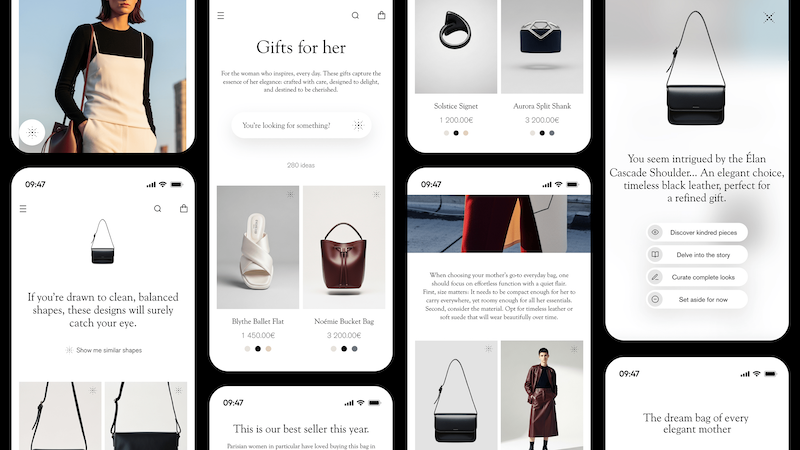
    The partnership extends into the creative layer itself. AKQA, WPP’s design and innovation company, is developing a new generation of AI-powered experiences that transform static websites into intelligent, generative platforms. The live AKQA Generative Store recreates the experience of personalised luxury retail service digitally—dynamically adapting product visuals, messaging and recommendations for each customer in real time. AKQA Generative UI, launching imminently, will instantly generate tailored, on-brand pages for users across enterprise and B2B contexts, with no manual intervention required.

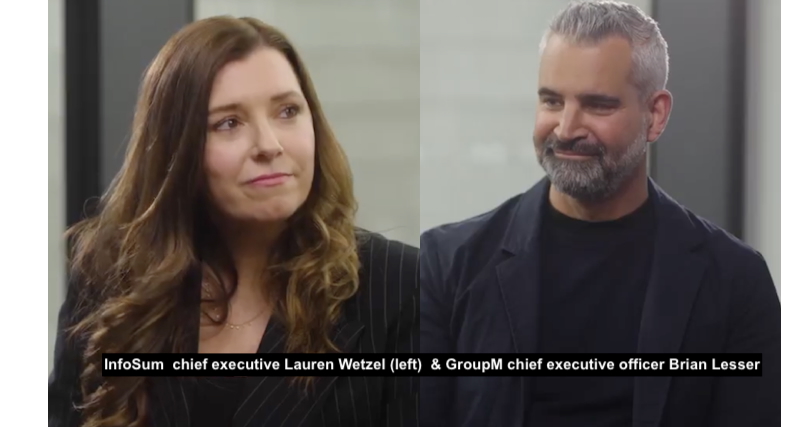
    Privacy and data security thread through the entire architecture. Using InfoSum’s Bunkers technology, now integrated into WPP Open and available on Google Marketplace, WPP can enforce secure data collaboration without physically moving sensitive customer data. This allows brands to harvest deeper, richer insights for AI marketing whilst maintaining ironclad privacy protection—a crucial advantage in an era of tightening data regulation and consumer scrutiny.

    The talent dimension is equally ambitious. WPP’s Creative Technology Apprenticeship programme, which has placed more than 50 early-career technologists across WPP agencies since 2022, will expand dramatically with Google joining as the primary curriculum partner. The goal is audacious: train over 1,000 creative technologists by 2030 in a world-leading curriculum covering creative coding, generative AI and robotics. These apprentices will work on real-world challenges from major clients—L’Oréal, Unilever and others—building the next generation of marketing talent fluent in machine learning, AI prompt engineering and algorithmic thinking.

    Beyond client work, Google AI will also transform WPP’s internal operations. Automated data analysis, intelligent resource allocation and instant access to global insights will flow through WPP’s workflows, accelerating the development of solutions, sharpening team responses and ultimately delivering superior speed and value to clients worldwide. The logic is clear: make the machine fast enough and the organisation responds like an organism, not a bureaucracy.

    There is a feedback loop built into the model that gives WPP an unusual advantage. New solutions are collaborated on, tested and validated first within Google’s own marketing operations—real-world testing grounds where ideas either survive or die quickly. The insights flow back to WPP clients, who receive solutions already battle-tested against the toughest marketing challenges. In a rapidly evolving AI landscape crowded with noise and overpromise, that’s a rare competitive edge.

    Rose called it a redefinition of what’s possible for clients. Kurian framed it as harnessing generative and agentic AI to transform business outcomes. Google global marketing senior vice-president Lorraine Twohill spoke of exploring what marketing and storytelling look like in a new era.

    But beneath the corporate language lies a harder truth: the pace of marketing innovation just accelerated dramatically, and the winners will be those organisations—agencies, brands, technologists—that can think and move at machine speed. Everyone else faces a widening gap between aspiration and execution.

  • Laura Maness steps down as global chief of Grey after three-year stint

    Laura Maness steps down as global chief of Grey after three-year stint

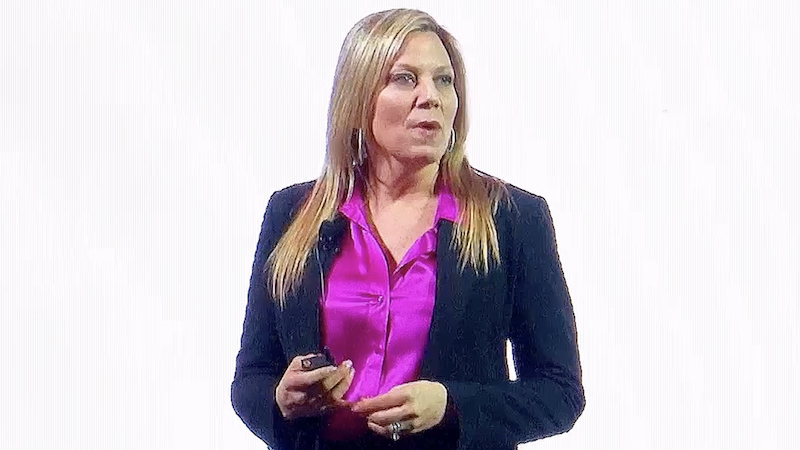
    NEW YORK: Laura Maness is stepping down as global chief executive of Grey, the 105-year-old advertising agency, after more than three years at the helm. In a LinkedIn post published on Thursday, Maness—the first woman to lead the storied shop—said she would be “passing the baton” to close colleagues whilst embarking on what she described as a “bold new chapter.” She offered no details about her next move.

    The departure marks the end of a brief but eventful tenure for Maness, who became only the sixth global chief in Grey’s history when she took the reins in September 2022. During her time leading the WPP-owned agency, Grey operated as a standalone brand within the Ogilvy network, a structure designed to preserve its independence whilst leveraging the broader group’s resources.

    Maness joined Grey from Havas, where she spent nearly a decade, most recently as chief executive of the group’s north American flagship. At Havas she drove what the industry regarded as a remarkable turnaround, earning the agency accolades including Digiday’s most innovative culture and Ad Age’s best places to work. She also steered Havas to become the first major network agency in America to achieve B Corp certification.

    Before Havas, Maness spent six years at Designkitchen, an independent Chicago shop that was acquired by WPP in 2008 following growth she helped orchestrate. Her career spans stints at FCB Global, Propane and Wunderman, with early roles at Black Dog Interactive and Giant Step during the dot-com era.

    Beyond her executive roles, Maness serves on several boards, including Tory Burch Foundation, Alembic Technologies, B Lab and the 4A’s, where she is vice chair. She co-chairs 50/50 Women on Boards and is a founding member of Chief, the invitation-only network for women leaders.

    Grey, founded in 1917, markets itself on creating “famously effective” ideas for brands. The agency has been named to Newsweek’s top 100 global most loved workplaces and America’s greatest workplaces for women, with women representing 50 per cent of its executive leadership.

    Maness’s cryptic sign-off—”As for what’s next? More to come”—has left industry observers guessing about her future plans.

  • Ogilvy’s influence chief calls time after 12 years

    Ogilvy’s influence chief calls time after 12 years

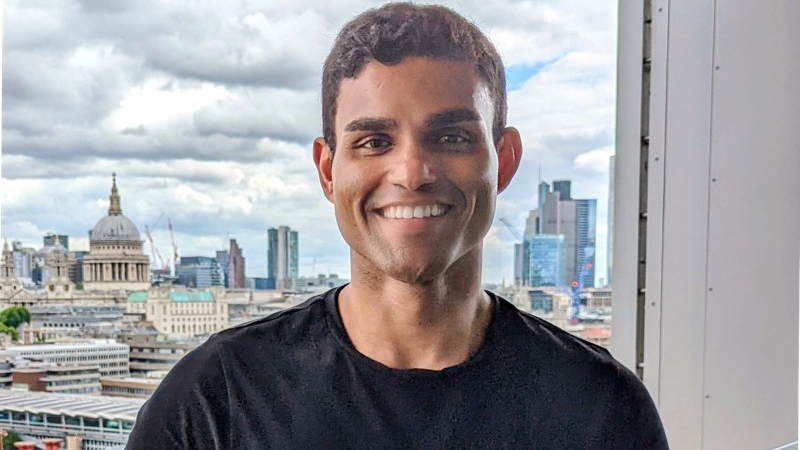
    LONDON: Rahul Titus is leaving WPP after a dozen years, during which he transformed Ogilvy into the world’s largest and most awarded influencer marketing operation. The global head of influence, who also leads influencer strategy for WPP Open X, announced his departure with plans for a trek to Everest Base Camp and some cycling holidays.

    Under Titus’s watch, Ogilvy has grown to employ more than 650 influencer specialists across over 30 markets. The agency has claimed the title of the world’s leading influencer network for seven consecutive years and won the Social & Creator Grand Prix at Cannes Lions for two years running.

    Titus joined Ogilvy as an intern in Bangalore before climbing through the ranks. He took on the role of managing partner and head of influence for Britain and Europe, the Middle East and Africa in September 2017, then became global head of influence in June 2022. His portfolio has included blue-chip clients such as Walgreens Boots Alliance, Bacardi, Mondelez, Mattel, Unilever, British Airways and Vodafone.

    Since November 2021, he has also served as global influence lead for WPP Open X, a bespoke unit that handles celebrity and influencer work for more than 200 Coca-Cola brands across 195 countries. He is a founding board member of the Influencer Marketing Trade Body, established in October 2021 to professionalise the industry.

    Before Ogilvy, Titus spent six months at YMU as director of social talent, where he managed digital-first creators. Earlier, he spent nearly three years at MediaCom, establishing and running its global influencer offering for clients including Shell, Revlon, LVMH and Sony. He began his career in search engine optimisation at Dentsu Aegis Network agencies Carat and iProspect.

    In his farewell message, Titus thanked WPP leaders including Julianna, Laurent, Fiona, Liz, Devika, Karen and Lindsay for their support. He said change was “scary but also exciting” and that he would be “cheering loudly from the sidelines” for his former colleagues.

  • Saffola launches AI campaign urging consumers to have a ‘Heart to Heart Talk’

    Saffola launches AI campaign urging consumers to have a ‘Heart to Heart Talk’

    MUMBAI: Saffola, the health-focused FMCG brand from Marico Limited, has launched an AI-powered campaign this World Heart Day to help consumers gauge the true age of their hearts.

    Titled ‘Heart to Heart Talk,’ the initiative encourages people to pause, reflect, and engage in a personal conversation with themselves about lifestyle habits that affect heart health. By scanning a QR code, uploading a selfie, and answering a few simple questions on Whatsapp, users receive a personalised AI-generated video revealing the gap between their real age and indicative heart age.

    According to the Indian Council of Medical Research- India Diabetes (ICMR-INDIAB), one in four Indians has high cholesterol, one in ten is diabetic, and one in three is hypertensive. Even active, young adults may unknowingly put their hearts at risk through daily stress and unhealthy choices.

    Marico Limited, CEO – India core business, Ashish Goupal said, “Saffola has always aimed to inspire consumers to take charge of their heart health. ‘Heart to Heart Talk’ is a moment of truth, helping people reflect on how small lifestyle habits can impact well-being and empower them to take meaningful steps towards a healthier tomorrow.”

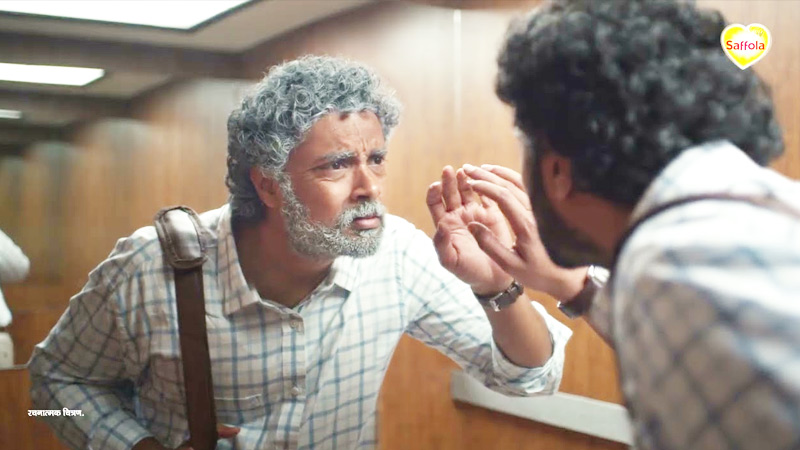
    Conceptualised by team WPP, the campaign includes a digital film depicting a young man caught in unhealthy routines, from breakfast pakodas to late-night junk food. At each step, he is confronted by the reflection of his older self, demonstrating the long-term effects of poor habits. The film highlights ‘Saffola Total Heart Pro’, enriched with Oryzanol to help reduce cholesterol, and shows it being used in everyday cooking to promote healthier choices.

    With this initiative, Saffola continues its long-standing mission to promote wholesome living and make heart health awareness both personal and engaging.


  • Madison Avenue moment as Havas closes in on Sam Balsara’s empire

    Madison Avenue moment as Havas closes in on Sam Balsara’s empire

    MUMBAI: The curtain is about to rise on one of Indian advertising’s most dramatic acts. After months of speculation, the Havas–Madison deal has now reached the signing stage, with top industry sources confirming that the Rs 700-crore acquisition for a 70 per cent stake is nearly sealed. For Sam Balsara, the man who has kept Madison fiercely independent for over three decades, this could be the turning point of a storied career.

    Industry insiders said that while it is “not right to discuss valuations at this stage,” both sides have agreed on the major terms. “The banker involved has finalised all formalities and the deal is on the verge of completion. Most likely, by early 2026 after regulatory approvals, it will be announced,” one veteran leader said.

    If the deal closes, it will peg Madison’s valuation close to Rs 1,000 crore, nearly double the Rs 500 crore price Balsara once discussed with WPP in 2015 though far short of the lofty numbers once floated.

    The move is no surprise given Havas’s acquisitive streak in India. Led globally by Yannick Bolloré, the network has snapped up five to six agencies in the past eight years and continues to see consolidation as its playbook for India. Bolloré had said earlier this year that cultural unification and strategic partnerships would remain core to Havas’s growth.

    Securing Madison, one of India’s last great independents, would not only give Havas scale but also cement its presence in a fiercely competitive market.

    For Madison, the timing is crucial. Over the past year, it has lost marquee clients including Godrej Consumer Products, McDonald’s, Atomberg, and Raymond, while Marico currently reviews its business. The losses have shaken confidence and intensified pressure on Balsara to secure a future-proof partner with technology, scale, and multinational backing.

    The agency has tried to respond. In August 2025, Madison brought back Ajit Varghese as partner and group CEO of Media and OOH with an equity stake marking his return after senior stints at JioHotstar and WPP. Earlier in the year, Vivek Das, ex-Google India and Southeast Asia executive, joined as chief marketing officer. Madison also completed its 100 per cent acquisition of Hiveminds, the performance marketing specialist it first invested in back in 2017.

    These moves underscored an effort to rebuild digital muscle and shore up bargaining power ahead of negotiations.

    For Balsara, long hailed as Indian advertising’s last independent mogul, the Havas deal may feel bittersweet. But it also signals realism: independence has limits in a world where scale, data, and global platforms dictate the pace.

    As one industry insider put it: “This is not just a deal, it’s an inevitability. Madison’s survival now depends on becoming part of something bigger.”

    If signed, the Havas–Madison marriage would go down as one of Indian advertising’s most significant consolidations marking the end of an era for independents and the dawn of a new one where even icons like Madison must reinvent themselves to stay in the game.

    Because in today’s ad world, survival isn’t about who shouts the loudest, it’s about who scales the fastest.
     

  • Federal Bank’s AI Onam wishes win hearts

    Federal Bank’s AI Onam wishes win hearts

    MUMBAI: When petals fall from the cloud, you know Onam has gone digital. This festive season, Federal Bank, in partnership with Hogarth, turned tradition into a tech-powered celebration, swapping generic greetings for personalised, AI-driven messages that felt anything but robotic.

    Using WPP’s AI tools and immersive tech from 8th Wall, the campaign let customers scan a simple QR code on posters, print or metro ads, and suddenly find themselves showered with virtual petals, greeted by a Kathakali dancer, or hearing the familiar trumpet of a vallam kali. And instead of a faceless message, it came directly from their own branch manager: part banker, part digital storyteller.

    “This Onam, we wanted to bring plug-and-play joy into people’s homes,” said Federal Bank, cmo, M V S Murthy. “Technology is at its best when it strengthens culture and community, not when it overshadows them.”

    Thousands of bespoke greetings were shared across Kerala and beyond, with customers responding with joy, nostalgia, and even surprise. For many in the diaspora, the greeting felt like a piece of home arriving at their phone.

    For Hogarth India, ceo, Karthik Nagarajan, the idea was simple: “We’re moving from creating content to crafting experiences. Tech should feel human, not heavy,” he noted.

    Backed by AI-assisted motion design, the experience was fully browser-based, no app required, making it as seamless as it was striking. Social chatter followed quickly, with younger audiences latching onto the novelty and sharing the moments widely.

    As WPP, global vp of Immersive tech & AI, Dale Imerman, summed it up, “This is India showing how creativity and technology can amplify cultural connection at scale.”

    For many, this year Onam didn’t just come home, it came alive on their screens. 

  • Unny Radhakrishnan to step down as Digitas India chief after 5.5 years

    Unny Radhakrishnan to step down as Digitas India chief after 5.5 years

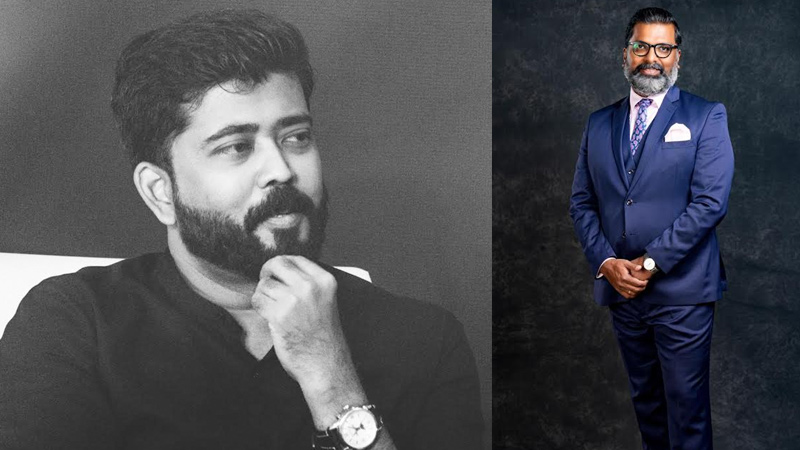
    MUMBAI:  Digitas India chief executive officer Unny Radhakrishnan will exit the agency at the end of September, drawing a close to a 5.5-year run at the Publicis Groupe-owned digital marketing firm.

    Radhakrishnan, who took charge in March 2020, steered Digitas India through a period of growth that saw it expand to a 450-strong team split between local clients and a global delivery hub. Under his leadership, the agency pushed deeper into data, user experience and technology services, cementing its position as a marketing transformation partner for brands.

    In a farewell note, he said leadership was about “bringing together people with different expertise and temperament to do things which otherwise could not have been done by any single individual”. He emphasised that before the “great place to work” labels, the focus was on being known for “great work and great people to work with.”

    Radhakrishnan’s career spans nearly three decades across GroupM, WPP and Publicis, with stints as chief digital officer for Wavemaker South Asia and earlier as head of digital at Maxus. A strong proponent of team building, he often described business as having “the responsibility to influence people to become better human beings, looking beyond the financial scorecards.”
    His next move has not been disclosed.

  • WPP hires Mariel Maciá as senior director of strategic design for Open unit

    WPP hires Mariel Maciá as senior director of strategic design for Open unit

    MUMBAI: WPP has appointed Mariel Maciá as senior director of strategic design within its WPP Open team, strengthening the agency group’s push to blend human creativity with artificial intelligence in marketing and brand experience.

    Maciá joins after more than five years at McKinsey & Company, where she served as senior service design manager in Berlin. Before that, she held design leadership roles at Die Krieger des Lichts and the innogy Innovation Hub, and earlier worked in film acquisition, production and festival programming across Europe and Latin America.

    Trained in audiovisual narrative in Buenos Aires, Maciá has built a career spanning media, design and digital transformation. At WPP, she will focus on reimagining how design thinking and emerging technologies can unlock new opportunities in advertising, media and customer experience.

    “The journey ahead is incredibly exciting,” she said, adding that she looks forward to collaborating with “the brilliant minds across WPP.”

  • WPP slashes dividend in half as advertising giant struggles with client cuts

    WPP slashes dividend in half as advertising giant struggles with client cuts

    LONDON: WPP, the world’s biggest advertising agency, delivered a sobering performance in the first half of 2025, slashing its interim dividend by 50 per cent as profits tumbled and clients tightened their belts.
    The London-listed giant reported headline operating profit of £412m for the six months to June, down 36 per cent from £646m a year earlier. Revenue less pass-through costs—the industry’s preferred measure—fell 4.3 per cent on a like-for-like basis to £5.03bn.

    The company cut its interim dividend to 7.5p per share from 15p previously, with the board citing the need to give incoming chief executive Cindy Rose “room to review the group’s strategy and capital allocation policy”.
    Mark Read, who steps down as chief executive on 1 September after seven years at the helm, acknowledged the difficulties. “It has been a challenging first half given pressures on client spending and a slower new business environment,” he said.

    The results underscore the advertising industry’s struggles as companies slash marketing budgets amid economic uncertainty. WPP’s top 25 clients managed only flat growth, while key sectors including consumer goods and automotive weakened in the second quarter.

    WPP has made “significant progress” repositioning its media division, which replaced GroupM in May as part of chief executive Read’s drive to simplify the sprawling conglomerate. The unit, now called WPP Media, has undergone substantial restructuring to make it more client-focused.

    The company expects severance action taken in the second quarter alone to generate more than £150m of annual cost savings from 2026. Headcount has fallen 3.7 per cent since the start of the year to 104,000 people.
    Despite the gloom, WPP continues to invest heavily in artificial intelligence and data capabilities. Usage of WPP Open, its AI-powered marketing platform, has surged, with 85 per cent of client-facing staff now using it monthly, up from 60 per cent in March.

    The company also completed the acquisition of InfoSum, a data collaboration platform, and launched Open Intelligence, an AI tool designed to predict audience behaviour.

    Looking ahead, WPP expects like-for-like revenue less pass-through costs to decline between 3 per cent and 5 per cent for the full year. Headline operating profit margin is forecast to drop by 50 to 175 basis points.
    The company’s performance varied widely by region. North America, WPP’s largest market, saw revenue less pass-through costs fall 2.4 per cent, while China plunged 16.6 per cent amid persistent macroeconomic pressures.

    At the prestigious Cannes Lions festival in June, WPP was named creative company of the year, providing some cheer amid the financial turbulence. The group’s agencies secured 168 Lions, including a coveted Titanium Lion.

    Average adjusted net debt stood at £3.4bn at the end of June, giving a debt-to-EBITDA ratio of 1.98 times—outside the company’s target range of 1.5 to 1.75 times.

    Shares in WPP have struggled this year as investors fret about the advertising downturn and the company’s transformation efforts. The stock trades well below pre-pandemic levels, reflecting the challenges facing traditional advertising agencies in an increasingly digital world.

    Rose, who joins from Microsoft, faces the daunting task of restoring growth while maintaining WPP’s position as the industry leader. Her strategic review will be closely watched by investors hoping for a clearer path forward for the advertising behemoth.