Tag: World War II

  • Ross Video shines at Broadcast India Show with cutting-edge solutions

    Ross Video shines at Broadcast India Show with cutting-edge solutions

    MUMBAI: The first day of the Broadcast India Show at the Jio World Convention Centre in Mumbai pulsated with the vibrant energy of the broadcast media and infotainment sectors. In an industry where technology evolves at lightning speed, the impact on broadcast and entertainment is profound. Yet, the full spectrum of innovative advancements often feels just out of reach-except for one remarkable occasion each year. For over 30 years, the Broadcast India Show has served as an interactive platform, showcasing groundbreaking shifts in infotainment technology while connecting attendees with the innovators behind these marvels.

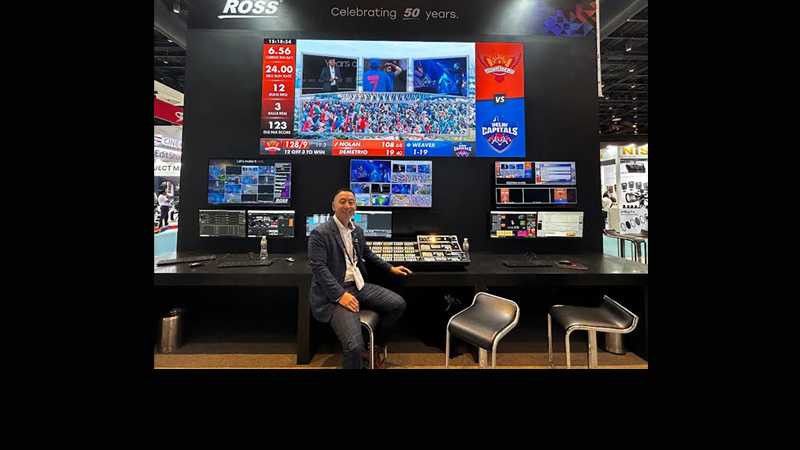
    As we navigated the bustling trade show, overwhelmed by the cutting-edge equipment and technology on display, one booth captured our attention: Ross Video. Initially sceptical, we quickly found ourselves engaged in one of the most enlightening conversations of the day with Ross Video director- sales, Asia, Simon Roehrs along with Ross Video marketing manager, APAC, Irene Siah. Their enthusiasm was infectious and before agreeing upon giving an in depth interview, they provided a brief overview of the company’s journey.

    Founded in 1974 by John Ross in the basement of his Montreal home, Ross Video began with a bold vision. John sold a meticulously restored World War II trainer aeroplane for $3,500, using those funds to launch the company. Remarkably, this initial investment remains the only external funding Ross Video has ever received. Since then, the company has flourished through self-funding and organic growth, reinvesting profits back into the business. In the present, John’s son, David Ross, serves as the chief executive officer, owning over 80 per cent of the company, while dedicated employees hold the remaining 20 per cent.

    Now, Ross Video stands out in the ever-evolving media landscape with an impressive array of products and services. Their offerings include state-of-the-art cameras, real-time motion graphics, advanced production switchers, robotic camera systems and immersive augmented reality and virtual studios. Additionally, the company provides video servers, robust infrastructure and routers, social media management solutions, newsroom systems and comprehensive live event production services.

    Buckle up readers as Indiantelevision.com’s Rohin Ramesh and Sreeyom Sil dived into an in-depth interview with Simon and Irene. Both were eager to tackle a plethora of questions we had lined up.

    Edited excerpts

    On the evolution of the company with the increasing demand for cloud based solutions

    I’ve been frequently asked about our cloud strategy, both by journalists and customers. It’s a great question! At Ross, we recognise that the cloud is a crucial component of the future, and we’re committed to providing a comprehensive broadcast workflow solution for our customers.

    Currently, Ross already offers a substantial range of broadcast-related capabilities in the cloud. This includes video servers, streaming applications like NDI and SOP, as well as graphics, switching, and audio mixing—all the essential elements needed to establish a full broadcast workflow in the cloud.

    Additionally, we provide Software as a Service (SaaS) options for customers, particularly in areas like Media Asset Management (MAM). With our SaaS model, we handle the relationship with AWS and deploy the necessary microservices, allowing customers to simply subscribe to our service. This contrasts with our other model, where the customer manages their own relationship with AWS while we assist in deploying the workflow.

    Our SaaS offerings include not only MAM but also inception, our Newsroom Computer System (NRCS). This dual approach allows us to cater to different customer needs while maintaining a strong commitment to delivering effective cloud solutions.

    On the integrating AI and automation in your product lineup

    That’s another excellent question! Honestly, we don’t focus much on our competition. While they do their thing, we concentrate on how we can best serve our customers today and into the future.

    AI is not new to us; we’ve been working with it for years. Our research lab, which consists of nearly 500 R&D professionals, is dedicated to this effort. For example, we’ve integrated ChatGPT, one of the leading AI technologies, into our Media Enterprise Management System (MEMS) and our Inception Newsroom Computer System (NRCS). This integration helps streamline the daily tasks of journalists.

    Imagine a journalist returning from an assignment with a lengthy story. They may want to create a brief snippet for social media, like an audio or video highlight. ChatGPT can summarise the story into a few concise sentences, which the journalist can then review and approve before publication. This significantly reduces turnaround times for digital content.

    Another exciting development is rossbot, which is available on our website. This chatbot allows customers from countries like Japan or Thailand to ask questions in their native languages. Rossbot accesses our extensive documentation and continually learns to provide accurate answers. For instance, if a user asks about a specific company code, Rossbot can deliver a precise response within 10 to 15 seconds. This is a remarkable improvement compared to traditional support channels, where inquiries often take much longer to resolve.

    Since deploying rossbot, we’ve seen a stabilisation in the volume of support calls, which speaks to its effectiveness in addressing customer queries efficiently.

    On sharing any recent case studies where your company has significantly transformed globally

    One of our most successful products is our hyperconverged solution. A significant trend in the broadcast industry, highlighted during events like IBC, is the growing focus on operational efficiencies. Many countries are facing economic challenges, which impact advertising revenue, especially with the rise of social media platforms. As a result, broadcasters need to operate more efficiently, find synergies, and potentially reduce their workforce.

    Our hyperconverged clusters offer a remedy to these challenges. By combining switching, routing, and a variety of essential features into a single, compact unit, we simplify broadcast operations. This integrated solution eliminates the need for multiple separate devices, reducing cabling and streamlining setups.

    Additionally, our hyperconverged systems significantly lower costs, both in terms of total cost of ownership and deployment speed. For mobile operations, for example, you only need one hyperconverged unit instead of a large truck filled with equipment. This not only saves on costs but also allows for faster on-air readiness. Overall, our hyperconverged solution has tremendous potential for cost reduction in the broadcast industry.

    On the major sport you are targeting in India, given that cricket is already the most established one

    I really appreciate your questions so far! Currently, we cover over 20 different sports, and if you take a look at the screen right there, you’ll see kabaddi. This sport is primarily popular in India, and it’s well-known because of local teams that share their requirements and trends with us. That’s why we’re actively supporting kabaddi today.

    When we identify a trend or demand, we collaborate closely with our product teams to adapt our offerings to fit regional markets. For instance, cricket is incredibly important—not just in India, but also in countries like Australia, England and South Africa. Interestingly, we’ve seen a significant rise in cricket’s popularity in North America.

    Did you know that there are approximately two million Indians living in Canada? This vibrant community is driving interest in the sport, which is why we’ve hosted matches in locations like New York, Texas, and Los Angeles. For example, India faced Pakistan in a match in New York, demonstrating the strong audience demand. When you look at the global audience for cricket, it’s impressive—it dwarfs many other sports.

    On elaborating more on your other vertices besides sports

    As I mentioned earlier, our primary market focus is broadcasting, which encompasses various aspects, especially sports broadcasting. Currently, about half of our revenue comes from this sector, making it a crucial vertical for us. However, we recognise that the broadcasting industry faces increasing challenges.

    We are also looking into live production and sports, as these are two of the most effective ways to capture audience attention. News and live sports are unparalleled in their ability to engage viewers, especially when it comes to thrilling moments like cheering for a cricket team.

    Beyond broadcasting, there is a growing demand for video solutions across other sectors, including government, education, and corporate environments. We see significant potential in corporate markets in India, particularly with large organisations like Tata and Accenture, as well as major banks. These companies are increasingly interested in video solutions for purposes such as video conferencing, board meetings, and town hall events.

    In the U.S., we have a strong customer base that uses our latest Carbonite switchers alongside Microsoft products. For instance, our switchers offer USB-C webcam output, allowing users to easily feed a high-quality video signal into their laptops or PCs. This setup can then be displayed on a TV, providing a professional-grade production quality for executive meetings and other large gatherings.

    On the future of broadcasting in India

    I see a bright future for the Indian broadcast market, and here’s why.

    First, about 50 per cent of broadcasting is still being done in standard definition (SD), which presents significant opportunities for upgrading to high definition (HD) and even ultra high definition (UHD).

    Second, the number of TV channels is steadily increasing. My team informs me that more than 100 new news channels are launched each year. This growth reflects the importance of news in India, a country characterised by its remarkable diversity.

    With distinct differences across the North, South, East, and West, and around 115 languages and dialects spoken, India’s diversity is truly unparalleled. This unique landscape creates a rich environment for broadcasting, with ample opportunities for tailored content that resonates with various audiences.

    On venturing into the post production market in the coming future

    In post-production, creativity is paramount. We are proud to offer a range of creative tools to support this. Additionally, we have a department called Rocket Surgery, which is truly exceptional. This team comprises approximately 40 to 50 talented individuals and is one of our notable acquisitions, showcasing Ross’s commitment to growth.

    Rocket Surgery specialises in bespoke projects tailored to our customers’ needs. When clients come to us with a vision and aren’t sure how to bring it to life, this team steps in to map out their ideas and provide innovative solutions. Some of these solutions are so groundbreaking that they’ve never been seen before in the industry.

    Looking ahead, we certainly see the potential to expand further into the entire production market.

  • Mel Gibson hops on as art director on World War II movie

    Mel Gibson hops on as art director on World War II movie

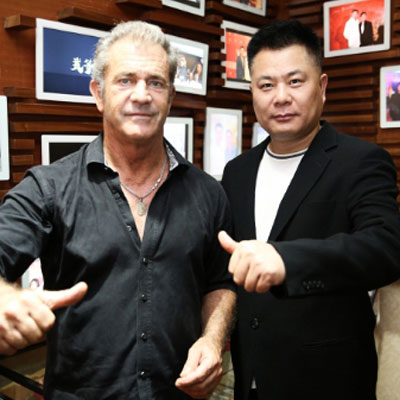
    MUMBAI: Actor and filmmaker Mel Gibson has joined the crew of 3D war movie The Bombing.Speaking at a press conference at the movie’s Xiangshan production base, Gibson announced his new role as art director of the $65 million star-studded movie, which features more than 30 renowned actors and actresses including Bruce Willis.


    Known to Chinese audiences for his role in Braveheart, Oscar-winning director and actor Gibson was invited to join the production of The Bombing by Chinese producer and director Dr. Shi Jianxiang, who is also the founder and CEO of Shanghai Kuailu Investment Group.


    “Mel is interested in what happened during that period of time, and provided relevant suggestions on how to make the movie. He is very insightful.” said Dr. Shi.


    It has been twenty years since Gibson’s last visit to China, and he spoke highly of the project at hand. “I have seen so many changes in China. The Bombing has an excellent world-class team with outstanding producers, directors, cast and crew. Our crew is marvelous, modest but enthusiastic. It has been a very interesting experience filming this movie. We share similar objectives no matter who we are, actors or directors. So I am grateful to have such opportunities to express my thought no matter how much I have contributed to the movie.”


    The Bombing is based on the bombing of Chongqing by the Japanese air force in World War, and portrays the hardship suffered by Chinese people at that time. Of all the major air raids throughout WWII, the bombing of Chongqing is the only one that has not been featured on screen.


    Dr. Shi stated that his reason for making the film is to demonstrate China’s national spirit against fascism, saying, “I hope audiences around the world can appreciate the cruelty of war and our courage, determination and capability to fight against it. China needs such movies that deliver hope and spirit.”


    Dr. Shi further explained that he invested the movie to mark the 70th anniversary of the Allied victory over fascism in memory of that miserable period of time in Chinese history. “We cannot forget what happened in the past. History made us what we are today,” he emphasized.


    His thoughts are echoed by director Xiao Feng’s expectations. “We chose a charismatic cast and crew in order to encourage more youngsters to remember history,” he said.


    Therefore despite the tremendous cast including Bruce Willis and Liu Ye, behind-the-scenes productions have been a focus as well. Oscar-winners Vilmos Zsigmond and Ronald Bass were invited to join the production as photography consultant and screenplay consultant respectively. Also, sound effects and 3D special effects will be produced by multiple top teams.


    Dr. Shi was optimistic about box office ratings of The Bombing and believes the movie can attract international audiences for its good quality. He also suggested that he has had other co-production movies ongoing currently and hopes that the cooperation between Hollywood and the Chinese movie industry could bring a brighter future to the domain.

  • DD to telecast a rare tale of Indian compassion for Europeans during World War II

    DD to telecast a rare tale of Indian compassion for Europeans during World War II

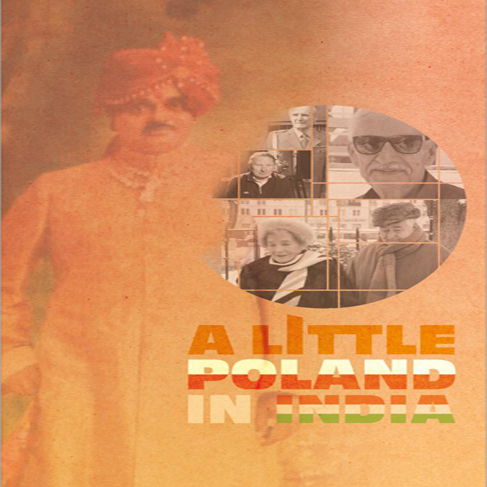
    NEW DELHI: ‘A Little Poland in India’ a poignant story of around one thousand orphaned children from Poland who found a sanctuary in India at the height of Nazi German Dictator Hitler’s atrocities in Poland, is to be telecast by Doordarshan later this week in Hindi.


    The film, which was telecast in English in November last year, will now be aired in Hindi on 4 June, 9.30 am onwards on DD National.


    The hour-long documentary is the true and captivating story of the then Jam Saheb (Ruler) Digvijaysinhji Ranjitsinhji Jadeja of Nawanagar, nephew of famous Indian cricketer Ranjitsinhji Vibhaji of the Jadeja clan,a princely state in the Kathiawar Peninsula, off the land of Gujarat. It is the heart-warming story of an enriched historical bond between India and Poland. It is a story that represents people-to people contact in its most humane form, beyond borders and across continents.


    During World War II, about 1000 Polish children from war-torn, occupied Poland and Soviet prison camps in Stalin’s Siberia, travelled all the way to India, where Jam Saheb took personal risks to make arrangements at a time when the world was at war and India was struggling for its Independence. He built a camp for them in a place called Balachadi beside his summer palace, 25 km from his capital city Jamnagar, and made them feel at home.


    This is the first film that has been co-produced between the governments of India and Poland under the Audio-Visual agreement between both countries. The co-producers are Doordarshan and the Gujarat Government in India, and the National Audiovisual Institute and TVP (Telewizja Polska) in Poland.


    Directed by Anuradha and Sumit Osmand Shaw with research by Anuradha herself, the film took the help of historian Andrzej Krzysztof Kunert, secretary general of the council for the Protection of Struggle and Martyrdom Sites. The research coordinators were Kresy-Siberia Foundation and a Balachadi survivor Wieslaw Stypula.  


    The film contains interviews with several survivors, including two children who met in Balachadi but married 78 years later in Poland.


    The venture was supported by the Embassy of India in Warsaw, the Embassy of Poland in India, and the Polish Institute, New Delhi.

  • DD to telecast a rare tale of Indian compassion for Europeans during World War II

    DD to telecast a rare tale of Indian compassion for Europeans during World War II

    NEW DELHI: A Little Poland in India a poignant story of around one thousand orphaned children from Poland, who found a sanctuary in India at the height of Nazi German Dictator Hitler’s atrocities in Poland, will be telecast by Doordarshan tomorrow.

    A Little Poland in India will be officially telecast 10 November at 3:00 pm and on11 November at 7:30 am on DD National and will there after open the inaugural ‘Kinoteka Polish Film Festval’ on18 November at India Habitat Centre.

    The hour-long documentary is the true and captivating story of the then Jam Saheb (Ruler) Digvijaysinhji Ranjitsinhji Jadeja of Nawanagar,nephew of famous Indian cricketer Ranjitsinhji Vibhaji of the Jadeja clan,a princely state in the Kathiawar Peninsula, off the land of Gujarat. It is the heart-warming story of an enriched historical bond between India and Poland. It is a story that represents people-to people contact in its most humane form, beyond borders and across continents.

    During World War II, about 1000 Polish children from war-torn, occupied Poland and Soviet prison camps in Stalin’s Siberia travelled all the way to India, where Jam Saheb took personal risks to make arrangements at a time when the world was at war and India was struggling for its Independence. He built a camp for them in a place called Balachadi beside his summer palace, 25 km from his capitalcity Jamnagar, and made them feel at home.


    This is the first film that has been co-produced between the governments of India and Poland under the Audio-Visual agreement between both countries. The co-producers are Doordarshan and the Gujarat Government in India, and the InA (National Audiovisual Institute) and TVP (Telewizja Polska) in Poland.

    Directed by Anuradha and Sumit Osmand Shaw with research by Anuradha herself, the film took the help of historian Dr. Andrzej Krzysztof KunertSecretary General of the Council for the Protection of Struggle and Martyrdom Sites. The Research Coordinators were Kresy-Siberia Foundation and a Balachadi survivor Wieslaw Stypula.  

    The film contains interviews with several survivors, including two children who met in Balachadi but married 78 years later in Poland.

  • Director Hayao Miyazaki set to retire

    Director Hayao Miyazaki set to retire

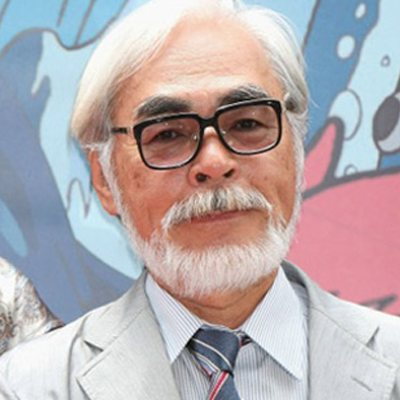
    MUMBAI: Oscar-winning director Hayao Miyazaki’s animation studio says The Wind Rises, in competition at the Venice Film Festival, will be his last feature.

    Koju Hoshino announced Miyazaki’s intention to retire Sunday, but declined to take questions, deferring to a news conference next week in Tokyo.

    Miyazaki was not in Venice for the international premiere. His Italian distributor said he stayed in Japan for the domestic release.

    Miyazaki, 72, is one of animation’s most admired and successful directors. He won an Oscar for Spirited Away in 2003 and a Golden Lion for lifetime achievement in 2005.

    The Wind Rises, Miyazaki’s 11th feature film, is a fantasy-filled look at the man who designed Japan’s World War II fighter planes.

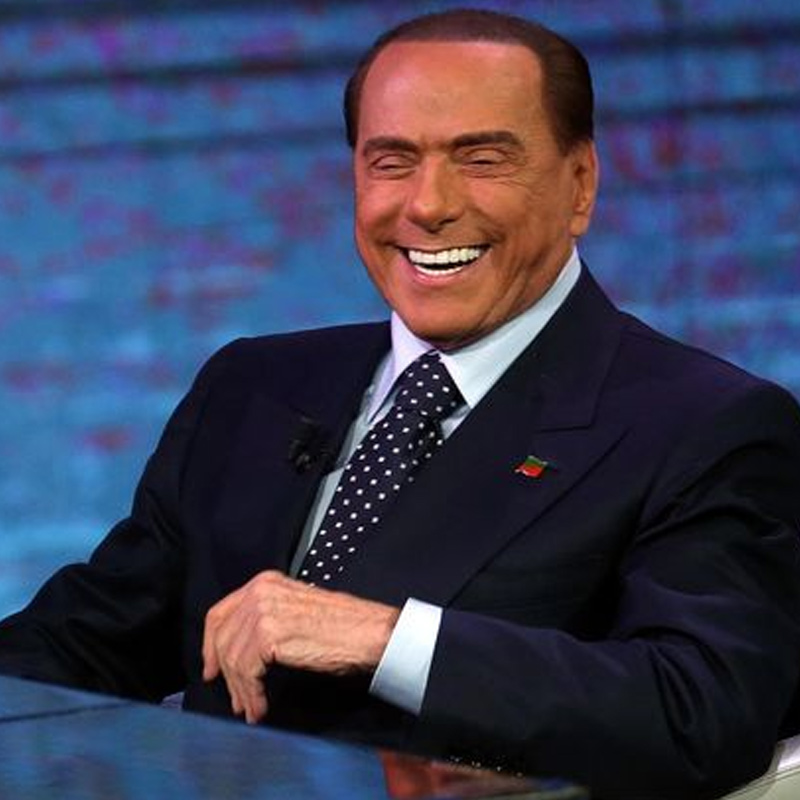
  • Berlusconi mulls own biopic

    Berlusconi mulls own biopic

    MUMBAI: Former Italian prime minister and media tycoon Silvio Berlusconi has expressed his wish of a film be made about his life and needs to find the right director, it is reported.

    Berlusconi, 75, made the announcement about his desire to make a film of his life on Tuesday, the 18th anniversary of his entry into Italian politics. He served as prime minister for only seven months back in 1995, but for the ten-year period ending last November, he was prime minister for all but 18 months.

    Born into a middle class family, Berlusconi built Europe‘s largest media empire and became the most transformational Italian political leader since World War II. This makes his life colourful enough to entertain on the silver screen.
     
    It wouldn‘t be the first film with Berlusconi as a subject. Nanni Moretti‘s Il Caimano (The Caiman) from 2006 which skewered Berlusconi appeared in competition in Cannes; Videocracy, a controversial documentary about Berlusconi‘s television empire from Erik Gandini, screened at the Venice Film Festival in 2009; and Silvio Forever, another critical documentary from Roberto Faenza, made its rounds last year.

    Berlusconi would presumably pen the film adaptation of his life story.

    One director who says he might be interested in making a Berlusconi film is well-known Italian funnyman Carlo Verdone, who bears a resemblance to the Italian leader.

  • Azaan: A montage of post-World War II espionage films

    Azaan: A montage of post-World War II espionage films


    Producer: JMJ Entertainment P Ltd, Alchemia Films.
    Director: Prashant Chadha.
    Cast: Sachin Joshi, Candice Boucher, Ravi Kissen, Arya Babbar, Dalip Tahil, Sajid Hassan, Sami Gharib, Aly Khan.


    MUMBAI: Most films in recent times may have been accused of having poor scripts, pilfered and plagiarised from western ideas; Azaan is the ultimate of such films. It has no script at all. It is just a sort of a montage of a number of post-World War II espionage films transposed in to the electronics/cell phone era.


    There is some sort of anti-India plot hatching somewhere or the other as the film makes it look and one Mr Azaan with the hand of God playing behind him feted to be the saviour. The film is also a sort of a travelogue without a planned itinerary. Wink and the hero is in some other country (the film has been shot in eight countries including India).
     
    Azaan Khan is an ex-army officer. Despite his mixed parentage of an Afghani father and Indian mother, he swears by Mother India and he has been enlisted by RAW (the Indianintelligence agency, Research and Analysis Wing), nothing less, the head of which is some woman for whom a perpetually skewed face passes as acting.


    Azaan Khan’s brief is to find and eliminate a sinister enemy called Doctor (Sajid Hassan), who plans to destroy India with biological weapons through a virus called Ebola. Doctor has the backing of a powerful enemy of India–hinted at as being China. The other tracks are those of Azaan Khan’s younger brother suspected to be a terrorist and the love he finds in Candice Boucher.


    Azaan is all about action and special effects which to an extent helps camouflage lead actor Sachin Joshi’s acting limitations. Candice Boucher looks pretty but is removed from the proceedings just as suddenly as she was brought in. Ravi Kissen is economical with his expressions, using just one throughout. Rest are okay. The script is episodic and there is nothing linear about the narration which, coupled with poor direction, puts paid to any hopes of an interesting action film.The director seems to be fulfilling his fantasy of shooting a ‘Hollywood like’ film. Songs are all in the background and offer no foot-tapping numbers.


    Azaan is a waste of a huge budget befitting a star cast film.


    Jo Dooba So Paar: It’s Love In Bihar: A low-budget earthy comedy


    Producer: Andaaz Production.
    Director: Praveen Kumar.
    Cast: Anand Tiwari, Vinay Pathak, Rajat Kapoor, Sita Ragione Spada, Pitobash Tripathy, Sadia Siddiqui, Dadhi Raj.


    For low-budget earthy comedies, the Hindi belt hinterland seems to be the preferred location. The television and computer may have now exposed people in the interiors to a lot of what others are exposed to but some things or people still can hold this audience in awe. Jo Dooba So Paar: Love In Bihar is the coming of age of a local young man.


    In the film Anand Tiwari is a brilliant school student who usually wastes his talent for wrong reasons, like spreading laughing gas during exams since his friends are not yet prepared to take the exam. He is booted out of the school and his father, a trucker, wants him to join him in running the truck. As is the wont of all such teenagers, Anand Tiwari is at loggerheads with his father, Dadhi Raj, chiding him for all the illegal things he does with his truck and yet expecting his son to do everything right.


    Things get worse between the two when an American girl, Sita Ragione Spada, enters the scene visiting Bihar to do research on the local art and staying with her uncle. She is white skinned, thanks to her American mother. The young man is besotted and it is love at first sight for him. He does not waste time and approaches the girl boldly and offers to be her guide. He is now head over heels in love and the day he decides to tell her he loves her, going to meet her with a watermelon as a gift, he sees her with a white American, kissing and getting cosy.


    This is when the Bihar angle comes in; the girl is kidnapped by a local mafia, her American boyfriend seeks Anand Tiwari’s help to find her but he is too heartbroken and feeling betrayed by her to agree. Finally, of course, it is happy ending and the boy and his father too are on the same wavelength.


    The problem with the film is that it is far too predictable and there are no high points. Direction is okay while the music provides some variety in the form of local flavour. Dialogue is well penned. Performances by Vinay Pathak and Anand Tiwari are natural with good support by the latter’s bunch of friends. Sita Ragione Spada is fair. Dadhi Raj and Sadia Siddiqui give a seasoned performance.


    Jo Dooba So Paar: It’s Love In Bihar is tolerable but not at multiplex admission rates; maybe later on DVDs and TV.


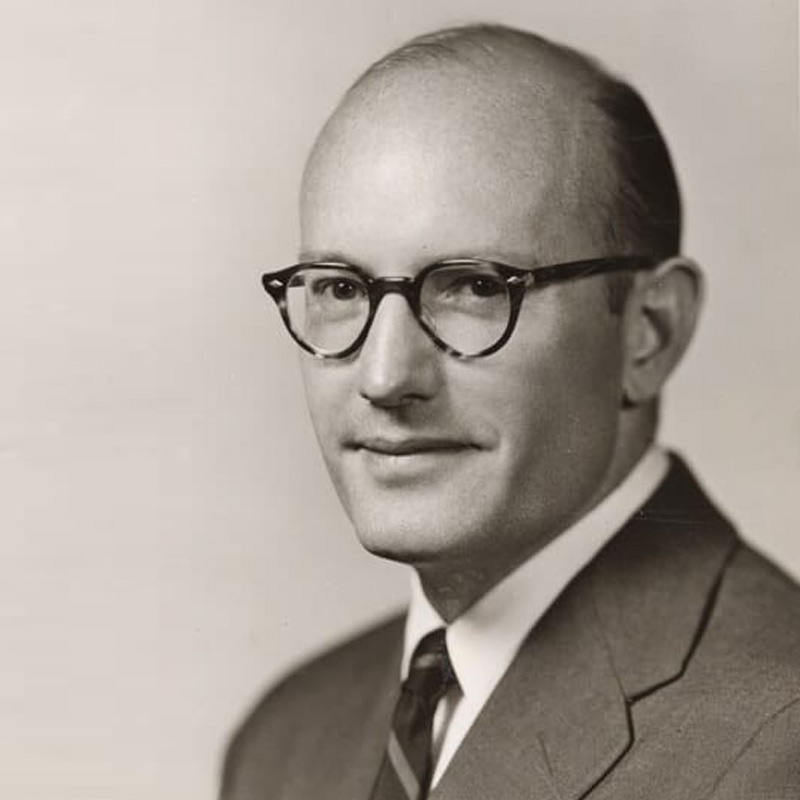
  • Nielsen ratings founder dies at age 92

    Nielsen ratings founder dies at age 92

    MUMBAI: One of the most remarkable personalities of the television business, Arthur C. Nielsen Jr, has died at the age 92.


    Nielsen took over the company established by his father, and morphed it into a market research mammoth – with a flair in television ratings. Today, the company is synonym with TV ratings and its points are known as the currency for the TV industry.


    Nielsen joined the company in 1945 after serving four years in World War II as a major in the Corps of Engineers. Nielsen served the company for the rest of his life. 
     
    The ratings have seen several ups and downs, particularly in measuring specific demographics. Nevertheless, 61 years after getting into the TV ratings business, Neilsen still remains the most prominent measurement system.