Tag: World TV Day

  • Publicis India unveils Thank You TV campaign for Zee TV

    Publicis India unveils Thank You TV campaign for Zee TV

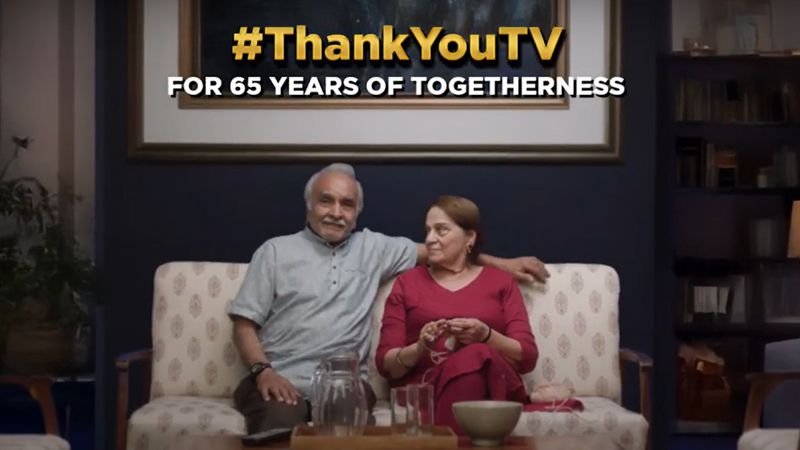
    Mumbai: In India, television still rules. Especially for viewers and the major broadcast networks. Pioneer Zee Entertainment found a way to express its gratitude to the medium by releasing a new TVC  titled Thank You TV  on World Television Day on 21 November. Created by Publicis India, a part of the Publicis Group, it celebrates television’s remarkable 65-year journey.

    As a source of entertainment, TV has been a constant companion, evolving alongside society, culture, and technology, and witnessing everything from historic moments and shifting family dynamics to significant societal progress. Through it all, television has remained a powerful medium that unites and connects people.

    The TVC tells a unique story from the perspective of a sofa, illustrating how TV not only brings joy and smiles to families but also offers a sense of fulfillment in itself. The ad highlights its  enduring importance in our lives and shows how storytelling, along with generational connections, has evolved—set to a catchy and memorable song.

    Publicis India managing director Oindrila Roy said: “With the Thank You TV campaign, we aim to celebrate television not only as a source of entertainment but as a medium that has profoundly shaped how families connect and share moments together. We are proud to collaborate with Zee TV to bring this heartfelt narrative to life. Through compelling storytelling and innovative ideas, we continue to support Zee TV in strengthening its bond with audiences, ensuring television remains a cherished and integral part of millions of lives.”

    “TV is still one of the best modes of entertainment for getting families and friends together. It makes us laugh, cry, think, and reflect,” added Publicis India national creative director Aman Mannan. “It even makes us jump in fear and joy. So, we wanted to pay our respects to this incredible box of wholesome entertainment with an out-of-box idea. Thank you, TV campaign is sofa’s ode to TV.”

    Zee Network CMO Kartik Mahadev highlighted:  “As 10 crore homes watch TV together every minute, we are reminded of its unparalleled ability to spark joy, ignite conversations, and shape the collective aspiration of a nation. On World TV Day, we wanted to celebrate this unique bond, and our partners at Publicis India brought it to life with a playful twist — seeing TV through the eyes of the sofa, the constant companion to countless shared moments. This idea beautifully captures TV’s role as the heart of togetherness in Indian homes. This film is a tribute to TV’s role as a timeless storyteller that evolves with us while keeping the spirit of togetherness alive.”

    As a television  monitor, Indiantelevision.com would like its impact only to grow!


    A post shared by Zee TV (@zeetv)


  • Zeel returns with #TVIsFamily campaign on World TV Day

    Zeel returns with #TVIsFamily campaign on World TV Day

    Mumbai: Zee Entertainment Enterprises Ltd (Zeel) has announced the launch of the second edition of its #TVIsFamily campaign to mark the occasion of World Television Day. The campaign kickstarted on 19 November.

    This year the campaign has a quirky twist with the introduction of peers of the television set – radio, mobile phone, laptop, cinema, etc. highlighting the conversation between these gadgets on television’s special day.

    Taking last year’s thought forward, the campaign aims to personify television and focus on the ubiquitous role it plays in every family, be an undeniable presence through the highs and lows, the laughter, and much more. The campaign further acknowledges the growing influence of other gadgets in users’ life for consuming content, before asserting that despite this, 765 million people across the country still spend an incomparable 903 billion mins watching TV every week, said the statement.

    “TV has been the most trusted and preferred medium reaching 200 million households for decades now,” said Zeel chief marketing officer content business Kartik Mahadev. “Last year, the ad film received a phenomenal response from viewers who related to the bond they share with television. With more and more mediums of entertainment and information emerging in the past few years, we wanted to bring to the fore how television will always have an undeniable chord with the viewers for generations to come.”

    Zeel is building one of the biggest digital walls on its social media properties, sharing pictures of families recognizing television as an integral part of their lives. Along with participation from the viewers, the digital wall also includes the star cast from some of Zee’s most iconic shows. From Zee TV’s “Kumkum Bhagya” and Zee Bangla’s “Hruta” to Zee Keralam’s “Neeyum Njanum,” and Zee Telugu’s “Rowdy Gari Pellam,” the characters of multiple primetime shows have sparked social media banter around celebrating the small screen’s presence by posing for a family portrait with television.


    A post shared by ZEE (@zeecorporate)


  • Star TV network pays tribute to distribution affiliates on World TV Day

    Star TV network pays tribute to distribution affiliates on World TV Day

    Mumbai: Star TV network has launched a campaign on World TV Day exemplifying the role played by the country’s DTH and cable operators in enhancing the consumer’s TV viewing experience. The campaign called #StarKaNaman portrays distribution affiliates as the consumer’s extended family and it will be aired on Star India network channels on 19-21 November in seven languages.

    The brand film showcases the value that the DTH and cable fraternity adds through their deep-rooted understanding of the consumer. It opens with a customer entering an operator’s office to purchase a yearlong TV subscription for his family as he would be away for a whole year. The customer is totally surprised and touched by the operator’s understanding of what his entire family watches and the reassurance the operator provides to not worry about the TV channel package recharge when he is away.

    https://www.facebook.com/StarTVNetworkIndia/videos/857706938240176/

    “We at the Star India network are grateful to our DTH and cable affiliates whose special bond with the consumers, much like an extended family, has elevated the TV viewing experience for millions of homes and also helped us connect better with them through our content,” said Star and Disney India president – TV distribution for India and international Gurjeev Singh Kapoor. “#StarKaNaman is our gesture to appreciate and celebrate this spirit that makes television the go-to platform for family entertainment in India.”

  • World TV Day: Six decades of TV in India; three of democratisation and splintering

    World TV Day: Six decades of TV in India; three of democratisation and splintering

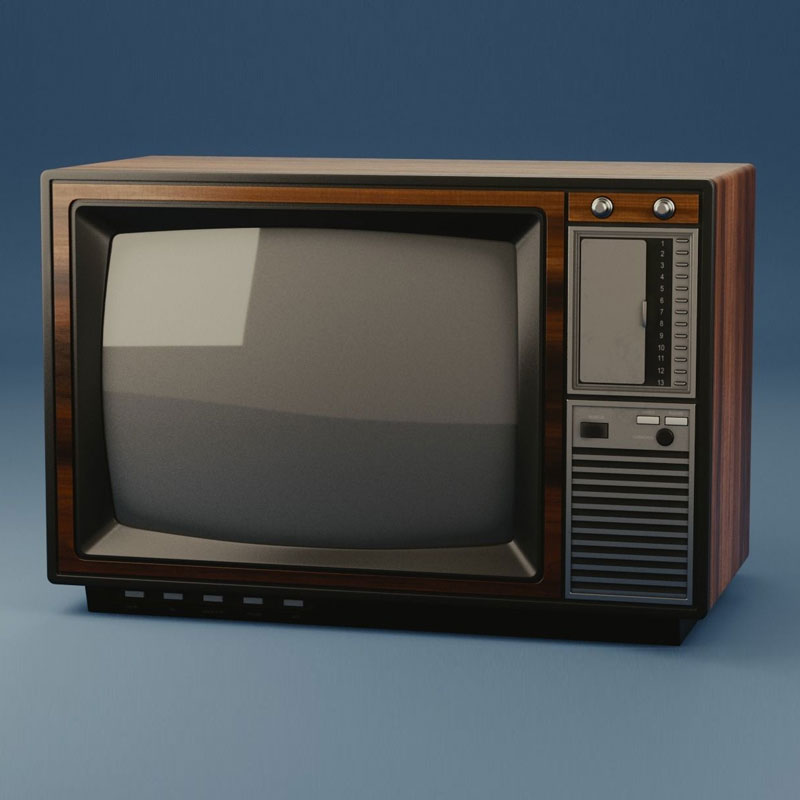
    MUMBAI: From 15 September 1959, when television was first introduced in India, to 2019, when India had over 19.7 crore TV homes, having a reach of over 83 crore, the medium has truly come a long way. So much so, that the earlier wooden cabinet-box TV, transmitting grainy black and white pictures, respectfully draped in a cloth and displayed proudly in our living rooms, now seems like an object from another planet.

    Out of the six, the journey for the first three-decades (1959-1989) – the era of single channel Doordarshan that became synonymous with TV – has been smooth and unadventurous. In the following three-decades (1989-2019), however, the ride has been a roller-coaster with fair-share of bumps and hiccups. India now has over 800 licensed channels —broadcasting 24X7 programming in all genres of channels, ranging from news, sports, kids, entertainment, music, business, infotainment and even spirituality in Hindi, English and more than two dozen regional languages.

    The Indian TV industry as a whole, as per a recent KPMG report, currently stands at Rs 714 billion, growing at a CAGR of 11.2 per cent, and remains the biggest platform for advertising and the most effective means of mass communication.

    No less audacious has been the evolution of content transmitted on this medium. From Hum Log (1984), India’s first TV serial, we moved to the era of Ramayan and Mahabharat in the late eighties that showcased the power of TV in India. And from early 2000, that saw the rise of the K phenomena (Kyunki Saas Bhi Kabhi.. Kasauti Zindagi Ki, Kahani Ghar-Ghar ki), stories of nouveau-riche, urban, joint-families firmly rooted in Indian traditions that were in-sync with the evolution of middle class in post-liberalisation phase to shows like Choti Sardarni (a hit serial on Colours on the life of a Sikh-village woman), the characters on Indian TV serials have evolved and shows a democratisation of the demographics of lead characters.

    However, along with the democratisation of lead characters, there has also been a splintering of TV-audiences and the content we watch. Television used to unite the whole country in late eighties with shows like Hum Log, Buniyad, Ramayan and Mahabarat, something that only Cricket is doing off-lately. As broadcasting opened to private players following the landmark 1995 Supreme Court judgement ruling that “airwaves are not the monopoly of the Indian government,” private television channels like Star, Zee, Aaj-Tak, CNN, BBC, Discovery, flooded the market, targeting different segments of audiences with different genres of channels and shows. Now there is no one size fits all, and shows are written, produced and marketed based on the interests of each segment – rural/urban, house-wives/kids, business/news, entertainment/spirituality.

    Nowhere is this splintering of audiences, and viewpoints, and ideologies more visible than in the news segment. While Prannoy Roy’s The World This Week (DD National) and The News Tonight (DD2) and SP Singh’s Aaj Tak, transformed the Doordarshan’s press-release style news reading in the late nineties, by 2010, news-segment was a different animal altogether with celebrity news anchors humbling the who’s who of business, politics, chit fund owners, investors and political parties. Anyone, howsoever mighty and high, can be put on media trial and humbled on TV. The monologue news-reading of nineties has transformed into a contested space, with a plethora of voices from all realms of life fighting it out on TV screens to validate their own point-of-view. While this has given expression to many underprivileged voices, it has also made us a much-more fragmented, polarised society. Today there are close to 900 channels in the news segment alone, transmitting in more than two dozen languages and funded by corporates, builders, bankers, chit fund owners and even politicians. Today, TV is not the great unifier it used to be, but an enhancer of our schisms along the lines of ideology, region, religion and political parties.

    The same democratisation of TV, and its content, can be seen in the evolution of reality TV shows as well. While Zee’s Sa Re Ga Ma Pa and Sony’s Boogie Woogie were early frontrunners in this genre, it was Star’s Kaun Banega Crorepati that truly showcased the potential of this genre. A prominent KBC feature was, small-town people from normal walks of life, teachers, tax-officers, shop-owners, sitting face-to-face with Amitabh Bachhan – a cinematographic equalizer that symbolically flattened the class differentiation between the two. No wonder that talent hunt shows remain sure-shot eye-ball grabbers even today, mirroring the restlessness in small-town aspirational Indians.

    Much has been written on the spread of small-screen smartphones and how it will disrupt video distribution and video consumption patterns. The TV, however, will maintain its place of prominence. The number of TV homes in India is expected to rise from the current 197 million to 209 million by 2023. At the same time, the TV industry is expected to rise from Rs 714 billion in 2019 to Rs 1,215 billion by 2024. It is also important to note that TV, cornering 45 per cent of the total ad spends, continues to be the largest medium for advertisers and ad revenues for TV are expected to grow at 13 per cent this year. The advertising revenues in the broadcast industry, currently at Rs 205 billion, are expected to rise to Rs 455 billion by 2024, as per a recent KPMG report – India Media & Entertainment report 2019.

    Going forward, not only our TV screens will be digitised, but with the integration of Internet of Things (IoT) and Artificial Intelligence, television will become the centre of our homes and transform it into a seamless gadget, helping users control other smart home devices, ranging from ACs, fridges, to our cars through voice-enabled-commands.

    The march of the idiot-box in India seems unstoppable, at least for the foreseeable future.

    On the occasion of this World Television Day (21 November), we take a look at how TV, cable and DTH brands connected to their consumers and celebrated the spirit of television.

    Panasonic India

    Hindustan Coca-Cola Beverages Pvt. Ltd

    Jio Chat

    Sun Direct

    Zee TV

    Star Sports

  • World TV Day: From ‘we’ to ‘me’

    World TV Day: From ‘we’ to ‘me’

    In today’s fast-paced world where everything is available at the click of a button, does one remember the good old days when wanting and waiting went hand-in-hand?

    The longing to watch Chitrahaar or Mahabharat is something the millennials will never know. With umpteen number of music channels and general entertainment channels (GECs), where shows go on for eons even if the storyline died its natural death hundreds of episodes before, showing whatever the viewer wants to watch 24/7.

    Want to watch a drama, choose from the GECs. If music, click on one of the music channels; animation, there are enough and more channels kids can choose from. Unlike the ones who saw the rise of the Indian television.

    For the ones who were born and grew up with television, shows like Hum log, Nukad,  Shaktiman, Rangoli and many others still holds a special place. And the clumsily-dressed characters made summer holidays even more special.

    The characters were simple yet with a progressive mindset. Today it is quite the opposite; heavy makeup and regressive thinking. The connection build over the years made Lalitaji a household name and owning a TV set was really a ‘Neighbour’s Envy, Owner’s Pride’ and Mile sur mera tumhara was not less than the national anthem. The half-an-hour news capsules covered many stories as there was less noise and more news. Although, there are certain anchors, which make primetime news more entertaining than the melodrama, today.

    Not only this, in the 80s and 90s, before the private television boomed, the entire family finished their chores before the favourite show or movie started.  Children finished their homework without being reminded, mothers prepared the meal and fathers left early from offices. The ‘we’ time was cherished.

    With the onset of DD Metro, Zee and Star Plus, the audiences got the first taste of life beyond the international shows as well as shows with high production value. Sa Re Ga Ma Pa, Hip Hip Hurray and Tara brought with them the modern touch to family television viewing.  

    And then came many more channels showcasing different genres from national to international markets giving a preference to one over the other.

    Today, it’s all about me, me and me. Children watch what they want to watch while parents are busy with their favourite channels. Segmentation is the need of the hour is what the broadcasters say, giving birth to 813 channels (as per the 15 September 2014 list on MIB), but in filling the 24 hours in the day, the quantity has taken over the quality.

    Today, how many of us eagerly wait for a show to begin or even alter our plans? Thanks to the long and sometimes dragging storylines as well as digital medium where on the command of a mouse everything will replay at our convenience, TV viewing has surely changed.

    Nonetheless, till entertainment is there the mundane and monotonous lifestyle will be saved by the flipping of numerous channels. LOL!


  • World TV Day: Industry barons go down the memory lane

    World TV Day: Industry barons go down the memory lane

    It was on 15 September 1959 when India officially experimented her tryst with the box that has been loved, loathed and equally criticized over the years.  But today, in its current avatar, the television set has seen a paramount shift, right from colour television being introduced in 1982 as India geared up for the Asian games to today’s 4K technology.

    Production values of various shows as well as the viewership experience have changed phenomenally.  As the world today celebrates World Television Day which was declared by the U.N in December 1996, indiantelevision.com speaks to some of India’s most notable names from the TV industry recalling some of their fondest memories of viewing television programmes.


    Prasar Bharati CEO Jawhar Sircar

    Television needs to look beyond its traditional ecosystem to embrace the opportunities offered by digital technology. The medium will die if it continues to grow in a linear fashion. TV began over electro-magnetic waves in 1959 and has grown through satellite to cover the entire country.

    While terrestrial TV has its own relevance, it will be quickly overtaken by new technologies including satellite and digital addressable systems.


    India Today Group consulting editor Rajdeep Sardesai

    For me my fondest memory was the coverage of the live elections in the years of 1995-1996. At that time, everyone would watch the national broadcaster Doordarshan as there were no private news channels. Covering the elections as a reporter along with journalist like Vinod Dua and Dr Pranoy Roy is a big part of those memories for me.


    NDTV executive vice chairperson KVL Narayan Rao

    Television today is more contemporary. Society has changed a little and what you have on air is reflective of that. The world has become a smaller place. There is more access now as compared to 25 years ago when the only window to international news was The Week That Was, produced by NDTV as one of the earliest private players. I remember serials like Buniyad, Humlog, Mahabharat and Ramayan. Some of the old ones were core of the heart serials and dealt with issues that were the reality of so many people of the country at that time such as post partition. The serials now have different production values.


    Sony Six business head Prasana Krishnan  

    Sports on television is growing rapidly and the Indian sports fan today has more access to viewing multiple properties than any other fan in the world and that too at an affordable cost. My fondest memory has to be this year’s FIFA World Cup Brazil as not only was it personally satisfying for me as a football fan but  a matter of pride to be carried on the channel. Every minute of the game on TV was engaging.


    Ten Sports CEO Rajesh Sethi

    Viewing television programmes is an enriching experience and is all about entertainment, entertainment and entertainment! Watching television especially sports is a great stress buster and allows me to relax. In fact watching sports on TV for me is all about celebration.


    Gasoline, founder and chief creative officer Anil Kakar

    From just two Doordarshan channels to over 800 channels today, television has come a long way. The good thing is, content continues to get more defined to suit niche audiences.  With the recent changes announced by the Star Network, viewers now have the choice of subscribing to specific channels on an a la carte basis. It will be interesting to see how this will go on to alter viewing patterns. In the long run, this might even lead to a shift of focus, largely from GECs to more diversified, niche content, as television gets more fragmented. Ultimately, as audiences, we will have even greater choice than we have today. Even with so many channels today, I would say the finest moments in television belong to the 90s. MTV and Channel V brought in a cultural change and attitudinal shift of sorts. Programmes such as Different Strokes, The Wonder Years, Mind Your Language and Star Trek were had to miss and are still hard to forget.